
Zhong Guo Jing Ying Bao

Search documents
普华永道:四大关键因素支撑,中国消费市场展望乐观
Zhong Guo Jing Ying Bao· 2025-12-18 03:29
Group 1 - The core viewpoint of the reports by PwC highlights four key factors that will positively impact the future of the Chinese consumer market [1][2] - The first factor is the growth of the middle and high-income population, which is expected to stimulate demand. By 2024, households in China with a disposable income exceeding $25,000 are projected to surge to 64 million, nearly doubling by 2029, presenting significant opportunities for high-end and luxury brand operators [1] - The second factor is the rapid expansion of leading international and domestic grocery retailers, indicating strong consumer confidence in the Chinese market. These leading companies have recognized the importance of category management and private label development, setting benchmarks for the industry [1] Group 2 - The third factor is that Chinese consumers surpass global counterparts in their acceptance of health, sustainability, and international products, creating opportunities for new categories and products [2] - The fourth factor is the expectation that the Chinese yuan will strengthen by 2026, which, along with a stabilized real estate market, is anticipated to boost consumer confidence and stimulate local consumption [2]
同仁堂澄清南极磷虾油虚假标注涉事企业非其子公司
Zhong Guo Jing Ying Bao· 2025-12-17 23:53
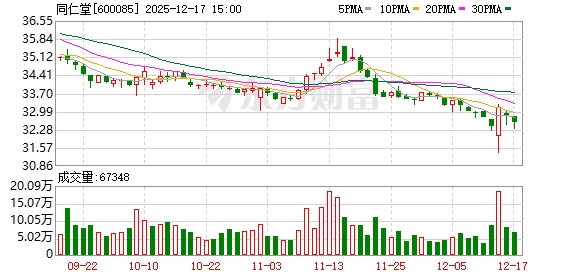
Group 1 - The core issue involves a false labeling incident related to Antarctic krill oil, where the company Beijing Tong Ren Tang Sichuan Health Pharmaceutical Co., Ltd. is incorrectly identified as a subsidiary of Beijing Tong Ren Tang Co., Ltd. [1][2] - Beijing Tong Ren Tang Co., Ltd. clarified that it is focused on the production and sales of pharmaceuticals, with no external third-party production involved [1][2] - As of December 17, the total market value of Beijing Tong Ren Tang Co., Ltd. is approximately 44.67 billion yuan [1] Group 2 - The Shanghai Consumer Protection Commission reported a potential fraud case involving a product labeled as "Beijing Tong Ren Tang 99% High Purity Antarctic Krill Oil," which claimed high phospholipid content but was found to have none [2] - The product in question is produced by Anhui Habao Pharmaceutical Co., Ltd. and distributed by Beijing Tong Ren Tang Sichuan Health Pharmaceutical Co., Ltd. [2]



上市公司同仁堂澄清:南极磷虾油虚假标注涉事企业非其子公司
Zhong Guo Jing Ying Bao· 2025-12-17 15:16
Group 1 - The core issue involves a false labeling incident related to a product marketed as "Beijing Tongrentang 99% High Purity Antarctic Krill Oil," which was found to have a phospholipid content of 0% despite claims of high quality [3][4] - Beijing Tongrentang Co., Ltd. clarified that the implicated company, Beijing Tongrentang (Sichuan) Health Pharmaceutical Co., Ltd., is not a subsidiary of theirs, but rather a subsidiary of Beijing Tongrentang Health Pharmaceutical Co., Ltd., which is part of the Tongrentang Group [3] - The company emphasized its commitment to protecting consumer rights and its brand image, stating that all its medicines are produced in-house without outsourcing to third parties [3] Group 2 - The Shanghai Consumer Protection Commission announced plans to interview the involved companies due to the allegations of product falsification [4] - The product in question was produced by Anhui Habao Pharmaceutical Co., Ltd. and distributed by Beijing Tongrentang (Sichuan) Health Pharmaceutical Co., Ltd. [4] - As of December 17, the total market capitalization of Beijing Tongrentang was approximately 44.67 billion yuan [3]
中金公司换股吸并东兴证券、信达证券预案出炉 吸并后总资产或超万亿元
Zhong Guo Jing Ying Bao· 2025-12-17 14:33
Core Viewpoint - The merger and acquisition plan between China International Capital Corporation (CICC) and Dongxing Securities and Xinda Securities is expected to significantly enhance CICC's asset scale and competitive position in the investment banking sector, with total assets projected to exceed 1 trillion yuan [1][5]. Summary by Sections Transaction Details - The merger involves a share swap, with CICC's share price set at 36.91 yuan per share, Dongxing Securities at 16.14 yuan, and Xinda Securities at 19.15 yuan [1]. - The exchange ratios are 1:0.4373 for Dongxing Securities and 1:0.5188 for Xinda Securities, leading to the issuance of approximately 3.096 billion new A-shares by CICC [1]. Shareholder Rights and Structure - Shares with restrictions (pledged, frozen, or legally limited) will convert to CICC shares, maintaining their original status [2]. - Central Huijin will hold 1.936 billion shares of CICC post-merger, representing 24.44% of the total share capital, remaining the controlling shareholder [2]. Strategic Benefits - The merger aims to enhance asset value and balance shareholder interests, with major shareholders committing to lock their shares for 36 months [3]. - CICC will inherit all assets, liabilities, and operations from the merged entities, aiming for comprehensive resource integration and enhanced development potential [4]. Operational Enhancements - Post-merger, CICC's estimated revenue for the first three quarters of 2025 is around 27.4 billion yuan, with a significant increase in capital scale [4]. - The number of CICC's retail clients is expected to rise from 9.72 million to over 14 million, enhancing its customer base [4]. Industry Positioning - The merger aligns with national strategies to improve financial institution efficiency and support high-quality development in the financial sector [6]. - CICC's capital utilization efficiency is expected to improve, with a historical financial investment return rate of 3.5%, outperforming Dongxing and Xinda Securities [6]. Future Outlook - CICC aims to leverage the merger to transform scale advantages into high-quality development momentum, aspiring to become a leading international investment bank [6].



中百集团闭店止损 调改、转型能否改变颓势?
Zhong Guo Jing Ying Bao· 2025-12-17 11:44
Core Viewpoint - Traditional retail companies are facing significant pressure, leading to store closures, adjustments, and transformations as a strategic response [1][4]. Group 1: Store Closures - Zhongbai Group announced the closure of 30 warehouse hypermarkets, with an estimated loss of approximately 180 million yuan due to these closures [2][3]. - As of December 4, 2025, Zhongbai had closed 30 warehouse hypermarkets, with reasons including long-term operational losses and contract expirations [2][3]. - The closures are part of a strategy to optimize the company's layout and improve overall operational quality [2][3]. Group 2: Financial Performance - Zhongbai Group reported revenues of 12.197 billion yuan, 11.639 billion yuan, and 10.381 billion yuan from 2022 to 2024, with corresponding losses of 351 million yuan, 322 million yuan, and 528 million yuan [3]. - In the first three quarters of 2025, Zhongbai achieved a revenue of 1.934 billion yuan, a year-on-year decline of 19.41%, alongside a loss of 325 million yuan [3]. - Factors contributing to the losses include increased competition from online retail, rising operational costs, and the impact of closing unprofitable stores [3]. Group 3: Industry Context - The traditional retail sector is under pressure from the rise of e-commerce, which has fundamentally changed the competitive landscape for essential goods [4]. - Other traditional retailers, such as Yonghui Supermarket, are also experiencing ongoing losses, indicating a broader trend in the industry [4]. Group 4: Transformation Efforts - Zhongbai Group is actively pursuing a transformation towards hard discount formats, launching 51 hard discount stores with a focus on quality and low prices [5]. - The company has completed adjustments to 14 warehouse formats and 55 community supermarket formats, resulting in increased customer visits [4][5]. - Experts suggest that the transition to hard discount formats leverages existing resources and brand advantages, although challenges remain in managing traditional operations while developing new formats [5][6].

银价破66美元历史高位!分析师呼吁:警惕短期回调风险
Zhong Guo Jing Ying Bao· 2025-12-17 11:44
Core Viewpoint - Silver prices have surged significantly, with the London spot silver price exceeding $66 per ounce, marking a daily increase of over 3.5% as of December 17. The price has risen more than 32% since hitting a low on November 24, driven by macroeconomic liquidity, supply-demand imbalances, and strong investment demand [1][2]. Group 1: Price Movement and Market Dynamics - As of December 17, the London spot silver price reached a high of $66.51 per ounce, reflecting a robust upward trend in the past two months [1]. - The gold-silver ratio has fallen to a four-year low due to the significant rise in silver prices [1]. - The global silver market has experienced structural shortages for five consecutive years, with an expected shortfall of 3,660 tons by 2025, driven by industrial demand from sectors like photovoltaics and electric vehicles [2]. Group 2: Supply and Demand Factors - Industrial demand, particularly from the photovoltaic sector, has surged, with a 17% annual increase in installed capacity driving silver paste demand [2]. - The supply of silver is constrained, with 72% of mined silver coming from copper, lead, and zinc by-products, exacerbating the supply-demand imbalance [2]. - High leasing rates for London silver and the return of inventories to European markets have contributed to upward price pressure [2]. Group 3: Market Sentiment and Risks - Analysts caution about potential short-term price corrections due to overbought conditions, with the RSI indicator for silver exceeding 85, indicating severe overbought status [3]. - The COMEX silver market is facing significant physical delivery demands, leading to a "short squeeze" scenario that amplifies price increases [2][3]. - There is a growing concern that high prices may lead to reduced industrial demand, and any unexpected monetary policy changes, such as interest rate hikes from the Bank of Japan, could impact global liquidity and market dynamics [3].
壁仞科技通过聆讯 “港股GPU第一股”呼之欲出
Zhong Guo Jing Ying Bao· 2025-12-17 11:44
Core Viewpoint - The news highlights the successful listing of domestic GPU company Biran Technology on the Hong Kong Stock Exchange, marking it as the first domestic GPU stock in Hong Kong, alongside the recent debut of Muxi Co., Ltd. on the STAR Market [1][2] Group 1: Company Overview - Biran Technology has achieved significant revenue growth, with projections showing an increase from RMB 499,000 in 2022 to RMB 337 million in 2024, reflecting a compound annual growth rate of 2500% [1] - The company has established strategic partnerships with nine Fortune China 500 companies, five of which are also listed in the Fortune Global 500 [1] Group 2: Financial Performance - Biran Technology's revenue figures for 2022, 2023, and 2024 are RMB 499,000, RMB 62.03 million, and RMB 337 million, respectively, with corresponding gross profit margins of 100%, 76.4%, and 53.2% [2] - The total research and development expenditure from 2022 to 2025 is projected to reach RMB 33.02 billion, with annual expenditures of RMB 10.18 billion, RMB 8.86 billion, RMB 8.27 billion, and RMB 5.72 billion [2] Group 3: Future Plans - The funds raised from the Hong Kong listing will primarily be allocated to the development of intelligent computing solutions, including advancements in smart computing hardware and software platforms, as well as the commercialization of these solutions [2]
李宁全球首家龙店北京开业,发布奥运联名金标系列
Zhong Guo Jing Ying Bao· 2025-12-17 11:09
Core Insights - Li Ning has opened its first "Loong Store" in Beijing, themed "Dragon Glory Begins," marking a significant branding initiative that integrates Olympic elements into its retail strategy [1] Group 1: Store Opening and Branding - The "Loong Store" represents a new retail format for the Li Ning brand, emphasizing its connection to Chinese cultural symbols and sports [1] - The store opening coincides with the launch of the new "Honor Gold Standard" product series, which features the Chinese Olympic Committee's commercial emblem alongside the Li Ning brand logo [1] Group 2: Historical Context and Partnerships - Li Ning has a longstanding relationship with the Olympics, having incorporated the "CHINA Dragon" element into the design of the Chinese sports delegation's uniforms since the 2000 Sydney Olympics [1] - The company has been selected again as the official sportswear partner for the Chinese sports delegation for the 2025-2028 Olympic Games [1]


陈文辉:养老基金是最好的耐心资本
Zhong Guo Jing Ying Bao· 2025-12-17 10:06
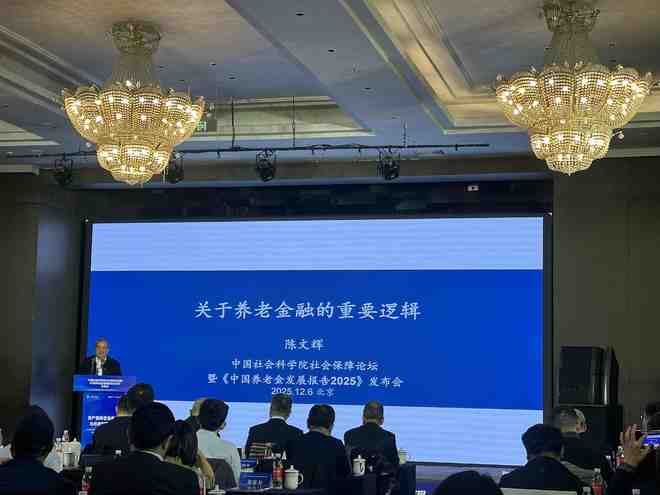
Core Viewpoint - The development of pension funds and long-term life insurance is crucial for addressing aging population issues and creating a substantial supply of patient capital, which is essential for modern industrial system construction and technological innovation [2][3]. Group 1: Importance of Patient Capital - Patient capital refers to long-term investments that do not seek short-term returns, focusing instead on supporting the sustained development of the real economy [3]. - The Chinese government has emphasized the cultivation and development of patient capital in several key documents, including the Central Economic Work Conference and the "14th Five-Year Plan" [3]. - Industries such as high-end manufacturing, new energy, and biomedicine require long-term funding due to their extended research and development cycles, which short-term capital cannot adequately support [3]. Group 2: Current Challenges - There is a notable shortage of patient capital supply in China, as institutional funds like wealth management products and public funds typically have short holding periods for equity investments [3]. - The previous reliance on short-term funds as long-term investments has proven unsustainable, particularly highlighted by the impact of the "Asset Management New Regulations" introduced in 2018 [3]. Group 3: Role of Pension Funds and Long-term Life Insurance - Pension funds and long-term life insurance are identified as the primary sources of true patient capital due to their long liability durations, which align with the long-cycle demands of modern industrial systems [5]. - These funds can effectively support strategic industries such as semiconductors and new energy, which require years of continuous investment [5]. Group 4: Risk Management for Pension Funds - A comprehensive risk management framework is necessary for pension funds to ensure they meet long-term investment goals, focusing on long-term trend risks such as demographic changes and climate change [6]. - The risk management system should extend beyond traditional market and credit risks to include operational, ESG, geopolitical, reputational, and long-term liability matching risks [6]. - Continuous enhancement of asset-liability management and stress testing is essential to assess potential risks and ensure the financial health of pension funds [6].
冲刺 “固态电池第一股”!“独角兽”卫蓝新能源拟登陆创业板
Zhong Guo Jing Ying Bao· 2025-12-17 10:06
Core Viewpoint - Beijing Weilan New Energy Technology Co., Ltd. is preparing to go public on the ChiNext board, potentially becoming the first company to offer solid-state batteries in the market [1] Group 1: Company Overview - Weilan New Energy was founded in 2016 and is a spin-off from the Chinese Academy of Sciences, focusing on solid-state lithium-ion batteries [1] - The company has completed nine rounds of financing since 2017, raising over 2.5 billion yuan, with investments from major players like Xiaomi and Huawei [1] - The company's valuation has increased from 5 billion yuan in 2021 to 18.5 billion yuan [1] Group 2: Technology and Products - Weilan New Energy specializes in solid-state batteries, which are expected to significantly enhance energy density, with future projections reaching 1000 Wh/kg [6] - The company has launched several products, including a 360 Wh/kg high-energy density power cell and a 280 Ah ultra-safe energy storage cell, which have already begun mass production [3][6] - The new generation of solid-state battery packs, developed in collaboration with BASF, aims to address safety concerns and improve range for electric vehicles [7] Group 3: Financing and Strategic Partnerships - The company has attracted 48 major institutional and industrial investors, creating a unique ecosystem of "research + industry + state-owned capital" [4] - Recent financing rounds have included significant investments from state-owned funds, which will support capacity expansion and technological upgrades [5] - The D+ round of financing was completed in September 2025, further solidifying investor confidence in the solid-state battery sector [5] Group 4: Industry Outlook - The solid-state battery technology is anticipated to begin mass production by 2027, with a gradual market penetration expected over the next five to ten years [8]
