
Zhong Guo Jing Ying Bao

Search documents
京东方、三星专利大战落幕
Zhong Guo Jing Ying Bao· 2025-12-17 09:23
Core Viewpoint - BOE and Samsung have reached a comprehensive settlement in their OLED patent dispute, marking a shift in the global display industry from zero-sum competition to a new phase of technological sharing and mutual benefits [1][7]. Group 1: Background of the Dispute - The patent battle began in late 2022 when Samsung initiated a 337 investigation with the ITC, accusing BOE of infringing on four OLED-related patents [2]. - The conflict escalated in 2023, with Samsung adding trade secret claims and filing lawsuits in Texas, while BOE countered with its own patent lawsuits in China [2][4]. - By mid-2025, the litigation intensified, with both companies filing multiple lawsuits against each other, reflecting a significant shift in market dynamics [2][4]. Group 2: Settlement Dynamics - The prolonged litigation resulted in high costs for both parties, with neither emerging as a clear winner [4]. - For BOE, a ruling against them could have severely impacted their market access in the U.S., while Samsung faced challenges in expanding its business in China due to deteriorating relations [4][6]. - The settlement included a reported agreement on a patent licensing fee of approximately 1 trillion KRW (about 4.85 billion RMB), which was a crucial factor in the resolution [6]. Group 3: Industry Implications - The resolution of the dispute is expected to reshape the competitive landscape of the global display industry, moving from fierce competition to a more collaborative approach [7]. - The settlement allows BOE to stabilize its supply to global clients, including Samsung, thereby reducing supply chain uncertainties for downstream manufacturers [7]. - The agreement signifies a shift in the power dynamics of the display industry, with Chinese manufacturers gaining a larger share of the global market, reflecting a transition from manufacturing dominance to a balance of technology and standards [7][8]. Group 4: Future Outlook - Despite the settlement, future intellectual property disputes are likely as technology continues to evolve rapidly [8]. - The resolution between BOE and Samsung illustrates that in a highly globalized supply chain, pure confrontation will give way to rule-based cooperation, indicating a more complex and intertwined competitive landscape in the OLED and advanced technology sectors [8].

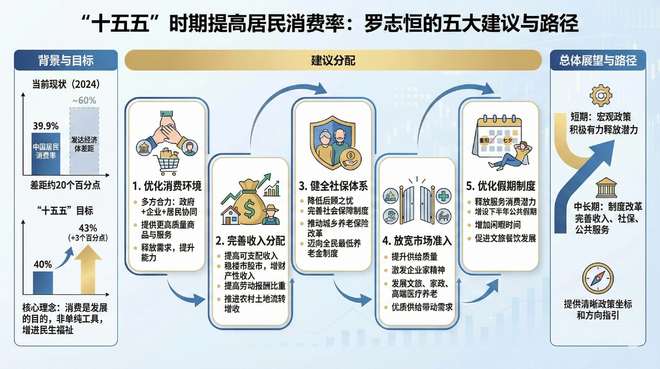
粤开证券罗志恒:“十五五”时期可从五大方面提高居民消费率
Zhong Guo Jing Ying Bao· 2025-12-17 09:01
Core Viewpoint - It is expected that by 2026, there will be a marginal recovery in household consumption, driven by the implementation of subsidy policies in areas such as childcare and elderly care, along with the wealth effect from rising stock markets [2] Group 1: Economic Context - The "14th Five-Year Plan" aims to significantly increase the household consumption rate, which is defined as the proportion of final household consumption expenditure to GDP [2] - In 2024, China's household consumption rate is projected to be 39.9%, an increase of 4.3 percentage points since 2012, but still about 20 percentage points lower than major developed economies [2] Group 2: Consumption Rate Improvement Strategy - To raise the household consumption rate from 40% to 43% during the "14th Five-Year Plan," an average annual growth rate of 6.5% in household consumption is required, assuming a nominal GDP growth rate of about 5% [4] - The increase in consumption is not merely a temporary measure but a strategic move related to the transformation of the economic development model, emphasizing that consumption should enhance the well-being of citizens rather than being treated as a mere policy tool [4] Group 3: Systematic Approaches to Boost Consumption - Five systematic approaches are proposed to enhance household consumption: 1. Optimize the consumption environment to create a collaborative effort among government, enterprises, and residents [5] 2. Improve the income distribution system to solidify the consumption foundation, focusing on increasing disposable income and enhancing property income [5] 3. Strengthen the social security system to alleviate residents' concerns about future expenditures [5] 4. Relax market access to improve supply quality, which can stimulate entrepreneurial spirit and accelerate the development of service industries [6] 5. Optimize holiday systems to release service consumption potential, thereby balancing supply and demand [6][7] Group 4: Policy Recommendations - Short-term measures require more proactive macroeconomic policies to unleash consumption potential, while long-term strategies depend on reforms in income distribution, social security, and public services to continuously enhance residents' consumption capacity and willingness [7]

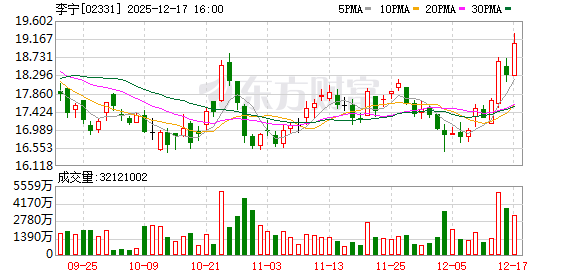
李宁全球首家龙店开业 高度绑定奥运元素
Zhong Guo Jing Ying Bao· 2025-12-17 09:00
Core Insights - The Li-Ning brand launched its first "Loong Store" in Beijing's Sanlitun Taikoo Li on December 14, 2025, themed "Dragon Glory Begins" [2] - The "Loong Store" represents a new retail format developed by Li-Ning, integrating the "CHINA Dragon" element into its design, which has been a part of the brand's identity since the 2000 Sydney Olympics [2] - Li-Ning has regained the contract to provide sportswear for the Chinese sports delegation from 2025 to 2028, marking a significant partnership with the Chinese Olympic Committee [2] Product Launch - The new "Honor Gold Standard" product line was officially launched, featuring a combination of the Chinese Olympic Committee's commercial emblem and the Li-Ning brand logo, symbolizing Chinese sports glory and spirit [2]

四小时 他做出了豆包手机平替“肉包”
Zhong Guo Jing Ying Bao· 2025-12-17 09:00
Core Insights - The "Doubao AI Phone" launched by ByteDance and ZTE has become a focal point in the tech industry, showcasing advanced AI capabilities for app automation and interaction [1][4] - The rapid development of a similar product called "Roubao" by Li Yunlong demonstrates the low technical barrier for creating AI phone assistants, with the main challenges lying in model optimization, data annotation, and sustainable business models [2][7] Group 1: Product Development and Features - The "Doubao Phone" sold out quickly after its release, with resale prices on second-hand platforms reaching nearly double the original price [1] - "Roubao" was developed in just four hours, with 99% of the code generated by AI, highlighting the efficiency of AI tools in software development [3] - The core functionality of "Roubao" mirrors that of the "Doubao Phone," allowing users to automate tasks across various apps without needing a computer [4][5] Group 2: Technical Challenges and Limitations - Despite its rapid development, "Roubao" faces performance bottlenecks, taking significantly longer to execute tasks compared to the "Doubao Phone" due to reliance on a general-purpose model [6][7] - The lack of detailed data annotation resources limits the accuracy and efficiency of "Roubao," as opposed to the "Doubao Phone," which benefits from extensive manual labeling and a specialized model [6][7] Group 3: Market Dynamics and Competition - Major tech companies are resistant to third-party AI assistants due to concerns over user privacy and potential disruption to their business models, as AI assistants can bypass traditional app usage patterns [8][9] - Companies like Tencent, Meituan, and Alibaba are developing their own AI services to keep users within their ecosystems, further complicating the competitive landscape for independent AI assistants [9] Group 4: Regulatory and Ethical Considerations - The development of AI phone assistants raises questions about user privacy and the potential for misuse, necessitating careful regulation and responsibility delineation [10][11] - There is a need for collaboration between phone manufacturers and app developers to create secure AI interfaces that protect user data while enhancing functionality [10][11]
创新突破、用好工具、扭亏“摘U” 科创成长层三董事长共聚谈“成长”
Zhong Guo Jing Ying Bao· 2025-12-17 07:43
Core Insights - The launch of the Sci-Tech Innovation Board (STAR Market) has significantly transformed the development ecosystem for China's technology industry, particularly benefiting unprofitable "hard tech" companies by providing a supportive environment for long-term investment and innovation [4][5] - As of November 2025, 57 unprofitable companies have listed on the STAR Market, with 22 of them achieving profitability post-listing [4] - The STAR Market has facilitated substantial revenue growth and reduced losses for companies, with 35 firms in the growth layer reporting a 39% year-on-year revenue increase and a 65% reduction in net losses in the first three quarters of 2025 [4] Company Performance and Growth - ChipLink Integration has raised 11 billion yuan since its listing, with revenue growing from 2 billion yuan before listing to 6.5 billion yuan in 2024, effectively doubling its revenue in three years [7] - CanSino has maintained a research and development (R&D) expenditure of over 30%, which has been crucial for its product development and market expansion, particularly during the COVID-19 pandemic [8][15] - Effort, a robotics company, has seen its sales increase from 2,000 units at the time of listing to 16,000 units in 2024, significantly enhancing its market share and competitiveness [10][16] R&D Investment and Innovation - R&D investment is critical for "hard tech" companies, with ChipLink maintaining a 30% R&D expenditure ratio, significantly higher than the industry average of 10% [13] - CanSino's R&D strategy has allowed it to navigate the "valley of death" in vaccine development, leading to profitability in the third quarter of 2025 [15][18] - Effort has shifted from a "follower" to a "leader" in innovation post-listing, focusing on autonomous innovation and the integration of AI technology into its robotics solutions [16] Path to Profitability - Achieving profitability is seen as a natural progression for unprofitable companies on the STAR Market, with both ChipLink and CanSino projecting profitability milestones in the coming years [17][19] - ChipLink anticipates reaching profitability by 2026, supported by increasing market share and improved operational efficiency [19] - Effort aims to achieve profitability through a dual strategy of scaling growth and enhancing profit margins, leveraging its technological advancements [20] Utilization of Growth Tools - The STAR Market's mechanisms, such as mergers and acquisitions and equity incentives, are vital for the growth of "hard tech" companies [21] - ChipLink's acquisition of a 72.33% stake in a peer company exemplifies the effective use of M&A strategies to enhance growth [21] - Both ChipLink and CanSino emphasize the importance of equity incentives to attract and retain talent, which is crucial for long-term success in the tech sector [22]


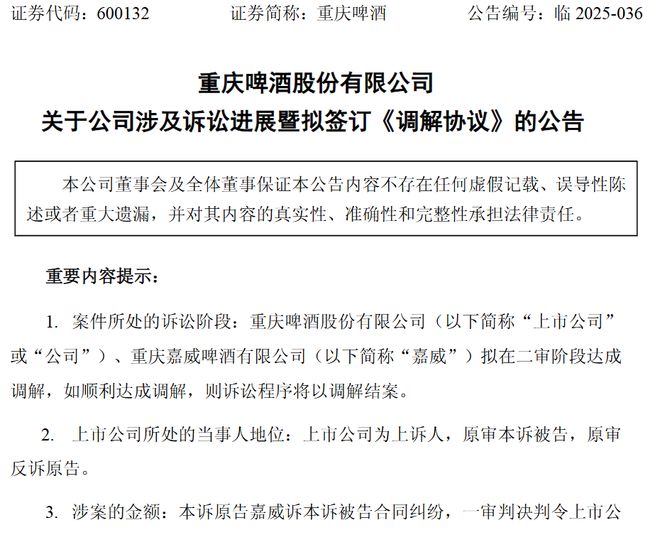
重庆啤酒与嘉威啤酒18年纠纷拟1亿元和解
Zhong Guo Jing Ying Bao· 2025-12-17 06:52
Core Viewpoint - Chongqing Brewery is in the process of reaching a settlement with Jiawei Brewery to resolve an 18-year dispute, potentially concluding the litigation that began in October 2023 with a claim amounting to 353 million yuan [1][2]. Group 1: Legal Proceedings and Settlement - The lawsuit initiated by Jiawei Brewery in October 2023 involves a claim of 353 million yuan, with the first-instance judgment favoring Jiawei Brewery in March 2025 [1]. - The dispute originated from a strategic cooperation agreement signed in 2007 and a 20-year product distribution framework agreement established in 2009, which restricted Jiawei Brewery to produce only the "Shancheng" brand beer [1]. - Following the first-instance ruling, Chongqing Brewery expressed disagreement and plans to appeal, asserting compliance with the agreements and denying any additional compensation obligations [2]. Group 2: Financial Implications of the Settlement - The proposed settlement includes a one-time payment of 100 million yuan (excluding tax) by Chongqing Brewery to Jiawei Brewery for all price difference settlements up to December 31, 2025 [2]. - Chongqing Brewery plans to reverse a previously recorded liability of 254 million yuan and will recognize a new liability of approximately 217 million yuan, which is expected to increase the company's total profit by 37.11 million yuan and net profit attributable to shareholders by 19.08 million yuan for the year 2025 [3]. - The settlement agreement stipulates that from 2026 to 2028, Chongqing Brewery will purchase 142,600 hectoliters of beer annually from Jiawei Brewery at a price of 4,000 yuan per hectoliter, potentially generating annual revenue of 570 million yuan for Jiawei Brewery if production targets are met [3]. Group 3: Strategic Outlook - Industry experts suggest that the short-term financial outlay by Chongqing Brewery may lead to long-term benefits, including alleviating profit pressure and stabilizing operations, allowing the company to focus on high-end products and market penetration [3]. - The settlement may also provide Chongqing Brewery with strategic flexibility regarding the "Shancheng" brand and Jiawei's production capacity, enabling potential future actions such as closure, acquisition, or replacement of assets [3].


重庆啤酒或与嘉威啤酒和解 一亿元了结18年纠纷
Zhong Guo Jing Ying Bao· 2025-12-17 06:25
Core Viewpoint - Chongqing Brewery and Jiawei Brewery are in the process of reaching a settlement to resolve an 18-year-long dispute, which involves a lawsuit initiated by Jiawei Brewery in October 2023, claiming 353 million yuan in damages [1][5]. Group 1: Legal Dispute Background - The lawsuit stems from a strategic cooperation agreement signed in 2007 and a 20-year product distribution framework agreement signed in 2009, which stipulated that Jiawei Brewery could only produce "Shancheng" brand beer and that all products must be distributed by Chongqing Brewery [5]. - Jiawei Brewery accused Chongqing Brewery of failing to include relevant products in the distribution agreement, leading to significant losses, and claimed that the annual production of "Shancheng" beer had plummeted from 1 million tons to 80,000 tons since the acquisition by Carlsberg [5][6]. Group 2: Settlement Agreement - The proposed settlement includes a one-time payment of 100 million yuan (excluding tax) from Chongqing Brewery to Jiawei Brewery for all price difference settlements up to December 31, 2025, and agreements on product distribution cooperation from 2026 to 2028 [6][7]. - Chongqing Brewery plans to reverse a previously recorded liability of 254 million yuan and will recognize a new liability of approximately 217 million yuan, which is expected to increase the total profit for 2025 by 37.11 million yuan and net profit attributable to shareholders by 19.08 million yuan [6][7]. Group 3: Future Business Implications - From 2026 to 2028, Chongqing Brewery is set to purchase 142,600 hectoliters of beer annually from Jiawei Brewery at a price of 4,000 yuan per hectoliter, with a compensation mechanism for any shortfall in actual sales [7]. - This agreement is projected to generate annual revenue of 570 million yuan for Jiawei Brewery if Chongqing Brewery meets its production and procurement commitments [7]. - Industry experts suggest that this settlement allows Chongqing Brewery to alleviate short-term profit pressures while stabilizing operations and providing strategic flexibility for future brand management and capacity decisions [7].
隆基李振国呼吁光伏业构建韧性供应链抵制非理性竞争
Zhong Guo Jing Ying Bao· 2025-12-17 06:03
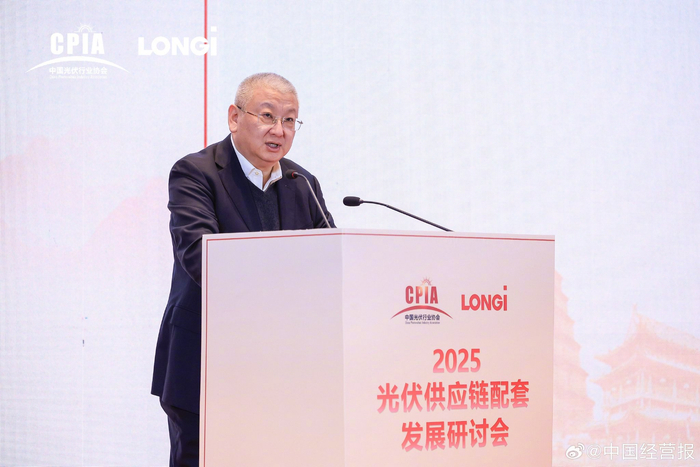
同时,李振国也表示,当前中国光伏产业正经历深刻的周期性调整,面临产能供需错配、价格下行 与"内卷式"竞争等挑战。在其看来,创新引领、稳健协同的供应链体系,是推动产业持续健康发展的关 键所在。 展望未来,李振国认为,一方面,要持续强化创新引领、构建韧性协同的供应链体系,积极开拓全球市 场,持续提升中国光伏品牌的国际影响力与竞争力;另一方面,呼吁产业链上下游加强务实合作,强化 行业自律,坚决抵制非理性竞争,合力营造开放包容、规范有序、韧性高效的产业新生态,为构建新型 能源体系、保障国家能源安全贡献光伏力量。中经记者 张英英 吴可仲 西安报道 【隆基绿能李振国:构建韧性协同供应链 抵制非理性竞争】12月17日,在西安召开的"2025光伏供应链 配套发展研讨会"上,隆基绿能创始人、首席技术官李振国发表致辞,呼吁行业强化创新与协同,构建 更具韧性的供应链体系。 李振国指出,经过几十年发展,我国光伏产业从无到有、从小到大,已成为技术研发活跃、产业链完整 齐备、端到端自主可控的具有国际竞争优势的战略性新兴产业。中国光伏企业通过自主创新与原创技术 发展,已经推动产业链多个环节达到国际领先水平,中国光伏产品出口覆盖全球200多 ...

上海楼市年终“翘尾”:价格领跑全国,新房再现“日光盘”
Zhong Guo Jing Ying Bao· 2025-12-17 05:39
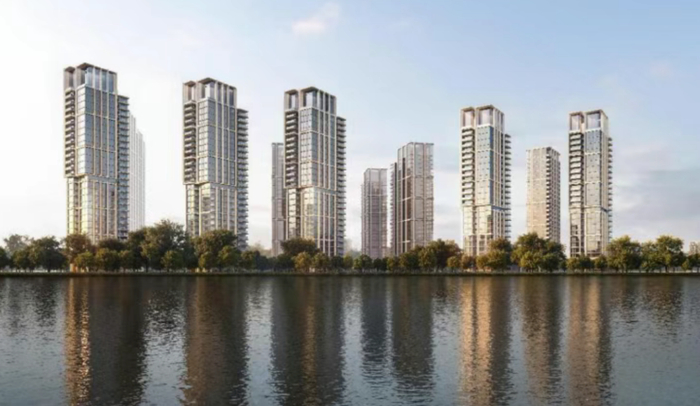
Core Insights - Shanghai's real estate market is experiencing significant changes, with new home prices rising by 5.1% year-on-year in November and an average increase of 5.7% from January to November, leading the national market [1] - The second-hand housing market in Shanghai has shown a notable recovery, with November transactions reaching 22,943 units, a 24% increase from the previous month, marking the highest volume since May [9][10] - The introduction of the "Good House" regulations is reshaping the new housing market, encouraging higher quality developments and altering buyer expectations [3][5] New Home Market - In November, the new home market in Shanghai recorded a transaction volume of approximately 320,000 square meters, the lowest this year, with a 20% month-on-month decline and over a 50% year-on-year drop [3] - The "Good House" regulations aim to enhance residential quality, allowing for increased balcony sizes and improved building aesthetics, which are expected to attract buyers [5][6] - Major projects like Lianqi Binjiang and Anlan Shanghai are set to launch, with Lianqi Binjiang's first batch of 122 units selling out quickly, indicating strong market interest [6][7] Second-Hand Home Market - The second-hand home market is benefiting from increased demand for properties in well-regarded school districts, with lower total price points driving sales [2][10] - The average price of second-hand homes in November decreased by 1.24% month-on-month and 5.56% year-on-year, settling at 56,708 yuan per square meter, which has encouraged buyers to enter the market [11] - Factors contributing to the recovery include a perception of price stabilization, reduced inventory, and a seasonal uptick in transactions as the year-end approaches [10][11] Market Outlook - Analysts predict a rebound in new home supply as developers engage in year-end sales efforts, potentially leading to a "tail-end" market surge [2][8] - The second-hand market is expected to maintain momentum into December, with a shift from "price for volume" strategies to a more stable "volume-price equilibrium" in the medium to long term [11]

隆基绿能李振国:构建韧性协同供应链 抵制非理性竞争
Zhong Guo Jing Ying Bao· 2025-12-17 05:37
李振国指出,经过几十年发展,我国光伏产业从无到有、从小到大,已成为技术研发活跃、产业链完整 齐备、端到端自主可控的具有国际竞争优势的战略性新兴产业。中国光伏企业通过自主创新与原创技术 发展,已经推动产业链多个环节达到国际领先水平,中国光伏产品出口覆盖全球200多个国家和地区, 成为全球能源转型的重要支撑。 同时,李振国也表示,当前中国光伏产业正经历深刻的周期性调整,面临产能供需错配、价格下行 与"内卷式"竞争等挑战。在其看来,创新引领、稳健协同的供应链体系,是推动产业持续健康发展的关 键所在。 12月17日,在西安召开的"2025光伏供应链配套发展研讨会"上,隆基绿能创始人、首席技术官李振国发 表致辞,呼吁行业强化创新与协同,构建更具韧性的供应链体系。 展望未来,李振国认为,一方面,要持续强化创新引领、构建韧性协同的供应链体系,积极开拓全球市 场,持续提升中国光伏品牌的国际影响力与竞争力;另一方面,呼吁产业链上下游加强务实合作,强化 行业自律,坚决抵制非理性竞争,合力营造开放包容、规范有序、韧性高效的产业新生态,为构建新型 能源体系、保障国家能源安全贡献光伏力量。 (文章来源:中国经营报) ...