
Zhong Guo Qing Nian Bao

Search documents
痛点是“管不住”,不是“治不好”
Zhong Guo Qing Nian Bao· 2025-11-15 01:46
Core Insights - Young patients with type 2 diabetes often feel despair about lifelong medication, but with proper management, there is potential for reversal of the condition [1][3] - The management of diabetes in young patients differs from that in older patients, requiring tailored approaches to medication and lifestyle changes [1][2] Management Strategies - Young patients may struggle with medication adherence due to their busy schedules; therefore, doctors should create simplified medication regimens, such as once-daily dosing [1][2] - Weight management is crucial for treating type 2 diabetes, with a focus on dietary control and physical activity [2][3] - Dietary recommendations include controlling total intake, adjusting the order of food consumption, and eating slowly to prevent overeating [1][2] Psychological Support - Many young patients believe diabetes is a lifelong burden, leading to feelings of hopelessness; healthcare providers should encourage them that diabetes can be managed effectively [3] - Setting achievable goals and providing positive reinforcement can help improve patients' self-management and adherence to treatment [3] Treatment Outcomes - Some patients may achieve remission of diabetes, defined as maintaining normal blood sugar levels for over three months without medication, but this is not common [2] - Continuous monitoring and support are essential, as many patients may mistakenly believe they are cured and neglect their management, leading to complications [2][3]
今天你看“电子黄历”了吗
Zhong Guo Qing Nian Bao· 2025-11-15 01:46
Core Viewpoint - The resurgence of interest in electronic almanacs reflects a modern adaptation of traditional practices, providing individuals with a sense of control and community amidst stress and uncertainty [1][2][4]. Group 1: Modern Appeal of Electronic Almanacs - Electronic almanacs offer clear directives that help individuals manage anxiety and provide a sense of control over their daily activities [2][4]. - The format of electronic almanacs is tailored to modern reading habits, making them visually appealing and easy to consume on digital platforms [3][4]. - The content of electronic almanacs has evolved to include contemporary lifestyle advice, making them more relatable and engaging for users [3][4]. Group 2: Social and Psychological Aspects - Many users engage with electronic almanacs as a social topic, using them to connect with others rather than strictly adhering to their guidance [2][4]. - The use of electronic almanacs can serve as a psychological buffer, allowing individuals to attribute setbacks to external factors rather than personal shortcomings [2][4]. - The community aspect of discussing electronic almanacs fosters a sense of belonging and connection among users [2][4]. Group 3: Caution Against Exploitation - Some electronic almanac creators may exploit users by promoting products under the guise of providing guidance, which raises concerns about potential scams [4]. - Over-reliance on electronic almanacs can lead to negative consequences, as they do not provide comprehensive personal guidance and may result in poor decision-making [4]. - Ultimately, the responsibility for creating one's own "auspicious days" lies in personal actions and clear thinking, rather than solely relying on electronic almanacs [4].
短暂“离线”:年轻人正在进行数字戒断实验
Zhong Guo Qing Nian Bao· 2025-11-15 01:46
Core Insights - The article discusses the overwhelming pressure on young professionals to remain "always online," leading to a sense of fatigue and loss of personal time [2][4][8] - It highlights individual attempts to disconnect from digital distractions, with various strategies employed to reclaim focus and mental well-being [5][6][9] Group 1: Digital Overload - Young professionals experience constant interruptions from work-related messages, leading to a lack of downtime and increased stress [2][3] - The phenomenon of being "always online" is described as a relentless "digital marathon," where individuals feel compelled to respond immediately to messages, disrupting their focus [2][4] - The impact of digital media on attention spans is noted as a broader societal issue, with digital information fragmentation reshaping lifestyles [4] Group 2: Attempts to Disconnect - Individuals like Chen Ming and Lin Wanqing have initiated personal experiments to reduce screen time, such as going offline for a day or limiting phone usage during specific hours [5][6][9] - These "digital detox" efforts have led to a renewed appreciation for uninterrupted time and a sense of mental clarity [6][7] - The article emphasizes that while complete disconnection from digital devices is impractical, individuals can adopt strategies to manage their digital engagement more consciously [8][9]
糖尿病人如何打好“持久战”
Zhong Guo Qing Nian Bao· 2025-11-15 01:46
Core Insights - The article highlights the challenges faced by diabetes patients in managing their condition, emphasizing the need for detailed and personalized management plans to improve patient outcomes [1][2][3] Group 1: Patient Management Challenges - Many diabetes patients struggle with long-term management due to a lack of symptoms, leading to medication non-compliance and poor lifestyle choices [1][2] - Emotional factors such as anxiety and depression can complicate diabetes management, affecting blood sugar control [9][11] Group 2: Medical Approaches - A modern Chinese medicine approach to diabetes management includes a classification system that differentiates between types of diabetes and stages of the disease, allowing for tailored treatment [3][5] - The integration of Western and traditional Chinese medicine is becoming more common, with clinical studies exploring combined treatment methods [5][7] Group 3: Importance of Education and Support - There is a critical need for health education in community and family settings to help patients understand dietary adjustments and medication management [4][10] - Family support plays a significant role in diabetes management, with the need for a balanced approach to avoid over-restriction or neglect of the patient's needs [10][11] Group 4: Prevention of Complications - Diabetes patients are at a higher risk for cardiovascular diseases, with studies indicating that about one-third of diabetes patients may have concurrent heart conditions [7][8] - Early detection and management of pre-diabetes can prevent the progression to full-blown diabetes, highlighting the importance of regular monitoring [8] Group 5: Future Directions - The "Healthy China Action" plan aims to improve diabetes management services and increase the treatment and control rates of diabetes by 2030 [8]
是自述也是科普,1型糖尿病女孩的漫画抗糖日记
Zhong Guo Qing Nian Bao· 2025-11-15 01:46
Core Insights - The article highlights the journey of Liu Ling, a young woman diagnosed with type 1 diabetes, who uses her experiences to create impactful comics that resonate with others facing similar health challenges [1][2][3][4][5] Group 1: Health Challenges and Personal Growth - Liu Ling was diagnosed with type 1 diabetes at the age of 12, which significantly altered her life and understanding of health [2] - After being diagnosed, she faced various misconceptions about diabetes, including the belief that it was solely related to sugar intake [3] - Liu Ling's comics serve as a medium for her to express her struggles and growth, transitioning from fear to acceptance and sharing her story with others [1][4] Group 2: Community and Support - The response to Liu Ling's comics has been overwhelmingly positive, with many individuals, including fellow patients and medical students, expressing their support and shared experiences [1][4] - Liu Ling emphasizes the importance of understanding and empathy towards young diabetes patients, as many face stigma and misunderstanding from peers and adults [3][5] - The comics not only provide a platform for Liu Ling but also foster a sense of community among those affected by type 1 diabetes, encouraging dialogue and support [4][5] Group 3: Awareness and Education - Liu Ling points out the need for better education and awareness regarding type 1 diabetes, particularly among young people and their families [4][5] - Misconceptions about diabetes being solely lifestyle-related persist, highlighting the necessity for ongoing public health education [5] - Liu Ling aims to continue her advocacy through her comics, striving to improve understanding of the realities of living with type 1 diabetes [5]
红领巾巡讲团为孩子们培育精神底色
Zhong Guo Qing Nian Bao· 2025-11-14 21:35
Core Points - The article discusses the immersive learning experience of the "National Red Scarf Lecture Group" members, focusing on enhancing their ability to convey the Party's innovative theories to young audiences [1][2] - The training program includes various teaching methods and emphasizes the importance of storytelling in engaging children with historical and political content [5][6] Group 1: Training and Learning Experience - The training program consists of specialized lectures, on-site teaching, experiential learning, interviews, and demonstration lectures, with participants grouped by their professional backgrounds [2][4] - Participants are tasked with creating a 20-minute lesson plan based on collective preparation, which will be tested through practical presentations to local youth [2][5] - The program aims to equip members with the skills to effectively communicate the Party's theories and historical narratives to children [1][3] Group 2: Participants' Background and Motivation - Members of the training group come from various sectors, including education, law enforcement, and environmental protection, highlighting a diverse representation [4][5] - Participants express a strong commitment to their roles, with many feeling the pressure to perform well in their presentations, indicating the significance of their responsibilities [2][5] - The training encourages participants to rethink how to relate national policies and historical events to the younger generation, fostering a deeper understanding of their relevance [3][9] Group 3: Practical Application and Impact - The program includes hands-on experiences, such as cooking traditional meals and reenacting historical events, to instill a sense of revolutionary spirit among participants [8] - Participants are encouraged to transform complex political concepts into relatable stories for children, emphasizing the importance of making history accessible and engaging [5][6] - The initiative aligns with the Party's goals to enhance the ideological education of youth and promote cultural confidence through active participation [9][10]
“希望工程·强国青年乡村体育教师”宣讲活动在绥芬河举行
Zhong Guo Qing Nian Bao· 2025-11-14 08:14
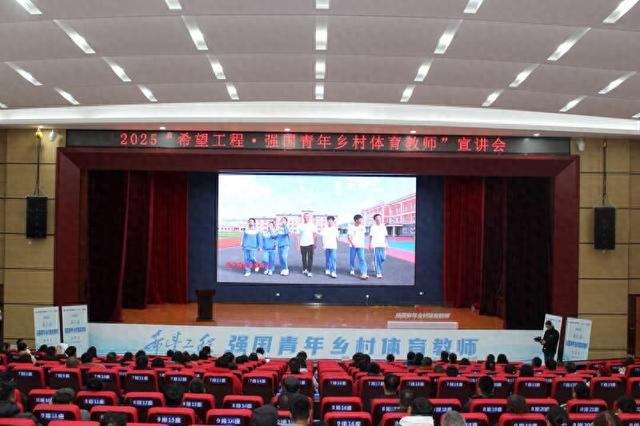
Group 1 - The event "Hope Project: Strong Youth Rural Sports Teachers" was held in Suifenhe, Heilongjiang Province, highlighting the importance of rural sports education and the role of sports teachers in fostering children's growth through sports like football and ice sports [1][3] - Anta Group donated sports resources worth 3 million yuan, including equipment packages and sports classes, to support rural sports education [3][5] - The event aims to raise awareness and support for rural sports education, connecting social forces with grassroots educational initiatives in border cities [5] Group 2 - Wang Yu, a sports teacher from Harbin, shared his experiences of nurturing students through sports, emphasizing the confidence and opportunities gained by children [3] - Tong Wei, a sports teacher from Suifenhe, innovated sports education under limited resources, creating handmade curling stones and a cross-country skiing training ground, successfully training several sports reserve talents [3]


青少年走进淮河能源工匠学院 沉浸式科普点亮科学梦
Zhong Guo Qing Nian Bao· 2025-11-14 08:04
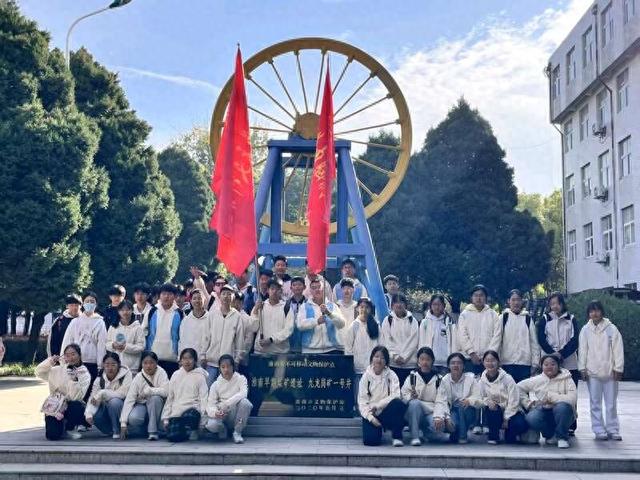
Core Viewpoint - The event organized by the Anhui Huainan Science and Technology Association aims to enhance scientific literacy among youth through hands-on experiences in vocational education, particularly in mining technology and safety practices [1][5]. Group 1: Event Overview - The 2025 Huainan City Science Popularization Education Demonstration Activity was held at Huainan Vocational Technical College, attracting over 240 students from local primary and secondary schools [1]. - The event provided a platform that integrates knowledge, fun, and practical experience, showcasing the resources of the Huaihe Energy Craftsman College [1][5]. Group 2: Educational Activities - Students participated in immersive experiences, visiting significant mining sites and educational facilities to learn about mining culture and advanced technologies [1][3]. - In the mining machinery training area, students observed the operation of simulated equipment and learned about mining technology advancements and equipment principles from professional instructors [3]. - The safety training area allowed students to operate simulated safety systems, reinforcing safety awareness and emergency response skills through hands-on practice [3]. Group 3: Educational Approach - The college's team designed an innovative three-part science popularization model combining physical displays, interactive Q&A, and hands-on practice, making complex vocational education content accessible and engaging for youth [3][5]. - This approach aims to broaden students' perspectives and enhance their understanding of science and technology in the vocational world [3]. Group 4: Future Plans - The Huaihe Energy Craftsman College plans to deepen the integration of science popularization and vocational education, continuously enriching content and optimizing activity formats to boost youth scientific literacy and promote craftsmanship spirit [7].

【中国青年报】科研团队监测显示九寨沟遗产地生态恢复成效显著
Zhong Guo Qing Nian Bao· 2025-11-14 01:38
自2017年8月8日九寨沟发生7.0级地震以来,空天院科研团队和九寨沟管理局持续利用多平台、多 时相、多波谱、多维度的卫星遥感数据和无人机航测遥感数据,结合野外实地测量和考察验证,系统开 展了九寨沟世界遗产地核心区的植被覆盖变化、生态恢复状况、滑坡及次生地质灾害治理等方面的监测 与评估。 综合监测评估结果显示,经过八年的自然恢复,辅以人工治理,九寨沟遗产地震后生态恢复成效显 著。九寨沟遗产地的植被覆盖率由震前(2017年)的83.35%,在震后降至79.64%,随后逐步回升, 2022年、2023年、2024年分别升至80.91%、81.68%和82.12%。与2022年相比,2023年滑坡和崩塌个数 减少65个,面积减少0.6平方公里。2024年部分滑坡面形态趋于稳定,表面重新出现植被。 11月7日至13日,中国科学院空天信息创新研究院(以下简称"空天院")研究员、联合国教科文组 织国际自然与文化遗产空间技术中心副主任付碧宏带领的科研团队,与九寨沟世界遗产管理局(以下简 称"九寨沟管理局")联合开展九寨沟世界自然遗产地"天-空-地"一体化监测和野外实地科考活动。 付碧宏表示,随着人工智能技术的快速发展,空间 ...
40年“申遗路”,为世界遗产保护提供中国智慧
Zhong Guo Qing Nian Bao· 2025-11-13 23:27
Core Viewpoint - The article highlights the significance of China's 40-year journey in applying for World Heritage status, showcasing the protection of historical heritage and the responsibility towards future generations [2][4]. Group 1: World Heritage Application Journey - In 1987, China listed its first World Heritage sites, including the Great Wall and the Forbidden City, and has since reached a total of 60 sites, ranking second globally [1]. - The book "千山万水——中国申遗故事" outlines 11 representative cultural heritage sites, illustrating China's continuous cultural narrative over thousands of years [2]. Group 2: Cultural Heritage Protection - The article emphasizes the importance of systematic protection and unified supervision of cultural heritage as proposed in the 15th Five-Year Plan [2]. - Experts involved in the heritage application process share their experiences, highlighting the dedication and achievements in protecting world heritage [4][6]. Group 3: Case Studies of Heritage Sites - The Beijing Central Axis, which has been in the application process since 2012, exemplifies the deep exploration and interpretation of heritage value through rigorous documentation and expert discussions [5][6]. - Mount Lu, as China's first "cultural landscape" World Heritage site, showcases the interaction between humans and nature, reflecting the diversity of Chinese culture [7][8]. Group 4: Standards for World Heritage - The evaluation criteria for World Heritage status include authenticity, integrity, and good protection status, which are essential for the selection process [9]. - The Grand Canal is highlighted as a linear cultural heritage, emphasizing the need for community involvement in its protection and the importance of cultural continuity [9][10].