
Zhong Guo Qing Nian Bao

Search documents
人工智能百人会聘任首批顾问,汇聚姚期智、王兴兴等专家学者
Zhong Guo Qing Nian Bao· 2025-11-16 08:12
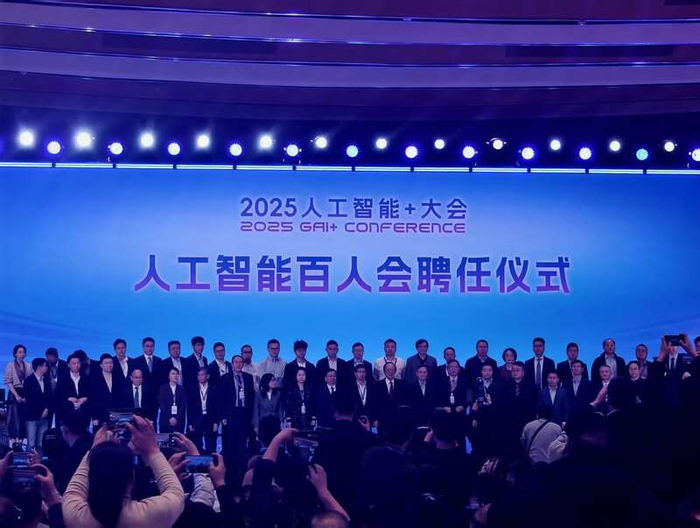
Group 1 - The 2025 Artificial Intelligence + Conference held a hiring ceremony for the Artificial Intelligence Hundred Talents Association, which includes renowned experts and scholars in the AI field [1][3] - The association aims to create a systematic AI+ full lifecycle ecological service system, promoting a collaborative innovation system that integrates government, industry, academia, research, finance, and application [3] - The "AI China Plan," authored by the association's team, was released at the conference, focusing on summarizing "China's practices" and contributing "China's wisdom" with future action proposals [3] Group 2 - Beijing is recognized as a national hub for the AI industry, having developed a number of internationally competitive AI companies [4] - The Beijing Municipal Science and Technology Commission and the Zhongguancun Management Committee are establishing multiple overseas service ports and stations for AI companies, targeting regions such as Hong Kong, Singapore, the UAE, and the EU [4]

《中国奇谭2》《罗小黑战记》……国创动画新片单发布
Zhong Guo Qing Nian Bao· 2025-11-16 05:51
Core Insights - Bilibili (referred to as "B站") held an online event on November 15, 2023, to announce the release of 40 domestic animation works for 2025-2026 [1] - The company will collaborate with Shenman Culture for the first time to adapt the popular web novel "I Clean Up Garbage in the Wasteland" into an animated series, marking the first "romantic wasteland" genre in China [1] - The animation will feature imaginative visual art, showcasing strange creatures and the integration of plants with urban architecture [1] New Releases - The new season of the annual series "A Mortal's Journey to Immortality" is set to air in the first half of 2026, alongside a feature film "The Mystery of the Vast Sea" and a spin-off "The Bone of the Immortal" [3] - The ongoing series "The Shepherd" will introduce new characters, while the third season of "Time Agent" is scheduled for release in October 2026 [3] - The highly popular animation "Chinese Folktales 2" is confirmed to premiere on January 1, 2026, featuring nine distinct short stories [3] Performance Metrics - Since 2018, Bilibili has launched over 3,000 domestic animation works, with nearly 970 million hours of viewing time for domestic content in the past year [6] - In Q3, the viewing time for domestic content on the platform increased by 104% year-on-year, with the overall user base reaching 330 million [6] - Bilibili's "Seeking Light Program" has supported 316 university projects with resources and funding, and as of August this year, the company has produced a total of 84 original animations [6]


青春共赴 数智同行
Zhong Guo Qing Nian Bao· 2025-11-16 05:41
Core Points - The 2025 Shanghai Cooperation Organization (SCO) Youth Exchange Camp focuses on enhancing digital skills among youth from SCO member countries, aiming to create new development momentum for the organization [7][10] - The event includes visits to various technological and cultural sites in China, showcasing advancements in automation, AI, and cultural heritage [8][9] Group 1: Technological Advancements - Youth representatives witnessed impressive technological achievements in high-tech enterprises, such as fully automated container terminals and AI applications in daily life [8] - The integration of AI and automation across industries was highlighted, with examples from companies like iFlytek, which applies AI in education, healthcare, and urban development [8][9] Group 2: Cultural Exchange - The event facilitated cultural understanding through activities that showcased traditional Chinese arts and crafts, fostering connections among youth from different countries [8][9] - Music and cultural performances served as a bridge for communication, emphasizing the importance of cultural exchange in building international relationships [9] Group 3: Youth Collaboration and Entrepreneurship - The SCO Youth Development Forum featured discussions on sustainable development and the importance of cross-border digital skills training to address global challenges [9][10] - Youth representatives expressed the need for collaboration and shared resources to enhance entrepreneurial efforts, viewing the SCO as a platform for innovation and growth [11][12] Group 4: Future Cooperation - The exchange camp is seen as a seed for future friendships and development, with participants optimistic about the potential for cooperation among SCO countries [12] - Discussions included the importance of leveraging unique cultural and developmental strengths of each member country to foster a collaborative environment [12]
跨越校门,让不求闻达的名字“群星闪耀”
Zhong Guo Qing Nian Bao· 2025-11-16 02:44
Group 1 - The original master play "Sun Yefang" from Shanghai University of Finance and Economics has performed outside its home institution for the first time at Renmin University of China, aiming to foster cross-regional cultural dialogue and resonate with the spirit of Sun Yefang, who emphasized respecting rules and safeguarding truth [2] - The trend of universities showcasing master plays has emerged, allowing institutions to share cultural heritage while promoting the spirit of great thinkers in a way that is accessible and relatable to students, enhancing the impact of value education beyond traditional political courses [2] - The film "Mr. Pingshi," depicting the dedication of educators during the Anti-Japanese War, has also joined the inter-university performance trend, receiving positive feedback across various universities [3][5] Group 2 - The "University Students Talk About Great Masters" initiative has mobilized 2,000 students from 88 universities in the Beijing-Tianjin-Hebei region to share stories of influential figures in science and education, expanding the reach of these narratives into communities and enterprises [3] - The storytelling approach in the initiative aims to connect historical figures with contemporary students, making the content more engaging and relevant to their lives [6][7] - The Beijing University of Technology's "Zhou Peiyuan Scientist Spirit Promotion Team" has been operational for nearly three years, integrating stories of historical scientists into various educational contexts, emphasizing the importance of aligning academic pursuits with national needs [8][10] Group 3 - The film "Mr. Pingshi" highlights the resilience of educators during wartime, showcasing the stories of notable figures like Huang Jiyu, who represents the commitment to education amidst adversity [10][11] - The film's narrative aims to raise awareness of the historical significance of education during national crises, encouraging viewers to appreciate the contributions of educators and the importance of preserving cultural heritage [12] - The film has sparked discussions among students about the desire to find mentors akin to the "Mr. Pingshi" figures in their own academic journeys, indicating a successful engagement with the audience [12][13] Group 4 - The "Sun Yefang" play has been integrated into the annual curriculum for new students at Shanghai University of Finance and Economics, emphasizing its role in ideological education [13][14] - The production has been adapted for its performance in Beijing, with adjustments made to language and content to enhance audience understanding and engagement [15] - The establishment of the Shanghai Higher Education Drama Cultural Education Alliance aims to promote the cultural and educational value of master plays across multiple institutions [14][16]

团山西省晋城市委:让新兴领域青年成为城市发展“合伙人”
Zhong Guo Qing Nian Bao· 2025-11-16 00:18
Core Viewpoint - The article highlights the proactive approach of Jin City in integrating emerging industry team building into its overall party-building efforts, focusing on youth engagement and support in various new sectors, particularly in esports and gig economy jobs [1][2]. Group 1: Youth Engagement and Industry Development - Jin City has established a youth organization framework that includes 1,025 new emerging industry youth organizations, marking a 224% increase from previous numbers [2]. - The esports industry has seen significant growth, with the establishment of the esports industry youth committee, which has organized various provincial and municipal esports competitions for 12 consecutive years, creating a strong brand presence [1][2]. - The city is also exploring the formation of new organizations in the digital culture sector, such as anime and gaming associations, to further engage youth in these emerging fields [2]. Group 2: Collaborative Initiatives and Policy Advocacy - Jin City has formed partnerships with multiple departments to create 10 city-level and 12 county-level industry youth committees, focusing on collaboration based on industry proximity and community ties [2]. - A proposal was developed in collaboration with Peking University to enhance the compliance of ride-hailing services, leading to improved regulatory oversight and industry sustainability [2][3]. - The establishment of a "New Emerging Youth Talent Pool" and a "Dynamic Youth Demand Database" aims to facilitate communication and support for youth in emerging sectors [3]. Group 3: Community and Educational Programs - The city has launched 28 youth night schools, engaging 4,637 participants, to provide educational opportunities and community support [3]. - Initiatives like the "Community Youth Action" and "Five-Thirty Classroom" are designed to foster community involvement and youth development [3]. - The formation of the "Mobile Sentinel" youth task force aims to involve delivery personnel in grassroots governance, enhancing their role in community service [3].

“情景”思政课“圈粉”青年学生
Zhong Guo Qing Nian Bao· 2025-11-16 00:16
胶东乳娘的歌谣与00后学子的宣讲交织回响,左权将军的绝笔家书在朗诵中缓缓展开,八路军战士与新 时代军人跨时空对话……日前,在山东科技大学的校园里,一场别开生面的思政课活动如火如荼。 "思政课不是'注满一桶水',而是'点燃一把火'。"山东科技大学党委书记王君松说,学校推出沉浸式情 景思政课,以"润物无声"的方式让红色精神浸润青年心灵,不仅能增强思政教育的感染力与吸引力,更 能培养出有信仰、有担当的时代新人。 思政课上,青年学生全情投入每个故事的讲述。故事中有西南联大学子投身抗战的赤子之心,也有战士 们不怕牺牲、保家卫国的热血之情。情景剧表演结束后,青年学生齐声合唱歌曲《歌唱祖国》,表达了 新时代青年与时代同向、与祖国同行的决心。 "这次思政课上,我宣讲的是左权将军的绝笔家书,通过一遍遍诵读这封家书,我更加深刻地感受到抗 战英雄的家国情怀与革命精神。"该校安全工程专业学生刘士昊说,集体备课时,这些红色故事一次次 直击内心,激励自己在今后的学习生活中要不怕困难、不断前行。 活动现场,该校青年学生和思政课教师通过情景表演、演唱、朗诵等多种形式,演绎了《无声的控诉》 《驼峰之魂》《最后的嘱托》《血色家书映丹心》《红色乳 ...
2025年安徽省大学生校园十大歌手大赛暨安庆市人才服务季启动
Zhong Guo Qing Nian Bao· 2025-11-15 13:31
Group 1 - The event "2025 China Unicom Anhui Province College Student Campus Top Ten Singers Competition" was launched in Anqing, attracting over 113,000 participants both online and offline [1] - The competition, which has been successfully held for three consecutive years, includes preliminary, semi-final, and final stages, with over 380 students from more than 100 universities in Anhui province registering to participate [2] - The event aims to enhance ideological guidance for college students, enrich campus cultural life, and provide a platform for youth to showcase their musical talents and pursue artistic dreams [2] Group 2 - The launch ceremony featured performances including a chorus of "With Me," a recap of the previous year's competition, and various musical acts that highlighted local cultural elements and the spirit of contemporary youth [5][7] - The event concluded with past winners singing the theme song "Dreams and Direction," marking a successful end to the ceremony [7]

国产首款eSIM手机在中国联通开售
Zhong Guo Qing Nian Bao· 2025-11-15 12:32
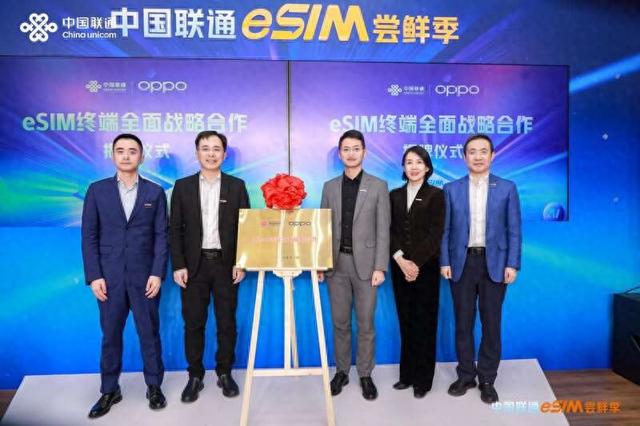
Core Insights - China Unicom launched the first domestic eSIM smartphone, the OPPO Find X9 Pro eSIM Satellite Communication Edition, marking a significant milestone in the eSIM market [1][3] Group 1: Product Launch - The OPPO Find X9 Pro supports both dual Nano-SIM slots and eSIM services, making it the first smartphone in the market to achieve "four cards dual standby" [3] - China Unicom introduced "three trial benefits" for this device, including a 200 yuan recharge, a blind box, and a commemorative plaque for the first batch of eSIM users [3] Group 2: User Demographics - The initial user profile for eSIM smartphones is characterized as "young, male, and high data demand," with 76% of users aged between 20 and 39 years [3] Group 3: Market Outlook - The release of the first eSIM smartphone is expected to drive rapid growth across all categories of eSIM terminals and promote the maturity of the domestic eSIM card and chip industry chain [3] - Monthly releases of eSIM smartphones are anticipated, covering all major mobile operating systems and mainstream phone brands [3] Group 4: Technological Integration - The integration of AI with eSIM technology is seen as a significant opportunity for innovation in terminal devices [3]

AI 虚拟拍摄助力科幻作品“书剧联动”,《外星异客》短剧启动
Zhong Guo Qing Nian Bao· 2025-11-15 11:52
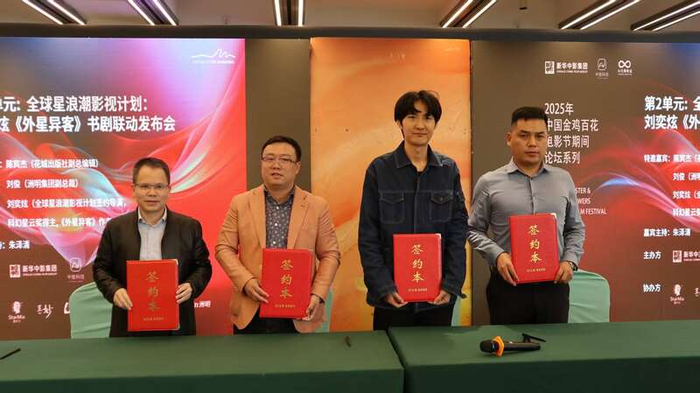
签 约仪式现场。花城出版社供图 中国青年报客户端讯(中青报·中青网记者 沈杰群)11月14日,"AI+影视:全球星浪潮影视计划系列论 坛"在福建厦门召开,科幻短剧《外星异客》签约仪式在现场举办。该项目以科幻小说《外星异客》为 原点,采用"虚拟拍摄+AI辅助"全流程技术制作。 科幻短剧《外星异客》由花城出版社、洲明科技、均富资本和郑州工程技术学院微短剧学院联合出品。 洲明科技副总裁刘俊表示,该短剧项目将全程使用AI虚拟拍摄技术,其中的外星场景、生化危机等高 能镜头无需耗费大量人力和财力进行实景搭建,完全可借用该项技术实现即拍即用,通过该模式可令拍 摄的综合成本较传统拍摄下降约70%。AI虚拟拍摄技术的应用不仅降低了成本,还缩短了制作周期。 《外星异客》小说作者兼科幻电影导演刘奕炫是广东省科普作协成员。自2021年该作品获得科幻星云奖 后,他组建独立视觉开发组,自筹资金拍摄概念短片,最终凭8分多钟样片拿下了科幻电影工业大赛"最 佳视觉效果奖"。他说,科幻创作不仅需要想象力,更需要逻辑严密的世界观与科学的叙事方法。借助 虚拟拍摄系统,能真正实现创作构想的技术落地。 《外星异客》短剧将于2025年12月进入虚拟拍摄阶 ...

“百所高校校博联展计划”走进甘肃农业大学
Zhong Guo Qing Nian Bao· 2025-11-15 02:02
中国青年报兰州11月14日电(钱君强 中青报·中青网记者 梅从政)一条长1.75米的恐龙腿骨、一页发黄 的《大公报》……诉说着甘肃农业大学近80年的办学史和农业文明5000年的演进史。11月14日,由中国 青年报·中青校媒联合中国高等教育学会校史研究分会推出的"百所高校校博联展计划"走进甘肃农业大 学认知馆,近40万名观众在线上跟随该校档案馆(校史研究中心)馆长包正育,了解"土"里长出的大学 问。 展柜中陈列的全国首批畜牧兽医学教材专著,见证了新中国早期畜牧和兽医学科的建立与发展,开创了 我国畜牧兽医高等教育的先河,为全国高等农业院校和科研院所培养了大批畜牧兽医专业骨干。 步入恐龙馆,"盛氏彤笙龙"与尖齿粒骨鱼化石等338件古生物标本一起,勾勒出甘肃地域的古生物演化 脉络,也让认知馆成为重要的古脊椎动物科普基地。 认知馆自2016年开放以来,已接待观众40余万人次。在这里,学生通过讲解老院长的办学信条理解科研 初心,农民通过农机模型学习现代农业技术,孩子们在恐龙馆里萌发科学兴趣……这座认知馆不仅是展 品的陈列地,更是农科精神的传承地,让"农之大、国之大"的信念在每一名参观者心中深深扎根。 钱君强 中青报·中青 ...