
Zhong Guo Chan Ye Jing Ji Xin Xi Wang

Search documents
连连国际2025生态大会召开 携手合作伙伴共赢“全球化航海新时代”
Zhong Guo Chan Ye Jing Ji Xin Xi Wang· 2025-08-15 04:05
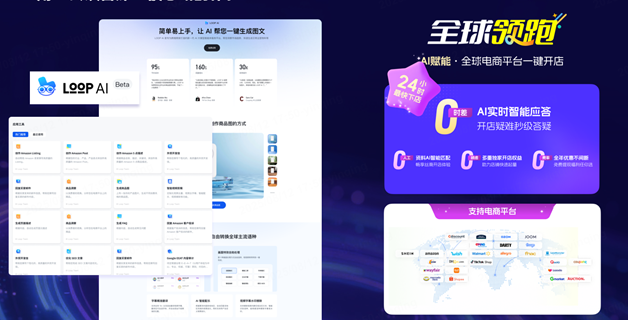
Group 1 - LianLian International held the 2025 Ecological Conference in Shenzhen, focusing on technological innovation and global market opportunities for outbound enterprises [1] - The event featured industry experts discussing new strategies for cross-border e-commerce, emphasizing the importance of collaboration and open ecosystems for success [1] - LianLian International has established a robust global presence with over 60 payment licenses and a network covering more than 100 countries, serving over 5.9 million outbound enterprises [1] Group 2 - LianLian International launched the "LianLian Cross-Border Merchant Confidence Index" project to assess market conditions and seller expectations across seven dimensions, aiding industry understanding [2] - The company introduced the CrossLink open platform to share its user ecosystem and facilitate diverse business scenarios, partnering with LooperBuy to enhance B2B sourcing services [2] - A global e-commerce entrepreneurship competition named "Breaking Boundaries Future" was announced to support small and medium-sized entrepreneurs in overcoming challenges related to funding, direction, and resources [2] Group 3 - LianLian International is integrating advanced AI technology to enhance product capabilities, offering free AI experiences to cross-border sellers and launching tools like "LOOP AI" for streamlined operations [3] - The company aims to empower the industry through technology and warm services, fostering trust and collaboration among ecosystem partners for a new era of globalization for Chinese enterprises [5]

京东政企业务携手东风汽车深化企业采购合作 推动汽车产业数智化转型升级
Zhong Guo Chan Ye Jing Ji Xin Xi Wang· 2025-08-15 04:05
Group 1 - JD Group and Dongfeng Motor Group have signed a strategic cooperation agreement to establish a comprehensive strategic partnership [1][2] - The cooperation will deepen collaboration in areas such as passenger vehicle omni-channel marketing, green intelligent logistics for commercial vehicles, parts sales, and after-sales service ecosystems [1][2] - The partnership aims to leverage each other's strengths in supply chain demand scenarios and digital operations to enhance cost reduction and efficiency [1][3] Group 2 - JD Group has a long-standing cooperative foundation with Dongfeng Motor, focusing on logistics commercial vehicle collaboration, user marketing, and after-sales service ecosystems [2] - JD's enterprise business has provided customized procurement solutions and supply chain services for over 30 subsidiaries of Dongfeng Motor since 2018 [2] - The partnership has led to significant improvements in employee welfare procurement, office supplies, and marketing through digital transformation [2][3] Group 3 - Future cooperation will focus on employee services, office supplies, and marketing, enhancing employee experience and engagement [3] - JD's enterprise business will integrate various service resources to build a comprehensive employee service management platform [3] - The collaboration promotes innovation in enterprise procurement and the automotive industry, facilitating a transition from traditional procurement to integrated procurement [3]


湖南:加力扩围,撬动570亿消费大市场
Zhong Guo Chan Ye Jing Ji Xin Xi Wang· 2025-08-15 02:54
Group 1 - Hunan Province's Commerce Department is enhancing the "old for new" consumption initiative to stimulate consumer spending and improve livelihoods, with a retail sales total of 10,391.81 billion yuan in the first half of the year, a year-on-year increase of 6.2%, surpassing the national average by 1.2 percentage points [1] - The initiative includes expanding the range of eligible products, such as including National IV emission standard gasoline vehicles for subsidies, adding mobile phones, tablets, and smart wearable devices to the digital product category, and increasing the number of home appliance categories eligible for trade-in [1] - The subsidy standards for automobile trade-ins have been raised by 1,000 yuan, with the minimum threshold for claiming subsidies lowered to 50,000 yuan, allowing consumers to receive 9,000 yuan in subsidies for new vehicle purchases [1] Group 2 - A funding management plan has been introduced to expedite fund disbursement, allowing for pre-allocations of up to 80% and monthly payments to ease the burden on enterprises and local governments [2] - The initiative has achieved significant participation, with 25,347 enterprises and 31,300 stores involved across 14 cities, resulting in 970.38 million subsidy claims and a total subsidy amount of 7.53 billion yuan, driving sales of 57.057 billion yuan [2] - The automotive sector has seen approximately 182,500 vehicles participating in the program, with 47% being new energy vehicles, generating sales of 26.163 billion yuan, while the home appliance sector recorded 5.1968 million units traded in, contributing to sales of 16.029 billion yuan [3]
福州文旅招商推介会在蓉渝两地举办
Zhong Guo Chan Ye Jing Ji Xin Xi Wang· 2025-08-15 01:23
Group 1 - The event "Youfu Zhizhou" cultural tourism promotion series was held in Chengdu and Chongqing to showcase Fuzhou's rich cultural tourism resources and quality projects, attracting over 200 participants from Fuzhou and the Sichuan-Chongqing region [1] - The promotion focused on key investment areas such as coastal resorts, hot spring wellness, cultural experiences, ecological tourism, urban leisure, and the integration of culture and tourism, highlighting Fuzhou's ecological advantages and industrial opportunities [1] - The event facilitated strategic cooperation with over 100 cultural tourism enterprises from Sichuan and Chongqing, leading to the signing of several quality projects, including the Fujian-Taiwan Digital Cultural Industry Park [1] Group 2 - Fuzhou aims to deepen cooperation with Sichuan and Chongqing enterprises in areas such as business model innovation, digital cultural tourism, and mutual customer sourcing, accelerating the implementation of various cultural tourism projects [2] - The city has seen significant growth in its cultural tourism economy, with over 128 million tourists and total spending of 118.625 billion yuan in 2024, marking increases of 13.6% and 20.6% respectively compared to the previous year [2] - Fuzhou has been recognized as the second most popular destination during the Spring Festival, highlighting its appeal as a top-tier city for tourism [2] Group 3 - Fuzhou has introduced supportive measures for high-quality development in the cultural tourism industry, including rewards for scenic area ratings, infrastructure construction, and financial support [3] - New policies aimed at promoting inbound tourism and supporting the performing arts sector have been implemented to enrich tourism offerings and stimulate market vitality [3] - These initiatives are designed to create a favorable environment for cultural tourism enterprises and investors, enhancing the overall tourism ecosystem in Fuzhou [3]
为消费提质升级绘制清晰路径 宁夏实施优化消费环境三年行动
Zhong Guo Chan Ye Jing Ji Xin Xi Wang· 2025-08-15 01:17
Core Insights - The article discusses the implementation of the "Three-Year Action Plan for Optimizing the Consumption Environment (2025-2027)" by the Ningxia Autonomous Region, aiming to enhance consumer experience and address pain points in the consumption sector [1][2]. Group 1: Key Actions and Objectives - The plan includes five major actions and 31 specific tasks targeting consumer safety, quality, and experience upgrades, establishing a clear path for consumption enhancement [1]. - It emphasizes the integration of consumption upgrades with supply-side structural reforms, leveraging existing national "Three Products" strategic demonstration cities to cultivate local quality brands [1][2]. - The plan aims to balance short-term consumption stimulation with long-term transformation through policies like new purchase subsidies in sectors such as automotive and home appliances, alongside initiatives for waste classification and resource recycling [1]. Group 2: Rural Consumption and Logistics - The plan proposes innovative service models like "Hundred Supply Pass" to bridge the urban-rural consumption gap, targeting the establishment of 180 new "Hundred Supply Pass" outlets and over 150 integrated routes by 2027 [1]. - A goal of achieving 80% coverage of comprehensive logistics service stations in administrative villages is set to facilitate rural consumption [1]. Group 3: Consumer Safety and Market Regulation - The plan outlines the construction of a comprehensive consumer protection network, emphasizing strict food and drug safety regulations and enhanced oversight of key agricultural products [2]. - It aims to address market transaction environments by targeting unfair practices in sectors like training, fitness, tourism, and elderly care, while promoting transparency in pricing through mechanisms like the "price commitment system" in the restaurant industry [2]. Group 4: Consumer Rights and Dispute Resolution - The plan seeks to improve consumer rights protection by encouraging large enterprises to establish dispute resolution systems and promoting no-reason return policies in physical stores, with a target of over 300 such units by 2027 [3]. - Mechanisms like "litigation mediation" and "shared courts" are introduced to lower the barriers for consumer rights protection, while a consumer environment index will be developed to quantify consumer satisfaction [3].
重庆居家适老化改造最高补贴3000元 采用消费立减方式直接兑现
Zhong Guo Chan Ye Jing Ji Xin Xi Wang· 2025-08-15 01:17
Group 1 - The Chongqing government has launched a subsidy policy for home modifications aimed at elderly residents aged 60 and above, providing up to 3000 yuan in direct consumption subsidies [1] - The subsidy covers 20% of the purchase price of eligible products, with a maximum total subsidy of 3000 yuan per person [1] - Eligible elderly individuals can apply for the subsidy through the "Yukuaiban" mobile app, where they can obtain a "purchase code" after approval [1] Group 2 - The subsidy program focuses on five core needs: safety in toileting and bathing, convenience in indoor mobility, improvement of home environment, smart monitoring, and adaptation of assistive devices [2] - It includes 39 categories of home modification products across seven major areas, such as anti-slip flooring, nursing beds, bathroom aids, kitchen equipment, physical environment modifications, smart monitoring devices, and assistive tools [2]
山西省76家企业获评2025年先进级智能工厂
Zhong Guo Chan Ye Jing Ji Xin Xi Wang· 2025-08-15 01:17
Group 1 - Shanxi Taiyuan Iron and Steel (000825) and 75 other companies have been recognized as advanced intelligent factories in Shanxi Province for 2025, marking a significant step towards the high-end and intelligent transformation of the manufacturing industry in the region [1][2] - The selected companies span multiple key sectors including steel, energy, equipment manufacturing, pharmaceuticals, and new materials, showcasing strong intelligent upgrade capabilities in traditional industries [1][2] - Emerging industries such as solar manufacturing are also making notable advancements, with companies like Shanxi Jinko Energy Manufacturing Co., Ltd. leveraging artificial intelligence and automation to accelerate technological breakthroughs [1] Group 2 - Different cities in Shanxi exhibit distinctive development characteristics, with Yuncheng City having the highest number of selected enterprises at 17, covering diverse fields such as automotive manufacturing and pharmaceuticals [2] - The Shanxi Transformation and Comprehensive Reform Demonstration Zone has gathered 10 companies focusing on high-end equipment and new energy equipment, indicating a strong push in these sectors [2] - The initiative aims to implement the national intelligent manufacturing development strategy by establishing benchmark enterprises and promoting the deep integration of new generation information technology with manufacturing [3] Group 3 - The provincial government plans to increase policy support for the selected enterprises, focusing on technological transformation and funding for digital transformation, encouraging the application of technologies like 5G and artificial intelligence [3] - A platform for communication will be established to facilitate technology sharing and experience promotion among enterprises, aiming to create an industry upgrade pattern that leads to broader improvements [3]

消费场景增多 国产品牌崛起 原料成本承压巧克力市场掀起调价潮
Zhong Guo Chan Ye Jing Ji Xin Xi Wang· 2025-08-15 00:57
Group 1 - Major chocolate companies, including Ferrero and Hershey, have announced price increases for their chocolate products due to rising cocoa prices and increased competition from domestic brands [1][2][3] - Hershey indicated that it would raise average chocolate product prices by double digits, while Nestlé also announced price hikes for its chocolate products [2] - Cocoa prices have surged, with futures reaching $7,380 per ton as of July 23, representing a 121% increase compared to two years ago [3] Group 2 - The increase in cocoa prices is attributed to a decline in international cocoa production and supply chain issues, leading to sustained high prices for over two years [3][5] - The price hikes from major chocolate brands may impact downstream markets, such as restaurants and dessert shops, although the overall effect on the companies' performance is expected to be minimal due to their strong bargaining power [4][5] - The market for chocolate products is becoming increasingly competitive, with the rise of domestic brands and the introduction of chocolate desserts in various retail outlets, putting pressure on traditional chocolate giants [3][4]


珠海高新区今年上半年GDP增长8.3%
Zhong Guo Chan Ye Jing Ji Xin Xi Wang· 2025-08-15 00:56
Economic Performance - The Zhuhai High-tech Zone reported a GDP of 21.547 billion yuan in the first half of 2025, with a year-on-year growth of 8.3% [1] - The total industrial output value above designated size grew by 26.5% year-on-year, while the industrial added value increased by 20.0%, maintaining over 20% growth for 18 consecutive months [1] - General public budget revenue reached 1.387 billion yuan, marking a 40.6% year-on-year increase, leading the growth in Zhuhai city [1] - Retail sales of consumer goods totaled 3.825 billion yuan, sustaining over 20% growth for six consecutive months [1] Industrial Development - The high-tech zone added 44 new industrial enterprises above designated size, with industrial added value growing by 20% year-on-year [1] - The top 50 industrial enterprises in the zone achieved an output value of 22.38 billion yuan, reflecting a 27.0% year-on-year increase, showcasing strong industrial resilience and competitiveness [1] Policy and Investment - The Zhuhai High-tech Zone is focusing on a "3+3+1" industrial system, enhancing capabilities in computing power supply services, application scenario openness, and shared innovation platforms [2] - The zone has introduced 89 new projects with a total planned investment of 22.273 billion yuan, significantly boosting industrial upgrades [2] - Actual foreign investment reached 46.57 million USD, while total foreign trade import and export amounted to 27.511 billion yuan, growing by 11.7% year-on-year [2] Future Goals - The Zhuhai High-tech Zone aims to surpass a total industrial output value of 100 billion yuan within two years, focusing on reform and innovation to accelerate high-quality development [2]
从长三角到长江经济带 超级“创共体”来了!
Zhong Guo Chan Ye Jing Ji Xin Xi Wang· 2025-08-15 00:42
Group 1 - The Yangtze River Economic Belt is enhancing collaborative innovation through regional legislation and agreements, marking a new phase in technology innovation cooperation [1][9] - The Long Triangle region has established a legal framework for technology innovation collaboration, which is the first of its kind in the country [1] - The Long Triangle region is focusing on key sectors such as artificial intelligence, integrated circuits, and biomedicine to drive high-quality development [1][10] Group 2 - The establishment of the Yangtze River National Technology Innovation Center has attracted significant innovation resources, leading to the incubation of over 1,700 enterprises [6][10] - The Long Triangle region has implemented 43 projects since 2022, with a total financial input of 1.8 billion yuan from local governments and 1.15 billion yuan from social investments [10] - The Long Triangle region is home to three out of five national-level technology innovation centers, indicating its strategic importance in the national innovation landscape [10] Group 3 - The successful case of Huazhi Biotechnology in Chuzhou highlights the potential of regional collaboration in fostering innovation and attracting investment [2][3] - The Long Triangle region is creating a collaborative innovation ecosystem, with initiatives like the "Long Triangle Marine Information Transmission Technology Innovation Alliance" to enhance technological capabilities [8] - The integration of technology and industry is emphasized as a key strategy for fostering new industries and business models in the Long Triangle region [1][9]
