Huan Qiu Wang Zi Xun

Search documents
特斯拉股东批准马斯克近万亿美元薪酬!马斯克跳舞庆功
Huan Qiu Wang Zi Xun· 2025-11-07 03:48
Core Points - Tesla's CEO Elon Musk has received shareholder approval for a potential compensation plan valued at nearly $1 trillion, with a 75% voting support rate [1][3] - Musk celebrated the approval at the annual shareholder meeting, highlighting the strong backing from retail investors despite opposition from major institutional investors [3] Summary by Sections Compensation Plan - The plan requires Musk to achieve two main objectives over the next 10 years: increase Tesla's current market value of $1.4 trillion to $8.5 trillion and commercialize 1 million Robotaxi vehicles [3] - Upon meeting these targets, Musk could receive hundreds of millions of new stock shares as a reward [3] Shareholder Dynamics - Significant opposition to the plan came from large institutional investors, including Norway's sovereign wealth fund and the California Public Employees' Retirement System [3] - Previous compensation proposals for Musk were rejected due to concerns about the close relationship between the board and Musk, leading to Tesla's relocation to Texas [3] Focus Areas - During the meeting, Musk emphasized the Optimus robot and did not initially mention the electric vehicle business, disappointing some analysts [3] - He later discussed full self-driving (FSD) capabilities, despite ongoing investigations by U.S. regulators into accidents related to Tesla's autonomous driving features [3] Analyst Insights - Analyst Dan Ives stated that Musk is Tesla's "most valuable asset" and that the company's AI valuation is expected to be unlocked, potentially shifting towards an AI-driven valuation model in the next 6-9 months [3]


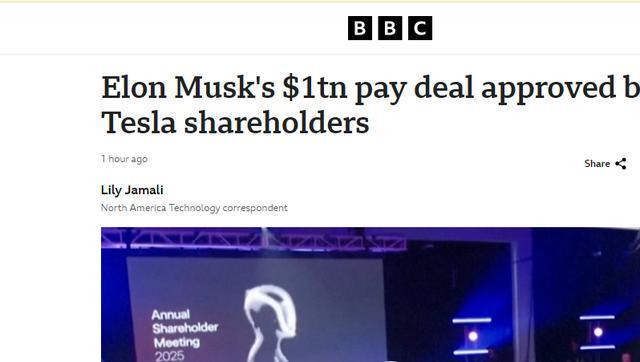
小鹏 IRON 机器人遭“真人疑云”,董事长哽咽辟谣
Huan Qiu Wang Zi Xun· 2025-11-07 03:48
Core Viewpoint - The emergence of the new generation IRON humanoid robot by Xiaopeng Motors has sparked significant public interest and debate regarding its authenticity and technological capabilities [1][4]. Group 1: Product Features - The IRON robot features a bionic design with a "skeleton-muscle-skin" structure, boasting 82 degrees of freedom and equipped with three self-developed Turing AI chips, achieving a total computing power of 2250 TOPS [4]. - The robot incorporates all-solid-state battery technology to ensure safety and extended operational range [4]. Group 2: Public Response and Clarification - Following public skepticism about the robot's authenticity, Xiaopeng Motors' chairman, He Xiaopeng, released an unedited video demonstrating the robot's internal structure, humorously acknowledging the high level of realism [4]. - During a technology launch event, He Xiaopeng further addressed the concerns by publicly cutting open the robot's leg covering to reveal its mechanical components, expressing hope that this would be the last time he needed to prove its robotic nature [4]. Group 3: Future Plans - The IRON robot has entered practical training at Xiaopeng's factory in Guangzhou, with plans for mass production by the end of 2026 [4]. - Baosteel has been announced as the first ecological partner for industrial inspection scenarios involving the IRON robot [4].


苹果控诉欧盟双法案矛盾 称用户安全遭漠视
Huan Qiu Wang Zi Xun· 2025-11-07 03:48
来源:环球网 据悉,欧盟委员会近期就DSA合规性向苹果发起问询,要求其说明反欺诈、未成年人保护等措施细节。 苹果法律副总裁凯尔・安德尔在回应中虽提交了所需材料,却严辞指出两项法案的矛盾之处:DSA要求 苹果筑牢App Store安全防线,DMA却强制其开放外链、侧载等功能,而这些功能缺乏同等安全保障, 将大幅增加诈骗风险。 安德尔强调,欧盟不能既禁止苹果采取关键防诈措施,又苛责其防护不足,这种监管悖论会让选择第三 方应用或侧载功能的iOS用户暴露在安全风险中。他呼吁欧盟将两项法案作为整体执行,而非割裂监 管。 【环球网科技综合报道】11月7日消息,据外媒macrumors报道,苹果公司致信欧盟委员会,直指《数字 服务法》(DSA)与《数字市场法》(DMA)存在规则冲突,批评欧盟一边要求 App Store强化消费者 保护,一边强制推行削弱安全保障的侧载等功能,此举"不合逻辑"。 苹果同时披露,2024年其应用审核团队已移除3.7万款欺诈应用,拒绝11.5万款不安全应用及32万款违规 提交,终止14.6万个欺诈相关开发者账户,彰显了App Store现有防护体系的有效性。(旺旺) ...


美股三大股指全线收跌,多个估值指标亮“红灯”
Huan Qiu Wang Zi Xun· 2025-11-07 01:40
Group 1 - The U.S. stock market experienced a significant decline, with the Dow Jones falling by 0.84% to 46,912.3 points, the S&P 500 down 1.12% to 6,720.32 points, and the Nasdaq dropping 1.9% to 23,053.99 points [1] - Valuation indicators for U.S. stocks are showing alarming signs, with the Buffett Indicator indicating that the market capitalization exceeds GDP by more than two times, reaching a historical high [1] - The proportion of speculative stocks has reached 11%, a level previously seen only during the 1999 internet bubble and the 2021 meme stock frenzy, according to Barclays [1] Group 2 - The current AI boom is accompanied by warnings of a speculative bubble, with many observers drawing parallels to the late 1990s internet bubble that ended in a market crash [4] - Major tech companies are investing billions in advanced chips and data centers to support the surge in usage of AI technologies like ChatGPT, Gemini, and Claude, indicating a shift in economic activity from humans to machines [4] - Research from MIT found that 95% of institutional investments in AI projects yield zero returns, while Harvard and Stanford studies indicate that AI-generated content often results in significant productivity losses due to its superficial quality [4]
马斯克1万亿美元薪酬方案获通过,外媒称“最顶层的财富令人难以置信”
Huan Qiu Wang Zi Xun· 2025-11-07 01:40
Core Viewpoint - Tesla shareholders approved Elon Musk's $1 trillion compensation plan, reflecting confidence in his vision to transform the company into an AI and robotics giant [1][4] Group 1: Compensation Plan - The compensation plan received over 75% approval from shareholders, allowing Musk to earn rewards based on achieving specific milestones over the next 10 years [1] - Key targets include delivering 20 million vehicles and operating 1 million autonomous taxis, with Musk's compensation tied to Tesla's market value reaching certain benchmarks [1] Group 2: Market Reaction - The approval of the compensation plan has positively impacted Tesla's stock price and boosted market confidence in Musk's leadership [4] - Analysts view the vote as beneficial for Tesla's stock, as the company's valuation is heavily reliant on Musk's vision for automated vehicles and expanded robot taxi services [4] Group 3: Wealth Implications - If Musk achieves the outlined goals, he could become the world's first trillionaire, highlighting the immense wealth potential for CEOs and companies at the top tier [4]

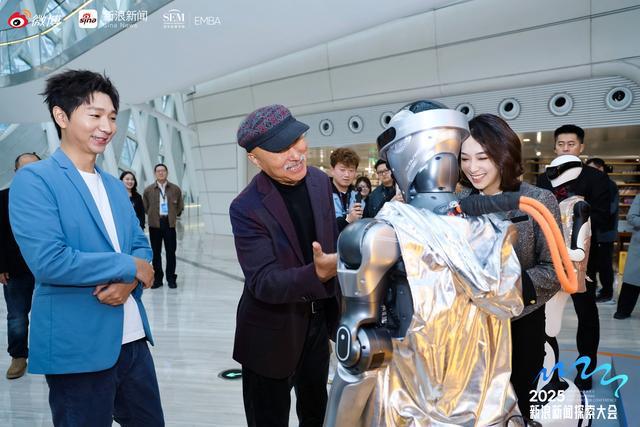
陈佩斯与机器人“琴唱合鸣”背后 藏着怎样的创新生态
Huan Qiu Wang Zi Xun· 2025-11-07 00:03
Core Insights - The article highlights the successful integration of AI and robotics into daily life in Haidian, showcasing a collaborative environment where technology is not just a tool but a part of human interaction [3][4][12] Group 1: AI and Robotics Integration - The event featured interactive robots that engaged with the audience, demonstrating a shift from cold technology to a more human-like interaction [3][4] - Haidian has created a complete ecosystem that allows innovation to transition from laboratories to real-life applications, emphasizing the importance of a supportive environment for AI development [4][6] Group 2: Infrastructure and Support - Haidian has established the largest single intelligent computing cluster in Beijing, providing local businesses with access to efficient computing power without the need for expensive infrastructure [6] - The region promotes data utilization through collaborative networks and high-quality data annotation, essential for effective AI algorithms [6][8] Group 3: Talent Development - Haidian has a robust talent cultivation system, with over 80% of the city's AI talent based in the area, supported by top universities and research institutions [8][10] - Initiatives like the Beijing Youth AI Academy aim to nurture talent from a young age, ensuring a continuous pipeline of skilled professionals [8][10] Group 4: Industry Structure - By 2025, Haidian is expected to host 297 embodied intelligence companies and 167 robotics firms, focusing on a systematic layout around core components of AI technology [11][12] - The region emphasizes a "chain" approach to industry development, fostering collaboration among companies to enhance innovation efficiency [11][12] Group 5: Future Directions - The focus for the next decade will be on embodied intelligence, where robots will not only think but also interact with their environment, with applications in healthcare, education, and more [14][15] - Haidian aims to become a global leader in AI innovation, setting standards and creating a trillion-dollar industry cluster [14][15]
德媒:与中国合作,欧洲才能跟上时代步伐
Huan Qiu Wang Zi Xun· 2025-11-06 23:30
Core Insights - China is emerging as a new technological powerhouse, with Chinese scientists taking a leading role in nearly half of all collaborative research projects with the US in 2023, indicating a significant increase in China's scientific influence [1][2] - The analysis of nearly 6 million research papers shows that 45% of the leadership in Sino-American research collaborations is now held by Chinese researchers, suggesting that by 2027-2028, China could match the US in key strategic fields such as artificial intelligence, semiconductor research, and materials science [1][2] Group 1 - China is making substantial investments in the scientific field and placing science at the core of its development strategy, expanding research openness and actively organizing international cooperation [2] - The country is developing a robust international scientific collaboration network by encouraging students and scientists to study and work globally, while also attracting talent from around the world [2] - China's strategic advantages include speed, strategic investment, and a state-led research system, although international research collaboration is becoming increasingly challenging due to geopolitical tensions [2] Group 2 - While the US remains a leader in artificial intelligence, China is rapidly catching up and is playing a crucial role in AI patent applications [2] - European institutions are lagging significantly behind their Chinese and American counterparts in global comparisons, indicating a shift in the global economic and geopolitical order [2] - For Europe, one potential strategy to keep pace with advancements is to consciously collaborate with Chinese teams in order to stay relevant in the evolving technological landscape [2]
刘伟:中国AI的后劲才刚开始展现
Huan Qiu Wang Zi Xun· 2025-11-06 22:53
Core Insights - The trend of Silicon Valley companies turning to Chinese large models signifies a shift in the global AI landscape, with Chinese models being recognized for their superior performance and cost-effectiveness compared to American counterparts like OpenAI [1][2] - The competition in the large model service market is evolving from a focus on machine capabilities to a systemic reconfiguration of the relationship between developers, models, and the global technology ecosystem [1][2] Group 1: Chinese AI Models - Chinese AI models, such as Qwen, Zhiyu GLM, and Kimi, are gaining traction in global commercial applications, showcasing their strong potential through an open-source ecosystem [1][2] - The strategy of empowering developers through open-source initiatives has led to significant community engagement, with Qwen offering over 300 models and generating 170,000 community models [3] Group 2: Ecosystem Dynamics - The traditional view of global AI competition as a "arms race" focused on computing power and top-tier research is being challenged by a more inclusive approach that emphasizes an open, collaborative ecosystem [2][5] - The integration of Chinese models into global technology environments is transforming them from isolated entities into foundational infrastructure that supports broader ecosystems [4][5] Group 3: Future Outlook - The recognition of Chinese AI as a "parallel competitor" in the open-source AI and commercialization space indicates a shift towards a more sustainable and resilient ecosystem [5] - The transition from a focus on computational power to an emphasis on ecosystem collaboration suggests a new era where collective intelligence emerges from the interplay of people, machines, and environments [5]
天问一号成功观测到星际“访客”:该天体彗星特征明显,距其约3000万公里远程拍摄
Huan Qiu Wang Zi Xun· 2025-11-06 22:53
Core Viewpoint - China's Tianwen-1 orbiter successfully observed the interstellar object ATLAS, marking a significant achievement in space exploration and expanding the capabilities of the Tianwen-1 mission [1][2]. Group 1: Observation Details - The Tianwen-1 orbiter observed ATLAS from a distance of approximately 30 million kilometers, making it one of the closest observations of this interstellar body [1]. - ATLAS was discovered on July 1, 2025, by a telescope in Chile and is the third known interstellar object to visit the solar system [1]. - The object has a hyperbolic trajectory with an eccentricity of 6.23, indicating it does not follow a closed orbit around the Sun [2]. Group 2: Scientific Significance - ATLAS is estimated to be between 3 billion and 11 billion years old, potentially older than the solar system, making it a rare sample for studying the composition of exoplanets and early stellar history [2]. - The ongoing research on ATLAS aims to explore the physical properties and size of the object, which is believed to have a comet-like structure with an icy nucleus [2]. Group 3: Technical Achievements - The Tianwen-1 team began preparations for observing ATLAS in early September, overcoming challenges due to the object's small size (nucleus diameter of about 5.6 kilometers) and faint brightness [3]. - The high-resolution camera on the Tianwen-1 orbiter was utilized to capture images of ATLAS, achieving a significant technical milestone by observing a target that is 10,000 to 100,000 times dimmer than Mars [4]. - The successful observation of ATLAS serves as a technical trial for future asteroid exploration missions, particularly for Tianwen-2 [4].
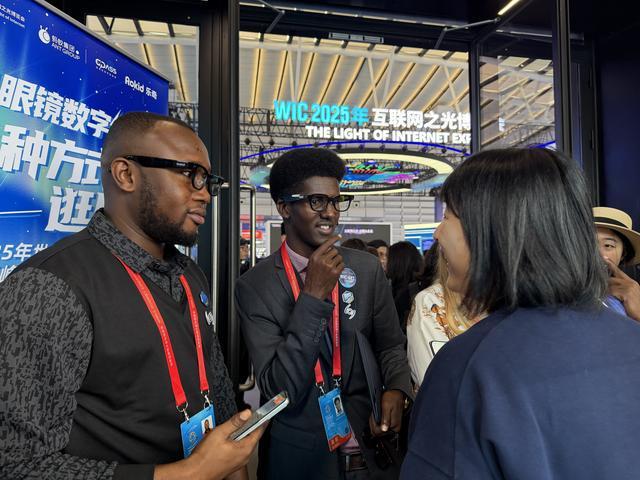
探访2025乌镇峰会:当AI眼镜邂逅“桐小乌”,数字技术让古籍“活”起来
Huan Qiu Wang Zi Xun· 2025-11-06 11:42
Core Insights - The 2025 World Internet Conference in Wuzhen showcased a strong technological atmosphere and innovative experiences, highlighting the integration of AI and digital technology in enhancing participant engagement [1][4][9] Group 1: Technological Innovations - The conference featured AI glasses equipped with gPass technology, allowing participants to interact with the intelligent assistant "Tong Xiaowu" for navigation and information retrieval, transforming the traditional conference experience [1][3] - The "Wenlan Chongguang·Shuyun Liufang" project utilized mixed reality (MR) technology to digitally reconstruct cultural heritage, enabling participants to explore and interact with historical texts like the "Four Treasuries" [4][7] Group 2: Health and Community Engagement - The AQ Joint Blue Vest Health Clinic provided health services to attendees and local elderly residents, demonstrating a commitment to community health through AI applications [7][9] - The AI health applications included features like skin analysis and a 24-hour AI medical hotline, allowing for real-time health monitoring and support for elderly care [9] Group 3: AI Developments - Ant Group showcased its advancements in general artificial intelligence, including the full display of the Bailing model family, which encompasses language, reasoning, and multimodal capabilities, marking a significant step into the 2.0 phase [9] - The introduction of the Robbyant-R1 service robot demonstrated practical applications of AI in various sectors such as dining, exhibition guidance, and medical inquiries [9]