
Feng Huang Wang

Search documents
关税阴影再度笼罩市场,美股集体大跌纳指跌超2%,中概股普跌
Feng Huang Wang· 2026-01-20 22:28
美东时间周二,由于美国总统特朗普坚持要求控制格陵兰,并以加征关税作为威胁,再度点燃全球贸易 战担忧,三大指数大幅下挫,纳指跌超2%。 截至收盘,道琼斯指数跌1.76%,报48,488.59点;标普500指数跌2.06%,报6,796.86点;纳斯达克指数 跌2.39%,报22,954.32点。 周二的下跌使标普500指数和纳斯达克指数在2026年以来转入负值区间:标普500指数累计下跌0.7%, 以科技股为主的纳指下跌1.2% 特朗普周六在Truth Social发文宣布,将对8个欧洲国家(均为北约成员国)的美国进口商品实施阶梯式 加征关税,直至"达成全面收购格陵兰岛的协议"。 他说,关税将于2月1日从10%起步,并在6月1日升至 25%。 本周,特朗普又威胁对法国葡萄酒和香槟征收200%的关税,背景是有报道称法国总统马克龙不愿加入 他所谓的"和平委员会"。 欧洲领导人已将特朗普最新的关税威胁形容为"不可接受",并据称正在考虑反制措施——其中法国被认 为正推动欧盟动用其最强有力的经济反制工具,即所谓的"反胁迫工具(Anti-Coercion Instrument)"。 桥水基金创始人达利欧在瑞士达沃斯世界经济 ...

理想回应汽车油箱选用不锈钢油箱的三大原因
Feng Huang Wang· 2026-01-20 14:49
1、塑料VS不锈钢:插混、增程车型经常纯电行驶情况下,油箱长期封闭,油气蒸发易致内部压力升 高,对油箱的抗变形、抗压能力要求极高。金属油箱在这两项性能上优势突出,因此理想选用金属油 箱。 理想汽车-W 分时图 日K线 周K线 月K线 61.85 -0.70 -1.12% 1.20% 0.80% 0.40% 0.00% 0.40% 0.80% 1.20% 61.80 62.05 62.30 62.55 62.80 63.05 63.30 09:30 10:30 12:00/13:00 14:00 16:10 0 17万 34万 51万 凤凰网科技讯1月19日,理想汽车材料技术负责人"吉超超有材"就旗下插电混动及增程车型选用不锈钢 而非塑料油箱的原因作出说明。其表示,主要有三大原因: 2、不用铝合金的原因:商用车的油箱形状规整,可采用铝合金实现轻量化。而乘用车为优化空间,油 箱形状复杂,铝合金难以加工成形。 3、理想自研不锈钢:常规304L不锈钢能满足复杂油箱的成形需求,但其强度与耐腐蚀性并未达到极 致。理想自研超高强不锈钢材料屈服强度提升100%,制成的油箱不仅拥有更优异的抗穿刺和防撞击, 而且耐腐蚀性能也很强 ...


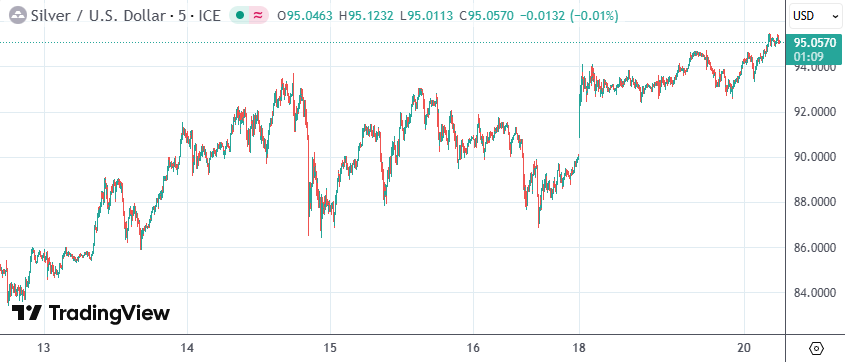
现货白银冲上95美元,特朗普关税威胁引发避险大逃亡
Feng Huang Wang· 2026-01-20 13:07
Group 1 - Precious metals prices rose collectively due to escalating geopolitical tensions, with spot silver breaking through $95, reaching a high of $95.51, marking a new historical record [1] - Spot gold also saw significant gains, reaching a peak of $4737.43 per ounce, and currently trading near $4727, reflecting an increase of approximately 1.2% [3] - Analysts predict that this remarkable upward trend will continue, with Citigroup forecasting gold to reach $5000 per ounce and silver to hit $100 within three months [3] Group 2 - The U.S. announced a 10% tariff on goods from Denmark, Norway, Sweden, France, Germany, the UK, the Netherlands, and Finland starting February 1, with plans to increase the tariff to 25% by June 1 unless an agreement regarding the purchase of Greenland is reached [3][4] - European leaders are discussing various countermeasures, including retaliatory tariffs on $108 billion worth of U.S. goods, with Germany's finance minister emphasizing the need for a clear response to U.S. threats [5] - Analysts suggest that the U.S. tariff threats resemble extortion tactics, impacting precious metal prices as a reaction to potential inflation from the U.S.-EU trade war and its effects on economic activity [6]
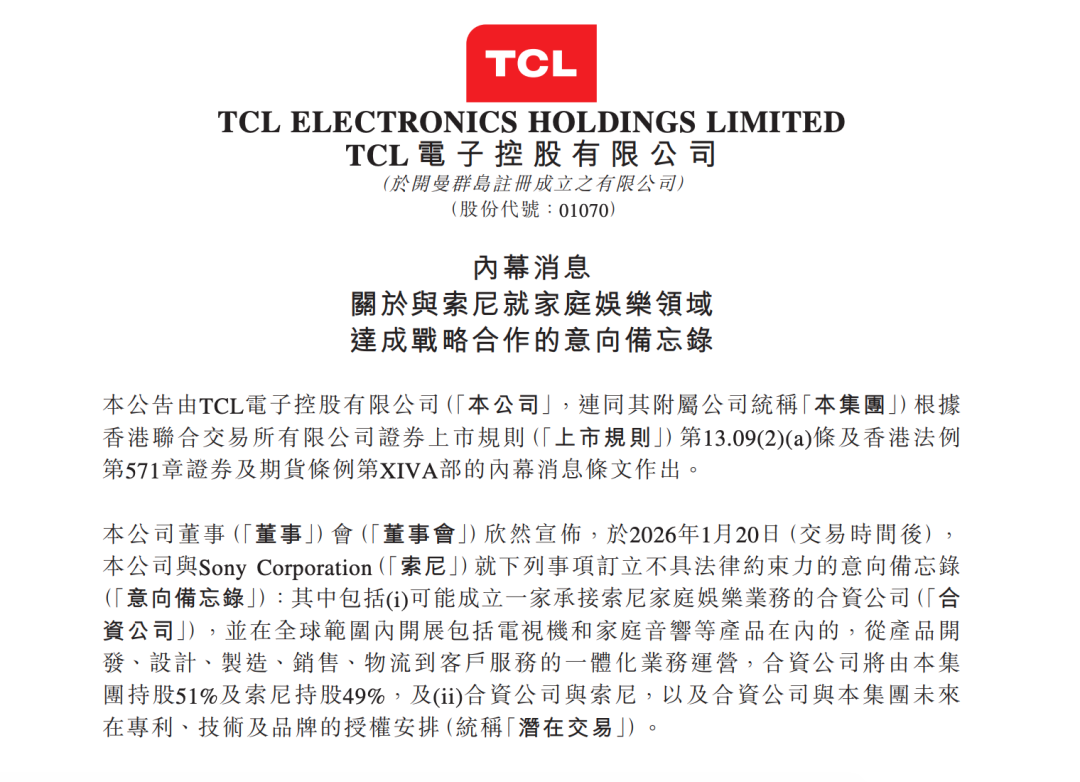
索尼委身TCL,日企时代终落幕了
Feng Huang Wang· 2026-01-20 13:07
Core Viewpoint - The collaboration between Sony and TCL marks a significant shift in the consumer electronics industry, highlighting the transition from traditional Japanese brands to Chinese manufacturers as key players in the market [1][21]. Group 1: Partnership Details - TCL announced a memorandum of understanding with Sony to establish a joint venture focused on Sony's home entertainment business, which will operate globally in an integrated manner [2][11]. - The joint venture will have TCL holding a 51% stake and Sony holding 49%, indicating that a Chinese company will lead the future of Sony's once-iconic television brand [5][12]. - The partnership aims to combine Sony's high-quality audio-visual technology and brand value with TCL's advanced display technology and cost efficiency [11][12]. Group 2: Historical Context - Sony was once a dominant player in the television market, with its Trinitron technology setting quality standards in the 1980s and 1990s, but has since faced challenges from emerging Chinese brands [6][9]. - The rise of Chinese brands like TCL and Hisense began in the early 2000s, leveraging lower costs and innovative technologies to capture market share from Japanese manufacturers [6][18]. - By 2025, Sony's television shipments had significantly declined, ranking tenth globally, while TCL and other Chinese brands surged ahead in market share [15][19]. Group 3: Industry Transformation - The collaboration reflects a broader trend in the consumer electronics industry, where traditional vertical integration models are being replaced by more flexible cooperative networks [12][16]. - As Chinese brands evolve from being price competitors to technology innovators, the dynamics of global competition are shifting, with a focus on collaboration rather than direct competition [16][20]. - The partnership symbolizes a strategic pivot for Sony, allowing it to concentrate on higher-margin businesses while leveraging TCL's manufacturing capabilities to sustain its legacy in the consumer electronics space [15][16].

机器人专用芯片是伪命题?英特尔宋继强:市场太小,目前难盈利
Feng Huang Wang· 2026-01-20 13:07
Core Insights - The core viewpoint is that for embodied intelligence to be effectively integrated into factories and homes, it must overcome the challenge of "reliability," which can be addressed by implementing a "triple system" approach in robotics [1][3]. Group 1: Current Challenges in Embodied Intelligence - Current embodied intelligence robots are likened to "genius children," performing well under ideal conditions but struggling with unexpected situations, highlighting the industry's common challenges [1]. - The accuracy of action generation in robots based on visual language models (VLA) is currently around 60-70%, with issues such as hallucinations, poor environmental adaptability, and weak long-term task planning capabilities [1][8]. Group 2: Proposed Solutions - A reliable embodied intelligence system should consist of three layers: a primary system for decision-making, a safety system for monitoring, and a fallback system for emergency handling [3]. - The primary system utilizes a "neuro-symbolic AI" approach, combining the generalization capabilities of neural networks with the reliability and interpretability of symbolic logic [3]. - The safety system continuously monitors the robot's execution status against preset safety rules, intervening when deviations occur, while the fallback system guides the robot into a safe state during emergencies [3][4]. Group 3: Industry Outlook and Hardware Considerations - The current market for robotics is small, making dedicated chips economically unfeasible; thus, the industry primarily adapts existing chips from other sectors like mobile and automotive [6]. - Intel's long-standing position in industrial automation provides it with a competitive edge, leveraging its expertise in high-precision motion control for robotics [6]. - The anticipated deployment model for future robotics involves a combination of robot terminals and edge servers to facilitate low-latency operations [7]. Group 4: Bottlenecks and Future Projections - Major bottlenecks include the limitations of VLA technology, which struggles with accuracy and understanding of physical relationships, leading to a shift towards "world models" that incorporate physical laws [8]. - Data isolation remains a critical issue, with significant variations in data requirements across different industries and robot types, complicating the establishment of unified data standards [8]. - The path to reliable embodied intelligence is projected to take two to three years, with initial deployments in semi-structured environments like logistics and manufacturing, followed by broader applications as reliability improves [10][11]. Group 5: Integration of Technologies - The development of embodied intelligence will not rely on a single technological breakthrough but rather on the integration of new AI models with established control technologies and safety engineering [12]. - The focus is on creating a reliable solution that minimizes errors in real-world applications, emphasizing the importance of a robust foundational system for robotics [12].


广汽汽车芯片半数将由格力替代?回应来了
Feng Huang Wang· 2026-01-20 11:47
Core Viewpoint - GAC Group has issued a statement refuting rumors that Gree Electric's chairman, Dong Mingzhu, claimed that half of GAC Group's automotive chips will be replaced by Gree chips in the future [1][2] Group 1 - GAC Group confirmed that on January 15, 2026, its chairman, Feng Xingya, led a delegation to visit Gree Electric to discuss the integration of "people, vehicles, and home" smart ecosystem development and explore industrial collaboration [1][2] - The company emphasized that any specific progress regarding cooperation will be announced through official channels in a timely manner [1][2] - GAC Group urged the public not to believe or spread unverified information regarding the collaboration [2]


雪球发布专项治理公告第三批 对“疯狂梭哈哥”等多个违规账号永久封禁
Feng Huang Wang· 2026-01-20 11:42
Core Viewpoint - The announcement by Xueqiu Security Center highlights the initiation of a special governance action to address violations related to the capital market, in alignment with the directives from the China Securities Regulatory Commission (CSRC) and the National Internet Information Office [1] Group 1 - The special governance action is a response to the 2026 CSRC system work meeting, aiming to combat false and misleading information in the capital market [1] - The platform has permanently banned several accounts identified as violators, including "Crazy Shuoha Ge," "Fortune to Buy House," and others [1] - This initiative is part of a broader effort to enhance the integrity of information in the capital market and ensure compliance with regulatory standards [1]
TCL电子牵手索尼,双方拟设合资公司承接索尼家庭娱乐业务
Feng Huang Wang· 2026-01-20 09:48
Core Viewpoint - TCL Electronics and Sony have signed a strategic cooperation memorandum to establish a joint venture company, with TCL holding 51% and Sony holding 49% [1] Group 1: Joint Venture Details - The new company will focus on integrated business operations including product development, design, manufacturing, sales, logistics, and customer service for products such as televisions and home audio systems [1] - The parties aim to negotiate a legally binding final agreement by the end of March 2026, with the new company expected to commence operations in April 2027, pending necessary approvals [1] Group 2: Branding and Market Strategy - Products from the new company will leverage the globally recognized "Sony" and "BRAVIA" brands, aiming to create new value for users worldwide [1]
崔东树:更多消费者购车预算冲30万+
Feng Huang Wang· 2026-01-20 08:22
文章指出,根据乘联分会统计,2025年1-12月行业降价车型为177款,较2024年减少42款,2026年预计 数量会进一步减少,反映出单纯依靠价格刺激的市场策略正在收缩。与此同时,消费端调研显示,超过 三成消费者将下一辆车的预算设定在30万元以上。这两组数据共同指向一个趋势:市场对单纯"降价"正 在脱敏,但对"含金量"越发敏感。 1月20日,"崔东树"公号发文称,2026年车市的核心特征可概括为:"价格战"效力递减,"价值战"成为 主航道。车企竞争的关键,已从"谁更便宜"转向"谁能在主流价格区间,提供更扎实的技术、更越级的 配置与更持续的体验"。 文章还提到了一组数据也印证了近期车市"消费升级"的特征。数据显示,国内乘用车零售均价已从2019 年的15.1万元,稳步提升至2023年的18.3万元,并在2024年维持在18.4万元的水平。进入2025年,尽管 年内均价有所波动,但12月单月均价已回升至18.4万元,显示出消费基盘的稳固性。近日发布的《德勤 全球汽车消费者研究报告》显示,超63%的消费者下一辆车预算直奔30万元及以上。 ...
雪球封禁多个违规账号,发言不当或涉嫌“抢帽子交易”
Feng Huang Wang· 2026-01-20 08:21
Core Viewpoint - The article discusses the crackdown on market manipulation by influential figures in the stock trading community, particularly focusing on the case of Jin Yongrong, who was penalized for manipulating stock prices through misleading recommendations and subsequent sell-offs [1][2]. Group 1: Regulatory Actions - The Zhejiang Securities Regulatory Bureau imposed a penalty of 83.25 million yuan on Jin Yongrong for manipulating the stock market, which includes the confiscation of illegal gains of 41.62 million yuan and an equal fine [1][2]. - Jin Yongrong's account on the Snowball platform had over 107,000 followers, and his posts averaged 1.3 million views each from September 2024 to April 2025 [1][2]. Group 2: Market Impact - During the period from September 2, 2024, to April 16, 2025, Jin Yongrong recommended 32 stocks, including Qidi Environment and Luvi Optoelectronics, and executed significant sell-offs shortly after his recommendations, totaling approximately 631 million yuan in trading volume [2]. - The stocks recommended by influential figures often exhibited extreme volatility, leading to substantial losses for late investors who failed to cut their losses in time [3]. Group 3: Community Reactions - Investors expressed frustration over the recommendations from influential figures, with some reporting significant losses, such as a 40% drop in the stock price of Luyan Pharmaceutical after a peak [3]. - Legal experts highlighted that the actions of these influential figures could violate securities laws, emphasizing the need for caution in their public statements and trading activities [3].