Qian Zhan Wang

Search documents
【最全】2025年煤化工行业上市公司全方位对比(附业务布局汇总、业绩对比、业务规划等)
Qian Zhan Wang· 2025-05-01 03:09
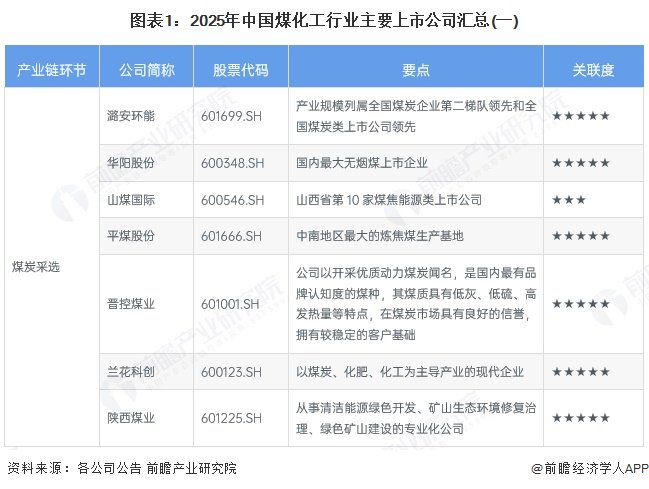
Core Viewpoint - The coal chemical industry in China is characterized by a diverse range of listed companies, each with distinct business layouts and performance metrics, focusing on both traditional and modern coal chemical products [1][3][20]. Industry Overview - The coal chemical industry is supported by upstream coal mining companies, which provide raw materials, and is influenced by coal price fluctuations that affect production costs and profit margins [1]. - The industry is divided into traditional coal chemical (e.g., coal-based fertilizers, synthetic ammonia) and modern coal chemical (e.g., new coal-based energy and materials) [1]. Key Listed Companies - Major listed companies in the coal chemical sector include China Shenhua (601088), Yanzhou Coal (600188), Baofeng Energy (600989), and others, with varying degrees of involvement in the coal chemical value chain [1][3][4]. - China Shenhua is recognized as a global leader in coal-based comprehensive energy [3]. Financial Performance - In the first half of 2024, China Shenhua reported revenues of 1680.78 billion, while other companies like Yanzhou Coal and Baofeng Energy reported revenues of 723.12 billion and 168.97 billion respectively [4][5]. - The overall gross profit margins in the coal chemical sector vary significantly, with Baofeng Energy achieving a gross margin exceeding 40% [19]. Business Layout and Strategy - Companies are strategically located in resource-rich regions, primarily in North and East China, focusing on traditional coal chemical products while expanding into modern coal chemical sectors [16][18]. - Business strategies emphasize safety, environmental protection, energy efficiency, and technological advancement to align with national policies and market demands [20][21]. Employee Composition - China Shenhua has the largest workforce in the sector, employing approximately 83,400 individuals, including 11,400 technical staff [11]. Future Planning - Companies are focusing on high-quality development, with plans to enhance core competencies, ensure energy security, and promote green and sustainable practices [21][22].






预见2025:《2025年中国稀土行业全景图谱》(附市场现状和发展趋势等)
Qian Zhan Wang· 2025-05-01 01:11
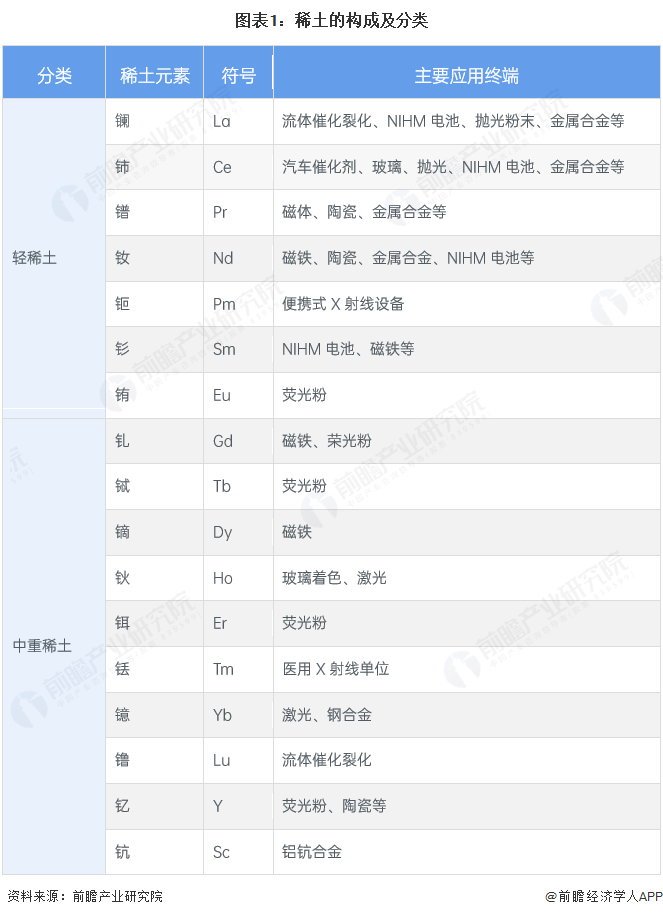
Industry Overview - Rare earth elements are a group of metals known as "industrial vitamins," consisting of 17 elements including lanthanides and similar elements like scandium and yttrium [1] - The rare earth industry is divided into several steps: mining, smelting, separation, and processing, with applications in wind power, electric vehicles, and smart manufacturing [4][5] Industry Development - China's rare earth production accounts for nearly 70% of global output, with an estimated production of 270,000 tons in 2024 [8] - The revenue of China's rare earth industry has fluctuated, increasing from 247.75 billion yuan in 2019 to 381.56 billion yuan in 2022, with a projected market size of 346.89 billion yuan for 2024 [17][18] Competitive Landscape - The majority of rare earth mining companies are located in Jiangxi and Inner Mongolia, with Jiangxi having the highest number of companies at 197 [23] - Shenghe Resources has the largest revenue in the rare earth sector, with an estimated revenue of 5.44 billion yuan in the first half of 2024, while Xiamen Tungsten achieved over 20% growth in the same period [25] Policy Direction - The Chinese government emphasizes the protection and innovation of the rare earth industry, with multiple policies aimed at supporting and regulating its development [11][13] Future Trends - The demand for rare earth recycling is expected to grow due to the non-renewable nature of these resources and the tightening supply-demand dynamics [28]


2025年中国数字营销行业技术发展现状 AI技术引领行业技术变革【组图】
Qian Zhan Wang· 2025-04-30 08:11
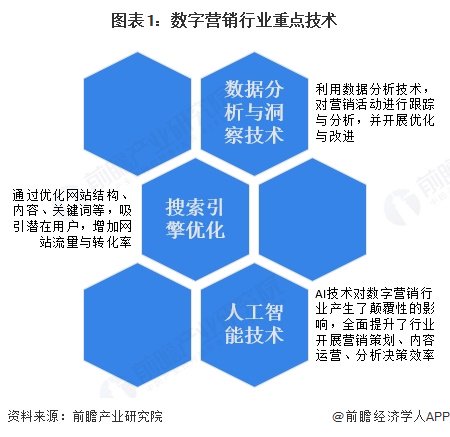
转自:前瞻产业研究院 行业主要上市公司:蓝色光标(300058.SZ);浙文互联(600986.SH);三人行(605168.SH);利欧股份 (002131.SZ)等 本文核心数据: 数字营销行业研发投入情况 ——数字营销行业重点技术 数字营销行业的重点技术包括数据分析与洞察技术、搜索引擎优化技术以及人工智能技术等,其中,人 工智能技术对数字营销行业产生的影响是颠覆性的,人工智能深度赋能了数字营销行业营销策划、内容 运营、数据分析决策等环节,引导数字营销行业的深度变革。 ——行业整体研发投入强度企稳 从行业整体的研发投入情况来看,2019-2024年期间,中国数字营销行业研发投入整体规模和研发投入 强度波动发展。2023年,中国数字营销行业整体研发投入规模为19.52亿元,研发投入强度达3.6%。总 体来看,中国数字营销厂商研发投入企稳,但研发投入强度仍存在进一步提升的空间。 ——AI技术最为受到行业关注 当前,营销模式创新是行业发展的热点话题。根据秒针营销科学院的数据,AI营销成为2025年广告主 创新营销中最为关注的创新模式,AIGC技术的进一步成熟有望进一步推动AI营销模式的加速渗透。 ——AI工具已 ...


国内首家通过!宁德时代获得两张动力蓄电池安全新国标检测报告【附宁德时代企业分析】
Qian Zhan Wang· 2025-04-30 06:24
(图片来源:摄图网) 4月27日,宁德时代获得两张GB 38031-2025《电动汽车用动力蓄电池安全要求》(以下简称 "新国标")检 测报告,成为国内首家通过新国标的企业。此次通过检测的产品涵盖电池单体与电池包,均采用其明星产品 麒麟电池,检测报告由权威第三方认证机构中汽中心新能源检验中心颁发。首份检测报告的颁发,不仅是对 GB 38031-2025标准有效性和可操作性的验证,更是对宁德时代在动力电池领域技术领先能力的认可。 作为全球动力电池和储能电池的龙头企业,宁德时代在行业中占据着举足轻重的地位。中国汽车动力电池产 业创新联盟数据显示,2024年1 - 11月,我国动力锂电池装机量前三强中,宁德时代、比亚迪和中创新航三 分天下,但宁德时代市场份额占比遥遥领先,均在5%以上,其余企业市场份额占比均在5%以下,行业龙头 地位稳固。 新国标GB 38031 - 2025于2025年3月28日发布,并将于2026年7月1日正式实施。作为动力电池安全领域的强 制性国家标准,新国标对电池安全性能提出了更为严苛的要求,旨在从源头上保障新能源汽车的安全运行。 宁德时代提前布局,率先通过检测,彰显了其在技术研发和质量控制 ...


重磅!2025年中国及31省市石墨烯行业政策汇总及解读(全) 加快壮大石墨烯产业
Qian Zhan Wang· 2025-04-30 06:17
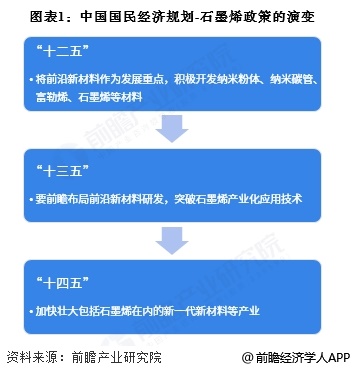
Core Insights - The article discusses the rapid development and strategic importance of the graphene industry in China, highlighting government policies and future goals for the sector [1][4][13]. Policy Overview - Since 2012, multiple government departments have issued policies to support the development of the graphene industry, focusing on production scale, industry standards, and technological innovation [4][6]. - The "14th Five-Year Plan" emphasizes the need for independent development of new materials, including graphene, aiming for significant industry growth from 2021 to 2025 [1][10]. Future Goals - By 2025, the production of high-quality graphene powder is expected to reach over 10,000 tons annually, with graphene film production exceeding 100 million square meters [13][15]. - The overall industry scale is projected to surpass 100 billion yuan, with significant advancements in electronic applications, including the mass production of 8-inch graphene chips [13][15]. Local Government Initiatives - Various provinces have set specific targets for graphene industry development, such as Chongqing aiming for a 50 billion yuan industry scale by 2021 and Ningbo targeting a competitive graphene industry cluster by 2023 [16][17]. - Local policies focus on enhancing innovation, production capabilities, and establishing industry standards to support the growth of the graphene sector [17][18].


【行业深度】洞察2025:中国激光测距仪行业竞争格局及市场份额(附市场集中度、企业竞争力评价等)
Qian Zhan Wang· 2025-04-30 05:11
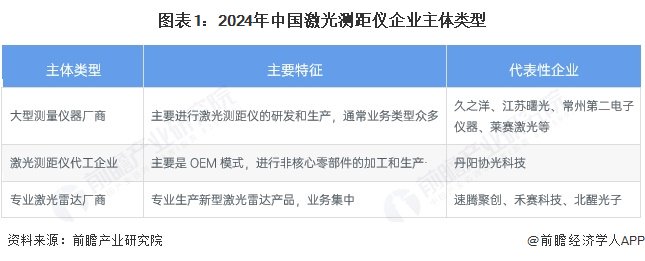
Core Viewpoint - The Chinese laser rangefinder industry is characterized by a diverse competitive landscape, with major players including large measurement instrument manufacturers, OEM companies, and specialized lidar manufacturers, driven by the growing demand for lidar in smart vehicles [1][6][12]. Group 1: Types of Competitors - The Chinese laser rangefinder industry consists of three main types of companies: large measurement instrument manufacturers, OEM companies, and specialized lidar manufacturers [1][3]. - Large measurement instrument manufacturers, such as JiuZhiYang and LaiSai Laser, focus on R&D and production of laser rangefinders and have a diverse business portfolio [3]. - OEM companies primarily engage in the processing and production of non-core components, exemplified by DanYang XieGuang Technology [3]. - Specialized lidar manufacturers, like SuTeng JuChuang and HeSai Technology, concentrate on producing new lidar products [3]. Group 2: Leading Companies - The Chinese laser rangefinder industry can be categorized into three tiers: - The first tier includes listed companies like JiuZhiYang, JuXing Technology, LaiSai Laser, and YouLiDe, which have rich industry experience and strong brand advantages [6]. - The second tier consists of competitive enterprises, including specialized small giants and pre-listed companies, such as MaiCe Technology and LeiShen Intelligent, which possess significant technical accumulation [6]. - The third tier comprises small and medium-sized enterprises and new entrants [6]. Group 3: Market Concentration - As of January 2025, there are over 300 major laser rangefinder-related companies in China, with Guangdong province having the highest number, exceeding 90 [8]. - The market concentration in the laser rangefinder industry is moderate, with a CR3 of 53% and a CR5 of 63% [8]. Group 4: Market Share and Competition - In 2023, leading companies like JuXing Technology, JiuZhiYang, and YouLiDe collectively held a market share of no more than 25%, indicating a relatively fragmented market [10]. - The competitive landscape is intense, with numerous suppliers and established international brands like Bosch and Leica maintaining a leading position in the market [13]. Group 5: Business Strategies - Among listed companies, there is a noticeable divergence in market strategies: JiuZhiYang and LaiSai Laser focus on the domestic market, while JuXing Technology primarily targets international markets [12]. - LaiSai Laser leads in the business layout of laser rangefinders among listed companies, while other firms like JiuZhiYang and JuXing Technology treat laser rangefinder business as a supplementary segment [12].



【合同物流】行业市场规模:2024年中国合同物流行业市场规模约6300亿元投融资金额超过35亿元
Qian Zhan Wang· 2025-04-30 02:41
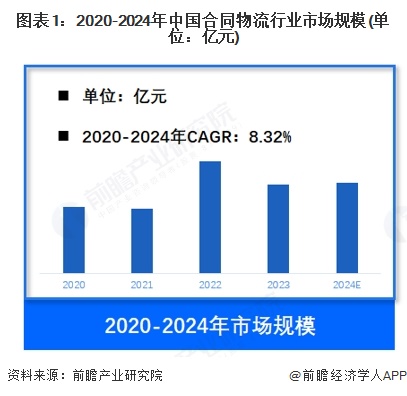
Industry Overview - The core viewpoint of the article highlights the growth potential of China's contract logistics industry, with a projected market size of approximately 630 billion yuan in 2024 and a compound annual growth rate (CAGR) of 8.32% over the past four years [1]. Market Size - The market size of China's contract logistics industry is expected to reach around 630 billion yuan by 2024, indicating significant growth potential [1]. Investment Trends - From 2014 to 2021, the number and amount of investment events in China's contract logistics industry showed a declining trend. In 2022, there were 12 investment events totaling 1.415 billion yuan. However, in 2024, the number of investment events is expected to increase to 24, with a total investment amount of 3.524 billion yuan [3]. Competitive Landscape - Leading companies in China's contract logistics sector include China National Freight, Xiamen Xiangyu, and SF Holding. Their specific business layouts are as follows: - **China National Freight**: A large comprehensive logistics company offering integrated logistics solutions across various sectors, including sea, air, and land transportation [5]. - **Xiamen Xiangyu**: A well-known supply chain logistics company focused on bulk commodity logistics, warehousing, and supply chain finance, serving industries such as manufacturing and agriculture [5]. - **SF Holding**: A leading comprehensive logistics service provider specializing in express delivery, warehousing, cold chain, and local distribution, while actively expanding into the contract logistics field [5]. - **Chuanhua Zhili**: A company dedicated to logistics and supply chain services, aiming to create an intelligent logistics platform for one-stop logistics solutions [5]. - **Anji Logistics**: A wholly-owned subsidiary of SAIC Group, providing logistics services for major manufacturers and parts suppliers, covering various logistics areas [5].




干翻19个省会!这座弹丸小城,创造中国最隐秘的经济奇迹
Qian Zhan Wang· 2025-04-29 14:36
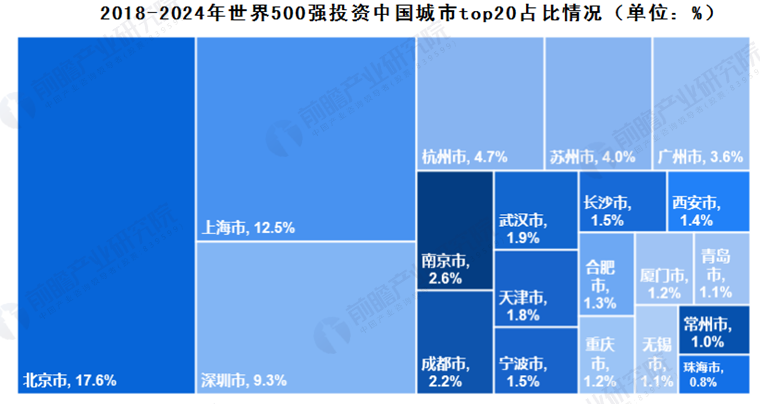
Core Insights - The article discusses the profound changes in urban landscapes due to the restructuring of global supply chains, accelerated industrial adjustments, and explosive growth in new productive forces. It emphasizes the importance of investment as a trust vote for future urban growth potential, as highlighted in the upcoming report by the Forward Industry Research Institute [1]. Investment Trends - Beijing, Shanghai, and Shenzhen are the top investment choices in China, benefiting from superior business environments, industrial support, and infrastructure, maintaining the top three positions in regional investment by Fortune Global 500 companies [2]. - Guangzhou is the only first-tier city experiencing a decline in investment attractiveness, with its share dropping from 10% in 2018 to 4.9% in 2024, while Hangzhou and Suzhou have rapidly ascended to the fourth and fifth positions [5]. - Overall, the investment inclination of Fortune Global 500 companies correlates positively with city rankings, with first-tier and new first-tier cities capturing 70% of the investment volume [5]. Regional Investment Patterns - Investment is increasingly concentrated in the Yangtze River Delta and eastern coastal provinces, indicating a geographical trend in investment preferences [8]. - The report identifies key industries attracting investment from Fortune Global 500 companies, primarily in AI, semiconductor, and new energy sectors, with semiconductors and new energy being the most attractive since 2021 [11]. City-Specific Insights - Shenzhen has seen explosive growth in the semiconductor and AI sectors due to proactive planning and systemic innovation, making these the top two industries for investment from Fortune Global 500 companies [12]. - Changzhou has emerged as a dark horse city, leveraging its new energy industry to attract significant investment, with 87 investments from Fortune Global 500 companies between 2018 and 2024 [13]. - In contrast, Guangzhou's declining investment attractiveness is attributed to structural issues and a lag in industrial transformation, with its investment events being only one-third of Shenzhen's [13]. Investment Logic and Strategies - The investment logic of Fortune Global 500 companies is shifting towards focusing on "irreplaceable nodes" in the industrial chain and achieving value multiplication through urban ecosystems [26]. - Cities are encouraged to deepen their regional advantages, anchor high-potential sectors, and cultivate headquarters economies to attract investment [27][28]. Conclusion - The report serves as a critical guide for local governments to position themselves strategically in the global industrial division and for companies to gain market insights for optimizing resource allocation and achieving sustainable development [1].
投资深圳 | 一文看懂深圳市新能源汽车产业发展现状与投资机会前瞻
Qian Zhan Wang· 2025-04-29 14:31
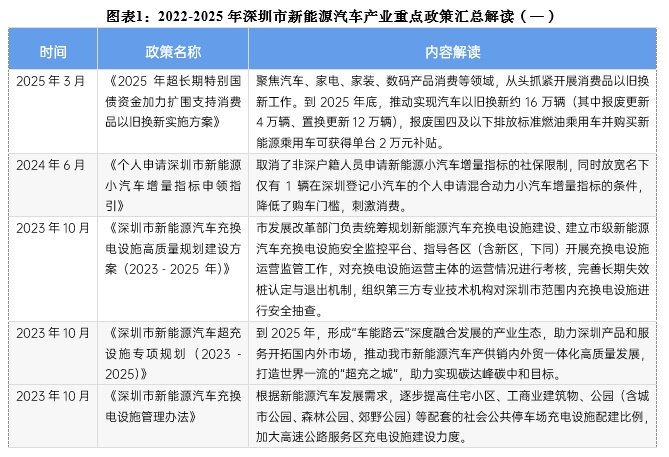
Core Insights - The development of new energy vehicles (NEVs) is a key engine for industrial innovation, international competition, and social transformation, driving high-quality economic growth and supporting carbon neutrality goals [1][2] - China's NEV exports have significantly increased, surpassing 2 million units for the first time, contributing to a total automotive export volume of 6.41 million units, showcasing China's leading position in the global new energy industry [1] - Shenzhen, as a model for NEV development, has established a comprehensive policy framework and a robust industrial ecosystem, positioning itself as a global leader in the NEV sector [1][2] Shenzhen's NEV Policy Environment - Shenzhen has developed a comprehensive policy system for the NEV industry, focusing on market expansion, infrastructure development, and ecological transition [1][2] - The policy evolution emphasizes strategic progression, system integration, and dual-driven development for sustainable urban growth [2] Key Policies Overview - Various policies have been implemented to stimulate NEV consumption, such as subsidies for scrapping old vehicles and easing application restrictions for new energy vehicle quotas [3][5] - The city aims to achieve a NEV ownership of 1.3 million vehicles by 2025, with a market penetration rate of 70% for new cars [5] NEV Industry Chain in Shenzhen - The NEV industry chain in Shenzhen features a comprehensive layout with strong regional collaboration, focusing on core components like batteries and electric control systems [8][9] - The industry includes over 1,000 enterprises in the battery, motor, and electronic sectors, with a complete lifecycle coverage from R&D to manufacturing and after-sales services [8] Industry Scale and Growth - Shenzhen's NEV production has surged from 300,000 units in 2021 to 2.9 million units in 2024, reflecting a nearly tenfold increase [12] - The city plans to produce over 2 million NEVs annually by 2025, with significant contributions from major manufacturers like BYD [12][16] Investment Opportunities - The NEV sector in Shenzhen is positioned as a global platform for green economic transformation, supported by a robust ecosystem of policies, technology, capital, and spatial resources [32][36] - Key investment areas include advanced battery technologies, vehicle-grade chips, and smart driving systems, with a focus on both technological innovation and practical applications [36][34] Financing Landscape - The financing landscape for Shenzhen's NEV industry is experiencing a structural shift, with significant capital investments directed towards core technologies and innovative applications [27][28] - Major financing activities are concentrated in regions like Guangming and Pingshan, where leading companies are driving technological advancements and capital accumulation [28]

2025年全球电线电缆产业市场分析:全球电线电缆区域格局分化,未来新能源和新兴市场显著推动全球市场增长
Qian Zhan Wang· 2025-04-29 07:20
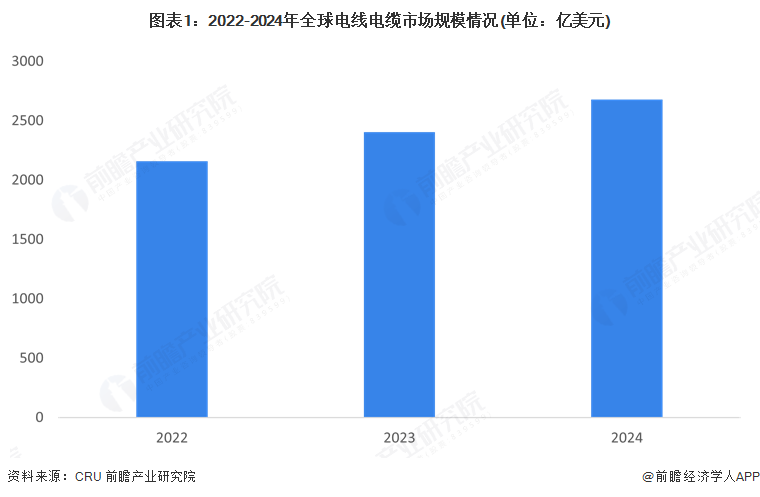
Global Wire and Cable Market Overview - The global wire and cable market is experiencing steady growth, with a projected market size of $267.8 billion in 2024, reflecting an 11.4% year-on-year increase [2] - The wire and cable industry is a fundamental support for the normal operation of modern economies and is indicative of a country's manufacturing level [1] Regional Market Dynamics - The traditional manufacturing regions of wire and cable are primarily in Europe, North America, and Northeast Asia, but production is shifting towards Asia, particularly China, Vietnam, and the Philippines, due to rapid economic growth [4] - The Asia-Pacific region accounts for 45% of the global wire and cable market, driven by demand from China and India, while Europe holds a 25% share, and North America accounts for 20% [6] Competitive Landscape - Prysmian Group is identified as the leading company in the global wire and cable industry, with Chinese companies increasingly enhancing their competitive strength, holding three positions in the top ten global manufacturers as of 2023 [7][9] Growth Opportunities and Challenges - The wire and cable industry is poised for significant growth in the renewable energy sector, particularly with the demand for high-voltage submarine cables for offshore wind power, expected to reach $12 billion by 2030 [10][12] - Emerging markets in Southeast Asia and Africa present new growth opportunities as electricity access improves [12] - Key challenges include fluctuations in raw material prices, particularly copper and aluminum, and trade barriers, such as anti-dumping investigations in Europe against Chinese cables [10][12]