Zhong Guo Zheng Quan Bao

Search documents
32项国家计量技术规范发布 涉及智能网联汽车等多领域
Zhong Guo Zheng Quan Bao· 2026-02-04 20:20
Group 1 - The State Administration for Market Regulation has released 32 national metrology technical specifications, covering various fields including intelligent connected vehicles, health, and smart meters [1][2] - The "Measurement Testing Specification for Automatic Parking Performance of Intelligent Connected Vehicles" is the first professional metrology testing standard for automatic parking performance in China, filling a technical gap in the industry [1] - The specification aims to unify and compare measurement testing results for key parameters in automatic parking technology, promoting research and development while ensuring safety for drivers and passengers [1] Group 2 - In the field of health, the "Electrocardiogram Machine Testing Regulations" standardizes the metrology testing framework for both analog and digital ECG machines, ensuring accurate diagnostic data for heart-related conditions [1] - The revised "Testing Regulations for Installed AC Energy Meters" consolidates five previous metrology technical specifications, enhancing technical requirements and operational feasibility, while addressing public concerns regarding measurement accuracy [2] - Additional general metrology technical specifications have been released, including principles for determining calibration cycles and performance evaluation guidelines for measuring instruments, laying the foundation for upgrading metrology standards [2]
资本加减法:透视中小银行差异化发展新逻辑
Zhong Guo Zheng Quan Bao· 2026-02-04 20:20
Core Viewpoint - The recent approval of capital increases for several small and medium-sized banks indicates a trend towards enhancing capital strength to support business expansion and meet regulatory requirements, while some banks are also reducing capital to improve capital allocation efficiency [1][3][6][7]. Group 1: Capital Increases - Qinghai Guinan Rural Commercial Bank's capital was increased from 60 million to 66 million yuan, with several other banks like Dongying Bank and Shijiazhuang Luquan Rural Commercial Bank also receiving approvals for capital increases [1][2]. - Dongying Bank's capital was raised by 447 million yuan, changing its registered capital from 4.396 billion to 4.843 billion yuan, while Hebei Jingxing Rural Commercial Bank's capital increased by 9.1641 million yuan, from 200 million to 209.1641 million yuan [2]. Group 2: Capital Reductions - Some banks, such as Shandong Yanggu Rural Commercial Bank and Beijing Mentougou Zhujiang Village Bank, have reduced their registered capital, indicating a strategic move rather than a sign of weakened capital strength [4][5]. - Since July 2025, several banks have been approved for capital reductions, including Hunan Yanling Rural Commercial Bank, which decreased its capital by 263 million yuan, and Yantai Fushan Zhujiang Village Bank, which reduced its capital by 7 million yuan [4]. Group 3: Industry Insights - Industry experts suggest that the current banking sector faces challenges such as narrowing net interest margins and insufficient internal capital accumulation, prompting banks to seek external capital to strengthen their financial base [3]. - The dual approach of increasing and reducing capital is seen as a way to optimize the overall capital structure of the banking industry, supporting high-quality development [6][7].


当“稳健”遇上“算法”:险资入“量”生态链调查
Zhong Guo Zheng Quan Bao· 2026-02-04 15:52
在低利率与资产欠配的双重影响下,追求绝对收益的保险资金正面临配置压力。部分中小型保险机构正 尝试借道专业的资产管理通道,将资金投向以往相对陌生的领域——量化私募。 名为"MOM"(管理人中管理人)的模式成为了主流"合规桥梁"。在这一生态链中,险资、券商资管、 量化私募三方角色交织,上演着一场关于风险、收益、效率与合规的精细合作与博弈。 "从黑箱走向灰箱" 合作的第一步,源于最根本的需求碰撞。"险资背负着3%至4%的刚性负债成本,这决定了其首要目标 是'覆盖成本后的安全收益',而非追求高波动的弹性回报。"知名量化私募蝶威量化相关负责人一语道 破险资的"负债驱动"本质。 这种对"确定性"和"穿透管理"的极致要求,与量化私募给外界的传统形象产生了矛盾。华东一家大型保 险资管机构人士的谨慎态度颇具代表性:"我们不投资私募量化产品。这个业务大型保险机构不会做, 因为风险较大。但据我们了解,一些中小保险资管机构和个别理财公司已经进行了尝试。" 为了撬动险资大客户,头部量化私募开始了一场从内到外的适应性"妥协"与"改造"。 "险资的风控要求严格很多,比如衍生品只能做股指期货且仅限套保,这就要求我们选股要控制在有股 指期货对 ...
上线贺岁短片、联动明星直播,舍得酒春节整合营销驱动品效双收
Zhong Guo Zheng Quan Bao· 2026-02-04 13:27
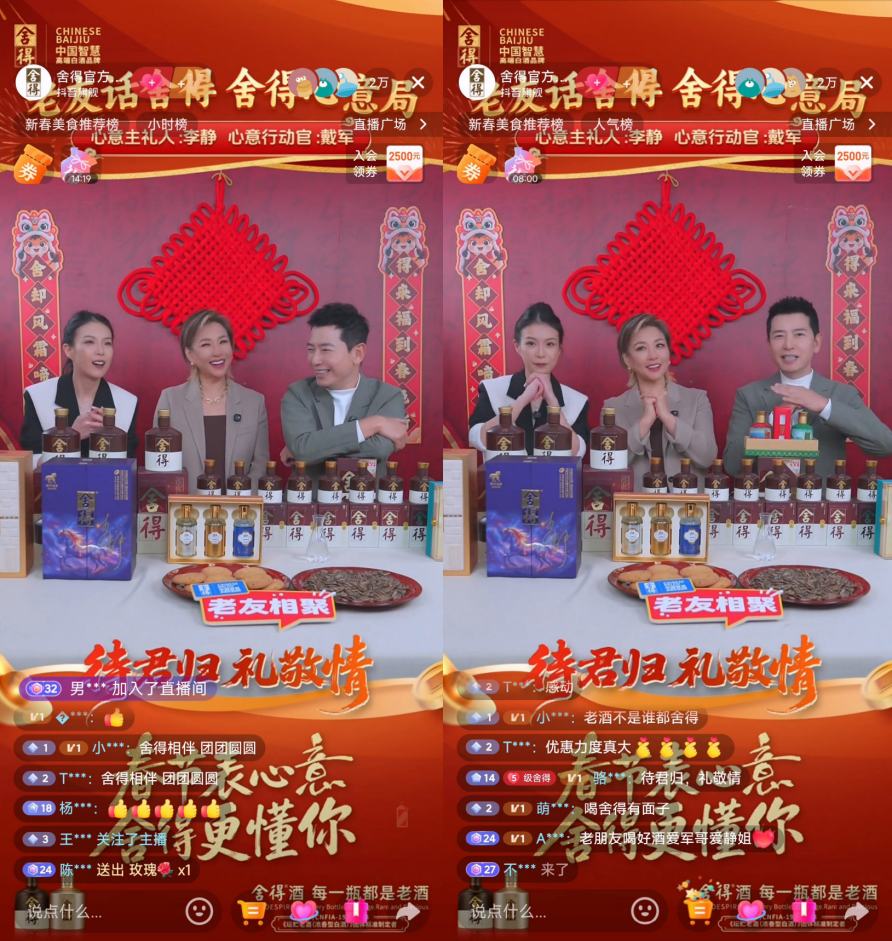
Core Insights - The article highlights the strategic marketing campaign by Shede Liquor for the Spring Festival, focusing on emotional connections and social interactions through the creative short film "Shede Expresses Heartfelt Intent" [1][2][3] Group 1: Marketing Strategy - Shede Liquor launched a creative short film featuring hosts Li Jing and Dai Jun to address the challenges of expressing gratitude and emotions during the Spring Festival, positioning the brand as the ideal choice for heartfelt gifts [2][3] - The marketing campaign emphasizes the theme of "expressing heartfelt intent" and includes interactive elements such as a live-streaming event with the hosts, enhancing consumer engagement and driving sales [4][6] Group 2: Emotional Engagement - The short film portrays Shede Liquor as a "voice of heartfelt intent," connecting with various social scenarios such as company gatherings and family reunions, thereby deepening the association of the brand with genuine emotions [3][9] - By leveraging the familiarity of the hosts and their long-standing friendship, the campaign effectively bridges the gap between the brand and consumers, making the concept of "heartfelt intent" more relatable and tangible [3][9] Group 3: Integrated Marketing Approach - The campaign utilizes a comprehensive marketing strategy that includes online challenges and offline promotions, creating a seamless connection between digital engagement and physical retail experiences [8][9] - Shede Liquor's initiatives include partnerships with restaurants for promotional events and targeted offerings for corporate clients, enhancing brand visibility and sales during the festive season [9]


“这董秘能处!”股价跌停,董秘出手增持
Zhong Guo Zheng Quan Bao· 2026-02-04 13:27
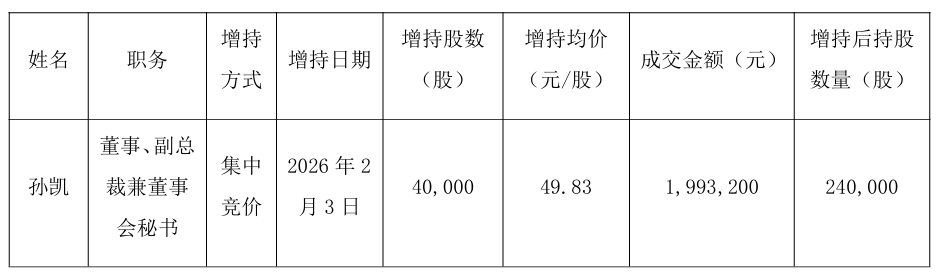
Core Viewpoint - The announcement of senior management's stock purchase by Xingye Yinxin highlights the confidence of the company's executives in its long-term value, particularly in the context of recent stock price declines [1][2]. Group 1: Stock Purchase Details - On February 3, Sun Kai, the company's Vice President and Secretary of the Board, purchased 40,000 shares at an average price of 49.83 yuan per share, totaling nearly 2 million yuan [2][3]. - This purchase occurred on a day when the stock had hit its daily limit down, closing at 51.45 yuan per share with a decline of 7.08% [1][2]. - Following Sun's purchase, the stock opened its limit down and closed the next day with a gain of 3.79%, reaching 53.40 yuan per share [7]. Group 2: Historical Context of Stock Purchases - Sun Kai has made six stock purchases over the past 12 years, with a total investment of approximately 3.57 million yuan and a current holding of 240,000 shares, reflecting a significant unrealized gain of about 9.25 million yuan [9][12]. - The first purchase was made on January 24, 2014, with an initial investment of 2,000 shares at an average price between 7.19 and 7.23 yuan per share, which later doubled due to stock capitalization [9]. Group 3: Market Perception and Influence - Sun Kai's consistent stock purchases have earned him the nickname "Stock God Secretary" among investors, indicating a strong market perception of his actions as a positive signal [1][5]. - The trend of executives like Sun Kai making personal investments in their companies has become a notable phenomenon in the A-share market, often serving as a guiding indicator for retail investors [1][13].

又一家银行,获批增资
Zhong Guo Zheng Quan Bao· 2026-02-04 13:23
专家认为,银行增资可增强服务实体经济与风险抵御能力,减资是为提升资本配置效率,二者并行可推 动银行业整体资本结构优化。 多家中小银行获批增资 2月4日,国家金融监督管理总局网站消息,青海贵南农村商业银行获批增加注册资本600万元,该行注 册资本由6000万元变更为6600万元。 记者梳理发现,近日,石家庄鹿泉农商银行、河北平山农商银行、河北井陉农商银行、东营银行等多家 中小银行的增资申请获监管部门核准。 2月4日,国家金融监督管理总局网站显示,青海贵南农村商业银行的增资申请获监管部门批复,该行注 册资本由6000万元变更为6600万元。 近日,东营银行、石家庄鹿泉农商银行等多家中小银行获批增加注册资本。与此同时,阳谷农商银行等 部分中小银行进行减资。 推动资本结构优化 在多家银行增资的同时,也有部分银行进行减资。 1月,国家金融监督管理总局聊城监管分局同意山东阳谷农商银行减少注册资本4421.02万元,由7.63亿 元变更为7.19亿元;北京金融监管局批复同意北京门头沟珠江村镇银行减资3000万元,注册资本降至 7.35亿元。 记者梳理发现,2025年下半年以来,已有多家中小银行及农村金融机构获批减资。例如, ...
资金涌入,这类ETF!
Zhong Guo Zheng Quan Bao· 2026-02-04 13:21
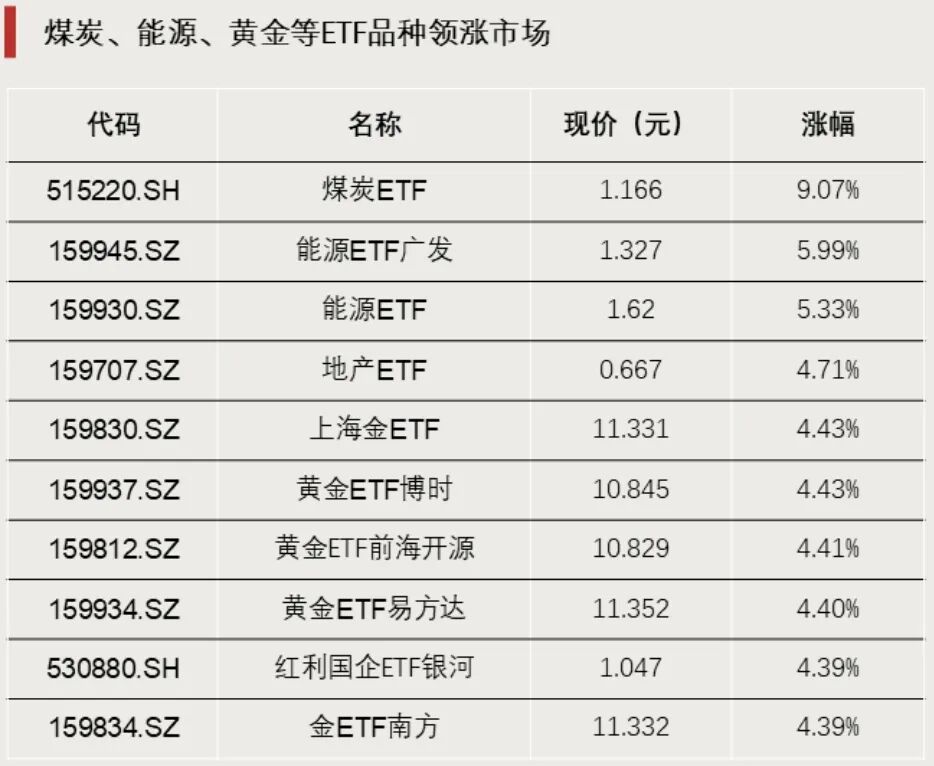
Group 1: Market Overview - A-shares experienced a strong rebound on February 4, with active performances in coal, energy, and gold sectors, as well as strong resource-related ETFs [1][3] - Multiple bond ETFs saw active trading, with short-term bond ETF Hai Futong (511360) and Yin Hua Ri Li ETF (511880) each exceeding 10 billion yuan in daily trading volume [2][7] Group 2: ETF Performance - Resource-themed ETFs led the gains, with coal ETFs rising over 9% and energy ETFs increasing by more than 5% [3][4] - The chemical ETF (159870) recorded a net inflow of 14.584 billion yuan from January 1 to February 3, ranking first in the market [2][9] Group 3: Sector Insights - The coal sector is experiencing a tight supply-demand balance, with prices stabilizing and rising, prompting recommendations to focus on high-dividend coal stocks [5] - The photovoltaic sector saw significant gains, driven by recent visits from Elon Musk's team to Chinese photovoltaic companies, boosting related ETFs [6] Group 4: Investment Trends - There has been a notable inflow of funds into technology and securities ETFs, despite recent market corrections in these sectors [2][10] - Over 10 billion yuan has been invested in dividend-related ETFs in the past month, with a focus on those combining Hong Kong stocks, state-owned enterprises, and dividends [11]
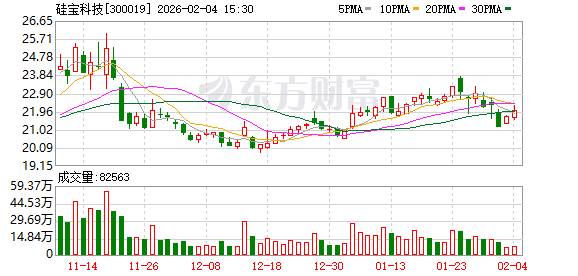
硅宝科技:2025年净利2.81亿元 同比增长18.34%
Zhong Guo Zheng Quan Bao· 2026-02-04 12:46
Core Viewpoint - Silicon Treasure Technology (300019) reported its 2025 performance forecast, showing significant growth in revenue and net profit, indicating a positive trend in the company's financial health and operational performance [4]. Financial Performance - The company achieved an operating revenue of 3.752 billion yuan, representing a year-on-year increase of 18.76% [4]. - The net profit attributable to shareholders reached 281 million yuan, with a year-on-year growth of 18.34% [4]. - The net profit excluding non-recurring gains and losses was 257 million yuan, reflecting a year-on-year increase of 15.03% [4]. - Basic earnings per share were reported at 0.715 yuan, and the weighted average return on equity was 10.68%, up by 1.1 percentage points from the previous year [4][19]. Valuation Metrics - As of the closing price on February 4, the company's price-to-earnings (P/E) ratio (TTM) was approximately 30.77 times, the price-to-book (P/B) ratio (LF) was about 3.23 times, and the price-to-sales (P/S) ratio (TTM) was around 2.35 times [4].

银邦股份:收到印度公司2.8亿元销售订单
Zhong Guo Zheng Quan Bao· 2026-02-04 12:31
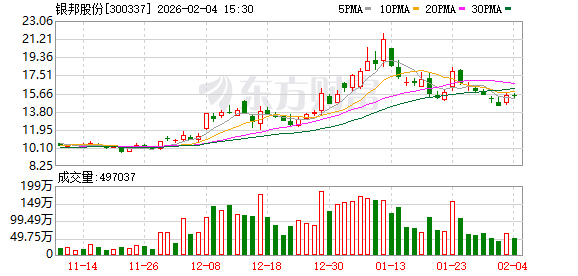
Core Viewpoint - The company, Yinbang Co., Ltd. (300337), announced a supply agreement with Holtec Asia Private Limited for aluminum-steel composite materials and aluminum-aluminum composite materials, with an estimated value of approximately 280 million RMB [2] Group 1: Order Details - The pricing model for aluminum-steel composite materials is a fixed price, while the pricing for aluminum-aluminum composite materials is based on "aluminum ingot + processing fee," with the aluminum ingot price referencing the average price from the Shanghai Futures Exchange for the previous month [2] - The order fulfillment period is set from January 1, 2026, to December 31, 2027 [2] Group 2: Client Information - Holtec, registered in Gujarat, India, specializes in the design and manufacturing of air condensers for various energy sectors, including solar, petrochemical, geothermal, and fossil fuel power generation [2] - The company has engaged in similar transactions with Yinbang from 2022 to 2024, with sales amounts of 5.1962 million, 36.6751 million, and 31.2646 million RMB respectively [2] Group 3: Company Product Portfolio - Yinbang Co., Ltd. primarily produces aluminum thermal transfer materials, multi-metal composite materials, aluminum-steel composite materials, and aluminum alloy composite protective materials, applicable in transportation, air separation, power station cooling, engineering machinery, electric power, household appliances, consumer electronics, and energy storage sectors [2] - Successful execution of this order is expected to enhance the company's revenue and profit for the years 2026 and 2027 [2]

国机重装:2025年净利4.79亿元 同比增长10.89%
Zhong Guo Zheng Quan Bao· 2026-02-04 12:26
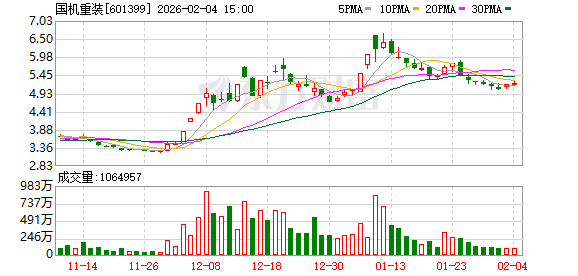
中证智能财讯国机重装(601399)2月4日晚间披露2025年业绩快报,公司实现营业收入138.85亿元,同比增长9.56%;归母净利润4.79亿元,同比增长 10.89%;扣非净利润4.15亿元,同比增长29.24%;基本每股收益0.07元,加权平均净资产收益率为3.28%。以2月4日收盘价计算,国机重装目前市盈率 (TTM)约为78.64倍,市净率(LF)约2.54倍,市销率(TTM)约2.7倍。 以本次披露业绩快报数据计算,公司近年市盈率(TTM)图如下所示: 近年来市盈率变化情况 (倍) 350 @00 250 200 150 100 62d07 28:33 52o78 56:45 50 46o76 0 2020-12-37 ' -1-06-30 2021-12-37 2022-12-37 2-06-2 2n- }- 公司 -〇- 行业均值 100 ହ 90 80 72o36 70 60 PIA 53-89 50 40 37602 30 20 16665 10 8 સ્ 0 2021-12-37 1 2020-12-37 ' -022-72-37 ' 5-12-37 3-06-30 - 公司 -○- ...