
Guang Xi Ri Bao

Search documents
广西造“良药好械美妆”不断走向市场
Guang Xi Ri Bao· 2025-12-26 03:16
药品安全监管方面,广西推动监管机制更好适应医药创新发展需求。政策加持下,2025年广西获国 家药监局批准上市药品10个,其中1个为全球首个仿制药,仿制药品种从"十三五"末的1个增长至42个; 109个第二类医疗器械填补广西空白;3个化妆品新原料通过国家药监局备案,实现零的突破。广西 造"良药好械美妆"正在不断走向市场。 通过综合运用监督检查、抽检监测等强化监管,"十四五"期间,全区实现药品安全事件"零发生", 药品评价性抽检合格率稳定在99%以上。 医药产业促进有力——自治区医疗器械检测中心检测能力覆盖区内生产90%的第二、三类医疗器 械;十米法电磁兼容实验室填补全区大型高端医疗器械检测能力的空白。《广西海洋中药材标准》完成 编制。药物临床试验机构数量从12家增长至54家。2025年,38家区外医药企业入驻重点园区,全区新增 第二类医疗器械注册证472张、普通化妆品备案2266个,分别同比增长11.06%和19.8%。 2025年前三季度,广西还为88个药品、136个医疗器械产品出具出口销售证明,销售额分别同比增 长27.23%和16.25%,更多广西产品首次走出"国门"。(刘冬莲) 12月25日,自治区政府 ...
高水平创新型广西建设扎实推进
Guang Xi Ri Bao· 2025-12-26 03:16
企业唱主角,创新活力强。广西多措并举强化企业科技创新主体地位。定制科技型企业服务包,选 派815名企业科技特派员点对点服务企业555家,健全"科技型中小企业—高新技术企业—瞪羚企业—科 技领军企业"梯次培育机制,累计入库科技型中小企业3757家,同比增长28.2%;备案高新技术企业1136 家。坚持把龙头企业作为产业创新的主引擎,累计培育自治区级工业龙头企业212家、链主企业70家。 持续引导中小企业深耕细分领域,锻造"独门绝技",新增专精特新企业69家,累计986家。1—11月,全 区规模以上工业高新技术企业增加值同比增长9.5%。 同时,全区以开放的姿态加大科技成果转化应用。将面向东盟的优势转化为成果集聚优势,整合利 用全国创新资源到广西开展成果转化。出台《广西科技成果转化三年行动方案(2025—2027年)》,支 持科技成果转化"双向揭榜",给予最高1000万元支持;支持企业引进京津冀、长三角、粤港澳大湾区等 科技发达地区的成果入桂转化,给予最高500万元奖励性后补助。发布首批193项"先使用后付费"科技成 果清单,签订合作协议项目45项。广西民族大学抗癌天然药物成果转化金额4600万元,刷新全区单项最 ...
理论铸魂润八桂 实干笃行启新程
Guang Xi Ri Bao· 2025-12-26 03:16
Core Viewpoint - The article discusses the implementation of the spirit of the 20th Central Committee of the Communist Party of China in Guangxi, highlighting a series of lectures aimed at educating and mobilizing local officials and the public to align with national development strategies [1][2]. Group 1: Lecture Activities - Nearly 100 specially invited professors and experts conducted lectures across 14 cities in Guangxi, directly reaching approximately 150,000 people [1]. - The lectures focused on the significance, core essence, and practical requirements of the 20th Central Committee, providing a systematic and comprehensive content framework for grassroots officials and the public [2]. Group 2: Tailored Content for Different Audiences - For enterprise employees, the lectures emphasized policies related to technological innovation, industrial upgrading, and green transformation, with a focus on building a modern industrial system [3]. - In educational settings, the lectures highlighted the responsibilities of youth and the construction of a strong educational system, integrating the spirit of the 20th Central Committee into school development plans [3]. - For rural officials and communities, the focus was on rural revitalization, environmental improvement, and ensuring people's livelihoods, providing targeted suggestions for local governance and development [4][5]. Group 3: Practical Implementation - The lectures maintained a problem-oriented and practice-oriented approach, aiming to translate macro policies into actionable grassroots strategies for high-quality development [4]. - Experts conducted field research to tailor the content of the lectures to local industry development, rural revitalization, and community governance [4]. Group 4: Community Engagement and Response - The lectures addressed pressing issues faced by communities, emphasizing a people-centered development philosophy and providing concrete suggestions for improving grassroots governance and addressing public concerns [6]. - Local officials expressed a commitment to integrating the spirit of the 20th Central Committee into their work, focusing on enhancing digital development and traditional industry transformation [7][8]. Group 5: Youth and Education - Educators and students were encouraged to incorporate the spirit of the 20th Central Committee into their teaching and learning, fostering a sense of responsibility towards national development [8]. - Students expressed their determination to contribute to national rejuvenation through their studies and cultural initiatives [8]. Group 6: Rural Development Initiatives - Local leaders in rural areas committed to advancing agricultural modernization and enhancing the quality of life for residents through integrated development strategies [9]. - Efforts were made to promote the integration of agriculture, culture, and tourism to create new income channels for rural communities [9].
今年东兴口岸跨境电商出口超60亿元
Guang Xi Ri Bao· 2025-12-25 02:57
Group 1 - The core viewpoint of the news highlights the significant increase in cross-border e-commerce package export declarations at the Dongxing port, driven by domestic e-commerce promotions and traditional festivals in Southeast Asia, with daily declarations reaching over 300,000 [1] - The Dongxing port's "9610" customs supervision model has facilitated the export of 47.203 million cross-border e-commerce packages this year, with a total value of 6.07 billion yuan [1] - The cross-border e-commerce direct reporting model at Dongxing port is particularly attractive to major platforms like Lazada and Cainiao, allowing Chinese goods to reach consumers in the ASEAN market with domestic e-commerce speed and cost-effectiveness [1] Group 2 - Dongxing Customs has enhanced regulatory service efficiency by expanding the cross-border e-commerce regulatory center, increasing its area by approximately 2,000 square meters and doubling the vehicle capacity from 15 to about 30 [2] - The optimization of operational processes and spatial layout at the Dongxing Customs has significantly improved site utilization efficiency and regulatory safety levels [2] - Currently, there are 109 cross-border e-commerce enterprises registered with customs in the China (Fangchenggang) Cross-Border E-commerce Comprehensive Pilot Zone [2]
广西特殊食品生产企业数量快速增长
Guang Xi Ri Bao· 2025-12-25 02:57
Core Insights - The special food industry in Guangxi has seen significant growth, with production enterprises, registration certificates, and health food filings increasing by 25%, 24.9%, and 64.7% respectively since the beginning of the 14th Five-Year Plan [1][2] Group 1: Industry Development - The Guangxi Market Supervision Administration has focused on enhancing food safety responsibilities through measures such as strict access management and targeted support, promoting high-quality development in the special food sector [1] - A one-on-one guidance approach has been implemented, embedding daily control, weekly inspections, and monthly assessments into the quality management systems of enterprises [1] - Key industry models such as Nanning Haiwang and Guilin Sanjin are being developed, with advanced practices promoted through on-site meetings and expert consultations to enhance corporate responsibility awareness [1] Group 2: Regulatory Framework - The special food registration and production licensing processes have been standardized, with full electronic approval and online inspections to promptly address issues [1] - A new cross-regional and cross-level party-building model has been established in the Fangchenggang International Medical Open Experimental Zone, facilitating collaboration on special food registration and approval policies [1] Group 3: Investment and Economic Impact - The Fangchenggang International Medical Open Experimental Zone has attracted six external special food enterprises, with a total signed investment amounting to 2 billion yuan, highlighting the industry's clustering effect [2] - This year, Guangxi has added one special medical purpose formula food production enterprise, marking a breakthrough in the special medical food sector [2]
广西国资国企奋力推进现代化基建筑牢经济发展硬支撑
Guang Xi Ri Bao· 2025-12-25 02:57
Core Viewpoint - The article highlights the significant progress in major infrastructure projects in Guangxi, driven by state-owned enterprises, as part of the "14th Five-Year Plan" initiatives aimed at enhancing regional economic development and modernizing infrastructure systems [1][5]. Group 1: Infrastructure Development - Nanning Wuxu International Airport's T3 terminal roof has been completed, covering an area of 134,000 square meters, marking a significant milestone in the airport's construction [1]. - The Huangbai Railway project has entered the continuous beam construction phase, contributing to the acceleration of the Qian-Gui freight corridor [1]. - By the end of 2025, the investment in highway projects by the Guangxi Communications Investment Group is expected to reach 542.2 billion yuan, with 80 projects completed, adding 4,765.9 kilometers of new highway [4]. Group 2: Transportation and Connectivity - The Guangxi region has achieved a railway operating mileage of 5,947 kilometers, including 2,494 kilometers of high-speed rail, ranking fifth nationally and first among western provinces [4]. - The second runway of Nanning Airport has officially commenced operations, and the construction of the T3 terminal and supporting facilities is accelerating [4]. - The North Bay Port Group has launched a sea-rail transport platform, achieving real-time data integration, and the first container-free station in Beihai has been put into operation, enhancing seamless sea-rail transport [4]. Group 3: Policy and Support - The Guangxi government has implemented policies to empower state-owned enterprises in various sectors, including port construction, land transportation, and logistics systems [1][2]. - A regular communication mechanism with industry authorities has been established to address project-related issues such as land use and environmental protection [2]. - The focus on technological innovation is emphasized to enhance construction quality and efficiency in infrastructure projects [3]. Group 4: Future Planning - The Guangxi State-owned Assets Supervision and Administration Commission plans to develop a high-standard "15th Five-Year Plan" to continue supporting major infrastructure projects that benefit the public and promote long-term development [5].


百亿“甜蜜产业链”的突围之路
Guang Xi Ri Bao· 2025-12-25 02:57
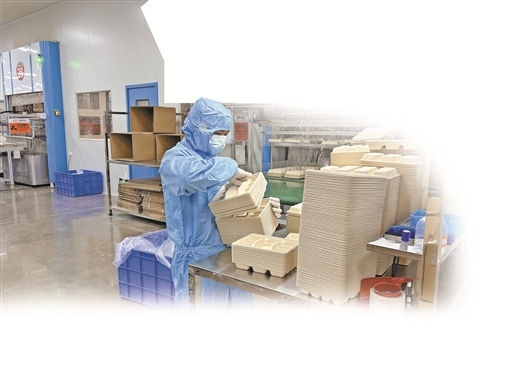
Core Insights - The article highlights the transformation of the sugar industry in Laibin, Guangxi, focusing on technological innovation and circular economy practices to enhance productivity and sustainability [7][14][16] Group 1: Industry Transformation - Laibin contributes to 10% of China's sugar production despite challenging terrain, emphasizing a shift from traditional resource-dependent practices to a technology-intensive, high-value, and green industry model [7][16] - The total industrial chain output value is expected to exceed 16 billion yuan in the 2024/2025 season, with over 7 billion yuan generated from the utilization of by-products [7][12] Group 2: Technological Advancements - The introduction of smart agricultural practices, such as the use of Beidou navigation systems in harvesting, has significantly increased sugarcane yields from 5-6 tons to 7-8 tons per acre [9][10] - Investments of 2 billion yuan in smart upgrades at sugar factories have improved sugar recovery rates by 2.9%, resulting in an additional production of over 2,800 tons of sugar per season [11][15] Group 3: Circular Economy Practices - Laibin has established the largest straw-based biodegradable tableware production base in China, achieving a 100% utilization rate of sugarcane by-products, with an annual capacity of 220,000 tons and a value exceeding 3 billion yuan [13][12] - The comprehensive utilization of by-products, including molasses and filter mud, has created new revenue streams and enhanced the resilience of sugar enterprises against market fluctuations [12][13] Group 4: Economic and Social Impact - The sugar industry in Laibin supports approximately 520,000 agricultural workers, with an average income of 9,650 yuan per farmer in the 2024/2025 season, contributing to rural revitalization [14][16] - The implementation of "order agriculture + price linkage" mechanisms ensures stable income for farmers while allowing them to benefit from rising sugar prices [14]
辉煌“十四五” 壮美新答卷丨崇左:以“链”为擎,激活工业发展新动能
Guang Xi Ri Bao· 2025-12-25 02:57
Group 1: Industry Development - The sugar industry in Chongzuo is undergoing digital transformation through the "Smart Sugar Industry" ecosystem platform, enhancing production efficiency and aiming for a refined sugar output of 190,000 tons in the new sugar season [1] - Chongzuo's industrial strategy during the 14th Five-Year Plan focuses on expanding from a single sugar industry to a comprehensive industrial chain, aiming for high-quality industrial development [2] - The city has established a "411" characteristic industrial system and "3+4" industrial park layout, contributing to a significant increase in the number of industrial enterprises and overall industrial output [2] Group 2: Economic Performance - From 2021 to 2024, Chongzuo has seen an average annual growth of 22.2% in industrial output value, with the number of industrial enterprises increasing from 371 to 673, moving from 11th to 8th in regional rankings [2] - The contribution rate of industry to GDP is expected to exceed 70% in 2024, marking a historic high and positioning industry as a key driver of economic growth [2] Group 3: Investment and Infrastructure - Chongzuo has invested over 14 billion yuan in building more than 1.5 million square meters of standard factory space, creating two "move-in-ready" industrial parks to attract and support projects [3] - The industrial output value of the parks has surged from 64.2 billion yuan in 2020 to 136.1 billion yuan in 2024, demonstrating the effectiveness of the clustering effect [3] Group 4: Technological Innovation - The city is embracing artificial intelligence in manufacturing, with 11 projects selected for the autonomous region's AI application list, indicating a shift from traditional manufacturing to intelligent manufacturing [4] - Chongzuo has established 41 smart factories and introduced advanced technologies such as robotics and drone manufacturing, positioning itself as a leader in the industry [4] Group 5: Environmental Sustainability - As of November this year, renewable energy (wind and solar) accounts for 76.1% of Chongzuo's installed capacity, supporting industrial development and promoting green transformation [4] - The energy consumption per ten thousand yuan of industrial added value has decreased by 39.75%, reflecting a commitment to ecological protection alongside economic growth [4]
广西烟火丨柚壳藏珍传漆香
Guang Xi Ri Bao· 2025-12-25 02:56
Core Viewpoint - The article highlights the craftsmanship and cultural significance of the grapefruit jar (柚罐), made from the peels of Shatian grapefruit, showcasing its historical roots and modern adaptations in production techniques. Group 1: Cultural and Historical Significance - The grapefruit jar is a traditional craft with techniques dating back to the Ming Dynasty, recognized as a representative project of intangible cultural heritage in Guangxi since 2020 [2][5] - The saying "柚壳藏珍,漆香传韵" reflects the cultural value of grapefruit jars, which are traditionally used for storing tea and dried fruits [2] Group 2: Craftsmanship and Production Techniques - Traditional production involves over 60 processes, but craftsman Wang Boyang has streamlined it to 12 while maintaining respect for the material and craftsmanship [2][3] - The process begins with the careful aging of grapefruit peels for at least two years to ensure proper moisture content, which is crucial for preventing deformation during processing [3][4] - Wang's innovative "slow kneading and shaping method" allows for efficient production, reducing the time from over a year to a more manageable timeframe [4] Group 3: Market and Economic Impact - The production capacity in the Yanshan District has reached 20,000 jars per month, with an expected output value of 40 million yuan in 2024 [5] - The unique craftsmanship aligns with global trends favoring "natural aesthetics" and "slow craftsmanship," leading to increased demand in major cities and international markets [5]
AI广西 AI中国 AI东盟丨在标准数据“海洋”里装上AI导航
Guang Xi Ri Bao· 2025-12-25 02:56
Core Insights - The integration of AI technology has significantly improved the efficiency of analyzing Technical Barriers to Trade (TBT) notifications, reducing the processing time from 5-7 days to just 3 days, allowing for precise alerts to businesses [1] - The platforms developed by Guangxi Standard Technology Research Institute, including the China-ASEAN/RCEP Standards Cloud Platform and the WTO/TBT Technical Barriers to Trade Service Platform, have garnered widespread attention for their innovative applications in market regulation [2] Group 1 - The China-ASEAN/RCEP Standards Cloud Platform has accumulated over 2,800 TBT notifications since 2018, with more than 530 notifications recorded since 2025, showcasing the extensive data collection capabilities [2] - The upgraded system allows for automatic matching of relevant information and quick extraction of key content, enhancing the efficiency of data processing by tenfold [2] - The platforms utilize a smart warning algorithm that combines domestic and international standards with TBT notification data, providing businesses with tailored strategies and recommendations based on their product parameters and target country requirements [2] Group 2 - Guangxi Bingke Food Co., Ltd. has expressed satisfaction with the WTO/TBT Technical Barriers to Trade Service Platform, highlighting its role in timely notifications that help mitigate trade risks and adjust production accordingly [3] - The two platforms have gathered over 30,000 ASEAN country standard texts and more than 1.7 million items of TBT notification data, facilitating the export of Chinese products and the import of foreign goods [3] - The application of AI technology is seen as a means to bridge the digital divide between countries, aiming to break down standard barriers and promote smoother trade and closer cooperation in the future [3]