Workflow
Di Yi Cai Jing Zi Xun
icon
Search documents
中国卫星封板涨停
Di Yi Cai Jing Zi Xun· 2026-01-12 02:12
1月12日早盘,中国卫星封板涨停,再创历史新高,成交额超67亿元。 ...
A股指数多数高开,天普股份一字跌停
Di Yi Cai Jing Zi Xun· 2026-01-12 02:05
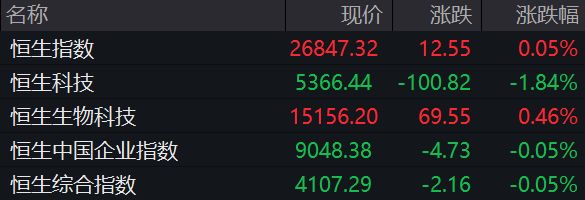
Group 1 - The commercial aerospace concept continues to strengthen, with companies like Jili Rigging and Hangxiao Steel Structure seeing three consecutive trading limit increases, while Tongyu Communication and Electronic Science Chip hit the daily limit, and other companies like Xinke Mobile and Star Map Measurement Control rose over 10% [1] - The Science and Technology Innovation 50 Index has expanded its gains to 1%, currently reported at 1491.58 points [2] - The A-share market opened with the Shanghai Composite Index up 0.35%, the Shenzhen Component Index up 0.47%, while the ChiNext Index opened down 0.13% [3] Group 2 - The AI application sector is active, with e-commerce and short drama gaming sectors leading in gains; the commercial aerospace index continues to develop, while energy metal concept stocks are gaining strength [4] - Individual stocks such as Tianpu Co., Guosheng Technology, and Jiamei Packaging have resumed trading, with Tianpu Co. opening at a daily limit down due to an investigation by the China Securities Regulatory Commission, while Guosheng Technology rose nearly 8% and Jiamei Packaging hit the daily limit [4] - Defu Technology opened down over 11% after terminating the acquisition of 100% equity in Luxembourg Copper Foil [6] Group 3 - The Hong Kong stock market opened with the Hang Seng Index up 0.55% and the Hang Seng Technology Index up 0.88%, with companies like WuXi Biologics, Meituan, Baidu Group, Zijin Mining, and Bilibili rising over 2% [6]
“全球大模型第一股”智谱大涨15%
Di Yi Cai Jing Zi Xun· 2026-01-12 01:52
Market Overview - On January 12, the Hang Seng Index opened up by 0.55%, reaching 26,376.84 points, while the Hang Seng Tech Index rose by 0.88% to 5,737.43 points [1][2] - The Hang Seng Biotech Index increased by 1.15%, and the Hang Seng China Enterprises Index gained 0.75% [2] Sector Performance - Most industry sectors experienced gains, with notable increases in non-ferrous metals, military industry, steel, and coal sectors [2] - The "first global large model stock," Zhizhu, surged nearly 15% after its listing on the Hong Kong Stock Exchange on January 8, where it initially rose by 13% on its first day [2] Company Highlights - Zhizhu's market capitalization approached HKD 70 billion after a single-day increase exceeding 20% on January 9, with its current price at HKD 182.30, reflecting a 14.94% rise [2][3] - Major tech stocks such as Meituan, Baidu Group, and Bilibili saw increases of over 2%, while Tongcheng Travel experienced a decline of over 1% [3][5]
但斌、王庆最新发声:从“924”到现在肯定是个牛市
Di Yi Cai Jing Zi Xun· 2026-01-11 13:13
Market Overview - The A-share market has entered a new phase in 2026, with the Shanghai Composite Index reaching 4120.43 points and total trading volume exceeding 30 trillion yuan [2] - Analysts believe that the market is in a bull phase since the "924" rally, with a focus on improving the quality of listed companies and their competitive advantages [2][6] Investor Sentiment - There has been a shift in investor risk appetite since the "924" rally, leading to a recovery in market sentiment [4] - Analysts predict that undervalued value stocks will be further revalued as investor sentiment stabilizes [4][5] Sector Performance - Growth stocks, particularly in the technology sector, have shown performance since the "924" rally, with a notable revaluation of these stocks [3][4] - The market is currently characterized by structural opportunities, especially in sectors driven by AI and technological advancements [4] International Investor Interest - International investors are increasingly participating in Chinese assets, with a shift in sentiment following profitable investments [7][8] - Morgan Stanley has upgraded its rating on Chinese stocks from neutral to overweight, indicating a belief in a slow bull market [8][9] Future Outlook - The market is expected to continue benefiting from technological advancements and improved competitive environments across various industries [8] - Analysts emphasize the importance of enhancing company quality and profitability to sustain long-term market growth [6]
剑指“AI时代的安卓”,千问抢滩AI硬件核心入口
Di Yi Cai Jing Zi Xun· 2026-01-11 12:57
Core Insights - The emergence of "Physical AI" is accelerating, with significant developments showcased at the 2026 CES and Alibaba Cloud's event in Shenzhen, indicating a shift towards AI integration in physical devices [1][3][4] Group 1: AI Hardware Transformation - AI hardware is evolving from mere marketing gimmicks to genuine intelligent devices capable of perception, understanding, and decision-making, marking a significant step in AI's practical application [3][4] - The Pettichat pet translator, which translates pet sounds into human language with a 94.6% accuracy rate, exemplifies the innovative capabilities of AI hardware [4] - The market for AI hardware is expanding rapidly, with over 1,000 smart hardware products showcased at Alibaba Cloud's event, indicating a growing demand and the entry of numerous brands [6] Group 2: Industry Dynamics - Alibaba Cloud's "Qianwen" model aims to become the Android of the AI hardware sector, facilitating a diverse range of devices to adopt intelligent systems through open-source and adaptable solutions [7][10] - The shift from hardware sales to service-oriented models is becoming prevalent, as companies leverage AI capabilities to enhance user experience and create sustainable profit models [10][11] - The introduction of a licensing fee model for AI services is expected to alleviate cost concerns for hardware manufacturers, encouraging mass production and competitive pricing [10][12] Group 3: Market Outlook - The Chinese AI hardware market is projected to exceed 1.1 trillion yuan by 2025, with a year-on-year growth of 13.4%, indicating a robust growth trajectory for the industry [12]
市场化下光伏产业链面临价值重估
Di Yi Cai Jing Zi Xun· 2026-01-11 11:37
Group 1 - The core viewpoint of the article highlights a significant policy shift in the photovoltaic (PV) industry, marked by the cancellation of export VAT rebates and the cessation of industry self-regulation, indicating a historical turning point for the sector [2][3]. - The Ministry of Finance and the State Taxation Administration announced the cancellation of export VAT rebates for PV products starting April 1, 2026, transitioning the industry into a "no rebate subsidy" phase [3]. - The cancellation of the export VAT rebate follows a period of declining export prices and increased competition in overseas markets, leading to substantial losses across the industry [3][4]. Group 2 - The market reacted sharply to these changes, with significant declines in the prices of polysilicon futures and related stocks, indicating a loss of investor confidence [4][8]. - The recent discussions between the State Administration for Market Regulation and leading companies in the PV sector, including Tongwei Co. and Daqo New Energy, focused on addressing monopoly risks and enforcing compliance with new regulations [4][5]. - Despite rising prices for upstream materials like polysilicon and silicon wafers, downstream component prices have not followed suit, leading to squeezed margins for developers [5][6]. Group 3 - The first quarter is traditionally a slow season for the PV industry, and the anticipated price increases for components face resistance due to weak demand [6][7]. - The shift in policy is prompting a reevaluation of the PV sector's value in the capital markets, with significant sell-offs observed in the stock prices of major companies [7][8]. - Analysts suggest that while the overall valuation of the PV industry is at historical lows, the uncertainty surrounding future profitability and market dynamics poses challenges for attracting investment [8].
马斯克颠覆式提出能源终极方案
Di Yi Cai Jing Zi Xun· 2026-01-11 11:15
Group 1 - Tesla CEO Elon Musk proposed that the future measure of wealth will be in "watts," emphasizing energy control rather than currency [2] - Musk outlined a "three-step" plan for solar energy, starting with the use of Tesla's Megapack to store excess electricity and improve grid efficiency [2] - The second step involves launching solar AI satellites into space to maximize solar energy utilization, requiring approximately 8,000 launches to complete deployment [2][3] Group 2 - In 2025, Tesla's energy storage products achieved a total installation capacity of 46.7 GWh, a year-on-year increase of 48.7%, with a record quarterly installation of 14.2 GWh in Q4 [3] - The concept of space photovoltaics is gaining traction, with industry leaders noting that solar panels in space can generate 7 to 10 times more energy than those on Earth [4] - Companies like JinkoSolar and Trina Solar are advancing their plans for space photovoltaics, with JinkoSolar's chairman highlighting the potential for continuous energy generation in space [4][5] Group 3 - JunDa Co. announced a strategic partnership with Shangyi Optoelectronics to invest in perovskite battery technology for space energy applications, indicating the vast potential of the space photovoltaic market [5] - The space economy, including satellite internet and deep space exploration, requires stable energy sources, and space photovoltaics can provide high efficiency and continuous power generation [5]
证监会:进一步提高入市规模比例
Di Yi Cai Jing Zi Xun· 2026-01-11 07:44
在1月11日举行的第30届中国资本市场论坛上,中国证监会副主席陈华平发言表示,将持续完善长钱长 投的制度环境,合力推动各类中长期资金进一步提高入市规模比例,优化合格境外投资者等制度安排, 让各类资金愿意来,留得住,发展得好。截至去年末,各类中长期资金合计持有A股流通市值约为23万 亿元,较年初增长36%;权益类基金规模由去年初的8.4万亿元增长到11万亿元左右。 ...
CES访谈|盖茨、亚马逊抢投硅谷黑马,光学芯片如何驱动物理AI
Di Yi Cai Jing Zi Xun· 2026-01-11 07:19
Core Insights - The focus of the 2026 CES is shifting from large language models (LLMs) to robotics and physical AI, emphasizing the importance of sensors, particularly optical semiconductors, in making AI applicable in the real world [1] - Lumotive's programmable optical chip, which operates without moving parts, is gaining attention for its ability to redefine laser radar (LiDAR) technology, making it smaller, more efficient, and easier to produce [1] Group 1: Technological Advancements - The bottleneck for physical AI is not in the models but in perception, highlighting the need for advanced sensors to enable robots to effectively interact with the real world [4] - Lumotive's optical semiconductors significantly enhance sensor performance by improving size, cost, durability, reliability, and efficiency, which are crucial for long-term operation in complex environments [4][5] - The software configurability of Lumotive's optical chip allows for the creation of multiple "virtual sensors," enabling dynamic switching between different perspectives, resolutions, and scanning strategies, thus fostering algorithm innovation [5] Group 2: Application Scenarios - Lumotive is actively collaborating in three main sectors: robotics, industrial automation, and smart infrastructure, all of which require high precision, safety, and reliability in sensors while being sensitive to cost and size [6] - The company is also exploring opportunities in commercial vehicles, heavy machinery, and forklifts, with a long-term vision for consumer vehicles and electronics [6] - The integration of LiDAR technology into high-end consumer devices, such as Apple smartphones, opens up possibilities for more consumer-grade 3D perception applications [6] Group 3: Investment Landscape - Notable investors in Lumotive include Bill Gates, Samsung, and Amazon, indicating strong confidence in the foundational technology rather than specific products [8] - The investment from strategic partners like Samsung and Amazon reflects their interest in the technology's applicability across consumer electronics, cloud computing, and smart devices [8] - Lumotive represents a paradigm shift where light is evolving from a physical component to a programmable, calculable, and scalable resource, similar to how CMOS cameras revolutionized smartphones [8]
顶级专家回应马斯克外科医生“失业论”
Di Yi Cai Jing Zi Xun· 2026-01-11 07:19
Core Viewpoint - Elon Musk predicts that general artificial intelligence (AGI) will arrive by 2026, with robots surpassing human surgical skills within three years and achieving complete superiority over human surgeons in four years [1][3]. Group 1: Impact on the Medical Field - Musk's statements have caused significant concern within the global medical community, suggesting a potential crisis for doctors [3]. - The concept of AGI refers to artificial intelligence systems that possess cognitive abilities comparable to or exceeding those of humans, capable of performing complex tasks and learning autonomously [3]. Group 2: Technological Developments - Neuralink, Musk's brain-machine interface company, is already using robots for "brain insertion" surgeries, with over 10,000 patients reportedly waiting for procedures [4]. - The surgical robots developed by Neuralink have significantly improved efficiency, reducing the time to implant a single electrode from 17 seconds to 1.5 seconds [4][5]. - The ultimate goal for Neuralink's surgical robots is to automate the entire surgical process, allowing procedures to be completed in a time frame suitable for a lunch break [4]. Group 3: Expert Opinions - Experts express skepticism about the feasibility of robots completely replacing human surgeons in the near term, emphasizing the need for human oversight in current robotic surgeries [7][8]. - Many medical professionals believe that while robots can enhance surgical efficiency, the complete autonomy of surgical robots is still a long way off, requiring significant advancements in technology and a shift in medical practice [7][8]. Group 4: Investment Landscape - The surgical robot market has seen a surge in investment, with significant funding rounds and IPOs indicating strong investor interest [9][10]. - The market for surgical robots is currently dominated by a few leading companies, making it challenging for new entrants to gain market share [10]. - The Chinese vascular intervention robot market is projected to grow significantly, with estimates suggesting a market size of 5.824 billion yuan by 2030, reflecting a compound annual growth rate of 90% [12].