Feng Huang Wang Cai Jing

Search documents
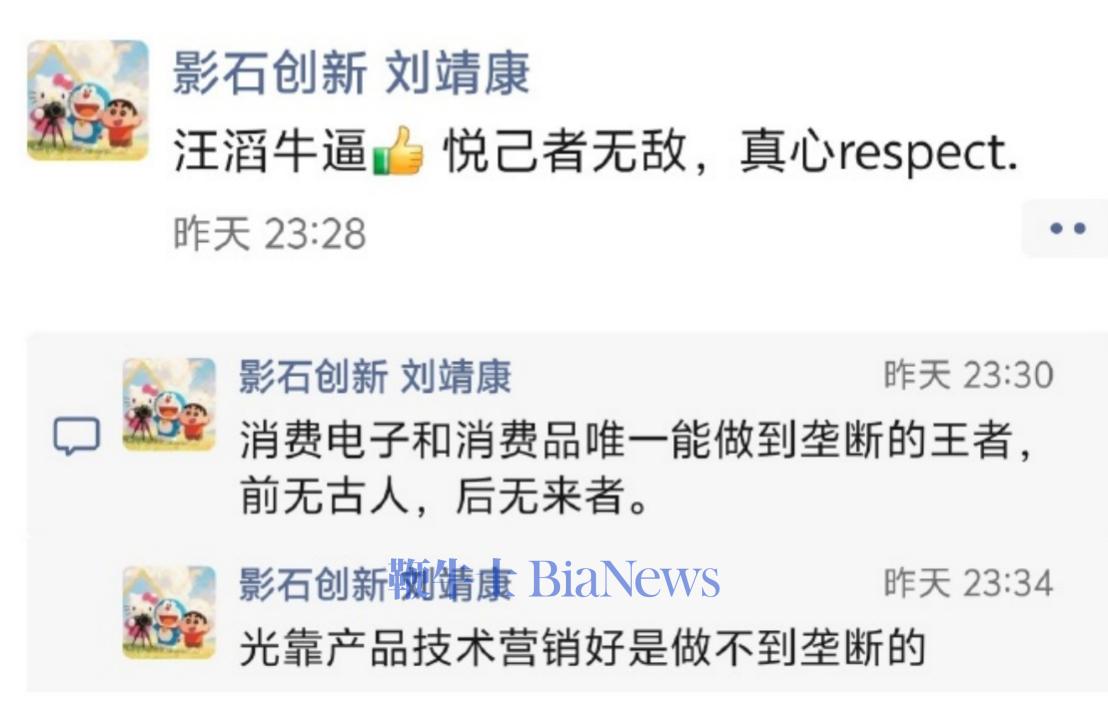
影石董事长朋友圈「阴阳」大疆「垄断」,消费电子暗战变明战
Feng Huang Wang Cai Jing· 2025-10-31 02:08
Core Viewpoint - A business war ignited by social media comments is unfolding between two tech giants in Shenzhen, with Liu Jingkang of YingShi Innovation and Wang Tao of DJI at the forefront of this confrontation [1][5]. Group 1: Market Dynamics - DJI has captured 43% of the global panoramic camera market within three months of launching its first product, posing a significant threat to YingShi [3][10]. - DJI's market share in the action camera sector has reached 66%, surpassing GoPro to become the global leader [9][10]. - The competition has intensified as both companies have shifted from a non-aggression stance to a full-scale market battle, with price wars and public disputes becoming common [5][15]. Group 2: Financial Performance - YingShi reported a revenue of 29.40 billion yuan for Q3 2025, a year-on-year increase of 92.64%, but its net profit fell by 15.90%, indicating a "growth without profit" situation [13]. - For the first three quarters of 2025, YingShi's cumulative revenue reached 66.11 billion yuan, up 67.18% year-on-year, while net profit declined by 5.95% [13]. - In contrast, DJI's revenue is projected to be around 800 billion yuan in 2024, significantly larger than YingShi's expected revenue of 55.74 billion yuan, highlighting the scale disparity between the two companies [20]. Group 3: Strategic Responses - Liu Jingkang's comments about DJI's "monopoly" may be a strategic move to shift focus from YingShi's financial struggles and create a favorable narrative for its expansion plans [14]. - DJI's aggressive pricing strategy aims to deter competitors by making the market less profitable, while YingShi seeks to leverage marketing tactics to gain traction in the public discourse [7][19]. - Both companies are expanding into new markets, with DJI launching a vacuum robot and YingShi increasing its R&D investment, indicating a mutual recognition of the need for growth beyond their current segments [22]. Group 4: Industry Implications - The ongoing rivalry reflects a broader trend in the tech industry, where intense competition may lead to either collaborative growth or a zero-sum game scenario [23]. - The rapid technological advancements and high product substitutability in the consumer electronics sector make it challenging for any single company to achieve true monopoly status [9][19].


深夜大跳水,暴跌11%,创三年来最大跌幅
Feng Huang Wang Cai Jing· 2025-10-30 23:00
Market Overview - The U.S. stock market faced pressure with all three major indices closing lower: Nasdaq down 1.57%, S&P 500 down 0.99%, and Dow Jones down 0.23%, primarily driven by declines in technology stocks [1] - Meta's stock fell 11.33%, marking its largest drop in three years, while Microsoft's stock decreased by 2.92%, as investors expressed concerns over rising expenditures in the AI sector [1] Semiconductor Sector - The semiconductor sector also experienced a downturn, with the Philadelphia Semiconductor Index dropping 1.53%, where 22 out of 30 component stocks declined, including AMD down 3.59%, Broadcom down 2.46%, and Nvidia down 2%, with its market value falling below $500 billion [2] - Analyst Matt Maley from Miller Tabak indicated that while this does not suggest an imminent AI bubble burst or a major market reversal, it does increase the likelihood of a short-term pullback [2] Chinese Stocks - Most popular Chinese stocks also saw declines, with notable drops including Xiaoma Zhixing down 6.79%, Baidu down 4.54%, Alibaba down 3.36%, Tencent Music down 3.23%, JD down 2.88%, Li Auto down 2.34%, NIO down 1.82%, Pinduoduo down 1.5%, and Xpeng down 0.99% [2] Economic Concerns - Ongoing debates regarding the U.S. economic fundamentals and policy direction were highlighted, with Goldman Sachs CEO David Solomon warning that if U.S. economic growth does not accelerate, rising debt levels could pose a "cleansing" risk to the economy [2] - Solomon noted that fiscal stimulus and aggressive fiscal operations have become deeply embedded in the U.S. and other economies, exacerbated by pandemic-related measures, and emphasized that the key to overcoming these challenges lies in growth [2] Recession Outlook - Solomon also stated that the likelihood of a recession in the near term is "low" and dismissed concerns that a few bankruptcy cases could trigger a systemic credit crisis in the U.S. [3] Federal Reserve Criticism - U.S. Treasury Secretary Scott Bessen criticized the Federal Reserve's recent cautious statements, suggesting that the Fed needs comprehensive reform despite appreciating the recent 25 basis point rate cut [4] - Bessen pointed out that the Fed's inflation forecasts have been inaccurate and indicated plans to conduct a second round of candidate interviews in early December to select a successor for Fed Chair Jerome Powell, aiming for a leader who can reshape the Fed's internal processes and operations [4]




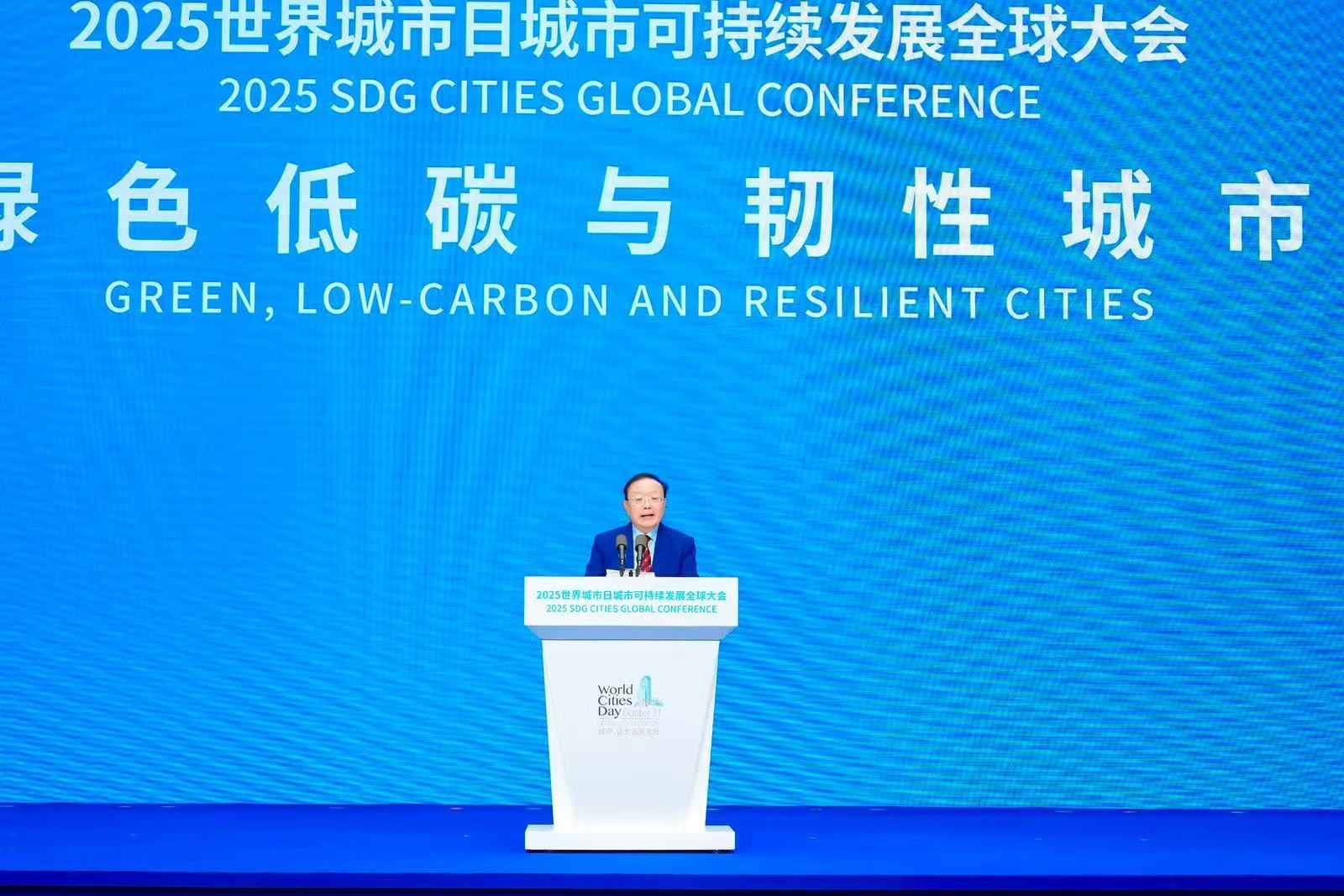
专访魏建国:共筑绿色低碳韧性之城,共促全球可持续发展
Feng Huang Wang Cai Jing· 2025-10-30 14:22
Group 1: Core Perspectives - The choice of Shanghai as the host for the UN Sustainable Development Center is a recognition of its achievements in sustainable development and its role as a bridge between developed and developing countries [4] - The emphasis on green and low-carbon cities is not only an environmental issue but also a profound transformation in economic development methods, essential for high-quality economic growth [5] - The development of resilient cities is crucial in the context of increasing global climate change and urban risks, requiring scientific planning and smart technology integration [6] Group 2: Interconnected Strategies - Green and low-carbon initiatives provide direction for sustainable development, while resilient city development ensures its security, functioning together like two wheels of a vehicle [7] - The establishment of the UN Development Program's Global Sustainable Development Center in Shanghai signifies an upgrade in global governance concepts, reflecting a deep transformation in urban civilization models [8]
美股指数集体低开,纳指跌0.79%,Meta跌11%
Feng Huang Wang Cai Jing· 2025-10-30 13:42
Core Viewpoint - U.S. stock market opened lower with significant declines in major indices, while Meta and Google reported contrasting financial results impacting their stock performance [1] Group 1: Market Performance - Dow Jones index fell by 0.41% [1] - S&P 500 index decreased by 0.52% [1] - Nasdaq Composite index dropped by 0.79% [1] Group 2: Company Specifics - Meta's stock plummeted by 11% after reporting a net profit of $2.7 billion for Q3, which was significantly below analyst expectations [1] - Meta plans to raise at least $25 billion through bond issuance [1] - Google's stock surged over 6% as the company exceeded analyst expectations in Q3 revenue, profit, and full-year capital expenditure guidance, with multiple key business segments showing double-digit percentage growth [1]

北京银行总资产增至4.89万亿元,不良贷款率降至1.29%
Feng Huang Wang Cai Jing· 2025-10-30 13:03
Core Insights - Beijing Bank reported a slight decline in operating income for the first three quarters of 2025, amounting to 51.588 billion yuan, a year-on-year decrease of 1.08% [1] - The bank's net profit attributable to shareholders increased by 0.26% year-on-year, reaching 21.064 billion yuan [1] - The weighted average return on equity stood at 9.86% as of the end of the third quarter [1] Financial Performance - Total assets of Beijing Bank reached 4.89 trillion yuan, reflecting a growth of 15.95% since the beginning of the year [1] - The total loan principal amounted to 2.37 trillion yuan, with a year-to-date increase of 7.38%, and loans constituted 48.51% of total assets [1] - The bank's total deposit principal was 2.64 trillion yuan, marking a 7.60% increase from the start of the year, with deposits accounting for 58.50% of total liabilities [1] Asset Quality - The asset quality of Beijing Bank showed improvement, with a non-performing loan ratio decreasing to 1.29%, down by 0.02 percentage points from the beginning of the year [1] - Specific loan categories such as technology finance, green finance, and inclusive small and micro enterprise loans saw significant growth, with increases of 20.16%, 26.20%, and 16.91% respectively [1]

黄金大幅回调还能买吗?专家最新研判
Feng Huang Wang Cai Jing· 2025-10-30 11:19
Group 1 - The core driver of the recent rise in gold prices is geopolitical tensions leading to significant increases in global central bank gold reserves and the efficiency of market participation through gold ETFs [1][2] - Historical data shows that gold prices have experienced two major upward cycles from 1970-1980 and 2000-2010, with central banks projected to purchase 1136 tons, 1037 tons, and 1045 tons of gold from 2022 to 2024, marking one of the fastest accumulation rates in modern history [1][2] - China's central bank has resumed gold purchases since November 2024, increasing its holdings for 11 consecutive months, while global central bank net gold purchases in Q1 2025 reached 244 tons, indicating a slowdown in buying speed [1][2] Group 2 - The recent significant drop in gold prices below the $4000 mark is attributed to its safe-haven properties, asset allocation diversification benefits, and market sentiment, with expectations of a new interest rate cut cycle emerging due to weak U.S. employment data and manageable inflation [2][3] - The ongoing high debt levels in major economies are prompting investors to prepare for "currency devaluation trades," thereby maintaining the long-term logic supporting gold prices [3]
惠理集团盛今:港股科技股相较于美股科技股有五大优势
Feng Huang Wang Cai Jing· 2025-10-30 11:19
Core Viewpoint - The interview with Sheng Jin from Huiri Group highlights the unique advantages and investment value of Hong Kong technology stocks compared to U.S. tech stocks, particularly in the context of the current investment landscape. Group 1: Investment Highlights of Hong Kong Technology Stocks - Significant valuation discount: As of October 2025, the Hang Seng Technology Index has a PE ratio of 23, which is at the 30-40% historical percentile, while the Nasdaq Index has a PE ratio of 37, at the 90% historical percentile, indicating a relative valuation advantage for Hong Kong tech stocks. Additionally, the PEG ratio for the Hang Seng Technology Index is 0.5, compared to 1.6 for the Nasdaq, suggesting that the growth potential of Hong Kong tech stocks is significantly underestimated [2]. - Continuous policy dividends: The introduction of China's "new quality productivity" strategy provides unprecedented development opportunities for Hong Kong tech companies. Specific measures such as an increase in the R&D expense deduction ratio to 150%, a 500 billion yuan investment in computing infrastructure, and AI industry support policies directly benefit the development of related enterprises [2]. - Improving fundamentals: Data shows that the profitability of Hong Kong tech companies is significantly improving, with the ROE of the Hang Seng Technology Index rising from 7.9% in 2023 to 13.5% by the second quarter of 2025. The gradual application of AI technology, overseas expansion of new energy vehicle companies, and technological breakthroughs in semiconductor firms are strong drivers for performance growth [2]. Group 2: Market Dynamics and Sector Composition - Strong capital inflow: Southbound capital has become a crucial support for the Hong Kong stock market, with a cumulative net purchase exceeding 1.21 trillion HKD by 2025, of which over 210 billion HKD is in the technology sector. Additionally, the anticipated interest rate cuts by the Federal Reserve create a favorable macro environment for foreign capital inflow [3]. - Balanced industry layout: The Hong Kong technology sector covers multiple key areas, including the internet, semiconductors, and new energy vehicles, forming a diversified industrial ecosystem. This balanced layout allows investors to share in the structural dividends of China's economic growth while effectively diversifying risks associated with a single industry [3].
“创业教父”遇考验:亲弟清仓套现 投诉10万+ 拉卡拉港股IPO前景几何?
Feng Huang Wang Cai Jing· 2025-10-30 10:09
Core Viewpoint - The company, Lakala, is facing significant challenges as it prepares for its IPO on the Hong Kong Stock Exchange, with declining performance metrics and increasing compliance issues overshadowing its market position as a leading digital payment provider in Asia [1][3]. Group 1: Company Performance - Lakala claims to be a leading digital payment and business solutions provider in Asia, with a market share of 9.4% in the independent digital payment service sector, amounting to over 4 trillion yuan in total payment volume for 2024 [4][6]. - Despite its leading position, Lakala's revenue has shown a downward trend, with figures of 5.361 billion yuan in 2022, 5.928 billion yuan in 2023, and 5.754 billion yuan in 2024, while net profits fluctuated from a loss of 1.438 billion yuan in 2022 to a profit of 457 million yuan in 2023, and a profit of 351 million yuan in 2024 [6]. - In the first three quarters of 2025, Lakala reported a revenue of 4.068 billion yuan, a year-on-year decrease of 7.32%, and a net profit of 339 million yuan, down 33.9% year-on-year, attributed to pressures in the bank card payment business [7][8]. Group 2: Financial Health - Lakala's financial health is concerning, with the company admitting to a net loss in 2022 and potential future profitability issues. As of June 30, 2025, the company reported net current liabilities, indicating liquidity risks that could limit operational flexibility [8][9]. - The cash flow situation is alarming, with a 63% year-on-year drop in net cash flow from operating activities, amounting to 290 million yuan in the first three quarters of 2025 [8]. Group 3: Shareholder Actions - The founder's brother, Sun Haoran, is exiting the company by selling his shares, which amounts to a total cash-out of 493 million yuan since Lakala's A-share listing in 2019 [9][10]. - Lenovo Holdings, the largest shareholder, has also reduced its stake from 26.54% to 23.54%, cashing out approximately 580 million yuan in the process, indicating a trend of diminishing confidence among major stakeholders [10][11]. Group 4: Compliance Issues - Lakala is facing a severe compliance crisis, with over 100,000 complaints filed against it on the Black Cat Complaint platform, highlighting issues such as unauthorized fees and poor service [14][15]. - The company has incurred multiple fines totaling 16.76 million yuan from 2022 to June 2025 due to various regulatory violations, including improper transaction management and failure to adhere to customer due diligence requirements [19][20].


“创业教父”遇考验:亲弟清仓套现,投诉10万+,拉卡拉港股IPO前景几何?
Feng Huang Wang Cai Jing· 2025-10-30 07:52
Core Viewpoint - The company Lakala, once a leader in the digital payment sector, is facing significant challenges as it prepares for its IPO in Hong Kong, with declining revenues, increasing complaints, and compliance issues overshadowing its market position [1][3][25]. Group 1: Company Performance - Lakala claims to be a leading digital payment and business solutions provider in Asia, with a market share of 9.4% in the independent digital payment service sector, amounting to over 4 trillion yuan in total payment volume for 2024 [5][4]. - The company's revenue from 2022 to 2024 shows a decline, with figures of 5.361 billion yuan in 2022, 5.928 billion yuan in 2023, and 5.754 billion yuan in 2024, while profits fluctuated from a loss of 1.438 billion yuan in 2022 to a profit of 457 million yuan in 2023, and a profit of 351 million yuan in 2024 [7][10]. - In the first three quarters of 2025, Lakala reported a revenue of 4.068 billion yuan, a year-on-year decrease of 7.32%, and a net profit of 339 million yuan, down 33.9% year-on-year, attributed to pressures in the bank card payment business [8][11]. Group 2: Business Structure and Challenges - The company’s core digital payment services account for 89% of its revenue, indicating a heavy reliance on a single business line that is facing industry growth bottlenecks [11]. - Lakala's cross-border payment business saw a significant increase of 77.56% year-on-year in the first three quarters of 2025, reaching 60.2 billion yuan, but this still represents less than 2% of the company's total payment volume [11]. - The company has acknowledged potential liquidity risks due to net current liabilities recorded as of December 31, 2022, and June 30, 2025, which may limit operational flexibility [11]. Group 3: Compliance Issues - Lakala is currently facing a compliance crisis, with over 100,000 complaints filed on the Black Cat Complaint platform, highlighting issues such as unauthorized fees and poor service [26][30]. - The company has been penalized multiple times for regulatory violations, including a fine of 2.5 million yuan for various infractions related to transaction management and customer due diligence from 2022 to June 2025 [33][34]. - Recent fines include 250,000 yuan for violations of acquiring business management regulations and 4.06 million yuan for failing to meet customer identification requirements [33][34]. Group 4: Shareholder Actions - The founder's family and early investors are reducing their stakes in Lakala, with significant sell-offs by major shareholders, including a total cash-out of 493 million yuan by the founder's brother [16][19]. - Lenovo Holdings, the largest shareholder, has also been gradually reducing its stake, from 26.54% to 23.54%, raising concerns about the company's attractiveness to investors [19][22].

市场震荡调整,创业板指低开低走跌近2%,全市场4100只个股飘绿
Feng Huang Wang Cai Jing· 2025-10-30 07:13
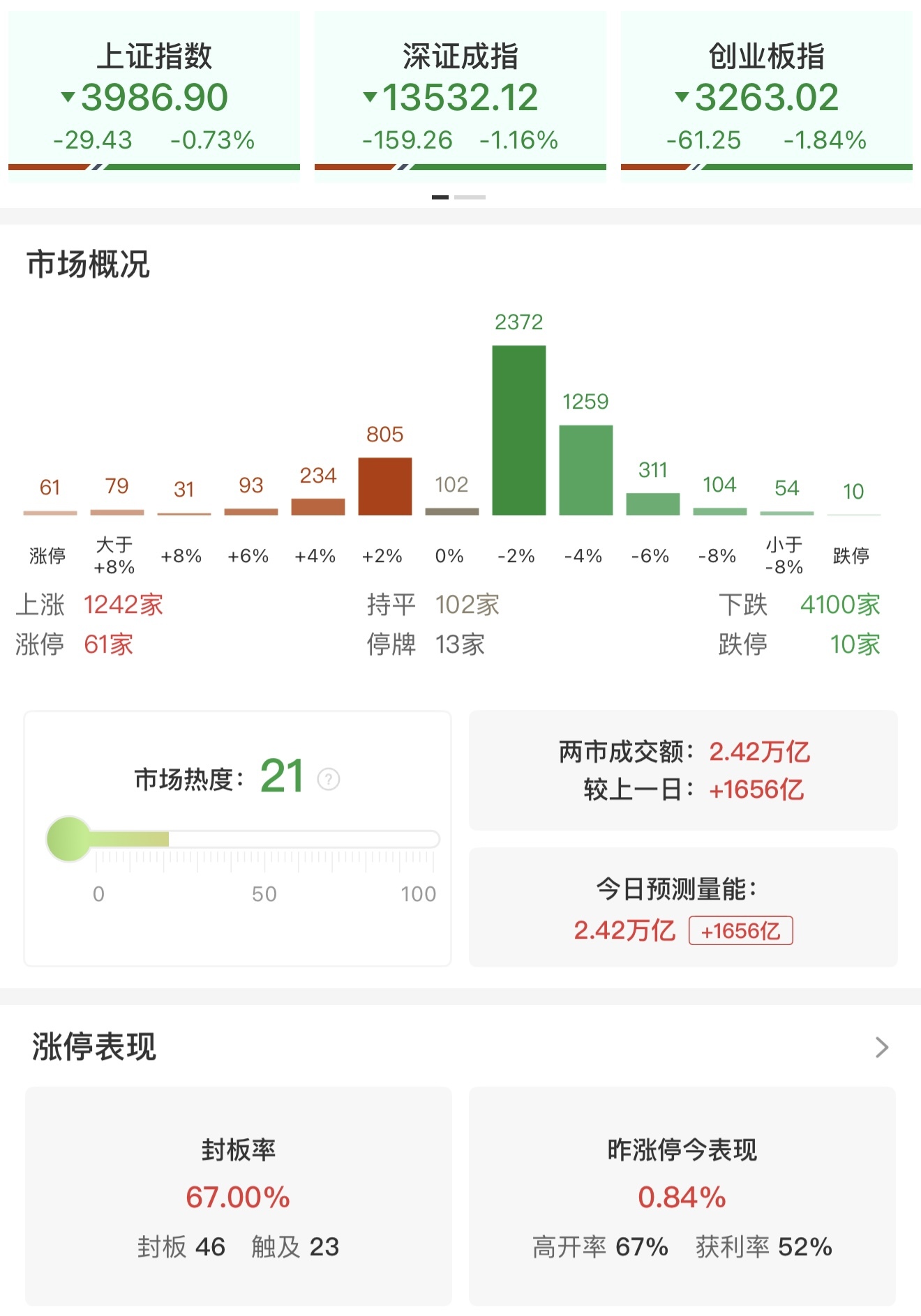
Market Overview - The market experienced fluctuations with all three major indices showing significant declines, particularly the ChiNext index which fell nearly 2% and the Shanghai Composite Index dropping below 4000 points [1] - The total trading volume in the Shanghai and Shenzhen markets reached 2.42 trillion yuan, an increase of 165.6 billion yuan compared to the previous trading day [1] - By the end of the trading session, the Shanghai Composite Index decreased by 0.73%, the Shenzhen Component Index fell by 1.16%, and the ChiNext Index dropped by 1.84% [1] Sector Performance - Energy metals, steel, quantum technology, and battery sectors showed the most significant gains, while sectors such as CPO, gaming, and coal experienced the largest declines [1] - A total of 4100 stocks in the market declined, indicating a broad-based sell-off [1] Notable Stocks - Lithium mining stocks surged, with Tianqi Lithium hitting the daily limit [1] - Quantum technology stocks were active, with Shenzhou Information achieving two consecutive limit-ups and Geer Software hitting the limit four times in six days [1] - The battery sector showed strength with both Shida Shenghua and Tianji Shares reaching the daily limit [1] - The energy storage sector saw some activity, with Tongrun Equipment achieving two consecutive limit-ups [1] - Conversely, computing hardware stocks weakened significantly, with Tianfu Communication and Xinyi Sheng experiencing substantial declines [1] - The gaming sector faced severe losses, with Giant Network nearing a limit-down situation [1] - The coal sector mostly declined, with Antai Group hitting the limit-down [1] Limit-Up Performance - The limit-up performance showed a sealing rate of 67% with a profit rate of 0.84% [3] - The sealing rate for stocks that hit the limit was 67%, indicating a strong performance in this category [3]