美国经济政策

Search documents
我们赢麻了
Xin Lang Cai Jing· 2026-02-25 17:54
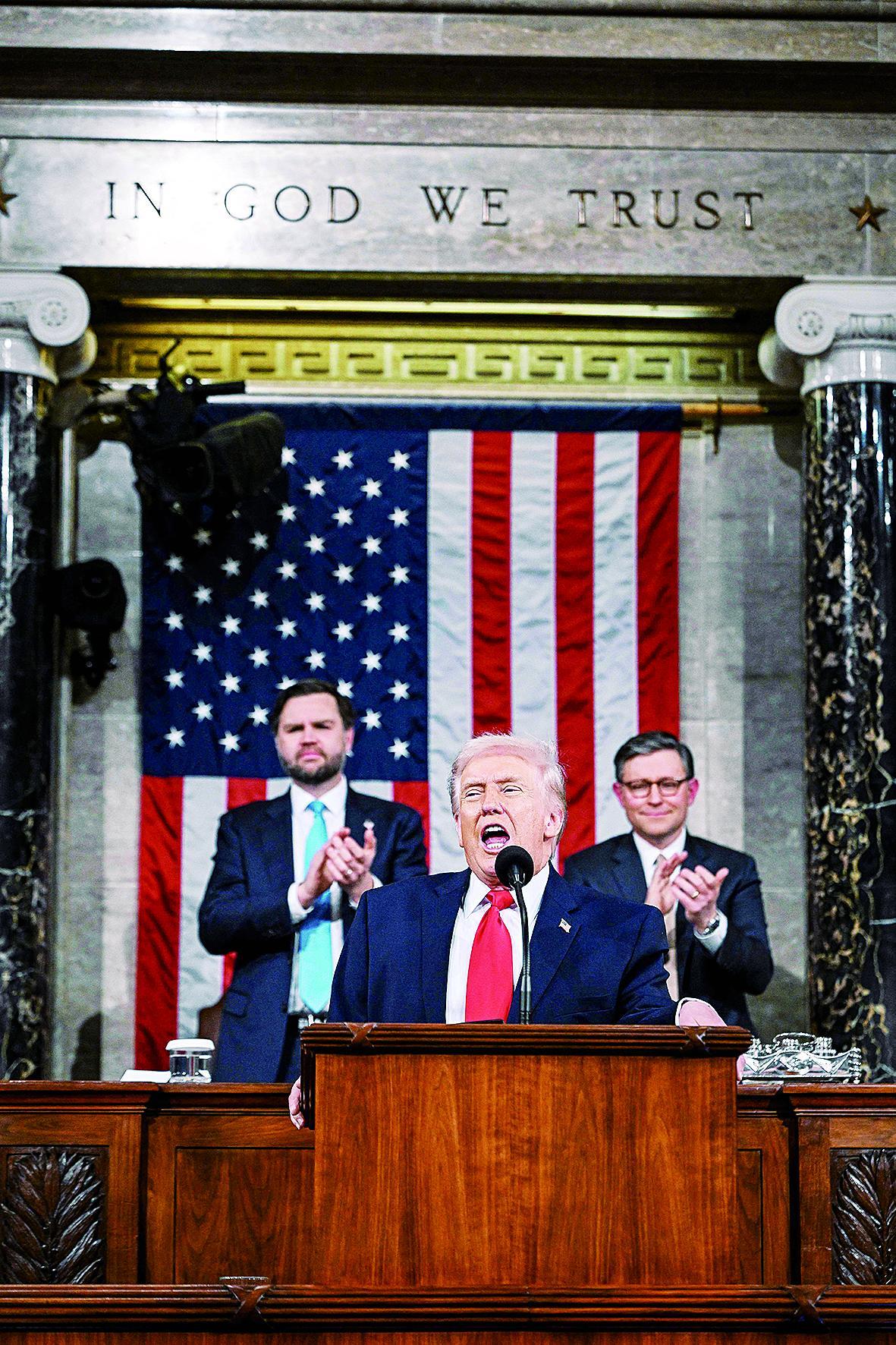
Group 1 - President Trump emphasized the economic achievements during his address, claiming the U.S. is in a "golden age" and is "stronger, better, and richer than ever before" [4][7] - A poll released prior to the address indicated that 55% of respondents believe the U.S. is in a worse state than a year ago, contrasting Trump's optimistic view [4] - Trump called for legislation to prohibit insider trading by Congress members, specifically mentioning former Speaker Nancy Pelosi, highlighting ongoing tensions between him and the Democratic Party [5][6] Group 2 - The address lasted approximately 110 minutes, focusing primarily on domestic issues, including economic stimulation and immigration policies [7][8] - Trump claimed to have curbed inflation, driven stock prices to new highs, and reduced prices for drugs, gasoline, and housing, aiming to alleviate public dissatisfaction with his economic policies [7][8] - The speech included a strong stance against Iran, asserting that the U.S. will never allow Iran to possess nuclear weapons and accusing Iran of developing missiles capable of threatening the U.S. [6][8]

20万亿巨头发逃离信号,究竟看到了什么?
华尔街见闻· 2026-02-09 10:16
Core Viewpoint - Amundi, Europe's largest asset management company, signals a significant shift by reducing investments in dollar assets and focusing on Europe and emerging markets, warning that the dollar will continue to weaken if U.S. economic policies remain unchanged [1][2]. Group 1: Amundi's Perspective - Amundi, as a conservative investor, is particularly averse to unquantifiable tail risks and the failure of asset correlations, which are both evident in the U.S. market outlook for 2026 [1]. - The analysis by Amundi's Chief Investment Officer indicates a fundamental shift in the perception of U.S. Treasury bonds and the dollar as safe-haven assets [1]. Group 2: Economic Forecasts - Amundi predicts that the U.S. real GDP growth will slow significantly to 1.6% by 2026, down from nearly 3% in 2023-2024, driven by structural factors such as exhausted private demand and diminishing marginal utility of fiscal stimulus [2]. - The uncertainty surrounding U.S. tariff policies is suppressing corporate capital expenditure, further impacting investment sentiment [2]. Group 3: Seven Certainties - Amundi outlines seven strategic pillars indicating a bearish outlook on dollar assets, including expectations of rising inflation, geopolitical risks, and a preference for European and emerging market bonds over U.S. Treasuries [3]. - The firm emphasizes the need for diversification into non-dollar assets and commodities to hedge against dollar risks [3]. Group 4: Structural Changes - The past year has shown a decline in the dollar's value against a basket of currencies, indicating poor performance of U.S. assets when measured in foreign currencies [4]. - The correlation between the dollar and U.S. equities and bonds has fundamentally reversed, leading to simultaneous declines in these assets [4][6]. Group 5: Market Dynamics - Gold prices have surged to approximately $5,000, reflecting a growing trend among investors to protect against dollar depreciation and other tail risks [5]. - The traditional assumption that U.S. Treasuries are risk-free has been challenged by rising debt interest payments, leading to a transformation in their risk profile [5][6]. Group 6: Economic Paradox - The U.S. faces a paradox where it seeks to reduce imports while expecting foreign nations to continue purchasing U.S. debt, creating a potential liquidity crisis for the dollar [7]. - The current economic landscape reveals a K-shaped recovery, where top-tier tech companies thrive while traditional industries struggle under high interest rates and inflation [7].

贵金属市场波动、政策变革与历史镜鉴
Zhao Shang Qi Huo· 2026-02-05 07:03
Report Summary 1. Report Industry Investment Rating No information provided. 2. Core Viewpoints of the Report The report analyzes the volatility logic of the precious metals market and the direction of US economic policies from four dimensions: historical review, current market characteristics, policy reform challenges, and investment insights. It points out that although the precious metals market has recently experienced a sharp decline, the long - term positive logic remains unchanged, and investors are advised to seize the layout window after the correction while controlling leverage levels [1][14][18]. 3. Summary by Directory 3.1 Historical Review: The Story of the Silver Squeeze in 1979 - 1980 - **Era Background**: In the 1970s, the US was in a stagflation quagmire. After the collapse of the Bretton Woods system, commodities prices soared, and the Hunt brothers hoarded silver with the goal of "silver replacing gold as a new reserve asset" [4]. - **Operation Path**: The Hunt brothers adopted a trinity monopoly layout, including spot monopoly (hoarding 1/3 of the world's circulating silver and controlling 69% of COMEX inventory), futures squeeze (establishing 200 million ounces of futures long positions with a leverage ratio of over 20 times), and financing design (using oil assets as collateral for chain lending) [5]. - **Regulatory Intervention and Market Crash**: In 1980, regulatory measures such as "Silver Rule 7" and a sharp increase in the margin ratio led to the collapse of the Hunt brothers' silver operation. The Fed launched a $1 billion rescue plan [6]. 3.2 Current Market: Similarities and Core Differences with 1979 - **Three Macro - environmental Commonalities**: Both periods show characteristics of abundant liquidity and lack of fiscal discipline, face resource competition and re - inflation risks, and have the Fed's intention to change policies [7]. - **Common Signs at the Micro - level**: Both market situations show "squeeze" signals, with large international banks in the short - selling camp, and regulators take measures such as raising margin ratios [8]. - **Fundamental Differences in Underlying Logic**: The 1979 market lacked physical demand support, while the current silver rise is driven by real industrial demand. The current risk control is stronger, and the game structure is more dispersed [9]. 3.3 Policy Reform: Wash's Policy Proposals and Real - world Challenges - **Wash's Core Policy Blueprint**: Wash proposes a policy combination of "interest rate cuts + balance - sheet reduction", including reducing the balance sheet to control inflation expectations, defending fiscal discipline, and advocating cross - cycle adjustment based on medium - and long - term economic trends [10]. - **Three Real - world Constraints for Policy Implementation**: There are constraints in liquidity, political格局, and the risk of chaotic market expectations [11]. - **Historical Cycle: Policy Swings of Fed Chairmen**: Historical Fed chairmen's policies have swung between "discipline adherence" and "political compromise". Wash's policy concept is similar to Volcker's, but he still faces real - world challenges [12][13]. 3.4 Causes and Long - term Logic of Precious Metals Market Volatility - **Three Driving Factors for the Recent Sharp Decline**: Policy expectation reconstruction, high - leverage stampede, and technical correction needs [14]. - **Long - term Core Logic Supporting Precious Metals**: The continuous weakening of the US dollar's credit and the continuation of the central bank's gold - buying wave [15]. 3.5 Core Insights and Investment Outlook - **Market Law Insights**: Squeezing is essentially a liquidity game, supply and demand are the ultimate price anchors, and rule changes are key variables [16]. - **Investment Outlook**: The recent sharp decline in the precious metals market has squeezed out short - term bubbles. Many investment banks predict that the gold price will reach $5,500 - $6,000 per ounce by the end of 2026. Investors are advised to seize the layout window after the correction [17][18].
24小时之内,特朗普与美联储的博弈正式结束,六月份将是分水岭
Sou Hu Cai Jing· 2026-01-31 09:06
Core Viewpoint - The ongoing power struggle between the Federal Reserve and the White House signals important implications for the future of the global economy, particularly with the upcoming appointment of a new Fed chair in June [1]. Group 1: Federal Reserve Decisions - The Federal Reserve announced on January 29 to maintain interest rates, marking the first pause since September 2025, with expectations for a rate cut in June 2026 [1]. - Powell stated that the U.S. economy is on a "solid foundation," and both inflation and employment risks have "diminished," indicating that a rate cut is unlikely in the near term [3]. - The core inflation rate in the U.S. has not yet reached the 2% target, and tariffs are a significant factor in the Fed's decision-making process [3]. Group 2: Leadership Transition - Kevin Warsh is set to replace Jerome Powell as the next Fed chair, which may introduce a more aggressive economic policy approach [1][4]. - Warsh advocates for a balance between encouraging the real economy and managing liquidity, which could lead to greater market volatility [4]. - The transition from Powell to Warsh raises questions about the consistency of future policies between the Fed and the White House [6]. Group 3: Political Dynamics - The relationship between Powell's rhetoric and Trump's aggressive tariff policies reflects a complex political balance, with potential for renewed conflict after Warsh's appointment [6]. - The effectiveness of Trump's tariff policies in reviving U.S. manufacturing remains uncertain, as they may accelerate industry transformation rather than stabilize it [6]. - The upcoming June decisions by the Fed are anticipated to have significant repercussions not only domestically but also on the global economic landscape [8].
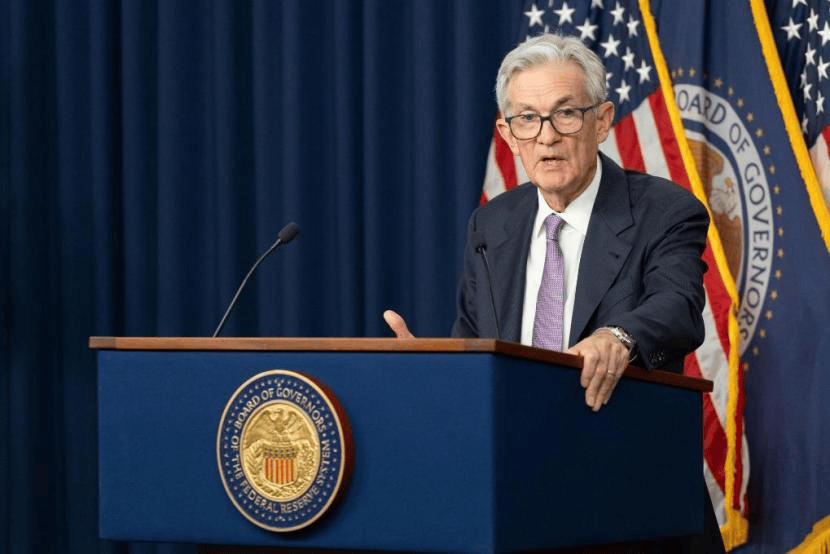
特朗普达沃斯讲话:赞赏自己的经济政策 抨击欧洲往不正确的方向发展
Xin Lang Cai Jing· 2026-01-21 14:26
Core Viewpoint - The speech by President Trump at Davos emphasizes the prosperity of the U.S. economy under his policies, suggesting that his governance model serves as a potential example for Europe to follow [1] Economic Performance - Trump claims that the U.S. economy is thriving, with rapid economic growth, significant increases in productivity, substantial investment growth, and steady income rises [1] - He asserts that inflation issues have been resolved [1] Comparison with Europe - Trump warns that European liberal governments are lagging behind the U.S. and urges leaders to adopt his model to provide security for their citizens [1] - He states that the U.S. is the global economic engine, indicating that global prosperity is tied to the health of the U.S. economy [1] - Trump expresses a desire to see Europe prosper but criticizes its current developmental direction as incorrect [1]
特朗普全国讲话变脸!罕见读稿不嬉笑,内容却让核查员崩溃?
Sou Hu Cai Jing· 2025-12-29 02:56
Core Viewpoint - Trump's recent national address marked a significant shift in his speaking style, moving from a casual and spontaneous approach to a more formal and scripted delivery, reflecting the pressures his administration is currently facing [1][3][4]. Group 1: Speech Style and Context - The national address was broadcasted live on major television networks, lasting 18 minutes, and was characterized by a serious tone and rapid speech, making it difficult for some viewers to follow [3][4]. - This change in style is attributed to the significant political pressure on the Trump administration, with only 33% of American adults supporting his economic policies, the lowest since his second term began [4][6]. Group 2: Economic Issues and Public Sentiment - Trump's approval rating among his core supporters has dropped by 8 percentage points since April, indicating growing discontent even within his base [6]. - The U.S. unemployment rate rose to 4.6% in November, the highest level since October 2021, with approximately 7.83 million unemployed individuals, highlighting the economic challenges facing the country [6]. - Nearly half of survey respondents reported feeling significant pressure regarding daily living expenses, with many believing that the current cost of living is at a historical high [6]. Group 3: Key Themes in the Address - The first major theme of the address involved Trump blaming the previous Biden administration for the current economic issues, stating he inherited a "mess" and is working to fix it [8][9]. - The second theme focused on optimistic projections for the economy, with Trump claiming inflation has stopped and promising economic recovery by 2026, including significant drops in prices for goods and lower loan rates [9][10]. Group 4: Controversial Proposals - Trump proposed a "warrior bonus" plan to distribute $1,776 checks to 1.45 million U.S. military personnel, funded by tariffs on imported goods, which has raised concerns about the legality of the tariffs [14][15]. - The announcement of this plan comes amid ongoing legal considerations regarding the tariffs, potentially creating a sense of urgency or pressure on judicial decisions [15]. Group 5: Monetary Policy and Economic Strategy - Trump's administration appears to favor increased spending rather than debt reduction, aligning with a broader political perspective that prioritizes economic stimulus through expanded fiscal measures [19]. - The market anticipates a potential interest rate cut by the Federal Reserve in January, with a 28.8% probability of a 25 basis point reduction, reflecting the administration's push for looser monetary policy to alleviate economic pressures [17].
聚焦美国经济议题,特朗普“关键时刻”发表18分钟讲话
Huan Qiu Shi Bao· 2025-12-18 23:01
Core Points - The main focus of Trump's speech was to defend his economic policies and encourage patience among the American public, suggesting that the economy is improving and will soon experience unprecedented prosperity [1][3][4] - The speech comes at a critical time as public support for the government's handling of economic issues has reached a new low, with upcoming midterm elections in 2026 making economic topics crucial for the Republican Party [1][6][8] Economic Policy Summary - Trump emphasized that he inherited a difficult economic situation and claimed significant positive changes have occurred in the past 11 months, including rising worker incomes and a decrease in inflation [3][4] - He highlighted the expected "largest tax refund season in history" in spring 2024, attributing this to tax cuts supported by the White House [4][6] - The speech included claims of a decrease in prices for essential goods like eggs and Thanksgiving turkeys, and he presented charts to support his assertion of an improving economy [4][6] Political Context - Trump's speech was characterized as having a partisan tone, aimed at rebuilding his declining support as polls show only 33% of Americans approve of his economic measures [6][8] - The speech was notably shorter and more focused than his usual style, indicating a shift towards a more structured approach in addressing economic concerns [5][6] - The backdrop of rising inflation and a recent increase in unemployment to 4.6%, the highest in over four years, adds pressure to Trump's economic narrative [6][8] International Relations and Policy Impact - Trump's administration has been active in international affairs, pressuring European nations to increase military spending and providing military aid to Ukraine, which has received mixed reactions from the American public [7][8] - The administration's trade policies, including high tariffs, have caused volatility in the stock market and uncertainty for businesses regarding import costs [7][8]
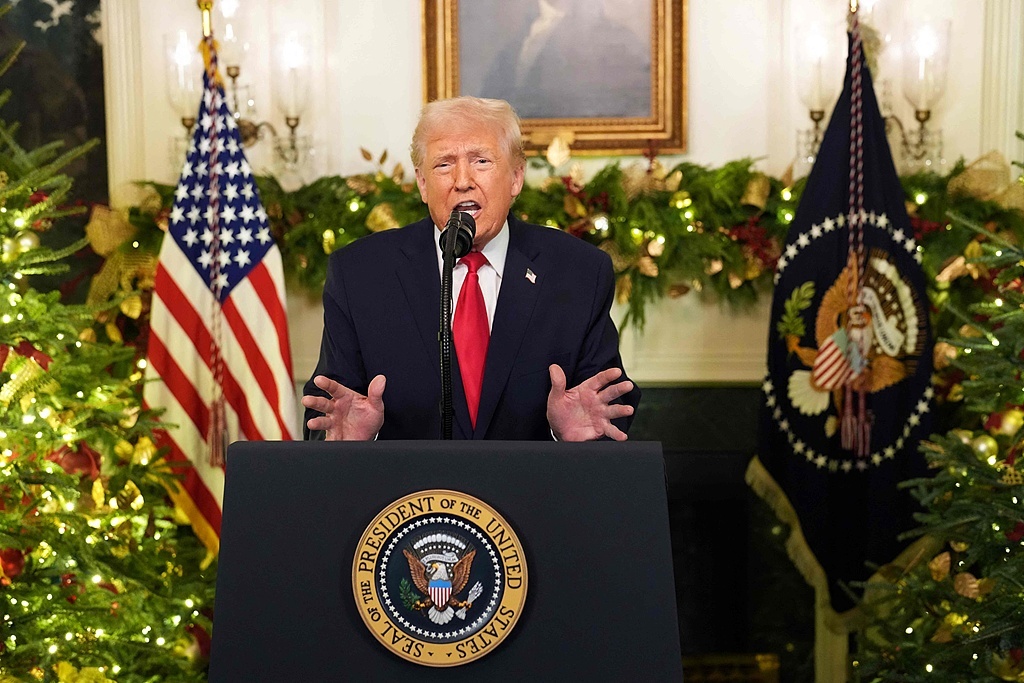
重磅!特朗普将于周四10点发表全美直播讲话:直言“最好的还在后头”
智通财经网· 2025-12-17 00:45
Group 1 - President Trump will deliver a prime-time address to the nation, aiming to promote his agenda amid declining public support for his economic policies [1][2] - The speech will highlight Trump's historical achievements over the past year and preview upcoming policies for the new year [1][2] - The address comes at a critical time as Trump's approval ratings are softening, and economic indicators show warning signs, including slowing wage growth and rising living costs [2][3] Group 2 - Trump has been reshaping the federal government by reducing its size and cutting funding for long-criticized programs, while also focusing on immigration policies [2] - The upcoming midterm elections in November will serve as a test of Trump's power and legislative agenda, with the potential for the Republican Party to lose seats in Congress [2] - Political opponents are criticizing Trump's tariffs, linking them to rising consumer prices and inflation, which have become key concerns for voters [2]
深夜大跳水,暴跌11%,创三年来最大跌幅
Feng Huang Wang Cai Jing· 2025-10-30 23:00
Market Overview - The U.S. stock market faced pressure with all three major indices closing lower: Nasdaq down 1.57%, S&P 500 down 0.99%, and Dow Jones down 0.23%, primarily driven by declines in technology stocks [1] - Meta's stock fell 11.33%, marking its largest drop in three years, while Microsoft's stock decreased by 2.92%, as investors expressed concerns over rising expenditures in the AI sector [1] Semiconductor Sector - The semiconductor sector also experienced a downturn, with the Philadelphia Semiconductor Index dropping 1.53%, where 22 out of 30 component stocks declined, including AMD down 3.59%, Broadcom down 2.46%, and Nvidia down 2%, with its market value falling below $500 billion [2] - Analyst Matt Maley from Miller Tabak indicated that while this does not suggest an imminent AI bubble burst or a major market reversal, it does increase the likelihood of a short-term pullback [2] Chinese Stocks - Most popular Chinese stocks also saw declines, with notable drops including Xiaoma Zhixing down 6.79%, Baidu down 4.54%, Alibaba down 3.36%, Tencent Music down 3.23%, JD down 2.88%, Li Auto down 2.34%, NIO down 1.82%, Pinduoduo down 1.5%, and Xpeng down 0.99% [2] Economic Concerns - Ongoing debates regarding the U.S. economic fundamentals and policy direction were highlighted, with Goldman Sachs CEO David Solomon warning that if U.S. economic growth does not accelerate, rising debt levels could pose a "cleansing" risk to the economy [2] - Solomon noted that fiscal stimulus and aggressive fiscal operations have become deeply embedded in the U.S. and other economies, exacerbated by pandemic-related measures, and emphasized that the key to overcoming these challenges lies in growth [2] Recession Outlook - Solomon also stated that the likelihood of a recession in the near term is "low" and dismissed concerns that a few bankruptcy cases could trigger a systemic credit crisis in the U.S. [3] Federal Reserve Criticism - U.S. Treasury Secretary Scott Bessen criticized the Federal Reserve's recent cautious statements, suggesting that the Fed needs comprehensive reform despite appreciating the recent 25 basis point rate cut [4] - Bessen pointed out that the Fed's inflation forecasts have been inaccurate and indicated plans to conduct a second round of candidate interviews in early December to select a successor for Fed Chair Jerome Powell, aiming for a leader who can reshape the Fed's internal processes and operations [4]




【广发宏观陈嘉荔】应如何认识7月美国非农数据的大幅波动
郭磊宏观茶座· 2025-08-02 03:40
Core Viewpoint - The U.S. employment data for July showed a significant decline, with non-farm payrolls increasing by only 73,000, which was below the expected 104,000. Additionally, the data for the previous two months was notably revised downwards, with a total downward revision of 258,000 for May and June combined [1][6]. Group 1: Employment Data Analysis - The July non-farm payrolls increased by 73,000, significantly lower than the expected 104,000. The revisions for May and June were substantial, with May revised down by 125,000 to 19,000 and June revised down by 133,000 to 14,000 [1][6]. - The volatility in non-farm data has become more frequent, attributed to technical issues in statistical methods and the increasingly complex economic environment. Factors include the limitations of the New Business Dynamics (NBD) model, outdated seasonal adjustment techniques, and significant fluctuations in U.S. economic policies [2][8]. - In July, the government sector cut 10,000 jobs, while the private sector added 83,000 jobs, which was below the expected 100,000. The healthcare, retail trade, and financial sectors contributed positively, while professional and business services, manufacturing, and government sectors were the main detractors [3][21]. Group 2: Unemployment Rate Insights - The unemployment rate (U3) increased from 4.12% to 4.25%. The rise in the unemployment rate for new entrants to the job market was a significant factor, moving from 0.42% to 0.58%. The permanent unemployment rate remained stable at 1.11% [4][22][23]. - The number of people transitioning from employment to unemployment rose significantly, while those moving from unemployment to employment decreased, indicating a weakening trend in the labor market [24][25]. Group 3: Federal Reserve's Monetary Policy Response - The Federal Reserve decided not to cut interest rates in July, with two members voting against the decision. The July non-farm data somewhat supported their viewpoint. Market expectations for a rate cut in September surged, with the probability rising to 80.3% from 37.7% [5][30][32]. - The market reacted negatively to the significant slowdown in non-farm data, raising concerns about the impact of tariffs on the U.S. economy. This led to declines in major stock indices and a drop in bond yields [5][32].