
Feng Huang Wang Cai Jing

Search documents
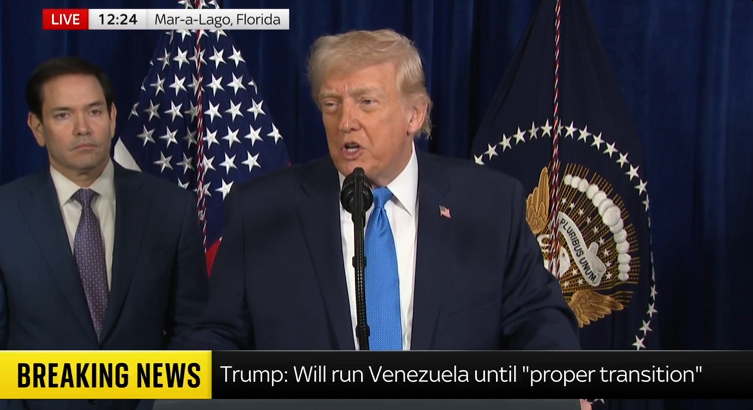
梅德韦杰夫:美国推翻马杜罗政权与毒品完全无关,只与石油有关
Feng Huang Wang Cai Jing· 2026-01-05 03:13
据凤凰卫视报道,俄罗斯联邦安全会议副主席梅德韦杰夫5日表示,美国总统特朗普的团队为了推进本 国的利益手段强硬且冷酷无情。美国推翻委内瑞拉总统马杜罗政权与毒品完全无关,只与石油有关,并 且他们也公开承认了这一点。强权统治显然比普通司法更为强大,但他们能否远程操控委内瑞拉仍是一 个大问题。 ...


时隔34个交易日,沪指盘中重回4000点
Feng Huang Wang Cai Jing· 2026-01-05 02:30
早盘半导体产业链震荡拉升,设备、材料、晶圆代工方向均表现不俗,中微公司、矽电股份、东微半导 涨超10%,华虹公司、中芯国际、拓荆科技、华海清科、中科飞测、盛美上海跟涨。消息面上,华虹公 司发布发行股份收购华力微97.5%股权的交易草案,中微公司披露发行股份及支付现金购买杭州众硅电 子64.69%股权的预案,并于1月5日复牌。 保险板块震荡走强,新华保险涨超5%,中国太保涨超3%,续创历史新高,中国平安、中国人寿、中国 人保涨幅靠前。消息面上,近日,国家金融监督管理总局数据显示,2025年前11个月,保险业总计实现 保费收入57629亿元,同比增长7.6%。其中,人身险公司实现保费收入41472亿元,同比增长9.1%;财 险公司实现保费收入16157亿元,同比增长3.9%。 凤凰网财经讯 1月5日,A股指数高开高走,沪指拉升涨0.82%,时隔34个交易日,上证指数盘中重回 4000点。深成指涨1.34%,创业板指涨1.58%。沪深两市成交额连续第151个交易日突破1万亿,较上一 日此时放量超1900亿,预计全天成交金额近2.6万亿。 | | | | | 户深京重要指数 | | | | | --- | --- | ...

A股指数集体高开:沪指涨0.46%,贵金属、石油石化等板块涨幅居前
Feng Huang Wang Cai Jing· 2026-01-05 01:33
凤凰网财经讯1月5日,三大指数集体高开,沪指高开0.46%,深成指高开0.80%,创业板指高开0.84%, 人脑工程、贵金属、石油石化等板块指数涨幅居前。 | | | | | | 秘职能圈形狀元 | | | | | --- | --- | --- | --- | --- | --- | --- | --- | --- | | 名称 | *● | 最新 | 涨幅% | | 涨跌 | | 总手 | 现手 金额 | | 上证指数 | | 3986.97 | 0.46 | 18.13 | 1338/524 | 0.11 | 6057 | 605万 106.81亿 | | 深证成指 | | 13633.63 | 0.80 | 108.61 | 1704/715 | 0.22 | 1132万 | 1132万 174.02亿 | | 北证50 | | 1444.23 | 0.26 | 3.80 | 167/82 | -0.10 | 8.67万 | 8.67万 2.68 亿 | | 创业板指 | | 3229.93 | 0.84 | 26.76 | 849/366 | 0.16 | 253 F | 253万 63.32亿 | ...

工业硬核托举十万亿,山东“头号工程”书写高质量发展答卷
Feng Huang Wang Cai Jing· 2026-01-05 00:36
Core Insights - Shandong has officially become the third province in China, and the first in the north, to surpass a GDP of 10 trillion yuan, marking a significant milestone in its economic development [2][4] - The province is focusing on industrial economy as a core support for its growth, implementing a "head project" strategy to enhance new-type industrialization [4][6] Industrial Foundation - Shandong's industrial sector is diverse, comprising 41 major industrial categories and 603 subcategories, with 18 manufacturing categories ranking in the top five nationally [4] - In 2024, the province's industrial added value grew by 8.3%, exceeding the national average by 2.5 percentage points, with revenues from industrial enterprises approaching 12 trillion yuan [4] - The province aims to add approximately 600 billion yuan in industrial output in 2025, continuing its growth trajectory from 2024 [4][9] Innovation and Technology - The proportion of high-tech industry output in Shandong's industrial sector increased from 53.32% in 2024 to 55.2% in the first half of 2025, indicating a shift towards innovation as a primary driver of growth [5] - Shandong has established a robust innovation ecosystem, with the coverage rate of R&D institutions in industrial enterprises rising from 13.3% in 2020 to nearly 40% in 2025 [9] Digital Transformation - The province has achieved over 95% coverage of digital transformation among industrial enterprises, with a deep transformation rate exceeding 47% [12] - Shandong is actively promoting the integration of digital and real economies, leveraging advancements in artificial intelligence and big data to enhance productivity [10][11] Chain Long System - Shandong has implemented a "chain long system" to optimize industrial chains, increasing the number of key industrial chains from 11 to 19, which enhances coordination and resource allocation [7][8] - The province's industrial chain enterprises generated nearly 11 trillion yuan in revenue, accounting for over 90% of the total industrial output [9] Future Outlook - Looking ahead to the 14th Five-Year Plan, Shandong aims to deepen the integration of industrial and digital economies, focusing on high-quality development and the construction of a modern industrial system [14]
从“数字济南”到“数智济南”,一字之变的新跨越
Feng Huang Wang Cai Jing· 2026-01-05 00:36
Core Insights - The "Smart Jinan" initiative aims to transform the city from a digital to a smart city, contributing to the construction of a modern socialist strong provincial capital [1][5] - The initiative is structured in a three-year plan: foundational work in 2022, key breakthroughs in 2023, and comprehensive upgrades in 2024 [1][2][3] Group 1: Digital Jinan Development - The "1+4+N" system was introduced to integrate digital government, economy, and society, marking a shift from fragmented to coordinated digital development [2] - Significant achievements include the launch of the first government service "cloud hall" in China, which handles over 300 high-frequency services 24/7 [2] - By 2025, Jinan's integrated big data platform is expected to accumulate 474 billion data entries, with an annual growth rate of 67% [3] Group 2: Transition from Digital to Smart - The evolution from "digital" to "smart" reflects a shift from basic data support to intelligent-driven development, aligning with national strategies [5][6] - The city recognizes the need to move beyond mere data accumulation to the release of data value and intelligent applications [5][6] Group 3: Strategic Goals and Future Outlook - The 2026 target year is identified as a strategic opportunity for the transition from "Digital Jinan" to "Smart Jinan," emphasizing project implementation [11][13] - Jinan aims to enhance its digital economy, with the core industry scale expected to exceed 600 billion yuan by 2024, marking a significant qualitative leap [10][11] - The integration of artificial intelligence across various sectors is prioritized to drive innovation and upgrade traditional industries [12][13]
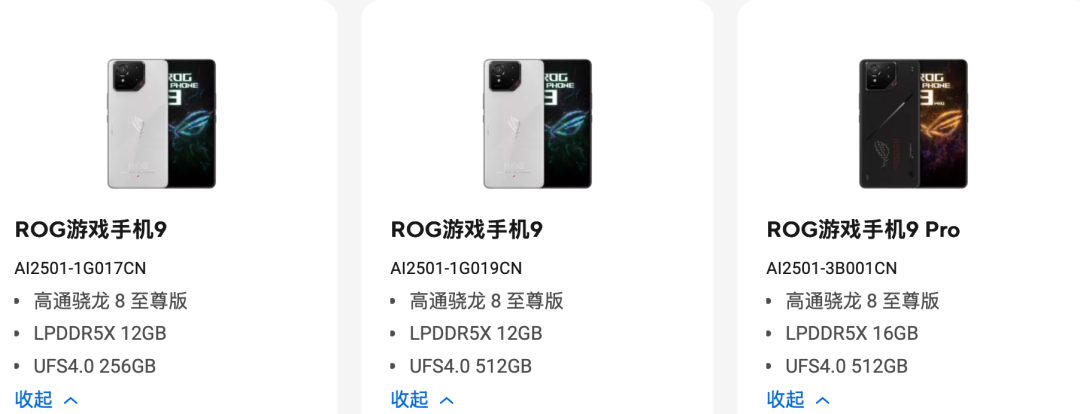
网传又一个玩家离场,华硕为何搞不定手机?
Feng Huang Wang Cai Jing· 2026-01-04 15:22
Core Viewpoint - ASUS is reportedly planning to exit the smartphone market, with no new smartphone releases planned for 2026, although the mobile division's operations will continue for now [1][2]. Group 1: Historical Context and Market Position - ASUS entered the mobile phone market in 2002, initially focusing on ODM for European operators, but struggled to establish brand recognition [2]. - The company launched its first self-branded phone, the J101, in 2003, marking the beginning of its branding journey [2]. - In 2008, ASUS acquired Garmin's smartphone business to differentiate itself in the market, but this partnership ended unsuccessfully due to the rise of the iPhone [2][3]. Group 2: Product Development and Strategy - ASUS attempted to penetrate the smartphone market with the ZenFone series in 2014, targeting high cost-performance ratios, which gained popularity in emerging markets [3]. - The launch of the ROG gaming phone in 2017 established a dual strategy for ASUS, focusing on mainstream with ZenFone and high-end with ROG [3]. Group 3: Challenges and Decline - After 2018, the smartphone market became increasingly competitive, with Chinese brands like Huawei and Xiaomi dominating [7]. - ASUS faced challenges in both cost-effectiveness and innovation, leading to a slowdown in product iterations and market presence [7]. - The mobile division has been a financial burden, with revenue from mobile devices consistently below 10% of total revenue and ongoing losses [8][9]. Group 4: Future Outlook - ASUS has indicated that the mobile division will see minimal activity by 2025, with a focus shifting back to its core PC business [7]. - The company is expected to concentrate on its main business areas, including AI, cloud computing, and smart ecosystems, while potentially exiting the smartphone market [10]. - ASUS's market share in the global PC market remains low, with the company ranking fifth behind Lenovo, HP, Dell, and Apple [11].
古巴国家主席誓言要让美国付出代价
Feng Huang Wang Cai Jing· 2026-01-04 07:46
据凤凰卫视援引美媒报道,1月3日,古巴国家主席迪亚斯-卡内尔在演讲中表示,古巴为委内瑞拉不惜 流血,也要让美国付出代价。 ...
伊朗最高领袖首谈抗议
Feng Huang Wang Cai Jing· 2026-01-04 07:46
Core Viewpoint - Protests in Iran, driven by inflation and currency devaluation, have escalated over the past week, leading to conflicts and casualties, prompting Supreme Leader Khamenei to address the situation for the first time [1] Group 1: Government Response - Khamenei acknowledged the economic demands of merchants while emphasizing the need to distinguish between "reasonable protests" and "riots" [1] - He stated that protests are a legitimate right but must not devolve into chaos, urging officials to engage in dialogue with protesters while enforcing the law against those who disrupt public order [1] - Khamenei warned against the infiltration of "soft warfare" and rumors, asserting that Iran will not yield to enemies and will rely on public support to overcome challenges [1]
委内瑞拉,一个世纪的资源争夺与宿命
Feng Huang Wang Cai Jing· 2026-01-04 07:02
Core Viewpoint - The military intervention by the U.S. in Venezuela is a culmination of over a century of conflict over oil resources, highlighting the strategic importance of Venezuela's vast oil reserves, which are the largest in the world [1][3][19]. Group 1: Oil Wealth and Historical Context - Venezuela has proven oil reserves of approximately 300 billion barrels, accounting for 17% of the global total, surpassing Saudi Arabia and the U.S. [3][5]. - The oil boom in the mid-20th century did not benefit the general population, leading to significant wealth disparity, with profits primarily flowing to international oil companies and a small elite [5]. - The "Bolivarian Revolution" initiated by Hugo Chávez in 1999 aimed to nationalize the oil industry, reclaiming resource sovereignty through reforms such as the Hydrocarbons Law of 2001, which mandated majority ownership by the state oil company PDVSA in joint ventures [5][7]. Group 2: U.S. Response and Geopolitical Tensions - U.S. interests were threatened by Venezuela's nationalization efforts, leading to sanctions and support for opposition movements, including a failed coup in 2002 [9][11]. - Following Chávez's death in 2013, Nicolás Maduro continued the nationalization policies, but U.S. relations deteriorated, especially after the 2018 elections, which the U.S. did not recognize [11][13]. - In 2025, the U.S. escalated its approach from economic sanctions to military threats, including a $50 million bounty on Maduro, reflecting the strategic importance of Venezuelan oil to U.S. interests [13][18]. Group 3: Impact on Global Oil Market - The military intervention is expected to disrupt Venezuela's oil exports, which have already plummeted from a peak of 3.5 million barrels per day to around 1 million barrels per day, representing only 0.8% of global production [13][19]. - Despite the geopolitical tensions, the global oil market is currently characterized by oversupply, with the International Energy Agency projecting a supply increase of 3 million barrels per day in 2025, which may mitigate the impact of Venezuela's supply disruption [20][22]. - The U.S. military control over Venezuelan oil resources could weaken OPEC+'s influence in the global oil market, potentially altering production coordination among oil-producing nations [22]. Group 4: Broader Economic Implications - The geopolitical turmoil is likely to create volatility in oil prices, with potential short-term spikes due to supply concerns, while long-term price pressures may remain limited due to existing supply surpluses [19][20]. - The military actions may also affect precious metals and shipping markets, with increased risk aversion likely driving up gold prices, which have already seen significant gains in 2025 [23][24]. - The situation may lead to increased logistics costs for energy and commodities due to military blockades, impacting supply chains and market dynamics [24].
锚定北方地区经济重要增长极,10万亿大省再出发
Feng Huang Wang Cai Jing· 2026-01-04 06:15
Core Insights - Shandong Province has achieved a significant milestone by surpassing a GDP of 10 trillion yuan in 2025, becoming the third province in China and the first in Northern China to reach this level, showcasing its economic strength and commitment to high-quality development [2][4] Economic Performance - The GDP of Shandong is projected to exceed 10 trillion yuan, reflecting a robust economic foundation characterized by a strong industrial base, with industrial added value increasing from 2.3 trillion yuan to 3.3 trillion yuan during the 14th Five-Year Plan, representing a growth of over 40% [2][3] - The manufacturing sector remains a cornerstone of Shandong's economy, contributing approximately 28% to the GDP, with an average annual growth rate of 7.5% in industrial added value, consistently outperforming the national average [2][3] Technological Advancements - Shandong is enhancing its competitive edge through technological innovations, with key developments in artificial intelligence, integrated circuits, and low-altitude economy, leading to an expected revenue of over 120 billion yuan in the AI core industry by 2025, accounting for nearly 10% of the national total [3][5] - The province has made significant strides in research and development, with the coverage of R&D institutions in large-scale industrial enterprises rising from 13.3% in 2020 to nearly 40%, and R&D investment by enterprises constituting 88.5% of the total social R&D expenditure, ranking first in the country [3][5] Regional Development - The economic growth of Shandong is supported by a collaborative development model, with cities like Jinan, Qingdao, and Yantai leading the way as trillion-yuan cities, while other cities strive to advance towards this goal [4][5] - The provincial government aims to enhance the economic status of Qingdao to a 2 trillion yuan city and support other cities like Weifang, Linyi, and Jining in their growth towards trillion-yuan economies [4] Corporate Contributions - In 2025, 52 companies from Shandong, including Shandong Energy Group and Haier Smart Home, made it to the list of China's top 500 enterprises, representing over 10% of the total, highlighting the province's strong corporate presence [4][5] - Companies in Shandong are increasingly focusing on green, high-end, and intelligent development, with notable examples including Shengquan Group and Lusheng Robotics, which are leading in their respective high-tech fields [5] Future Outlook - Shandong is positioned to continue its upward trajectory, with a focus on stability, quality improvement, and efficiency as it embarks on the 15th Five-Year Plan, reinforcing its role as a key economic growth engine in Northern China [5][6]