
Feng Huang Wang Cai Jing

Search documents
绿电逆袭记:一张绿色“身份证”如何照亮山东制造的未来?
Feng Huang Wang Cai Jing· 2025-12-30 00:01
Core Viewpoint - The establishment of the Shandong Green Certificate Trading Service Center marks a significant transformation in the certification of "green identity" in China, creating the first provincial-level green certificate trading hub in the country [1]. Group 1: Background and Challenges - The introduction of green certificates addresses a critical issue in China's manufacturing exports, where the source of electricity (green or gray) is often unclear, leading to challenges in demonstrating environmental value to overseas clients [3]. - Once electricity enters the grid, it becomes indistinguishable, trapping the environmental value of green power and preventing it from translating into competitive advantages for businesses [3]. Group 2: Green Certificate Mechanism - The green certificate serves as an "identity card" for each kilowatt-hour of green electricity, with one certificate corresponding to 1,000 kilowatt-hours of green power, featuring unique blockchain coding for traceability and tamper-proofing [5]. - The previous system required companies in Shandong to purchase green certificates through distant national platforms, creating long processes and limiting the flexibility of green electricity transactions across regions [6]. Group 3: Policy and Market Dynamics - High-energy-consuming enterprises face increased costs when purchasing green certificates, but national policies are increasingly emphasizing the importance of renewable energy consumption, expanding the mandatory green certificate consumption to industries like steel, cement, and data centers [8]. - Shandong's innovative regional trading platform allows power generation companies to sell green certificates independently, enabling electricity consumers to enhance their product's "green content" without altering supply lines [8]. Group 4: Market Impact and Data - The establishment of the center led to the signing of purchase intentions for 7.18 million green certificates on its opening day, facilitating data sharing and market connectivity among the nine provinces along the Yellow River [10]. - As of August this year, the nine provinces along the Yellow River sold 188 million green certificates, accounting for 41% of the national total, while purchasing 121 million certificates, representing 26% of the national total [11]. - By the end of November, Shandong's non-fossil energy power generation capacity reached 135 million kilowatts, making up 53.6% of the total power generation capacity, with solar power leading nationally for eight consecutive years [11].

美股三大指数集体低开,贵金属板块集体下跌
Feng Huang Wang Cai Jing· 2025-12-29 14:41
Market Overview - The three major U.S. stock indices opened lower, with the Dow Jones down 0.19%, the S&P 500 down 0.45%, and the Nasdaq down 0.72% [1] Company News - Amazon has decided to suspend its drone delivery program in Italy due to broader commercial regulatory issues, despite having made good progress in aviation regulation [2] - Lululemon's founder Chip Wilson has initiated a proxy fight to push for changes in the company's board following the departure of CEO Calvin McDonald [3] - Intel announced the completion of a sale of common stock to Nvidia, totaling $5 billion for 214,776,632 shares at a price of $23.28 per share [4] - Samsung's P4 factory construction is accelerating, with equipment installation and testing expected to be completed 2-3 months ahead of schedule, focusing on 10nm sixth-generation DRAM production [5] - SoftBank is reportedly in deep discussions to acquire DigitalBridge, a private equity firm primarily investing in data center assets [6] - Woodside Energy has signed a long-term LNG supply agreement with Turkey's Botas, committing to supply approximately 5.8 billion cubic meters of gas equivalent starting in 2030 for up to 9 years [7]



付鹏:管理00后不是问题,过时的“生产关系”才是
Feng Huang Wang Cai Jing· 2025-12-29 13:20
Group 1 - The event "2025 Anhui Entrepreneurs' Think Tank" aims to analyze capital market dynamics and assist in wealth enhancement and strategic layout for enterprises, while exploring regional industrial upgrade opportunities and clarifying investment directions [1] Group 2 - Economist Fu Peng addressed the management issues concerning the "post-00s" generation, emphasizing that the core of many management dilemmas is not the lack of ambition among young employees, but rather a disconnect between traditional management logic and the new labor force [3] - Fu highlighted a common cognitive conflict where traditional management expectations clash with the direct responses from younger employees, indicating that outdated management systems are misaligned with current workforce characteristics [3] - He provided an example from his media company, advocating for flexible work arrangements over rigid schedules, which has led to continuous growth in output since 2022, emphasizing the importance of results over adherence to traditional rules [3] Group 3 - Fu Peng elevated the management discussion to an economic theory level, asserting that production relationships must adapt to the development of productive forces, especially when the characteristics and values of labor subjects change significantly [4] - He criticized outdated distribution and risk-sharing mechanisms that only offer verbal rewards for creativity and innovation, arguing that such systems suppress vitality within organizations [4]
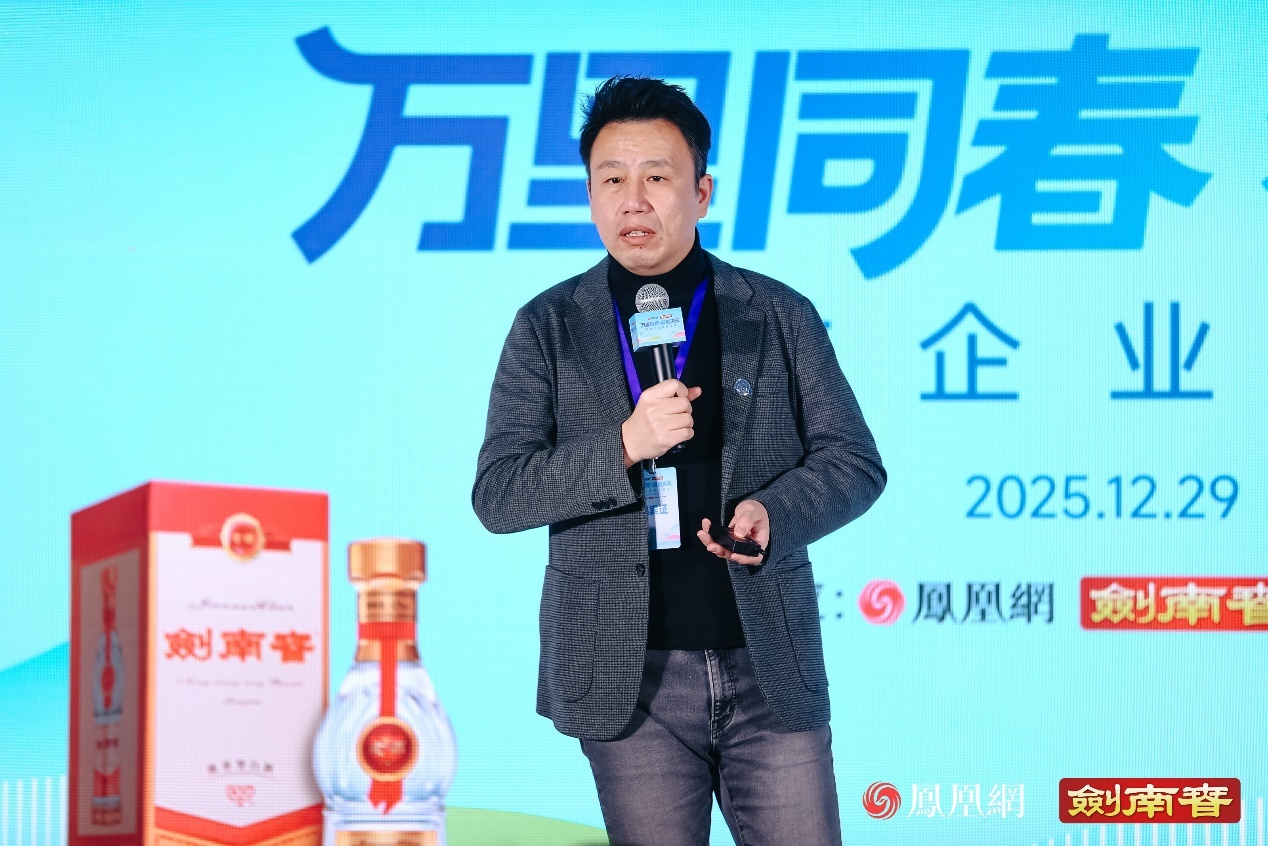
付鹏:股市是资本投入的产出效率,资本是生产要素
Feng Huang Wang Cai Jing· 2025-12-29 13:20
12月29日,由凤凰网、剑南春联合主办的"万里同春·徽聚未来——2025安徽企业家思享荟"于合肥召开,旨在解析资本市场动态,助力企业财富增值与战略 布局,挖掘区域产业升级机遇,明晰投资方向。 他援引刘纪鹏公开提出的观点,指出当前资本市场仍存在"一股独大"、上市公司违法违规等问题,其本质是制度层面亟待改革。"刘纪鹏老师讲的就是,资 本市场的制度性改革是需要调整的,否则效率抬不上去,就这么简单。"付鹏总结道。 付鹏以美国市场为例展开分析。他指出,美国股市并非永远上涨,其长期向好建立在生产效率持续提升的基础上。历史上,美国每当面临生产要素停滞的周 期,股市也会随之出现长达十多年的徘徊。而自2015、2016年以来,美国在生产力提升和特朗普任内推动的制度性改革两方面均有进展。 付鹏 知名经济学家 知名经济学家付鹏在2025安徽企业家思享荟"发表演讲, 付鹏强调:"股市是资本投入的产出效率,资本是生产要素。我把钱投到这个市场里,效率高,产 出就高。"他表示,真正影响股市的核心因素是"效率",而这一效率主要来源于三个方面:生产力的进步、生产关系的改变,以及制度的调整。 ...
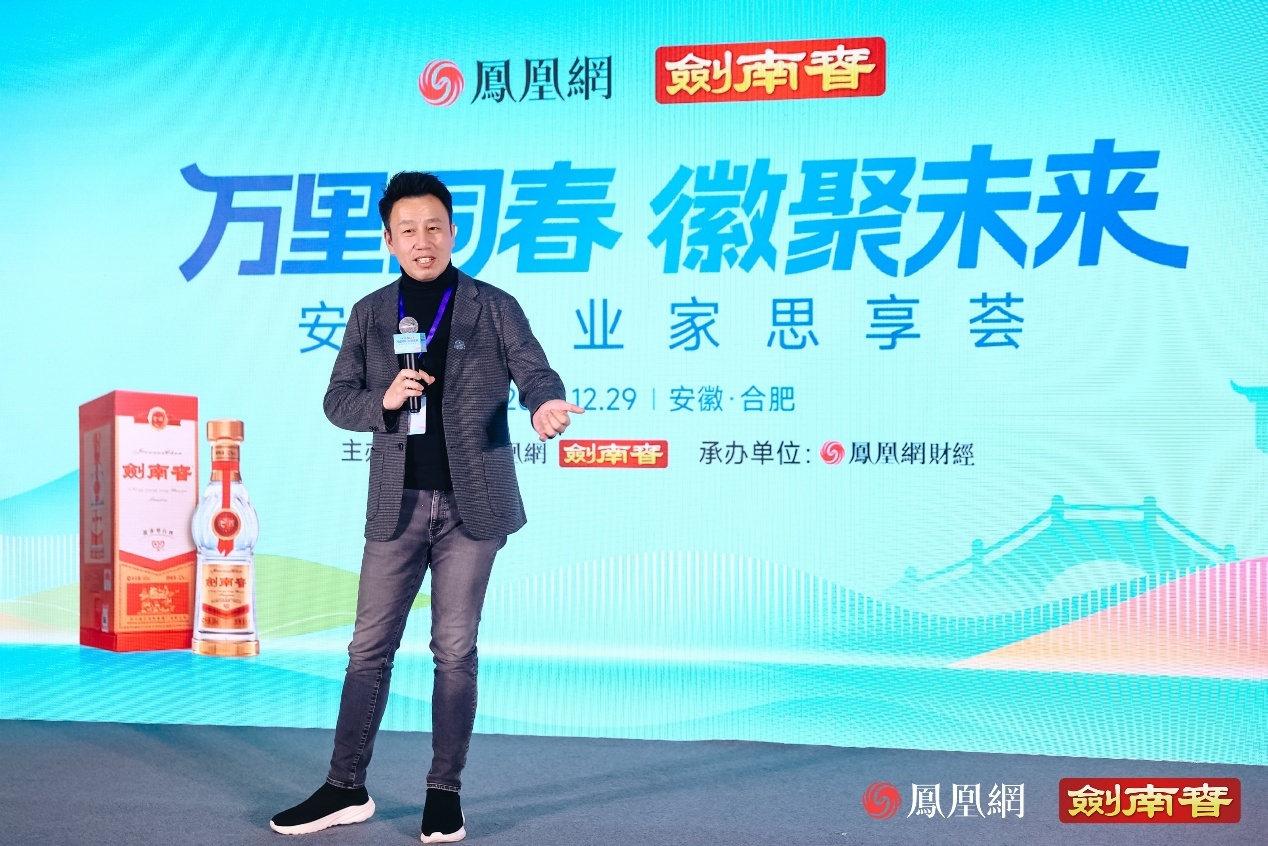
李剑阁:AI催生金融新业态 智能投顾、数字员工等将持续涌现
Feng Huang Wang Cai Jing· 2025-12-29 10:48
Core Insights - The integration of artificial intelligence (AI) in the financial sector has transitioned from pilot testing to large-scale implementation and ecological collaboration, becoming a key driver for the transformation and upgrading of the industry [1][2] - AI technology is deeply embedded in the entire financial business chain, enhancing risk prevention, investment decision-making, customer service, and operational management [1] - The future will see a closer integration of AI technology with industry scenarios, extending its application to key sectors such as industry, healthcare, and finance, highlighting its role as a core engine for industrial upgrading [1] Group 1 - AI will enhance the quality and efficiency of financial services by optimizing processes and enabling intelligent decision-making, shifting the industry focus from scale competition to quality competition [1] - AI will expand the boundaries of financial services, addressing challenges in inclusive finance, green finance, and digital finance, allowing for more precise and widespread coverage of key areas and weak links in the real economy [1] Group 2 - AI will give rise to new financial business formats and models, such as smart investment advisory, digital employees, and cross-border intelligent finance, continuously enriching and improving the financial ecosystem [2]
中银理财黄党贵:建议提高中长期限产品发行比例 拓宽跨境理财业务
Feng Huang Wang Cai Jing· 2025-12-29 10:48
Core Viewpoint - The chairman of Bank of China Wealth Management, Huang Danggui, emphasized the need for wealth management companies to accelerate their professional and market-oriented transformation to better align with the high-quality development goals of the 14th Five-Year Plan [1][2] Group 1 - Wealth management companies should act as a bridge linking investment and financing more closely, focusing on expanding their positioning based on current conditions, particularly in direct and equity investments, which are currently underrepresented in their portfolios [1] - The development of multi-asset allocation and "fixed income plus" products is essential for enhancing the quality of service to the real economy and providing higher returns to clients in a low-interest-rate environment [1] - Strengthening the layout of medium- to long-term products and developing differentiated services is crucial, as the client base seeks stable returns, and longer product durations can help mitigate market volatility [1] Group 2 - Three suggestions were made for achieving high-quality development in the wealth management industry: optimizing business structure to encourage medium- to long-term products, promoting cross-border wealth management services, and enhancing investment capabilities to diversify product offerings [2]
邵宇:把握经济转型的结构性机遇 新质生产力与能源转型是关键
Feng Huang Wang Cai Jing· 2025-12-29 09:15
Group 1 - The event "Wanli Tongchun: Huizhu Future - 2025 Anhui Entrepreneurs' Think Tank" was held in Hefei, focusing on capital market dynamics, wealth enhancement, and strategic layout for enterprises [1] - The chief economist of Fudan University's Management School, Shao Yu, analyzed the current and future state of the Chinese economy, highlighting significant structural differentiation during a profound transformation period [4] - Shao Yu emphasized the historical shift in economic momentum, contrasting the market value, revenue, and employee scale of GPU companies with traditional real estate, indicating a transition in economic drivers [4] Group 2 - Exports have shown strong resilience, achieving record surpluses despite a complex international environment, providing solid external support for the Chinese economy [4] - The long-term development of the Chinese economy will be defined by two key factors: the green transition represented by new energy and the development of new productive forces centered on technological breakthroughs [4] - Urbanization in China has room for improvement, with expectations to peak by 2035, which, combined with the new energy transition, will create ongoing development opportunities for regions like Anhui and Hefei that are early adopters of technological industrialization [4] Group 3 - The asset market is witnessing a shift in residents' asset allocation from a real estate-dominated approach to a more diversified strategy [5] - The stock market's long-term healthy development relies on the growth of new productive force enterprises that represent the "national fortune" and the deepening of capital market reforms [5] - Understanding and aligning with the era's main theme of "seeking happiness for the people and rejuvenation for the nation" is crucial for grasping future policy and market directions [5]
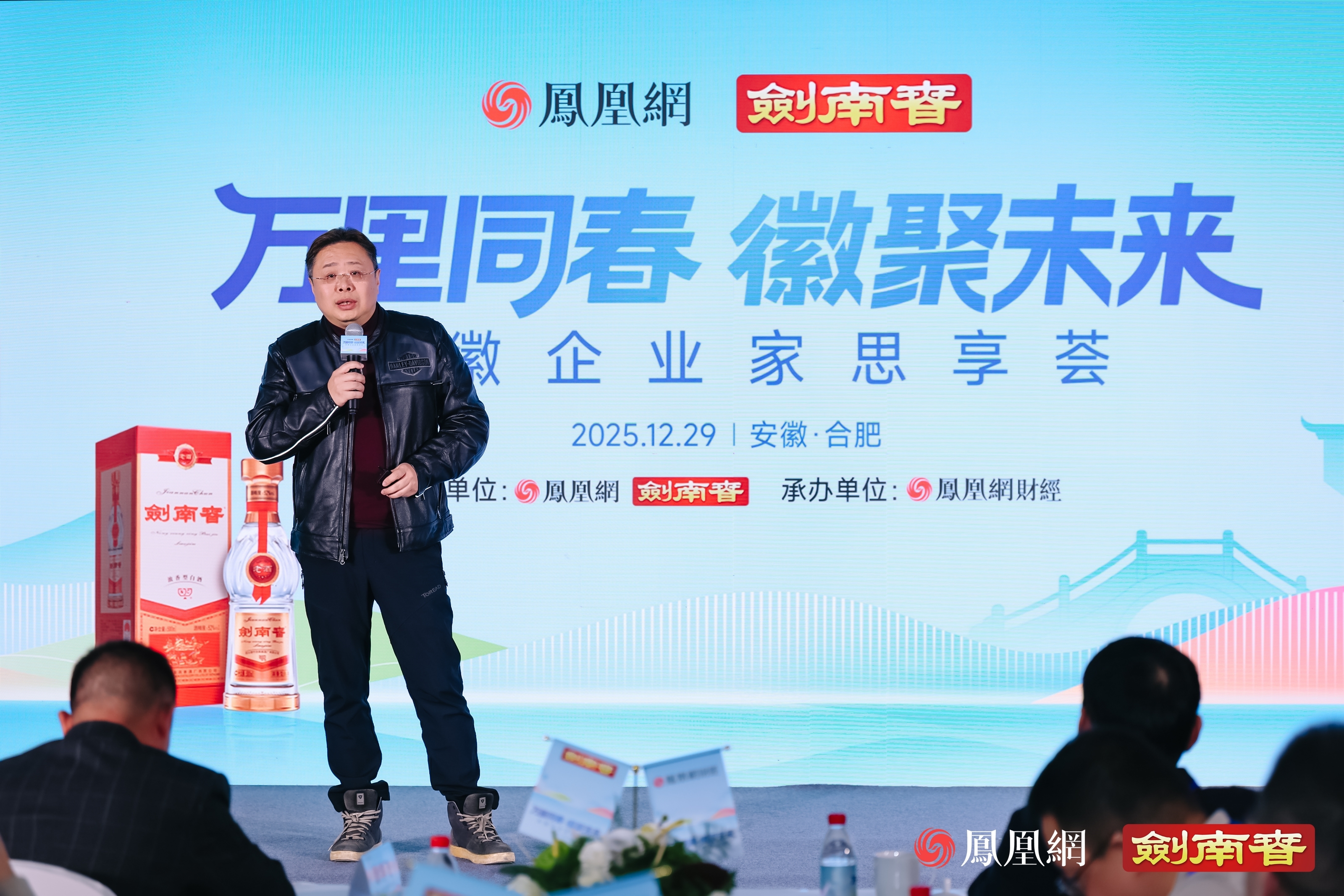
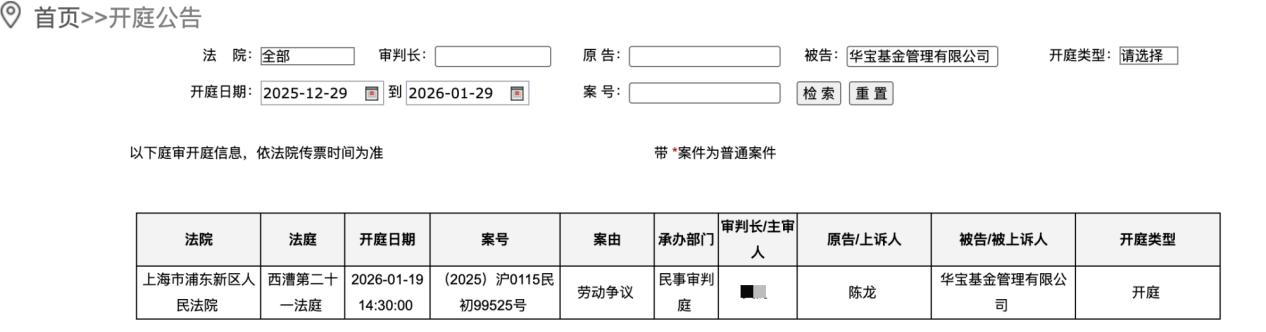
重亏近50%遭解聘?基金经理将华宝基金告上法庭
Feng Huang Wang Cai Jing· 2025-12-29 09:15
Group 1 - Huabao Fund has been sued in court due to a labor dispute, with the case set to be heard on January 19, 2026 [1][4] - The plaintiff, Chen Long, is linked to a former fund manager at Huabao Fund, who served as a senior analyst and managed multiple funds before leaving [5][7] - Chen Long's performance as a fund manager was poor, with returns of -46.75% for the Huabao Competitive Advantage Mixed Fund and -54.80% for the Huabao Green Theme Mixed Fund during his tenure [7][8] Group 2 - After Chen Long's departure, the Huabao Competitive Advantage Mixed Fund saw a significant increase in returns, achieving 63.07% since 2025, ranking in the top 10% of similar products [8][9] - The current fund manager, Shi Jian, has shifted the fund's focus towards domestic semiconductor investments, which have recently experienced a market surge [8][9] - As of September 30, Huabao Fund's total management scale reached 379.1 billion yuan, ranking 28th in the industry [9]
招大引强,“链”就济南新动能
Feng Huang Wang Cai Jing· 2025-12-29 08:24
Core Insights - Jinan is focusing on project-driven industrial development, emphasizing the importance of "chain master" projects to stimulate entire industrial chains [1][4][8] - The city has restructured its industrial layout from "ten major chains" to a more precise "13 iconic industrial chains and 34 key industrial chains," enhancing its competitive strategy [2][3] Group 1: Industrial Strategy - Jinan's new industrial matrix includes 13 iconic chains that align with national strategic priorities, such as aerospace information, artificial intelligence, and integrated circuits [3] - The 34 key chains serve as detailed support, allowing for targeted policies and investment strategies, thus avoiding homogenized competition [3][6] Group 2: Project Attraction - The city is actively attracting large and strong projects, which have a significant multiplier effect on local industries, as seen in the automotive and integrated circuit sectors [4][6] - Major automotive companies like BYD and Geely have established bases in Jinan, leading to a robust supply chain with nearly 400 local suppliers collaborating with BYD [4] Group 3: Industrial Ecosystem - Jinan is fostering a collaborative industrial ecosystem where "chain master" enterprises lead the way, attracting specialized small and medium-sized enterprises to join the supply chain [5][6] - The city is optimizing spatial layouts and promoting differentiated development among districts to enhance industrial synergy and reduce resource waste [6] Group 4: Future Industries - Jinan is positioning itself in emerging sectors such as aerospace information and artificial intelligence, with significant investments from leading companies in these fields [7] - The establishment of advanced facilities, such as the largest humanoid robot data training center in the province, highlights Jinan's commitment to high-tech industries [7] Group 5: Economic Goals - Jinan aims for its industrial revenue to exceed 1 trillion yuan in 2024, with a target of 1.1 trillion yuan by 2025, driven by the 13 iconic industrial chains [6][8]
全国首条“六改十二车道”高速公路——京台高速齐济段建成通车
Feng Huang Wang Cai Jing· 2025-12-29 08:20
Core Viewpoint - The completion of the "Six to Twelve Lanes" expansion project of the Jingtai Expressway from Qihe to Jinan marks a significant milestone in enhancing the traffic capacity and efficiency of the Jingtai Expressway in Shandong Province, supporting regional high-quality development and the construction of a strong transportation network in the area [1][2]. Group 1: Project Overview - The Jingtai Expressway Qijizhan expansion project spans 23.999 kilometers, starting from the Yancheng hub and ending at the Yinjialin hub, and is a key project of the Ministry of Transport and a major project in Shandong Province [1]. - The project is the first of its kind in the country to implement a "Six to Twelve Lanes" expansion, addressing the long-standing congestion issues due to the original six-lane design [2]. Group 2: Technical Innovations - The project features a unique design combining an overall twelve-lane structure at the start and end points with a separated design for other sections, which is a first for similar projects in China [2]. - It introduces a comprehensive expansion method that includes side separation and widening of elevated bridges, as well as a new type of emergency rescue passage [2][3]. Group 3: Quality Control and Safety Management - A "75432" quality control system has been established to ensure high construction quality, incorporating seven strict control mechanisms and various technical guidelines [3]. - The project employs advanced safety management techniques, including a third-party safety consulting team and a comprehensive safety monitoring system utilizing drones and smart warning devices [3][4]. Group 4: Smart Technology Integration - The project integrates digital and intelligent technologies, developing a BIM collaborative management platform for online management and visualization throughout the construction process [4]. - New technologies such as "contactless payment" and "intelligent green inspection" are expected to enhance toll station efficiency by over 30% [4][5]. Group 5: Bridge Construction Innovations - The project includes the construction of a new Yellow River bridge with a main span of 530 meters, utilizing a pioneering steel-concrete hybrid bridge tower structure [6]. - Innovative construction techniques, such as a custom-built large segment intelligent bridge construction machine, have been developed to ensure precision and safety during the construction of complex bridge segments [7]. Group 6: Economic Impact - The completion of the project is part of Shandong Highway Group's commitment to the national transportation strategy, with significant investments made in major highway projects throughout the year, totaling 440 billion yuan [7].
