
Zhong Guo Huan Jing Bao

Search documents
康巴什区以绿色发展理念构筑现代草原新城
Zhong Guo Huan Jing Bao· 2025-04-24 01:35
Core Viewpoint - Kangbashi New City in Inner Mongolia is a model of green development, continuously enhancing ecological civilization since being awarded the "National Ecological Civilization Construction Demonstration Zone" in 2019 [1] Group 1: Ecological Development and Urban Planning - Kangbashi District integrates the concept of "lucid waters and lush mountains are invaluable assets" into urban development, focusing on creating a modern, livable grassland city [3] - The district emphasizes high-standard planning and construction, prioritizing low-energy, low-pollution, and high-value green industries to ensure sustainable development [3] - Urban ecological infrastructure has been improved with the establishment of 34 parks, achieving a green coverage rate of 42.65% and ensuring that every citizen can access a park within a 10-minute walk [4] Group 2: Environmental Governance and Quality Improvement - Kangbashi has implemented measures to improve air quality, achieving an average PM2.5 level of 21 micrograms per cubic meter over the past five years, with over 320 days of good air quality [5] - The district has enhanced water quality in the Ulanmuren River, elevating its status from Class V to Class III, and has been recognized as a model for beautiful rivers and lakes [5] - Initiatives for waste management and recycling have led to the creation of "waste-free cells" and the establishment of intelligent waste sorting systems [5] Group 3: Low-Carbon Development and Economic Growth - Kangbashi aims to achieve carbon peak through comprehensive economic and social development, becoming a model for low-carbon urban construction [6] - The district has made significant progress in carbon reduction and transformation, supporting the development of new energy industries and electric public transport [6] - The service sector has diversified, with digital economy, cultural tourism, and financial services becoming key pillars, attracting well-known enterprises to the region [6] Group 4: Cultural and Tourism Development - Kangbashi has been recognized as a national-level night culture and tourism consumption cluster, enhancing its cultural influence through various attractions [7] - The district is advancing energy-saving and environmental protection industries, with distributed photovoltaic projects and waste-to-energy initiatives laying a foundation for a zero-carbon city [7] Group 5: Community Engagement and Green Living - The ecological initiatives in Kangbashi are centered around the people, focusing on improving environmental infrastructure and promoting a harmonious living environment [8] - The district is developing a park city model, with plans for pocket parks and green corridors to enhance urban green spaces [8][9] Group 6: Future Outlook and Sustainable Development - Kangbashi has transformed from a "desert city" to an "oasis city," receiving multiple accolades for its ecological and urban development achievements [10] - The district is committed to sustainable development, aiming to drive growth through ecological initiatives and contribute to ecological civilization [11]


如何科学修复废弃矿渣库?
Zhong Guo Huan Jing Bao· 2025-04-23 03:08
Group 1 - The core issue is the heavy environmental pollution and ecological restoration tasks left behind by closed mining enterprises, particularly concerning the large volume and complex composition of abandoned slag, which poses high potential environmental risks [1] - The principle of "who pollutes, who governs" indicates that the enterprises or their rights assignees are the primary responsible parties for pollution remediation, but many of these companies are bankrupt and unable to fulfill their obligations, leading to unowned mines that local governments must take over [1] - It is essential to clarify the specific departments responsible for pollution remediation, as theoretically, the departments approving mining operations should supervise pollution control during production [1] Group 2 - A two-step strategy is recommended for the scientific remediation of abandoned slag, focusing first on risk control to achieve an environmentally harmless goal, including measures like checking the safety of slag storage, preventing dust pollution, and managing water inflow [2] - After establishing a secure environment, research into resource utilization should be gradually developed, allowing for the phased extraction of materials once industrialization is feasible, emphasizing a "first harmless, then beneficial" approach [2] Group 3 - For slag with poor resource attributes that may not be utilized for a long time, a shift in utilization strategy is necessary, such as creating artificial slopes for safe and stable storage, which can be developed for surface use without property disputes [3] - Successful examples include increasing surface soil thickness for planting local shade-tolerant economic crops and installing solar panels for a combined industrial and agricultural development model [3] - Investors must be responsible for the collection and treatment of leachate in this resource utilization model, transforming slag mountains into green and economically beneficial landscapes [3]
唤醒河湖的生命脉动——底泥洗脱技术引领水生态修复新方向
Zhong Guo Huan Jing Bao· 2025-04-23 02:23
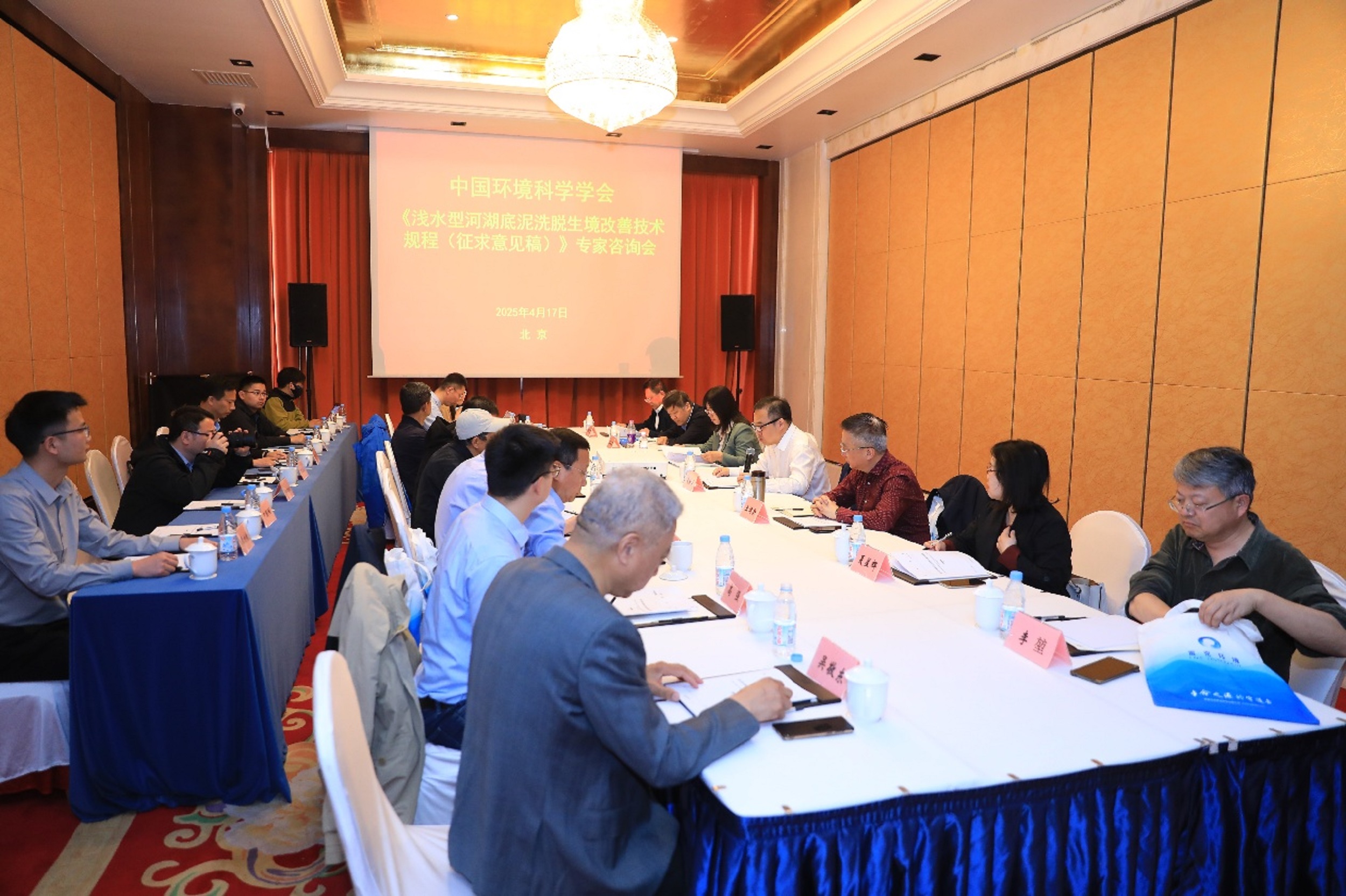
4月17日,由中国环境科学学会主办的《浅水型河湖底泥洗脱生境改善技术规程》专家咨询会在北京召开。中国科学院院士王焰新、中国工程院院士王浩、 清华大学教授刘会娟、北京师范大学教授夏星辉、中国科学院南京地理与湖泊研究所研究员秦伯强、中国环境科学研究院研究员姚芝茂、安徽省城建设计研 究总院教授级高工李堃等水科学与技术领域的专家学者齐聚一堂,对《浅水型河湖底泥洗脱生境改善技术规程》的修订提出专业建议。 专家咨询会现场 会上,与会专家对安徽雷克环境科技有限公司的底泥洗脱技术给予了高度评价和认可,一致认为这项技术是水体生境修复、推动生态恢复的前沿技术,应通 过标准引领加快推广应用步伐,为美丽中国建设提供有力的技术支撑。 中国科学院院士王焰新 技术创新:破解内源污染治理难题 底泥洗脱技术这项具有自主知识产权的创新技术,源于中国科学院合肥物质科学研究院余增亮研究员团队的科研突破。会上,研发团队代表介绍了技术的基 本原理,通过物理扰动在洗脱仓内产生湍流,湍流剪切力分散沉积层表面的颗粒物,沿重力方向形成粒度梯度分布,粗颗粒物重力沉降原位覆盖,细颗粒物 通过泵吸转移出水,经絮凝沉淀固液分离,清水回流河湖,絮凝污染物转移上岸干化应用 ...
解读!自然生态保护司司长张玉军:及时发现查处重大生态破坏事件,全面提升生态保护和修复监管能力
Zhong Guo Huan Jing Bao· 2025-04-22 23:24
Core Viewpoint - The introduction of the "Regulations on the Determination of Major Ecological Destruction Events" aims to enhance the identification and handling of significant ecological damage incidents, thereby promoting the construction of a beautiful China and ensuring ecological safety [1][2][3] Group 1: Importance of the Regulations - The regulations are a crucial step in deepening ecological civilization reforms and provide a standardized basis for determining major ecological destruction events, which is essential for improving the ecological protection system [2][3] - The implementation of these regulations is a necessary measure to meet the growing public demand for a beautiful ecological environment and to prevent ecological damage incidents [2][3] - The regulations address the lack of systematic and comprehensive standards for defining major ecological destruction events, marking a significant breakthrough in ecological protection efforts [3][4] Group 2: Definition and Scope of Major Ecological Destruction Events - The regulations define the concept and scope of major ecological destruction events, focusing on human activities that violate laws and regulations, while excluding natural disasters and other non-human factors [4][5] - It specifies the criteria for determining major ecological destruction events, considering the impact on various ecosystems, protected species, and the overall quality of ecological systems [5][6] Group 3: Implementation and Coordination - Successful implementation of the regulations requires strong organizational support and inter-departmental collaboration to enhance the authority and rationality of the determination process [8][9] - The regulations emphasize the need for timely collection of clues regarding major ecological destruction events, utilizing advanced technologies such as satellite remote sensing and artificial intelligence [8][9] - A scientific and precise approach to investigation and assessment is necessary, including the development of an ecological big data platform to improve the efficiency of evaluations and determinations [9]
孝感探索“1+1+X”多书同达机制
Zhong Guo Huan Jing Bao· 2025-04-22 14:46
"您好,这是《行政处罚决定书》,请您认真阅读确认后在送达回证上签字。"日前,湖北省孝感市某食 品有限公司因废水超标排放,受到孝感市生态环境局的行政处罚。 与过去不同的是,在送达《行政处罚决定书》的同时,执法人员还向被处罚企业送达另外两份文书—— 《生态环境监管信用修复告知书》《超标排放废水违法行为及合规建议书》。 "您可于最短行政处罚信息公示期满后申请在线修复,撤下相关公示信息,及时消除不良影响。相关失 信信息公示途径、修复条件及流程参见《生态环境监管信用修复告知书》。此外,针对本次违法行为, 向您送达《超标排放废水违法行为及合规建议书》。"执法人员向企业负责人罗先生详细介绍。 企业收到《行政处罚决定书》后,往往对如何进行信用修复知晓不足,对生产经营过程中遇到的常见法 律问题也缺乏认识。为引导信用主体及时纠正失信行为、消除不良影响,助力企业全生命周期健康发 展,孝感市生态环境局积极探索"1+1+X"多书同达机制,在《行政处罚决定书》之外,还向经营主体送 达信用修复提示函及合规指南或体检报告书等信用合规指引。这一举措旨在深入落实规范涉企业行政执 法、湖北省优化营商环境、强化信用监管相关要求。 拿到3份文书的企业 ...
四川省委书记王晓晖强调 不断夯实四川现代化建设的绿色本底
Zhong Guo Huan Jing Bao· 2025-04-22 09:46
会议指出,要动真碰硬抓好中央生态环境保护督察反馈问题和国家移交长江、黄河问题整改。要严格整 改时限,实行全过程台账管理,及时准确掌握整改进度,确保各项整改任务按时完成。要统筹推进源头 治理、系统治理、综合治理,坚决防止表面整改、虚假整改,适时开展"回头看",确保经得起检验。要 坚持举一反三、标本兼治,全面排查整治同类型、关联性、衍生性问题,推动形成常态长效的制度机 制,持续提升生态环境保护质效。 会议指出,要进一步全面深化生态文明体制改革。当前重点要进一步健全美丽四川建设责任体系,建立 完善指标体系和推进落实机制,深化环保垂直改革,梯次推进美丽四川建设试点。要严格实施生态环境 分区管控,加强生态环境准入管理,推动产业、能源、交通运输结构调整优化。要全面实行排污许可 制,建立新污染物协同治理和环境风险管控体系,推进多污染物协同减排,建立排污权有偿使用和交易 制度,健全资源环境要素市场化配置体系,有效激发市场活力。 近日,四川省生态环境保护和督察工作领导小组全体会议召开,四川省委书记、领导小组组长王晓晖主 持会议并讲话。他强调,要深入学习贯彻习近平生态文明思想和习近平总书记对四川工作系列重要指示 精神,坚决扛起维 ...
从“田间废料”到“绿色黄金”,秸秆综合治理如何破局?
Zhong Guo Huan Jing Bao· 2025-04-22 03:13
一是空间重构,建立四级网格化管理体系。按照"县统筹、乡镇(街道)负责、村(社区)落实、组 (队)巡查"原则,将全域划分为秸秆禁限烧网格,每个网格配备1名专职网格员和3—5名志愿巡查员。 开发"智慧禁限烧APP",网格员实时上传巡查数据,系统自动生成热力图辅助决策。 二是责任量化,做到考核指标动态管理。建立"5+3"考核指标体系:"禁烧管控""收储运体系""产业化水 平""农民满意度""碳减排量"5项核心指标,叠加"技术创新""模式创新""机制创新"3项加分项。对乡镇主 要领导进行考核,形成约束机制。 随着污染治理攻坚战向纵深推进,秸秆的低效处理问题已成为制约农村生态治理与可持续发展的关键难 题。笔者建议,要不断通过制度创新、技术赋能和治理升级,推动秸秆综合利用实现从被动管控向主动 治理转变。 以产业化路径激活资源价值。 一是技术创新,突破资源化利用瓶颈。秸秆利用难的核心在于收集成本高、转化技术弱。要不断通过技 术创新,发展生物质发电等产业,提升秸秆利用价值。 二是模式创新,构建三级产业链体系。在初级利用层面,积极推广秸秆低茬收割、粉碎还田、深翻覆盖 还田沃土技术模式,实现降低利用成本、增强土壤肥力的"双赢"。 ...
吉林市以重大项目为抓手建设美丽江城
Zhong Guo Huan Jing Bao· 2025-04-22 01:50
吉林市生态环境局近日组织召开2025年重大项目部署推进会议,全面部署生态治理项目谋划与推进工 作,绘制推进"时间表"与"路线图"。 会议要求,项目谋划工作由市生态环境局主抓主办,并立即组建"重大项目推进办公室",统筹项目全生 命周期管理,实行"统一谋划、统一申报、统一监管"机制,确保各环节无缝衔接。市生态环境局领导班 子、各处室及县(市、区)分局负责人要系统学习吉林省生态环境厅"一汇编、一索引、两清单"政策文 件,提升项目包装专业化水平。 会议明确,吉林市生态环境系统将以重大项目为推手,推动生态优势转化为发展胜势,为"十五五"规划 实施和美丽江城建设提供有力支撑。2025年是"十五五"规划编制工作的关键之年,要以战略思维强化重 大项目支撑。各级必须提高政治站位,深刻领会"谋项目就是谋工作、抓项目就是抓落实"的核心要义。 各部门"一把手"要亲抓亲办,坚决破除"等靠要"思想,主动对接省级政策导向,将项目谋划作为深入打 好污染防治攻坚战、巩固生态优势、擦亮绿色发展底色的关键抓手,全面提升工作主动性和积极性。 会议强调,项目谋划是争取政策资金的"敲门砖",必须迎难而上、主动作为,要开展生态领域内的"大 排查""大起底 ...
辽源实施生态环境分区管控
Zhong Guo Huan Jing Bao· 2025-04-22 01:50
Core Viewpoint - Liao Yuan City government has announced an ecological environment zoning control implementation plan, establishing 61 environmental control units to enhance ecological environment management and protection [1][2] Group 1: Environmental Control Units - The plan includes 31 priority protection units, covering 44.83% of the administrative area, with strict limitations on large-scale development and ecological restoration in damaged areas [1] - There are 26 key control units, accounting for 20.61% of the administrative area, focusing on pollution discharge control and risk prevention while improving resource utilization efficiency [1] - Four general control units represent 34.56% of the administrative area, adhering to basic ecological protection requirements [1] Group 2: Management Principles - The management approach is based on principles of ecological priority, green development, differentiated policies, and dynamic management [1][2] - The city aims to address prominent ecological issues through a structured environmental admission list, categorized into three levels: overall requirements, river basin requirements, and specific unit requirements [1] Group 3: Focus Areas - The focus is on optimizing spatial layout, controlling pollutant emissions, preventing environmental risks, and enhancing resource and energy utilization efficiency [2] - Priority protection units will strengthen ecosystem protection and functionality, while key control units will intensify pollution discharge management and environmental risk prevention [2]
大连出台“十项举措”,规范涉企检查
Zhong Guo Huan Jing Bao· 2025-04-22 01:36
事前抓源头。深入强化"三项必须",即日常检查必须纳入计划管理,全面梳理年度重点任务、专项行动 部署、环境管理保障需求以及日常监管要求等,统筹合并检查事项,避免多头重复入企;入企检查必须 先批准后开展,针对环境信访等线索类执法任务,未经执法工作负责人批准,不得随意开展检查;执法 检查必须先研判后入企,开展前即要梳理管理信息,提前确定执法重点,避免盲目检查。 事中强监督。严格实施两项举措,即执法检查任务要明确检查要点和规范要求,对照检查表单"一表通 查",一次进门全部查清,且现场检查必须开展全过程记录,客观、真实记录检查情况和相关证据,检 查记录文书全部使用执法终端制作,确保现场检查全程规范;执法人员使用全市统一部署的应用程序扫 码入企,当场向检查对象反馈检查结果、申诉渠道等信息,主动接受检查对象扫码点评。 近日,辽宁省大连市生态环境局出台《规范涉企检查"十项举措"》,对生态环境执法事前、事中、事后 三个环节进行严格规范,对检查计划、执法过程、裁量基准等多个领域进行分析优化,旨在全链条、全 过程优化全市生态环境执法工作,打造文明、规范、有温度的执法队伍,全力护航大连"两先区"高质量 发展。 中国环境报原题为: 事 ...