
Zhong Guo Huan Jing Bao

Search documents
陕西开展2025年度国家绿色数据中心推荐工作
Zhong Guo Huan Jing Bao· 2025-08-08 11:06
Group 1 - The core initiative is to promote energy-saving and carbon reduction transformations in data centers across Shaanxi Province, with a focus on green development by recommending national green data centers for 2025 [1][2] - The recommendation process involves six sectors: industry, information communication, energy, internet, finance, and public institutions, adhering to the 2025 National Green Data Center Evaluation Index System [1] - Recommended data centers must meet specific criteria, including independent legal status, clear property rights, stable operation for over one year, and compliance with national green infrastructure development plans [1] Group 2 - Data centers constructed after 2022 should ideally be located within national integrated computing network hubs and designated areas for computing and electricity coordination [1] - The minimum scale for data centers is set at 3,000 standard racks, with a rack utilization rate of no less than 60%, and computing resource usage rates should be industry-leading, aiming for at least a secondary level in the Green Data Center Evaluation [1] - The self-evaluation process for participating units includes creating a self-evaluation report based on the 2025 National Green Data Center Evaluation Index System, with local authorities responsible for reviewing and recommending submissions [2]
粪肥还田要理顺各方关系
Zhong Guo Huan Jing Bao· 2025-08-08 08:17
Core Viewpoint - The new "Technical Specifications for Returning Livestock Manure to Fields" implemented from August 1 aims to enhance resource utilization and address pollution from livestock farming while reducing chemical fertilizer usage [1][2] Group 1: Implementation and Benefits - The implementation of manure return can effectively solve pollution issues from livestock farming and decrease the reliance on chemical fertilizers [1] - A practical manure distribution system has been established where livestock farmers transport manure to storage pools located in fields, allowing crop farmers to easily access and utilize the manure [1] - This system benefits both livestock farmers, who can extend their facilities and increase storage capacity, and crop farmers, who save on fertilizer costs and have convenient access to manure [1] Group 2: Construction and Management of Storage Pools - Local authorities need to strengthen guidance on the construction of manure storage pools, ensuring that livestock and crop farmers sign comprehensive utilization agreements [2] - The construction of storage pools should consider factors such as terrain, transportation conditions, and environmental protection measures like odor control and water-fertilizer integration [2] - Agricultural departments must provide guidance during the manure application phase to control application rates and methods, preventing secondary pollution [2]
西藏生态安全屏障日益牢固
Zhong Guo Huan Jing Bao· 2025-08-08 07:57
王君正介绍,2021年以来,西藏自治区经济发展规模不断扩大,发展的质量和效益明显提升,清洁能 源、文化旅游、高原轻工业等现代产业蓬勃发展,现代产业体系初步建立。如今,西藏自治区自我造 血、自我发展的能力不断提高,主要经济指标增速连续多年位居全国前列,2025年全自治区生产总值有 望突破3000亿元,实现第三个千亿目标。 在坚定不移贯彻落实绿色发展理念方面,2024年,西藏自治区绿色食品、有机农产品、农产品地理标 志、全国名特优新农产品总数达到了404个,绿色有机成为"藏字号"农畜产品的金字招牌。绿色工业加 速转型,2021年—2024年累计培育国家级绿色工厂17家、国家级绿色工业园区1家,高原特色产业的含 绿量、含金量、含新量不断提升。 如今,西藏自治区依托世界级水能、风能和太阳能资源,加快清洁能源基地建设,积极为实现"双碳"目 标贡献力量。2024年西藏清洁能源发电量占比达到99%以上,基本实现了全清洁电力供应,成为全国清 洁能源发电量占比最高的地区。非化石能源消费比重达到55%以上,位居全国前列。 西藏自治区的各领域生态补偿制度不断优化完善。2021年—2024年,西藏自治区累计落实草原生态补助 奖励资金 ...
如何规范第三方服务市场?有这几点建议
Zhong Guo Huan Jing Bao· 2025-08-08 07:04
目前,除了政府购买服务以外,基本上都是企业付费给第三方服务机构,这就赋予甲方极大的话语权。 在现阶段总体为买方市场的情况下,有的第三方服务机构为了保住业务,选择铤而走险。有的第三方服 务机构出于压减成本的目的,不规范采样和监测,甚至直接编造数据。同时,一些地方的监管部门和委 托企业等主体,对第三方服务机构监管不到位,给其留下了可钻的空子。 第三方环保服务关系生态环境事业的长足发展,必须保证其健康良性发展。笔者认为,应从以下几方面 综合施策。 严抓企业遵规守纪。要督促引导第三方服务企业严格遵守法律法规,积极落实有关制度规范。同时,甲 方企业要对聘请的第三方服务机构加强监督和考核,不能授意、暗示其弄虚作假。甲方不得因为对方拒 绝配合弄虚作假,就擅自与按合同正常履职的第三方服务机构解除合同,或者在后续招标中设置阻碍性 条件。对有上述行为的,要严厉惩处相关责任人员。可考虑实行不当干预记录制度,将其纳入企业信用 管理和从业记录管理。 生态环境第三方服务市场近年发展迅猛,为推动生态环境质量持续改善作出了积极贡献,但也暴露出一 些问题,特别是弄虚作假问题突出。出现问题不可怕,关键是要正视问题,并切实采取措施解决问题。 笔者 ...
本报评论员:立足岗位职责 展现责任担当|五论贯彻落实《地方党政领导干部生态环境保护责任制规定(试行)》
Zhong Guo Huan Jing Bao· 2025-08-08 06:04
Core Viewpoint - The "Regulations on the Responsibility System for Ecological and Environmental Protection of Local Party and Government Leaders (Trial)" establishes clear responsibilities for local leaders in ecological protection and creates a comprehensive responsibility system to support the goal of building a beautiful China [1] Group 1: Implementation of Responsibilities - Local ecological and environmental departments play multiple roles, including policy advisor, coordinator, and supervisor, which are crucial for transforming institutional advantages into governance effectiveness [1] - There is a need for strong commitment and practical efforts to ensure the implementation of the responsibility system, leading to tangible results in ecological protection [1] Group 2: Strategic Direction - Local ecological and environmental departments must enhance political awareness and align their actions with national ecological civilization goals, ensuring that policies are tailored to local realities [2] - The focus should be on addressing prominent ecological issues that affect the public, ensuring that ecological protection benefits the people [2] Group 3: Collaborative Efforts - Ecological protection requires collaboration across various sectors, necessitating a "big environmental protection" mindset to achieve coordinated efforts [3] - Local departments are responsible for overseeing ecological protection within their jurisdictions and must work together with other relevant departments to enhance effectiveness in carbon reduction, pollution control, and ecological restoration [3] Group 4: Enforcement and Accountability - The responsibility system includes strict supervision and management to ensure compliance, with local departments tasked with monitoring environmental protection efforts [3] - There is an emphasis on combating environmental violations to maintain a strong deterrent effect and safeguard ecological safety [3] Group 5: Future Outlook - The current phase of ecological civilization construction is challenging, and local ecological departments must take on responsibilities and demonstrate results in improving environmental quality [4]
让生态理念扎根研学游
Zhong Guo Huan Jing Bao· 2025-08-08 05:45
Core Viewpoint - The increasing popularity of educational trips for students during holidays is noted, but there is a significant lack of ecological understanding and knowledge in the design and practice of these trips, leading to superficial learning experiences [1][2]. Group 1: Current Issues in Educational Trips - Many educational trips are marketed with themes like "natural exploration" and "outdoor practice," yet they often fail to incorporate ecological concepts and knowledge [1]. - Students may learn the names of plants and animals but do not grasp the interdependence within ecosystems or the deeper logic of sustainable development [1]. - The design of these trips often emphasizes "experiential learning" over "immersive thinking," resulting in a lack of systematic explanation of ecological principles [1][3]. Group 2: Importance of Ecological Concepts - Educational trips are described as "walking classrooms," where integrating ecological theories is essential to instill respect for nature and the protection of life in children [2]. - The need for a comprehensive understanding of ecological systems is emphasized, suggesting that ecological principles should be woven into every aspect of the educational experience [2]. Group 3: Recommendations for Improvement - The article suggests four key integrations to embed ecological concepts into educational trips: - Integrate ecological system concepts during natural observations, using visual aids to explain energy flow and interconnections within ecosystems [3]. - Incorporate ecological balance concepts through practical experiences, such as comparing different human interventions on vegetation recovery [3]. - Include sustainable development concepts in scenario analyses, using local examples to illustrate the symbiotic relationship between development and environmental protection [3]. - Promote harmonious coexistence through action-oriented guidance, encouraging children to engage in environmental protection activities [4].
生物多样性不是自然保护区的“特产”,城市也要融入自然
Zhong Guo Huan Jing Bao· 2025-08-08 03:11
Group 1 - The central urban work conference emphasizes the goal of building a modern, innovative, livable, beautiful, resilient, civilized, and smart city, focusing on high-quality urban development and the importance of urban renewal [1] - The article highlights the need to integrate ecological protection into urban planning, construction, and governance to create harmonious cities that coexist with nature, reducing interference with natural environments [1][2] - Urbanization has led to the expansion of production and living spaces while squeezing ecological spaces, resulting in urban issues such as heat island effects, air pollution, and frequent flooding [1][2] Group 2 - To address urban ecological issues, a rational structure of production, living, and ecological spaces is required, incorporating ecological protection boundaries into urban planning as rigid constraints [2] - The article advocates for a clustered development approach rather than sprawling expansion, promoting the integration of urban spaces with natural elements through ecological corridors and green networks [2] - The importance of biodiversity in urban ecosystems is emphasized, calling for the protection of important species and habitats to restore urban biodiversity and ecological integrity [3]
嘉兴:二十年“两山”实践,绘就生态新画卷
Zhong Guo Huan Jing Bao· 2025-08-08 02:08
Group 1 - The core idea of the article emphasizes the transformation of Jiaxing City from an "environmental debt" to an "ecological asset" through systematic governance and innovative practices, showcasing the synergy between ecological environment and economic development [2][10][17] - Jiaxing has achieved a significant improvement in water quality, with the proportion of Class III water bodies rising from 0% in 2012 to 100% today, and drinking water sources meeting standards for five consecutive years [4][5] - The city has implemented comprehensive pollution control measures, including the "Five Water Co-Governance" initiative and the "Three Water Coordination" strategy, leading to a reduction of over one-third of pollutants through various ecological projects [4][5] Group 2 - Jiaxing's air quality has improved, with PM2.5 concentrations projected to drop to 26.8 micrograms per cubic meter by 2024, marking a significant achievement in air pollution control [5] - The city has established a "city-park-enterprise" three-tier practice system for pollution reduction and carbon neutrality, showcasing innovative technologies that reduce volatile organic compound emissions by 17.68 tons annually [5][10] - Jiaxing encourages the development of green industries such as ecological agriculture and rural tourism, with successful examples like the integration of the peach industry and rural tourism in Taoyuan Village, leading to increased farmer incomes [10][11] Group 3 - The article highlights the importance of community involvement in ecological governance, with initiatives like the creation of "quiet communities" and the use of AI for monitoring pollution sources [16] - Jiaxing has pioneered the integration of carbon emissions into planning and environmental assessments, establishing a rapid response mechanism for environmental incidents [16][17] - The city's practices demonstrate that ecological protection and economic development can coexist harmoniously, providing a model for integrated ecological and economic growth in the Yangtze River Delta region [17]

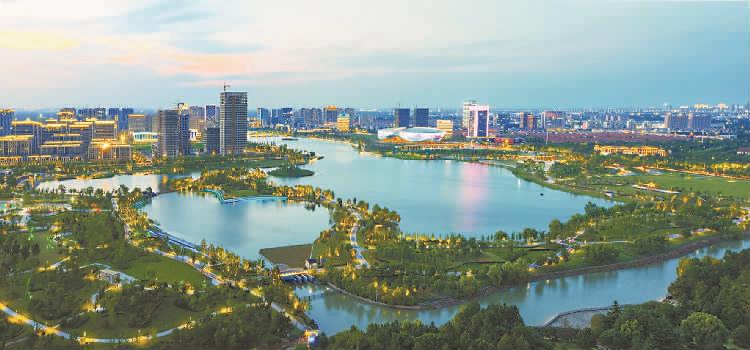
从破题到点题 践行“两山”理念温州有何答题之道?
Zhong Guo Huan Jing Bao· 2025-08-08 02:08
Core Viewpoint - Wenzhou has successfully balanced ecological protection and economic development, achieving a forest coverage rate of 61.7%, a surface water quality rate of 98.3%, and a GDP exceeding 800 billion yuan, exemplifying the principle that "lucid waters and lush mountains are invaluable assets" [2] Group 1: Ecological Governance Initiatives - Wenzhou's approach to ecological governance began with a recognition of "ecological deficit" and a commitment to rigorous environmental management, moving away from the "GDP first" mentality [4] - The Longwan District undertook significant pollution control measures, shutting down 196 synthetic leather production lines and investing 1.5 million yuan in a solid waste disposal center, leading to the establishment of high-tech industries in the area [5] - The Sanyang Wetland underwent a comprehensive restoration process, improving its ecological service value to an annual average of 1.2 billion yuan and significantly enhancing carbon sequestration capabilities [6] Group 2: Innovative Economic Models - Wenzhou has developed a value realization pathway for ecological products, exemplified by the "water economy" in Wencheng County, which transformed water resources into a multi-tiered value chain, increasing the economic value of water from 0.5 yuan to 28 yuan per ton [11][12] - Traditional industries are being transformed sustainably, as seen in the leather industry transitioning to pet products, achieving sales prices three times higher than traditional leather goods [12] - Cultural heritage is being integrated into economic development, with the preservation of ancient bridges leading to significant tourism revenue and enhanced local product value [13] Group 3: Institutional Framework and Mechanisms - Wenzhou has established a robust ecological governance system that integrates government guidance, market operations, and social participation, facilitating effective environmental management [17] - The introduction of a "multi-evaluation integration" approval model has streamlined environmental assessments, reducing approval times from 180 days to 72 days [17] - The "digital Shanshui" system employs advanced monitoring technologies to ensure water quality standards are met, significantly reducing operational costs while enhancing ecological benefits [18] Group 4: Community Engagement and Future Prospects - Community involvement in ecological governance is exemplified by local initiatives such as the "civilian river chief" program, which encourages citizen participation in monitoring water quality [19] - Collaborative models among local enterprises, such as the "shared pollution control" initiative, have led to reduced treatment costs and lower emissions [19] - Wenzhou's recognition as an "International Wetland City" and its ambition to create a national ecological civilization demonstration zone highlight its commitment to sustainable development and provide a replicable model for other regions [19]

刚柔并济,让执法兼具力度和温度
Zhong Guo Huan Jing Bao· 2025-08-08 01:46
针对加油站油气回收装置污染物检测超标问题,山西省太原市生态环境保护综合行政执法队近日对辖区 3家超标加油站采取了"一对一"约谈与帮扶。 要充分展现"刚柔并济"的执法智慧,就需要各地在执法过程中,坚持教育与处罚相结合、服务与管理相 结合,正确处理好"刚"和"柔"的关系。要准确把握柔性执法的特点、要求和举措,纠正执法中的片 面"刚性"或片面"柔性"的做法,平衡好执法力度和温度。 要增强"刚柔并济"的执法能力。在运用"刚性"举措方面,重点增强执法人员通过依法监管执法、约谈等 举措,压实执法对象生态环境保护主体责任、督促执法对象守住生态环境保护底线的能力。在运用"柔 性"举措方面,重点增强执法人员说服教育、劝导示范、帮扶指导的能力。此外,还要增强执法人员根 据实际情况,灵活运用"刚性"和"柔性"举措的能力,努力使执法力度和执法温度达到最佳效果。 要落实"刚柔并济"的执法举措。针对执法对象存在的违法行为和问题隐患,综合采取现场执法、现场约 谈等方式,向执法对象明确整改的标准、要求、时限,督促其严格履行主体责任、落实相关整改要求。 对于私设暗管或利用溶洞、裂隙偷排偷放,篡改伪造自动监测数据,不正常运行污染防治设施等重大违 ...