
Zhong Guo Huan Jing Bao

Search documents
污水处理行业现绿色低碳转型怎么做?
Zhong Guo Huan Jing Bao· 2025-07-24 07:07
Core Insights - The wastewater treatment industry is crucial for environmental infrastructure and water pollution control, with carbon emissions from this sector accounting for approximately 2% of global totals and showing an upward trend [1] - The industry in China is transitioning from a focus on pollution control to a green direction that emphasizes both pollution reduction and carbon emission reduction, driven by various policies [1][2] - Recent policies aim to enhance energy efficiency and optimize processes in wastewater treatment plants, binding pollution reduction and carbon reduction goals [1][2] Policy and Technological Innovations - Local initiatives are exploring collaborative treatment of industrial wastewater and municipal sewage, exemplified by the Qingdao Water Group's partnership with Qingdao Beer Company, which has saved over 62 million yuan and reduced carbon emissions by over 40,000 tons CO2e [2] - Technological optimizations, such as improved aeration systems and anaerobic digestion for energy recovery, have led to significant energy savings and carbon reductions in various treatment plants [2][3] - The integration of resource recovery and carbon neutrality models is being piloted, with projects in Guangzhou demonstrating carbon reduction through sludge carbonization and carbon trading [3] Challenges and Bottlenecks - The industry faces challenges such as an incomplete standard system for carbon accounting, leading to difficulties in data comparability and performance evaluation [4] - Low-carbon technologies are not yet mature, with high costs and operational instability limiting their application in smaller treatment facilities [4] - Operational management issues, including unstable influent loads and outdated management practices, hinder the ability to optimize energy use and carbon emissions [4] Recommendations for Future Development - The industry should focus on improving policy and standard systems, including developing localized carbon accounting guidelines and energy utilization standards [6] - Promotion of low-carbon technologies and processes is essential, with an emphasis on reducing reliance on traditional carbon sources and enhancing renewable energy integration [6] - Optimizing operations through smart management and real-time monitoring of water quality and energy use can significantly improve efficiency [6] - Innovative mechanisms and multi-party collaboration, such as green finance initiatives, can support low-carbon transformation projects [6]
普洱“碳”寻绿色发展密码
Zhong Guo Huan Jing Bao· 2025-07-24 02:09
Group 1: Carbon Management Initiatives - Yunnan Province's Pu'er City has established itself as a national forestry carbon sink pilot county, emphasizing ecological and green development [1] - The city has implemented a comprehensive carbon peak action plan, focusing on nine major actions including energy transition, urban construction, and green technology innovation [2][3] - A carbon account platform has been initiated, facilitating over 5,300 tons of carbon trading through a collaborative mechanism involving companies, counties, and farmers [2] Group 2: Green Economic Development - Pu'er City achieved a 100% green electricity supply rate during the 14th Five-Year Plan period, with significant growth in organic product certifications and green food brands [4] - The city is developing a circular economy, integrating agriculture, forestry, and tourism into a diversified industrial structure, with a focus on clean production and resource efficiency [4] - Traditional industries are undergoing green upgrades, exemplified by a salt company's energy-saving project that reduced energy consumption by 65% and carbon emissions by over 35,000 tons [5] Group 3: Sustainable Agricultural Practices - The city is promoting the green transformation of traditional agriculture, leveraging highland specialty products like tea and coffee to create a sustainable agricultural cycle [6] - Initiatives include the establishment of ecological demonstration gardens and the development of a circular industry chain that enhances agricultural productivity [6] - The city has successfully integrated carbon management into its agricultural practices, contributing to high-quality green development [6]
撬动志愿服务力量建设美丽云南
Zhong Guo Huan Jing Bao· 2025-07-24 02:09
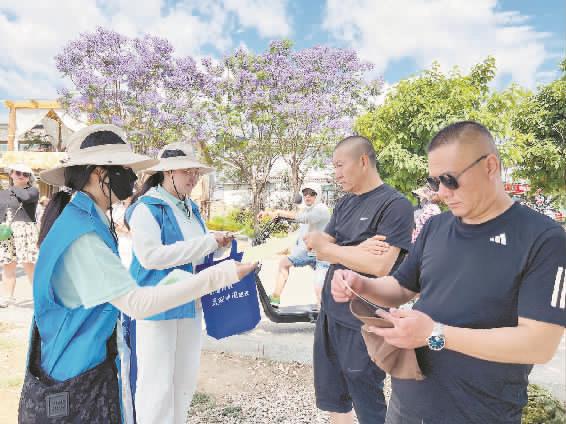
Group 1 - Yunnan Province has successfully formed 115 ecological environment volunteer teams with a total of 4,052 registered volunteers, conducting 431 ecological environment volunteer service activities to date [1] - The Yunnan Ecological Environment Publicity and Education Center has collaborated with ecological environment bureaus from 10 prefectures (cities) to carry out over 10 diverse ecological environment volunteer service promotional activities, enhancing public awareness of ecological environment protection [1] - Activities include ecological environment knowledge lectures, outdoor exhibitions, community interaction, and knowledge dissemination, effectively reaching various social groups [1] Group 2 - The "Nine Lakes Environmental Guardians" volunteer service initiative has mobilized over 2,000 volunteers in five prefectures (cities) to engage in activities such as specialized lectures, beach clean-ups, low-carbon cycling, and ecological advocacy [2] - Volunteers are actively educating tourists about lake ecology while participating in clean-up efforts, creating a vibrant community engagement around lake protection [2] - Participants express that lake protection is an ongoing commitment, emphasizing the importance of raising ecological awareness among the public [2] Group 3 - Yunnan Province has organized specialized training sessions for volunteer service teams, focusing on project planning, brand building, and enhancing the skills and capabilities of ecological environment volunteers [4] - The province aims to establish a structured volunteer service organization system, consisting of a provincial team, municipal sub-teams, and several branches, to further advance ecological environment volunteer services [4] - Future plans include developing more distinctive volunteer service activities to foster social consensus and gather collective efforts for harmonious coexistence between humans and nature [4]

云南环保设施开放“玩”出新花样
Zhong Guo Huan Jing Bao· 2025-07-24 02:02
Group 1 - Yunnan Province is promoting public access to environmental protection facilities through various initiatives, including expanding open fields, offline activities, live streaming events, and optimizing mini-program services [1][2] - As of now, 100 units in Yunnan have been included in the national public access list for environmental protection facilities, covering eight categories such as environmental monitoring, urban sewage treatment, waste disposal, and more, achieving full coverage across 16 prefectures and cities [1] - In March, the Ministry of Ecology and Environment announced the first batch of "new four categories" of open environmental protection facilities, with 11 units from Yunnan Province included, marking an extension from traditional categories to core industrial sectors [1] Group 2 - Yunnan Province is regularly promoting offline access to environmental protection facilities, with activities organized on significant dates such as International Biodiversity Day and World Environment Day, allowing students to engage directly with environmental monitoring and purification technologies [2] - An innovative live streaming event was held at China National Petroleum Corporation Yunnan Petrochemical Company, attracting nearly 60,000 online participants, showcasing wastewater treatment centers and energy recycling systems, thus creating a dual empowerment of online engagement and offline experience [2] - The province is building a comprehensive open access framework that combines online and offline experiences, aiming to transform environmental protection knowledge into practical experiences for the public [3]
滇越携手提升区域生态环境守护力
Zhong Guo Huan Jing Bao· 2025-07-24 02:02
Group 1 - The core objective of the recent event was to enhance environmental capacity and technical sharing between Yunnan Province and Vietnam, focusing on green development goals and fostering cooperation in the ecological environment sector [2][5] - The event aligns with the joint declaration on deepening the comprehensive strategic partnership between China and Vietnam, aiming to strengthen political mutual trust and create new opportunities for cooperation in ecological and environmental fields [2][4] - During the event, both sides engaged in roundtable discussions, sharing experiences in ecological civilization construction, climate change response, water pollution control, and biodiversity protection [2][3][4] Group 2 - Yunnan Province has been committed to the concept of "lucid waters and lush mountains are invaluable assets," prioritizing ecological protection as a key to sustainable development and achieving significant results in green, low-carbon transformation [3][4] - The province has achieved an urban sewage treatment rate of 98.01% and a rural waste treatment rate of 92%, with a comprehensive utilization rate of major crop straw reaching 91% [4] - Yunnan actively participates in international cooperation in environmental protection, having implemented multiple projects with Laos, Myanmar, and Cambodia, improving local living conditions and community welfare [4] Group 3 - The event resulted in the signing of a bilateral cooperation meeting summary, establishing a long-term cooperation mechanism with annual joint meetings to review and plan future collaborative efforts [4] - The cooperation will focus on areas of mutual interest, including urban air pollution control, water ecological environment governance, and biodiversity protection, with plans for personnel exchanges, capacity building, and joint research projects [4][5]
国内首个柴油机油D1标准发布,潍柴提供关键支撑
Zhong Guo Huan Jing Bao· 2025-07-24 01:15
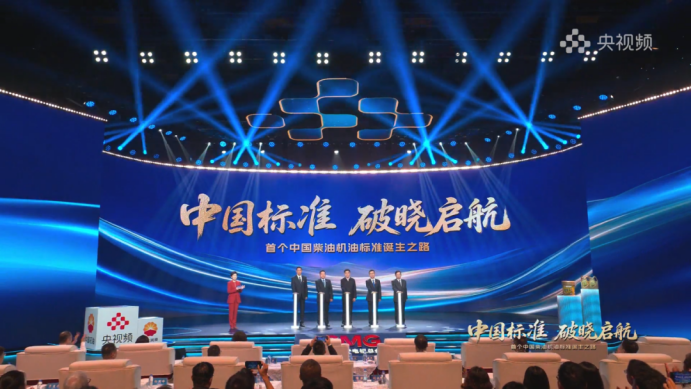
Core Viewpoint - The release of China's first diesel engine oil D1 standard marks a significant step towards breaking foreign monopolies and establishing an independent standard in the industry, with Weichai Power playing a crucial role in its development [1][3][7]. Group 1: Industry Background - China is the world's largest producer and seller of engines, yet it has long relied on the American API system for diesel engine oil standards, which has hindered the industry's independent development [3]. - In 2016, the China Internal Combustion Engine Society, along with Weichai and 42 other organizations, formed the "Engine Lubricating Oil China Standard Development Innovation Alliance" to break foreign technological monopolies [3]. Group 2: Technical Contributions - Weichai invested nearly 100 technical experts over nearly ten years to develop the D1 standard, using its WP13 engine as a core testing platform [4][8]. - The testing data indicated that the new standard allows for an oil change interval of up to 120,000 kilometers, a 100% increase compared to previous standards, significantly reducing user costs [4]. Group 3: Collaborative Efforts - Weichai collaborated with the China Automotive Research and Testing Center to develop the WP13 evaluation method, leading to the implementation of four industry standards and participation in drafting eight supporting specifications [6]. Group 4: Future Implications - The D1 standard not only enhances the competitiveness of Weichai engines but also promotes upgrades across the entire industry chain, with potential benefits for future emissions standards (National VI and VII) [7]. - The promotion of the D1 standard is expected to accelerate the Chinese diesel engine oil industry's transition away from foreign dependency, moving towards high-quality development [7].
区块链筑基碳管理 智能监测创未来
Zhong Guo Huan Jing Bao· 2025-07-24 01:15
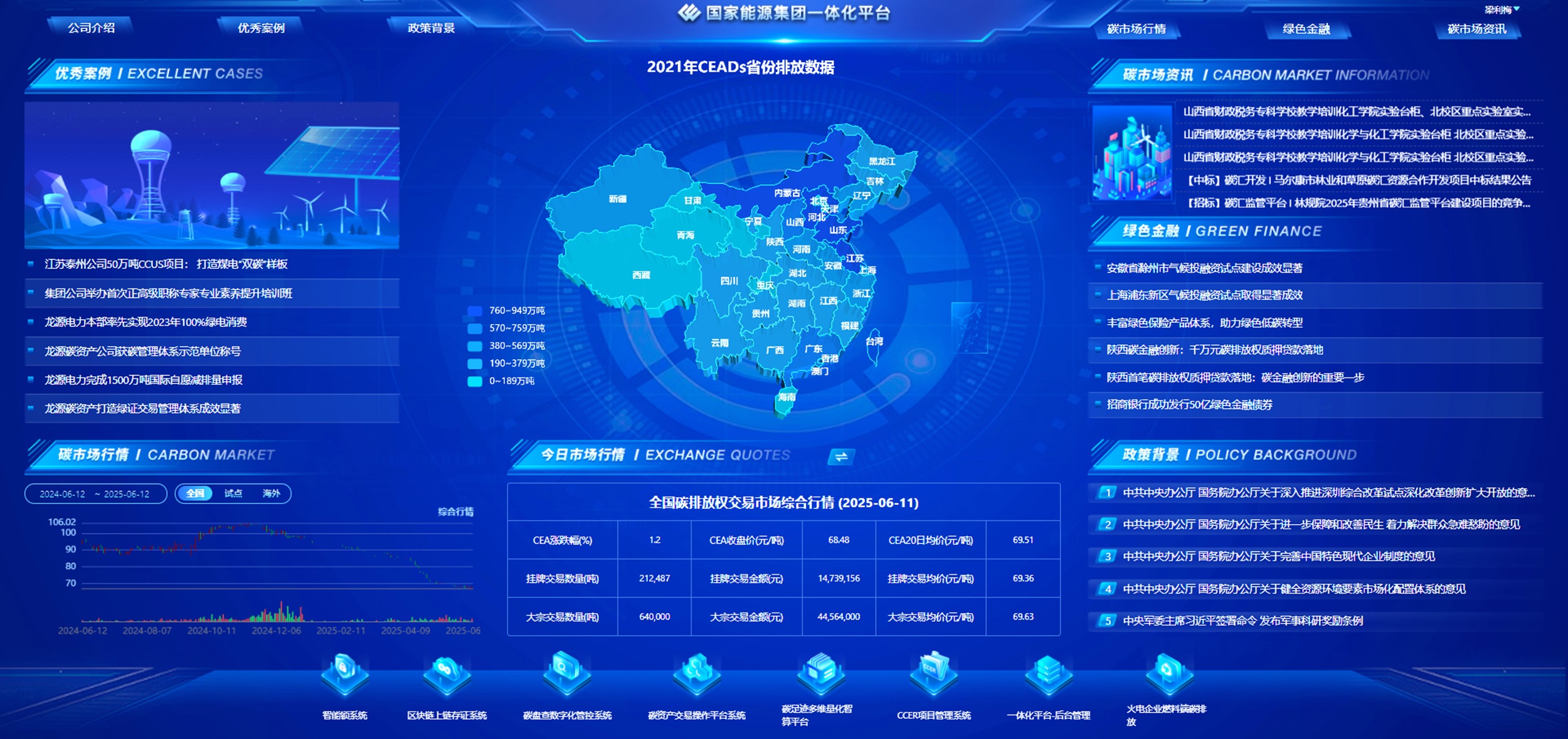
Core Viewpoint - Longyuan Carbon Asset Management Technology Co., Ltd. is a wholly-owned subsidiary of China Energy Group, focusing on carbon asset management and digital transformation in line with China's dual carbon goals [1][4]. Group 1: Company Overview - Longyuan Carbon Asset Company was established in August 2008 and is one of the first specialized carbon asset management institutions in China [1]. - The company has received various certifications, including national high-tech enterprise and "specialized, refined, distinctive, and innovative" small and medium-sized enterprises in Beijing [1]. Group 2: Project Overview - In 2022, the company initiated a project titled "Research and Demonstration of Integrated Intelligent Monitoring Application for Carbon Emission and Trading Based on Blockchain," with a total investment of 24.261 million yuan, spanning three years [2]. - The project integrates blockchain technology with carbon management, covering carbon emission monitoring, asset trading, and carbon footprint accounting [2]. Group 3: Technical Features and Project Advantages - The project features a fully digital management system that integrates 1,294 verification elements and establishes a dynamic personnel management mechanism [3]. - An innovative trading platform utilizes RPA robotic process automation technology for automated management of national carbon market accounts, significantly reducing trading risks [3]. - The carbon footprint accounting platform employs lifecycle assessment methods and integrates multi-source data to support real-time carbon emission calculations [3]. Group 4: Benefit Analysis - The project has managed carbon assets valued over 10 billion yuan, marking a shift from traditional manual management to digital and intelligent management [4]. - It has improved efficiency in carbon quota trading, completing 105 transactions worth 1.89 billion yuan within five days, compared to previous cycles of 1.5 to 2 months [4]. - The project has generated significant cost savings, including 9.8 million yuan in reduced compliance costs and 3.933 million yuan in labor cost savings [4].
AI赋能蓝色生态产业园 共建循环经济新生态
Zhong Guo Huan Jing Bao· 2025-07-24 01:15
Core Viewpoint - Jinko Environment Co., Ltd. focuses on deep water treatment and wastewater resource utilization, providing integrated lifecycle solutions through innovative engineering productization [1] Company Overview - Founded in 2004, Jinko Environment is a national high-tech enterprise specializing in water treatment and wastewater resource recovery [1] - The company has developed the Newater House® smart water treatment unit, which utilizes the WateRobot® AI system for modular design and manufacturing [1] - Jinko Environment has received multiple industry awards, recognizing its technological strength and contributions to national demonstration projects [1] Project Overview - The Tangshan Nanpu Economic Development Zone project aims to address water resource supply and demand conflicts by implementing a comprehensive wastewater resource utilization project [2] - This project serves as a benchmark for the "Blue Ecological Industrial Park" development in the region [2] Project Scale - The Tangshan Nanpu project has an annual production capacity of 87,000 tons of high-quality reclaimed water, with a significant portion supplied to chemical and thermal power enterprises [3] - The project achieves over 70% industrial wastewater reuse, equivalent to replacing 31.755 million tons of fresh water annually [3] Technical Features and Innovations - The project features a comprehensive resource utilization technology system, achieving industrial-grade reclaimed water quality and zero waste of pollutants [4] - The AI-driven WateRobot® system enhances operational efficiency and safety through advanced technologies such as deep learning and fault diagnosis [4] Benefits Analysis - Ecological benefits include the annual replacement of 31.755 million tons of industrial fresh water and a reduction of 952.65 tons of CO2 emissions [7] - Economic benefits are realized through reduced water costs for chemical and thermal power enterprises, enhancing production stability [7] - The project has received recognition as a benchmark for industrial water conservation and has been nominated for international awards, showcasing its value in sustainable development [7]

红旗渠精神发祥地如何从贫困山区变成幸福家园?
Zhong Guo Huan Jing Bao· 2025-07-24 00:25
Core Viewpoint - Linzhou City has transformed from a poverty-stricken mountainous area to a tourism destination by prioritizing ecological development and implementing the concept of "lucid waters and lush mountains are invaluable assets" [1][8]. Environmental Governance - Linzhou has initiated systematic restoration and enhancement of its natural environment, achieving over 95% effective rural waste management through a market-oriented cleaning model combined with community participation [2]. - The city has engaged 1.56 million people in a "Clean Home" campaign, clearing 865,000 tons of waste and planting 480,000 trees, while also completing toilet renovations for 92% of rural households [2]. - The "All-region Greening" plan has increased forest coverage to 47%, with 1.71 million acres of forest land, including 300,000 acres of economic forest [2]. Resource Recycling - Linzhou has creatively repurposed traditional stone structures from demolished buildings into park landscapes, preserving cultural memory while reducing construction costs [3]. - The city has transformed 1,100 hectares of abandoned homesteads into gardens and orchards [3]. Ecological Industry Development - Linzhou has strategically developed unique ecological industries, facilitating the conversion of "green mountains and clear waters" into economic benefits [4]. - The chrysanthemum industry has been established in Tea Shop Town, generating an annual output of approximately 10 million kilograms and contributing over 35 million yuan to local farmers [4]. - The under-forest economy has been developed by utilizing forest resources for medicinal herbs, generating over 1 million yuan in annual income from 300 acres of medicinal plants [4]. Slope Economy - Linzhou has introduced favorable policies for slope land development, leading to the transformation of 1,500 acres of wasteland into terraced fields for walnut and apple cultivation, providing over 80 jobs [5]. Cultural and Tourism Integration - Linzhou has built a comprehensive tourism system leveraging the Red Flag Canal spirit and the natural resources of the Taihang Mountains, establishing a 5A-level tourist area [6][7]. - The city has developed over 470 boutique homestays, transforming traditional villages into popular tourist destinations [8]. - The integration of tourism and industry aims to achieve a modern industrial system, focusing on high-end, intelligent, and green development [8].
落实中央城市工作会议要求,长三角绿色低碳美丽城市建设这样推进
Zhong Guo Huan Jing Bao· 2025-07-23 23:15
Core Viewpoint - The recent Central Urban Work Conference emphasizes the construction of green and low-carbon beautiful cities, highlighting the achievements and challenges faced in the Yangtze River Delta region's green urban development [1] Group 1: Institutional Coordination - The Yangtze River Delta needs to establish a comprehensive institutional coordination system to form a new pattern of regional linkage and multi-party co-construction [2] - A vertical collaborative policy and regulatory system should be developed to address issues of poor upward and downward linkage and unclear responsibilities in ecological environment policies [2] - Local governments should create operational procedures and supervision methods to enhance daily regulation and enforcement [2] Group 2: Horizontal Collaboration - The region should enhance the existing joint prevention and control mechanisms for ecological environment governance, focusing on deep collaboration and efficiency improvement [3] - Establish a permanent regional ecological environment coordination agency to manage major project reviews and ecological compensation negotiations [3] - Promote a multi-party collaborative governance mechanism involving the public, enterprises, and social organizations in ecological environment supervision [3] Group 3: Technological Innovation - The Yangtze River Delta should leverage its technological advantages to enhance cross-regional technological innovation and transformation capabilities [5] - A digital technology-driven fine governance model should be established to support complex scenarios in air quality management and pollution control [5] - Create a low-carbon technology joint research platform to focus on key areas such as industrial waste gas treatment and green building energy efficiency [6] Group 4: Resource Allocation - A cross-regional funding coordination system should be established to support green low-carbon city construction, integrating various funding sources [8] - Develop a collaborative configuration mechanism for key ecological environment resources, breaking down administrative barriers [9] - Establish a shared talent development system to enhance the quality of green development personnel in the region [10]