
Xin Lang Ji Jin

Search documents
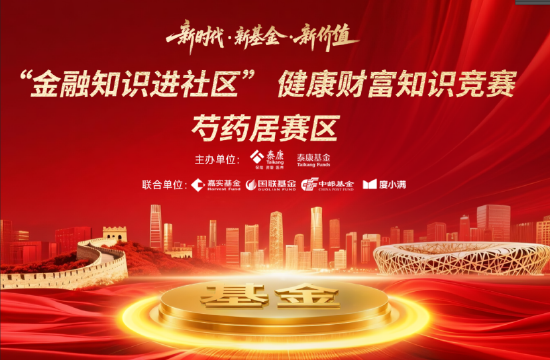
泰康基金持续举办“金融知识进社区”健康财富知识竞赛活动 助力居民守护钱袋子
Xin Lang Ji Jin· 2025-10-17 02:45
Core Points - The event "Financial Knowledge into Communities" aims to enhance financial literacy and fraud prevention awareness among community residents [3][7] - The competition is part of the "New Era, New Fund, New Value" initiative to promote high-quality development in the public fund industry [7][9] Group 1: Event Overview - The competition is organized by Taikang Fund in collaboration with several financial institutions, including Harvest Fund and Postal Savings Fund [1][3] - The event consists of preliminary and final rounds, with the preliminary round in the Shaoyaoju area featuring 16 community residents forming 4 representative teams [3][5] Group 2: Competition Structure - The competition includes mandatory questions, quick-answer questions, and risk-related questions covering topics such as financial knowledge, fraud prevention, and retirement investment [5] - A "help" segment is included where staff from Taikang Fund and Guolian Fund provide guidance and explanations to enhance participants' understanding of financial concepts [5] Group 3: Objectives and Future Plans - The initiative aims to disseminate professional financial knowledge to ordinary investors, improve financial investment knowledge, and enhance risk awareness among the public [7] - Future activities will focus on more diverse content and formats to further promote financial literacy and support families in safeguarding their financial well-being [9]

从社区商圈到高校 华商基金以专业陪伴助力行业高质量发展丨北京公募基金高质量发展在行动
Xin Lang Ji Jin· 2025-10-17 02:45
Core Insights - The "New Era, New Fund, New Value" initiative aims to promote high-quality development in the public fund industry in Beijing through various educational activities and investor engagement [3][12]. Group 1: Event Overview - The "Future Financial Talent Cultivation Program" was successfully conducted at the Central University of Finance and Economics, focusing on enhancing financial literacy among students [3][4]. - The initiative is part of a broader action plan to implement high-quality development in the public fund sector, guided by the Beijing Securities Regulatory Bureau [3][12]. Group 2: Educational Focus - The activities included discussions on diverse investment themes such as fund investment strategies, index investing, AI empowerment, and essential financial skills for the workplace [3][4]. - Participants demonstrated a strong understanding of financial concepts, asking insightful questions that reflect their professional knowledge and broad perspectives [4]. Group 3: Investor Engagement - The series of events aims to deepen public understanding of the fund industry's development and the importance of rational and long-term investing [12]. - The company emphasizes the significance of building an investor companionship system to enhance risk awareness and promote rational investment behaviors [12]. Group 4: Future Directions - The company plans to continue reforming its investment research system and optimizing customer service to contribute to the high-quality development of China's capital market [13].
厚植中国特色金融文化根基 汇安基金积极践行“五要五不”原则 以硬核文化软实力 筑牢高质量发展堤坝
Xin Lang Ji Jin· 2025-10-17 02:45
Core Viewpoint - The article emphasizes the importance of cultivating a distinctive Chinese financial culture to promote high-quality development in the financial sector, highlighting the "Five Musts and Five Must Nots" as essential principles for the industry [1]. Group 1: Integrity and Responsibility - Integrity is fundamental to the public fund industry, serving as the foundation for sustainable capital markets. The industry must prioritize investor interests and adhere to fiduciary duties [2]. - Since its establishment in 2016, the company has integrated integrity into all aspects of investment management, customer service, and product innovation, fostering a trustworthy environment [2]. Group 2: Balancing Ethics and Profit - The company believes that ethical considerations and profit are not mutually exclusive, advocating for a value-oriented approach that aligns company interests with those of clients [3]. - The governance structure encourages long-term decision-making, focusing on both short-term and long-term benefits while optimizing investment portfolios to support the real economy [3]. Group 3: Risk Management - Risk prevention is a perpetual theme in finance, necessitating a balance between development and safety to avoid systemic risks [4]. - The company enhances its risk management capabilities through advanced technology and rigorous analysis, ensuring that risk considerations are integrated throughout the investment process [4]. Group 4: Innovation and Practicality - Innovation is vital for the financial sector, but it must be grounded in serving the real economy to avoid detachment from core principles [6]. - The company promotes practical innovation by supporting national strategies and developing products that meet evolving investor needs while enhancing investor protection [6]. Group 5: Compliance and Value Creation - Compliance is the cornerstone of industry survival and development, with the company emphasizing a culture of compliance and integrity [7]. - The company integrates party leadership into its governance and operational strategies, fostering a cohesive approach to compliance and cultural development [7].
金融知识进社区,护好居民幸福家——工银瑞信投教基地走进方庄街道开展防非讲座
Xin Lang Ji Jin· 2025-10-17 02:45
Core Points - The initiative "New Era, New Fund, New Value" aims to enhance financial literacy and awareness of illegal financial activities among community residents during the 2025 World Investor Week [1][2] - The program includes educational lectures that address common financial risks and illegal activities, such as stock market scams and high-yield investment schemes [2][3] - The initiative emphasizes the importance of rational investment and long-term value investing, encouraging residents to be cautious of high-return promises [2][3] Group 1 - The educational activities are designed to help residents recognize and prevent financial risks, with a focus on practical knowledge [1][2] - The program has received support from local authorities and positive feedback from residents, who found the information useful for their daily lives [2][3] - The organization aims to continue expanding its investor education efforts to build a stronger financial safety net for the community [3]
中加基金:信义为本、体系为基,构建高质量发展新生态
Xin Lang Ji Jin· 2025-10-17 02:45
Core Viewpoint - The article emphasizes the importance of prioritizing investor interests in the public fund industry, marking a significant shift towards creating value for investors and ensuring high-quality development in the sector [1]. Group 1: Prioritizing Investor Interests - The core of fiduciary responsibility is to place investor interests at the center of company operations, influencing product design, investment operations, and sales services throughout the entire process [2]. - The investment team at Zhongjia Fund adheres to long-termism and risk control principles, focusing on both short-term performance and long-term value creation, while maintaining a strict risk-reward ratio [2]. Group 2: Constructing a Comprehensive Risk and Compliance Ecosystem - A robust risk and compliance system is essential for high-quality development in public funds, with Zhongjia Fund establishing a "four-in-one" risk and compliance framework that integrates risk prevention and compliance management into business processes [3]. - The fund actively supports sectors like technology innovation and green finance, while implementing a comprehensive risk monitoring mechanism to manage market, credit, and liquidity risks dynamically [3]. Group 3: Serving the Real Economy and Enhancing Resident Wealth - Zhongjia Fund is committed to lowering investor costs and has proactively adjusted management fees following the introduction of the public fund industry fee reform plan [4]. - The fund focuses on long-term value-oriented product innovation and actively participates in investor education initiatives to promote a long-term investment mindset [4]. Group 4: New Journey Towards High-Quality Development - Looking ahead, Zhongjia Fund aims to integrate fiduciary responsibility into its corporate DNA, enhancing research and investment capabilities to achieve a virtuous cycle of scale, quality, and returns [5]. - The fund recognizes that high-quality development is a long-term endeavor and is dedicated to optimizing fiduciary responsibility mechanisms and improving its ability to serve the real economy and enhance resident wealth [6].
国新国证基金:公募基金高质量发展行动方案解读之投资者的选基新视角
Xin Lang Ji Jin· 2025-10-17 02:45
Core Insights - The "Action Plan for Promoting High-Quality Development of Public Funds" will transform the fee structure and assessment methods of fund companies, reshaping the competitive landscape and development direction of the industry [1] Group 1: Shift in Focus - The Action Plan emphasizes a transition from a "scale-oriented" approach to a "capability-oriented" one, highlighting the importance of the core competitiveness of fund managers [2] - Investors are encouraged to abandon the "size equals return" mentality and instead focus on the "investment research capability" of fund managers, with regulatory bodies establishing evaluation metrics for fund companies [2] Group 2: Investment Strategy Evolution - The investment strategy is shifting from "chasing stars" to establishing a "trust system," as long-term assessment mechanisms will replace the individual heroism of fund managers with a more collaborative investment research framework [3][4] - Investors should prioritize the professionalism and efficiency of the investment research systems behind fund products, viewing fund selection as choosing a comprehensive and reliable investment methodology rather than relying on a single manager's short-term market predictions [4] Group 3: Emphasis on Long-Term Investment - The reforms aim to encourage long-term investment, with fee reforms designed to lower the long-term holding costs for investors [5] - Investors are advised to avoid frequent trading due to short-term market noise and to select fund managers whose interests are aligned with theirs, focusing on long-term performance to benefit from the compounding returns of capital markets [5] - The Action Plan is guiding the public fund industry towards a more regulated, transparent environment centered on investor returns, urging fund companies to enhance their management structures and service systems while improving both investment performance and investor experience [5]
银华基金:提升投顾专业能力,更好地服务居民理财需求
Xin Lang Ji Jin· 2025-10-17 02:45
Group 1 - The core viewpoint of the articles emphasizes the growth and development opportunities in the fund advisory business, driven by increasing wealth management needs among residents and regulatory support from the China Securities Regulatory Commission [1][2][3] - The number of pilot institutions for fund advisory services has increased from 18 to 60 since the pilot program began in October 2019, indicating a significant expansion in the industry [1] - Silver华基金 has established a comprehensive service model that includes market analysis, investment strategy development, and ongoing account management to meet diverse investor needs [2] Group 2 - Silver华基金 has built a team of experts from various financial sectors to provide differentiated advisory services, focusing on both broad and customized investment solutions [2] - The firm is leveraging an industrialized "strategy factory" model to create a matrix of solutions addressing various investor needs, such as low volatility and retirement planning [2] - The future outlook for the fund advisory business suggests a phase of rapid growth in both scale and quality, supported by enhanced professional capabilities and AI-driven strategies [3]
雪球基金多维发力 赋能公募高质量发展宣传
Xin Lang Ji Jin· 2025-10-17 02:45
Core Insights - The event series "High-Quality Development of Public Funds" in Beijing aims to connect the industry with the public, promoting the theme of "New Era, New Funds, New Value" [1] Group 1: Online Initiatives - A dedicated webpage titled "NewEraNewFundsNewValue" was launched, aggregating authoritative content from over 40 institutions, including investment logic analysis and long-term investment insights from fund managers [2] - The webpage attracted over 5 million user views within a month, indicating strong public interest [2] - A user discussion activity on public fund reforms involved 60 experienced investors discussing topics such as long-term investment strategies and digital transformation, generating high-quality content with over 10,000 reads [2] Group 2: Offline Education Efforts - On October 15, a campus event at Central University of Finance and Economics featured expert sharing and interactive Q&A sessions, focusing on themes like technology-driven investment [3] - The event utilized case studies and visual aids to help students understand concepts like cost averaging and risk diversification [3] - The approach of combining online outreach with offline education aims to create a new path for investor education, closely aligned with user needs and real-world scenarios [3]
基金行业话养老 | 一文读懂个人养老金的基本概念
Xin Lang Ji Jin· 2025-10-17 02:45
Group 1 - The core theme of the event is "New Era, New Fund, New Value," aimed at promoting high-quality development of public funds in Beijing and enhancing its role as a national financial management center [1] - The initiative is part of the implementation of the "Action Plan for Promoting High-Quality Development of Public Funds," which seeks to create a new brand for high-quality financial development in Beijing [1] - Public funds are increasingly becoming a vital choice for residents' wealth management, fulfilling various investment and financial needs [1] Group 2 - The personal pension system, launched in 2022, is a key component of the third pillar of the pension system, marking a significant step towards a more comprehensive and diversified pension framework in China [1] - Personal pensions serve as a long-term investment channel supported by government policies, allowing individuals to plan for their future while enjoying tax benefits [1][4] Group 3 - The three pillars of China's pension system include: the first pillar (basic pension insurance), the second pillar (enterprise annuities), and the third pillar (personal pensions) [2] - Personal pensions are designed to complement basic pension insurance and enterprise annuities, providing a stable and sustainable source of retirement funding [3] - Participants in personal pensions can enjoy short-term tax benefits and long-term enhancements to their retirement security [4]
华夏基金:走进奥运商圈传播金融知识,北京公募基金高质量发展在行动
Xin Lang Ji Jin· 2025-10-17 02:38
Core Viewpoint - The event "New Era, New Fund, New Value" aims to promote the high-quality development of public funds in Beijing, enhancing the city's role as a national financial management center and fostering investor education and protection [1][2]. Group 1: Event Overview - The event took place on October 16 at the North Star Huayi Cinema in the Olympic Business Circle, organized by multiple fund companies and supported by the Beijing Securities Regulatory Bureau [1][2]. - The initiative is part of a broader series of activities launched on September 8, focusing on the high-quality development of public funds in Beijing [1]. Group 2: Educational Initiatives - The event featured a financial education exhibition area with engaging materials and interactive experiences aimed at enhancing public financial literacy [4]. - Educational materials distributed included books and booklets designed to simplify complex financial concepts for the audience [4]. Group 3: Industry Insights - Beijing is a significant hub for public funds, with 36 public fund companies and 3 public fund managers as of the end of August, ranking second nationally [6]. - The total asset management scale of public fund managers in Beijing reached 81,433.18 billion yuan, managing 2,986 public fund products [6]. Group 4: Investor Education Strategy - The investor education strategy of the company focuses on a customer-centric approach, aiming to enhance the investment experience for clients [6]. - The educational framework includes a comprehensive curriculum covering various public fund products and life stages of investors [6][7]. - A diverse range of educational activities is conducted, including campus financial education and community outreach programs [7].
