凤凰网财经

Search documents
降费难阻业绩失速,蓝月亮连续5年上半年亏损
凤凰网财经· 2025-08-31 10:49
Core Viewpoint - Blue Moon Group reported a revenue of HKD 30.37 billion for the first half of 2025, a year-on-year decline of approximately 3%, with a loss of HKD 4.35 billion, although this loss has narrowed compared to the previous year [2]. Group 1: Online Pressure and Core Business Decline - The decline in revenue compared to the previous year is a significant factor contributing to Blue Moon's losses in the first half of the year [4]. - The company's personal and home cleaning products generated revenues of HKD 2.16 billion and HKD 1.8 billion, respectively, with year-on-year growth of 12.4% and 4.8%. However, the clothing cleaning products, which account for over 80% of total revenue, saw a decline of 4.6% to HKD 26.41 billion [4]. - The clothing cleaning market is currently characterized by "high-end breakthroughs and mid-range battles," with international brands like Procter & Gamble and Unilever promoting innovative products in China, while local brands compete through niche marketing [4][5]. Group 2: Sales Channel Performance - Online sales accounted for 68.1% of total revenue in the first half of 2025, down from 72.6% in the previous year, with online sales revenue declining by 8.9% to HKD 20.68 billion [6]. - The decline in online sales is attributed to the company's decision to control sales and distribution expenses, which affected the growth of new sales channels [5][6]. - Blue Moon's aggressive marketing strategy, particularly through live streaming on platforms like Douyin, has led to significant sales during promotional events, but at a high cost [7]. Group 3: Financial Performance and Strategic Investments - From 2021 to 2024, Blue Moon's sales and distribution expenses increased significantly, outpacing revenue growth, leading to a continuous decline in net profit [8]. - In 2024, despite achieving a record revenue of HKD 85.56 billion, the company reported a net loss of HKD 7.49 billion, marking its first annual loss since going public [8]. - In the first half of 2025, Blue Moon reduced its marketing expenses by 13.2% to HKD 19.1 billion, but this led to a more pronounced revenue decline due to the company's heavy reliance on online traffic [8][9]. Group 4: Future Outlook - Blue Moon plans to leverage emerging online and distribution platforms to promote best-selling and new products, particularly focusing on concentrated laundry detergents [9]. - The company acknowledges that educating consumers about new products will require time, investment, and extensive promotion, indicating that short-term performance may continue to face challenges [9].


晶科能源半年巨亏29亿,152亿江西首富李仙德“压力山大”
凤凰网财经· 2025-08-31 10:49
Core Viewpoint - JinkoSolar's performance has significantly declined in the first half of 2025, with a revenue drop of 32.63% and a net loss of 29.09 billion yuan, attributed to intensified competition and falling prices in the photovoltaic market [3][4][7][8]. Financial Performance - JinkoSolar reported a revenue of 31.831 billion yuan in the first half of 2025, a decrease of 32.63% year-on-year [3][7]. - The company experienced a net loss of 29.09 billion yuan, a decline of 342.38% compared to a profit of 12 billion yuan in the same period last year [3][7]. - The non-recurring net profit was -31.75 billion yuan, a staggering drop of 1560.33% year-on-year [7]. - The net cash flow from operating activities was -3.812 billion yuan, primarily due to reduced sales receipts [9]. Industry Context - The photovoltaic industry is facing severe challenges, with many companies reporting significant losses. In the first quarter of 2025, 31 A-share listed photovoltaic companies collectively lost 12.58 billion yuan, a year-on-year increase of 274.3% in losses [10][11]. - Over 40 companies have announced delistings, bankruptcies, or mergers since the beginning of 2024 [11]. - The industry is experiencing overcapacity, with domestic manufacturers' production capacity exceeding 1100 GW, while the optimistic demand for 2025 is only 600 GW globally [11][12]. Company Strategy - JinkoSolar aims to navigate the industry's downturn by focusing on technological innovation, global market expansion, and efficient management to build a competitive edge [13]. - The company has reduced its R&D expenses to 1.175 billion yuan, a decrease of 56.95% year-on-year, with R&D expenditure accounting for 3.69% of revenue, down from 5.78% [10]. Wealth Impact - The wealth of JinkoSolar's founder, Li Xian De, has significantly decreased, with his family's net worth dropping from 215.1 billion yuan last year to 152 billion yuan this year, a loss of 63.1 billion yuan [5][12].


喝了这款雷司令,连82年的拉菲都看不上了,前500单多送1瓶
凤凰网财经· 2025-08-31 10:49
要知道,在葡萄酒的世界里, 雷司令一直被行业内誉为"白葡萄酒之冠"! 据说全球仅不到5%的人,有机会喝到这款雷司令! 而今天有着迷人花果香气+绝妙清爽口感,酒体品质达到「雷司令天花板」—— 【约瑟夫德拉森雷司令】半甜白葡萄酒 前500单,送手提礼袋+送海马刀+品牌方多送一瓶!速抢! 既然是"白葡萄酒之冠",那肯定是跟甜度有很大关联,因为甜度决定这款雷司令是否好入口! 早在19世纪末,雷司令可是相当辉煌的, 有些比拉菲、拉图价格来得还高些! 1896年伦敦餐馆的酒单 雷司令(Hock)的价格比拉菲还高! 而德国原瓶进口的"半甜白"雷司令,更是"神一般的存在"! 据说当年18世纪中期英国女王赴德国访问时, 细品了一口佐餐雷司令葡萄酒后,立刻惊叹连连, 如获至宝! 时至今日,英国皇室依然将雷司令半甜白葡萄酒,作为皇室用酒之一! 而且雷司令酸度适中,有陈年潜力。 要想喝到 纯正的德国进口雷司令半 甜白 ,还有3点要注意: 1、德国莱茵瓶型; 2、报关单贸易国是德国,而不是中国; 3、原瓶进口,而不是原液进口; 抛开这款酒先不说, 光看这款雷司令的颜值就值上千吧! 再加上"德式复古骑士"的元素, 真的是格调满满! 不管 ...

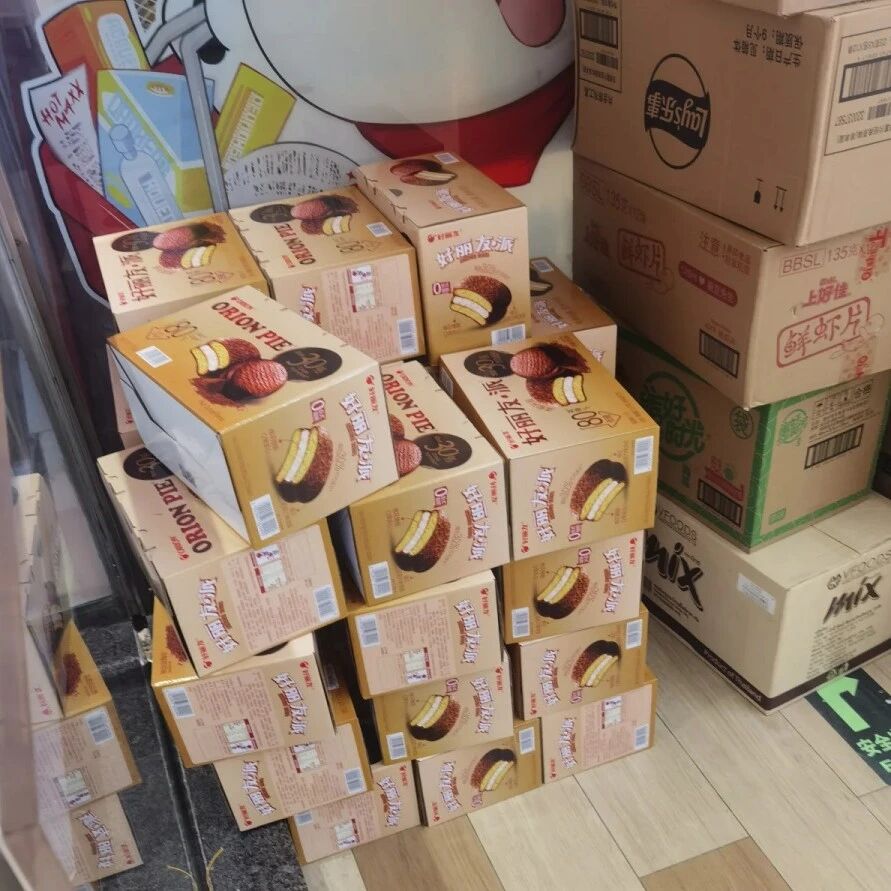
疑似被下架“山姆同款”在折扣店出售,好丽友回应
凤凰网财经· 2025-08-31 10:49
Group 1 - The product "low-sugar Orion pie" was previously sold at Sam's Club for 49.9 yuan and has been removed from their shelves due to selection issues [1] - The product is now available at a discount chain called "Good Sale," priced at 32.9 yuan per box, with a shelf life until November [3] - Good Sale primarily sells near-expiry discount items and assists brands in clearing out inventory, with over 950 stores nationwide as of June this year [3] Group 2 - Orion's spokesperson confirmed that the low-sugar pie was removed from Sam's Club due to stock issues and that there are no plans to sell it through other stores [4] - Orion reported a 8.1% year-on-year increase in sales to 777.2 billion won in Q2, with sales in the Chinese market growing by 3.0% to 304.8 billion won, accounting for over 40% of total sales [5] - The change in Sam's Club's product selection strategy has led to public criticism, with some members feeling that the store is losing its unique offerings [7]
德国发明“空气腰靠”!撑出保时捷豪车腰感,只要百元
凤凰网财经· 2025-08-30 12:19
Core Viewpoint - The article emphasizes the increasing prevalence of lumbar spine issues in China, particularly among younger populations, and promotes the ergonomic lumbar support product from the company Miqiao as a solution to alleviate discomfort during long drives [5][6][10]. Group 1: Industry Context - The lumbar spine problem population in China has exceeded 200 million, with a trend of younger individuals being affected [5]. - Research indicates that lumbar support can significantly reduce the average intervertebral joint force by 8% and muscle load by 15% compared to seats without lumbar support [6]. Group 2: Product Features - Miqiao's ergonomic lumbar support features a combination of memory foam and air sacs, allowing for dynamic adjustment to provide optimal support [21][25]. - The product is designed to distribute pressure evenly, reducing the occurrence of back pain and sciatica [18]. - The lumbar support is adjustable, catering to various body types and ensuring comfort during prolonged sitting [48][60]. Group 3: Company Background - Miqiao is recognized as a leader in the ergonomic office product sector in China, with a research center located in Germany [12]. - The company has a development team comprising experts from China, Germany, and the Netherlands, focusing on ergonomic product design for 16 years [10]. - Major companies like Tencent, Liepin, and Google have collectively purchased Miqiao's products, indicating strong market validation [14]. Group 4: Pricing and Availability - The lumbar support is offered at a promotional price of 129 yuan, making it an accessible option for consumers [45][87]. - The product is available in multiple colors, including Phantom Gray, Nordic Gray, and Sky Blue, suitable for various settings such as school, work, and travel [39][48].

中国7万人小镇,拿捏了韩国人的胃
凤凰网财经· 2025-08-30 12:19
Core Viewpoint - The article discusses how the small town of Renzhao in Shandong, China, has become a dominant player in the South Korean kimchi market, leveraging opportunities created by supply shortages in South Korea due to extreme weather and agricultural limitations [4][24]. Group 1: The Kimchi Crisis in South Korea - Kimchi is a staple food in South Korea, with an average consumption of 35 kilograms per person per year, and over 95% of the population consumes it daily [9][12]. - South Korea faces agricultural challenges due to its limited arable land, leading to a low self-sufficiency rate of only 20% for food production [12][13]. - Extreme weather events have historically caused significant disruptions in cabbage supply, leading to price surges; for instance, in 2020, cabbage prices reached 79 RMB in Seoul due to supply shortages [15][19]. Group 2: Renzhao's Dominance in the Kimchi Market - Renzhao town produces over 80% of the kimchi imported into South Korea, capitalizing on the country's reliance on imported cabbage and kimchi during supply crises [6][24]. - The town's success is attributed to its favorable agricultural conditions, including a temperate climate and fertile land, which are ideal for cabbage cultivation [24][25]. - The establishment of kimchi factories in Renzhao began around 2000, with a significant increase in production aimed at the South Korean market by 2005 [27][28]. Group 3: Quality Control and Market Adaptation - Renzhao's kimchi producers have implemented rigorous quality control measures, including multiple rounds of inspections and the use of fresh ingredients to meet South Korean health standards [32][35]. - The local industry has adapted to South Korean tastes by using preferred cabbage varieties and developing specific flavor profiles for different regions in South Korea [41][42]. - Innovations in production techniques, such as spraying saltwater instead of manual salting, have improved the texture and taste of the kimchi, aligning with consumer preferences [44][47]. Group 4: Strengthening the Domestic Kimchi Industry - The 2010 kimchi crisis prompted Renzhao farmers to expand cabbage cultivation, but subsequent oversupply led to significant price drops, teaching valuable lessons about market dynamics [51][53]. - Renzhao has diversified its operations beyond cabbage production to include extensive kimchi processing, establishing a robust industry that now dominates the local economy [53][54]. - The local government has facilitated the growth of the kimchi industry by creating cooperative platforms for farmers and processors, optimizing supply chains, and leveraging data analytics for better market predictions [57][59]. Group 5: Lessons for County-Level Economies - Renzhao's transformation into a global kimchi hub illustrates the importance of identifying niche markets and leveraging local resources effectively [62][66]. - The town's experience highlights the necessity of maintaining high standards for food safety and quality to compete in international markets [63]. - The integration of technology and data-driven approaches in agriculture can enhance efficiency and reduce risks, providing a model for other regions to follow [64][66].

股民必看!吴晓求直言:总想“一夜暴富”的人把市场搞乱了
凤凰网财经· 2025-08-30 12:19
Core Viewpoint - The current A-share market rally is driven by the release of reform dividends and is a significant reflection of institutional rule reforms, rather than mere speculation or bubble dynamics [1][4][5]. Group 1: Market Dynamics - The market's changes are not spontaneous; they are results of reforms that have addressed previous constraints on capital market development [4][5]. - The core logic of reform is to eliminate institutional barriers to capital market growth, provide stable expectations for investors, and impose high costs on violators [5][6]. - The ongoing reforms suggest that the current market rally may continue as long as reforms are in progress, with long-term market development being the main trend [6][12]. Group 2: Investor Behavior - There is a concern about investors who seek quick wealth, which disrupts market stability; the market should be viewed as a wealth growth platform rather than a gambling arena [7][8]. - Even with the index rising from 3000 to 3800 points, not all investors are profiting, indicating the importance of stock selection and market understanding [8][9]. Group 3: Market Valuation and Transparency - The high price-to-earnings ratio of companies like Cambrian (3000 times) reflects market expectations, and while bubbles may form, they will eventually find a rational valuation [10][11]. - Transparency and accurate information disclosure are crucial for maintaining market order and preventing speculative bubbles [10][11]. Group 4: A-share Market Strength - The A-share market has become stronger than the Hong Kong market and is less dependent on it, with growth driven by internal reforms and policy adjustments [12][13]. - The perception of the market as primarily a financing platform has shifted towards recognizing it as an investment market, which is essential for its growth [13]. Group 5: Asset Structure and Financial Reform - The asset structure in China is expected to change, with a growing proportion of financial assets, particularly securities, which should ideally account for 40%-50% of household assets [22][25]. - The era of relying on real estate for wealth preservation is ending, and there is a need to transition towards financial assets for better liquidity and returns [26][28]. Group 6: Regulatory Framework - A compensation mechanism for forced delisting due to violations is necessary to protect individual investors, as they are often the most affected by such actions [29][30]. - The need for a robust legal framework to deter severe financial crimes is emphasized, with suggestions for harsher penalties, including the possibility of capital punishment for significant fraud [31][32].

带领乳业触底回升:蒙牛2025年半年报展现高质量增长韧性
凤凰网财经· 2025-08-30 12:19
Core Viewpoint - Mengniu Dairy's mid-year performance demonstrates strong resilience and quality growth amidst a challenging industry environment, with significant increases in revenue and operating cash flow [1][3][17] Group 1: Financial Performance - In the first half of 2025, Mengniu achieved revenue of 41.57 billion yuan and operating profit of 3.54 billion yuan, marking a year-on-year growth of 13.4% [1] - Operating cash flow saw a substantial increase of 46.2% year-on-year, and the operating profit margin improved by 1.5 percentage points to 8.5%, indicating strong profitability and operational efficiency [1][17] Group 2: Product Innovation - Mengniu's growth is attributed to continuous product innovation and structural optimization, launching over 100 new products in response to diverse consumer needs [4][5] - The company introduced 72 new products in the ambient milk segment to enhance basic nutrition and improve cost-performance ratio [5] - New products include high-end organic milk and functional products, such as the only "health-mark" yogurt in the country [5][7] Group 3: Channel Expansion - Mengniu's deep channel layout has been a key driver of its growth, with successful custom products for membership stores like Sam's Club and Walmart [10][12] - The company has achieved the top online market share for adult milk powder and maintained a leading position in the children's milk powder segment through a comprehensive online strategy [12] - B2B business has also performed well, entering new markets like coffee and tea, and focusing on high-value products [13] Group 4: Brand and Value Creation - Mengniu is committed to creating new value for stakeholders through innovative business models and management practices [14] - The flagship brand "Telunsu" has focused on product and brand innovation rather than engaging in price competition, leading to growth in its organic series [14] Group 5: Sustainability and Governance - Mengniu has been rated AA by MSCI ESG for two consecutive years and has established 37 green factories, promoting sustainable practices across its supply chain [15] - The company is dedicated to low-carbon initiatives and environmental actions, aiming to engage more stakeholders in the green transition [15] Group 6: Future Outlook - Mengniu's management emphasizes a consumer-first approach and plans to continue strengthening its core capabilities in brand leadership, R&D innovation, and channel upgrades [17] - Balancing high-end and affordable products, scale and profit, as well as innovation and cost will be crucial for solidifying its position as a global dairy leader [17]

中国外卖大战,打到了巴西战场
凤凰网财经· 2025-08-30 12:19
Core Viewpoint - The article discusses the escalating competition between Chinese companies Didi and Meituan in the Brazilian food delivery market, highlighting their legal disputes and strategic maneuvers as they attempt to capture market share in a rapidly growing sector [4][12]. Group 1: Legal Disputes - Didi and Meituan are currently involved in three lawsuits in Brazil, with the conflicts escalating to the legal arena as both companies vie for dominance in the food delivery market [5][10]. - Didi entered the Brazilian market first by acquiring local ride-hailing platform 99 in January 2018 and later launched its food delivery service, 99Food, in November 2019 [5][6]. - Meituan announced its entry into the Brazilian market with its food delivery service, Keeta, planning to invest $1 billion over the next five years [7][8]. Group 2: Market Dynamics - Brazil's food delivery market is attractive due to its large population of 210 million and a compound annual growth rate of 17.6%, indicating significant growth potential [12][13]. - The Latin American food delivery market has grown from $7.497 billion in 2018 to $37.918 billion in 2023, maintaining a growth trend for seven consecutive years [13]. - Despite iFood's dominance with an 80% market share, its operational efficiency is reportedly low, presenting opportunities for competitors like Didi and Meituan [13][15]. Group 3: Competitive Strategies - Didi's strategy leverages its existing ride-hailing infrastructure and experience in other Latin American markets to enhance its food delivery services in Brazil [16][17]. - Meituan aims to capture key urban markets through aggressive subsidy strategies, while Didi focuses on utilizing its existing network of 700,000 motorcycle riders for cost-effective delivery [19][20]. - The competition is expected to intensify as both companies adapt their strategies based on ongoing legal developments and market conditions [20].


大疆、影石、追觅,正在互相“偷家”?
凤凰网财经· 2025-08-30 12:19
Core Viewpoint - The article discusses the escalating competition among major players in the consumer electronics market, specifically focusing on DJI, Insta360 (影石), and Dreame Technology (追觅), as they venture into each other's core business areas, leading to a "stealing home" strategy in their respective markets [4][10][21]. Group 1: Company Strategies and Market Movements - Insta360's founder Liu Jingkang gained attention for a high-profile cash giveaway, which coincided with the launch of their panoramic drone, the Antigravity A1, marking their entry into DJI's territory [4][6]. - DJI has been proactive in expanding its product line, recently launching the Osmo 360 panoramic camera, which directly competes with Insta360's products [5][13]. - Dreame Technology is also diversifying, confirming its entry into the drone market, while its affiliated company Photon Leap plans to release an action camera [5][15]. Group 2: Market Position and Financial Performance - DJI holds over 70% of the global consumer drone market, with projected revenues of 80 billion yuan and net profits of 12 billion yuan for 2024 [6][8]. - Insta360 has a 67.2% market share in the global panoramic camera market and ranks second in the action camera market, with expected revenues of 5.57 billion yuan and net profits of 990 million yuan for 2024 [8][9]. - Dreame Technology is projected to achieve revenues of 15 billion yuan in 2024, surpassing Insta360 but still trailing behind DJI [9]. Group 3: Industry Trends and Competitive Dynamics - The boundaries between drones, panoramic cameras, and robotic vacuums are blurring due to advancements in underlying technologies, prompting companies to seek new growth avenues [16][23]. - The saturation of the consumer drone market is pushing DJI to explore new product lines, while Insta360 faces pressure to innovate post-IPO [17][18]. - The competitive landscape is characterized by price wars, with companies like DJI and Insta360 adjusting their pricing strategies to capture market share [24][27]. Group 4: Challenges and Future Outlook - The transition into new product categories poses risks, as companies must navigate technical challenges and consumer perceptions [29]. - The success of new products will depend on their ability to resonate with consumers, despite existing brand loyalty in their core markets [28][29]. - The article suggests that the ultimate winner in this competitive landscape will be determined by which company can effectively address its weaknesses while leveraging its strengths [29].