凤凰网财经

Search documents
油价要失控?战争溢价还能持续多久
凤凰网财经· 2026-03-08 10:09
Core Viewpoint - The recent surge in oil prices, driven by geopolitical tensions in the Middle East, particularly the closure of the Strait of Hormuz, poses significant implications for global inflation expectations and monetary policy, especially for the Federal Reserve [2][5]. Group 1: Oil Price Dynamics - Oil prices are influenced by geopolitical events; without such disruptions, sustained price increases are challenging [6]. - The global economic cycle significantly impacts oil demand, which is currently weakening due to slowing economic growth and inflationary pressures in the U.S. [6][7]. - The oil supply is relatively elastic, allowing producers to quickly adjust output in response to price changes, which can suppress price increases [7][8]. Group 2: OPEC and Global Supply - OPEC and OPEC+ play crucial roles in regulating global oil supply, controlling approximately 45%-50% of the world's oil production [11]. - OPEC members rely heavily on oil revenues, with specific countries having breakeven oil prices ranging from $73.5 to $137.7 per barrel [13][14]. - Russia's oil revenue is critical for its budget, contributing 30%-40% of its income, and it collaborates with OPEC to stabilize oil prices [17][18]. Group 3: Market Reactions and Predictions - The current rise in oil prices is largely due to supply disruption expectations, but this may not lead to a long-term trend without actual supply shortages [21][23]. - The situation in the Strait of Hormuz is pivotal; if it remains blocked, significant production cuts could occur, with estimates suggesting a potential reduction of up to 470,000 barrels per day [25][26]. - If the conflict persists, oil prices could exceed $100 per barrel, leading to broader impacts on capital markets [26][27].


伊朗,炸了美国科技巨头数据中心
凤凰网财经· 2026-03-08 10:09
Core Viewpoint - Amazon Web Services (AWS) has faced significant operational disruptions due to drone attacks on its data centers in the Middle East, highlighting the increasing vulnerability of data infrastructure in conflict zones [1][3]. Group 1: Incident Details - AWS reported that two drone attacks directly hit its data centers in the UAE, while a facility in Bahrain was affected by nearby explosions [1]. - The attacks caused structural damage, impacting power supply and triggering fire suppression systems, leading to additional water damage [1]. - AWS indicated that the recovery process may take a considerable amount of time due to the extent of physical damage [1]. Group 2: Strategic Implications - The Iranian Revolutionary Guard claimed responsibility for the attacks, stating the aim was to assess the role of these centers in supporting military and intelligence activities [3]. - Experts suggest that data centers are becoming strategic targets in modern warfare, as they are critical to national operations, akin to traditional targets like oil and gas facilities [4]. - The reliance of data centers on power, cooling, and network infrastructure means that disrupting these elements can lead to prolonged outages affecting various sectors [4]. Group 3: Market Impact - The attacks raise questions about the future of significant investments by U.S. tech giants in the Middle East, which amount to billions of dollars [6]. - Plans for AI data centers in the region, including a 500 MW facility by a Saudi AI company in collaboration with NVIDIA and AMD, may be jeopardized [6]. - The UAE is also planning a large-scale AI park with a 5 GW capacity, further emphasizing the region's growing importance in the tech landscape [6].


月薪2万,我养不起自己的“AI员工”
凤凰网财经· 2026-03-08 10:09
Core Viewpoint - The article discusses the emergence and implications of OpenClaw, an AI tool that acts as a powerful assistant capable of automating complex tasks, highlighting both its potential and the financial burdens it imposes on users [4][60]. Group 1: OpenClaw Overview - OpenClaw is an AI software developed by Peter Steinberg, which has gained popularity for its unique capabilities compared to traditional AI products [10][11]. - Unlike conventional AI that requires user input for tasks, OpenClaw can autonomously perform a wide range of operations on a computer, effectively acting as an "AI manager" [24][25]. - Users have reported significant success with OpenClaw, such as negotiating car prices and even managing personal relationships through automated interactions [30][36]. Group 2: Financial Implications - The initial cost of deploying OpenClaw is just the beginning, as ongoing operational costs can be substantial due to its high token consumption [60][101]. - Token consumption is a critical factor, with OpenClaw burning tokens at a rate significantly higher than traditional AI, leading to potentially high monthly expenses [63][82]. - Users have reported costs of up to $400 per day for OpenClaw's operations, with some experiencing bills exceeding 20,000 RMB in a month due to excessive token usage [85][92]. Group 3: Privacy and Security Concerns - Deploying OpenClaw on primary computers poses significant privacy risks, as it requires extensive access to personal files and system operations [102][108]. - There are growing concerns about data security, with warnings against using OpenClaw on devices that store sensitive information, as it could lead to data breaches [111][114]. - The potential for financial loss is also highlighted, with users advised to avoid sharing sensitive information like wallet passwords with OpenClaw [115][116]. Group 4: Societal Impact and Future Outlook - The rise of OpenClaw has contributed to workplace anxiety, as individuals fear being replaced by AI, especially in light of corporate trends favoring automation [119][123]. - The article suggests that the future of work may involve adapting to AI technologies rather than resisting them, with a focus on learning to leverage AI for personal and professional gain [127][130]. - Ultimately, the article emphasizes the need for individuals to earn enough to sustain the costs associated with using AI tools like OpenClaw, rather than fearing obsolescence [129][130].

裁员4000人,市值立涨400亿
凤凰网财经· 2026-03-08 10:09
Core Viewpoint - The article discusses the potential economic implications of AI, suggesting that while AI may enhance productivity, it could also lead to significant job losses and a disconnect between economic growth and the average worker's experience, resulting in a "ghost GDP" scenario [1][2][3]. Group 1: AI and Economic Impact - Citrini's analysis predicts that by 2028, the economic output of a typical computing center could surpass that of 10,000 white-collar workers, leading to reduced labor demand and a negative economic cycle [2]. - The labor share of GDP is projected to drop from 64% in 1974 to 46%, indicating that economic growth may increasingly become irrelevant to ordinary people [2]. - The article highlights a potential future where unemployment rates double and stock market valuations decline by over one-third [2]. Group 2: Block's Layoffs and AI Integration - Block's recent decision to lay off employees from 10,000 to around 6,000 was attributed to the integration of AI into their operations, despite the company experiencing profit growth [3][4]. - Following the announcement of layoffs, Block's stock price surged nearly 30%, indicating market approval of the cost-cutting measures [4]. - Critics argue that the layoffs reflect a management strategy that prioritizes AI over human resources, raising concerns about the sustainability of such an approach [13][18]. Group 3: Block's Business Evolution - Block, originally known as Square, has evolved from a payment processing service to a diversified ecosystem, including O2O and streaming services [12][20]. - The company has made significant investments in various sectors, including a $297 million acquisition of Tidal, which has not yielded expected results [16]. - Block's annual transaction volume exceeded $66.94 billion, with a gross profit of $10.36 billion, showcasing its substantial market influence [20]. Group 4: Future Economic Balance - The article concludes that the current economic landscape is undergoing a value reconstruction due to the rise of AI, which challenges traditional labor dynamics [21]. - It emphasizes the need for a new balance in the economy, as high productivity assets may lead to job reductions rather than increases, a situation unprecedented in economic history [21].


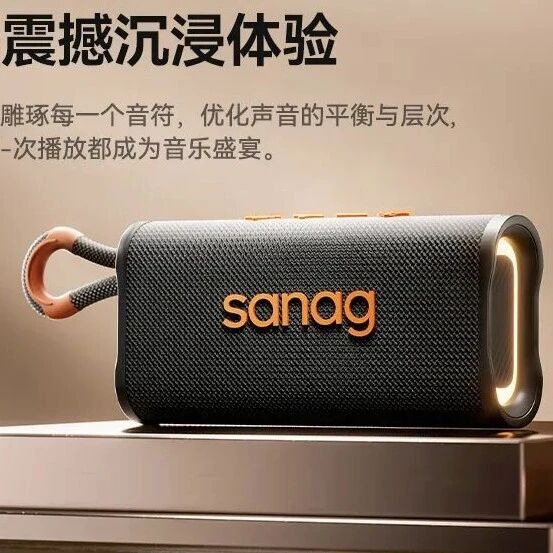
蓝牙音箱中的“劳斯莱斯”!立体音浪环绕,随时随地听演唱会
凤凰网财经· 2026-03-08 10:09
Core Viewpoint - The article emphasizes the transformative experience of using a Bluetooth speaker, highlighting its advantages over traditional headphones and the enhanced enjoyment it brings to various activities. Group 1: Product Features - The Bluetooth speaker offers a powerful sound experience with 10W dual drivers, providing deep bass and immersive surround sound, making it suitable for home, travel, and outdoor activities [12][17][20] - It utilizes Bluetooth 5.3 technology for stable connections up to 10 meters, ensuring seamless audio playback even from a distance [22][26][60] - The speaker has a long battery life of approximately 10 hours on a single charge, allowing for extended use without the need for frequent recharging [27][64] Group 2: User Experience - The speaker enhances daily activities such as reading, cooking, and exercising by providing a rich audio experience that elevates the overall enjoyment [7][51][56] - It is designed for ease of use, featuring simple controls for volume adjustment and song selection, making it user-friendly for all ages [29][32] - The aesthetic appeal of the speaker, available in black and white, adds to its desirability, making it a stylish accessory for outdoor events and gatherings [32][35] Group 3: Pricing and Value - The speaker is positioned as a high-value product, originally priced at 199 yuan but currently available for a promotional price of 139 yuan, offering premium sound quality at an accessible price point [35][37][67] - The product's development involved extensive research and adjustments to achieve superior sound quality, distinguishing it from competitors in the market [39]
麦当劳CEO“试吃”被群嘲,揭开麦门的信任危机
凤凰网财经· 2026-03-08 10:09
Core Viewpoint - McDonald's faced a public relations crisis following a promotional video featuring CEO Chris Kempczinski, where his minimal bite of a new burger led to widespread criticism and mockery on social media [1][2][3] Group 1: Incident Overview - The PR disaster was triggered by a video under one minute long, where Kempczinski introduced the new product "Big Arch" and claimed it would be his lunch for the day [3] - During the tasting segment, Kempczinski hesitated and only took a symbolic small bite, which shocked consumers [5] - His choice of words, referring to the burger as a "product" rather than "food" or "burger," was perceived as lacking passion and respect for the food, making the video feel more like a corporate presentation than a genuine food experience [7] Group 2: Competitive Response - Competitors quickly capitalized on the situation, with Burger King's North America president, Tom Curtis, posting a video of himself enthusiastically eating a burger, contrasting sharply with Kempczinski's performance [7] Group 3: Trust Crisis - McDonald's is currently facing a trust crisis, with a decline in global sales for the first time since 2020 and a 3% drop in net profit due to rising costs from inflation [10] - The company acknowledged a diminishing "value leadership" in consumers' minds and shifted to a "value strategy" in 2025, promoting $5 meal deals to retain middle and low-income customers [10] Group 4: Food Safety Concerns - A serious E. coli outbreak linked to McDonald's in October 2024 resulted in multiple hospitalizations and one death, further impacting consumer trust [12] Group 5: Market Dynamics in China - China is viewed as McDonald's largest growth engine, with plans to open approximately 1,000 new stores by 2026, aiming for a total of 10,000 by 2028 [14] - However, McDonald's faces intense competition from local brands like Wallace and Tasting, which offer better price-performance ratios [14] - The company must balance rapid expansion with maintaining quality and profitability, especially as it moves into lower-tier cities [14]


肚腩“终结者”,找到了!
凤凰网财经· 2026-03-07 10:55
Core Viewpoint - The article discusses the rising popularity of a weight loss product, the "Wakumura Pharmaceutical Super Metabolism Patch," in Japan, highlighting its effectiveness in enhancing metabolism and promoting a leaner physique [8][28]. Group 1: Product Overview - The "Wakumura Pharmaceutical Super Metabolism Patch" is a modern topical patch officially produced by the Japan Health Association [11]. - It has received certification from the Eastern Medicine Association and approval from the Japanese Pharmaceutical Administration [14]. - Unlike oral products, this external application is perceived as safer by consumers [16]. Group 2: Product Features - The patch utilizes various natural active ingredients and precious herbal extracts, including Garcinia Cambogia extract, which promotes microcirculation in the body for healthy weight loss [22]. - Users may experience a slight warming sensation within 5-10 minutes of application, indicating the active ingredients penetrating the subcutaneous fat layer to accelerate circulation [24]. - The intensity of the warming sensation correlates with the thickness of the fat layer in the applied area [25]. Group 3: Market Performance - Upon its launch, the metabolism patch quickly became a bestseller in Japan, often sold out in major chain pharmacies, with many consumers purchasing multiple bags at once [28]. - The retail price in Japan is 2880 yen (approximately 133 yuan) per bag, with promotional offers available for bulk purchases [36][37].

大量滞留在迪拜的黄金,正折价出售
凤凰网财经· 2026-03-07 10:55
Core Viewpoint - The ongoing conflict in the Middle East has led to significant disruptions in gold logistics, resulting in gold being sold at a discount in Dubai due to high storage and transportation costs [2][4][7]. Group 1: Market Impact - Due to the conflict, many buyers have suspended new procurement orders because of exceptionally high transportation and insurance costs, along with delivery uncertainties [3]. - Traders are selling gold at discounts of up to $30 per ounce below the London benchmark price due to the pressure of ongoing storage and capital costs [4]. - As of last week, many shipments of gold remain stranded in Dubai, despite some being loaded onto flights [5]. Group 2: Regional Significance - The UAE, particularly Dubai, is a crucial hub for gold refining and trade, exporting to various regions including Asia, Switzerland, the UK, and several African countries [6]. - The closure of some airspace in the UAE due to the conflict has severely impacted air transport, which is the primary method for gold shipment [7]. Group 3: Supply Chain Challenges - Indian gold dealers are experiencing tight physical gold supply due to delays and stranded shipments, although the current demand is manageable [8]. - If the situation persists for several months, it could lead to significant supply issues in the market [9]. - Some refineries are facing raw material supply disruptions, with a notable impact on the supply of semi-finished gold bars from a Middle Eastern mine [10][11]. Group 4: Cost Increases - Since the outbreak of the conflict, transportation costs for new contracts from other regions have surged by 60% to 70% [12].

亏损收窄股价却缩水四成,2100亿沐曦股份怎么了?
凤凰网财经· 2026-03-07 10:55
Core Viewpoint - Muxi Co., Ltd., a prominent domestic GPU chip giant, is facing challenges despite its rapid revenue growth, as it continues to report significant losses and high R&D expenditures [4][10][21]. Group 1: Financial Performance - Muxi Co., Ltd. expects to achieve revenue between 400 million to 600 million yuan in Q1 2026, representing a year-on-year growth of 24.84% to 87.26% [8]. - The company anticipates a net profit loss attributable to shareholders of 90.76 million to 182 million yuan for the same period, although this loss is narrower than the 233 million yuan loss reported in the same quarter last year [9][10]. - The total net profit loss for the year 2025 was reported at 781 million yuan, indicating ongoing financial struggles [11]. Group 2: Market Position and Challenges - Muxi Co., Ltd. has a strong background with a core team from renowned companies like AMD, which has helped it gain significant attention in the capital market since its establishment in 2020 [15][18]. - The company has faced a decline in stock price, dropping 40% from its peak, with a current market capitalization of 213.5 billion yuan [20][21]. - Despite impressive revenue growth rates in previous years, the company is experiencing a slowdown, with 2025 revenue growth at 121.26% compared to extraordinary rates of 12334.6% and 1301.46% in 2023 and 2024, respectively [12][13]. Group 3: R&D and Product Dependency - Muxi Co., Ltd. has heavily invested in R&D, with expenditures of 648 million, 699 million, and 901 million yuan from 2022 to 2024, accounting for 282.11% of cumulative revenue during that period [23]. - The company relies significantly on its Xiyun C500 series chip, which accounted for 97.28% and 97.87% of its main business revenue in 2024 and Q1 2025, respectively [26][27]. - High customer concentration is a concern, with the top five customers contributing 100%, 91.58%, 71.09%, and 88.35% of revenue in the respective years, indicating vulnerability to changes in demand from these clients [28].

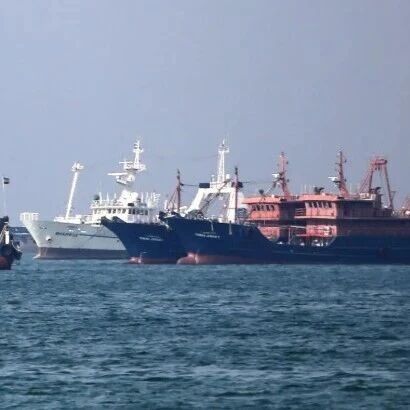
为通过霍尔木兹,至少10艘船只改成“中国身份”
凤凰网财经· 2026-03-07 10:55
Core Viewpoint - The ongoing conflict in the Middle East, particularly the airstrikes by the US and Israel against Iran, has led to significant disruptions in global energy transportation, especially in the strategic Strait of Hormuz, prompting ships to adopt "identity disguise" tactics to avoid risks [2][8]. Group 1: Current Situation - Approximately 1,000 vessels are currently trapped in the Gulf and surrounding waters, with a total value of about $25 billion [3]. - Many ships are altering their transponder signals to claim they are Chinese-owned or have Chinese crew members, with at least 10 vessels reported to have changed their destination signals in the past week [2][3]. - Some vessels are also manipulating GPS signals to mislead guided weapons, resulting in a dense clustering of ships as observed by satellite imagery [3]. Group 2: Tactics and Implications - The types of vessels changing their signals include container ships and oil tankers, with some fully loaded and others empty [4]. - The responsibility for altering the transponder signals lies with the ship's captain, who can easily modify the destination information, indicating a level of deception involved [5]. - The practice of changing identities for safety is not new; it was previously seen in the Red Sea situation in 2023 when vessels sought to avoid attacks from Houthi forces [8]. Group 3: Regional Dynamics - The conflict has led Iran to target energy facilities and vessels in the Gulf region, effectively closing the Strait of Hormuz, which accounts for about one-fifth of global oil and liquefied natural gas supplies [8]. - China, maintaining a friendly relationship with Iran and relying heavily on Middle Eastern energy supplies, is reportedly requesting Iran to ensure safe passage for related vessels [9]. - Some vessels are still able to pass through the Strait, primarily those owned by China or Iran, highlighting the strategic importance of these identities in the current context [10].