阿尔法工场研究院

Search documents
美妆高管“大洗牌”,相宜本草CEO入职7个月“闪离”
阿尔法工场研究院· 2025-07-22 11:53
Core Viewpoint - The competition in the cosmetics industry is shifting from "traffic competition" to "technology competition" [3] Group 1: Industry Changes - In the first half of 2025, there will be at least 30 significant personnel changes among leading domestic and international cosmetics companies [4] - International giants are re-employing technical talents and introducing cross-industry talents to strengthen industry barriers, while local companies are restructuring organizational efficiency by leveraging foreign technical experts amidst talent loss [5][6] Group 2: Personnel Restructuring - The phenomenon of management turnover among domestic leading beauty companies is intensifying, with several core positions currently vacant or temporarily filled [8] - Companies like Proya and Shanghai Jahwa have vacant positions for vice presidents [9] Group 3: Talent Acquisition - Proya is actively bringing in foreign technical talents, with its new Chief Scientific Officer having 27 years of experience at Procter & Gamble [13] - Some companies are promoting internal talents to strengthen organizational resilience, such as Huaxi Biological promoting its global supply chain platform executive director and financial director to vice president [15] Group 4: Leadership and Innovation - International beauty giants are promoting technical talents to integrate deeply into brand operations, while also introducing cross-industry talents to stimulate innovation [17] - L'Oréal's recent appointments of executives with R&D backgrounds signify a shift towards "technology defining brands" [18][19] Group 5: Market Dynamics - The demand for cosmetics is shifting from emotional premium to functional essence, compelling companies to build core competitiveness through R&D breakthroughs and technological barriers [22] - The emphasis on technical talents is reshaping the competitive rules of the industry, moving away from reliance on traffic dividends and marketing concepts [22][23] Group 6: Future Outlook - Companies that master core technologies and technical talents will continue to lead, while brands lacking a technical foundation may struggle to survive [23]


金通灵连续6年财务造假,原董事长等6人被刑事追责
阿尔法工场研究院· 2025-07-22 11:53
Core Viewpoint - The article discusses the financial fraud case of Jintongling, which inflated its revenue by 1.135 billion yuan over six years, leading to administrative, civil, and criminal penalties for the company and its executives [2][4][8]. Group 1: Financial Fraud Details - Jintongling was found to have inflated its revenue by 1.135 billion yuan and reduced its revenue by 250 million yuan from 2017 to 2022 [4][18]. - The company reported inflated profits of 411 million yuan during the same period, with specific years showing significant discrepancies [18]. - The fraudulent activities included falsifying project completion reports and prematurely recognizing revenue, which misled investors and regulators [15][17]. Group 2: Legal Consequences - Jintongling and six of its executives are facing criminal charges for violating information disclosure laws, with potential penalties including imprisonment [7][8]. - The company has been subjected to a total administrative penalty of 5.7 million yuan, with additional sanctions against involved intermediary firms [18][27]. - A collective lawsuit has been initiated by over 50 investors against Jintongling and its executives, as well as three brokerage firms and an accounting firm [3][4]. Group 3: Company Background and Financial Performance - Founded in 1993 and listed in 2010, Jintongling initially focused on various industrial sectors before shifting to industrial blowers and centrifugal air compressors [11][19]. - The company has faced significant financial challenges, with continuous losses reported from 2020 to 2024, culminating in a net loss of 1.314 billion yuan in 2024 [25][26]. - Despite the ongoing financial difficulties, Jintongling's stock price has increased by over 40% in 2025, indicating some investor optimism [4][26].


童颜针没有护城河:围猎圣博玛的,不只有新氧
阿尔法工场研究院· 2025-07-22 11:53
Core Viewpoint - The competition in the "童颜针" (youthful needle) market is intensifying, with nine products already approved for sale and over ten more in the application process, leading to a saturated market with limited differentiation among products [1][23]. Market Expansion - The "童颜针" market is expanding with new entrants, including 康哲药业's "丽真然" and 上海爱唯缇's "Olidia," which received approval from the National Medical Products Administration [3][22]. - The entry of these new players is pushing the already fierce market competition to new heights [4]. Pricing Strategies - The first approved "童颜针," 艾维岚, is facing challenges in maintaining its high price of 18,800 yuan due to competitive pricing strategies from other players, such as 新氧's "奇迹童颜" project priced at 5,999 yuan [5][11]. - The price of 艾维岚 has reportedly dropped to around 12,000 yuan by 2023, with expectations of further declines as competition increases [27]. Product Lifecycle and Market Dynamics - The market dynamics suggest that price reductions are inevitable due to the competitive landscape and the typical product lifecycle in the medical aesthetics industry, where products often experience price drops within 3 to 5 years post-launch [25][39]. - Historical examples, such as 薇旖美, illustrate that products can see significant price declines shortly after their introduction, indicating a trend that 艾维岚 may also face [25][26]. Regulatory Environment - The "童颜针" is classified as a Class III medical device in China, which requires strict regulatory compliance, impacting market entry and competition [34][35]. - The ability to obtain this classification is crucial for companies to participate in the market and secure high profit margins [35][37]. Brand and Marketing Strategies - Companies like 高德美's "塑妍萃" have successfully established strong brand identities and marketing strategies, allowing them to maintain higher price points despite market saturation [40][41]. - Effective brand building and storytelling are essential for sustaining product value and consumer interest in a competitive market [42][43]. Future Outlook - The future of companies like 圣博玛, which relies heavily on its flagship product 艾维岚, is uncertain as they face increasing competition and pressure to diversify their product offerings [39][40]. - The medical aesthetics market in China is projected to grow significantly, but companies must adapt their strategies to navigate the challenges posed by rapid competition and changing consumer preferences [35][39].
良品铺子“卖身”国资,“风投女王”累计套现15亿
阿尔法工场研究院· 2025-07-21 12:10
Core Viewpoint - The article discusses the significant strategic investment by Wuhan's state-owned enterprise, Changjiang Guomao, in Liangpin Shop, marking a pivotal moment in the company's history and reflecting the broader changes in China's snack food industry [2][3][21]. Group 1: Transaction Details - Liangpin Shop announced a strategic investment from Changjiang Guomao, with a total transaction amount of 1.49 billion yuan [2]. - The deal involves the transfer of 21% of shares from the controlling shareholder Ningbo Hanyi and 8.99% from the second-largest shareholder, Today Capital, totaling approximately 1.046 billion yuan and 445 million yuan respectively [5][6]. - After the transaction, Changjiang Guomao will hold 29.99% of Liangpin Shop's shares, becoming the new controlling shareholder [6]. Group 2: Company Performance and Challenges - Liangpin Shop's market value has significantly declined from over 34 billion yuan at its peak to around 5.5 billion yuan, losing more than 28 billion yuan [15]. - The company reported a revenue of 8.046 billion yuan in 2023, a year-on-year decrease of 14.76%, and a net profit of 180 million yuan, down 46.26% [15]. - The company is projected to face a net loss of 46.1 million yuan in 2024 and an estimated loss of 75 million to 105 million yuan in the first half of 2025 [16]. Group 3: Industry Context and Competition - The snack food industry is undergoing significant transformation, with discount snack stores like "Zero Snacks" and "Zhao Yiming Snacks" rapidly gaining market share, leading to increased competition for Liangpin Shop [19]. - The merger of "Zero Snacks" and "Zhao Yiming Snacks" has created a new industry giant with a GMV of 55.5 billion yuan and nearly 14,400 stores, far surpassing Liangpin Shop's 2,500+ stores [19]. - Liangpin Shop's previous stake in "Zhao Yiming" was sold shortly before the merger, resulting in a loss of market share [19]. Group 4: Future Outlook - The entry of state-owned capital is seen as a crucial attempt for Liangpin Shop to break through in a competitive market, transitioning from product competition to supply chain ecological competition [21]. - Analysts believe that the collaboration with Changjiang Guomao could address key industry pain points such as raw material sourcing and cost control [21]. - The board of Liangpin Shop will be restructured post-transaction, with a commitment to maintain market-oriented operations and stability in core business [22].

1.2万亿超大水电站开工,“基建狂魔”挑战世界最高难度
阿尔法工场研究院· 2025-07-21 12:10
以下文章来源于赶碳号科技 ,作者侦碳 赶碳号科技 . 关注碳中和产业前沿,解读新能源硬核科技,洞察风光氢储投资机会。 导语: 雅鲁藏布江下游水电工程这个超级工程,将占到新中国成立以来所有传统水电装机总量 的21.22% 。 周末发生一起大事件! 2025年7月19日,雅鲁藏布江下游水电工程(核心项目墨脱水电站)正式破土动工。这项超级工 程的投资金额之巨、施工难度之高、耗时之久、影响之广,都将创下历史纪录。 工程官方名称为"雅鲁藏布江下游水电工程",核心项目为墨脱水电站,位于西藏自治区墨脱县, 地处雅鲁藏布江下游大转弯处(米林县与墨脱县交界),项目总投资超1.2万亿元、装机容量达 7000万至8100万千瓦,相当于3座三峡、5座白鹤滩,项目建设周期为10年。 墨脱电站在建成后,将对我国的电力结构产生怎样的影响呢? 国家能源局数据显示,截至2024年底,我国全国发电装机总量为33.49亿千瓦,同比增长 14.6%。其中,水电装机4.36亿千瓦(常规水电装机3.77亿千瓦,抽水蓄能0.59亿千瓦),同 比增长仅3.2%,增速垫底,远低于光伏(45.2%)、风电(18%)、核电(6.9%)和火电 (3.8%)等电源的 ...

深铁,“输血”万科、“动刀”万科
阿尔法工场研究院· 2025-07-21 12:10
以下文章来源于石头侃房 ,作者樂无 石头侃房 . 洞察楼市信息,诉说房产百态。以媒体人的视角说房事、品房经、论房道。 导语:当区域公司早已名存实亡,撤销便成为水到渠成的选择。 大股东深铁在给万科"输血"的同时,也在逐步改变万科的骨架和基因。 7月中旬的深圳,万科总部会议室里,一场决定这家地产巨头命运的组织变革正在悄然推进。 据多个信源确认,万科将全面取消所有区域公司,将原有的"集团-区域-城市"三级管控体系彻底转变为"集团-片区"两级管控架构。 这一调整涉及北京、华东、华中、南方、西南五大区域公司及多个直管公司,核心权限如采购权收归集团,开发经营本部从上海迁回深圳。 几乎与此同时,深铁系高管辛杰接任万科董事会主席已满半年,十余名深圳国资背景干部进驻核心岗位,标志着这家曾经的 "宇宙房企"彻底进入"深铁 时代"。 这场变革不仅是万科内部的管理重构,更是国资深度介入房企治理的标志性事件,折射出房地产行业从市场化扩张向国资主导收缩的历史性转折。 深铁改写万科"基因" 深铁对万科的控制不仅停留在股权层面,更通过人事调整实现深度渗透。 2025年初的万科董事会改组,已经为今天的变革埋下伏笔。 2025年1月,郁亮辞去董 ...

有品牌销量暴跌90%,白酒厂集体押注低度“救命酒”
阿尔法工场研究院· 2025-07-21 12:10
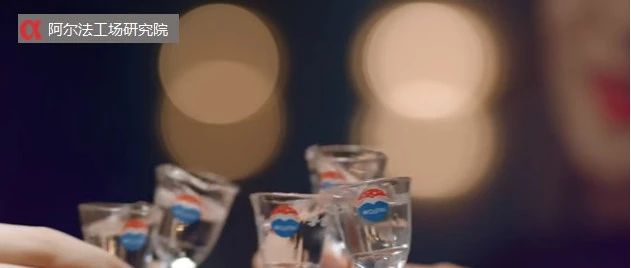
Core Viewpoint - The article discusses the trend of "low-alcohol" products in the Chinese liquor industry as a response to market pressures and changing consumer preferences, questioning whether this shift is a sustainable strategy or merely a temporary reaction to challenges [1][4]. Industry Trends - A significant decline in sales has been reported, with one liquor factory experiencing a 90% drop in sales over the past month, indicating severe market distress [2]. - Major liquor companies are launching low-alcohol products, such as Wuliangye's 29-degree and Luzhou Laojiao's 28-degree offerings, as part of a broader strategy to adapt to declining sales and attract younger consumers [3][4]. Policy Impact - The introduction of stricter regulations on high-end liquor consumption, particularly in business settings, has pressured companies to seek alternative products that are more affordable and appealing to a broader audience [4][6]. - The "ban on alcohol" has expanded, affecting the core business consumption scenarios and prompting companies to explore low-alcohol and small-bottle products as potential solutions [4][6]. Market Dynamics - The low-alcohol segment is seen as a way to cater to a more price-sensitive market, but it faces stiff competition from other beverage categories like beer and soft drinks, which may dilute the traditional advantages of liquor [8]. - Historical experiences suggest that blindly pursuing lower-priced products may not lead to industry recovery, as high-end products have proven to be more profitable [8]. Strategic Challenges - The current low-alcohol trend may be a rushed response to market pressures rather than a well-thought-out strategic shift, leading to unclear objectives and misallocation of resources [9][10]. - Companies may lack the long-term commitment needed to successfully develop low-alcohol products, risking abandonment of these initiatives if immediate results are not seen [10][12]. Brand and Cultural Considerations - There is a risk of diluting brand value through the introduction of low-alcohol products, which could lead to price wars and damage the image of high-end brands [11][13]. - The cultural significance of high-alcohol liquor in China poses a challenge for companies attempting to pivot to low-alcohol offerings, as they may overlook the need for deeper brand and cultural adaptations [14][15][16].
争夺人工智能人才的史诗级大战
阿尔法工场研究院· 2025-07-21 12:10
Core Insights - The article discusses the intense competition for talent in Silicon Valley, particularly in the artificial intelligence sector, highlighting the significant financial incentives being offered to attract top researchers and engineers [1][2][3] Group 1: Talent Acquisition and Competition - OpenAI was in talks to acquire Windsurf for $3 billion, but the deal fell through, leading to Windsurf's CEO leaving for Google and taking key employees with him [1][18] - Meta, under Mark Zuckerberg's leadership, is aggressively recruiting top talent, offering compensation packages exceeding $300 million, which has led to a shift in the talent market [2][9] - The competition has elevated AI researchers to "superstar" status, with salaries comparable to those of NBA players and Hollywood stars [1][2] Group 2: Company Strategies and Responses - Meta is focusing on building a "dream team" in AI by poaching leaders from promising startups and offering limited-time job offers to create urgency [2][3] - OpenAI's leadership is responding to the talent war by adjusting compensation and exploring innovative ways to recognize and reward top talent [11] - The article highlights a conversation between Zuckerberg and OpenAI's Chief Researcher, which led to a strategic shift in Meta's recruitment approach, emphasizing investment in talent over hardware [4][7] Group 3: Impact on Startups - Windsurf's acquisition by Google for $2.4 billion resulted in a significant loss of talent and left many employees feeling abandoned [18][19] - The article illustrates the emotional impact on employees at Windsurf, who were left uncertain about their future after the acquisition news [19][20] - The trend of "acquihire" deals is becoming common among tech giants, often leaving remaining employees in a precarious position [18]


华为爆改酒店业
阿尔法工场研究院· 2025-07-18 11:23
Core Viewpoint - Huawei is expanding into the hotel management sector through its subsidiary Anpu Hotel Management Co., aiming to reshape the hotel industry with its technological expertise and create a comprehensive accommodation ecosystem [4][8][50]. Group 1: Company Overview - Anpu Hotel Management Co. was established by a Huawei affiliate in Guangzhou, marking Huawei's new venture into hotel services [4]. - The company has launched multiple hotel brands, including Anpu Polai, Anpu Yicheng, Anpu Hotel, Anpu Yueting, and Anpu Yiting, catering to various market segments from high-end to budget accommodations [15][19][20]. - Anpu hotels are primarily located in major cities in China and several international markets, including Saudi Arabia, South Africa, and Mexico [12][13]. Group 2: Leadership and Management - Ren Ping, the son of Huawei's founder Ren Zhengfei, serves as a director of Anpu Hotel Management and is also the general manager of its parent company, Shenzhen Huitong Business Co., which is a wholly-owned subsidiary of Huawei [25][26][28]. - The management team has extensive experience in real estate and hotel operations, contributing to the strategic direction of Anpu [30][31]. Group 3: Business Model and Strategy - Anpu's business model differs from traditional hotel chains by focusing on direct ownership and management of properties, primarily serving Huawei employees and affiliates [34][35]. - The hotels are not widely open to the public, with most bookings coming from internal sources, which allows for a more controlled and tailored service experience [35]. - Anpu aims to leverage Huawei's technological capabilities to enhance hotel operations and guest experiences, positioning itself as both an operator and a technology provider [50]. Group 4: Technological Integration - Anpu hotels incorporate advanced smart technologies, such as facial recognition and smart room controls, to improve guest experiences and operational efficiency [40][41]. - Huawei's AI solutions, including the recently launched "Xiao An Butler," are being implemented in Anpu hotels to streamline services and enhance customer interaction [48]. - The introduction of the Star River AI network aims to optimize energy consumption in hotels, achieving energy savings of over 30% through intelligent management systems [49]. Group 5: Market Position and Future Outlook - The hotel industry is undergoing a transformation towards digitalization, and Huawei's entry is seen as a potential disruptor that could redefine industry standards [36][50]. - The success of Anpu in the hotel market will depend on its ability to grow and adapt within the evolving hospitality landscape [55].
宗庆后家族,海外资产大曝光
阿尔法工场研究院· 2025-07-18 11:23
Core Viewpoint - The article discusses the potential challenges and changes facing the Zong family business network due to emerging conflicts of interest among family members, particularly in light of recent real estate transactions and the passing of Zong Qinghou [1][24]. Real Estate Transactions - A luxury mansion owned by the Hilton family in Los Angeles was sold for $25 million after being on the market for over two years, down from an initial asking price of $55 million, representing a price drop of over 50% [2][21]. - The buyer of this property is reportedly connected to the Zong family, specifically Zong Qinghou's family [2]. Family Dynamics and Asset Management - Zong Qinghou, known for his frugal lifestyle, had a more complex family structure than publicly known, with multiple children, including some not widely recognized [3]. - The Zong family has established a significant offshore capital network, with offshore companies playing a crucial role in their asset management [5][8]. Offshore Companies and Investments - Zong Fuli controls Hongsheng Beverage Group, which is linked to an offshore company registered in the British Virgin Islands [5][6]. - Zong Fuli has held directorships in several offshore companies, including Best Max Group Limited in Seychelles and others registered in the British Virgin Islands [7][8]. - The Zong family's offshore companies are part of a larger, intricate network that allows them to manage and invest in various domestic enterprises [11][17]. Domestic Business Control - The Zong family, through offshore entities, has significant control over domestic companies, including joint ventures and wholly-owned subsidiaries in the food and beverage sector [12][13]. - Hongsheng Group, under Zong Fuli's leadership, has invested in numerous domestic companies, creating a comprehensive supply chain in the food and beverage industry [12][18]. Real Estate Investments - The Zong family has a history of investing in overseas real estate, including properties in Los Angeles and Hong Kong [21][23]. - Zong Fuli purchased a property in Hong Kong for approximately 11.1 million yuan, which was later sold for 26 million yuan [21][23]. - The family has also acquired high-value properties in Hong Kong, with one estimated to be worth around 200 million HKD [23]. Conclusion - The Zong family's previously stable business network is now facing potential upheaval due to internal family disputes and the complexities of their asset management strategies [24].