36氪

Search documents
8点1氪:胖东来重奖伤人事件中见义勇为的20名员工,最高奖励5万元;平台回应“淘宝闪购新工服需骑手自购”;邵佳一将出任国足主帅
36氪· 2025-11-06 00:12
Group 1 - The core viewpoint of the article highlights the recognition and reward given by the company to employees who acted bravely during an emergency incident, with a total reward of 200,000 yuan distributed among 20 employees, with the highest individual reward being 50,000 yuan [4][5][6] - The incident occurred on November 2, where an assault took place at the company's life square, leading to the immediate response from security personnel and police, resulting in the arrest of the suspect [4][5] - The company founder, Yu Donglai, stated that there are no plans for the company to go public or scale up operations, emphasizing a focus on cultural and business research instead [13] Group 2 - Ele.me responded to discussions regarding the new uniforms for delivery riders, clarifying that the new uniforms can be exchanged for old ones, but conditions vary based on the rider's category and tenure [5][7] - ByteDance is recruiting for a senior expert in humanoid robotics algorithms, offering a monthly salary between 95,000 to 120,000 yuan, indicating a strong investment in AI and robotics [10] - Xiaomi announced the discontinuation of its calling service, with all user data to be cleared upon termination of the service on December 3, 2025 [11] Group 3 - Guizhou Moutai announced a share buyback plan with a total investment between 1.5 billion to 3 billion yuan, aimed at reducing registered capital [13] - The International Air Transport Association (IATA) will introduce the Chinese yuan as a settlement currency, expected to launch in December 2025, which will help local airlines reduce exchange rate risks [15] - Stellantis announced a global recall of 375,000 vehicles due to battery safety issues, urging owners to park vehicles outdoors until repairs are made [16] Group 4 - Japan is experiencing a significant increase in flu cases, leading to over 1,000 schools closing as a precautionary measure [17] - The U.S. government is currently in the longest shutdown in history, with the latest temporary funding bill failing to pass, marking the 36th day of the shutdown [18] - The Hong Kong Stock Exchange plans to appoint KPMG as its external auditor for the fiscal year ending December 31, 2026, pending shareholder approval [18] Group 5 - Google announced the "Suncatcher" project to explore the use of solar energy for AI data centers in space, with plans to launch prototype satellites by early 2027 [22] - Apple is reportedly planning to integrate Google's AI technology to enhance its Siri voice assistant, with an annual payment of approximately 1 billion dollars to Google [22] - XPeng Motors plans to launch three Robotaxi models in 2026, aiming to promote the commercialization of autonomous driving [23]



OpenAI上市,美股迎来「中石油时刻」?
36氪· 2025-11-06 00:12
Core Viewpoint - The potential massive IPO of OpenAI could be the final straw that undermines market sentiment, raising concerns about an AI bubble similar to the 2000 internet bubble [4][26]. Group 1: Historical Context of "Mega IPO" Phenomenon - Historical analysis shows that "mega IPOs" often serve as a warning signal for market risks, primarily due to their siphoning effect on liquidity from other sectors [6][21]. - The "mega IPO" phenomenon typically occurs during periods of extreme market optimism, where investors exhibit high risk tolerance and are willing to pay a premium for future growth expectations [6][21]. - The 2007 IPO of China National Petroleum Corporation (CNPC) is a notable example, where it raised 668 billion yuan, accounting for 0.23% of the total A-share market capitalization at the time, leading to a significant market downturn shortly after [8][10]. Group 2: Recent Examples and Market Implications - The IPO of Rivian Automotive in 2021 raised over $13.7 billion, with its stock price initially soaring, but it later experienced a dramatic decline, signaling a potential tech bubble burst [16][17]. - The 2015 IPO of Guotai Junan Securities also exemplified the "mega IPO curse," as it coincided with a peak in the A-share market, leading to a subsequent market decline [12][13]. Group 3: Current Market Indicators - The current AI sector shows signs of overcrowding, with the top five tech companies in the U.S. accounting for over 16% of the global public stock market, raising concerns about a potential bubble [27][30]. - Valuation metrics indicate a possible bubble, with the average P/E ratio of the top five tech giants around 37 times, significantly higher than the historical average of the S&P 500 [30][32]. - The increase in debt financing related to AI, particularly around OpenAI, mirrors the telecom bubble of the early 2000s, raising alarms about potential systemic risks if performance expectations are not met [31][34]. Group 4: Conclusion and Outlook - While some indicators suggest an AI bubble, the current market is characterized by stronger performance support from leading companies compared to the 2000 bubble, which may mitigate the risk of a severe downturn [30][34]. - If OpenAI's IPO occurs and its valuation exceeds future cash flow potential, it could trigger a reversal in market sentiment, potentially leading to an AI bubble [34][35].
景点里的护手霜店:毛利70%,到底哪些「冤大头」在买单?
36氪· 2025-11-06 00:12
Core Viewpoint - The article discusses the rise of a standardized hand cream brand named "Qingzhi," which has become a ubiquitous presence in tourist areas across China, appealing to young consumers' gift-giving anxieties while operating on a high-profit margin model [4][9][32]. Group 1: Brand Overview - "Qingzhi" operates a chain of hand cream stores that present themselves as local must-buy items in various cities, despite being a standardized product without local ingredients or craftsmanship [7][8]. - The brand has successfully expanded across numerous tourist attractions, creating a perception of local authenticity while maintaining a uniform product offering [6][8][9]. Group 2: Consumer Behavior - Young consumers experience "gift anxiety," leading them to seek out unique local products, which "Qingzhi" capitalizes on by marketing its hand creams as local specialties [26][31]. - The brand's packaging and marketing strategies resonate with young consumers, who often feel pressured to find meaningful gifts for friends and family [10][14][26]. Group 3: Profitability and Business Model - The hand cream category is characterized by low production costs and high retail prices, allowing "Qingzhi" to achieve significant profit margins, with gross profit rates exceeding 50% [32][41]. - The brand's operational model is designed for rapid expansion, with standardized store layouts and minimal inventory requirements, further enhancing profitability [41][42]. Group 4: Market Challenges - The success of "Qingzhi" has led to increased competition, with many imitators entering the market, resulting in a saturation of similar stores in tourist areas [48][58]. - As the novelty of "local must-buy" products diminishes, consumer interest may wane, posing a risk to the brand's continued success [58][59].

「智源深澜」获天使轮融资,构建数据驱动的AI生物分子设计平台 | 早起看早期
36氪· 2025-11-06 00:12
Core Insights - The article discusses the recent angel round financing of "Zhiyuan Shenlan," which raised several million yuan, led by Woyan Capital, with participation from Tianfeng Capital and other angel investors. The funds will be used for building a generative AI platform for biomolecules and a self-driving molecular function evolution platform, as well as for market expansion [3][4]. Group 1: Company Overview - Zhiyuan Shenlan was established in 2024, incubated by Megia Technology, focusing on data-driven biomolecule design and manufacturing. The founder, Dr. Wang Chengzhi, has over 20 years of experience in the life sciences field [3][4]. - The company aims to leverage generative AI to transform the research paradigm in life sciences from "large-scale trial and error" to "precise design and creation" [3][5]. Group 2: Technological Advancements - The emergence of AlphaFold 2 has predicted over 200 million protein structures, covering most known proteins on Earth, but the industry is more focused on protein functions rather than just structures [3][4]. - Zhiyuan Shenlan is optimizing for "function" by exploring functional needs in practical applications, utilizing a self-driving automated experimental platform to efficiently generate functional data [4][5]. Group 3: Future Vision - The company is working towards a data-driven bioengineering and molecular design platform, evolving AI for Science from a 2.0 "navigation design engine" to a 3.0 "scientific intelligent autonomous platform" [5][6]. - In the future, AI is expected to autonomously design, execute, and iterate entire research experiment loops, with human scientists focusing on key questions and strategic directions [5][6]. Group 4: Key Breakthroughs - Three key breakthroughs are necessary for the autonomous intelligent evolution platform: a unified coordinate system for AI understanding, an autonomous decision-making AI agent, and an automated intelligent experimental platform [6]. - Zhiyuan Shenlan proposes a "ten-step" roadmap for AI4S 3.0, aiming to learn existing human knowledge, propose hypotheses, validate experiments, and ultimately make scientific discoveries that surpass human intuition across multiple scientific fields [6].

向黄仁勋汇报的英伟达36人
36氪· 2025-11-05 13:35
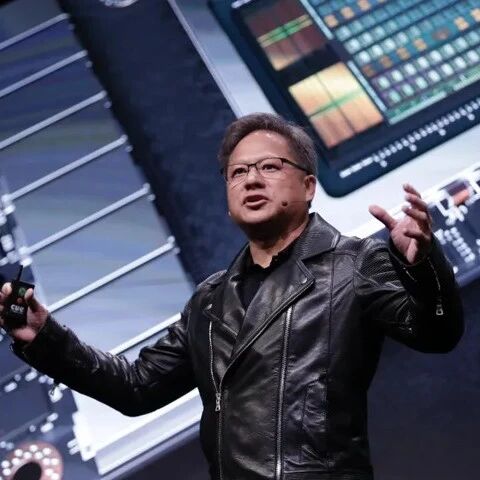
Core Viewpoint - Jensen Huang is transitioning Nvidia towards a more vertical management structure, reflecting the company's rapid expansion and the need for a more organized approach to manage its growing complexity [2][118]. Group 1: Management Structure - Nvidia's CEO Jensen Huang has 36 direct reports, a significant number for a company valued at $4 trillion, indicating a complex management structure [83]. - Huang's direct reports are divided into seven functional areas: strategy, hardware, software, AI, public relations, networking, and an executive assistant [6][10]. - The hardware segment remains the foundation of Nvidia, with one-third of Huang's direct reports focused on hardware-related businesses [9][10]. Group 2: Key Personnel - Key figures under Huang include Jonah Alben, Dwight Diercks, and Bill Dally, who have been with Nvidia for many years and play crucial roles in the company's success [24][37][49]. - Alben, known as the "soul of GPU architecture," has been with Nvidia for 28 years and oversees a team of over 1,000 engineers [27][35]. - Diercks, with 31 years at Nvidia, manages the software engineering team, which has grown significantly over the years [39][44]. - Bill Dally, Nvidia's chief scientist, has been instrumental in evolving GPUs into general-purpose parallel computing platforms [49][54]. Group 3: New Talent - Wu Xinzhao, the only Chinese executive directly reporting to Huang, is responsible for Nvidia's automotive business and has a strong background in autonomous driving technology [63][67]. - Under Wu's leadership, Nvidia's automotive revenue is projected to nearly double from $281 million to $567 million in the 2024-2025 fiscal year [79]. Group 4: Organizational Changes - The shift towards a vertical management structure is a response to Nvidia's rapid growth, with employee numbers increasing from 29,600 to 36,000 in just one year [105]. - Huang's preference for a flat organizational structure has faced challenges as the company scales, leading to increased information noise and collaboration costs [109][118]. - The reduction in Huang's direct reports from 55 to 36 suggests a significant shift in management strategy, moving towards a more structured approach to handle the complexities of a larger organization [100][118]. Group 5: Company Culture - Huang promotes a high-pressure work culture, emphasizing the urgency of tasks and prioritizing performance over employee comfort [122][126]. - The lack of recreational facilities in Nvidia's offices reflects Huang's belief that the primary focus should be on work [125][126]. - Employees often experience a demanding work environment, with tight deadlines and high expectations [128].

不跟巨头打仗,凯度在厨房里赢了十五年
36氪· 2025-11-05 13:35
Core Viewpoint - Kaito aims to transform kitchens into spaces that express lifestyle attitudes, emphasizing the emotional connection to cooking and technology as a means of empathy rather than just efficiency [2][3][30]. Group 1: Company Philosophy and Development - Kaito's brand philosophy revolves around creating a warm and inviting kitchen environment, where technology integrates seamlessly into daily life [2][3]. - The company has evolved from a niche brand focused on steam and baking integrated machines to a leading player in the "new kitchen appliance" sector over the past fifteen years [2][5][15]. - Kaito's approach to innovation is not merely about introducing new products but about understanding and addressing the emotional and practical needs of users [12][20]. Group 2: Market Position and Strategy - Kaito identified the potential of steam and baking integrated machines early on, recognizing a gap in the market that traditional brands overlooked [8][9]. - The company has established itself as a leader in the kitchen appliance industry by focusing on user education and experience rather than traditional sales tactics [11][12][14]. - Kaito's strategy emphasizes maintaining a steady pace of growth without succumbing to price wars or fleeting trends, allowing it to build a strong reputation based on quality and user satisfaction [14][23][24]. Group 3: Product Innovation and User Experience - Kaito's introduction of the first external water tank large-capacity steam oven addressed a significant user pain point, enhancing the overall cooking experience [13]. - The company has set a standard for user experience in the industry, prioritizing product stability and engineering excellence over mere marketing [14][23]. - Kaito's product line now includes various new kitchen appliances, such as integrated stoves, water purifiers, dishwashers, and coffee machines, all designed to enhance the kitchen experience [24][28]. Group 4: Brand Visibility and Future Direction - The recent appointment of Yang Mi as the global brand ambassador marks a strategic move to increase brand visibility and communicate Kaito's values to a broader audience [3][31][34]. - Kaito's focus on long-term value and user experience positions it uniquely in a market filled with transient trends and aggressive competition [30][38]. - The company aims to continue evolving as a "new kitchen appliance expert," maintaining its commitment to quality and user-centric design while expanding its product offerings [38][40].

数字车钥匙的星闪时代来临,谁在引爆这场人车交互革命?
36氪· 2025-11-05 13:35
Core Insights - The article emphasizes the emergence of the "Star Flash Digital Key" as a pivotal technology in the smart automotive industry, expected to become a standard feature by 2025 [1][2][20] - The transition from traditional mechanical keys to digital keys is highlighted, with a focus on the user experience and the need for improved communication technologies [6][20] Group 1: Technology and User Experience - The Star Flash Digital Key addresses common issues faced by users with existing Bluetooth, NFC, and UWB technologies, such as signal delays and security concerns [1][6][9] - The technology offers enhanced precision, with positioning accuracy within 0.6 meters, significantly improving user experience by eliminating common frustrations like "penalty standing" [7][9] - Security is a major focus, with Star Flash utilizing Time of Flight (TOF) technology to ensure accurate distance measurement, thus preventing potential hacking risks associated with traditional Bluetooth keys [9][10] Group 2: Market Adoption and Industry Impact - Since its introduction in March 2025, over 50 vehicle models have adopted the Star Flash Digital Key, indicating rapid market acceptance and integration [11][12] - The technology is not just a communication tool but is becoming a critical entry point for smart mobility ecosystems, representing a shift in how vehicles connect with users and other devices [6][13][20] - The collaboration among over 1,200 partners to establish standards and ecosystems around Star Flash is indicative of a robust industry-wide effort to enhance smart automotive experiences [13][21] Group 3: Future Outlook - The article suggests that the Star Flash Digital Key will redefine the interaction between users and vehicles, marking the beginning of a new era in smart mobility [20][21] - The establishment of a unified standard and ecosystem around Star Flash is expected to facilitate large-scale commercialization and further innovation in the smart automotive sector [15][18]

50元的外卖服,被户外中产抢疯了
36氪· 2025-11-05 13:35
Core Viewpoint - The article discusses the trend of outdoor enthusiasts, particularly the middle class, opting for affordable alternatives to expensive outdoor gear, specifically using delivery rider uniforms as a practical and cost-effective solution for outdoor activities [5][16][40]. Summary by Sections Outdoor Gear Trends - The middle class has shifted from high-end outdoor gear to cheaper alternatives, such as delivery rider uniforms, which are now seen as practical and effective for outdoor activities [5][7][16]. - The trend began in international ski resorts where delivery riders were spotted wearing their uniforms, leading to a surge in popularity among outdoor enthusiasts [7][10]. Performance and Practicality - Delivery uniforms, priced around 50 to 300 yuan, are praised for their warmth and functionality, often outperforming traditional expensive outdoor gear [10][15][17]. - These uniforms are designed with practical features, such as deep pockets and wind-resistant materials, making them suitable for various outdoor conditions [19][40]. Cultural Shift - There is a growing acceptance of wearing delivery uniforms in outdoor settings, with many outdoor enthusiasts finding them to be a symbol of practicality rather than a fashion faux pas [21][23]. - The article highlights that wearing these uniforms can even enhance the perception of the wearer, as they are associated with a hardworking and resilient image [36][44]. Economic Considerations - The rising costs of traditional outdoor gear have made it difficult for many to participate in outdoor activities, leading to a search for more affordable options [46][47]. - The article emphasizes that the shift to delivery uniforms allows enthusiasts to enjoy outdoor activities without the financial burden associated with high-end gear [49][50].


顶级资本罕见联手押注光互连,光联芯科加速AI算力底层革命
36氪· 2025-11-05 09:20
Core Viewpoint - The investment in Guanglian Xinke, a company specializing in Optical Input/Output (OIO) technology, signals a significant shift in the underlying structure of AI computing power, with the potential to redefine the industry landscape [2][3][31]. Group 1: Investment and Market Dynamics - Guanglian Xinke has completed multiple rounds of financing in less than two years, indicating strong investor confidence and a rapid acceleration in the commercialization of its OIO technology [2][3]. - The collaboration of two top-tier investment firms in this financing round highlights the growing interest in the optical interconnect chip sector, which is seen as a critical component for the future of computing [3][26]. - The optical module industry is expected to reach new heights by 2025, with companies like Zhongji Xuchuang, Xinyi Sheng, and Tianfu Communication gaining significant market attention [6]. Group 2: Technological Advancements - OIO technology represents a leap from electrical to optical connections between chips, addressing inefficiencies in data transfer that currently consume over 90% of energy in large AI models [8][12]. - The transition to optical interconnects is crucial as traditional copper connections face physical limitations, leading to increased energy consumption and reduced effective transmission distances [13][16]. - Guanglian Xinke's OIO solution aims to enhance bandwidth by two orders of magnitude while simultaneously reducing energy consumption by the same factor, significantly lowering operational costs for data centers [16][21]. Group 3: Strategic Positioning and Future Outlook - The company is positioned to leverage China's advantages in the optical module and packaging sectors, which can lead to cost reductions and scalable deployment of its technology [19][21]. - Guanglian Xinke's strategy emphasizes a shift from merely increasing chip performance to optimizing system-level efficiency, potentially allowing domestic chips to surpass competitors like NVIDIA in terms of overall system performance [18][24]. - The vision for the future includes a nationwide optical interconnect network that will redefine the competitive landscape of AI computing in China, moving from a "chip stacking" approach to a "light interconnect" paradigm [31].

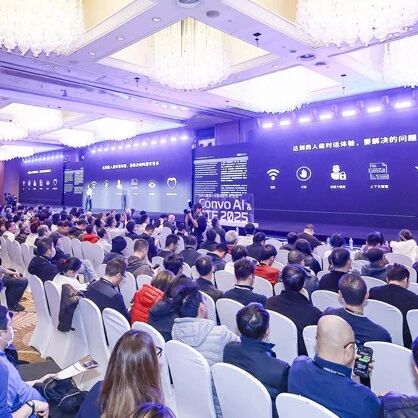
对话式AI,等待下一次「万亿时刻」
36氪· 2025-11-05 09:20
Core Viewpoint - The rise of conversational AI is creating significant business opportunities, with 67% of companies planning to place conversational AI at the strategic core by 2025, and 84% intending to increase investments in this area within the next year [1][2]. Group 1: Market Demand and Growth - The usage of conversational AI by Agora has seen a 151% quarter-over-quarter growth by Q3 2025, indicating strong market demand [2]. - The integration of technologies such as large language models (LLM), automatic speech recognition (ASR), text-to-speech (TTS), and real-time engagement (RTE) is essential for the development of conversational AI [4]. Group 2: Technological Challenges - Key challenges for achieving human-like dialogue in conversational AI include low latency response, natural interruption handling, context management, and emotional understanding [16]. - The current average end-to-end latency for most conversational AI systems is over 3 seconds, while human conversations typically have a latency of around 400 milliseconds, highlighting a significant gap [14]. Group 3: Evaluation Framework - The "three-dimensional two-track" evaluation framework proposed in the white paper assesses AI's understanding, expression, and interaction capabilities, using both benchmark and user-oriented testing methods [20][21]. - This framework aims to provide a comprehensive and objective assessment of conversational AI, addressing the limitations of existing evaluation methods [20]. Group 4: Application Scenarios - Conversational AI has already achieved large-scale implementation in smart hardware, emotional companionship, and online education [27]. - The technology is expected to play a crucial role in the upcoming explosion of AI hardware in 2025, enhancing the functionality of devices like AI companions and smart glasses [28]. Group 5: Future Prospects - Future developments in conversational AI may include multimodal interactions, enabling the AI to understand gestures and facial expressions, thus approaching human-like communication [33]. - The potential for conversational AI to evolve into a "super assistant" that integrates into business processes and serves as a digital employee is also highlighted [34]. Group 6: Economic Impact - Conversational AI is set to transform human-machine communication, reducing the barriers to AI technology usage and promoting equitable access to AI [35]. - The technology is expected to free humans from mundane tasks, allowing for a focus on creative and strategic work, which could lead to new business models and economic growth [35][36].