鑫椤储能

Search documents
阳光电源将在埃及投建10GWh储能系统工厂
鑫椤储能· 2026-01-13 06:37
Core Viewpoint - The article highlights a strategic partnership between the Egyptian government, Norwegian renewable energy company Scatec, and China's Sungrow Power Supply, aimed at developing a significant clean energy project in Egypt with an investment exceeding $1.8 billion [1][2]. Group 1: Project Overview - The collaboration involves the construction of a 1.7GW solar power plant and a 4GWh battery storage system in Minya Province, Egypt, under the project named "Energy Valley" [1]. - The project aims to create one of the largest integrated solar + storage power bases globally, ensuring stable power supply through large-scale energy storage [1]. - A 25-year power purchase agreement has been signed with the Egyptian Electricity Transmission Company to support the project's energy output [1]. Group 2: Manufacturing and Local Impact - Sungrow Power Supply will establish a battery storage system manufacturing plant in Ain Sokhna Industrial Zone, with an annual capacity of 10GWh, expected to commence production in April 2027 [1]. - This facility will be the first of its kind in the Middle East and Africa, primarily supplying the "Energy Valley" project while also catering to the regional market [1]. - The partnership signifies a crucial step for Egypt in localizing renewable energy manufacturing and enhancing grid stability [2].


天合储能1.7GWh亚太项目交付
鑫椤储能· 2026-01-13 06:37
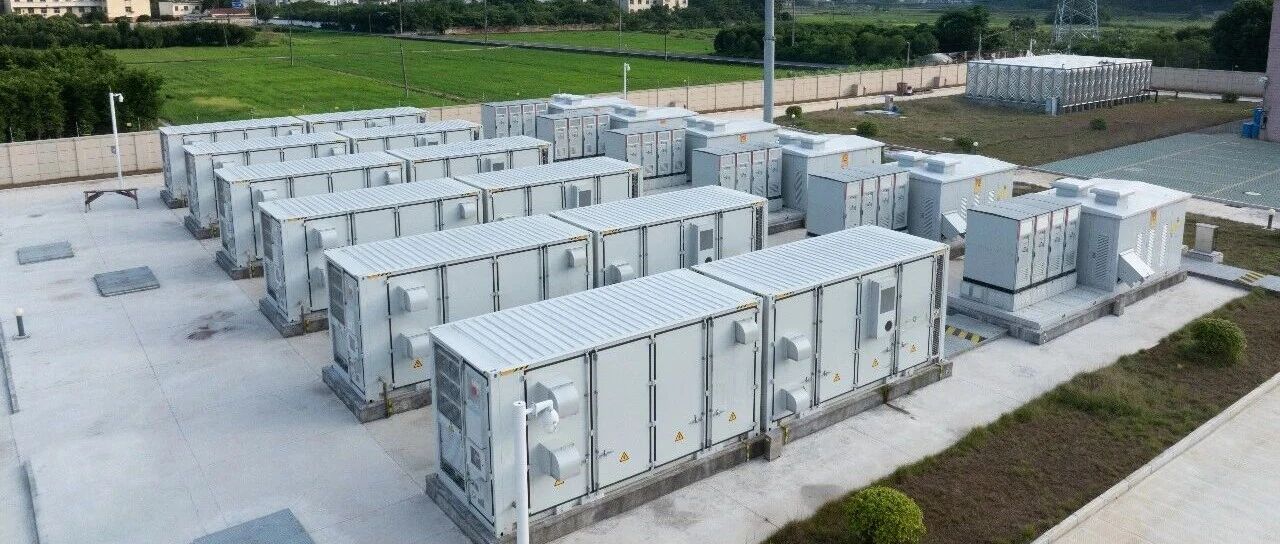
关注公众号,点击公众号主页右上角" ··· ",设置星标 "⭐" ,关注 鑫椤储能 资讯~ 近日,天合储能顺利完成向亚太地区 1.7GWh 储能项目的发货交付。该项目为公司目前 规模最大的海外储能项目出货 ,标志着天合储能在超大 规模储能项目交付能力上的又一次突破,也进一步彰显了公司在海外储能市场的持续拓展与全球项目交付能力的领先优势。 本次交付项目采用天合储能 Elementa 2 储能系统。该系统搭载天合自研电芯,并配备 AI 仿生液冷技术,可将系统内部电芯温差精准控制在 2.5℃ 以内,在 –30°C 至 55°C 的宽温区间内保持稳定运行,充分适应高温、高负荷等复杂工况,为超大规模储能项目的长期安全与可靠运行 提供坚实保障。 鑫椤报告预售: 2025-2029年全球储能市场运行趋势及竞争策略研究报告 预订电话:18964001371(微信同) 凭借高可靠性与快速部署优势, Elementa 系列储能产品正持续服务于不同区域、不同应用场景的能源需求,在效率、灵活性与系统稳定性之间 实现良好平衡,满足海外市场对储能系统 规模化、工程化、可复制落地 的实际需求。 截至 2025 年底,天合储能全球储能系统累 ...

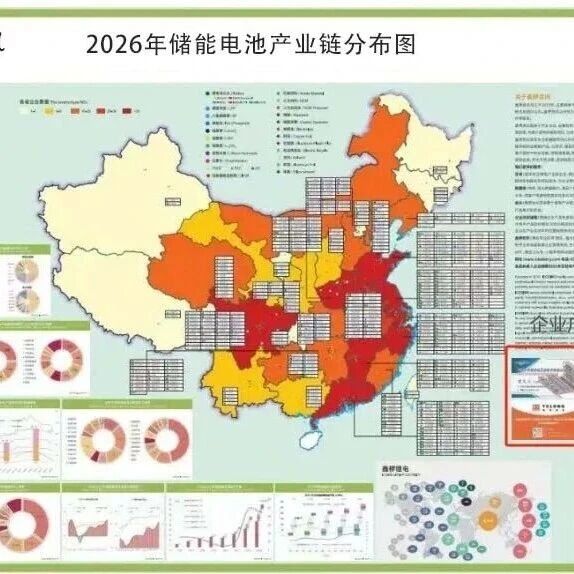
招商!鑫椤资讯2026中国储能产业分布图
鑫椤储能· 2026-01-12 06:39
关注公众号,点击公众号主页右上角" ··· ",设置星标 "⭐" ,关注 鑫椤锂电 资讯~ 为什么这张地图是储能企业的"必投广告"? ( 本图片为示意图,具体以实际产品为准) ✓ 储能系统采购决策者 ✓ 产业链上下游企业 ✓ 政府招商部门与产业园区负责人 ✓ 投资机构与行业分析师 区域布局热力图 : 精准标注全国多个 重点省市的龙头企业和产业集群 产业链全景图谱 :覆盖从锂矿→电芯→PCS→系统集成→EPC→应用 全链条核心企业 重点项目标注 : 政策热力指数 : 各省补贴力度、配储要求、电价政策一目了然 合作赞助: 精准传播,直击决策层 本分布图将定向发行至 3万+储能产业链核心人员 : 每一张地图,都是一份进入核心圈层的邀请函! 地图内容核心价值: 广告位投放请联系: 13248122922 ( 微信同) 鑫椤资讯储能电芯出货量 鑫椤资讯 工商业储能出货量 鑫椤资讯 基站&数据中心备电 出货量 鑫椤资讯 源网侧储能出货量 鑫椤资讯 户储(含便携式)出货量 ...... 1.冠名赞助——在分布图左上方与主办方共同显示企业LOGO等信息 2.品牌赞助——在分布图下方空白位置展示企业名称、主营产品、联系方式等内 ...
又一储能企业赴港IPO
鑫椤储能· 2026-01-12 06:39
Core Viewpoint - The article highlights the resilience and growth potential of Yuanxin Energy Storage Technology Co., Ltd. as it submits its prospectus to the Hong Kong Stock Exchange, showcasing strong financial performance and a clear operational turning point in 2025 [1][4]. Group 1: Operational Turning Point - The company is expected to reach a significant operational turning point in 2025, with approximately 880 million yuan in revenue and around 71 million yuan in net profit, reflecting an annualized return on equity (ROE) of about 83.55% for 2023-2024 [4]. - This combination of indicators is crucial in the competitive renewable energy equipment industry, signaling strong sustainable development [5]. - The improvement in profitability is driven by three integrated operational supports: enhanced manufacturing and system integration efficiency from scaled delivery, market premium pricing for products and systems due to technological accumulation, and a net operating cash flow exceeding 210 million yuan in the first three quarters [6][8]. Group 2: Asset Structure Stability - The company's total assets amount to approximately 2 billion yuan, with a seemingly high debt ratio; however, the underlying structure is robust [9]. - Most liabilities are operational debts such as accounts payable and contract liabilities, rather than high-risk financial leverage, indicating strong "industrial credit" [10]. - The net asset value is about 235 million yuan, primarily driven by retained earnings rather than continuous external capital infusion, demonstrating a solid business model with strong risk resistance [12]. Group 3: Growth Logic Transition - Yuanxin Energy Storage is undergoing a "business phase leap," with revenue increasing sixfold from 124 million yuan in the first three quarters of 2024 to 881 million yuan in the same period of 2025, alongside a structural reversal in net profit [15]. - This explosive growth is attributed to a complete transformation in business structure, shifting from reliance on product sales in 2024 to integrated energy storage solutions contributing over 90% of revenue in 2025 [16]. Group 4: Future Value from a Capital Perspective - Yuanxin Energy Storage demonstrates significant competitive advantages at a crossroads of industry differentiation, being closer to application scenarios and system value rather than solely dependent on battery prices [18]. - The company has a shorter cash recovery cycle compared to pure project development or investment firms, enhancing its resilience against capital cycles [19]. - The growth is not reliant on asset accumulation or excessive financing but maintains a synergy between cash flow and profitability as the company enters a new phase of quality growth and capital efficiency [23]. Group 5: Value Logic and Market Position - The company's value logic is divided into three clear stages: short-term performance certainty and profit turning points provide solid valuation reference points; mid-term expansion of scale and high ROE will enhance valuation space; long-term extension into operations, asset management, and platformization will shift the valuation system from manufacturing to asset services and platform premiums [25][26]. - The true value release is expected to occur as the company leverages the capital market for higher-level platform upgrades, with significant potential for capital utilization efficiency post-IPO [29].
2025年储能招投标全景分析:招标规模447.5GWh,中标规模382.6GWh,备案规模1526.9GWh
鑫椤储能· 2026-01-09 01:44
Core Insights - The article highlights the significant growth in the energy storage market in 2025, with a total bidding scale of 447.5 GWh, representing a year-on-year increase of 113.2% [1]. Bidding Market - The bidding market saw a total scale of 447.5 GWh, with non-collective bidding projects reaching 371.7 GWh (up 179.9%) and collective bidding projects at 75.8 GWh (down 1.7%) [1]. - The growth in bidding demand is driven by two key nodes: the 531 grid connection deadline and the 1231 grid connection deadline, with significant project launches concentrated around these dates [3][4]. - Policies have accelerated bidding demand, particularly in regions like Inner Mongolia, which introduced incentives for projects to start before the June deadline [6]. Winning Market - The total winning scale in 2025 was 382.6 GWh, with independent storage projects accounting for 65% of the market demand [10]. - The average internal rate of return (IRR) for projects across provinces is above 8%, with some regions like Gansu and Guangdong seeing IRR as high as 10-15% due to high frequency regulation demand [10]. - Major players in the winning market include CRRC Zhuzhou, Haibo Shichuang, and Ningde Times, with a concentration of market participation among system manufacturers and a few leading battery manufacturers [12][14]. Price Trends - The average price for 2-hour storage systems was stable at 0.5485 yuan/Wh, while the EPC price was 1.0268 yuan/Wh, reflecting a 12.6% decrease from the previous year [17]. - Battery cell prices experienced three rounds of increases in the second half of the year, driven by overseas orders and high domestic bidding demand, leading to a tight supply-demand balance [17].



2025年磷酸铁锂市场盘点:名义产能653万吨,总产量增长61.5%,月产量突破40万吨
鑫椤储能· 2026-01-08 06:31
Core Viewpoint - The production of lithium iron phosphate (LFP) is projected to reach 3.915 million tons by 2025, representing a year-on-year growth of 61.5% [1] Monthly Production Trends - In 2025, LFP production is expected to show a steady increase throughout the year, with monthly outputs of 200,000 to 300,000 tons from January to May, 300,000 to 400,000 tons from June to October, and exceeding 400,000 tons in November and December [3] Capacity Analysis - By the end of 2025, nominal LFP production capacity is expected to reach 6.53 million tons, an increase of 950,000 tons from 5.58 million tons at the end of 2024. However, significant idle capacity exists due to high costs, outdated equipment, lack of technology, and insufficient funding [5] - The nominal production capacity of companies capable of mass production will total 5.7235 million tons, up 742,500 tons from 4.981 million tons in 2024 [5] Company Market Share - Hunan Youneng leads the market with approximately 30% share, while other companies hold less than 10%. The second tier includes Wanrun New Energy, Defang Nano, Fulian Shenghua, Youshan Technology, Longpan Lithium Source, and Guoxuan High-Tech, each with market shares between 5% and 10% [8] - The third tier consists of Taifeng Xianxing, Anda Technology, GCL-Poly Energy, Dingsheng Technology, Jintang Times, Rongtong High-Tech, Wanhu Chemical, and Sichuan Langsheng, each with market shares exceeding 2% [8] Production Growth Rates - Among the top 20 companies, Zhongchu Innovation's 100,000-ton production line is expected to fully release in 2025, with a staggering growth rate of 1578%. Other companies like Bangpu Recycling and Wanhu Chemical also show growth rates exceeding 200%, while Anda Technology, GCL-Poly Energy, and Fulian Shenghua exceed 100% [9] Process Technology - The phosphate iron process accounts for 82.1% of production, followed by ferrous oxalate, ferric nitrate, iron red, and hydrothermal methods. The latter three processes have the potential to transition from niche to mainstream as they have already achieved mass production of high-pressure solid products [11]



兴发集团兴顺磷酸铁锂厂与比亚迪合作生产线投运
鑫椤储能· 2026-01-08 06:31
Core Viewpoint - The article highlights the advancements and production capabilities of Hubei Xingshun New Materials Co., Ltd. in the lithium iron phosphate (LFP) sector, emphasizing its strategic partnerships and future production plans to meet the growing demand in the electric vehicle and energy storage markets [3][5]. Group 1: Company Overview - Hubei Xingshun New Materials Co., Ltd. is a subsidiary of Xinfeng Group, focusing on the research, production, and sales of lithium iron phosphate cathode materials, with an annual designed capacity of 80,000 tons [3]. - The company’s product range includes second to fourth generation specifications, widely used in electric vehicles and energy storage stations [3]. Group 2: Production and Development - A production line customized for BYD has been put into trial operation, featuring over twenty new demagnetization devices to enhance product performance [1]. - The company plans to accelerate product upgrades and market development, aiming to produce and sell 70,000 tons by 2026, primarily supplying BYD [3][5]. Group 3: Strategic Partnerships - Hubei Xingshun has established stable collaborations with several companies, including Penghui Energy and Zhita New Energy, and is focusing on product validation and integration with leading battery cell manufacturers like EVE Energy [5]. - The company has successfully passed BYD's testing for ton-level samples and is preparing for formal mass production [3]. Group 4: Industry Context - The region of Xingshan is seizing opportunities in the new energy sector, promoting technological upgrades in lithium iron phosphate processes and accelerating the development of projects like the all-vanadium flow battery [6]. - The aim is to create a robust industrial cluster integrating vanadium energy storage and lithium iron phosphate, contributing to high-quality regional development [6].

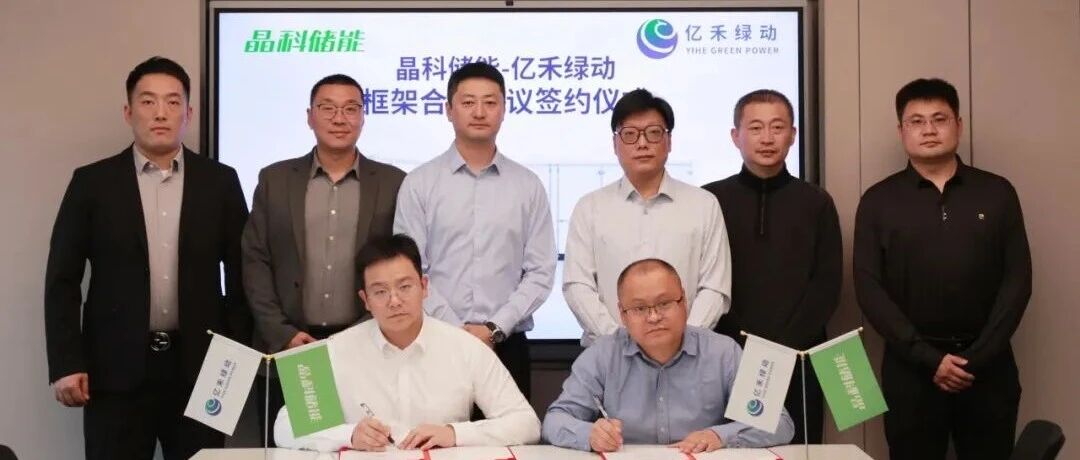
3GWh合作敲定!晶科储能与亿禾绿动携手加速储能规模化应用
鑫椤储能· 2026-01-07 07:58
Core Viewpoint - The collaboration between Jinko Energy Storage and Shaanxi Yihe Green Energy Co., Ltd. aims to develop energy storage projects with a target scale of 3GWh over the next two years, focusing on project development, equipment procurement, and technical collaboration [1][3]. Group 1: Collaboration Details - Jinko Energy Storage will provide its next-generation Blue Whale SunTera G3 6.25MWh battery storage system, which features a 95% system cycle efficiency and a lifespan of up to 10,000 cycles, ensuring long-term economic viability [3]. - The system incorporates intelligent liquid cooling technology and non-uniform flow channel design, achieving a temperature difference of ≤2°C between cells, significantly enhancing operational safety and lifespan [3]. - The system is designed to operate in harsh environments with an IP55 protection level, C5 corrosion resistance, a wide temperature range of -30°C to 55°C, and adaptability to altitudes up to 4,000 meters, providing high energy density and efficiency solutions for large-scale energy storage stations [3]. Group 2: Company Background and Strategy - Shaanxi Yihe Green Energy has developed a cumulative 1.28GW/5.12GWh of energy storage projects nationwide, establishing a solid project development and investment system [5]. - The company employs a hybrid energy storage technology route combining all-vanadium flow batteries and lithium iron phosphate batteries, leveraging the safety and flexible decoupling advantages of all-vanadium flow batteries alongside the rapid response capabilities of lithium iron phosphate batteries [5]. - The collaboration with Jinko Energy Storage aligns with Yihe Green Energy's strategic goals, aiming to enhance project development and system solutions through technical collaboration and resource integration, thereby contributing to the green and low-carbon transition of the economy and society [5]. Group 3: Market Impact - The partnership is a significant step for Jinko Energy Storage in deepening its presence in the domestic energy storage market, with a commitment to support project development and large-scale application of energy storage solutions [7]. - The collaboration is positioned to contribute to the construction of a new power system and the achievement of carbon neutrality goals [7].

富临精工公告:50万吨高端储能用磷酸铁锂项目
鑫椤储能· 2026-01-06 06:20
Group 1 - The core investment plan involves a total investment of 87 billion yuan in Inner Mongolia, focusing on the production of high-end lithium iron phosphate and upstream precursor projects to meet the growing demand for high-performance lithium iron phosphate batteries in the energy storage market [1][2] - The project includes the construction of a 500,000-ton annual production capacity for lithium iron phosphate, with an estimated total investment of 60 billion yuan, divided into two phases [1] - The upstream projects include a 400,000-ton annual production capacity for lithium iron phosphate precursor oxalic acid, with an investment of 1.2 billion yuan, and a 600,000-ton annual production capacity for ferrous oxalate precursor, with an investment of 1.5 billion yuan [1][2] Group 2 - The investment strategy aims to create an integrated and large-scale production layout from key raw materials to high-end cathode materials, reinforcing the market leadership of Jiangxi Shenghua in high-density lithium iron phosphate [2] - The collaboration with core customer CATL is emphasized, as CATL plans to secure production capacity through long-term supply agreements and aims to become a controlling shareholder of Jiangxi Shenghua through capital increase [2]

30GWh!宁德时代又一电池项目签约
鑫椤储能· 2026-01-05 02:18
Core Viewpoint - The article highlights the strategic investment agreement between CATL and the Guizhou provincial government to expand the production capacity of energy storage and power batteries in Guizhou, indicating a deepening of CATL's full industry chain layout in the region [1][2]. Group 1: Investment Agreement - CATL signed an investment cooperation agreement for the second phase of its energy storage and power battery production base in Guizhou, planning an annual production capacity of 30GWh and covering an area of approximately 550 acres [1]. - The first phase of the production base, which also has a planned capacity of 30GWh, was announced in November 2021 with a total investment not exceeding 7 billion yuan [2]. Group 2: Strategic Importance - The strategic cooperation agreement signed in October 2021 aims to build a complete lithium battery industry chain in Guizhou, encompassing upstream lithium battery materials and downstream market applications [2]. - CATL's chairman emphasized the importance of Guizhou's industrial development foundation and natural resources, marking the investment as a significant strategic move for the company [2].