AI前线

Search documents
LeCun 手撕 Meta:Llama 4 造假,小扎直接废掉整个 AI 团队,锐评 28 岁新上司:不懂研究还瞎指挥
AI前线· 2026-01-03 07:56
Core Viewpoint - Yann LeCun, a Turing Award winner and former chief scientist at Meta, has officially announced his departure to pursue entrepreneurial ventures, revealing significant issues within Meta's AI operations, including manipulated benchmark results and a loss of trust in the AI team by CEO Mark Zuckerberg [2][5]. Group 1: Manipulation of Benchmark Results - LeCun disclosed that the benchmark results for Llama 4 were manipulated, with engineers using different model variants to optimize scores rather than presenting true capabilities [4]. - The launch of Llama 4 in April 2025 was marked by impressive benchmark scores but faced criticism for its actual performance, corroborating LeCun's claims of "data cheating" [4][10]. Group 2: Management and Team Dynamics - Following the Llama 4 incident, Zuckerberg reportedly lost trust in the AI team, leading to the marginalization of the entire generative AI team, with many employees leaving or planning to leave [5][6]. - Meta's response included a $15 billion investment in acquiring a significant stake in Scale AI and hiring its young CEO, Alexandr Wang, to lead a new research department [5][7]. Group 3: Leadership and Strategic Direction - LeCun criticized Wang's appointment, highlighting a troubling reversal of hierarchy where a less experienced individual would oversee a leading AI researcher [8]. - The fundamental disagreement between LeCun and Wang centers on the strategic direction of Meta's AI efforts, with LeCun advocating for a different approach than the current focus on scaling language models [9][10]. Group 4: Limitations of Current AI Models - LeCun has consistently argued that large language models have significant limitations and that true AI potential requires alternative approaches [10][11]. - He presented a new model architecture called Joint Embedding Predictive Architecture (JEPA), which aims to address the shortcomings of existing technologies by training systems on video and spatial data to develop a better understanding of physical principles [13][14]. Group 5: Future Predictions - LeCun anticipates that a prototype of the new architecture could be ready within 12 months, with broader applications expected in several years [14]. - He predicts that AI with animal-level intelligence could be achieved in five to seven years, while human-level intelligence may take a decade [14].



今年让AI可靠地抢走你的活儿?Anthropic 首席产品官曝新年目标:大模型不拼 “更聪明”,终结“公司上AI,员工更累”尴尬
AI前线· 2026-01-03 05:33
2025 年智能体全面爆发。但实际落地中,编码领域的智能体成为核心突破点,其中 Anthropic 的 Claude Code 表现尤为突 出。 整理 | 褚杏娟 根据 YC 最新数据,Anthropic 的模型份额突破 52%,正式超越长期霸主 OpenAI。2024 年到 2025 年初,Anthropic 的份额大 多维持在 25% 左右,但在过去 3 到 6 个月中实现了"曲棍球棒"式的陡峭增长。这种转变的核心驱动力在于 Anthropic 优秀的编 写代码能力,这让它成为许多开发人员的首选工具,并渗透到其他使用场景。 近期,Anthropic 首席产品官 Mike Krieger 做客"AI Daily Brief"节目,系统梳理了"vibe coding"在未来的发展方向。 从 Claude 早期对编程能力的聚焦,到像 Claude Code 这样更广泛应用智能体的兴起,他详细拆解了软件工程师、非技术背景 的创作者,以及希望从聊天机器人迈向真正 Agent 化工作流、底层基础设施以及可量化投资回报的企业团队,正在面临的问 题,以及 Anthropic 为此将在 2026 年进行的优化方向,比如重点 ...

梁文锋署名,DeepSeek 论文引爆 AI 圈:mHC 架构横空出世!网友:这工程难度是地狱级
AI前线· 2026-01-02 06:00
Core Insights - DeepSeek has introduced a new network architecture called mHC (Manifold-Constrained Hyper-Connections) aimed at addressing numerical instability and signal explosion issues in large-scale model training while retaining performance enhancement advantages [2][5][6] Problem Addressed by the Architecture - Traditional Transformer networks rely on residual connections to maintain stable signal transmission, which is crucial for training deep learning models. However, Hyper-Connections (HC) have led to instability due to unconstrained connection matrices, causing signal explosion and gradient issues during large-scale training [6][7] - The mHC architecture introduces geometric constraints by projecting the residual mapping space onto a specific manifold, ensuring that the connection matrix remains within a double stochastic matrix framework, thus restoring the identity mapping property and stabilizing signal norms [6][10] Technical Implementation - The research team utilized the Sinkhorn-Knopp algorithm for projection constraints, optimizing the connection matrix while controlling system overhead to maintain training efficiency [11][12] - During training, the model learns a regular real-valued matrix, which is then projected to an approximate double stochastic matrix before each forward pass, ensuring that connections remain within a safe manifold [12] Experimental Results - The experiments demonstrated that mHC effectively avoided common training convergence issues found in traditional HC while maintaining or even improving performance across various tasks at parameter scales of 3 billion, 9 billion, and 27 billion [12][15] Broader Implications - The significance of mHC lies not in replacing the Transformer paradigm but in providing a scalable theoretical and engineering framework for exploring complex residual topologies. It highlights the importance of explicitly constraining model structures within geometrically favorable spaces to systematically address stability issues [12][14] - This approach opens avenues for future designs of more complex multi-stream and multi-path networks, balancing enhanced expressiveness with controllable trainability [12][14]

Claude Code、Cursor 都过时了?!硅谷顶流大牛炸场暴论:AI 编程练满 2000 小时才算“会用”,荒废一年世界级大神也成实习生水平
AI前线· 2026-01-02 05:32
Core Insights - The article discusses the evolution of software engineering towards "Vibe Coding" and the necessity for engineers to adapt to AI-driven development methods, emphasizing that traditional coding practices are becoming obsolete [2][3][4]. Group 1: Steve Yegge's Career and Contributions - Steve Yegge has over 30 years of experience in software development, having worked at Amazon and Google, where he played a crucial role in building technical infrastructures and developing tools like Grok [2][3]. - After leaving Google in 2018 due to perceived conservatism, Yegge joined Grab and later Sourcegraph, where he led the company's transition towards AI-driven development [3][4]. Group 2: Vibe Coding and AI Programming - Yegge argues that using traditional IDEs for coding is no longer acceptable for competent engineers, who must transition to agent programming, where the focus is on managing AI agents rather than writing code directly [5][6][9]. - He emphasizes that the core skill has shifted from coding to directing AI agents, and that engineers who do not embrace AI will quickly fall behind [10][11]. Group 3: Challenges and Future of Software Development - The article highlights the challenges of code merging in high-productivity environments, where traditional methods are insufficient to handle the volume of code changes [33][34]. - Yegge predicts that the future of programming will involve a shift towards "factory-style coding," where AI tools will automate much of the coding process, fundamentally changing team structures and workflows [38][39]. Group 4: Current State of AI Companies - Yegge notes that companies like Google, Anthropic, and OpenAI are currently experiencing internal chaos due to rapid expansion and the challenges of integrating AI into their workflows [45][46]. - He suggests that while these companies are making progress, they still face significant execution challenges that need to be addressed for successful AI integration [47][48].


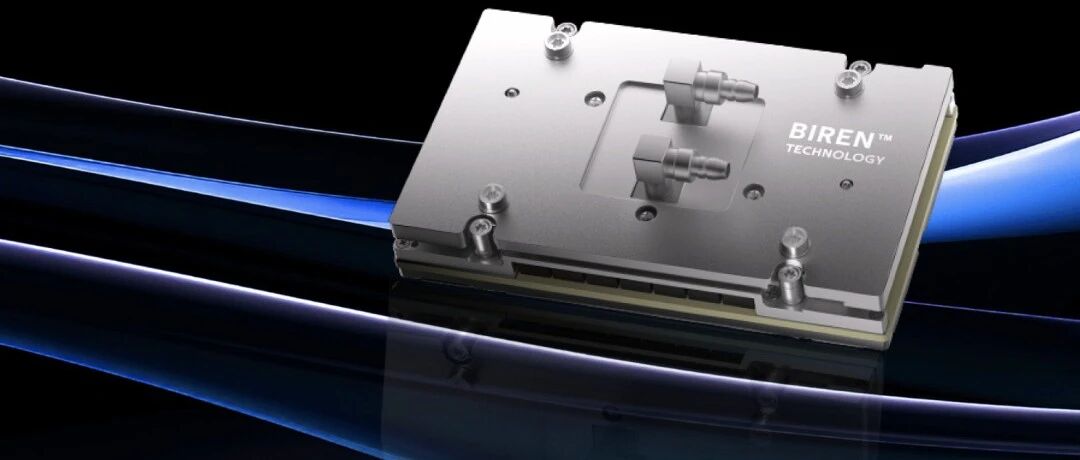
多款高端 AI 芯片实现量产,港股“GPU 第一股”壁仞科技开年挂牌:市值破千亿、首日涨幅领跑市场
AI前线· 2026-01-02 02:59
Core Viewpoint - The article highlights the successful IPO of Wallen Technology, a leading GPU company in Shanghai, marking a significant milestone in the Hong Kong stock market for 2026 and representing the largest IPO since the implementation of the 18C regulations [2]. Group 1: IPO Performance - Wallen Technology's stock price surged on its debut, opening at HKD 35.70, an increase of 82.14% from the issue price of HKD 19.60, and reaching a market capitalization of approximately HKD 1002 billion [2][3]. - The company received over 2300 times oversubscription during the IPO, indicating strong market interest in the domestic GPU sector and AI computing infrastructure [4]. Group 2: Company Overview - Founded in 2019, Wallen Technology focuses on high-performance general-purpose GPUs and intelligent computing systems, targeting data center applications rather than consumer-grade GPUs [4][6]. - The company emphasizes a design philosophy of "high computing density + general programmability," aiming to provide high floating-point computing power and bandwidth to meet the demands of AI model training [6]. Group 3: Financial Performance - Wallen Technology has incurred cumulative losses exceeding RMB 6.3 billion since its inception, with significant losses reported in recent years: RMB 1.474 billion in 2022, RMB 1.744 billion in 2023, and RMB 1.538 billion in 2024 [8][11]. - The company's R&D expenses have been substantial, accounting for approximately 79.8% of total operating expenses in 2022, with expectations for further increases in R&D investment [12]. Group 4: Product Development - Wallen Technology has successfully launched three GPGPU products, with the BR106 aimed at data centers and the BR110 targeting edge scenarios, emphasizing energy efficiency [10]. - The company has developed its own GPU architecture, which includes critical components such as computing units and interconnects, to ensure long-term competitiveness and autonomy [6]. Group 5: Leadership and Funding - The founder and CEO, Zhang Wen, has a diverse background in finance and technology, having previously held key positions in notable companies before establishing Wallen Technology [15][16]. - Wallen Technology has completed multiple rounds of financing, with its valuation reaching RMB 20.915 billion after the latest funding round, reflecting market confidence in its long-term potential in the high-end GPU sector [18].
大模型狂叠 buff、Agent乱战,2025大洗牌预警:96%中国机器人公司恐活不过明年,哪个行业真正被AI改造了?
AI前线· 2026-01-01 05:33
Core Insights - The article discusses the significant changes in AI technologies, particularly focusing on large models, agents, and AI-native development paradigms, and how these have transformed various industries in 2025 [2] Group 1: Industry Landscape - OpenAI remains a leading player in the AI space, maintaining its position with general large model capabilities, although the release of GPT-5 did not meet high expectations [4] - Google made a strong comeback in 2025, with technologies like Gemini 3 and Nano Banana gaining user traction through effective distribution across search, office, and cloud products [4] - Anthropic has emerged as a stable player, surpassing OpenAI in API business scale and growth through deep partnerships with cloud providers like AWS [5] - Domestic company DeepSeek has become a notable star in 2025, with the release of R1 and an open-source approach that invigorated the AI ecosystem [5] - The industry is shifting focus from "scaling" to "sustainability," as companies face challenges like low production ratios and high loss pressures [5] Group 2: Company Capabilities - Companies that succeed are those addressing high-frequency demand scenarios, such as AI social media and music, which naturally fit large model applications [7] - Companies that have fundamentally restructured their cost structures through AI, significantly reducing marginal costs, are also positioned for success [7] - Companies lagging behind include those that focus solely on algorithms without integrating product development, leading to stagnation in commercialization [9] Group 3: Technological Evolution - The evolution of large models has shifted from merely increasing size to enhancing usability, with improvements in complex instruction understanding and multi-step reasoning [14] - The cost-effectiveness of models has improved significantly, with a nearly tenfold increase in performance per cost within a year [15] - The industry consensus is moving from "how strong is the model" to "how verifiable and reusable are the processes" [8] Group 4: Agent Development - Agents are recognized as the next core battleground in AI, with a shift from merely answering questions to executing tasks [36] - The introduction of standardized protocols like MCP has enabled agents to collaborate more effectively, moving from isolated operations to organized systems [38][39] - The competition is not just about the models but also about the surrounding infrastructure and operational capabilities necessary for agents to function effectively [40] Group 5: Future Directions - The future of agents lies in their ability to operate in open environments, handling uncertainties and making decisions based on incomplete information [45] - The industry is expected to see a shift from selling agent capabilities to providing automated services that deliver measurable business value [43] - The integration of agents into existing business processes is anticipated to redefine their role from mere tools to essential components of operational workflows [43]

ARR 超300万刀、实现月度盈亏平衡!ListenHub 完成天使+轮融资,加速出海进程
AI前线· 2026-01-01 05:33
Core Insights - MarsWave, a leading company in generative AI and multimodal interaction technology, has completed a $2 million angel round financing led by Tianji Capital, with participation from Xiaomi co-founder Wang Chuan [2] - Despite profitability concerns in the AI audio sector, MarsWave has achieved an annual recurring revenue (ARR) exceeding $3 million and reached monthly breakeven, establishing itself as one of the few AI-native companies with a validated profit model [2] - The funding will primarily be used to expand into the North American market and develop the next generation of multimodal agents [2] Product and Market Strategy - MarsWave's core product, ListenHub, transforms complex professional knowledge, industry reports, and internal documents into easily understandable "knowledge explanation videos, podcasts, and slides" [2] - The platform has a 5% paid user rate and a monthly churn rate below 3%, indicating strong demand for its services [4] - ListenHub has undergone a significant product and positioning upgrade, rebranding from an "AI voice and podcast tool" to "the narrator of all things," with a new slogan emphasizing one-click generation of videos, podcasts, and PPTs [6] Global Expansion Plans - The recent financing will focus on global strategic layout, with an initial emphasis on the North American market [8] - ListenHub plans to launch a "Global Creator Program" to replicate its validated organic growth model, which has achieved $3 million ARR without advertising spend [8] - The new COO, with extensive experience in AI and internet operations, will lead the global strategy, leveraging the high demand for efficient knowledge digestion tools in North America [6][8]
2025年硅谷给华人AI精英开出上亿年薪!Agent、Infra人才被抢疯了
AI前线· 2026-01-01 02:00
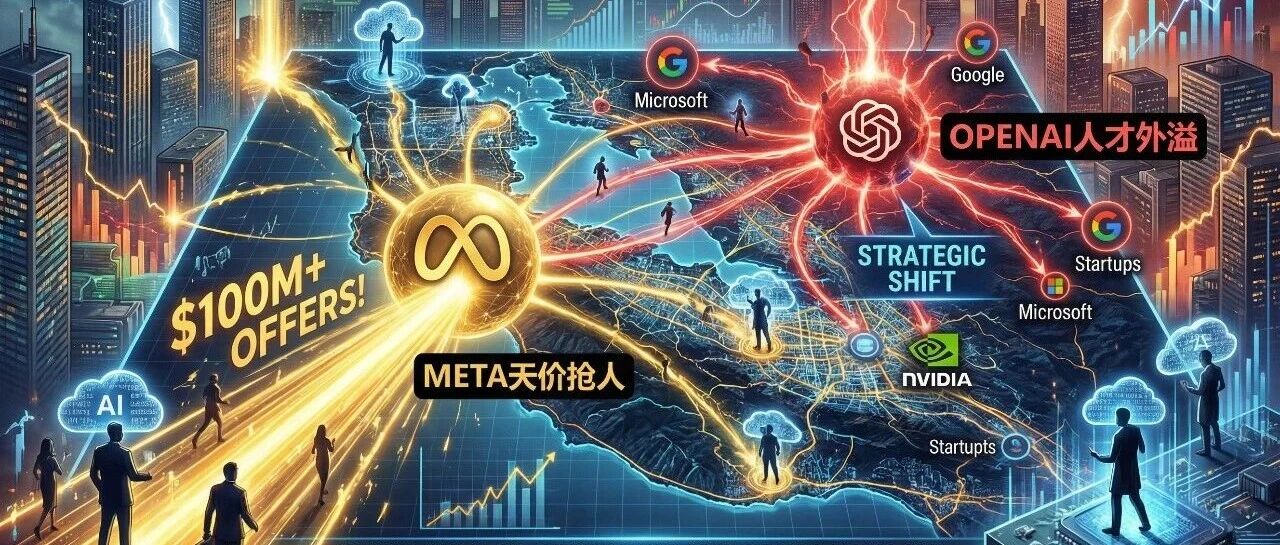
Core Insights - The AI landscape in Silicon Valley is shifting from a focus on model parameters and benchmark scores to the ability to integrate models into products and systems that create real business value [4][6] - The talent market is experiencing simultaneous layoffs and aggressive hiring, reflecting a transition from general artificial intelligence (AGI) aspirations to a consensus on application-specific artificial superintelligence (ASI) [8][10] - The operational focus is moving from technical breakthroughs to engineering execution, with companies prioritizing the conversion of existing model capabilities into stable systems and deployable products [12][16] Talent Dynamics - Major tech companies are aggressively recruiting talent in areas such as agent systems, multimodal capabilities, and AI infrastructure, indicating a shift in the types of AI skills that are in demand [25][30] - High-profile personnel changes, particularly at Meta, illustrate a strategic pivot towards product-centric development, leading to the departure of key research figures [15][19] - The influx of Chinese engineers into critical roles highlights the competitive nature of the talent market, with companies offering substantial signing bonuses to attract top talent [24][28] Market Trends - The operational costs associated with maintaining AI models are rising, leading to a reevaluation of investment strategies and a focus on commercial viability [10][11] - The decline in the marginal returns of increasing model size and complexity is prompting companies to seek more practical applications of AI technology [10][11] - The emergence of new startups and research labs, such as Advanced Machine Intelligence Labs and Thinking Machines Lab, reflects a diversification of approaches to AI development [20][23] Strategic Shifts - The decline of foundational research initiatives, such as Meta's FAIR lab, signifies a broader trend where research must directly contribute to product development to retain strategic importance [17][18] - The focus on practical applications of AI is reshaping the landscape, with companies prioritizing the ability to deploy AI systems effectively over theoretical advancements [12][16] - The competitive landscape is increasingly defined by the ability to optimize AI systems for real-world applications, moving beyond traditional metrics of success [35][36]
写在 Manus“卖身”后:企业级 Agent 只会更像软件,而非魔法
AI前线· 2025-12-31 04:33
Core Insights - Meta has announced the acquisition of Manus for several billion dollars, marking it as the third-largest acquisition in Meta's history after WhatsApp and Scale AI [2] - Manus's founder will become a vice president at Meta, and the company will continue to operate independently in Singapore [2] - The acquisition highlights the challenges faced by independent companies in the generative AI space, as the development and optimization of enterprise-level agents often require significant resources typically available to larger firms [2] Group 1: Challenges in AI Implementation - Issues related to engineering delivery and product optimization can be categorized into several types, including hallucination, integration, operation and maintenance, and cost control [3] - In real enterprise scenarios, users prioritize immediate operational efficiency over abstract metrics like token usage [4] - The challenges of deploying AI solutions in the Asia-Pacific region include language diversity and regulatory requirements, necessitating localized support and flexible deployment options [30][32] Group 2: Product Development and Strategy - The concept of Agentic RAG (Retrieval-Augmented Generation) aims to enhance the capabilities of AI systems by allowing them to plan, iterate, and utilize multiple tools, rather than simply retrieving and generating responses [16][19] - Tencent Cloud's approach to AI emphasizes product thinking, focusing on practical solutions that meet real business needs rather than just visionary concepts [20][28] - The introduction of AI-native widgets by Tencent Cloud represents a significant advancement in user interaction, allowing for customizable components that can be easily integrated into AI systems [26][27] Group 3: Market Position and Competitive Landscape - Tencent Cloud's recognition in the IDC report as a leader in the AI space reflects its strong product capabilities and local support infrastructure across the Asia-Pacific region [5][32] - The successful implementation of AI solutions, such as the partnership with DHL, demonstrates the practical benefits of AI in enhancing operational efficiency and reducing reliance on human resources [33][34] - The future of AI commercialization in the enterprise sector will depend on the underlying product mindset, engineering capabilities, and global operational strategies [35][36]


模力工场026周 AI 应用榜:告别散兵游勇,看 AI 应用如何组队破局
AI前线· 2025-12-31 04:33
Core Insights - The article presents a roundup of the top 15 AI applications for 2025, highlighting their significance in various verticals such as work efficiency, software development, and data analysis [2] Group 1: Top AI Applications - Wino Studio from Hangzhou is recognized for its capabilities in work efficiency, data analysis, and educational learning, serving as a high-performance desktop application that integrates probabilistic models with deterministic domain knowledge [4] - AI Ping from Beijing is a one-stop platform for large model service evaluation and API calls, categorized under AI infrastructure [4] - ChatGPT is acknowledged as a general-purpose AI assistant that covers writing, programming, analysis, and creative collaboration [4] - Kapi Accounting is designed for users who enjoy managing their finances, offering quick recording methods and budget planning features [4] Group 2: Developer Insights - The core team behind Wino Studio has a dual background in theoretical physics and big data development, aiming to merge academic and industrial strengths [6] - Wino Studio aims to provide productivity tools for researchers and enterprises by combining AI with scientific computing, initially inspired by the need for a domestic alternative to Mathematica and MATLAB [8] - The application utilizes Rust programming language for high-performance interactive computing and integrates various computational units to enhance user experience [9] Group 3: Market Trends - The article indicates a shift towards collaborative AI applications that work together to solve complex problems, moving away from standalone tools [19] - Wino Studio is described as a flexible "expert studio" that allows users to assemble various AI capabilities and programming tools to tackle specific challenges [19] - The trend of "team-based" AI solutions is evident in applications like Kapi Accounting, which automates the entire financial management process [20] Group 4: Future Goals - Wino Studio's future objectives include deepening expertise in specific application scenarios, achieving breakthroughs in foundational algorithms for scientific computing, and expanding product visibility to reach millions of potential users [13]