中国有色金属工业协会硅业分会

Search documents
后续硅片市场行情展望走势分析---反内卷政策带动下光伏市场回暖
中国有色金属工业协会硅业分会· 2025-07-25 08:49
Group 1 - The core viewpoint of the articles highlights a significant recovery in the photovoltaic market since July, driven by the "anti-involution" policy, leading to a rebound in product prices across various industry segments, particularly in the silicon wafer sector [1][2] - The price of polysilicon has increased by over 30%, positively impacting industry sentiment and reducing financial pressure on silicon wafer manufacturers [1] - The average transaction prices for N-type G10L, N-type G12R, and N-type G12 silicon wafers have risen by 27.91%, 25.00%, and 21.01% respectively compared to the beginning of the month, indicating a strong upward trend in pricing [1] Group 2 - The Central Financial Committee and the Ministry of Industry and Information Technology have emphasized the need to govern low-price competition and promote the exit of outdated production capacity, providing a regulatory framework for the industry [2] - The ongoing "anti-involution" policy is expected to further optimize the industry structure, with silicon wafer prices likely to maintain a relatively stable trend [2] - The acceptance of silicon wafer prices by downstream battery and module manufacturers, as well as terminal market demand, are critical factors to monitor, as poor acceptance could hinder market growth [2] - Despite challenges, the photovoltaic industry remains robust under the dual carbon goals, with a long-term positive trend expected for the silicon wafer market [2]


【安泰科】单晶硅片周评-市场情绪火热 硅片价格继续上行(2025年7月24日)
中国有色金属工业协会硅业分会· 2025-07-24 07:44
Core Viewpoint - The price of silicon wafers continues to rise due to positive market sentiment driven by supply constraints and increased demand from downstream battery manufacturers [1][2] Group 1: Silicon Wafer Prices - The average transaction price for N-type G10L monocrystalline silicon wafers (182*183.75mm/130 μm) is 1.1 yuan per piece, up 4.76% week-on-week [1] - The average transaction price for N-type G12R monocrystalline silicon wafers (182*210mm/130 μm) is 1.25 yuan per piece, up 8.70% week-on-week [1] - The average transaction price for N-type G12 monocrystalline silicon wafers (210*210mm/130 μm) is 1.44 yuan per piece, up 6.67% week-on-week [1] Group 2: Market Dynamics - The increase in silicon wafer prices is attributed to rising raw material prices for polysilicon, leading manufacturers to raise prices amid increased costs [1] - A slight decrease in market supply is noted as wafer manufacturers begin to implement production cut plans [1] - Downstream battery manufacturers are starting to accept price increases for silicon wafers, resulting in an increase in purchasing orders [1] Group 3: Production and Capacity - The overall operating rate in the industry remains stable compared to last week, with two leading companies operating at 50% and 40% capacity [1] - Integrated companies are operating at 50%-80% capacity, while other companies are also in the 50%-80% range [1] Group 4: Downstream Price Movements - The mainstream price for battery cells is 0.26-0.27 yuan/W, up 0.02 yuan/W week-on-week [2] - The mainstream price for components is 0.66-0.67 yuan/W, up 0.01 yuan/W week-on-week [2] - Future trends in silicon wafer prices will largely depend on how much downstream components can absorb the increased costs [2]
硅产业链新闻动态
中国有色金属工业协会硅业分会· 2025-07-24 07:44
Group 1: Industry Overview - In June, the newly installed photovoltaic capacity reached 14.36 GW, representing a year-on-year decrease of 38% and a month-on-month decrease of 85% [1] - As of the end of June, the total installed power generation capacity in the country was 3.65 billion kW, with solar power capacity at 1.1 billion kW, showing a year-on-year growth of 54.2% [1] - The average utilization hours of power generation equipment decreased by 162 hours compared to the same period last year, totaling 1504 hours [1] Group 2: Company Developments - Canadian Solar has established a silicon company to enhance its vertical integration and cost control in the photovoltaic industry [2] - The new company, Uratqi Haoxi Silicon Industry Co., Ltd., was registered on June 17 with a capital of 1 million yuan and is fully controlled by Canadian Solar [2] - Highview Solar has commenced mass production of its 2 GW BC module project, achieving an efficiency of 24.6% [3] - The BC modules utilize cells from Aiko Solar and feature proprietary packaging technology to enhance efficiency and durability [3] - Highview Solar plans to build an additional 1 GW BC module production line in Yibin, Sichuan, which has completed environmental assessment [3] Group 3: Investment Decisions - Sichuan Hebang Biotechnology Co., Ltd. has decided to suspend further investment in its 10 GW N-type ultra-high-efficiency monocrystalline silicon wafer project due to market conditions [4][5] - The company has already invested approximately 340 million yuan into its subsidiary, Anhui Fuxing New Energy Technology Co., Ltd., which has established a production capacity of about 1.5 GW N-type wafers [5] - The decision to halt additional investment is based on price fluctuations in the silicon wafer industry and a temporary mismatch in overall photovoltaic market capacity [5]

【安泰科】工业硅周评—现货价格大幅上涨 市场情绪回暖(2025年7月23日)
中国有色金属工业协会硅业分会· 2025-07-23 09:10
Core Viewpoint - The recent significant increase in industrial silicon prices is driven by improved market sentiment and downstream demand, although the acceptance of rapid price increases by downstream sectors remains limited [1][2]. Group 1: Price Movement - The main contract price for industrial silicon rose from 8745 CNY/ton to 9525 CNY/ton, an increase of 8.92% during the week of July 17-23, 2025 [1]. - The national average price reached 9378 CNY/ton, up by 527 CNY/ton, with specific grades showing price increases: 553 grade at 9202 CNY/ton (+600 CNY/ton), 441 grade at 8852 CNY/ton (+500 CNY/ton), and 421 grade at 9785 CNY/ton (+360 CNY/ton) [1]. - FOB prices increased by 25-90 USD/ton [1]. Group 2: Supply and Demand Dynamics - Supply-side factors include the resumption of production at northern major plants and increased production plans in southern regions due to positive price impacts [1]. - Demand-side factors show a slight decrease in industrial silicon demand due to unexpected maintenance at a single unit in Shandong, while the operating rate of polysilicon plants has slightly increased, stabilizing overall demand from the three major downstream sectors [1]. - Despite the price increase, the downstream sectors' acceptance of rapid price hikes is limited, and industry inventory pressures remain, suggesting limited upward price potential for industrial silicon [2].
国内太阳能级多晶硅价格(2025.07.23)
中国有色金属工业协会硅业分会· 2025-07-23 09:10
Core Viewpoint - The article discusses the developments and trends in the silicon industry in China, highlighting the growth potential and challenges faced by the sector [1][2]. Group 1: Industry Overview - The silicon industry in China is experiencing significant growth, driven by increasing demand in various applications such as electronics and renewable energy [1]. - The Chinese government is supporting the silicon industry through policies aimed at enhancing production capabilities and technological advancements [1]. Group 2: Market Dynamics - The article notes that the global silicon market is projected to grow, with China playing a crucial role in meeting the increasing demand [1]. - There are challenges related to environmental regulations and competition from international players that could impact the growth of the industry [1].
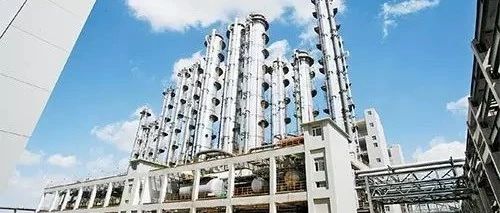
一文读懂:不同行业对石英砂的多元需求与应用全景
中国有色金属工业协会硅业分会· 2025-07-22 05:34
Core Viewpoint - The article discusses the various applications and requirements of quartz sand in different industries, highlighting the significance of SiO2 content and the impact of raw material availability on supply and demand dynamics. Group 1: Quartz Sand Composition and Requirements - Different industries have varying requirements for the composition, granularity, and sphericity of quartz sand, with SiO2 content above 99.99% primarily used in high-purity quartz glass and silicon micro-powder, necessitating strict impurity limits [1] - Quartz sand with SiO2 content between 99.9% and 99.99% is used in high-end silicon micro-powder and photovoltaic glass, with supply currently in a "tight balance" state [1] - Quartz sand with SiO2 content below 99.9% is utilized in bulk applications such as flat glass and ceramics, where supply is currently abundant [1] Group 2: Types of Quartz Raw Materials - Various types of quartz raw materials include vein quartz, quartz sandstone, quartzite, natural quartz sand, and others, each with distinct characteristics and applications [5][6][7] - Vein quartz typically has a high SiO2 content exceeding 98% and is used for high-value products like high-end glass and silicon micro-powder [5] - Quartz sandstone, formed from weathered source rocks, generally has a SiO2 content above 90% and is widely used in glass and ceramics [6] - Natural quartz sand has a SiO2 content greater than 90% and is primarily used in metallurgy and ceramics [7] Group 3: Applications of Quartz in Various Industries - The glass industry is the largest consumer of quartz resources, with significant applications in construction, automotive, and medical fields, consuming approximately 3,406 million tons of quartz sand in 2021 [10][11] - The casting sand sector is the second-largest consumer, with an annual consumption of about 3,300 million tons, primarily sourced from quartz sandstone and natural quartz sand [13] - Industrial silicon, produced from quartz and carbon reductants, is crucial for downstream industries like photovoltaics and semiconductors, with a production of 261 million tons in 2021 [14] - Silicon micro-powder, derived from quartz, is widely used in electronics and construction, with a total production of 600,000 tons in 2021 [15] Group 4: High-Purity Quartz Applications - High-purity quartz is essential for high-tech products in industries such as semiconductors and photovoltaics, with applications including quartz crucibles and optical instruments [20][21] - In the photovoltaic sector, high-purity quartz is used to produce quartz crucibles for multi-crystalline silicon, which are critical for high-temperature processes [21][23] - The fiber optic industry relies on quartz glass as a fundamental material for fiber optic preform production, which is vital for communication networks [24]
【安泰科】高纯石英砂/石英坩埚价格(2025年7月22日)
中国有色金属工业协会硅业分会· 2025-07-22 05:34
Core Viewpoint - The article discusses the developments and trends in the silicon industry in China, highlighting the growth potential and strategic importance of the sector in the global market [1][2]. Group 1: Industry Overview - The silicon industry in China is experiencing significant growth, driven by increasing demand for silicon products in various applications, including electronics and renewable energy [1]. - The Chinese government is actively supporting the silicon industry through policies and initiatives aimed at enhancing production capabilities and technological advancements [1]. Group 2: Market Dynamics - The global silicon market is projected to expand, with China playing a crucial role as a leading producer and exporter of silicon materials [1]. - There is a notable increase in investment in silicon production facilities, reflecting the industry's potential for high returns and strategic importance in the supply chain [1].
【安泰科】光伏玻璃价格(2025年7月22日)
中国有色金属工业协会硅业分会· 2025-07-22 05:34
『 主办单位 : 中 国 有 色 金 属 工 业 协 会 硅 业 分 会 了 ㄴ Hosted by: Silicon Industry of China Nonferrous Metals Industry Association – 回国確心 China Silicon Industry ...

工信部:钢铁、有色、石化等十大重点行业稳增长工作方案即将出台
中国有色金属工业协会硅业分会· 2025-07-21 01:35
Core Viewpoint - The Ministry of Industry and Information Technology (MIIT) is focusing on stabilizing growth in key industries, promoting digital transformation, and enhancing the integration of technology and industry to drive economic development. Group 1: Industry Growth Plans - The MIIT is set to release growth stabilization plans for ten key industries, including steel, non-ferrous metals, petrochemicals, and building materials, emphasizing structural adjustments and the elimination of outdated production capacity [1] - Recent announcements indicate that growth stabilization plans for machinery, automotive, and power equipment industries will also be issued soon, aimed at enhancing quality supply capabilities and optimizing the industry development environment [5] Group 2: Digital Transformation and AI Integration - Over 100 AI-enabled devices, such as AI smartphones, computers, and glasses, have emerged, contributing to new economic growth points [2] - The digital industry achieved a business revenue growth of 9.3% year-on-year in the first half of the year, an increase of 3.4 percentage points compared to the same period last year [6] - The MIIT plans to issue digital transformation implementation plans for industries like textiles, light industry, food, and pharmaceuticals, focusing on 82 typical scenarios for intelligent transformation [7] Group 3: Technological Innovation and Future Industries - The MIIT is promoting the collaborative empowerment of industrial internet and artificial intelligence, while accelerating the research and development of 6G technology [4] - The ministry aims to foster high-level digital transformation service providers and encourage enterprises to shift towards a "product + service" model [9] - Future industries such as humanoid robots, the metaverse, and brain-computer interfaces are being prioritized for innovation and development [12] Group 4: Support for SMEs - The MIIT will conduct special actions to address the issue of overdue payments to small and medium-sized enterprises (SMEs), aiming to alleviate their financial burdens [10] - Plans are underway to establish the second phase of the National SME Development Fund to attract more social capital for long-term investments in hard technology [15] Group 5: Quality Development and Standards - The MIIT is committed to implementing high-quality development plans for the copper, aluminum, and gold industries, focusing on effective supply and demand coordination [14] - The ministry will accelerate the establishment of a digital transformation standard system to promote high-quality standards for new technologies and products [9]

开工低位压减库存 多措并举缺一不可----2025年上半年多晶硅市场概况
中国有色金属工业协会硅业分会· 2025-07-18 03:04
Core Viewpoint - The silicon industry is facing significant challenges in 2025, with prices consistently below production costs, leading to widespread losses among producers. Group 1: Market Prices and Production Costs - In the first half of 2025, the average price of polysilicon dropped to 38,000 yuan per ton, below the industry average cost for over 14 months [1] - Industrial silicon prices fell to 9,648 yuan per ton by the end of April 2025, remaining below average costs for nearly 3 months [1] - The average price of 182mm silicon wafers decreased to 0.95 yuan per piece, with cost overruns lasting over 2 months [1] Group 2: Production and Operational Rates - To address supply-demand imbalances, companies reduced production, resulting in historical lows for monthly operating rates: 41.9% for industrial silicon, 38.6% for polysilicon, and 44.3% for silicon wafers [1] - The average monthly production of polysilicon in the first half of 2025 was 100,000 tons, with a significant drop to 92,000 tons in February, a year-on-year decrease of 47.4% [1] - The overall operating rate of the top five polysilicon producers was 42.2%, with the lowest at 24.1% [1] Group 3: Inventory and Supply-Demand Dynamics - Prior to 2023, polysilicon inventory was maintained at around 2 weeks of production, but by the end of 2023, inventory accumulated to 63,000 tons due to supply surplus [3] - By the end of 2024, total inventory reached a historical high of 398,000 tons, with a year-on-year increase of 335,000 tons [3] - In the first half of 2025, domestic polysilicon production was approximately 597,000 tons, a year-on-year decrease of 44.0%, with a slight inventory reduction of 31,000 tons by the end of June [3] Group 4: Price Trends and Market Adjustments - Polysilicon prices showed a "stable then declining" trend in the first half of 2025, with an average price of 36,800 yuan per ton, down 28.8% year-on-year [7] - From January to mid-April, prices increased slightly by 2.7% but fell by 17.5% from late April to the end of June [7] - The global demand for polysilicon in 2025 is projected at 1.4 million tons, with domestic demand around 1.3 million tons [8] Group 5: Industry Restructuring and Future Outlook - The polysilicon industry is undergoing significant adjustments and restructuring, with government interventions aimed at stabilizing prices and production [8][10] - Measures include capacity mergers, performance standards, and efforts to avoid excessive competition that leads to price declines [10] - The industry is expected to face ongoing challenges, but with coordinated efforts, a more balanced market may emerge [10]