
硅微粉

Search documents
【雅克科技(002409.SZ)】战略投资赋能双轮驱动,受益存储芯片高景气周期——跟踪点评(赵乃迪/蔡嘉豪)
光大证券研究· 2026-03-07 00:03
Core Viewpoint - The company is entering a new growth cycle driven by strategic investments and the AI-driven semiconductor industry, which is reshaping the market landscape and enhancing domestic alternatives in key sectors [4][5][6]. Group 1: Strategic Investment and Growth - The company announced a capital increase of 925 million RMB for its wholly-owned subsidiary Chengdu Kemeite Special Gas Co., Ltd. to support its strategic planning and operational development [4]. - The strategic investment from Gongrong Jintou and Xingyin Financial Asset Investment will enhance the company's capacity expansion and technological upgrades, positioning it to seize opportunities in the industry transformation [6]. Group 2: Semiconductor Industry Dynamics - The semiconductor industry is entering a new AI-driven cycle, with significant demand growth across consumer, enterprise, and industrial sectors, particularly in AI PCs, servers, and smart driving [5][7]. - Global AI server shipments are expected to grow over 80% year-on-year in 2024, with the semiconductor market projected to exceed 1 trillion USD by 2030, nearly doubling from 2023 [7][8]. Group 3: Domestic Alternatives and Market Position - The company has established a strong presence in semiconductor materials, covering critical manufacturing processes, with its precursor purity reaching 99.99999% (7N level) and an 18% market share in global HBM precursor supply [8]. - The company is positioned as a key supplier for major domestic wafer fabs, including SMIC and Yangtze Memory Technologies, indicating a successful domestic alternative strategy [8]. Group 4: LNG Market Growth - The global LNG insulation board market is projected to grow from approximately 1.507 billion USD in 2025 to 16.82 billion USD by 2032, with a CAGR of 40.8% from 2026 to 2032 [9]. - The company is experiencing strong demand in its LNG board business, with completed GTT certification for multiple products, enhancing its profitability amid rising LNG import volumes driven by carbon neutrality policies [9].



中银证券研究部2026年3月金股
Bank of China Securities· 2026-03-01 10:42
Core Insights - The report emphasizes that the A-share market is experiencing short-term volatility while focusing on domestic fundamentals in the medium term, with resource commodities expected to perform well [4][2] - The geopolitical situation, particularly the military actions in the Middle East, is contributing to increased uncertainty in global markets, which is likely to support gold prices in the short term [4][2] - The upcoming National People's Congress (NPC) is a key focus for domestic investors, with macroeconomic policy releases expected to influence market sentiment [4][2] Real Estate Sector: Poly Real Estate Group - Poly Real Estate Group has improved its sales ranking to 12th in the industry as of January 2026, with a sales price of 25,000 yuan per square meter [8] - The company achieved sales of 3.7 billion yuan in January 2026, a year-on-year decline of 22.9%, which is better than the average decline of 24.7% among top 100 real estate companies [8] - The company’s sales area decreased by 6.8% year-on-year, while the average sales price fell by 16.5% [8] Transportation Sector: CITIC Offshore Helicopter - CITIC Offshore Helicopter is a leading player in China's general aviation sector, operating the largest civil helicopter fleet in Asia [13] - The company has a strong operational capacity with 84 advanced helicopters and has established a significant presence in various operational areas, including offshore oil and emergency rescue [13] - The company has secured a three-year strategic cooperation agreement with CNOOC, solidifying its position in the offshore oil service market [14] Transportation Sector: China Merchants Energy Shipping - China Merchants Energy Shipping reported stable growth in 2024, with a slight decrease in revenue but a 5.59% increase in net profit [16] - The company’s fourth-quarter performance showed a significant increase in revenue and net profit, driven by a rise in container shipping volumes [16] - The outlook for 2025 suggests a tightening supply-demand balance in the oil tanker market, which may lead to improved profitability [18] Chemical Sector: Zhejiang Longsheng - Zhejiang Longsheng experienced a 6.47% decline in revenue in the first half of 2025, with a slight increase in dye business gross margin [19] - The company is focusing on cost reduction and efficiency improvements to navigate the challenges posed by industry capacity releases and tariff impacts [20] - The company maintains a strong market position in the dye and additive sectors, with ongoing developments in its real estate business [21] Chemical Sector: Yake Technology - Yake Technology reported steady revenue growth driven by LNG and electronic materials, although net profit growth lagged behind revenue due to increased exchange losses and R&D expenses [22] - The company is actively developing advanced materials for semiconductor applications, with significant revenue contributions from its electronic materials segment [23] New Energy Sector: Tianci Materials - Tianci Materials reported a significant decline in 2024 earnings, but a recovery is anticipated in Q1 2025 with a 30.80% increase in revenue [26] - The company is facing challenges in its lithium-ion battery materials business, while its daily chemical materials segment remains stable [27] Medical Sector: Mindray Medical - Mindray Medical's performance in the first half of 2025 was under pressure, but a recovery is expected in Q3 as medical equipment bidding activities improve [28] - The company is expanding its international business, with international sales accounting for about 50% of total revenue [29] - Mindray is leveraging AI technology to enhance its medical services, positioning itself for future growth opportunities [30] Food and Beverage Sector: Baba Food - Baba Food is a leading brand in Chinese-style frozen foods, with a revenue increase of 12.1% in the first three quarters of 2025 [31] - The company is optimizing its store operations and expanding its franchise model, with positive feedback on new store formats [32] - The group meal business has shown strong growth, contributing to the company's second growth curve [33] Food and Beverage Sector: Yihai International - Yihai International is expanding its market presence by developing B-end customers and exploring overseas markets [34] - The company is focusing on enhancing its supply chain capabilities and increasing its market share in Southeast Asia [34] Consumer Services Sector: China Duty Free Group - China Duty Free Group is acquiring DFS's Greater China tourism retail business to strengthen its market position in Hong Kong and Macau [35] - The company is also partnering with LVMH to enhance its brand and supply chain advantages [36] Computer Sector: Ninebot - Ninebot is focusing on innovation in short-distance transportation and service robots, with a diverse product line [37] - The company is experiencing rapid growth in overseas markets, particularly in Europe and the US, driven by strong demand for electric scooters and e-bikes [37]


AI的下一战:高端PCB材料,一个千亿级的国产替代新战场(附60页PPT与解读、投资逻辑)
材料汇· 2026-02-21 10:03
Group 1 - AI applications are driving the PCB industry towards a growth cycle, with expectations for both volume and price increases. The demand for HDI and 18+ layer boards is expected to grow significantly due to the rise in AI servers and 5G applications, with global market value CAGR predictions of 6.4% and 15.7% respectively from 2024 to 2029 [3][40]. - Copper-clad laminates (CCL) are identified as the core substrate for PCBs, accounting for approximately 27% of PCB cost structure. Key raw materials include copper foil, resin, and fiberglass cloth, with a shift towards high-frequency and high-speed CCLs driven by AI and 5G applications [4][9]. - The demand for electronic resins is evolving, with a focus on high-performance types such as PTFE, PPO, and hydrocarbon resins. These materials are crucial for meeting the high-frequency and high-speed requirements of modern PCBs, with domestic manufacturers making strides in replacing imported materials [4][9][149]. - The use of high-performance silicon micro-powder is rapidly increasing, driven by the performance upgrades of downstream devices and the growing application of AI servers. The demand for silicon micro-powder in China is projected to reach 473,000 tons by 2025, reflecting a year-on-year growth of 13.2% [4][156]. Group 2 - The global PCB market is projected to recover from a downturn in 2023, with a growth rate of 5.8% in 2024 and a sustained CAGR of 5.2% through 2029, indicating that new AI-driven demands are creating a new growth curve rather than merely a cyclical recovery [23][24]. - China is the largest PCB manufacturing base globally, accounting for 56% of the market value. This proximity to customers enhances supply chain security and responsiveness, positioning domestic material companies favorably for growth [24][21]. - The shift towards high-end PCBs is evident, with a decline in single/double-sided boards and an increase in HDI and packaging substrates. This trend highlights the growing demand for advanced packaging technologies, which require high-performance materials [29][30]. - The demand for high-frequency and high-speed CCLs is expected to grow significantly, with the market size projected to reach approximately $2.8 billion. This segment, while a smaller part of the overall CCL market, is characterized by faster growth and higher profit margins [87][89].
成都汇阳投资关于AI发展驱动PCB升级,上游材料迎发展良机
Quan Jing Wang· 2026-02-12 02:41
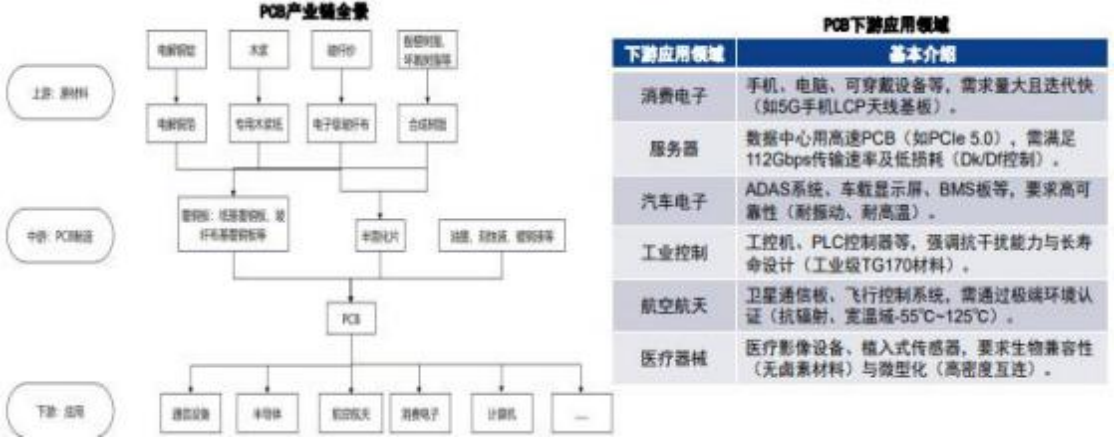
Industry Overview - The PCB industry is expected to expand significantly, driven by the development of AI technology and the demand from the electric vehicle sector, with a projected global market size of $96.8 billion by 2025 [1] - The industry is evolving towards high-density, small aperture, large capacity, and lightweight designs, leading to increased requirements for core materials such as copper-clad laminates and high-frequency, high-speed materials [1] Material Upgrades - The demand for high-end copper-clad laminates is increasing, with HVLP copper foil expected to become mainstream; foreign companies like Mitsui Metals dominate the high-end copper foil market, while domestic firms are gradually entering the supply chain [3] - Electronic fabrics are becoming thinner and lighter, with a positive outlook for Q fabric upgrades, where Japanese companies currently lead the high-end electronic fabric market, and domestic enterprises are increasing their investments [3] - The performance of copper-clad laminates is primarily determined by the resin formulation, with a shift from epoxy resins to advanced materials such as bismaleimide resins, cyanate esters, polyphenylene ether, hydrocarbon resins, and polytetrafluoroethylene [3] Specialized Products - The upgrade in PCB technology is driving the iteration of silicon micro-powder products, with spherical silicon micro-powder better meeting high-end demands; the market size for silicon micro-powder in China is projected to reach 1.73 billion yuan by 2024, with a demand of 418,000 tons, and the high-performance spherical silicon micro-powder market is expected to be 852 million yuan, accounting for 49.22% [5] - The market for PCB-specific chemicals is expected to expand alongside PCB development, with foreign companies currently leading the market while domestic firms are accelerating their catch-up efforts [5] Key Companies in the Industry - **Shengyi Technology**: A leading domestic manufacturer of copper-clad laminates, holding a significant global market share and excelling in high-frequency and high-speed material development [6] - **Huazheng New Materials**: A prominent domestic player with strong competitiveness in high-speed substrates and metal substrates [7] - **Jia Yuan Technology**: One of the leading domestic companies in the copper foil sector, focusing on high-end PCB copper foil [8] - **Zhongyi Technology**: Notable for significant breakthroughs in high-end copper foil technology and possessing deep technical reserves [9] - **China Jushi**: A global leader in the fiberglass industry, providing stable and high-quality raw materials for PCB upstream [9] - **Honghe Technology**: A global leader in mid-to-high-end electronic-grade fiberglass cloth, widely used in PCB manufacturing for AI servers and 5G base stations [10] - **Dongcai Technology**: The only producer of M9 grade hydrocarbon resin, breaking foreign monopolies and supplying to ShenNan Circuit, achieving domestic substitution in high-end resin [12]
未知机构:国瓷材料拟推股票激励计划坚定长期增长信心公司公告2026年限-20260211
未知机构· 2026-02-11 02:20
Summary of Company and Industry Insights Company: Guocera Materials Key Points - **Stock Incentive Plan Announcement**: Guocera Materials announced a restricted stock incentive plan for 2026, proposing to grant 5.7606 million shares, which represents 0.58% of the total share capital. The initial grant will consist of 5.49 million shares, accounting for 95.3% of the total rights granted, with 270,600 shares reserved, representing 4.7% of the total rights granted [1][1][1] - **Incentive Recipients and Pricing**: The initial grant will be awarded to 61 individuals at a price of 15.23 yuan per share [1][1][1] - **Performance Assessment Targets**: The performance assessment targets for the release of the stock restrictions are based on the non-recurring net profit for 2025. The growth rates for the non-recurring net profit attributable to the parent company are set at no less than 10% for 2026 and 32% for 2027 [1][1][1] - **Confidence in Long-term Growth**: The stock incentive plan reflects the company's strong confidence in the growth of its core business and the successful advancement of new products such as sulfide electrolytes and silica powder [1][1][1] Additional Insights - **Performance Targets as a Baseline**: It is anticipated that the performance assessment targets will only represent a "baseline" level, given the context of high-quality growth in the core business and the synergy among various product lines, including shell + solid-state electrolytes and silica powder [2][2][2]

代表委员热议持续打好优化营商环境组合拳助推高质量发展——精准招商提质效 聚力攻坚强产业
Xin Lang Cai Jing· 2026-02-01 02:48
Core Viewpoint - The provincial government emphasizes the need to promote stable growth in industrial and private investments, optimize the business environment, and attract significant projects to achieve effective outcomes [1][10]. Group 1: Investment and Project Development - The Kunming Pengruili Health City project has successfully integrated medical and elderly care services, attracting nearly 200 residents since its opening in December 2024, showcasing the efficiency of Yunnan's service in optimizing the business environment [1][2]. - The project includes a nursing home, rehabilitation hospital, and a comprehensive hospital, with various phases of operation scheduled from 2025 to 2026, demonstrating a well-supported project lifecycle [1][2]. Group 2: Industry Development Strategies - Da Guan County is focusing on precise investment attraction strategies, leveraging local resources such as bamboo, silicon, and aluminum to enhance industrial development [3][4]. - The bamboo industry in Da Guan County has seen significant growth, with a brand value of 1.507 billion yuan, supported by a model that integrates production bases, parks, and enterprises [3][4]. Group 3: Economic Performance - By 2025, Da Guan County is projected to have 23,097 business entities and a GDP exceeding 10.068 billion yuan, marking a significant improvement in provincial rankings [5][6]. - The local public budget revenue has tripled since 2020, reaching 376 million yuan, reflecting the positive impact of improved business conditions [5]. Group 4: Policy Recommendations - To attract quality projects, it is essential to create a stable and supportive ecosystem for businesses, including clear policies and efficient government services [7][8]. - Specific policies targeting key industries such as deep processing of agricultural products, green aluminum, and new energy batteries are recommended to enhance operational efficiency and reduce costs for enterprises [7][8]. Group 5: Business Environment Optimization - Continuous improvement of the business environment is crucial, with initiatives aimed at enhancing service efficiency and responsiveness to business needs [10][11]. - The government has implemented mechanisms for regular communication with enterprises to address challenges in labor, financing, and supply chains, fostering a supportive atmosphere for business growth [10][11].
华金证券:AI发展驱动PCB升级 上游材料迎发展良机
智通财经网· 2026-01-26 02:27
Core Viewpoint - The PCB market is experiencing growth and technological upgrades driven by AI servers and automotive electronics, with a shift towards high-density, lightweight, and high-frequency substrates [1][2]. Group 1: Market Growth and Trends - The PCB industry is expected to expand significantly, with a projected global market size of $96.8 billion by 2025, driven by increased demand from AI technology and electric vehicles [2]. - The trend in PCB development is moving towards high-density, small aperture, large capacity, and lightweight designs, necessitating higher performance materials for core substrates [2][3]. Group 2: Key Materials and Upgrades - The demand for high-end copper foil is increasing, with HVLP-type copper foil expected to become mainstream; foreign companies currently dominate this high-end market, while domestic firms are gradually entering the supply chain [3]. - Electronic fabrics are becoming thinner and lighter, with a positive outlook on the upgrade trend for Q fabrics, where Japanese companies currently lead, but domestic enterprises are increasing their investments [3]. - The performance characteristics of copper-clad laminates are primarily determined by the resin formulation, which is evolving from epoxy resins to more advanced systems such as bismaleimide, cyanate esters, polyphenylene ether, hydrocarbon resins, and polytetrafluoroethylene [3]. Group 3: Specialized Chemicals and Market Dynamics - The upgrade in PCB technology is driving the iteration of silicon micro-powder products, with the market for high-performance spherical silicon micro-powder expected to reach $0.852 billion by 2024, accounting for 49.22% of the total market [4]. - The market for PCB-specific chemicals is anticipated to expand alongside PCB development, with foreign companies currently leading, while domestic firms are accelerating their efforts to catch up [4]. Group 4: Investment Recommendations - Companies to watch in the copper foil sector include Copper Crown Copper Foil, Defu Technology, Nord Shares, Zhongyi Technology, and Longyang Electronics; in the electronic fabric sector, notable companies are Feilihua, Ping An Electric, Lite Optoelectronics, Quartz Shares, Honghe Technology, China National Materials, International Composites, China Jushi, Changhai Shares, Shandong Fiberglass, and Bofei Electric; in the resin sector, key players are Dongcai Technology, Shengquan Group, Tongyu New Materials, Shiming Technology, and Hongchang Electronics; in the silicon micro-powder sector, focus on Lianrui New Materials, Yake Technology, Guoci Materials, and Lingwei Technology; and in PCB chemicals, consider Guangxin Materials, Guanghua Technology, Sanfu New Science, Jiuri New Materials, and Yangfan New Materials [4].
基础化工行业深度报告:AI发展驱动PCB升级,上游材料迎发展良机
Huajin Securities· 2026-01-25 12:24
Investment Rating - The report maintains an "Outperform" rating for the industry [1]. Core Insights - The development of AI is driving upgrades in PCB technology, leading to increased demand for upstream materials. The global PCB market is expected to reach USD 96.8 billion by 2025 [3]. - The three main materials—copper foil, electronic cloth, and resin—are undergoing expansion and upgrades. High-end copper foil is becoming mainstream, with foreign companies dominating the high-end market while domestic firms gradually enter the supply chain [3]. - The market for silicon micro-powder is expected to grow, with high-performance spherical silicon micro-powder projected to reach a market size of RMB 850 million by 2024, accounting for 49.22% of the total market [3]. - Investment opportunities are highlighted in various segments, including copper foil (e.g., Tongguan Copper Foil, Defu Technology), electronic cloth (e.g., Feilihua, Ping An Electric), resin (e.g., Dongcai Technology), silicon micro-powder (e.g., Lianrui New Materials), and PCB chemicals (e.g., Guangxin Materials) [3]. Summary by Sections AI-Driven PCB Upgrades - The PCB industry is experiencing significant growth due to AI technology and the rise of electric vehicles, with a notable increase in demand for AI servers and automotive electronics [3]. - The trend towards high-density, small aperture, large capacity, and lightweight PCBs is evident, necessitating higher performance from upstream materials [3]. Expansion of Three Main Materials - High-end copper foil demand is on the rise, with HVLP-type copper foil expected to become the mainstream product. Foreign companies currently dominate this segment [3]. - Electronic cloth is becoming thinner and lighter, with domestic companies increasing their investments in high-end electronic cloth [3]. - The performance of copper-clad laminates is largely determined by the resin formulation, with a shift from epoxy resin to more advanced materials [3]. High-End Silicon Micro-Powder and Specialty Chemicals - The upgrade of PCBs is driving the iteration of silicon micro-powder products, with a focus on spherical silicon micro-powder to meet high-end demands [3]. - The market for PCB specialty chemicals is expanding, with foreign companies currently leading while domestic firms accelerate their development [3]. Investment Recommendations - The report suggests focusing on companies involved in copper foil, electronic cloth, resin, silicon micro-powder, and PCB chemicals, highlighting specific firms in each category [3].
AI发展驱动PCB升级,上游材料迎发展良机
Huajin Securities· 2026-01-25 12:10
Investment Rating - The report maintains an "Outperform" rating for the industry [1]. Core Insights - The development of AI is driving upgrades in PCB technology, leading to increased demand for upstream materials. The global PCB market is expected to reach USD 96.8 billion by 2025 [3]. - The three main materials—copper foil, electronic cloth, and resin—are undergoing expansion and upgrades, with high-end copper foil becoming mainstream [3]. - The market for silicon micro-powder is expected to grow, with high-performance spherical silicon micro-powder projected to reach a market size of RMB 850 million by 2024, accounting for 49.22% of the total demand [3]. - Investment opportunities are highlighted in various sectors, including copper foil, electronic cloth, resin, silicon micro-powder, and PCB chemicals [3]. Summary by Sections AI-Driven PCB Upgrades - PCB is essential in modern electronic products, with significant demand growth driven by AI technology and electric vehicles. The industry is expected to expand further [3][30]. - The trend towards high-density, small aperture, large capacity, and lightweight PCBs is evident, necessitating higher quality upstream materials [3]. Main Materials Expansion - High-end copper foil demand is increasing, with foreign companies dominating the high-end market while domestic firms are gradually entering the supply chain [3]. - Electronic cloth is becoming thinner and lighter, with domestic companies increasing their investments [3]. - The resin market is evolving from epoxy resin to more advanced materials, enhancing the performance of copper-clad laminates [3]. Silicon Micro-Powder and Specialty Chemicals - The upgrade of PCBs is driving the iteration of silicon micro-powder products, with a notable market for high-performance spherical silicon micro-powder [3]. - The market for PCB specialty chemicals is expanding, with foreign companies currently leading but domestic firms accelerating their development [3]. Investment Recommendations - The report suggests focusing on companies in various segments: - Copper Foil: Copper Crown, Defu Technology, Nord Shares, Zhongyi Technology, Longyang Electronics - Electronic Cloth: Feili Hua, Ping An Electric, Lite Optoelectronics, Quartz Shares, Honghe Technology, China National Materials, International Composites, China Jushi, Changhai Shares, Shandong Fiberglass, Bofei Electric - Resin: Dongcai Technology, Shengquan Group, Tongyu New Materials, Shiming Technology, Hongchang Electronics - Silicon Micro-Powder: Lianrui New Materials, Yake Technology, Guoci Materials, Lingwei Technology - PCB Chemicals: Guangxin Materials, Guanghua Technology, Sanfu New Materials, Jiuri New Materials, Yangfan New Materials [3].
工银AIC联合兴银AIC 推动上市公司市场化债转股项目在无锡落地
Zhong Guo Jin Rong Xin Xi Wang· 2026-01-07 22:22
Group 1 - The core investment involves a total of 925 million yuan, with ICBC Investment contributing 725 million yuan and Xingyin Investment contributing 200 million yuan, aimed at supporting the semiconductor materials sector [1] - The investment targets Chengdu Kemeite Special Gas Co., Ltd., a core subsidiary of Yake Technology, to enhance its capacity expansion and technological upgrades [1] - Yake Technology has established itself as a leading platform in the new materials sector in China, covering high-barrier areas such as semiconductor precursors, photoresists, electronic special gases, silicon micropowder, and LNG composite materials [1] Group 2 - The collaboration between ICBC Investment and Xingyin Investment exemplifies the role of state-owned banks in empowering the real economy and highlights the achievements of joint investment strategies in supporting high-quality development of emerging industries [2] - This partnership is the first investment signed by a financial asset investment company of a joint-stock bank in Jiangsu Province, showcasing the integration of finance and industry [2] - Future efforts will focus on the "465" modern industrial cluster construction, providing comprehensive financial services to technology-driven enterprises and fostering the development of new productive forces in Wuxi [2]