创业邦

Search documents
AI热潮带飞马桶厂?不起眼的日企,控制了芯片命脉
创业邦· 2026-02-06 00:08
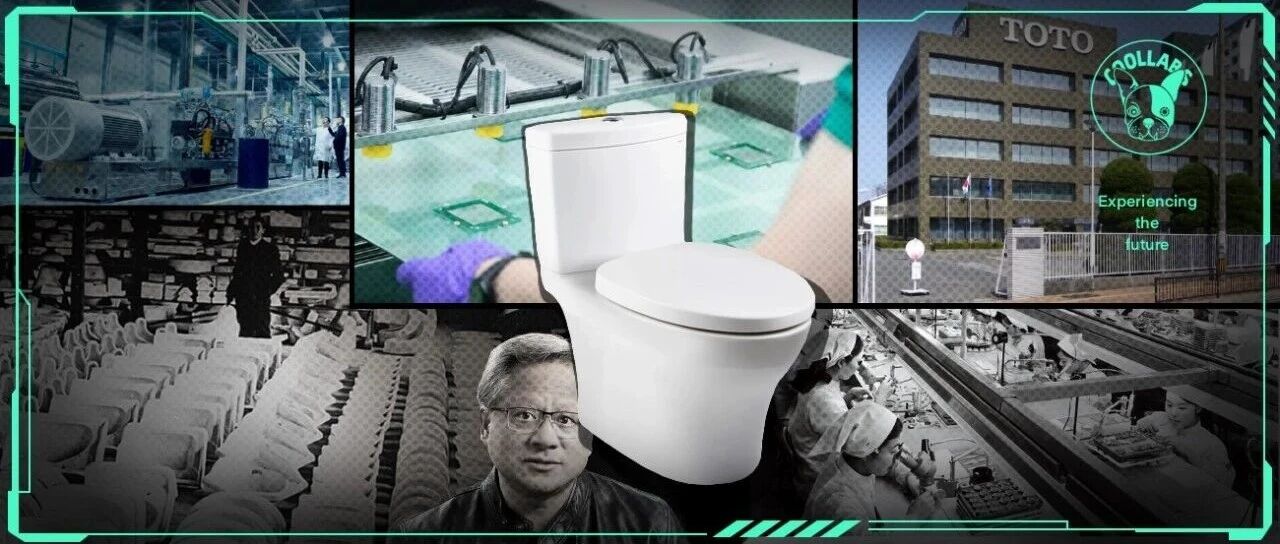
Core Viewpoint - The article discusses how traditional companies, such as TOTO, have successfully transitioned into the semiconductor industry by leveraging their existing technologies and expertise, particularly in ceramics, to meet the growing demands of the AI and semiconductor markets [6][19]. Group 1: TOTO's Transformation - TOTO, a Japanese bathroom products company, saw its stock price surge by 11% due to its involvement in the semiconductor industry, despite its primary business being unrelated to AI [8]. - The company's success is attributed to its expertise in producing high-density, low-porosity ceramics, which are essential for semiconductor manufacturing processes [11][12]. - TOTO's pivot to semiconductor precision ceramics has become a significant growth engine, contributing 42% of its revenue with a profit margin of 40%, far exceeding the average of 7% across all departments [19]. Group 2: Broader Industry Trends - The semiconductor industry is increasingly adopting electrostatic chucks, which TOTO has developed, due to their ability to provide uniform force and reduce contamination risks during wafer processing [12][17]. - Other traditional Japanese companies, such as Ajinomoto and Kao, have also successfully transitioned into the semiconductor sector by utilizing their existing technologies to create essential materials for chip manufacturing [22][30]. - The article highlights that Japan's historical industrial strength and technological reserves have allowed these companies to adapt and thrive in the semiconductor market, even as their traditional businesses face challenges [34][37]. Group 3: China's Potential - The article suggests that China's industrial sectors are beginning to mature, with companies like Xingfa Group and Huitian New Materials emerging as players in the semiconductor supply chain by developing high-purity materials and specialized adhesives [39][43]. - The narrative emphasizes that China's industrial development, although historically delayed, is now gaining momentum, and the accumulated technological expertise will eventually lead to significant advancements in the semiconductor industry [49].


贾跃亭“造人”上热搜,机器人1.7万开卖,已拿下1211台订单
创业邦· 2026-02-05 10:18
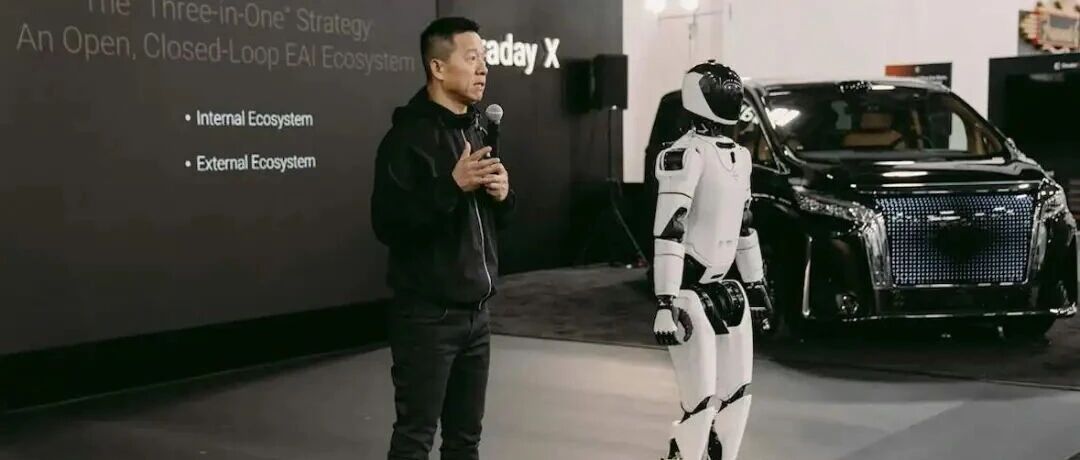
Core Viewpoint - Faraday Future, led by Jia Yueting, has launched four series of embodied AI robots, marking a significant shift from automotive to robotics, with a focus on practical applications and affordability [4][6][24]. Product Launch - The robots include the Futurist, Master, Aegis, and a robotic arm series, with a total of 1,211 paid pre-orders received immediately after the launch [6][8]. - The pricing ranges from $2,499 to $34,990, targeting various market segments [8][10]. Product Specifications - The Futurist series is designed for complex professional environments, priced from $34,990, featuring advanced capabilities such as 200 TOPS computing power and multiple sensors for environmental interaction [10][12]. - The Master series focuses on athletic performance, starting at $19,990, with 30 degrees of freedom and high precision for interactive tasks [12][14]. - The Aegis series, starting at $2,499, is aimed at security and companionship, offering a more accessible entry point into the robotics market [14][18]. Strategic Vision - Jia Yueting emphasized a "three-in-one" ecological strategy, integrating terminal products, an open-source platform, and data factories to create a closed-loop ecosystem that enhances product capabilities and drives sales [20][22]. - The EAI 5x4 technology architecture aims to establish a universal autonomous capability across various scenarios, promoting the widespread adoption of embodied AI robots [18][20]. Financial Backing - Prior to the robot launch, Faraday Future secured a $10 million investment, providing crucial financial support for its new direction in robotics [22][24]. - The company is transitioning from a traditional sales model to a subscription-based revenue model, enhancing profitability and user engagement [20][22].

都是茶饮出海,为什么只有蜜雪赚到钱?
创业邦· 2026-02-05 10:18
以下文章来源于霞光社 ,作者唐飞 编辑丨李小天 图源丨蜜雪冰城官网 "在时代广场,花星巴克一半的价钱就能买到一杯奶茶。" 一个月前,在纽约读书的留学生们惊喜地发现,来自中国的蜜雪冰城在这里开业了。令人惊讶的不是 门店本身,而是它的价格——1美元的冰淇淋、2-3美元的奶茶。这意味着只要花星巴克大杯拿铁 霞光社 . 赋能企业全球化 来源丨 霞光社(ID:Globalinsights) 作者丨 唐飞 (约5.8美元)一半的价钱,就能喝到一杯热乎的奶茶。 同样的价格标签也在悉尼、首尔、东京等全球多地出现,换算下来,这个价格只比蜜雪冰城国内价格 略高一点。 根据最新财报,蜜雪冰城海外业务已成为其增长最快的部分,2025上半年海外净增128家门店,整体 海外门店数来到4733家。 相比之下,同样积极出海的茶饮品牌还有喜茶、茶百道和霸王茶姬,海外门店主要也多位于大型城市 的城市核心地段,但却在财报中难觅可观的海外利润数据。 血糖乱不乱,雪王说了算 12月20日,蜜雪冰城洛杉矶好莱坞店正式营业,该店位于星光大道"中国剧院"正对面,所在商圈消 费成熟。5天后,蜜雪冰城在美国纽约再开两店。 蜜雪冰城在美国的开店思路延续品牌"高质 ...

拿下餐饮年度最大融资,门店超过1万家,咖啡界迎来新变局
创业邦· 2026-02-05 10:18
Core Viewpoint - Nova Coffee has successfully completed a significant C-round financing, raising several hundred million yuan, marking the largest financing in China's restaurant industry over the past year. The company aims to expand its store count from over 1,200 at the end of 2024 to more than 10,000 by the end of 2025, with a peak of 1,800 new stores opened in a single month [5][7]. Group 1: Business Model and Growth Strategy - Nova Coffee employs a "store-in-store" model, partnering with existing cafes and restaurants to minimize capital expenditure while rapidly expanding its presence in the market [8][10]. - The company has achieved significant sales through its partnerships, generating substantial cash flow, but faces challenges in maintaining quality and stability due to reliance on external partners [10][12]. - To attract investment, Nova has opened over ten direct-operated stores and started a franchise model, slowing down the growth of its store-in-store strategy [10][11]. Group 2: Market Positioning and Differentiation - Nova Coffee initially competed on price but shifted to a differentiation strategy focusing on health-conscious products, launching low-sugar and low-fat coffee options to establish a unique brand identity [15][16]. - The company aims to position itself as a provider of "delicious coffee without the guilt," targeting health-conscious consumers who are concerned about sugar and fat content [15][19]. Group 3: Supply Chain and Operational Efficiency - Nova Coffee has invested in its supply chain by establishing a coffee plantation in Yunnan and securing production facilities in Africa, enhancing its control over raw materials and production quality [19][21]. - The company plans to optimize its supply chain further by building automated roasting facilities and distribution centers, which are expected to improve product quality by 30% and reduce costs [19][21]. Group 4: Competitive Landscape and Future Challenges - Despite achieving its goal of 10,000 stores, Nova Coffee's reliance on the store-in-store model raises concerns about its long-term competitive advantage, as it may struggle to maintain product quality and brand integrity [21][23]. - The company faces intense competition from established players like Luckin Coffee and Kudi, which have significantly more stores and resources, highlighting the need for Nova to strengthen its brand and operational capabilities [21][23].
智己汽车联席CEO刘涛向特斯拉道歉;零跑汽车高管回应2026年目标:“105万台,多一台算我输”丨汽车交通日报
创业邦· 2026-02-05 10:18
Group 1 - BMW plans to launch nearly 20 new or updated models in the Chinese market by 2026, including the new generation BMW iX3 long-wheelbase version, which will be officially unveiled at the Beijing Auto Show in 2026 and is expected to be launched in the second half of this year [2] - Leap Motor's COO Xu Junbo stated that the company's target for 2026 is to sell 1.05 million vehicles, emphasizing a focus on efficiency and stability rather than chasing explosive growth [2] - IM Motors' co-CEO Liu Tao publicly apologized to Tesla for previous comments regarding a traffic accident, clarifying that the accident was not caused by Tesla's brake failure, thus correcting his earlier statements [2] - Xiaomi's founder Lei Jun announced that the new generation SU7 is expected to launch in April 2026, with pre-orders already open, highlighting significant upgrades in driving experience and control systems [2] - Xiaopeng Motors officially unveiled its first six-seat SUV, the Xiaopeng GX, which is built on the SEPA 3.0 architecture, claiming to resolve long-standing issues in six-seat SUVs [2]



47岁顺德女老板卖咖啡机,年入5亿,冲刺IPO
创业邦· 2026-02-05 03:08
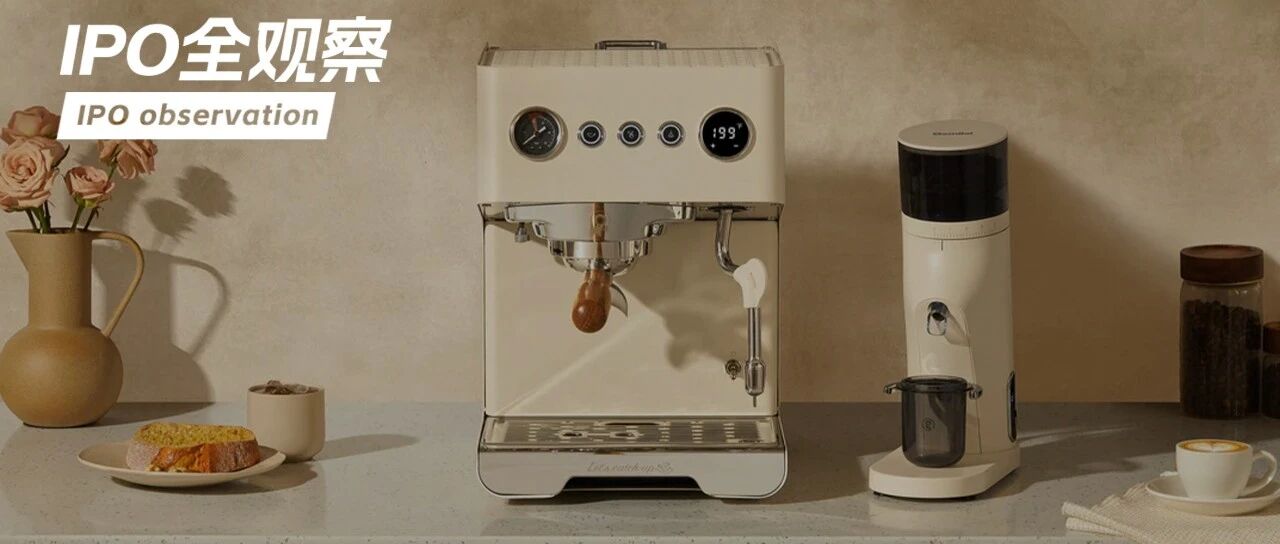
Core Viewpoint - Gemilai has transformed from an OEM manufacturer to a leading domestic coffee machine brand in China, capturing significant market share and demonstrating strong growth potential in the coffee machine industry [3][10][20]. Company Overview - Gemilai has become the second-largest coffee machine brand in China by revenue, with a market share of 7.5% in 2024, and leads the domestic brands with a 27.9% share in the higher-end semi-automatic espresso machine segment [3][10]. - The company has expanded its distribution to over 60 countries and regions, with cumulative sales reaching 2 million units [3]. Historical Development - The company was founded in 2011, evolving from a contract manufacturer to a brand focused on home coffee machines, with its first product featuring a commercial extraction system [5][6]. - Gemilai's growth reflects the broader trend of domestic coffee machine brands rising against European competitors, particularly in the context of increasing local manufacturing capabilities [5][20]. Financial Performance - Gemilai's revenue surged from 307.68 million RMB in 2023 to 497.55 million RMB in 2024, marking a year-on-year increase of 61.7% [10][12]. - The company's net profit has also increased, reaching 22 million RMB in 2023, 40 million RMB in 2024, and 54 million RMB in the first nine months of 2025 [15]. Revenue Structure - The self-owned brand business has become the core growth engine, with revenue rising from 213 million RMB in 2023 to 410 million RMB in 2024, accounting for 82.4% of total revenue [12]. - The product mix includes home espresso machines, dual-use machines, commercial machines, and grinders, with home machines contributing the largest share of revenue [7][12]. Market Positioning - Gemilai targets the mid-range to high-end market, competing against both domestic and European brands, with a focus on quality and performance [17][18]. - The company faces competition from brands like De'Longhi, which holds a 28.9% market share, and other domestic brands that target lower price segments [17][18]. Industry Growth Potential - China's coffee machine market is expected to grow at an annual rate of 18.7% from 2024 to 2029, driven by low per capita coffee consumption compared to Europe and Korea [19]. - The domestic market remains the primary focus for Gemilai, contributing approximately 80% of its revenue [19]. Future Outlook - The company plans to use funds from its potential IPO for digital upgrades, R&D investments, global marketing, and channel expansion, which will further solidify its market position [20].
谷子上市潮,重点看什么?
创业邦· 2026-02-05 03:08
Core Viewpoint - The article discusses the rise of the "Guzi Economy" in China, particularly focusing on the booming market for collectible toys and related IP products, highlighting the importance of IP in driving growth and competition in this sector [5][7][19]. Group 1: Market Overview - The "Guzi Economy" refers to the market for IP-related products, including toys, comics, and games, which has gained significant traction among young consumers, largely unaffected by macroeconomic conditions [7][19]. - The market size for the Guzi Economy is projected to grow from approximately 1.7 trillion yuan in 2024 to over 2.4 trillion yuan in 2025, and is expected to exceed 3 trillion yuan by 2027 [13][19]. - The number of active users in the broader two-dimensional market is expected to surpass 350 million by 2025, with over 12 million consumers specifically interested in Guzi products [13][19]. Group 2: Key Players and IPOs - Several companies are preparing for IPOs in the Guzi Economy, including 52TOYS, which is closely modeled after Pop Mart, and has received strategic investment from Wanda Film [8][10]. - Other notable companies include Copper Master, which has received investment from Lei Jun, and TOP TOY, a brand spun off from Miniso, which is also pursuing an IPO [10][11]. - The rapid pace of IPOs reflects the growing interest and investment in the Guzi Economy, with companies like 52TOYS and Suplay aiming to capture market share in the collectible toy segment [10][11]. Group 3: Importance of IP - The core of the competitive landscape in the Guzi Economy is the ownership and development of IP, which is essential for driving sales and brand loyalty [19][25]. - Companies like Pop Mart and Card Game have successfully leveraged popular IPs such as Ultraman and My Little Pony to fuel their growth, while also developing their own IPs [19][25]. - The reliance on external IP poses risks, as companies must navigate licensing costs and the potential expiration of IP rights, making the cultivation of proprietary IP increasingly important [25][26]. Group 4: Future Outlook - Upcoming financial reports from major players like Pop Mart and Bluko will be critical in shaping market expectations and investor confidence in the Guzi Economy [29]. - The ability of these companies to maintain the influence of their existing IPs and develop new ones will be pivotal for their continued success and market valuation [29].


AI“外包”谷歌之后,华人天才抛弃苹果?
创业邦· 2026-02-05 03:08
以下文章来源于字母AI ,作者小金牙 字母AI . 聚焦前沿科技,抢先看到未来。 来源丨字母AI( faceaibang ) 编辑丨王婧 图源丨Midjourney 苹果的AI团队一口气走了四位华人骨干,损失惨重。 他们分别是: · 王子瑞(Zirui Wang),基础模型团队后训练负责人,去了谷歌DeepMind; · 杨寅飞(Yinfei Yang),首席研究科学家,创业; · 游昊轩(Haoxuan You),高级研究科学家,加入Meta超级智能实验室; · 王柏林(Bailin Wang),研究科学家,加入Meta推荐算法团队。 作者丨小金牙 四个人里有两个都选择了Meta,怕也不是巧合,毕竟去年7月苹果基础模型团队率先损失的一员大 将,正是团队负责人庞若鸣,他正是跳槽去了Meta。 他们的离开,正值苹果AI战略经历一次大转向之际。苹果的AI战略从以自研为重,转向了部分外包。 此前苹果和谷歌官宣合作,Gemini将驱动苹果新Siri。 硅谷AI行业竞争激烈、人才流动加剧,而华人作为不可忽略的关键力量,正在用脚投票,成为了风向 标。 华人骨干密集弃船,苹果正在驶向AI竞争的边缘航道。 接连四位华人骨干抛 ...


越疆开启第三批全尺寸工业人形机器人ATOM的2026年量产交付;商业航天首个卫星测发技术厂房诞生丨智能制造日报
创业邦· 2026-02-05 03:08
Group 1 - Counterpoint predicts that Broadcom will expand its market share in the custom chip (ASIC) market to 60% next year, capturing nearly 99% of wafer manufacturing orders from the top ten global data centers and ASIC customers [2] - The competition in the AI chip market is expected to intensify between ASICs and GPUs, with Broadcom and TSMC positioned as the biggest winners in the second phase of the AI chip boom [2] Group 2 - Yujian has commenced the mass delivery process for its third batch of full-size industrial humanoid robots, ATOM, which are set for large-scale delivery in 2026 [2] - LG Energy Solution has signed an agreement with Hanwha's U.S. subsidiary to supply 5 GWh of batteries for energy storage systems, with production planned locally to avoid tariff uncertainties [2] Group 3 - Samsung Display plans to start mass production of 8.6-generation OLED panels in May, which are expected to be used in Apple's upcoming OLED MacBook Pro models [2] Group 4 - Tianbing Technology announced the completion of the first satellite measurement and launch technology plant in China's commercial aerospace sector, which will enhance the efficiency of satellite testing and launch preparations [2]



英伟达据悉接近达成协议在OpenAI最新一轮融资中投资200亿美元;智谱GLM-4.7-Flash开源14天突破百万下载丨AIGC日报
创业邦· 2026-02-05 00:09
更多AIGC资讯…… 扫码可订阅产业日报 欢迎加入 睿兽分析会员 ,解锁 AI、汽车、智能制造 等相关 行业日报、图谱和报告 等。 上述知情人士表示,此次3500亿美元的估值与公司正在进行的募资谈判估值一致,且为投前估值, 即该估值未计入本次拟募集的资金。Anthropic方面拒绝对此事置评。因相关事宜未公开,该知情人 士要求匿名并表示,此次要约收购的具体细节尚未敲定。(东方财富网) 2.【 英伟达据悉接近达成协议在OpenAI最新一轮融资中投资200亿美元】 2月4日消息,英伟达 据悉接近 达成协议在OpenAI最新一轮融资中投资200亿美元。(新浪财经) 3.【 OpenAI拟运用AI助力药企研发并从中获利】 2月4日消息,据报道,OpenAI首席执行官山姆·奥特曼 表示,公司可能考虑投资大量运用其人工智能技术研发新药或新疗法的公司或提供补贴,并可能通过收 取专利或使用权费用获得回报。奥特曼称,人工智能开发者可以选择与制药公司合作,共同承担使用其 人工智能模型的费用,并随后从该公司的研究成果中获得"一定比例的分成"。他指出,他们目前尚未有 此类合作。(财联社) 4.【微软提拔销售高管,全力布局人工智能业务 ...