国家能源局

Search documents
2025年9月份全社会用电量同比增长4.5%
国家能源局· 2025-10-23 02:32
Core Viewpoint - The article highlights the electricity consumption data for September and the cumulative data for the first nine months of the year, indicating growth in various sectors while noting a decline in residential electricity usage [2] Summary by Sections September Electricity Consumption - Total electricity consumption reached 888.6 billion kWh, representing a year-on-year increase of 4.5% [2] - Breakdown by sectors: - Primary industry consumed 12.9 billion kWh, up 7.3% year-on-year [2] - Secondary industry consumed 570.5 billion kWh, up 5.7% year-on-year [2] - Tertiary industry consumed 176.5 billion kWh, up 6.3% year-on-year [2] - Urban and rural residential electricity consumption was 128.7 billion kWh, down 2.6% year-on-year [2] Cumulative Electricity Consumption (January to September) - Total cumulative electricity consumption reached 7,767.5 billion kWh, with a year-on-year increase of 4.6% [2] - Breakdown by sectors: - Primary industry consumed 114.2 billion kWh, up 10.2% year-on-year [2] - Secondary industry consumed 4,909.3 billion kWh, up 3.4% year-on-year [2] - Tertiary industry consumed 150.6 billion kWh, up 7.5% year-on-year [2] - Urban and rural residential electricity consumption was 1,237.8 billion kWh, up 5.6% year-on-year [2]

倒计时1天!2025国际能源变革论坛明日启幕,共绘能源未来新图景
国家能源局· 2025-10-22 12:24
Core Viewpoint - The article emphasizes China's significant contributions to global energy transition, showcasing its achievements in renewable energy and the upcoming 2025 International Forum on Energy Transition in Suzhou, which aims to address future energy challenges and innovations [5][6][7]. Summary by Sections Achievements in Renewable Energy - China has established the world's largest renewable energy system, with one-third of electricity consumption coming from green energy [6]. - The energy consumption per unit of GDP has decreased by 11.6% over four years [6]. - China has built the largest electric vehicle charging network globally [6]. - The average cost of electricity generated from wind and solar has dropped by 60% and 80%, respectively, over the past decade [6]. Upcoming Forum Details - The 2025 International Forum on Energy Transition will take place from October 23rd to 25th, 2025, in Suzhou, China [2]. - The forum will feature various sub-forums focusing on renewable energy development, new power systems, hydrogen energy, nuclear power, and carbon capture technologies [8]. - Key activities include a main opening ceremony, keynote speeches, and high-level dialogues addressing global clean energy cooperation and the challenges of energy transition [8].

国家能源局发布一批重点行业标准
国家能源局· 2025-10-22 08:54
Group 1: Development of New Technologies, Industries, and Business Models in Energy - The National Energy Administration has released a series of standards aimed at promoting the development of new technologies, industries, and business models in the energy sector, focusing on energy project planning, construction, and operational management [2] - The standards include a series for blockchain green electricity trading, which provides guidelines for the design, construction, and application of blockchain platforms for green electricity trading, enhancing the efficiency and security of the green electricity market [3] - Standards for intelligent coal mine construction have been established, providing comprehensive guidelines for the design, installation, and acceptance of intelligent systems in coal mining, thereby supporting stable operations [4] - A technical specification for intelligent safety production control systems in thermal power plants has been introduced, which outlines requirements for design, implementation, and testing, aimed at improving safety management through intelligent technologies [5] - Guidelines for the feasibility study report of renewable energy hydrogen production projects have been set, which will enhance the economic viability of hydrogen production projects and promote the high-quality development of the renewable hydrogen industry [6] - A technical specification for evaluating green electricity consumption has been established, which will standardize evaluation processes and support the development of a green electricity consumption certification system [7] - Standards for the operation of submarine power cables have been introduced, which will improve the reliability of submarine cable operations and enhance the application of new technologies in various scenarios [8] Group 2: Standardization of Energy Project Planning, Construction, and Management - A technical guideline for the renovation of medium-voltage distribution networks has been released, which provides technical requirements for the renovation of 10kV public AC distribution networks, enhancing the capacity to integrate new energy sources [9] - A technical specification for electric vehicle load aggregation systems has been established, which outlines the design, development, and operational requirements for these systems, facilitating the integration of charging stations into the grid [10][11] - Basic requirements for the planning of intelligent coal mine construction have been set, which will guide the planning process and enhance the scientific and standardized approach to intelligent systems in coal mining [12]

国家能源局公告 2025年第5号
国家能源局· 2025-10-22 08:54
Core Viewpoint - The National Energy Administration has approved and published a total of 307 energy industry standards and 35 foreign language versions of energy industry standards, along with 3 modification notices for existing standards, aimed at enhancing the quality and safety of energy production and consumption [1]. Summary by Categories Industry Standards - A total of 307 energy industry standards have been approved, including recommendations for reducing the environmental impact of hydraulic fracturing operations and specifications for shale gas extraction processes [2][4]. - Specific standards include: - NB/T 10116-2025: Recommended practices for reducing the environmental impact of hydraulic fracturing operations, replacing NB/T 10116-2018 [2]. - NB/T 10117-2025: Weight method for isothermal adsorption determination of shale gas, replacing NB/T 10117-2018 [2]. - NB/T 11045.4-2025: Technical specifications for shale gas extraction processes, part 4: Gas lift extraction [2]. Foreign Language Standards - 35 foreign language versions of energy industry standards have been approved, which are essential for international collaboration and compliance [1]. Modification Notices - Three modification notices for existing energy industry standards have been issued to ensure they remain relevant and effective in the current energy landscape [1]. Implementation Dates - All approved standards are set to be implemented starting from March 28, 2026, allowing stakeholders time to adapt to the new regulations [2][4].
倒计时2天!国际能源变革论坛十载回顾
国家能源局· 2025-10-21 12:56
点击 国家能源局 关注 2025国际能源变革论坛 2025 INTERNATIONAL FORUM ON ENERGY TRANSITION A DECADE OF COLLABORATION DRIVES ENERGY TRANSITIONS FOR A GREEN FUTURE 2025年10月23日-25日 中国·苏州 October 23rd-25th 2025 Suzhou,China 10月23日至25日,2025年国际能源变革论坛将在江苏苏州召开。作为全球能源领域的高端对话平台,这场由国家能源 局、国际可再生能源署与江苏省人民政府联合打造的全球能源盛会,即将迎来创办十周年的里程碑时刻。 自2015年创办以来,历届国际能源变革论坛均以其高规格、前瞻性和务实性,汇聚了来自全球政要、专家学者与企业代 表,形成了一系列引领性能源转型共识与倡议。十载耕耘,论坛已成为全球能源转型领域的"风向标",为推动能源革命、 应对气候变化贡献了重要智慧和方案。 2025年国际能源变革论坛即将召开之际,让我们回溯时光长河,重温那些镌刻在能源变革史上的高光瞬间,展望全球能源 转型更加广阔的未来。 十年回顾:从"苏州声音"到 ...

国家能源局组织召开2025—2026年度采暖季天然气保暖保供工作会议
国家能源局· 2025-10-21 03:07
Core Viewpoint - The meeting organized by the National Energy Administration emphasizes the importance of ensuring natural gas supply for the heating season of 2025-2026, highlighting the need for preparedness and response to external uncertainties and extreme weather conditions [1][3]. Group 1: Meeting Overview - The meeting was attended by key figures from major energy companies, including the National Pipeline Group and major oil companies, who reported on their preparations for the heating season [3]. - The China Meteorological Administration provided weather forecasts for the heating season, while various government departments offered suggestions for work improvements [3]. Group 2: Market Conditions - The international natural gas market has shown a generally loose fundamental condition this year, with stable domestic market operations, sufficient resource supply, and a slowdown in natural gas consumption growth [3]. - Natural gas prices have remained stable with a downward trend, contributing to a favorable supply and price stability situation [3]. Group 3: Action Plans and Recommendations - The meeting emphasized the need for a bottom-line thinking approach, considering external uncertainties and the frequency of extreme weather events, to ensure effective work and emergency plans [3]. - Specific tasks were outlined to strengthen heating and residential gas supply in northern regions, enhance gas-electricity coordination, ensure safe operations, and improve market competitiveness [3]. - The meeting highlighted the role of natural gas as an essential part of the new energy system, advocating for reforms, supply increases, infrastructure strengthening, and consumption promotion to ensure stable development of the natural gas industry during the 14th Five-Year Plan [3].
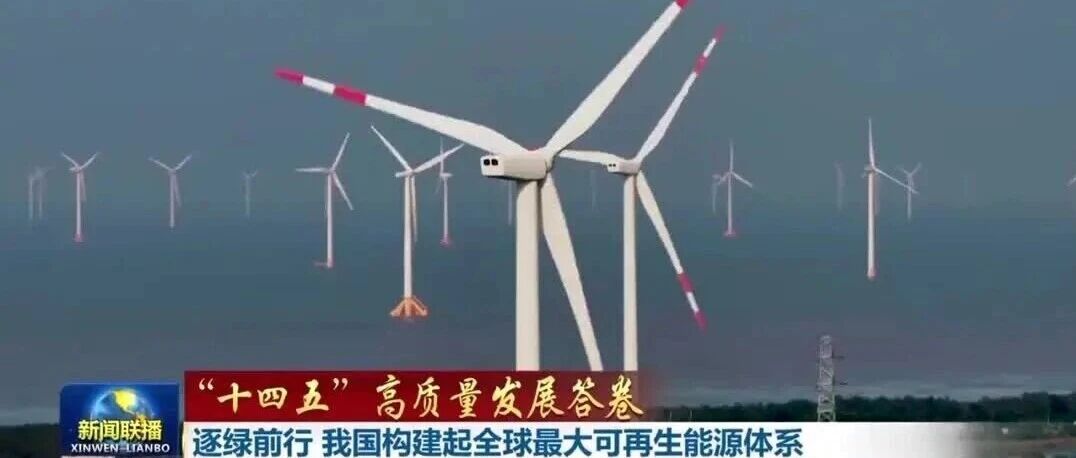
新闻联播︱“十四五”高质量发展答卷 逐绿前行 我国构建起全球最大可再生能源体系
国家能源局· 2025-10-20 23:08
Core Viewpoint - China is undergoing a significant transformation in its energy production and consumption patterns, focusing on green energy development and achieving substantial progress in renewable energy generation since the "14th Five-Year Plan" [2][5]. Group 1: Renewable Energy Development - The transformation of barren deserts and wastelands into vast power generation fields illustrates China's commitment to green energy [2]. - The annual electricity generation from solar power in a specific area is equivalent to replacing 560,000 tons of coal [3]. - China generates over 10 trillion kilowatt-hours of electricity annually, accounting for one-third of global electricity production, with one-third of this coming from renewable sources [4]. Group 2: Infrastructure and Capacity Expansion - The construction of six large hydropower stations along the Yangtze River forms the world's largest clean energy corridor [5]. - The "14th Five-Year Plan" includes nine major clean energy bases, with seven located in western regions, highlighting the geographical focus of renewable energy development [5]. - The total area of newly added solar panels over five years could cover 530,000 football fields, and the length of newly added wind turbine blades could stretch from the easternmost to the westernmost points of China and back [5]. Group 3: Energy Transmission and Storage - The establishment of 19 ultra-high voltage transmission lines over five years has created a super network for electricity delivery, increasing the cross-regional transmission of clean energy by 70% [5]. - Renewable energy from the west now supports one-fifth of the electricity demand in the eastern and central regions [5]. - New energy storage technologies, such as gravity storage and compressed air, have been introduced in the "Five-Year Plan," playing a crucial role in managing peak electricity demand [5]. Group 4: Achievements and Goals - China has built the world's largest and most complete renewable energy industry chain, achieving the target of 20% non-fossil energy consumption as set in the "14th Five-Year Plan" [5].
倒计时3天!2025年国际能源变革论坛即将开幕!
国家能源局· 2025-10-20 11:23
Core Viewpoint - The 2025 International Forum on Energy Transition aims to showcase China's achievements in energy transformation and promote international cooperation in clean energy, aligning with global development and governance initiatives proposed by President Xi Jinping [5][6]. Group 1: Forum Overview - The forum will take place from October 23rd to 25th, 2025, in Suzhou, China, focusing on the theme "A Decade of Collaboration Drives Energy Transitions for a Green Future" [2][5]. - It will be co-hosted by the National Energy Administration, the International Renewable Energy Agency, and the Jiangsu Provincial Government [5]. Group 2: Agenda and Topics - The agenda includes 11 sub-forums and 2 thematic events on October 23rd, covering key areas such as renewable energy development, hydrogen energy, nuclear power, urban energy transition, and AI in energy [6]. - The opening ceremony, keynote speeches, and results release will occur on the morning of October 24th, followed by high-level dialogues on global clean energy cooperation and energy transition risks [6]. Group 3: Participation and Goals - The forum will invite energy ministers from relevant countries, ambassadors, and leaders from international organizations to foster discussions on energy transformation and cooperation [5][6]. - The event aims to explore new paths for global energy transformation and establish a new chapter in international clean energy cooperation [6].

专家解读丨有力度的监管:加快推动油气管网设施公平开放
国家能源局· 2025-10-20 07:33
Core Viewpoint - The newly released "Regulatory Measures for Fair Access to Oil and Gas Pipeline Facilities" enhances the legal framework for regulating the fair access to oil and gas pipeline facilities, promoting market-oriented reforms in the oil and gas sector and ensuring compliance with national policies [3][4][5]. Group 1: Regulatory Enhancements - The new regulatory measures are a significant improvement over previous regulations, providing a clear legal basis for government oversight and industry compliance [4]. - The measures align with the central government's directives to promote independent operations in natural monopoly sectors and market-oriented reforms in competitive sectors [4]. - The introduction of specific definitions and requirements for fair access to pipeline facilities aims to ensure non-discriminatory service provision to qualified users [4][5]. Group 2: Implementation of Energy Law - The new regulatory measures are designed to support the implementation of the "Energy Law," which establishes a comprehensive legal framework for the energy sector in China [5]. - The measures detail the requirements for fair access and service provision, ensuring that pipeline operators comply with the law and provide transparent services to eligible enterprises [5]. Group 3: Market Integration - The regulatory measures aim to establish a unified national market by clarifying the roles and responsibilities of regulatory bodies at both national and local levels [6]. - The introduction of local regulatory measures will enhance the oversight of pipeline facilities, promoting fair access and breaking down regional market barriers [6]. Group 4: Strengthened Oversight - The new measures include penalties for non-compliance, providing a robust framework for enforcement and accountability in the oil and gas sector [7]. - Specific violations related to unfair access and service provision are clearly outlined, allowing for more effective regulatory actions [7]. Group 5: Practical Experience and Future Directions - The past decade of experience in implementing fair access to oil and gas pipeline facilities has informed the development of the new regulatory measures [8]. - The introduction of digital systems for information reporting and public disclosure enhances transparency and efficiency in regulatory practices [9]. - Ongoing training and inspections by regulatory bodies have improved compliance and service standards among pipeline operators [10]. Group 6: Future Implications - The new regulatory measures are expected to significantly improve the order of the oil and gas market, reducing conflicts related to infrastructure access among different market players [11]. - The measures will facilitate the establishment of a multi-tiered regulatory framework, promoting the opening and oversight of various pipeline networks [11]. - The Shanghai Petroleum and Natural Gas Exchange will continue to enhance its services in line with the new regulations, supporting the market-oriented reforms in the oil and gas sector [11].

专家解读丨《监管办法》落地实施,公平开放监管力度与时俱进提升
国家能源局· 2025-10-20 07:33
Core Viewpoint - The implementation of the "Regulatory Measures for Fair and Open Access to Oil and Gas Pipeline Facilities" aims to enhance the regulatory framework for oil and gas pipeline facilities, promoting a fair and competitive market environment in the oil and gas industry [3][4]. Group 1: Background and Context - The new regulatory measures respond to significant changes in oil and gas policies and market dynamics since 2017, emphasizing the separation of pipeline operations from oil and gas sales and ensuring fair access for third-party market participants [4][5]. - The establishment of the National Pipeline Group in 2019 marked a shift towards a unified and efficient oil and gas transportation service, necessitating government oversight and industry supervision [5][6]. Group 2: Key Highlights of the Regulatory Measures - The new regulatory measures elevate the status to departmental regulations, enhancing the authority and deterrent effect of the regulatory framework [6]. - Specific penalties for violations are outlined, reducing discretionary enforcement and minimizing disputes [6][7]. Group 3: Fair Access and Service Application - The measures detail user registration requirements, ensuring fair and non-discriminatory access for eligible enterprises [7]. - Pipeline operators must provide written explanations for any service application rejections and establish clear guidelines for capacity allocation and service requests [7][8]. Group 4: Contractual Obligations and Information Disclosure - Pipeline operators are prohibited from extending transportation distances to increase revenue and must adhere to fair contract terms without unreasonable demands [8]. - The measures specify information reporting requirements, distinguishing between proactive and upon-request disclosures, ensuring transparency in operational data and service conditions [8][9]. Group 5: Overall Impact and Future Directions - The regulatory measures are expected to strengthen oversight of monopolistic practices, promote fair competition in the oil and gas market, and enhance the efficiency of resource allocation [9]. - Future efforts will focus on refining regulatory requirements, improving enforcement capabilities, and enhancing information transparency to support industry and societal oversight [9].