日经中文网

Search documents
日本地方城市往返中国航线纷纷停运
日经中文网· 2025-12-17 03:26
Core Viewpoint - Spring Airlines is suspending several routes between Japan and China due to market impacts and low passenger load factors, particularly following diplomatic tensions and natural disasters affecting travel sentiment [2][4][14]. Route Suspensions - Spring Airlines will suspend the route between Saga Airport and Shanghai Pudong International Airport starting December 22, with previous reductions in frequency from four to two flights per week [2][4]. - The route from Okayama Airport to Shanghai will be suspended from December 16 to March 28, 2026, with all flights operated by China Eastern Airlines [5][7]. - The Toyama-Shanghai route will also see a suspension from January 3 to March 28, 2026, with a total of 37 round trips canceled due to market issues [8][10]. - The Shizuoka-Shanghai route will be suspended from January 2026 until late March, with a significant impact expected on local businesses due to the high proportion of Chinese tourists [14]. Passenger Load Factors - The load factor for the Saga-Shanghai route dropped from over 90% to around 40% following a travel advisory from the Chinese government and subsequent earthquake alerts in Japan [4]. - The Okayama-Shanghai route had an average load factor of 82.4% in November, but the future operational plans remain uncertain [7]. - The Shizuoka route had a load factor of 67% in October, indicating a decline in demand [14]. Economic Impact - The economic impact of the Shizuoka route is significant, with an estimated economic effect of 35.4 billion yen for the fiscal year 2024, a 30% increase from 2023 [14].



日本娱乐实力(3)错失2万亿周边商品市场
日经中文网· 2025-12-17 03:26
Core Viewpoint - The article discusses the commercialization rights of Japanese anime and manga, highlighting how major streaming platforms like Netflix are capitalizing on these rights, leading to a significant outflow of potential revenue from Japan to foreign companies [2][10]. Group 1: Commercialization Rights and Market Dynamics - Streaming platforms negotiate with production committees to acquire rights for adaptation and distribution, often gaining rights to produce and sell merchandise as well [6]. - The global sales of merchandise related to Japanese anime reached $14.3 billion, while the streaming revenue was $5.5 billion in 2023, indicating a substantial market for merchandise [6]. - Japanese companies often lack the talent to plan and sell merchandise overseas, resulting in a loss of potential revenue and market presence [9]. Group 2: Impact on Japanese Companies - The inability to effectively utilize their IP leads to "idle IP" situations, where Japanese companies miss out on potential earnings that are instead captured by foreign platforms [10]. - Companies like Toho are taking steps to secure merchandise rights for their properties, indicating a shift towards better management of IP rights [11]. - New initiatives, such as MAG.NET, aim to directly sell merchandise overseas, reducing intermediaries and increasing revenue for Japanese creators [11]. Group 3: Future Opportunities - Expanding into previously untapped overseas merchandise markets is seen as crucial for the next leap in Japanese animation's success [11].

中国谨慎赴日提醒打击日本零售业
日经中文网· 2025-12-17 03:26
中国政府发出让民众谨慎赴日的提醒或将波及企业业绩。观察日本的百货店和药妆店等25家主要零售企 业2025财年(截至2026年2月)的市场平均预期(Quick Consensus),在约1个半月内,超过一半的13家 企业出现了净利润预期下调。各企业正在采取措施以降低对中国顾客的依存度,但能在多大程度上填补 空缺尚不透明。 对决算财年截至2月的25家零售企业的10月底和12月15日的Quick Consensus进行比较后发现,分析师考 虑到谨慎赴日提醒导致中国游客消费减少等因素,重新评估了25家企业的业绩预期,其中有13家的净利 润预期下调。 从25家企业的2025财年净利润总额来看,企业计划为同比增加18%,达到7586亿日元,但市场预期为增 加12%,增至7199亿日元,出现下调。 到达关西国际机场的外国人(12月3日) 观察日本的百货店和药妆店等25家主要零售企业2025财年的市场平均预期,在约1个半月内,超过一半 的13家企业出现了净利润预期下调。分析师指出,各企业本年度将面临十几亿日元的利润下行…… 面向访日游客的高档运动鞋销售强劲的ABC-MART和杉控股等药妆店相继下调了市场预期。 瑞银证券以面向 ...

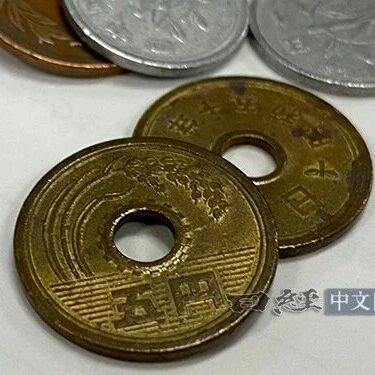
5日元硬币的时价已超面值?原因是……
日经中文网· 2025-12-17 03:26
Core Viewpoint - The value of Japanese yen coins is increasing due to rising raw material prices, particularly copper, which has reached historical highs, leading to the raw material value of the 5 yen coin exceeding its face value and the 10 yen coin approaching 90% of its face value [2][4]. Group 1: Raw Material Composition and Prices - The 5 yen coin consists of 60% to 70% copper and 30% to 40% zinc, while the 10 yen coin is made up of 95% copper, 3% to 4% zinc, and 1% to 2% tin [4][5]. - As of December 15, the raw material prices are estimated at 5.4 yen for the 5 yen coin and 8.7 yen for the 10 yen coin based on domestic market prices [4][5]. Group 2: Global Trends and Implications - The increase in raw material prices is a global phenomenon, with the U.S. Mint halting the production of the 1 cent coin due to high manufacturing costs, which are nearly four times its face value [6]. - The trend towards cashless payments is growing, with a significant decrease in cash usage for transactions under 1000 yen in Japan, dropping from 89.2% to 61.6% over the past decade [6]. Group 3: Currency Production and Future Considerations - The Japanese Ministry of Finance has stated that cash remains essential for those unable to use cashless payment methods, and there are no plans to stop producing circulating currency [8]. - The manufacturing environment for currency has changed significantly, with no new production of 1 yen and 5 yen coins for circulation since 2016 and 2021, respectively, indicating a need to reassess the value of currency [8].
日本拟2028年对EV按重量加税
日经中文网· 2025-12-16 08:00
Core Viewpoint - Japan plans to impose a new tax on private electric vehicles (EVs) starting from May 2028, based on vehicle weight, with heavier vehicles facing higher tax burdens [2][4]. Group 1: Tax Implementation - The new tax will be applied during vehicle inspections, starting from May 1, 2028, and will also include plug-in hybrid vehicles (PHVs) [4]. - The tax amount will be determined based on the average gasoline tax burden of gasoline vehicle owners [4][5]. - PHVs will be taxed at half the rate of EVs, as they have already contributed to gasoline taxes to some extent [4]. Group 2: Rationale for Tax - The primary reason for increasing the tax burden on EVs is to ensure funding for road maintenance, as EVs do not contribute to fuel taxes like gasoline vehicles do [5]. - The heavier weight of EVs compared to gasoline vehicles leads to greater road wear, justifying the need for a tax [5]. Group 3: Market Impact - Heavier EV models, particularly imported ones, dominate the domestic market, suggesting that higher-end vehicles will incur larger tax amounts [5]. - The Japanese government plans to suspend local taxes related to environmental performance ratios for two years (2026-2027) to support the automotive industry affected by U.S. tariffs [5].

个人取得日本不动产将须提供国籍,26年度实施
日经中文网· 2025-12-16 08:00
Core Viewpoint - Japan's Ministry of Justice announced that starting from 2026, individuals must provide nationality information when acquiring real estate, aiming to monitor the nationality of property owners [2][4]. Group 1: Nationality Information Requirement - The new regulation will require individuals to fill out nationality information on real estate registration forms and submit identification documents such as passports and residence cards [2][4]. - Nationality information will be stored internally and will not be recorded in the public real estate registry to protect personal privacy [4]. Group 2: Database Development - The Digital Agency of Japan plans to establish a database by 2027 for sharing nationality information within the government, utilizing the "Basic Real Estate Registration" database [4]. Group 3: Legislative Intent - The ruling coalition of the Liberal Democratic Party and the Japan Innovation Party has committed to drafting a law in 2026 to strengthen regulations on foreign ownership of land, aiming to clarify the actual situation of real estate transactions [5].

柬埔寨申请加入CPTPP
日经中文网· 2025-12-16 08:00
Core Viewpoint - Cambodia has applied to join the Comprehensive and Progressive Agreement for Trans-Pacific Partnership (CPTPP) to diversify its export markets, especially in light of high tariffs imposed by the U.S. on Cambodian goods [2][4]. Group 1 - Cambodia's exports to the U.S. account for approximately 40% of its total exports, highlighting the need for market diversification due to the U.S. imposing tariffs as high as 49% [2][4]. - The CPTPP, which was signed by 12 countries in 2016, aims to promote high-level free trade, and its relevance has increased amid rising protectionism [2][4]. - The CPTPP negotiations require unanimous consent from the existing 12 member countries to initiate discussions on tariff reductions, with ongoing negotiations involving 10 countries and regions, including Cambodia [4]. Group 2 - The CPTPP was re-negotiated and renamed after the U.S. withdrawal under the Trump administration, with the remaining 11 countries signing the agreement in 2018 [4]. - The CPTPP is currently in negotiations with Costa Rica and has decided to initiate talks with Uruguay, indicating ongoing expansion efforts [4]. - The UK is set to join the CPTPP in 2024 following its exit from the European Union, further expanding the agreement's reach [4].

日本娱乐实力(2)海外原作×日本制作成潮流
日经中文网· 2025-12-16 02:54
Core Viewpoint - The article discusses the growing influence of overseas original works in the Japanese animation industry, highlighting the success of adaptations like "Let's Play" and "Solo Leveling," and the need for Japan to adapt to maintain its competitive edge in both animation and gaming sectors [2][5][12]. Group 1: Japanese Animation's Global Expansion - Japanese animation has established a strong brand identity, often associated with high-quality storytelling and artistic expression, but is now beginning to incorporate overseas works as original sources [2][10]. - The "Anime Expo" in Los Angeles showcased the popularity of the animation "Let's Play," which is based on a webtoon created by American author Leeanne M. Krecic, indicating a shift towards international collaboration in content creation [4][5]. - Crunchyroll, a major player in the animation distribution market, has identified "Let's Play" as a key title for 2023, reflecting a trend of adapting overseas content into Japanese animation styles [5][10]. Group 2: The Rise of Overseas Original Works - The upcoming animation "Solo Leveling," based on a Korean web novel, is noted as a pioneering example of this trend, with production handled by A-1 Pictures, further emphasizing the blending of international narratives with Japanese production [8][10]. - The increasing popularity of overseas original works is seen as an opportunity for Japanese animation to expand its audience and meet the growing demand for diverse storytelling styles [10][16]. - The collaboration between Crunchyroll and Aniplex in producing "Solo Leveling" demonstrates the integration of webtoon pacing into animation, catering to modern viewing habits [10]. Group 3: Challenges in the Gaming Sector - Japan's gaming industry is facing challenges as it struggles to adapt to the rapidly growing mobile and computer gaming markets, where it has historically held a competitive advantage [12][14]. - Analysis of popular games on platforms like Steam reveals that Chinese companies are now leading in both sales and downloads, indicating a shift in the gaming landscape that Japan must address [14][16]. - The article suggests that Japan's slow response in the gaming sector could allow competitors to gain further ground, similar to the trends observed in the animation industry [12][16].

中国人形机器人登陆日本
日经中文网· 2025-12-16 02:54
Core Viewpoint - The competition in humanoid robot development is shifting, with Chinese and American companies taking the lead, while Japan's presence is diminishing in this sector [2][15]. Group 1: Market Dynamics - The humanoid robot market is projected to reach $5 trillion by 2050, with over 1 billion humanoid robots expected to be in operation globally [11]. - The industry is redefining robots as the "body" of AI, indicating a significant shift in their role and application [11]. - Chinese companies are advancing through national strategies and a focus on domestic production of key components, while American firms are entering practical application stages [13]. Group 2: Key Players - Major Chinese companies in humanoid robotics include UTree Technology, UBTECH Robotics, and Zhongqing Robotics [14]. - Notable American companies include Agility Robotics, Tesla, and Boston Dynamics [14]. - Japanese companies, such as Kawasaki Heavy Industries, have a weaker presence in humanoid robotics compared to their industrial robot offerings [15]. Group 3: Technological Advancements - The G1 humanoid robot developed by UTree Technology can assist customers in cafes by taking orders and delivering food, showcasing advanced mobility and interaction capabilities [6]. - The Walker E robot from UBTECH can carry loads of up to 30 kg, indicating its potential use in factories and warehouses [8]. Group 4: Strategic Insights - Japanese companies are encouraged to leverage their strengths in addressing domestic needs, such as elderly care, rather than directly competing with China and the U.S. [15]. - The application of humanoid robots extends beyond manufacturing and logistics to include disaster response and service scenarios, highlighting their versatility [15].

日经BP精选——中国半导体2026年展望:自主供应链趋完善,去英伟达化加速
日经中文网· 2025-12-16 02:54
Group 1 - The core viewpoint of the article highlights that Huawei is becoming a central player in China's semiconductor industry, particularly in AI semiconductors, challenging the dominance of Nvidia [5]. - By 2026, Huawei and emerging companies like Cambricon Technology are expected to significantly increase their AI semiconductor shipments, with a forecast of over 1 million units, more than doubling the predictions for 2024 [5]. - The article emphasizes that despite the advancements, China's manufacturing equipment and materials still lag behind the most advanced levels globally [5].