日经中文网

Search documents
矿业股的投资热潮踩下刹车
日经中文网· 2025-10-31 03:07
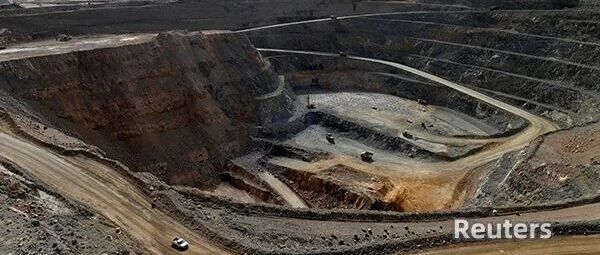
Core Insights - Mining stocks have been identified as "invisible winners" during the Trump era, significantly outperforming global stock indices and IT indices, with a notable increase of 20% and 30% respectively by the end of 2024 [2][4] - Recent declines in gold and rare earth stocks indicate a shift in market sentiment, as mining stocks have dropped 6% from their mid-October highs [2][4] - The easing of geopolitical tensions between the US and China has led to a reduction in investments in mining stocks, which were previously seen as a hedge against these risks [5][8] Group 1: Mining Stock Performance - The "Metals and Mining" sector saw a peak increase of 54% compared to the end of 2024, but has since reverted to September levels, losing momentum [4] - Mining stocks outperformed the aerospace and defense index, which rose by 55%, during a period of heightened geopolitical tensions [4] Group 2: Geopolitical Factors - The initial surge in mining stock investments was driven by concerns over geopolitical risks, particularly the US-China trade tensions, which prompted countries to compete for critical mineral resources [5] - The recent news of potential trade agreements between the US and China has contributed to a decline in mining stock prices, with MP Materials' stock dropping 30% from its mid-October peak [8] Group 3: Market Reactions - The stock prices of companies like Lynas Rare Earths and MP Materials surged due to their strategic importance in the US's efforts to establish a non-China reliant rare earth supply chain [7] - Gold prices have also been influenced by geopolitical factors, with a notable rise in demand from emerging market central banks, leading to a peak of over $4000 per ounce [7] Group 4: Future Outlook - The future of mining stocks remains uncertain, as speculative investments have receded, yet they still maintain higher levels compared to early 2025 [8] - Analysts suggest that the trend of buying mining stocks as a hedge against inflation may continue, given their historical resilience in inflationary environments [8]

比亚迪7~9月减收减益,销量减2%
日经中文网· 2025-10-31 03:07
Core Viewpoint - BYD is facing intense competition in the domestic market, leading to a decline in both revenue and profit for the first time since early 2020 [2][4]. Group 1: Financial Performance - For the third quarter of 2025, BYD reported a revenue decline of 3% year-on-year to 194.9 billion yuan and a net profit drop of 33% to 7.8 billion yuan [2][4]. - The automotive sales decreased by 2% year-on-year to 1.11 million units, marking a significant slowdown in growth for the company [2][4]. - Both revenue and net profit fell short of market expectations, which were 215.2 billion yuan and 12.1 billion yuan respectively [4]. Group 2: Market Competition - The competition in the sub-200,000 yuan market, which has been BYD's main battlefield, has intensified, with competitors like Geely and Zhejiang Leapmotor achieving growth in electric vehicle sales [4]. - The increase in costs due to a shortened payment cycle for trading partners has further pressured profits, contributing to consecutive quarterly profit declines [4]. Group 3: International Expansion - BYD is actively seeking growth opportunities in overseas markets, with passenger car exports reaching 230,000 units in the third quarter, a 2.5-fold increase compared to the same period last year [5]. - The company plans to launch a lightweight electric vehicle, "RACCO," in the Japanese market by the summer of 2026, amidst increasing competition from other Chinese automakers expanding their international presence [5].


【日经BP书籍】从0到1的新获客瞬间
日经中文网· 2025-10-31 03:07
Group 1 - The article discusses a new customer acquisition method developed by Japanese marketing expert Serizawa Ren, aimed at helping companies overcome growth bottlenecks in a saturated market [6][7]. - The method is based on five years of research and tracking over 300 brands, emphasizing the importance of non-customers as significant potential customers [6][7]. - The approach allows companies to increase high-quality users without incurring high costs, providing a pathway from zero to one in customer acquisition [7]. Group 2 - The article highlights the challenges faced by companies in the current market, particularly in terms of declining sales and the need for innovative customer development strategies [6][7]. - It emphasizes the necessity for businesses to adapt to the "stock era" and find new growth opportunities through effective marketing techniques [6][7]. - The insights provided are validated through practical applications in 100 companies, showcasing the effectiveness of the new acquisition method [7].

特朗普对华贸易战自我毁灭的三个原因
日经中文网· 2025-10-31 03:07
Core Viewpoint - The article discusses the lack of progress in correcting international trade imbalances between the US and China, despite some outcomes from the recent US-China summit. It highlights the increasing US imports and the failure of tariffs to achieve intended trade balance improvements [2][4][6]. Group 1: Trade Dynamics - From January to September, China's exports to the US decreased by 16.8%, while its exports to the rest of the world grew by 6.1% [4]. - US imports globally increased by 11.5% from January to July, which has led to a diversion of Chinese products through Southeast Asia [4][6]. Group 2: Economic Indicators - The US trade deficit has worsened, increasing by 23%, while China's production continues to grow at over 5% [6]. - The US, with only 4% of the world's population, accounts for 31% of global consumption, while China, with 17% of the population, holds 28% of global manufacturing [6]. Group 3: Tariff Impact - The Trump administration's tariffs, which reached as high as 145%, aimed to promote fair trade but have not improved trade imbalances [2][6]. - The reliance on tariffs reflects a misunderstanding of market dynamics, as the US cannot compel China to yield solely based on its market size [6].

日本首次从澳大利亚进口重稀土
日经中文网· 2025-10-31 03:07
Core Viewpoint - Australia’s Lynas Corporation has successfully separated heavy rare earth elements at its processing plant in Malaysia, marking Japan's first import of heavy rare earths from a country outside China, which dominates the global market with nearly 100% share [2][5]. Group 1: Company Operations - Lynas extracts rare earths from its Mount Weld mine in Western Australia, processes them in Malaysia into dysprosium and terbium, and then ships them to Japan [4]. - The Japanese trading company Sojitz has imported heavy rare earths produced by Lynas for the first time, which are essential for electric vehicle (EV) and wind turbine motor production [2][4]. Group 2: Market Dynamics - China accounts for 70% of global rare earth production and nearly 100% of heavy rare earths, making the establishment of a non-China dependent supply chain critical [5]. - In response to China's export controls on dysprosium and terbium, which were implemented as a retaliatory measure against U.S. tariffs, companies like Suzuki and Ford have had to pause production due to supply shortages [5]. Group 3: Future Demand and Agreements - The International Energy Agency (IEA) predicts that global demand for rare earths will expand to 3.4 times the 2020 levels by 2040, driven by decarbonization trends [5]. - A framework for stable rare earth procurement was agreed upon during the Japan-U.S. summit on October 28, highlighting the urgency of securing alternative supply sources [5].
特朗普表示下调对中国10%关税
日经中文网· 2025-10-30 06:49
Group 1 - The core viewpoint of the article is that the meeting between President Trump and the Chinese leader in Busan, South Korea, resulted in a significant agreement that is set to last for one year, with the possibility of extension after that period [2][3] - Trump described the meeting as excellent and praised the Chinese leader as a great leader, indicating a positive diplomatic relationship [3]

日本央行维持0.5%政策利率,继续观望关税影响
日经中文网· 2025-10-30 06:49
Core Viewpoint - The Bank of Japan (BOJ) has decided to maintain its policy interest rate at 0.5% during its monetary policy meeting on October 30, following six consecutive meetings without change since the rate was raised in January. The BOJ is closely monitoring the impact of U.S. tariff policies on the Japanese economy [2][4]. Group 1: Monetary Policy Decisions - The BOJ has kept the uncollateralized overnight call rate target at 0.5% since its increase in January [2]. - Two policy board members opposed maintaining the rate, advocating for an increase to 0.75%, citing that the inflation stability target has been largely achieved and that inflation risks are increasing [4]. - The BOJ plans to update its economic and price outlook report every three months, providing forecasts for real GDP growth and consumer price index changes [5]. Group 2: Economic Forecasts - The BOJ forecasts real GDP growth rates of 0.7% for both 2025 and 2026, and 1.0% for 2027 [5]. - The consumer price index, excluding fresh food, is projected to be 2.7% in 2025, 1.8% in 2026, and 2.0% in 2027 [5]. - The BOJ maintains its prediction for achieving the 2% inflation stability target between the latter half of 2026 and 2027 [6]. Group 3: Market Expectations - There is a significant market expectation for a rate hike in December, with a 60% probability according to recent statistics [6]. - The BOJ's President, Ueda, is under scrutiny regarding how he will articulate the rate hike policy [6].

东京名古屋磁悬浮工费再涨,2035年开通仍未定
日经中文网· 2025-10-30 06:49
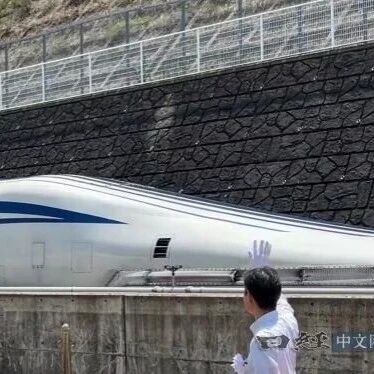
Core Viewpoint - The total construction cost of the Maglev Central Shinkansen has significantly increased from the initial estimate of 5.52 trillion yen to 11 trillion yen, reflecting rising material prices and construction difficulties [2][5]. Group 1: Cost Increases - The revised total construction cost is now estimated at 11 trillion yen, an increase of approximately 4 trillion yen from the previous estimate of 7.04 trillion yen [2]. - The rise in costs is attributed to a 2.3 trillion yen impact from higher prices, including 1.3 trillion yen due to increased prices of construction materials like steel and concrete, as well as labor costs [5]. - An additional 1 trillion yen has been included to address potential future price increases, while 1.2 trillion yen is allocated for dealing with construction challenges due to unexpectedly fragile geological conditions [5]. Group 2: Funding and Financial Strategy - JR Tokai plans to cover the funding shortfall through operating cash flow, company bonds, and loans, with the government having already invested 3 trillion yen [4]. - An estimated 2.4 trillion yen is needed to cover construction costs while maintaining "sound operations and stable dividends," assuming the opening date is set for 2035, although this is still tentative [4]. - The president of JR Tokai, Shunsuke Niwa, indicated that the excavation work for the Shizuoka section of the Southern Alps tunnel has not yet started, making accurate predictions difficult [4].
FT中文网精选:我们是否身处一场人工智能泡沫中?
日经中文网· 2025-10-30 03:19
Group 1 - The article discusses the potential existence of an artificial intelligence bubble, highlighting differing perspectives between the industry and financial sectors [5] - It mentions that the recent AI boom and expectations of interest rate cuts have led the S&P 500 index to reach historical highs, impacting the performance of short-sellers negatively [6] - Retail investors have been blamed for the poor returns of short-sellers since 2020, with a notable reference to the GameStop short squeeze, indicating a trend of retail investors influencing market dynamics [6]

高市对特朗普表示禁运俄罗斯产LNG有困难
日经中文网· 2025-10-30 03:19
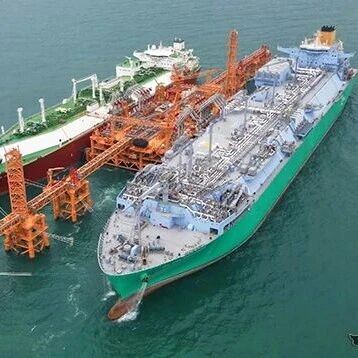
Core Viewpoint - Japan's Prime Minister Kishi Nobuo expressed concerns about the potential economic impact of banning Russian LNG imports, which account for nearly 9% of Japan's total LNG imports, during discussions with U.S. President Trump [2][5]. Group 1: Japan's Energy Dependency - Japan's reliance on Russian LNG is significant, with nearly 9% of its total LNG imports coming from Russia [5]. - The potential ban on Russian LNG could disrupt Japan's energy supply stability, raising concerns about economic activities [5][7]. Group 2: U.S. Pressure on Japan - During a meeting on October 28, Trump reiterated the request for Japan to stop importing Russian LNG as part of broader G7 sanctions against Russia [4]. - The U.S. aims to reduce Russia's energy revenue through coordinated sanctions, with the EU already discussing a comprehensive ban on Russian LNG imports [4]. Group 3: Japan's Position - Kishi conveyed to Trump that implementing a ban would negatively impact Japan's economy and could benefit China and Russia [7]. - Japanese companies, such as Mitsui & Co. and Mitsubishi Corporation, are involved in the Sakhalin-2 project, which produces and liquefies natural gas in Russia's Far East [7].