日经中文网

Search documents
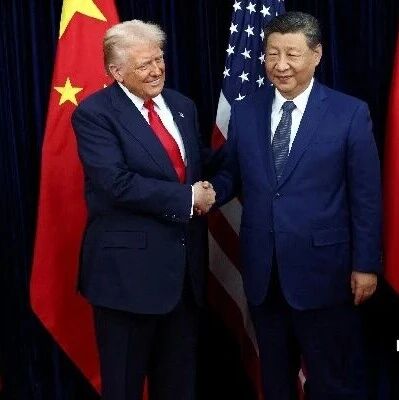
中美在釜山举行首脑会谈
日经中文网· 2025-10-30 03:19
Core Viewpoint - The meeting between Chinese President Xi Jinping and U.S. President Donald Trump on October 30 in Busan, South Korea, marks their first face-to-face interaction since the beginning of Trump's second term, with a focus on trade issues [2][4]. Group 1: Meeting Context - The meeting is significant as it is the first since the establishment of Trump's second administration in January this year [2]. - The discussions are expected to address the importance of stabilizing U.S.-China relations and easing trade tensions [4]. Group 2: Key Discussion Topics - Trade friction between the two countries is a primary topic of negotiation during the meeting [4]. - The issue of synthetic drug "fentanyl" smuggling is also anticipated to be a point of discussion [4]. - The meeting occurs just before Xi's attendance at the APEC leaders' meeting, indicating a broader context of international economic cooperation [4].

本田墨西哥工厂因安世半导体争端停产
日经中文网· 2025-10-30 03:19
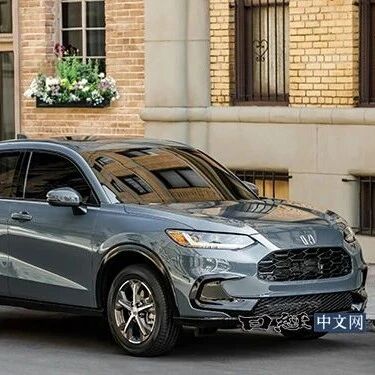
Core Viewpoint - Honda has halted production at its Mexican plant due to semiconductor shortages caused by geopolitical tensions surrounding Nexperia, a semiconductor manufacturer based in the Netherlands and owned by a Chinese company. This marks the first time a Japanese automaker has explicitly reported being affected by this issue [2][4]. Group 1: Production Impact - Honda stopped production in Mexico on October 28 and began adjusting production in the U.S. and Canada on October 27. The company has not disclosed the scale or duration of the production cuts [4]. - The Mexican plant, located in Celaya, is a crucial facility for Honda, with an annual production capacity of 200,000 vehicles, primarily producing the SUV model HR-V. North America accounts for 40% of Honda's global sales, and prolonged production disruptions in this region could lead to a decline in performance [4][5]. Group 2: Semiconductor Supply Chain Issues - Honda utilizes general semiconductors produced by Nexperia in some of its components. While the motorcycle production facility in Mexico continues to operate normally, the automotive production has been significantly impacted [5]. - The Dutch government has taken control of Nexperia citing national security concerns, while the Chinese government has responded with export controls on products manufactured by Nexperia in China [5].

丰田重新定义“雷克萨斯”
日经中文网· 2025-10-30 03:19
Core Viewpoint - Toyota is restructuring its luxury vehicle strategy by establishing the "Century" brand as an independent entity to target the ultra-luxury car market, while also enhancing the Lexus brand's positioning and development freedom [2][5][6]. Group 1: Lexus Brand Strategy - Toyota showcased the "LS Concept," a six-wheeled electric vehicle, at the "Japan Mobility Show 2025," emphasizing the brand's renewal and advanced technology [4]. - The LS Concept is designed as a chauffeur car, maximizing interior space due to the absence of a fuel tank, featuring a three-row seating arrangement [4]. - The complexity of Lexus's positioning has prompted Toyota to redefine its luxury brand strategy, aiming to clarify brand roles and enhance differentiation from competitors [6][7]. Group 2: Century Brand Development - The "Century" brand is positioned as the pinnacle of Toyota's offerings, with the goal of becoming a symbol of Japanese pride and luxury [5]. - The Century brand has introduced a sedan and an SUV, priced at 20.08 million yen (approximately 935,000 RMB) and 27 million yen (approximately 1.257 million RMB), respectively [5]. - By placing the Century brand above Lexus, Toyota aims to allow Lexus to develop more freely within the luxury car segment [7]. Group 3: Brand Structure and Market Positioning - Toyota's new brand structure includes five brands: Century, Lexus, Koda, Daihatsu, and GR, each targeting different market segments [6]. - The establishment of the Century brand is seen as a strategic move to challenge the ultra-exclusive market, with expectations for accelerated launches aimed at affluent consumers [6]. - The success of the Century brand will be crucial for the redefinition of Lexus, as it seeks to establish a clear luxury identity [7].


高市充分利用安倍“遗产”重塑日美蜜月
日经中文网· 2025-10-29 07:34
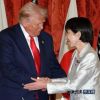
Core Points - The article discusses the first meeting between Japanese Prime Minister Sanae Takaichi and U.S. President Donald Trump, highlighting the establishment of mutual trust and the continuation of the "honeymoon" relationship initiated by former Prime Minister Shinzo Abe [2][4][10]. Group 1: Meeting Highlights - Takaichi opened the meeting with a casual reference to watching baseball, which reflects a strategy used by Abe to foster rapport with Trump [5][7]. - The meeting included a donation of 250 cherry blossom trees to Washington, D.C., in celebration of the U.S. bicentennial in 2026, which was positively received by Trump [8]. - Takaichi presented gifts that included golf-related items previously used by Abe, aiming to reinforce the connection with Trump [9]. Group 2: Diplomatic Strategy - Takaichi has been preparing for this meeting since taking office on October 21, emphasizing the importance of a strong relationship with the U.S. for Japan's political stability [4]. - The meeting was characterized by personal interactions, with Trump praising Takaichi as potentially one of Japan's best prime ministers and expressing a willingness to support Japan on various issues [9][11]. - Takaichi's diplomatic approach includes referencing Abe's "Japan's diplomacy shining on the world stage" and adopting the "Free and Open Indo-Pacific" strategy as key themes [10]. Group 3: Future Implications - Takaichi's intention to recommend Trump for the Nobel Peace Prize reflects a strategy to align closely with U.S. foreign policy, despite potential risks of compromising Japan's diplomatic values [11]. - The article notes concerns about Japan's alignment with Trump's unilateral approach to international relations, which may conflict with Japan's traditional advocacy for rule of law and democracy [11].
中国股市10年来高位,IPO窄门难入
日经中文网· 2025-10-29 07:34
Core Insights - The core viewpoint of the article highlights the significant decline in IPO fundraising in China, with a focus on government policy directing funds towards specific industries such as electric vehicles (EV) and semiconductors, while overall IPO activity remains low compared to previous years [2][4][5]. IPO Fundraising and Activity - In the first nine months of 2023, the total IPO fundraising in mainland China was approximately $10.065 billion, a decrease of 84% compared to the highest fundraising year of 2022, which was $63.346 billion [4]. - The number of IPOs in 2023 was only 75, representing just 20% of the 375 IPOs recorded in the same period of 2021 [4][5]. - The Shanghai Composite Index is currently at a 10-year high, which typically facilitates easier fundraising for companies [4]. Industry Focus - The IPOs that did occur were predominantly in sectors prioritized by the government, such as EVs and semiconductors, indicating a strategic focus on enhancing the manufacturing sector [2][5]. - Notable companies in the IPO rankings include those in the automotive supply chain, with five out of the top ten fundraising companies related to automotive components [5][6]. Government Policy and Market Dynamics - Financial institutions are controlling the supply of IPOs to prevent market crashes, leading to a preference for certain industries while larger IPOs in non-manufacturing sectors are redirected to Hong Kong [5]. - The article mentions that semiconductor-related companies are being prioritized for listing, reflecting the government's emphasis on high-tech industries [6][7]. Future Outlook - There is an expectation for continued IPO activity in high-tech sectors, with companies like Unitree Robotics and Moore Threads planning to submit their IPO applications [9]. - The Chinese government is likely to maintain its support for high-tech industries, as indicated by recent discussions at the 20th Central Committee meeting regarding economic policies for 2026-2030 [9][10].

特朗普暗示下调对中国的芬太尼关税
日经中文网· 2025-10-29 07:34
Core Viewpoint - The article discusses President Trump's intention to lower tariffs on Chinese products related to fentanyl, which will be a key topic in the upcoming US-China summit in South Korea. The current tariff rate is set at 20%, and there is speculation it may be reduced to 10% as part of negotiations with China to address the fentanyl crisis [2][4]. Group 1 - Trump expressed that he would lower the tariff rate on Chinese products due to the expectation that China will assist in resolving the fentanyl issue [2][4]. - The current tariff on Chinese products related to fentanyl is 20%, which was established in March, and discussions are ongoing about potentially reducing it to 10% [4][5]. - The fentanyl issue has been highlighted as a top priority for Trump, who has called for cooperation from Mexico, Canada, and China to combat the influx of this synthetic drug [4]. Group 2 - The upcoming US-China summit on October 30 is expected to address various topics, including China's rare earth export controls and the US's imposition of port fees on Chinese vessels [5]. - Trump had previously suggested imposing a 100% tariff on imports from China in response to rare earth export controls, but the likelihood of this action being implemented is decreasing [5].

高市以美国产大米和牛肉招待特朗普
日经中文网· 2025-10-29 03:16
Core Points - The lunch hosted by Japanese Prime Minister Fumio Kishida featured American rice and beef dishes, highlighting the partnership between Japan and the United States [1][4] - The menu included chicken and American rice cheese risotto, American beef steak with traditional Japanese vegetables, and mixed fruit jelly [3] Group 1 - The lunch took place on October 28 at the Akasaka Guest House in Tokyo, attended by U.S. President Donald Trump and his delegation [1] - U.S. Ambassador to Japan, Rahm Emanuel, emphasized that "partnership is also reflected in the lunch" [4]

日经早盘突破5万1000点
日经中文网· 2025-10-29 03:16
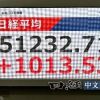
Core Viewpoint - The Nikkei average stock index in Tokyo experienced a significant rebound, closing at 51,249 points, up 1,030 points (2.05%) from the previous trading day, surpassing the historical high of 50,512 points set on the 27th [2][4]. Group 1 - The rebound in the Nikkei index was influenced by positive market sentiment regarding the easing of US-China trade tensions [2][4]. - The US stock market also reached new historical highs, with major indices such as the Dow Jones Industrial Average rising, which contributed to the bullish sentiment in Tokyo [4]. - Anticipation of progress in US-China discussions, particularly regarding synthetic drugs, further bolstered investor confidence ahead of the upcoming summit between the two nations [4]. Group 2 - The market is also reacting to expectations that the Federal Reserve may decide to lower interest rates in the upcoming Federal Open Market Committee meeting, which has encouraged buying activity among investors [4].
日美发布4千亿美元对美投资清单 聚焦AI电力
日经中文网· 2025-10-29 03:16
Core Viewpoint - The U.S. and Japan have announced a joint investment initiative totaling approximately $400 billion, focusing on four key sectors: nuclear power generation, AI power development, strengthening AI infrastructure, and critical minerals [2][5]. Group 1: Investment Areas - The joint investment initiative highlights four primary sectors for collaboration: nuclear power generation, AI power development, strengthening AI infrastructure, and critical minerals [2]. - Eight Japanese companies have expressed interest in participating in the projects outlined in the joint investment initiative [2]. Group 2: Key Participants - Notable Japanese corporate leaders, including Masayoshi Son from SoftBank, attended a signing ceremony for the investment projects [4]. - Other participating companies include Hitachi, Panasonic, Mitsubishi Electric, and Toshiba, indicating a strong interest from major players in the Japanese market [4]. Group 3: Project Details - The largest project under consideration involves the construction of new nuclear reactors, with a potential scale of up to $1 trillion, leveraging Japan's expertise in reactor construction and component manufacturing [5][6]. - The collaboration includes the establishment of small modular reactors (SMRs) by GE Vernova and Hitachi, with a project scale also reaching up to $1 trillion [5]. Group 4: Energy Demand and AI - The increasing demand for electricity driven by generative AI is a significant factor in this collaboration, with predictions indicating that U.S. data center electricity consumption could quadruple by 2030 [6]. - The partnership aims to enhance the electricity infrastructure necessary to support major tech companies like OpenAI and Google, positioning Japan to develop a second major industry following automotive [6]. Group 5: Future Participation - The Japanese Minister of Economy, Trade and Industry indicated that the companies listed in the joint initiative are not yet confirmed participants, and others may join in the future [7].
日美签造船合作备忘录,意在抗衡中国
日经中文网· 2025-10-29 03:16
Core Points - The U.S. shipbuilding capacity is considered to be nearly non-existent, with only a few commercial ships built annually [1][6] - Japan aims to double its shipbuilding output by 2035 compared to 2024 levels, with plans to boost domestic companies [1][6] - A memorandum was signed between Japan and the U.S. to enhance shipbuilding capabilities and investment in the U.S. [1][4] Group 1 - The U.S. government is collaborating with Japan to revitalize its shipbuilding industry, which currently holds only about 0.2% of the global market share [6] - The memorandum includes plans for strategic investments to modernize shipyards and enhance cooperation between Japanese and American companies [3][6] - Japan's share of global shipbuilding has decreased from 36% in 2004 to an estimated 13% in 2024, highlighting the need for revitalization [6] Group 2 - Japan's industry groups plan to invest 350 billion yen in equipment by 2035, seeking government support through funds [6] - The collaboration aims to strengthen the U.S. Navy's capabilities, including ship repairs in Japan and the construction of dual-use vessels [6][7] - South Korea is also investing in the U.S. shipbuilding sector, indicating a competitive landscape in the region [7]