野村东方国际证券

Search documents
一分钟了解日本|日本的老年健身房
野村东方国际证券· 2025-06-20 09:54
NOA URA 野村东方国际证券 分钟了解日本 for from Treat with a more of the 日本的老年健身房 上期我们介绍了日本体育消费趋势的转变。本期我们将聚焦 少子老龄化背景下的日本社会是如何将体育健身与养老体系 结合在一起。 老年健身房的起源 HHHHH 2000年后日本推行社区性体育场所 长期以来,日本的体育发展以 "综合型地域体育俱乐部"。 学校、企业为中心。大众体育 更多老年人开始从对抗性运动 设施资源比较缺乏。 转向健身房。 分析师 张影秋 (SAC执证编号:S1720522110001) 曾万霖 (SAC执证编号:S1720524050001) 往期推文回顾 一分钟了解日本|日本体育消费趋势的转变 免责声明 向上滑动阅览 内容来源 本内容根据野村东方国际证券2023年08月17日发布的证券研究报告《赛道之上,创新致胜——日本经济下行期黄金赛道之运动服饰》制 作。 本材料虽由野村东方国际证券有限公司(以下简称"本公司"或"我们")研究部提供,但并非我们发布的证券研 究报告,仅系我们根据本公司已正式发布的研究报告内容制作。我们不保证本材料内容、观点、文字与正式出 具的研究报 ...


2025年下半年市场展望|一致预期的长尾
野村东方国际证券· 2025-06-20 09:54
Core Viewpoint - The article discusses the external environment and market expectations for the second half of 2025, highlighting the potential for increased volatility and the importance of a dual-track allocation strategy in investment [3][4]. Group 1: External Environment and Market Trends - Since March, the euro has appreciated against the dollar, indicating a shift of funds away from dollar assets, with non-dollar assets receiving strong liquidity support [3]. - The market has already priced in most potential changes, including consistent expectations for the U.S. and Chinese economies, as well as shifts in international capital flows [4]. Group 2: Market Outlook for the Second Half of 2025 - The article anticipates that the second half of 2025 will see increased market volatility as expectations align with reality, particularly as high-frequency data begins to validate these expectations [4]. - The article suggests that Chinese equity assets are likely to outperform overseas markets due to strong domestic policy expectations and favorable liquidity conditions in emerging markets [4]. Group 3: Investment Strategy - A "barbell strategy" focusing on dividend stocks and technology growth sectors is recommended, with projected revenue growth for the CSI 300 index at 4.5% and 5.3% for 2025 and 2026, respectively [5]. - The static valuation of the CSI 300 is considered undervalued by 25.6% compared to its ten-year average, making it attractive for long-term investors [5].

防非宣传月|防非提示词条(五):坚持理性投资
野村东方国际证券· 2025-06-20 09:54
Group 1 - The article emphasizes the importance of rational investment and the need for public awareness regarding illegal securities and futures activities [2][3][5] - It highlights the initiative of the Shanghai Stock Exchange to promote investor education during the national campaign against illegal securities and futures [2][3][5] Group 2 - The content is a reprint from the Shanghai Stock Exchange's investor education WeChat account, indicating a focus on educational outreach [5][6] - The article does not provide specific financial data or performance metrics related to the Shanghai Stock Exchange or its listed companies [6]

资本研·观|“投资的代际传承”—— 日本家庭支持证券账户制度
野村东方国际证券· 2025-06-13 10:11
"投资的代际传承" -日本家庭支持证券账户制度- 作者:野村资本市场研究所 野村 亜紀子 要点 1.在长寿的日本,如何支持老年人在认知判断能力下降后的资产管理成为了一大课题。2025年2 月,日本证券业协会公布的一项制度纲要"家庭支持证券账户",成为了一项新的选择。 2.家庭支持证券账户是指高龄客户(委托人)可以在健康时指定一位家庭成员作为意定代理人 (亲属代理人),在本人认知判断能力下降或丧失后进行代理交易。除了可以出售资产和提款外, 其特点是还可以继续进行投资管理。委托人与信任的家人共同制定管理和投资方针后,签订公证合 同并申请开户。证券公司将从准备阶段开始提供全程的支持。 3.亲属代理人必须秉持善良管理人的行事准则。此外,账户的代理权限范围也有限制,例如:不 允许代理人投入新资金进行投资等,以抑制代理人滥用权力的风险。该制度的设计并不像意定监护 制度中对监督人选任的严格规定,而是更关注用户的便利性。 4.关于家庭支持证券账户的提供,预计各证券公司将在2025年4月以后根据客户需求、现有服务 等做出判断。若能藉此增进老年人的晚年福祉,最终使"投资的代际传承"得以实现,那将具有重大 的社会意义。 Ⅰ 老年人 ...

防非宣传月|投资理财不受骗,查清资质是关键(四)私募基金信息披露备份系统介绍
野村东方国际证券· 2025-06-13 10:11
本文系转载自 深交所投教公众号。 本文不构成野村东方国际证券的任何投资建议、推介或宣传。野村东方国际证券没有独立核实过被转载文章的 内容,该文章中的任何观点不代表野村东方国际证券观点,野村东方国际证券不对投资者依赖本文的任何内容 而采取的行动承担任何责任。投资有风险,入市需谨慎。 本文转载自: 深交所投教 免责声明 向上滑动阅览 ...

野村东方国际证券成功举办2025中期策略会
野村东方国际证券· 2025-06-13 10:11
Core Viewpoint - The mid-term strategy meeting by Nomura Orient International Securities emphasizes the theme of "seeking certainty amid geopolitical games," focusing on how to navigate uncertainties and capitalize on industry and asset certainties in the current market environment [2]. Group 1: Market Environment - The euro, which accounts for over 60% of the dollar index, has appreciated against the dollar since March, indicating a trend of capital withdrawal from dollar assets [2]. - Non-dollar assets have received strong liquidity support in the first half of the year, with international capital favoring European bonds, European stocks, and the Hang Seng Technology Index [2]. - The market has priced in most potential changes, including consistent expectations for the U.S. economy and shifts in international capital flows [2]. Group 2: Future Market Outlook - The second half of 2025 is expected to be a critical juncture for market direction, with discrepancies between expectations and reality likely to converge as high-frequency data is validated monthly [3]. - The loosening and shifting of international capital narratives may lead to additional liquidity impacts, potentially increasing market volatility [3]. - Given strong domestic policy expectations and a favorable liquidity environment under a weak dollar, Chinese equity assets are anticipated to outperform overseas markets in the latter half of the year [3]. Group 3: Sector and Stock Performance - The projected revenue growth rates for the CSI 300 Index are 4.5% and 5.3% for 2025 and 2026, respectively, with corresponding net profit growth rates of 2.8% and 6.7% [3]. - The decline in risk-free interest rates suggests that the CSI 300 is still undervalued from a static valuation perspective, making it attractive for long-term domestic investors [3]. - Dividend stocks with stable yields and specific technology growth sectors (military, new energy, and new consumption) are expected to be more suitable for the market environment in the second half of the year [3].
家庭日活动|粽香飘NOI,五彩佑安康
野村东方国际证券· 2025-06-13 10:11
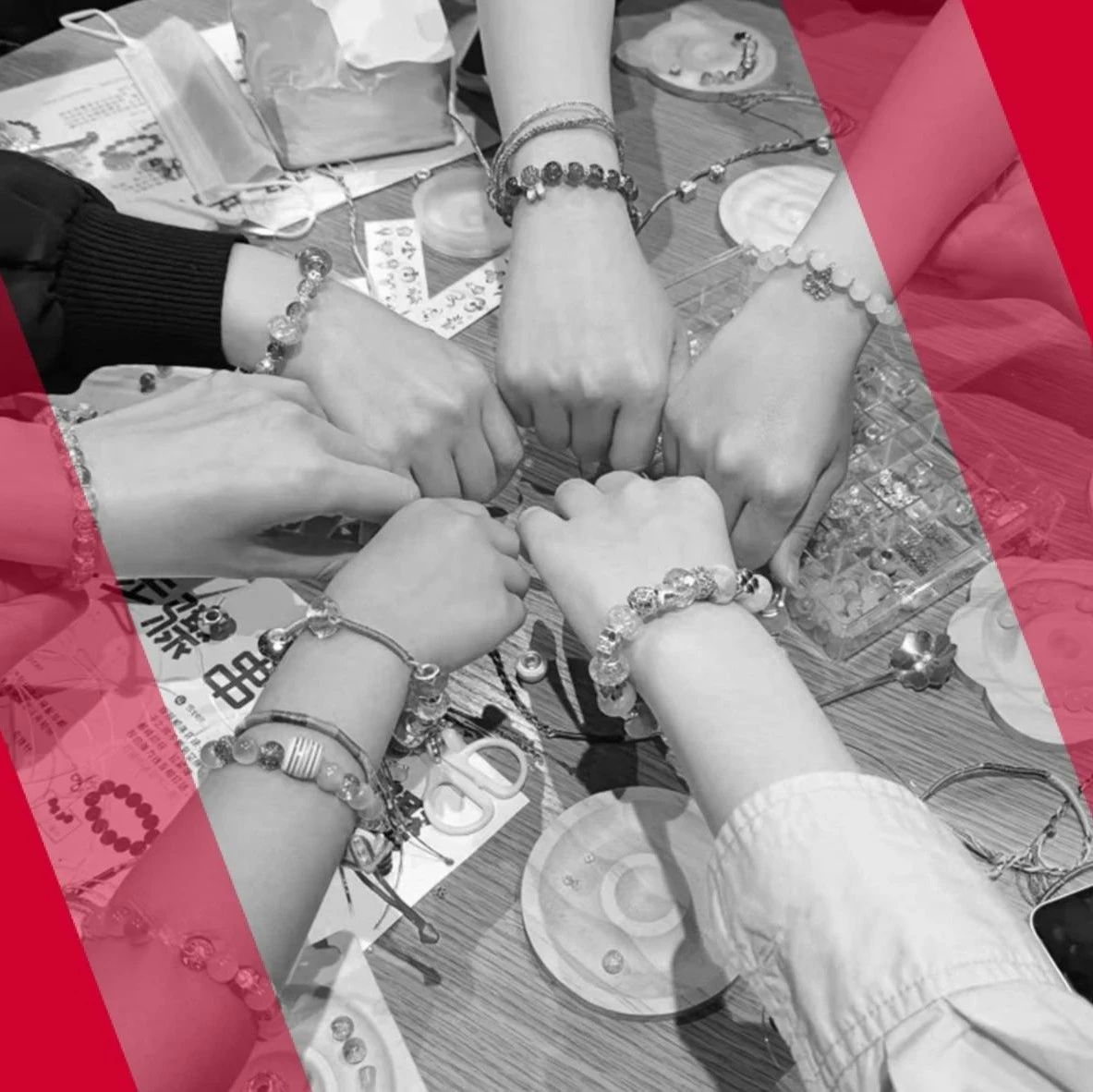
近日,野村东方国际证券举办了家庭日活动,公司特别邀请员工携带孩子走进上海办公室。活动 当日,办公室褪去了平日的严肃模样,换上了端午节的装饰,轻盈的飘空气球摇曳生姿,处处洋 溢着端午的温馨氛围,让大小朋友们一踏入便感受到浓浓的节日喜悦。 艾香与粽香交织的午后,上海的同事们欢聚一堂共享美味,从传统的蛋黄肉粽到清甜的豆沙粽,从箬叶 包裹的咸香软糯到蜜枣流露的绵密清甜,每一款粽子都似舌尖上的文化密码,诉说着南北风味的交融与 传承。 免责声明 本文不构成野村东方国际证券的任何投资建议、推介或宣传。野村东方国际证券不对投资者依赖本文的任何内容而 采取的行动承担任何责任。投资有风险,入市需谨慎。 大家用五彩丝线串联翡翠、玛瑙般的珠串,指尖上的盘结传递着五彩绳"辟邪纳吉"的千年传说,以及珠 串中"五谷丰登"的美好寓意。 在温馨愉悦的氛围中,本次端午家庭日活动圆满落下帷幕,这场充满爱与陪伴的聚会,不仅为亲子关系 搭建了温馨的互动桥梁,更让员工们在忙碌的工作之余,以轻松愉快的方式增进了彼此的情感联结,共 同度过了一段充满欢笑与温情的美好时光。 ...
财知浅见|情绪经济与Z世代消费主权崛起
野村东方国际证券· 2025-06-13 10:11
Core Viewpoint - The article discusses the shift in consumer behavior among Generation Z, emphasizing their willingness to pay a premium for emotional experiences, which reflects a broader transition in Chinese society from material abundance to emotional fulfillment [2][4]. Group 1: Consumer Behavior - Generation Z's pursuit of "uncertainty surprises," "community recognition," and "personalized expression" leads to a consumption model that prioritizes psychological satisfaction and social currency over traditional value-price assessments [2]. - This shift indicates a transformation in China from a "manufacturing output" economy to a "cultural IP output" economy, with capital markets increasingly recognizing high-value, light-asset models [2][4]. Group 2: Industry Trends - The rise of emotional economy has resulted in a new operational model that captures value across the entire content creation industry chain, from IP industrialization to value redistribution [4]. - Companies are building complete chains involving artist signing, industrial production, multi-channel sales, and secondary trading, relying on four key phases: incubation, growth, explosion, and continuation [4]. Group 3: Market Dynamics - The emotional economy has driven significant market activity in A-share markets, particularly in the two-dimensional and trendy toy sectors, supported by a large consumer base [4]. - For instance, Pop Mart, known for its trendy toys, has shown strong stock performance since its listing in Hong Kong, exemplifying the dual attributes of "new consumption + cultural IP" [4].

锂电新周期|全球产业格局的变迁
野村东方国际证券· 2025-06-06 09:43
Core Viewpoint - The global lithium battery landscape is entering a new cycle, driven by the increasing penetration of electric vehicles (EVs) in China and the sustained demand for energy storage, with a projected compound annual growth rate (CAGR) of 57% for global power battery installations from 2020 to 2024 [3][4]. Demand Growth - The demand for lithium batteries globally is expected to reach 1339 GWh by 2024, with energy storage accounting for 235 GWh (18% of total demand). The energy storage demand is projected to grow to 305 GWh in 2025, driven by rising electricity prices, decreasing costs of storage systems, and increased renewable energy penetration [3][4]. Supply and Capacity Utilization - The oversupply situation in the lithium battery industry is expected to improve by 2025, with new capacity growth slowing to 29% and 10% in 2025-2026, compared to 68% and 52% in 2023-2024. This will lead to a recovery in capacity utilization rates to 46% by 2026 [4][5]. Global Market Dynamics - The previous cycle (2022-2024) saw significant changes in the global lithium battery landscape, primarily due to the U.S. Inflation Reduction Act (IRA) attracting Japanese and Korean battery companies to expand capacity in North America, while domestic second-tier lithium battery companies in China expanded capacity significantly, leading to temporary oversupply and declining profits [4][5]. Investment Opportunities - Companies that can expand their capacity outside the U.S. and are close to end customers are expected to achieve excess profits, especially as trade tensions rise and domestic oversupply persists. The focus on European markets is seen as a strategic move for Chinese lithium battery companies to mitigate risks and enhance profitability [5][6]. European Market Outlook - The European market is anticipated to recover in 2025, with a projected increase in lithium battery capacity utilization from 62% in 2024 to 69% in 2025. The demand for both power and energy storage batteries is expected to drive this recovery [11][12]. Competitive Landscape - Chinese lithium battery companies are expected to gain a competitive edge in Europe, with planned capacity reaching 362 GWh compared to 213 GWh for Korean companies and 300 GWh for local European firms. The broad coverage of the supply chain and superior manufacturing capabilities position Chinese firms favorably [12][13]. Client Relationships - Chinese lithium battery companies have established partnerships with 23 international automotive manufacturers, significantly higher than the 18 partnerships of Korean companies and 4 of European firms, indicating a strong supply capability and responsiveness to market demands [13][15].

反洗钱宣传|洗钱风险“十面埋伏”,掌握“秘籍”才能识破陷阱,避免沦为洗钱“工具人”
野村东方国际证券· 2025-06-06 09:43
Core Viewpoint - The article discusses the rising gold prices and highlights the alarming trend of money laundering through gold transactions, emphasizing the complexity and various methods used by criminals to legitimize illegal funds [1][2][3]. Group 1: Concept of Money Laundering - Money laundering is defined as the process of legitimizing illegal income through various means, primarily involving the concealment of the source and nature of the funds [7]. - The origins of money laundering can be traced back to the 1920s in the United States, where criminal organizations used businesses as fronts to mix illegal income with legitimate revenue [7]. Group 2: Methods of Money Laundering - Criminals employ various methods to launder money, including providing bank accounts to hide illegal funds, converting assets into cash or financial instruments, and transferring funds through banks or third-party payment platforms [8]. - Other methods include transferring illegal funds abroad to evade legal consequences, utilizing underground banking systems, and disguising the nature of the funds through various transactions [8]. Group 3: Police Warnings - Authorities warn that money laundering techniques are diverse but often rely on the same core strategies, urging individuals to remain vigilant and avoid becoming unwitting accomplices [9]. - Key recommendations include not renting or lending personal identification or bank accounts, avoiding using personal accounts for others' transactions, and ensuring investments are made through reputable financial institutions [10].