量子位

Search documents
聊AI,当然得来量子位MEET大会!
量子位· 2025-11-20 04:09
Core Insights - The article emphasizes the transformative impact of artificial intelligence (AI) on various industries, marking the beginning of a new era in 2025 [1] - The MEET2026 Intelligent Future Conference will focus on cutting-edge technologies and industry advancements related to AI [2][3] - The conference theme "Symbiosis Without Boundaries, Intelligence to Ignite the Future" highlights AI's role in driving societal evolution [3] Event Details - The conference will cover hot topics in the tech circle, including reinforcement learning, multimodal AI, chip computing power, AI in various industries, and AI going global [4] - It will feature a blend of academic frontiers and commercial applications, showcasing leading technological achievements from infrastructure, models, and products [5] - The event will also include the authoritative release of the annual AI rankings and trends report [6] Notable Speakers - The conference will host prominent figures such as Zhang Yaqin, a renowned scientist and entrepreneur in AI and digital video [12][13] - Sun Maosong, Executive Vice President of the Tsinghua University AI Research Institute, will also be a key speaker [17] - Other notable speakers include Wang Zhongyuan, Zhao Junbo, and Liu Fanping, all of whom have significant contributions to AI research and applications [21][27][48] AI Rankings and Trends Report - The "Artificial Intelligence Annual Rankings" initiated by Quantum Bit has become one of the most influential lists in the AI industry, evaluating companies, products, and individuals [60] - The "2025 Annual AI Trends Report" will identify and analyze ten major AI trends, focusing on technological maturity, current applications, and potential value [61] Conference Logistics - The MEET2026 Intelligent Future Conference will take place at the Beijing Jinmao Renaissance Hotel, with registration now open for attendees [62] - The event aims to attract thousands of tech professionals and millions of online viewers, establishing itself as a significant annual technology business summit [64]


芯片就像重庆,英特尔说的
量子位· 2025-11-20 04:09
Core Insights - The article discusses Intel's innovative approaches and technological advancements in the semiconductor industry, particularly in relation to AI and PC platforms, as highlighted during the recent technology innovation conference in Chongqing [6][10][12]. Group 1: Intel's Technological Innovations - Intel's next-generation AI PC platform, Panther Lake, has entered mass production, marking the company's entry into the "Aemi era" (1 Aemi = 0.1 nm) [9]. - The Intel 18A process technology enables over 15% performance improvement at the same power consumption, or a 25% reduction in power consumption at the same performance level, with a 30% increase in transistor density [10]. - Panther Lake is expected to deliver a 50% increase in multi-core and graphics performance, alongside a 40% reduction in power consumption, with an overall AI computing power of 180 TOPS [14][15]. Group 2: AI and Edge Computing - The article emphasizes the transformation of AI PCs from mere tools to partners, with future AI-native PCs expected to possess five core capabilities: perception, cognition, execution, memory, and learning [17][18]. - Intel is addressing the growing demand for edge computing by integrating SoC solutions to assist partners like CVTE in transitioning from traditional operations to comprehensive AI solutions [25]. - The emergence of generative AI and the integration of AI with control systems are identified as key trends in edge computing [24]. Group 3: Collaboration and Ecosystem Development - Intel is focusing on building a robust local ecosystem in China, collaborating with various partners to enhance the capabilities of domestic AI models through instruction set optimization and quantization techniques [27]. - A notable example includes a specialized re-ranking model that improved accuracy from 85% to 96% after fine-tuning, surpassing some larger general models [28]. - The strategy of leveraging "small models with significant impact" is seen as crucial for the widespread adoption of AI PCs [29]. Group 4: Data Center and Power Consumption - The article highlights the exponential growth of data, with predictions indicating a 3.5-fold increase in global power consumption to support AI over the next five years, alongside an estimated $7 trillion investment in data centers [34]. - Intel's Xeon 6 processors are designed to complement GPUs in AI model training, featuring enhanced data transfer capabilities and dedicated AI acceleration [38]. - The focus on reliability aims for a 99.999% uptime in data centers, ensuring continuous operation and security [39].


英伟达炸裂业绩打飞“AI泡沫”,黄仁勋:云端GPU卖光了
量子位· 2025-11-20 04:09
Core Viewpoint - Nvidia's third-quarter earnings report exceeded expectations, dispelling concerns about an "AI bubble" and showcasing strong growth across its business segments [7][10][50]. Financial Performance - Nvidia reported record revenue of $57 billion for Q3 FY26, surpassing analyst expectations of $55.2 billion, with a year-over-year increase of 62% and a quarter-over-quarter increase of 22% [8][11]. - Net income reached $31.9 billion, a 65% increase year-over-year, with diluted earnings per share (EPS) of $1.30, exceeding market expectations of $1.25 [11][8]. - The company anticipates revenue to exceed $60 billion in Q4, potentially reaching $65 billion [10][49]. Business Segments - **Data Center**: This segment is the backbone of Nvidia's business, generating $51.2 billion in revenue, a 66% year-over-year increase and a 25% quarter-over-quarter increase [19][18]. - Data center computing revenue reached $43 billion, up 56% year-over-year [21]. - Networking revenue surged 162% year-over-year to $8.2 billion [23]. - **Gaming**: Revenue from gaming increased by 30% year-over-year, driven by demand for high-end GPUs, although it saw a slight quarter-over-quarter decline of 1% [26][27]. - **Professional Visualization**: This segment saw a 56% year-over-year increase in revenue, attributed to the launch of the new DGX Spar platform [29][30]. - **Automotive**: Revenue grew by 32% year-over-year, primarily due to the adoption of Nvidia's autonomous driving platform [34]. Market Sentiment and Future Outlook - Nvidia's strong performance has alleviated some market fears regarding the sustainability of AI investments, with the CEO asserting that the AI ecosystem is expanding rapidly [50][55]. - Despite concerns about potential limitations in AI infrastructure spending, Nvidia's results suggest ongoing demand for AI capabilities [52][50]. - The company's ability to maintain growth in a challenging market environment has led to increased stock prices, positively impacting the broader tech sector [44][2].


网友疯玩Gemini 3!AI造物门槛真是0了
量子位· 2025-11-20 04:09
Core Viewpoint - The article highlights the innovative capabilities of Gemini 3 Pro, showcasing its ability to generate various applications and games through simple prompts, indicating a significant leap in AI technology compared to its predecessor, Gemini 2.5 Pro [9]. Group 1: Application Generation - Users can create retro-filtered photos instantly by simply posing and clicking a button [3]. - The AI has enabled the rapid expansion of a platform akin to "4399 mini-games," demonstrating its versatility in generating creative and interactive content [9][10]. - Various games and applications can be generated, including a 2D parkour game and a 3D interactive water physics scene, showcasing the AI's capability to produce complex environments and interactions [26][28]. Group 2: User-Generated Content - Users have shared their creations, such as an Xbox One controller SVG and a 3D Pac-Man game, illustrating the community's engagement and creativity [12][14]. - The AI can transform simple sketches into interactive applications, such as a house layout design from a floor plan [34]. - The ability to generate entire mobile application UI interfaces from basic prompts has been highlighted, emphasizing the ease of use and accessibility for users [38]. Group 3: Tools and Utilities - Users can create useful tools like a screen recording application that provides real-time prompts based on spoken instructions, enhancing productivity for online meetings and presentations [42][44]. - The AI's capability to adjust video ratios and generate creative video ideas further supports users in content creation without the need for expensive software [45][41]. - The article encourages users to explore their creativity and share their ideas, fostering a collaborative environment for innovation [48].

朱啸虎投的第一个AI硬件公司,又完成一轮融资
量子位· 2025-11-20 00:30
Core Insights - Gyges Labs has successfully completed a Pre A+ funding round, attracting investment from Granite Asia and璀璨资本, following a previous Pre-A round led by金沙江创投 [2][4] - The company aims to create AI glasses that prioritize everyday wearability, emphasizing a "Glass First" philosophy, which contrasts with the trend of bulky, feature-heavy smart glasses [6][7][10] - Gyges Labs' innovative display technology, DigiWindow, allows for a lightweight design (35 grams) and discreet information display, enhancing user experience without compromising on aesthetics [11][14][15] Funding and Company Background - Gyges Labs raised significant capital in its Pre A+ round, building on a previous multi-million RMB Pre-A round [2][4] - The leadership team includes experienced professionals from Silicon Valley and major tech companies, enhancing the company's credibility and innovation potential [4] Product Philosophy and Design - The company focuses on minimalism in design, opting for a lightweight and unobtrusive product that can be worn daily without drawing attention [10][14] - The absence of a camera in the AI glasses reflects a strategic choice to avoid issues related to privacy, battery life, and usability [19][21][22] AI Functionality and User Experience - Gyges Labs emphasizes "active AI" capabilities, such as real-time translation and contextual information display, which aim to integrate seamlessly into users' daily lives [26][27] - The design philosophy prioritizes user comfort and social acceptance, avoiding features that could lead to awkward situations in social settings [27] Future Vision and Product Development - Gyges Labs envisions a broader ecosystem of wearable devices, with plans to introduce a smart ring in 2026, expanding its AI capabilities beyond glasses [33][35] - The company's ultimate goal is to empower users through various wearable technologies, enhancing their capabilities and experiences [35]

“最强具身VLA大模型”,究竟强在哪儿?
量子位· 2025-11-20 00:30
Core Insights - The article discusses the breakthrough of the robot foundation model π*0.6, which showcases its capabilities in performing complex tasks with a success rate exceeding 90% [2][10]. Group 1: Model Overview - π*0.6 is the latest VLA (Vision-Language-Action) model, building on the previous π0.5, and introduces a novel training method called RECAP [8][10]. - The RECAP method allows robots to learn from their mistakes, shifting from traditional imitation learning to a more intuitive learning approach [3][29]. Group 2: RECAP Methodology - RECAP consists of three main stages: guidance through human demonstration, correction through expert intervention, and practice through autonomous experience [7][12]. - The model utilizes a value function to evaluate actions, which helps in identifying advantageous actions and improving learning efficiency [19][22]. Group 3: Training Process - The training process involves offline reinforcement learning using diverse data sources, including human demonstrations and autonomous attempts, to train the value function and policy [20][22]. - The model's architecture has been enhanced, with the backbone expanding from Gemma (2.6B) to Gemma3 (4B) and Action Expert parameters increasing to 860M [25]. Group 4: Performance Evaluation - In tests involving complex tasks like folding clothes and making espresso, RECAP doubled the throughput and reduced failure rates by approximately 50% compared to models using only supervised fine-tuning [27]. - The model demonstrated high stability, successfully performing tasks for extended periods without human intervention [28]. Group 5: Learning from Failures - The ability of the model to learn from failures is highlighted as a significant advancement, allowing it to extract effective learning signals from imperfect experiences [29][56]. - This approach opens new avenues for future research in robotics, emphasizing the importance of learning from real-world execution rather than solely relying on ideal demonstrations [56].

三行代码就能手搓一个AI应用!蚂蚁OceanBase开源其首款AI数据库
量子位· 2025-11-19 09:01
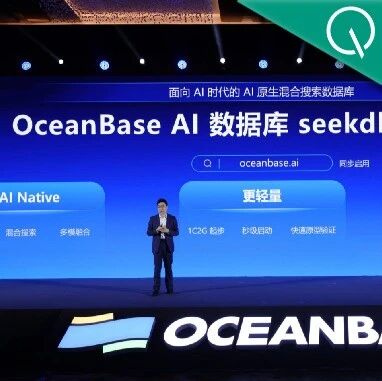
Core Insights - OceanBase has launched its first AI-native database, seekdb, designed to meet the demands of the AI era, allowing developers to build AI applications with just three lines of code [8][9][19] - The database aims to address the challenges faced by enterprises in integrating multimodal data for AI applications, which often suffer from fragmentation and complexity [11][12][19] - OceanBase's seekdb features a hybrid search capability that combines vector retrieval, full-text search, and scalar filtering, enhancing both speed and accuracy [14][19] Group 1: OceanBase Overview - OceanBase is a self-developed distributed relational database by Ant Group, launched in 2010, and has evolved over 15 years to become a leading domestic database [3][4] - The database has over 4,000 global customers and has achieved an average annual growth rate of over 100% for five consecutive years [4] - As of May this year, OceanBase has built an active community of over 25,000 developers, with cumulative downloads exceeding one million [5] Group 2: seekdb Features - seekdb supports unified storage and retrieval of various data types, including scalar, vector, text, JSON, and GIS, facilitating complex queries without cross-system calls [14] - The database is designed for easy deployment, requiring only 1 CPU core and 2GB of memory, and can be installed with a single command [16] - seekdb is open-sourced under the Apache 2.0 license, allowing users to freely use, modify, and extend the software [17] Group 3: AI Integration - OceanBase's CEO emphasizes that the real bottleneck in AI is not the models but the data, particularly in high-sensitivity scenarios like finance and government [19] - seekdb is positioned as a real-time entry layer for integrating large models with private data, aiming to simplify the data architecture for AI applications [20][21] - The new OceanBase 4.4 version integrates transaction processing, analytical processing, and AI capabilities into a single core, enhancing distributed scalability and high availability [22] Group 4: Additional Tools - OceanBase has also released a series of tools alongside seekdb, forming a complete toolchain for AI applications, covering data management, retrieval, analysis, and memory [23] - PowerRAG is an enterprise-level retrieval-augmented generation solution that simplifies the process of building AI applications like knowledge bases and intelligent customer service [24] - PowerMem is designed to efficiently manage and recall user interaction context, achieving a top score in the LoCoMo Benchmark while significantly reducing token consumption [26][27] Group 5: Strategic Vision - OceanBase's strategy focuses on unifying data across different systems and formats through a multi-load, multi-modal, and hybrid cloud architecture [29] - The goal is to provide enterprises with a single database core capable of handling transactions, analysis, search, and AI inference, streamlining operations and reducing complexity [31]
何恺明团队新作:扩散模型可能被用错了
量子位· 2025-11-19 09:01
Core Viewpoint - The article discusses a new paper by He Kaiming that challenges the mainstream approach to diffusion models by advocating for a return to the original purpose of denoising, suggesting that models should directly predict clean images instead of noise [2][5][6]. Summary by Sections Diffusion Models - Diffusion models have become increasingly complex over the years, often focusing on predicting noise rather than the clean images they were originally designed to denoise [4][6]. - The new paper emphasizes that since diffusion models are fundamentally denoising models, they should directly perform denoising [5][6]. Manifold Hypothesis - The article explains the manifold hypothesis, stating that natural images exist on a low-dimensional manifold within a high-dimensional pixel space, while noise is uniformly distributed across the entire space [7][9]. - This distinction leads to challenges when neural networks attempt to fit high-dimensional noise, requiring significant model capacity and often resulting in training failures [9]. JiT Architecture - The proposed architecture, JiT (Just image Transformers), is a simplified model that processes images directly without relying on complex components like VAE or tokenizers [10][11]. - JiT operates by taking raw pixel data, dividing it into large patches, and setting the output target to predict clean image blocks [12]. Experimental Results - Experimental results indicate that while predicting noise and predicting original images perform similarly in low-dimensional spaces, traditional noise prediction models fail in high-dimensional spaces, while JiT remains robust [14]. - JiT demonstrates excellent scalability, maintaining high-quality generation even when input dimensions are significantly increased [15][17]. - The JiT architecture achieved state-of-the-art FID scores of 1.82 and 1.78 on ImageNet datasets of 256x256 and 512x512, respectively, without relying on complex components or pre-training [18][19]. Research Focus - The primary research direction of He Kaiming includes representation learning, generative models, and their synergistic effects, aiming to build intelligent visual systems that understand the world beyond human perception [21].

聊AI,当然得来量子位MEET大会!
量子位· 2025-11-19 06:20
Core Insights - The article emphasizes the transformative impact of artificial intelligence (AI) on various industries, marking the beginning of a new era in 2025 [1] - The MEET2026 Intelligent Future Conference will focus on cutting-edge technologies and industry advancements related to AI [2][3] - The conference theme "Symbiosis Without Boundaries, Intelligence to Ignite the Future" highlights AI's role in driving societal evolution [3] Event Details - The conference will cover hot topics in the tech circle, including reinforcement learning, multimodal AI, chip computing power, AI in various industries, and AI going global [4] - It will feature a collision of academic frontiers and commercial applications, showcasing leading technological achievements from infrastructure, models, and products [5] - The event will also include the authoritative release of the annual AI rankings and trends report [6] Notable Speakers - The conference will host prominent figures such as Zhang Yaqin, a world-class scientist and entrepreneur in AI and digital video [12][13] - Sun Maosong, Executive Vice President of Tsinghua University's AI Research Institute, will also be a key speaker [17] - Other notable speakers include Wang Zhongyuan, Zhao Junbo, and Liu Fanping, all recognized for their contributions to AI and technology [21][27][48] AI Rankings and Trends Report - The "Artificial Intelligence Annual Rankings" initiated by Quantum Bit has become one of the most influential rankings in the AI industry, evaluating companies, products, and individuals [60] - The "2025 Annual AI Trends Report" will focus on the main themes of technological development, identifying ten significant AI trends and analyzing their potential value [61] Conference Logistics - The MEET2026 Intelligent Future Conference will take place at the Beijing Jinmao Renaissance Hotel, with registration now open for attendees [62] - The event aims to attract thousands of tech professionals and millions of online viewers, establishing itself as an annual barometer for the intelligent technology industry [64]

“日本版OpenAI”创下估值新高!Transformer八子之一创办,老黄也投了
量子位· 2025-11-19 06:20
Core Viewpoint - Sakana AI has achieved a record valuation of approximately 400 billion yen (about 2.635 billion USD) following its recent Series B funding round, making it the highest-valued startup in Japan's history [4][42]. Group 1: Company Overview - Sakana AI was founded in July 2023 and has quickly gained attention due to its innovative approach to AI, particularly in developing a nature-inspired intelligence model [6][20]. - The company is co-founded by Llion Jones, a notable author of the Transformer paper, and David Ha, a former senior scientist at Google Brain [7][16]. Group 2: Funding and Valuation - The recent Series B funding raised 20 billion yen (approximately 135 million USD), contributing to a total valuation of around 400 billion yen [4][5]. - The investment consortium includes major players like Nvidia, Khosla Ventures, NEA, and Japanese financial giants such as Mitsubishi UFJ and Shikoku Electric Power [5]. Group 3: Technological Innovation - Sakana AI aims to develop AI models inspired by natural evolution, focusing on efficiency and performance while reducing computational costs [20][21]. - The company has introduced "The AI Scientist," a comprehensive AI system capable of automating the entire scientific research process, including generating and publishing academic papers [27][28]. Group 4: Research and Development - The AI Scientist has evolved, with its second version successfully passing peer review at the ICLR conference, demonstrating its capability to generate high-quality research [38][42]. - Sakana AI has maintained a rapid research output, releasing multiple studies and innovations on a monthly basis, further solidifying its position in the AI landscape [42][44]. Group 5: Market Comparison - In comparison to OpenAI's valuation, Sakana AI's growth trajectory positions it as the closest equivalent to a "Japanese version of OpenAI," despite its unique approach [43][45].