
量子位

Search documents
对话文远知行韩旭:中国真正的L4只有3家,马斯克不上激光雷达干不过Waymo | MEET2026
量子位· 2025-12-20 11:19
Core Insights - The article discusses the evolution of the autonomous driving industry, highlighting the achievements of the company WeRide under the leadership of Han Xu, who emphasizes the importance of talent acquisition and technological advancements in the field of Robotaxi [1][2][5]. Group 1: Company Achievements - WeRide has become the first publicly listed Robotaxi company in both the US and Hong Kong, marking a significant milestone in its eight-year journey [2][8]. - The company has successfully transitioned from a phase of skepticism about autonomous driving to achieving operational milestones, including the removal of safety drivers from vehicles [17][18]. - WeRide has deployed its Robotaxi services in 11 countries, demonstrating its global reach and operational capabilities [15][18]. Group 2: Industry Insights - Han Xu asserts that only three companies in China can truly operate Level 4 (L4) autonomous vehicles, emphasizing the technical barriers that still exist between Level 2 (L2) and L4 technologies [6][19][22]. - The article highlights the distinction between companies claiming to have L4 capabilities and those that have demonstrated actual operational success with a fleet of autonomous vehicles [21][24]. - Han Xu predicts that if Tesla continues to rely solely on production vehicles without integrating advanced sensor technologies, it will struggle to achieve the same level of autonomy as competitors like Waymo [45]. Group 3: Talent Acquisition and AI Impact - The company is actively recruiting top talent with salaries ranging from 3 to 5 million, reflecting the increasing demand for skilled professionals in the AI and autonomous driving sectors [46][49]. - Han Xu describes AI as a significant amplifier of talent value, suggesting that exceptional individuals can command much higher salaries in the current market [46][48]. - The company aims to attract talent by offering competitive compensation packages, indicating its financial strength and commitment to innovation [50][51]. Group 4: Future Predictions - Han Xu forecasts that within three years, if Tesla does not adopt multi-modal sensor technology for its Robotaxi, it will not reach the operational standards set by Waymo [53]. - He also predicts the emergence of a "Superdriver" within eight years, a level of autonomous driving that surpasses the capabilities of the best human drivers [53].


潞晨尤洋:日常办公没必要上私有模型,这三类企业才需要 | MEET2026
量子位· 2025-12-20 08:02
Core Viewpoint - The application of large models extends beyond chatbots and programming assistants, and their true value will be realized across various industries in the future [8]. Group 1: Types of Companies Needing Private Models - Three types of companies require industry-specific or private models: traditional large enterprises, small and medium-sized enterprises with vast amounts of data, and disruptive new companies [8][34]. - Traditional large enterprises often possess valuable industry-specific data [34]. - Small and medium-sized enterprises specializing in niche areas can leverage their data as a source for large models [35]. - Disruptive companies in sectors like finance, pharmaceuticals, and e-commerce are most likely to benefit from developing their own private models [35]. Group 2: Implementation Criteria - Companies that only handle daily office tasks or primarily text data do not need to develop private models and can utilize existing large model APIs [4][37]. - If a company has sufficient text data, it can implement a Retrieval-Augmented Generation (RAG) model combined with a large model API instead of building its own [38]. - Companies with vast multimodal data or stringent privacy requirements, such as those in oil exploration or pharmaceuticals, should consider developing a private model [38]. Group 3: Market Predictions - The large language model market is predicted to be divided into three segments: domain-specific LLMs, general-purpose LLMs, and private LLMs [39][41]. - By 2033, domain-specific models are expected to capture approximately 40% of the market share, while general-purpose and private models are projected to each hold around 30% [47]. Group 4: Training and Optimization - The key to successfully deploying large models for business is post-training or agentization, which differentiates models from standard APIs [42]. - Companies should focus on maximizing computational efficiency and developing effective fine-tuning templates to create their industry-specific models [43][44]. - The company has developed a fine-tuning SDK to facilitate the creation of private models, allowing users to focus on model and algorithm innovation [17][45]. Group 5: Real-World Applications - A world-renowned automotive company has utilized this technology to create a multimodal automated decision support system [53]. - A leading e-commerce company's autonomous driving business has significantly improved with the help of this technology [53]. - Another world-class automotive company has developed an intelligent cockpit model with assistance from this technology [53].
ChatGPT文风,原产地肯尼亚
量子位· 2025-12-20 08:02
Core Viewpoint - The article discusses the similarities between the writing style of a Kenyan author and that of ChatGPT, suggesting that AI may inadvertently mimic the structured and formal writing style taught in certain educational systems, particularly in Kenya [2][9][12]. Group 1: Author's Experience - A Kenyan author, Marcus Olang', expressed frustration over being told his writing resembles that of ChatGPT, leading to a need to "prove he is not AI" [5][6]. - Olang' and his peers have received feedback indicating their writing is too similar to AI-generated content, highlighting a broader issue faced by many non-native English speakers [6][14]. - The structured writing style taught in Kenyan education emphasizes clarity and logic, which aligns with the output of AI models like ChatGPT [11][12]. Group 2: AI's Learning Process - AI models, including ChatGPT, learn from a vast array of texts that often reflect formal and classic writing styles, which are similar to those taught in strict educational systems [12][28]. - The process of Reinforcement Learning from Human Feedback (RLHF) involves human testers, often from African countries, who provide feedback that shapes the AI's writing style [28][29]. - The frequent use of certain words, such as "delve," in AI-generated text can be attributed to the natural and formal English used by these testers in their daily lives [30][31]. Group 3: Community Response - The author's sentiments resonate with others, as many non-native English speakers feel their writing is unfairly categorized as AI-generated due to its structured nature [15]. - The article highlights a growing awareness of the impact of AI on perceptions of human writing, particularly among those from regions with rigorous educational standards [15][19]. - The phenomenon has sparked discussions on social media, with users sharing their experiences and insights regarding AI-generated content [23][26].

CMU教授万字反思:西方式AGI永远到不了
量子位· 2025-12-20 07:38
Core Viewpoint - The discussion around AGI (Artificial General Intelligence) is fundamentally flawed as it ignores the physical limitations of computing resources and hardware, making AGI an unattainable goal [1][17]. Group 1: Hardware Limitations - The performance peak of GPUs was reached in 2018, and further improvements are limited, with significant optimizations expected to exhaust their potential by 2027 [14][15]. - The cost of moving information increases exponentially with distance, which affects the efficiency of computation [5]. - Current AI architectures, such as Transformers, are nearing the physical limits of hardware optimization, indicating that further advancements will be minimal [8]. Group 2: Resource Consumption - Achieving linear improvements in AI performance requires exponential increases in resources, making it increasingly impractical [9][16]. - The cost of collecting data from the physical world is prohibitively high, which complicates the development of AGI that can handle complex real-world tasks [18]. - The assumption that scaling up models will enhance AI performance is flawed, as the diminishing returns on resource investment will soon become evident [16]. Group 3: Future of AI - The future of AI lies in gradual improvements within physical constraints, focusing on practical applications that enhance productivity rather than pursuing the elusive AGI [20]. - The approach in the U.S. tends to focus on achieving superintelligence through significant investment, while China emphasizes practical applications and productivity enhancements through subsidies [21][22].

字节全员涨薪底气曝光:2025年利润500亿美元,跟Meta一个水平了
量子位· 2025-12-20 06:30
Core Insights - ByteDance has reported a significant profit increase, with a net profit of $40 billion for the first three quarters of the year, and is projected to reach $50 billion by year-end, averaging a daily profit of approximately $9.64 million [5][7]. - The company's revenue is expected to hit $186 billion, reflecting a 20% year-over-year growth, resulting in a net profit margin of 26.9% [7]. - ByteDance's valuation has surged, with reports indicating a valuation of $330 billion in September, later rising to $480 billion following stock buybacks and competitive bidding from investment firms [8]. Salary Increase and Structural Changes - ByteDance announced a company-wide salary increase, with a 1.5 times increase in salary adjustment investment for the current performance evaluation cycle, aimed at enhancing total employee compensation [10][20]. - The salary structure will shift to increase the cash component while reducing the proportion of stock options, with performance incentives also seeing a 35% increase in total bonus investment [10][20]. - The new salary structure will allow for more immediate cash access for employees, with adjustments in the distribution of performance options [11][21]. New Job Level System - A new job level system will be implemented starting January 2026, transitioning from a 10-tier system to a new L1-L10 classification, which will not directly correspond to the previous levels [12][23]. - The new system aims to provide greater salary increase potential and redefine job requirements at each level, enhancing overall compensation competitiveness [13][23]. - The restructuring is part of ByteDance's strategy to attract and retain talent amid increasing competition in the AI sector, reflecting a shift in focus from top-tier talent to a broader employee base [15][16].
北大华为联队夺冠:形式化数学竞赛33支队伍角逐,国产大模型啃下形式化证明硬骨头
量子位· 2025-12-20 06:30
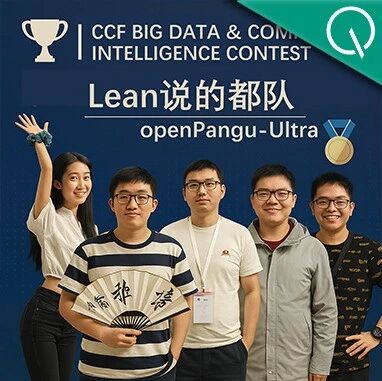
Core Insights - The article discusses a breakthrough in AI mathematical reasoning achieved by a team named "Lean说的都队" during the CCF formalized mathematics competition, where they emerged as champions among 33 teams [1][2]. Group 1: Competition Overview - The competition, organized by the China Computer Federation and supported by various institutions, aimed to address the core issues of "hallucination" and unreliability in large models during mathematical reasoning [2]. - The competition required models to convert natural language mathematical problems into formal proof code without any natural language explanations, effectively making AI act as both mathematicians and programmers [4]. Group 2: Team Performance - "Lean说的都队" demonstrated exceptional capabilities, answering 181 out of 220 questions correctly in the preliminary round, scoring 82.27 points, and solving 5 out of 50 difficult problems in the finals with a score of 10 points, leading to a total score of 57.21, placing them first [6]. - The team consisted of members from Peking University, including Yuan Ye, Liu Chengwu, Li Botao, Xie Jiaxuan, and Li Siqi, guided by Professor Zhang Ming [6]. Group 3: Technical Innovations - The team utilized the Huawei openPangu-Ultra-MoE-718B model, a large-scale mixed expert language model with 718 billion parameters, which demonstrated strong performance in formal mathematical reasoning tasks [9]. - The model's architecture includes advanced features such as Multi-head Latent Attention and Depth-Scaled Sandwich-Norm, enhancing its ability to handle abstract mathematical concepts [9]. Group 4: Methodology and Mechanisms - The team introduced a collaborative solving system that combines the reasoning capabilities of the openPangu model with the efficiency of specialized provers [7]. - They implemented a dynamic switching strategy and a multi-layer quality assurance system to ensure the correctness and semantic alignment of proofs [13][14]. Group 5: Semantic Verification Breakthrough - A significant innovation was the introduction of a semantic decomposition verification mechanism, which breaks down natural language problems into data types, premises, and proof goals, improving the reliability of formal results [16][19]. - This approach addresses the issue of overly lenient judgments in traditional methods, significantly reducing the error rate in formal proofs [19]. Group 6: Practical Applications - The team showcased their model's adaptability through two case studies: one involving abstract algebra and another on complex number calculations, demonstrating the model's ability to generate rigorous formal proofs [20][22]. Group 7: Challenges and Future Directions - Despite the progress, the team acknowledged limitations in the current system, particularly in handling advanced mathematics topics and the average solving time of one hour per problem [23]. - Future recommendations include developing specialized provers through active learning, exploring dynamic sampling strategies, and fostering human-AI collaboration in proof processes [23]. Group 8: Conclusion - The achievements of the Peking University and Huawei team mark a significant milestone for China in the field of AI formalized reasoning, providing a viable technical pathway for tackling rigorous mathematical proofs [31].
首个文本到3D生成RL范式诞生,攻克几何与物理合理性
量子位· 2025-12-20 04:20
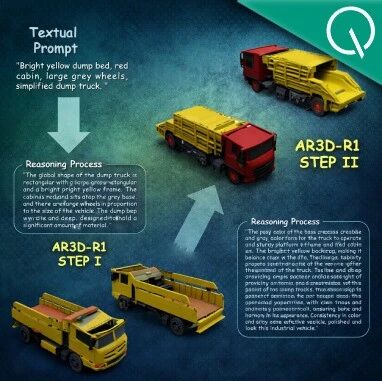
Core Insights - Reinforcement Learning (RL) has become a key method for enhancing the reasoning chain and generation quality in large language models and text-to-image generation [1] - A recent study by several universities explores the applicability of RL in the more complex domain of text-to-3D generation [2][3] Group 1: Research Focus - The study investigates whether RL can strengthen the stepwise reasoning and generation process of 3D autoregressive models [3] - It identifies challenges in the text-to-3D domain, including the need for reward design that captures semantic alignment, geometric consistency, and visual quality [6] Group 2: Reward Design and Findings - The research team found that aligning with human preference signals is crucial for improving overall 3D quality, while other reward dimensions provide limited benefits when used alone [7] - Specialized reward models generally outperform large multimodal models (LMMs) in robustness, although a general multimodal model (Qwen-VL) showed unexpected robustness in 3D-related attributes [7] Group 3: Training Techniques - In 3D autoregressive generation, RL prefers token-level strategies over sequence-level operations, leading to significant improvements [8] - Techniques like Dynamic Sampling can stabilize training, while excessive KL penalty removal can degrade performance [9] Group 4: Benchmarking and Evaluation - The study introduces the MME-3DR benchmark, focusing on spatial and structural geometry, mechanical affordance, physical plausibility, organic forms, and rare entities [10] - MME-3DR aims to assess consistency, reasonability, and interpretability under challenging constraints rather than just diversity [11] Group 5: Key Discoveries - RL training significantly enhances implicit 3D reasoning capabilities across various dimensions, including spatial geometry and physical feasibility [15] - The hierarchical structure design (Hi-GRPO) that respects the sequence of geometry followed by texture is more effective than simple scoring on final images [16] - The balance between performance and stability is critical, as sparse rewards or excessive RL iterations can lead to instability and mode collapse [17] Group 6: Limitations and Future Directions - Current models still struggle with complex geometries, long-tail concepts, and highly stylized scenes, indicating the limitations of scalable 3D RL due to computational and reward acquisition costs [18]
卡帕西2025大模型总结火爆硅谷
量子位· 2025-12-20 04:20
Core Insights - The article discusses the emerging trends in AI for 2025, highlighting the transformative impact of large models and the belief that only 10% of their potential has been realized so far [6][7]. Group 1: Key Predictions and Trends - The introduction of RLVR (Reinforcement Learning with Verified Rewards) marks a new phase in training large models, allowing them to develop reasoning strategies autonomously [8][10]. - The performance of large models is expected to exhibit a "zigzag" characteristic, indicating rapid bursts of capability as RLVR is adopted [18]. - Cursor represents a new application layer for large models, suggesting a shift towards more integrated and user-friendly AI applications [23][24]. Group 2: Innovations in AI Applications - Claude Code is identified as a significant example of a large model agent, capable of running locally on personal computers and utilizing user-specific data [26][32]. - Vibe Coding is anticipated to democratize programming, enabling non-professionals to create software through natural language [34][37]. - Nano Banana is highlighted as a groundbreaking model that integrates text generation, image generation, and world knowledge, setting a new standard for user interface and experience in AI [40][43].

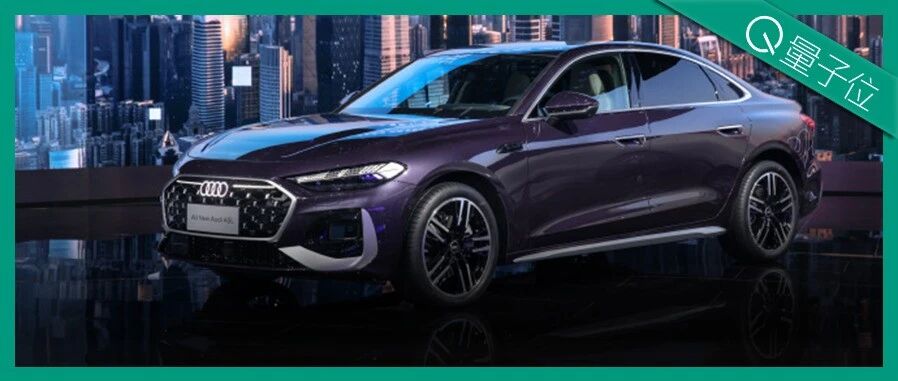
奥迪+华为=油车智能天花板?
量子位· 2025-12-20 04:20
Core Viewpoint - The emergence of the FAW Audi A5L QianKun Intelligent Driving® version, a fuel vehicle equipped with Huawei's intelligent driving technology, challenges the stereotype that fuel vehicles lack intelligence, showcasing a significant advancement in the automotive industry [1][2][44]. Group 1: Product Features and Performance - The FAW Audi A5L integrates Huawei's QianKun Intelligent Driving with Audi's mechanical quality and Porsche's engine technology, creating a highly capable vehicle [1]. - The vehicle's design includes innovative placement of the lidar system, which is located below the headlights, maintaining traditional aesthetics while enhancing functionality [7]. - During a test drive, the vehicle demonstrated high levels of intelligent driving, with 93% of the journey under intelligent assistance, effectively navigating various urban and highway scenarios [9][39]. Group 2: User Experience and Feedback - The intelligent driving system of the FAW Audi A5L successfully dispelled preconceived notions about fuel vehicles being non-intelligent, providing a comfortable and safe driving experience [41][44]. - Users reported smooth acceleration and steering, with the system effectively managing complex driving situations, such as navigating through blind spots and roundabouts [24][28][39]. Group 3: Market Trends and Implications - The fuel vehicle market remains significant, with 14.67 million units sold in China from January to October, indicating a strong user base that demands intelligent features [45]. - The integration of intelligent driving technology into fuel vehicles is seen as a response to market demands, with the potential for significant growth in this segment [46][56]. - The collaboration between Audi and Huawei represents a shift in the automotive industry, where fuel vehicles can now compete with electric vehicles in terms of intelligence and user experience [57][60]. Group 4: Technological Innovations - The vehicle's architecture includes a six-layer system, with Huawei responsible for the upper layers that enhance intelligent capabilities, while Audi focuses on the lower layers to improve responsiveness [47][49]. - The Vehicle Motion Manager (VMM) plays a crucial role in facilitating communication between hardware and software, ensuring smooth operation of the intelligent driving system [52][54]. - Audi's redesign of the electronic architecture reduces communication delays, allowing for more efficient execution of driving commands, which is essential for the performance of intelligent driving features [50][55].
量子位编辑作者招聘
量子位· 2025-12-20 04:20
编辑部 发自 凹非寺 量子位 | 公众号 QbitAI 目前,我们有 三大方向 岗位招聘,希望你是 (或者能成为) 这三个方向的内容专家: 岗位均为全职,工作地点:北京中关村。 岗位面向: 加入我们,你可以获得: 以下是岗位详情: 所有岗位不同能力层级职位均在开放,欢迎结合个人履历和经验申请。 AI产业方向 AI热潮还在汹涌,但如果你还不知道如何参与……那为什么不来 量子位 呢? 我们是一家以 追踪AI新进展 为核心的内容平台,经过8年积累,目前拥有顶流影响力,广泛且备受认可的产业资源,以及时代风口的最佳观 测和学习生态位。 岗位职责: AI产业方向 :关注基建层创新,包含芯片、AI Infra、云计算; AI财经方向 :关注AI领域创投和财报,跟踪产业链资本动向; AI产品方向 :关注AI在应用和硬件终端方向的进展。 社招:覆盖编辑、主笔、主编各个层级,按能力匹配岗位; 校招:应届毕业生,接受实习且可转正。 站在AI浪潮之巅 :第一时间接触和了解AI领域最新技术和产品,构建完整的AI认知体系。 玩转AI新工具 :将各种AI新技术、新工具应用于工作,提升工作效率和创造力。 打造个人影响力 :通过撰写独家原创内 ...
