合成生物学与绿色生物制造

Search documents
郑裕国院士团队汤晓玲、柳志强教授实现L-蛋氨酸高效生物合成
合成生物学与绿色生物制造· 2025-09-02 02:48
Core Viewpoint - The article discusses the innovative research on L-methionine synthesis through engineered enzymes, highlighting advancements in enzyme stability and activity, which are crucial for industrial applications in various sectors such as feed, pharmaceuticals, and food [3][4][10]. Group 1: Enzyme Engineering and Research Findings - L-methionine is an essential amino acid with significant applications in feed, pharmaceuticals, and food industries, making its efficient biosynthesis a research focus in biotechnology [3]. - The research team developed a fermentation-enzyme synthesis route for L-methionine, utilizing a high-efficiency cell factory to produce the precursor O-succinyl-L-homoserine (OSH) [3][4]. - A novel strategy called "dynamic network rigidification-local flexibility regulation" was proposed to enhance enzyme activity and stability, addressing the long-standing "activity-stability trade-off" in protein engineering [3][4]. Group 2: Key Experimental Results - The study identified 20 potential mutation sites in the enzyme O-succinyl-L-homoserine mercaptotransferase (CvMetZ) through consensus sequence analysis, leading to beneficial mutations such as T59I and A241T, which improved half-life and enzyme activity significantly [4][5]. - The half-life of the T59I mutant increased from 3.3 hours to 9.8 hours, with a 28% increase in enzyme activity, while A241T achieved a half-life of 11.2 hours and a 25% activity increase [4][9]. - The combination of multiple mutations resulted in a triple mutant (T59I/T119Y/A241T) that exhibited a half-life of 20.6 hours and a 36% increase in enzyme activity, demonstrating the effectiveness of the engineered design [8][9]. Group 3: Industrial Application and Cost Efficiency - The modified enzymes were subjected to immobilization studies, achieving high immobilization efficiency and activity recovery, with over 90% activity retained after the first 10 batches and over 60% after 30 batches [10]. - The fermentation enzyme method for L-methionine synthesis demonstrated a yield of 92.8% using over 100 g/L of O-succinyl-L-homoserine as a substrate, providing critical data for large-scale production [10].

合成生物A股突发!688089,终止重大资产重组
合成生物学与绿色生物制造· 2025-08-31 08:39
Core Viewpoint - The company Jia Bi You announced the termination of its acquisition of 63.21% equity in Ou Yi Biological after nearly 10 months of planning, citing changes in the external market environment as the reason for this cautious decision [2][6]. Summary by Sections Termination Reasons - Jia Bi You's latest announcement indicated that the termination of the acquisition was due to the failure to reach an agreement on core transaction terms, and the company has withdrawn its application documents [4][6]. Background of the Acquisition - Since October 29 of the previous year, Jia Bi You had been planning a major asset restructuring, initially aiming to acquire 65% of Ou Yi Biological's equity. This was later adjusted to 63.21% and involved a reduction in the number of transaction parties from 14 to 13 [7][8]. - The adjusted proposal included issuing 29.77 million shares at a price of 19.29 yuan per share, totaling a transaction price of 830.6 million yuan, which would have resulted in a significant goodwill addition of 721 million yuan, accounting for 43.3% of total assets and 47.21% of net assets as of September 30, 2024 [7][8]. Financial Performance - In the first half of the year, Jia Bi You reported a revenue of 307 million yuan, representing a year-on-year increase of 17.6%, and a net profit attributable to shareholders of 108 million yuan, reflecting a growth of 59.01% [8].

2.3亿元!恩和生物4000吨合成生物新项目开工!
合成生物学与绿色生物制造· 2025-08-31 08:39
Core Viewpoint - The establishment of the Ordos Synthetic Biology Technology Co., Ltd. marks a significant step in the synthetic biology sector in Inner Mongolia, aiming to create a leading domestic and globally competitive synthetic biology industry base through collaboration between Hangzhou Enhe Biotechnology Co., Ltd. and Ordos Electric Metallurgy Group [2][4]. Group 1: Project Development - The first synthetic biology project in Ordos, with an investment of 230 million yuan, aims to produce 4,000 tons of bio-based calcium propionate annually after the completion of the first phase [4]. - The project focuses on "efficient, green, and low-carbon" industrial biological manufacturing technology, transitioning from "laboratory research and development to large-scale production" [4]. - Upon completion, the project will become the largest producer of clean label products globally, securing a significant position in the international market [4]. Group 2: Strategic Collaborations - In May, Enhe Biotechnology signed a strategic cooperation agreement with Proya Cosmetics, marking Proya's first collaboration with a synthetic biology company to integrate synthetic biology, artificial intelligence, and bio-manufacturing technologies [5]. - The collaboration aims to innovate functional raw materials, develop medical beauty materials, and construct a green intelligent manufacturing system [5]. - In July, Hefei Yien Biotechnology Co., Ltd. was established with a registered capital of 10 million yuan, focusing on the manufacturing and research of bio-based materials, co-owned by Yili Group and Enhe Biotechnology [6].

研发投入逆增15%!华熙生物合成生物布局深化
合成生物学与绿色生物制造· 2025-08-28 14:07
Core Viewpoint - Despite facing overall performance pressure in the first half of 2025, Huaxi Biological's strategic adjustments have begun to yield results, indicating a potential turning point in profitability [2][3]. Financial Performance - In the first half of 2025, Huaxi Biological achieved operating revenue of 2.261 billion yuan, with a net profit attributable to shareholders of 221 million yuan, and a net profit excluding non-recurring gains and losses of 174 million yuan. The overall performance did not show growth [2]. - In Q2 2025, the company reported operating revenue of 1.183 billion yuan, a year-on-year decline of 18.44%. However, the net profit attributable to shareholders increased by 20.89% to 119 million yuan, marking the first year-on-year and quarter-on-quarter increase in net profit margin since Q1 2024 [2]. Strategic Transformation - The return of the General Manager to the front line has driven significant changes, shifting the company's strategy from "scale expansion" to a "benefit-oriented development model" centered on scientific research and innovation [3]. - Huaxi Biological aims to continue focusing on technological innovation to expand the application of synthetic biology and optimize its business structure for high-quality development [3]. R&D Investment - R&D expenses increased by 15.25%, focusing on three key areas: synthetic biology technology, industrialization of recombinant collagen, and microecological preparations, with a 30% improvement in strain modification efficiency [4]. - The company is actively developing new bioactive substances using cutting-edge synthetic biology technologies and has initiated 34 skin science innovation R&D projects and 17 nutrition science innovation R&D projects during the reporting period [4]. Industrial Application and Future Growth - Huaxi Biological is applying its leading synthetic biology manufacturing capabilities across three major sectors, establishing a complete R&D chain from basic research to technology transfer and industrial application [6]. - The company has completed process validation for its sterile HA production line and is advancing the national synthetic biology technology innovation center in Tianjin, aiming to overcome the "scaling up" bottleneck in biomanufacturing [6]. - The establishment of Huaxi Tang'an Biotechnology Co., Ltd. is noteworthy, as it utilizes synthetic biology technology for the precise synthesis of heparin polysaccharides, positioning the company to transition the heparin industry from "animal resource dependence" to "green biomanufacturing" [6].


155亿!丰原绿色零碳生物制造项目落户!氨基酸、生物材料、生物能源三大版块!
合成生物学与绿色生物制造· 2025-08-28 14:07
Core Viewpoint - The collaboration between Inner Mongolia and Anhui Fengyuan Group aims to establish a green zero-carbon bio-manufacturing industrial base, aligning with national carbon neutrality goals and enhancing regional competitiveness in green manufacturing and bio-economy [2][4]. Group 1: Project Overview - The total investment for the Fengyuan (Northern) green zero-carbon bio-manufacturing industrial base project is 15.5 billion yuan, covering amino acid products, bio-materials, and bio-energy sectors [2]. - Upon full operation, the project is expected to generate annual sales revenue of approximately 26 billion yuan, tax revenue of about 3 billion yuan, and create around 3,500 jobs [2]. Group 2: Technological Innovations - Fengyuan Group has developed first and second-generation bio-manufacturing technologies using starch sugar and straw for sugar production, respectively [4]. - The company has established four major innovative technology platforms, including: 1. Technology for producing plant-based humic acid from agricultural and forestry waste [4]. 2. Three bio-based material platform technologies (PLA, bio-based polyurethane, bio-based polycarbonate) [4]. 3. Three bio-energy manufacturing technologies (cellulosic ethanol, biodiesel, bio-jet fuel) [4]. 4. Downstream application technologies for bio-based materials, including bio-fibers, bio-plastics, and bio-based construction materials [4]. Group 3: Strategic Importance - This project is a key part of Tongliao City's efforts to implement the autonomous region's strategy for high-quality development of emerging industries and modern industrial systems [4]. - The collaboration is expected to significantly enhance the competitiveness of Kailu County in the green manufacturing and bio-economy sectors, positioning it as an important growth pole for high-quality development in eastern Inner Mongolia [4].

川宁生物,半年净利4.55亿!生物发酵项目总投资已逾80亿元
合成生物学与绿色生物制造· 2025-08-27 13:38
Core Viewpoint - The financial performance of Chuaning Bio for the first half of 2025 shows significant declines in revenue and net profit, indicating challenges in the current market environment [2][3]. Financial Performance Summary - The company reported a revenue of 2.35 billion yuan, a decrease of 26.50% compared to the same period last year [3]. - Net profit attributable to shareholders was 455 million yuan, down 40.64% year-on-year [3]. - The net profit after deducting non-recurring gains and losses was 456 million yuan, reflecting a 40.38% decline [3]. - Basic earnings per share were 0.20 yuan, a decrease of 41.18% from the previous year [3]. - Cash flow from operating activities decreased by 49.32%, amounting to 391 million yuan [3]. - Total assets at the end of the reporting period were 10.16 billion yuan, down 3.74% from the previous year [3]. Strategic Focus and Future Directions - The company plans to enhance its core competitiveness through four strategic directions: 1. Reforming traditional antibiotic intermediates and Q10 through synthetic biology, utilizing gene editing and metabolic engineering to improve product efficacy and reduce production costs [4]. 2. Enhancing and cost-reducing existing products like red myrtle alcohol and squalene through optimization of strains and fermentation processes [4]. 3. Efficient biological utilization of C1/C2 resources, focusing on sustainable production of single-cell proteins and specialty chemicals [4]. 4. Developing larger-scale amino acids and vitamins [5]. Main Business and Product Overview - Chuaning Bio operates in the pharmaceutical manufacturing sector, focusing on "biological fermentation" and "synthetic biology" as dual driving strategies [5]. - The company has invested over 8 billion yuan in its fermentation projects, with a total production capacity of approximately 16,000 tons per year [6]. - Key products include thiocyanate erythromycin, cephalosporin intermediates, penicillin intermediates, and coenzyme Q10 [6]. - The synthetic biology project, with an investment of 1 billion yuan, has multiple products in production, making the company one of the few in the industry to complete the entire process from selection to large-scale production [6].

估值近50亿!合成生物“黑马”冲刺港交所
合成生物学与绿色生物制造· 2025-08-27 13:38
Core Viewpoint - Baoyi Pharmaceutical has submitted a listing application to the Hong Kong Stock Exchange, attracting significant capital investment through multiple financing rounds totaling over 1 billion RMB since its establishment [2][5]. Financing Situation - Baoyi Pharmaceutical has completed several financing rounds, including 319 million RMB in A round (February 2021), 585 million RMB in B round (August 2022), and 426 million RMB in C round (July 2024) along with 45 million RMB in C+ round (December 2024) [2][3]. - The post-investment valuation reached 4.871 billion RMB after the latest financing rounds, with a share cost of 16.91 RMB [2][3]. Business Model and Strategy - The company focuses on developing recombinant biopharmaceuticals using synthetic biology technology, aiming to replace traditional biochemical extraction products and upgrade existing treatment methods [5][6]. - Baoyi Pharmaceutical's strategy aims to mitigate risks associated with traditional extraction methods, such as viral contamination and supply instability, while producing higher purity and more effective drugs at controlled costs [6]. Financial Performance - The company reported revenues of 6.93 million RMB in 2023, 6.16 million RMB in 2024, and 41.99 million RMB in the first half of 2025, with losses of approximately 160 million RMB, 364 million RMB, and 183 million RMB respectively during the same periods [6][7]. - R&D expenditures were significant, with 132.5 million RMB in 2023, 250.7 million RMB in 2024, and 111 million RMB in the first half of 2025, indicating a focus on expanding its product pipeline [6][7]. Product Pipeline - Baoyi Pharmaceutical has seven clinical-stage candidates and five preclinical assets, with three core products (KJ017, KJ103, SJ02) protected by comprehensive intellectual property rights [8][9]. - KJ017, a highly glycosylated recombinant hyaluronidase, has completed Phase III clinical trials in China and is set to submit a New Drug Application (NDA) in 2024 [8][9]. - KJ103 targets autoimmune diseases and has received approval for Phase II clinical trials in China, while SJ02 is expected to be commercialized by the end of 2025 [9]. Market Potential - The total clinical market size for the four therapeutic areas Baoyi Pharmaceutical is targeting is projected to exceed 50 billion RMB by 2033 [7].
天津工生所在檀香精油高效合成方面取得新进展
合成生物学与绿色生物制造· 2025-08-25 16:45
Core Viewpoint - The article discusses the sustainable and large-scale production of sandalwood essential oil through synthetic biology, addressing the resource scarcity and high costs associated with natural sandalwood [1][3]. Group 1: Sandalwood Essential Oil Overview - Sandalwood essential oil, derived from sandalwood heartwood, is highly valued for its unique woody fragrance and is used in perfumes, cosmetics, pharmaceuticals, and religious ceremonies [1]. - The slow growth of sandalwood trees, which take decades to mature, along with overharvesting, has led to a significant increase in market prices, approximately $2,500 per kilogram, and unstable supply [1]. Group 2: Synthetic Biology Approach - The research team at the Tianjin Institute of Industrial Biotechnology has successfully developed a yeast cell factory capable of producing sandalwood alcohol, achieving a record yield of 10.4 g/L, which is the highest reported in literature [3][4]. - The team utilized subcellular compartment engineering to enhance the production process, specifically targeting the peroxisome for enzyme localization, which significantly improved the conversion rates of sandalwood precursors [4]. Group 3: Research and Development Achievements - The study demonstrated a 5.1-fold increase in total yield of sandalwood alcohol and sandalwood olefin, reaching 0.9 g/L, with further innovations leading to a conversion rate increase to 60.6% [4]. - The research has received funding from various national programs and has resulted in multiple patent applications, with findings published in the Journal of Agricultural and Food Chemistry [5].

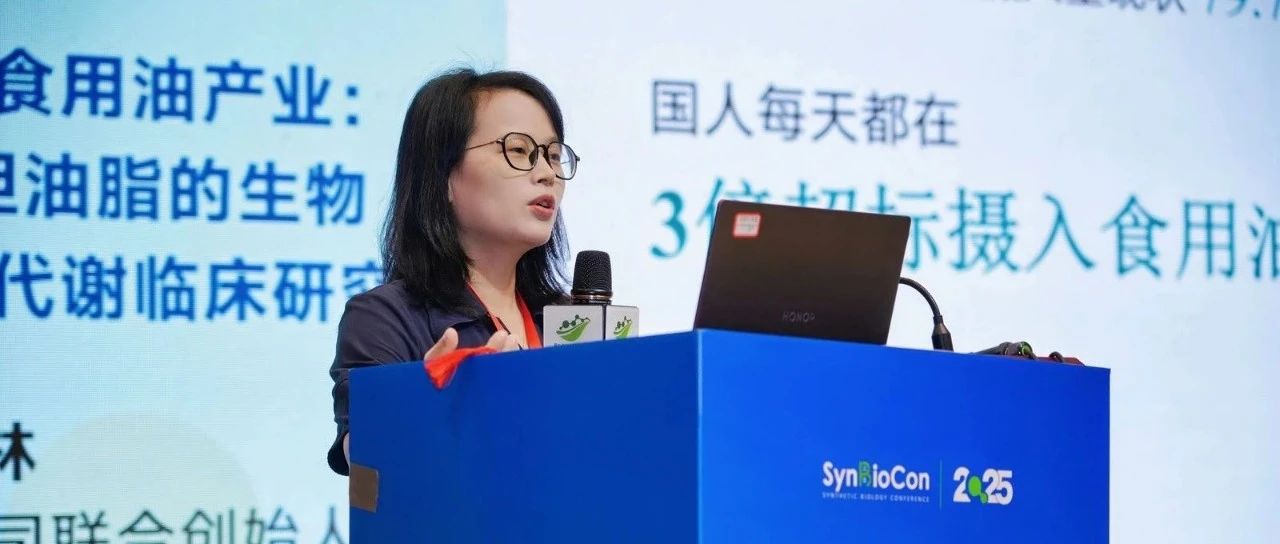
合成生物学重磅突破!轻云减负油联合北大医学部临床证实:换甘油二酯油8周改善6大健康指标!国民用油进入「真」减负时代!
合成生物学与绿色生物制造· 2025-08-25 16:45
Core Viewpoint - The article emphasizes the transformative potential of synthetic biology in the edible oil industry, particularly through the innovation of "light cloud reduced burden oil," which utilizes biotechnological advancements to create healthier oil options that support metabolic health [1][3][8]. Group 1: Technological Breakthroughs - Traditional edible oil processing often sacrifices nutritional value for purity, leading to high levels of triglycerides (TAG) that can contribute to fat accumulation and insulin resistance [3]. - The innovative biocatalytic process developed by the company allows for the conversion of natural triglycerides into diglycerides (DAG) at low temperatures, resulting in a more metabolically friendly oil that is easier to convert into energy [3][5]. - This technology not only preserves the natural flavor of the oil but also effectively reduces the metabolic burden associated with triglycerides, achieving a balance between nutrition and taste [3][5]. Group 2: Clinical Evidence - A large-scale double-blind clinical trial conducted in collaboration with Peking University Medical School demonstrated significant health improvements over an eight-week period for participants consuming diglyceride oil, including better blood lipid levels, reduced total and visceral fat, and decreased waist circumference [5]. - The results of this clinical study provide robust evidence supporting the effectiveness of "oil replacement" in improving lipid metabolism among the Chinese population, addressing a long-standing gap in domestic research [5]. Group 3: Industry Implications - The product represents a shift in the health oil market, transforming high-barrier health interventions into simple lifestyle changes, such as switching to a different type of oil, without requiring significant dietary changes or additional costs [8]. - The integration of advanced biomanufacturing techniques and intelligent manufacturing controls positions the company to redefine standards in the Chinese health edible oil sector, moving from basic sustenance to precision health [8][10]. - The evolution of oil consumption reflects a broader awakening to health consciousness among Chinese families, indicating a shift from merely eating enough to prioritizing quality and health in dietary choices [10].
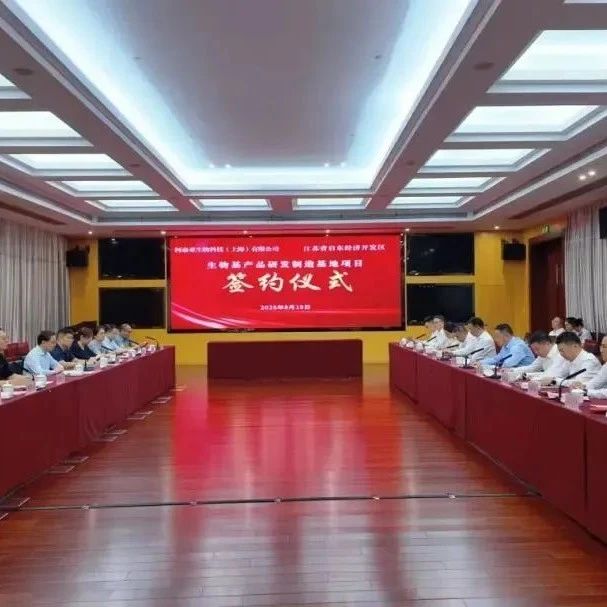
10.5亿!柯泰亚生物基研发制造基地落地启东
合成生物学与绿色生物制造· 2025-08-25 16:45
Core Viewpoint - The signing of the synthetic biology product R&D and manufacturing base project by KOTAIYA in Qidong Economic Development Zone represents a significant milestone in the company's transition from R&D to large-scale production, highlighting the importance of the local environment and support for the health sector [2][3][5]. Group 1 - The total investment for the project is 1.05 billion yuan, aimed at establishing a base for the production of pharmaceutical excipients and food nutritional additives [3]. - KOTAIYA's chairman emphasized the project's role in the company's industrialization process and expressed confidence in Qidong's supportive business environment and geographical advantages [5]. - Qidong's mayor noted the city's integration into the Shanghai biopharmaceutical industry chain, with nearly a hundred biopharmaceutical companies and several high-level innovation platforms established [6]. Group 2 - The project is expected to inject strong momentum into the local biopharmaceutical industry, with a focus on high investment scale and technological content [6]. - Qidong's government is committed to supporting the project and facilitating its rapid development into a tangible outcome, aiming for KOTAIYA to become a key player in the local biopharmaceutical sector [6].