digihuman(835670)

Search documents
国金证券:数字人民币应用场景空间广阔 2.0时代将加速发展
智通财经网· 2026-01-09 02:37
Core Insights - Digital RMB plays a significant role in promoting the internationalization of the RMB and enhancing China's financial influence globally [1][2] Group 1: Digital RMB Overview - Digital RMB is a digital form of legal tender issued by the central bank, characterized by legal validity, security, convenience, and programmability [2] - As of November 2025, Digital RMB has processed 3.48 billion transactions with a total transaction amount of 16.7 trillion RMB [2] Group 2: Market Dynamics - The necessity for sovereign digital currencies arises from risks posed by cryptocurrencies and global stablecoins to the international monetary system [3] - Approximately 130 countries, representing 98% of the global economy, are exploring digital versions of their currencies, with many in advanced development or pilot stages [3] Group 3: Favorable Environment - The usage rate of cash in China is low, with electronic payments accounting for over 60% of non-cash transactions [4] - The total payment volume in China's digital payment market is projected to reach 332 trillion RMB in 2024 and 393 trillion RMB by 2029 [4] Group 4: Industry Chain - Key technology areas for the issuance layer include digital encryption, network security, and identity authentication, with core technology companies likely to participate in the development [5] - The circulation layer will require banks and third-party payment institutions to upgrade their systems to accommodate Digital RMB [5] - The application layer involves upgrades to payment terminals like POS and ATMs, as well as the use of digital wallets [5]

数字人民币APP上线“碳普惠”小程序服务 “碳积分”可兑换数字人民币
Zheng Quan Shi Bao Wang· 2026-01-08 23:23
Core Insights - The digital RMB app has undergone significant updates, including the launch of the "Carbon Benefit" mini-program in Shanghai, which allows users to track their carbon reduction through green behaviors and convert these into carbon credits that can be exchanged for digital RMB [1] Group 1: Digital RMB App Updates - The app has completed its 2.0 version upgrade and introduced a wallet balance interest feature [1] - The "Carbon Benefit" mini-program is now live, marking a new application scenario that integrates social value and daily life [1] Group 2: Impact on Society - Analysts suggest that this initiative enhances the integration of digital RMB into everyday life, promoting faster adoption among the public [1] - The conversion of environmental contributions into tangible economic incentives lowers the barriers for the public to engage in green living, fostering a low-carbon societal trend where everyone can participate and benefit [1]
碳积分直接换钱 数字人民币APP上线“碳普惠”
Zheng Quan Shi Bao· 2026-01-08 18:47
Group 1 - The core viewpoint of the article highlights the launch of the "Carbon Benefit" mini-program within the digital RMB app, which allows users to convert their green behaviors into carbon credits that can be exchanged for digital RMB, thus promoting environmental sustainability and economic incentives [1][2]. - The "Carbon Benefit" feature is part of a broader initiative in Shanghai, which has been developing a carbon benefit market since November 2022, aiming to integrate market operations with benefits for citizens and businesses [2]. - The development of the "Carbon Benefit" program is facilitated by Lvqiu Technology (Shanghai) Digital Technology Co., Ltd., showcasing a model of local innovation supported by national policies, similar to previous initiatives in other cities like Qingdao [2][3]. Group 2 - Various enterprises and government bodies have been innovating around carbon benefit models, integrating user behaviors into specific applications, such as opting out of disposable utensils or using electronic payments to accumulate carbon credits [3]. - The introduction of the "Carbon Benefit" mini-program in the digital RMB app signifies the integration of innovative practices into a broader national financial technology ecosystem, enhancing the reach and impact of carbon reduction initiatives [3].
上海尝鲜数字人民币“碳普惠”
Xin Lang Cai Jing· 2026-01-08 16:57
Core Viewpoint - The introduction of the "Carbon Inclusive" program within the digital RMB app aims to encourage low-carbon behaviors among consumers by allowing them to earn carbon credits for eco-friendly actions, which can be converted into digital RMB [1][3][4]. Group 1: Carbon Inclusive Program - The "Carbon Inclusive" service quantifies low-carbon actions, such as riding shared bikes or using public transport, into carbon credits that can be exchanged for digital RMB [3][4]. - Users can activate the service through the digital RMB app, linking it to their accounts on participating platforms like Metro, Hello Chuxing, and T3 Chuxing, which will automatically track their low-carbon activities [3][4]. - The program is expected to enhance user engagement with digital RMB, promoting a positive cycle among policy, market, and users, while also supporting the dual carbon goals [4]. Group 2: Future Expansion and Features - The digital RMB management center plans to expand the "Carbon Inclusive" service to more cities and low-carbon scenarios, creating a collaborative network across multiple regions [5]. - The upgraded digital RMB app (version 2.0) will offer interest on balances in real-name wallets and include digital RMB deposits under deposit insurance, ensuring consumer protection [5]. - As of November 2025, the digital RMB has processed 3.48 billion transactions totaling 16.7 trillion RMB, with 230 million personal wallets opened, indicating significant adoption and application across various sectors [5].


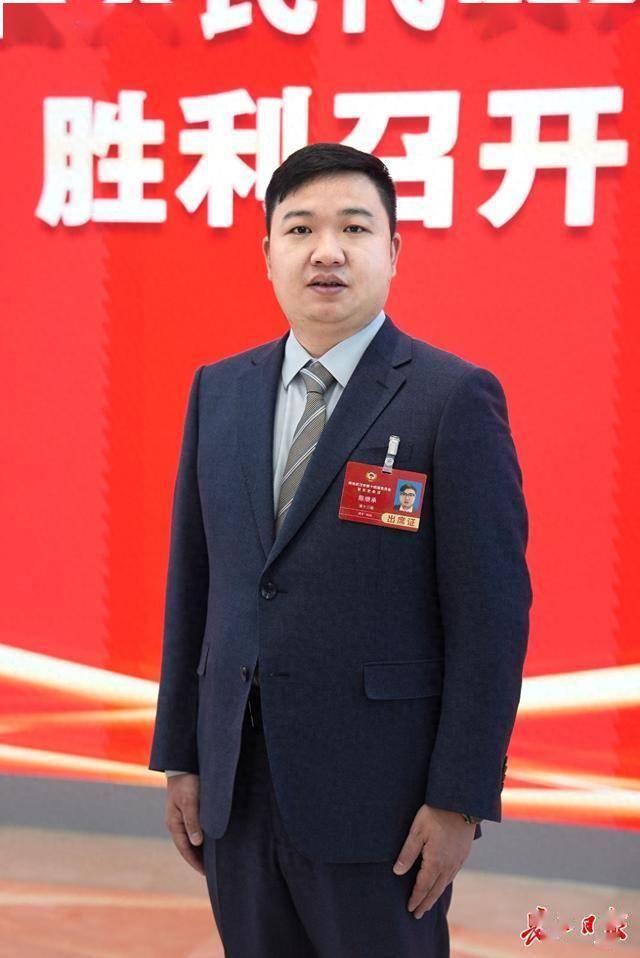
市政协委员陈继承:让数字人带游客玩三镇
Sou Hu Cai Jing· 2026-01-08 16:08
Group 1 - The core idea of the article is the proposal to utilize AIGC (Artificial Intelligence Generated Content) and digital human technology to create immersive cultural tourism experiences in Wuhan [1][3][4] - The proposal suggests that digital humans can be realistic replicas or redesigned historical figures, capable of real-time multilingual interaction and available 24/7 to enhance visitor engagement [3][4] - The initiative aims to connect historical narratives with modern technology, allowing digital humans to be integrated into various platforms such as smart screens and robots, thereby improving service inclusivity and efficiency for tourists [3] Group 2 - The proposal is part of a continuous effort by the company to enhance the cultural tourism sector in Wuhan, with previous suggestions already being adopted by relevant departments [4] - Specific recommendations include creating a digital human IP matrix representing different cultural aspects of Wuhan, developing an intelligent interactive system, and designing a digital tour route that connects key cultural sites [4] - The overarching goal is to blend technology with cultural heritage, making Wuhan's cultural tourism more engaging and personalized, potentially leading to the emergence of new popular tourist attractions [4]
低碳出行可赚数字人民币,上海率先试点
Guo Ji Jin Rong Bao· 2026-01-08 14:03
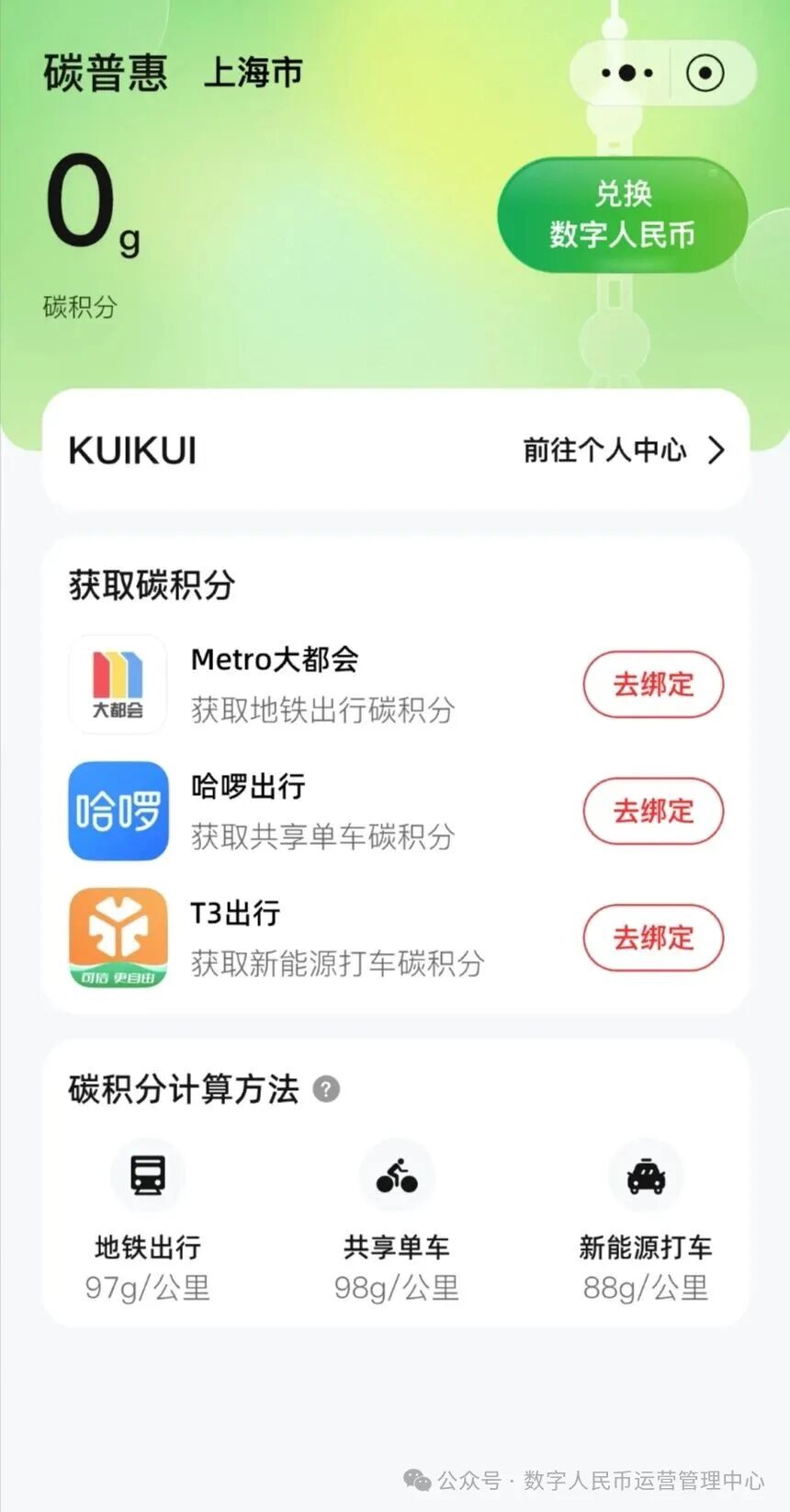
Core Viewpoint - The digital RMB management center is enhancing the application of digital RMB in "green finance" by launching a "carbon inclusive" mini-program within the digital RMB app, initially available in Shanghai [1][3] Group 1: Digital RMB and Green Finance - The "carbon inclusive" mini-program is designed to create innovative application scenarios in the carbon inclusive field [1] - The first platforms to integrate the mini-program include Metro (Shanghai Metro), Hello Chuxing, and T3 Mobility [3] - Users can earn carbon credits for low-carbon travel behaviors on these platforms, which can be converted into digital RMB [3] Group 2: User Engagement and Functionality - Users must open a digital RMB wallet and upgrade to a real-name wallet to participate in the program [3] - Currently, carbon credits can only be earned through specific activities: riding the Shanghai Metro, using Hello Chuxing's shared bikes, and taking T3's new energy vehicles [3] - The conversion rate is set at 0.01 yuan of digital RMB for every 1250 grams of carbon credits [3] Group 3: Future Developments - The digital RMB management center plans to introduce more low-carbon scenarios and expand the program to additional cities [3]
工行成功开展数字人民币跨境数字支付平台业务试点
Jin Rong Jie· 2026-01-08 13:02
Group 1 - The core viewpoint of the article highlights the successful pilot of the digital RMB cross-border payment platform by the Industrial and Commercial Bank of China (ICBC), under the guidance of the People's Bank of China, the Monetary Authority of Singapore, and the Bank of the Lao People's Democratic Republic, which aims to enhance cross-border payment efficiency and service levels [1] - On September 24, 2025, the People's Bank of China announced the official operation of the digital RMB international operation center and launched the digital RMB cross-border payment platform, providing a "Chinese solution" for central bank digital currency cross-border payment cooperation [1] - ICBC leverages its global service network and operational advantages in digital RMB to actively support the development of the cross-border digital payment platform [1] Group 2 - ICBC's Singapore branch has successfully implemented an innovative pilot for overseas recharge of digital RMB personal wallets, facilitating consumption for Singaporean tourists in China [1] - The ICBC Vientiane branch, in collaboration with the ICBC Shandong branch, successfully processed the first international trade cross-border remittance business under digital RMB between China and Laos, supporting cross-border trade and investment facilitation [1] - ICBC plans to further expand innovative application scenarios for digital RMB and actively contribute to the internationalization of the RMB and the establishment of a controllable cross-border payment system [1]

上海尝鲜数字人民币“碳普惠”,坐地铁也能挣钱!其他地区加速拓展中
Bei Jing Shang Bao· 2026-01-08 12:05
Core Viewpoint - The introduction of the "Carbon Inclusive" service within the digital RMB app aims to encourage low-carbon behaviors among the public by allowing users to earn carbon credits for eco-friendly actions, which can be converted into digital RMB [4][6]. Group 1: Service Overview - The "Carbon Inclusive" service quantifies low-carbon actions, such as riding shared bikes or using public transport, into carbon credits that can be exchanged for digital RMB [4]. - Users can activate the service through the digital RMB app, where their low-carbon activities will automatically accumulate carbon credits in their "Carbon Inclusive" account [5]. Group 2: Industry Implications - The "Carbon Inclusive" service is expected to enhance the adoption of digital RMB by promoting the dual carbon goals and increasing user engagement through rewards [6]. - The service is anticipated to create a positive cycle among policies, markets, and users, transforming banks from passive promoters to active operators [6]. Group 3: Future Expansion - Following its initial launch in Shanghai, the "Carbon Inclusive" service is expected to expand to other pilot regions across the country [7]. - The digital RMB app has recently been upgraded to version 2.0, which includes interest payments on balances and insurance coverage for digital RMB deposits, enhancing user confidence [7]. Group 4: Current Statistics - As of November 2025, the digital RMB has processed 3.48 billion transactions, amounting to 16.7 trillion yuan, with 230 million personal wallets opened [7]. - The service has established a replicable application model across various sectors, including retail, education, and public services, contributing to the broader financial landscape [7].
低碳行为可“换钱”,数字人民币App上线“碳普惠”服务|快讯
Hua Xia Shi Bao· 2026-01-08 10:59
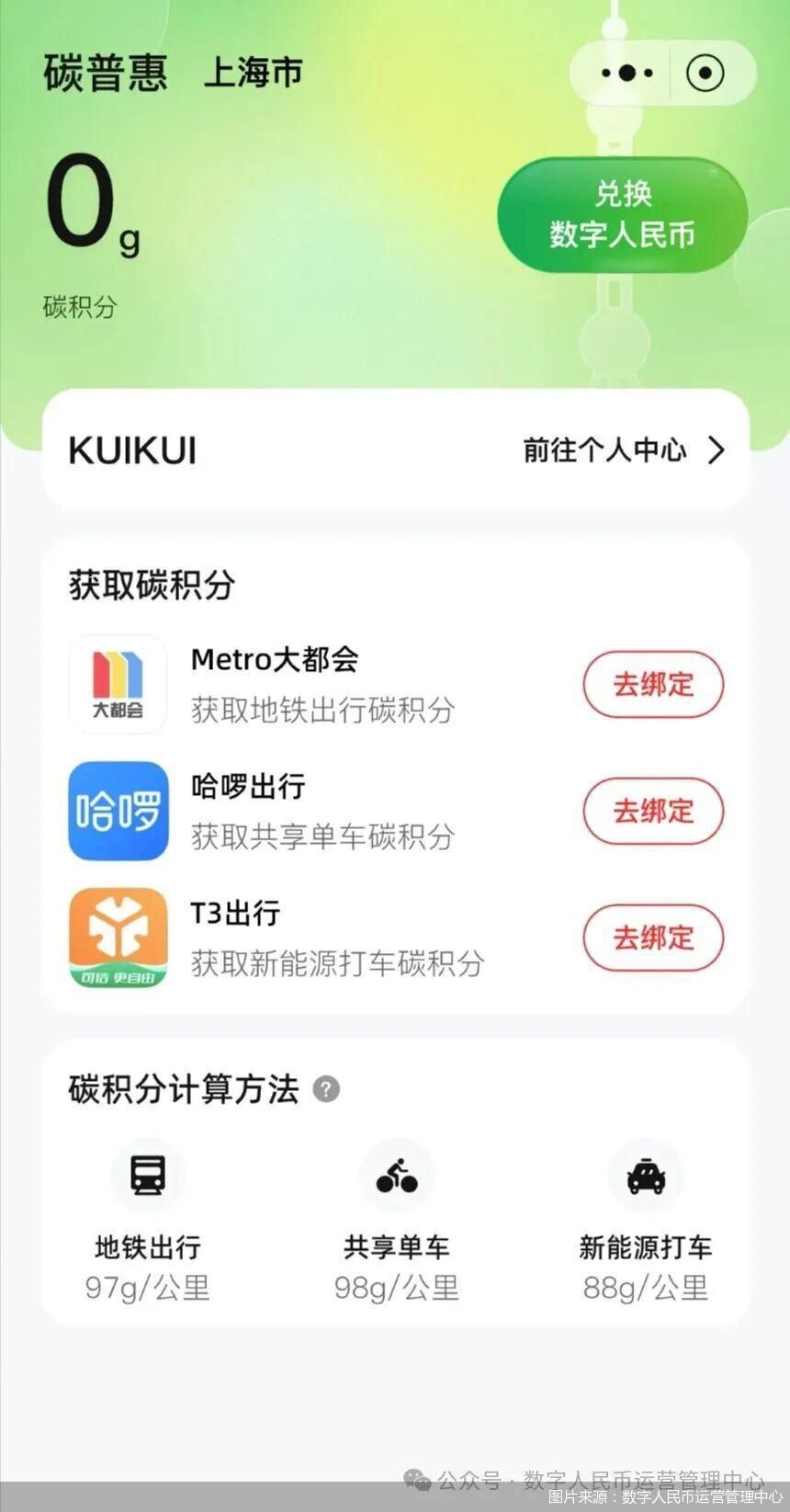
Group 1 - The core idea of the article is the introduction of a "Carbon Inclusive" service within the digital RMB app, which allows users to accumulate carbon credits for their low-carbon activities and exchange them for digital RMB [2] - The People's Bank of China is promoting the use of digital RMB in green finance scenarios by supporting the development of innovative applications in the carbon inclusive sector [2] - The "Carbon Inclusive" mini-program has been launched in Shanghai, allowing users to link their accounts from platforms like Metro, Hello Chuxing, and T3 Chuxing to automatically record their low-carbon behaviors and accumulate carbon credits [2] Group 2 - The service aims to encourage the public to engage in low-carbon behaviors by rewarding them with carbon credits that can be converted into digital currency [2] - Users must log into the "Carbon Inclusive" mini-program within the digital RMB app and associate their accounts with the aforementioned platforms to benefit from the service [2] - The initiative represents a significant step in integrating digital currency with environmental sustainability efforts [2]

银行今十条:数字人民币App上线新服务;辽宁农商银行董事长杨济时拟提名为市长;陕国投拟增持长安银行...
Jin Rong Jie· 2026-01-08 10:58
Group 1: Central Bank Operations - The People's Bank of China conducted a 1.1 trillion yuan reverse repurchase operation to offset the same amount maturing this month, ensuring liquidity in the market [1] Group 2: Digital Currency Innovations - The digital yuan app launched a "carbon inclusive" service in Shanghai, allowing users to earn carbon credits for eco-friendly behaviors, which can be exchanged for digital yuan [2] Group 3: HSBC and Hang Seng Bank Privatization - HSBC announced the results of Hang Seng Bank's privatization, emphasizing the goal of enhancing complementary advantages rather than erasing differences between the two entities [3] Group 4: Banking Security Measures - Several regional small banks, including Anping Huimin Village Bank, suspended overseas transactions to mitigate cross-border fraud risks, following similar actions by larger banks [4] Group 5: Credit Market Developments - A competitive lending environment has emerged, with personal loan rates dropping to the "2s" as banks simplify approval processes and enhance loan disbursement efficiency [5] Group 6: Leadership Changes in Financial Leasing - The Shanghai Financial Regulatory Bureau approved the appointment of a new chairman for China Everbright Financial Leasing, amidst a wave of leadership changes in the financial leasing sector [6] Group 7: Agricultural Bank Personnel Adjustments - Agricultural Development Bank is undergoing personnel adjustments, with new appointments in its northeastern branches aimed at optimizing regional business management [7] Group 8: Capital Increase at Chang'an Bank - Shaanxi Guotou plans to increase its stake in Chang'an Bank through a capital increase of up to 800 million yuan, raising its shareholding to 6.23% post-transaction [8][9] Group 9: Political Aspirations of Banking Executives - The chairman of Liaoning Rural Commercial Bank, Yang Jishi, is nominated as a candidate for a city mayor position, indicating a significant career transition [10] Group 10: Anti-Corruption Efforts in Banking - The deputy secretary of Hunan Rural Credit Cooperative, Jiang Junwen, is under investigation for serious violations, highlighting ongoing anti-corruption efforts within the financial system [11]