CKH HOLDINGS(00001)

Search documents
智通ADR统计 | 2月10日





智通财经网· 2026-02-09 22:30
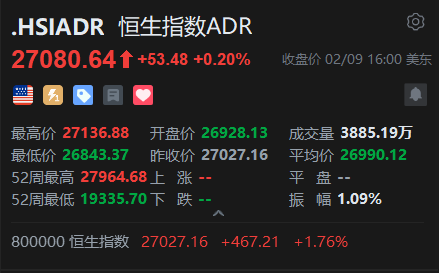
Group 1 - Major blue-chip stocks mostly rose, with HSBC Holdings closing at HKD 141.801, up 1.8% from the previous close [2] - Tencent Holdings closed at HKD 561.139, reflecting a 0.2% increase from the previous close [2] Group 2 - Tencent Holdings (00700) latest price is HKD 560.000, with an increase of HKD 12.500 or 2.28% [3] - Alibaba Group (09988) latest price is HKD 157.900, up HKD 2.900 or 1.87% [3] - HSBC Holdings (00005) latest price is HKD 139.300, up HKD 4.500 or 3.34% [3] - AIA Group (01299) latest price is HKD 86.350, up HKD 2.850 or 3.41% [3] - Meituan (03690) latest price is HKD 91.050, down HKD 0.350 or 0.38% [3] - China Ping An (02318) latest price is HKD 73.000, up HKD 3.400 or 4.89% [3] - Hong Kong Exchanges (00388) latest price is HKD 418.600, up HKD 11.000 or 2.70% [3] - Baidu Group (09888) latest price is HKD 142.200, up HKD 4.400 or 3.19% [3] - Kuaishou Technology (01024) latest price is HKD 69.300, down HKD 1.950 or 2.74% [3]

恒生科技反弹,距去年10月高点回撤已超20%,调整时长和空间均超过历史均值
Mei Ri Jing Ji Xin Wen· 2026-02-09 03:22
Core Viewpoint - The Hang Seng Technology Index has experienced over 80 trading days of adjustment since October last year, with a drawdown nearing 20%, exceeding historical averages [1] Group 1: Market Performance - The adjustment duration and magnitude have surpassed historical averages, which are 20 trading days and an 18% drawdown respectively [1] - The Hong Kong technology sector is noted for its resilience, while the A-share technology sector is recognized for its greater elasticity [1] Group 2: Investment Outlook - Huaxia Fund is optimistic about the rebound potential of Hong Kong technology stocks, highlighting the sector's core assets in AI, including computing power, models, software applications, and hardware terminals [1] - The integration of AI with e-commerce, entertainment, and enterprise services is expected to generate significant products [1] Group 3: Investment Products - Investors are encouraged to consider Hong Kong technology-related ETFs, such as the Hang Seng Technology Index ETF (513180.SH), Hang Seng Internet ETF (513330.SH), and Hong Kong Stock Connect Technology ETF (159101.SZ), all of which are listed on mainland exchanges and support T+0 trading [1] - The Hang Seng Internet ETF (513330.SH) focuses on major Hong Kong internet companies like Alibaba, Baidu, Tencent, NetEase, and JD.com [1] - The Hong Kong Stock Connect Technology ETF (159101.SZ) covers internet and new energy vehicles while also including leading innovative pharmaceutical companies like BeiGene, WuXi Biologics, and Innovent Biologics [1]

携手构建亚太共同体 促进亚太地区增长和繁荣(APEC中国年:开放 创新 合作)
Ren Min Ri Bao· 2026-02-08 23:16
Group 1 - China will host the 2026 APEC summit, with the informal leaders' meeting scheduled for November in Shenzhen, marking its third time as APEC host [1][4] - APEC is recognized as the highest-level and most influential economic cooperation mechanism in the Asia-Pacific region, with China actively participating in regional cooperation [1][2] - The theme for the 2026 APEC year is "Building an Asia-Pacific Community, Promoting Common Prosperity," aligning with President Xi Jinping's vision of a community with a shared future [3][4] Group 2 - The current global context of increasing unilateralism and protectionism poses significant challenges to international economic and trade order, making China's role as APEC host crucial for regional and global cooperation [2][4] - China aims to inject strong momentum into Asia-Pacific cooperation and provide more certainty and stability for global economic growth through the APEC summit [2][4] - The APEC 2026 agenda will focus on three priority areas: openness, innovation, and cooperation, aimed at promoting free trade, driving new productivity, and leveraging member advantages for mutual benefit [3][4]
美国名校毕业刚回国,26岁“金少”空降成董事长和总经理,父母隐退!A股多位“00后”执掌要职,“不负投资者”成重大考验
Mei Ri Jing Ji Xin Wen· 2026-02-08 13:26
Group 1 - The core point of the article is the emergence of a new generation of young leaders in A-share listed companies, particularly focusing on Jin Xi, the newly appointed chairman and general manager of Hongming Co., who is only 26 years old and faces significant challenges ahead [1][10][14] - Jin Xi has a strong educational background, having graduated from New York University and Columbia University, and has held various positions within the family business, indicating a well-prepared succession plan [4][12] - The company is currently facing financial difficulties, with projected losses exceeding 10 million yuan in 2025, attributed to a downturn in downstream investment demand and increased market competition [1][10][13] Group 2 - The trend of "post-00s" successors in A-share companies is notable, with several young leaders emerging, many of whom have prestigious educational backgrounds and family connections [7][10] - Other examples include Wu Liangyi, who became the president of Shitou Co., and Chen Hanlun, who is managing *ST Songfa, both of whom are also facing significant operational challenges [10][11] - The transition of leadership in Hongming Co. is characterized by a mix of youthful leadership and experienced support, as the new board includes seasoned professionals to help stabilize the company [12][14] Group 3 - The financial performance of Hongming Co. has deteriorated since its IPO, with revenues and net profits significantly declining, raising concerns about its future viability under the new leadership [13][14] - Investors are apprehensive about the ability of young leaders like Jin Xi to navigate the complexities of running a public company, especially given their limited experience [12][14] - The generational transition in leadership raises questions about the balance of power and responsibility, as Jin Xi does not hold any shares in the company, while his parents retain a majority stake [14]


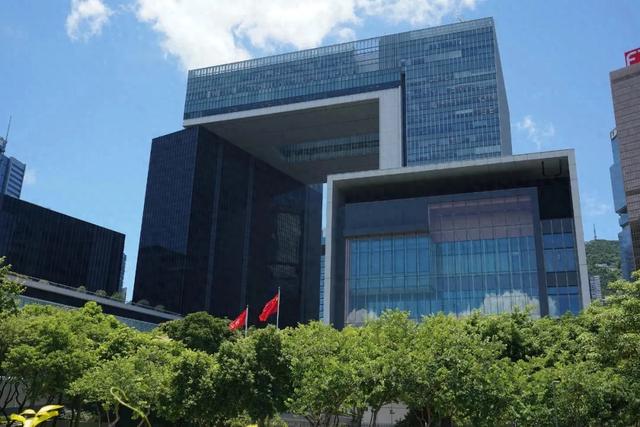
香港特区政府召见巴拿马总领事
Xin Lang Cai Jing· 2026-02-08 05:05
Core Viewpoint - The Hong Kong government expresses strong dissatisfaction with the Panama Supreme Court's ruling regarding the operating rights of Hong Kong's CK Hutchison Holdings at two ports in Panama, emphasizing the potential negative impact on the business environment and economic development in Panama [1][3]. Group 1: Government Response - The Secretary for Commerce and Economic Development of Hong Kong, Edward Yau, has summoned the Panama Consul General to express opposition to the ruling, which he claims undermines the investment and job creation efforts made by the Panama port company over the years [3]. - Yau criticizes Panama for damaging its national credibility and warns that such actions will have profound negative effects on the business environment and economic development, as well as severely disrupt international trade rules [3]. Group 2: China's Position - The Chinese government has reiterated its commitment to protecting the legitimate rights and interests of Chinese enterprises in response to the Panama Supreme Court's ruling, which it deems as baseless and damaging to Hong Kong enterprises [5]. - The State Council's Hong Kong and Macao Affairs Office has condemned the ruling as absurd and a betrayal of trust, asserting that the Chinese government will not tolerate acts of hegemony and bullying [5].
专访香港法律专家:巴拿马撕毁合约背信弃义,中方护企有实招
Xin Lang Cai Jing· 2026-02-07 15:36
Core Viewpoint - The Panama Supreme Court ruled the renewal of the concession contract for the Panama Canal port operated by a Hong Kong company as unconstitutional, which has raised concerns about the legal rights of Chinese enterprises in foreign investments [1][4]. Group 1: Legal and Political Context - The ruling has been criticized by the Chinese government as a violation of the legitimate rights of Hong Kong enterprises, emphasizing the commitment to protect these rights [1][4]. - The timing of the ruling coincides with U.S. efforts to diminish Chinese influence in Latin America, suggesting potential political motivations behind the decision [6]. Group 2: Response Strategies - The company involved, CK Hutchison Holdings (长江和记实业有限公司), has initiated arbitration against the Republic of Panama based on the concession agreement, claiming breach of contract [7]. - Possible measures for the Chinese government include diplomatic negotiations, compliance reviews, and enhanced scrutiny of trade and investment in Panama [3][4]. Group 3: Legal Vulnerabilities - The ruling raises questions about procedural fairness and the protection of investor rights, particularly given the long-standing operation of the port by the company since 1997 [6]. - The legality of the temporary takeover of the port by the Danish shipping company Maersk, as stated by the Panamanian government, is also under scrutiny [6]. Group 4: Lessons for Chinese Enterprises - Companies are advised to conduct thorough legal due diligence before investing, considering not only contract terms but also the political stability and legal environment of the host country [10]. - Establishing a compliance mechanism that integrates local legal expertise is crucial for monitoring regulatory changes during project operations [11]. - In the event of adverse legal rulings, companies should act swiftly to initiate arbitration or seek injunctions to mitigate negative impacts [11].

香港特区政府召见巴拿马总领事,港专家:仲裁胜诉可查封巴政府境外资产
Xin Lang Cai Jing· 2026-02-07 11:29
Core Viewpoint - The Hong Kong government expresses strong dissatisfaction with the Panama Supreme Court's ruling that declared the renewal of contracts for two ports operated by Hong Kong's Cheung Kong Holdings in Panama as unconstitutional, emphasizing the potential negative impact on Panama's business environment and international trade rules [1][3]. Group 1: Government Response - The Secretary for Commerce and Economic Development of Hong Kong, Edward Yau, reiterated the government's position, criticizing Panama's actions as damaging to the country's credibility and economic development [1]. - The Hong Kong government urges Panama to respect contractual agreements and ensure a fair business environment for companies operating legally in the country [1][3]. Group 2: Legal Actions and Implications - Cheung Kong Holdings has initiated arbitration against the Panama Supreme Court's ruling, claiming it has suffered "serious and imminent losses" and is seeking "broad compensation" [3]. - Legal experts suggest that if Cheung Kong wins the arbitration, it could seek enforcement of the ruling in 172 countries under the New York Convention, although Panama may claim "sovereign immunity" to protect its assets [4]. Group 3: Potential Economic Impact - The situation may hinder potential investments worth billions, as Chinese state-owned enterprises have significant ongoing infrastructure projects in Panama, including a $1.4 billion bridge project and a cruise terminal [7]. - Chinese shipping companies are being advised to consider rerouting cargo through other ports without significantly increasing costs, and customs inspections on imports from Panama have been intensified [7]. Group 4: Broader Geopolitical Context - Analysts suggest that China could coordinate with neighboring countries to isolate Panama diplomatically and may consider targeted sanctions against specific individuals or entities in Panama [6]. - The Chinese government is expected to provide comprehensive legal and political support for Cheung Kong's arbitration efforts, indicating a strong stance against perceived U.S. influence in the region [6][5].
巴拿马港口交易被“戏耍”?李嘉诚被迫低头,中方不忍了!
商业洞察· 2026-02-07 09:22
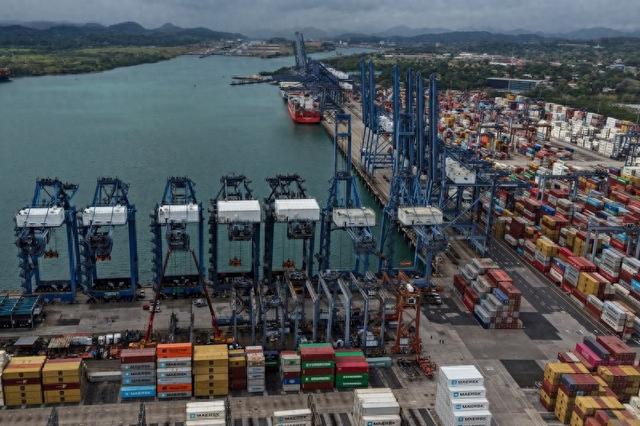
Core Viewpoint - The article discusses the unexpected legal ruling by the Panamanian Supreme Court that invalidated the operating contracts of two ports owned by Li Ka-shing's company, resulting in a significant loss of investment and control over these assets [1][3]. Group 1: Port Operations and Legal Issues - The Panamanian Supreme Court ruled that the contracts for the two ports operated by Li Ka-shing's company were unconstitutional, leading to their takeover by Maersk Group pending a new bidding process [1][3]. - Li Ka-shing had invested approximately $1.8 billion (around 12.49 billion RMB) over 30 years in these ports, which accounted for 40% of the container throughput of the Panama Canal, making them highly valuable assets [3][4]. - The ruling was justified by Panama on the grounds that the contract renewal did not follow the public bidding process, which was seen by some experts as a premeditated trap [3][4]. Group 2: Strategic Moves and Market Reactions - Li Ka-shing's urgency to sell the ports was driven by the recognition of their precarious position, prompting him to liquidate his assets before the legal issues escalated [4]. - Following the failed acquisition attempt by BlackRock, which was halted due to public backlash and regulatory intervention, the situation escalated with Panama initiating legal proceedings to terminate Li's contracts [6][9]. - The article suggests that the U.S. may be influencing Panama's actions, as the country appears to be aligning more closely with American interests, potentially at the expense of Chinese investments [8][9]. Group 3: Potential Responses and Future Implications - In response to the ruling, the Chinese side is considering international arbitration to protect its interests and bring the issue to a global audience, emphasizing the need to demonstrate who is acting reasonably in this situation [10]. - China has also developed contingency plans, such as expanding the Chancay Port in Peru, to alleviate pressure on the Panama Canal and redirect trade routes, which could significantly impact Panama's revenue from transit fees [12]. - The article highlights that China remains Panama's largest trading partner, and any withdrawal of Chinese investment could severely affect the Panamanian economy, indicating the potential consequences of antagonizing Chinese enterprises [12].

李嘉诚为什么要卖港口?两边押注的生意再也做不了
Sou Hu Cai Jing· 2026-02-07 03:33
Core Viewpoint - Li Ka-shing's decision to sell his port assets is influenced by geopolitical tensions and the need to align with political powers, particularly in the context of U.S.-China relations [1][5][9] Group 1: U.S. Influence and Geopolitical Context - The U.S. has historically been critical of Li Ka-shing's port operations, particularly since he acquired the rights in 1996, but the current geopolitical climate has shifted, leading to increased scrutiny [1][3] - The U.S. aims to project strength and influence global business decisions, compelling top intermediaries to choose sides, which affects Li Ka-shing's operations [3][5] - The U.S. cannot completely restrict Chinese shipping, as it relies on Chinese goods, indicating a complex interdependence [3] Group 2: Li Ka-shing's Business Strategy - Li Ka-shing has been divesting from controversial assets, including over 10,000 telecom bases in Europe and now his port businesses, indicating a strategic shift in response to international pressures [9] - The sale of his ports is not limited to the two controversial ones in Panama but extends to dozens of ports globally, reflecting a broader strategy to mitigate potential future complications [9] - Li Ka-shing's choice to sell to BlackRock instead of a Chinese consortium highlights the necessity of political alignment in business dealings, as selling to Chinese entities could provoke U.S. backlash [7][9] Group 3: Historical Context and Current Realities - Thirty years ago, business practices allowed for dual allegiances, but the current political climate demands clear alignment, making it difficult for businessmen like Li Ka-shing to operate in both the U.S. and China simultaneously [5][7] - Li Ka-shing's significant investments in the UK, totaling around 400 billion, demonstrate a historical pattern of seeking opportunities abroad while navigating complex political landscapes [5]

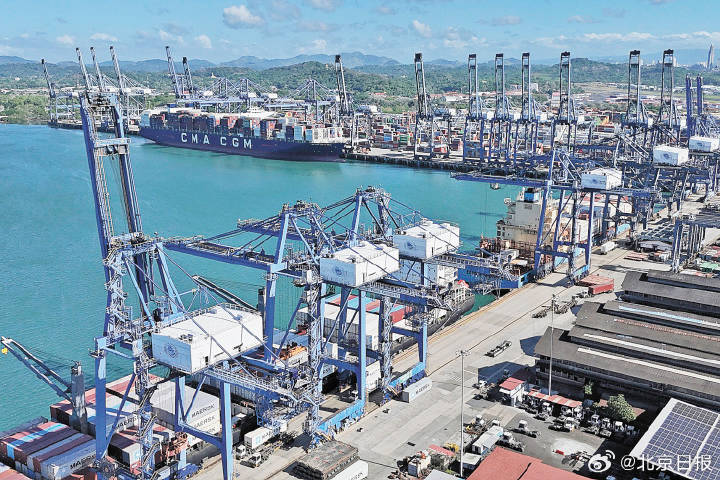
长和就巴拿马港口案提起仲裁,港澳办:巴方裁决于法无稽、于理乖张
Bei Jing Ri Bao Ke Hu Duan· 2026-02-06 10:09
Core Viewpoint - The Hong Kong-based Cheung Kong Holdings Limited (CKH) strongly opposes the recent ruling by the Panama Supreme Court, which declared the port concession agreements held by its subsidiary, Panama Ports Company (PPC), as unconstitutional, leading to significant backlash from the Chinese and Hong Kong governments [1][3]. Group 1: Legal and Operational Developments - PPC has initiated arbitration proceedings against the Panamanian government following the Supreme Court's ruling, which is expected to take effect in early February [3]. - The ruling has prompted the Panamanian government to take actions against PPC, including seizing operations and conducting inspections based on the unpublished court decision [4][5]. - PPC claims that the government's actions over the past year have been unreasonable and have caused severe financial losses, while other companies with similar agreements have not faced the same treatment [3][5]. Group 2: Economic and Political Implications - The Chinese government has condemned the Supreme Court's ruling, stating that it undermines the rule of law and contract spirit, and warns that Panama will face significant political and economic consequences if it continues down this path [1][7]. - The situation is viewed as a geopolitical struggle, with analysts suggesting that the port operations have become a battleground for U.S.-China tensions in Central America [6]. - The ruling is perceived as damaging to Panama's international credibility and could have long-term negative effects on its business environment and economic development [7].