
人民币跨境支付体系

Search documents
金融大家评 | 陈四清:加快建设自主可控的人民币跨境支付体系
清华金融评论· 2026-02-26 11:07
Core Viewpoint - The article emphasizes the importance of establishing a self-controlled cross-border payment system for the RMB as a crucial part of China's strategy to enhance its role in global financial governance and adapt to the changing global economic landscape [3][11]. Group 1: Historical Context and Importance of Cross-Border Payment Systems - The rise of financial powers throughout history has relied on independent and comprehensive financial infrastructure, with cross-border payment systems playing a key role [4]. - Historical examples include the Netherlands in the 17th century, the UK in the 19th century, and the US in the 20th century, each establishing robust payment systems that facilitated international trade and finance [4]. Group 2: Current Global Trends in Cross-Border Payments - Since the 21st century, the role of cross-border payment systems has become increasingly significant due to globalization, serving as a vital artery for capital flow and international trade [5]. - By 2025, global trade is projected to reach $35 trillion, with a 7% year-on-year growth, and global capital flow is expected to reach $1.8 trillion, highlighting the need for efficient payment systems [5]. Group 3: Challenges and Opportunities for RMB Cross-Border Payment System - The current global cross-border payment landscape is characterized by a "one superpower, many strong" dynamic, with the US dollar's share in global payments declining but still relying heavily on SWIFT for transaction messaging [6]. - The rise of emerging economies is creating new opportunities for RMB cross-border payments, as these countries push for local currency settlements and develop parallel payment systems [6][11]. Group 4: Digital Transformation in Cross-Border Payments - Technological advancements, including AI, blockchain, and big data, are driving the digital transformation of cross-border payment systems, with central bank digital currencies (CBDCs) emerging as a key development path [10]. - China is positioned as a leader in the CBDC space, with the digital RMB being integrated into the cross-border payment framework through the CIPS [10]. Group 5: Strategic Recommendations for Building a Self-Controlled RMB Payment System - The article outlines several strategies for enhancing the RMB cross-border payment system, including expanding international partnerships, developing digital RMB products, and establishing standardized payment protocols [12][13][14][15]. - Emphasis is placed on the need for a collaborative approach to address regulatory, technical, and operational challenges in the cross-border payment ecosystem [11].


上海国际金融中心一周要闻回顾(2月2日—2月8日)
Guo Ji Jin Rong Bao· 2026-02-08 11:11
Group 1 - Shanghai's GDP growth target for this year is set at around 5%, with a focus on enhancing the capabilities of the "Five Centers" [3] - The Shanghai government aims to strengthen the international financial center by advancing financial system reforms and improving cross-border financial services [3][4] - There is a push for the development of offshore financial functions to enhance Shanghai's global competitiveness in the financial sector [5][6] Group 2 - The Shanghai government is initiating a pilot program for purchasing second-hand homes to expand the supply of affordable rental housing, with support from China Construction Bank [7] - The Shanghai Futures Exchange has announced adjustments to margin levels and price limits for silver and other futures contracts due to significant price volatility [9] - The Shanghai Stock Exchange is working on creating a multi-layered ETF market, with projections indicating that the domestic ETF market will exceed 6 trillion yuan by 2025, surpassing Japan [10] Group 3 - The People's Bank of China reported that cross-border RMB transactions reached 32.4 trillion yuan in 2025, marking a 9% year-on-year increase [10] - The first commercial real estate REITs projects have been accepted for review, indicating an expansion of the REITs market into commercial properties [10] - A biodiversity loan for forest economy has been successfully issued, supporting the construction of a world-class ecological island in Chongming [12]
上海国际金融中心强不强,这五年很关键!需要把握哪些关键点?
Xin Lang Cai Jing· 2026-02-06 08:35
Core Insights - The Shanghai government aims to enhance its international financial center during the 14th Five-Year Plan, focusing on deepening the construction of the Sci-Tech Innovation Board and fostering long-term capital [1][2] - By the end of 2024, Shanghai is expected to have 1,782 licensed financial institutions, with foreign institutions making up one-third, indicating its role as a primary entry point for foreign financial entities into China [1] - The goal for the 15th Five-Year Plan is to establish an international financial center that aligns with China's comprehensive national strength and global influence within 5 to 10 years [1] Strategic Pillars - The construction of the international financial center is seen as a strategic core that drives the city's overall capability enhancement, focusing on resource allocation, asset pricing, risk management, and technological innovation [3] - Four strategic pillars are identified: 1. Deepening the new market system and expanding its functions to create a global RMB asset allocation center and risk management center [3][4] 2. Promoting high-quality institutional opening and enhancing hub capabilities by building an offshore financial system [4][5] 3. Ensuring comprehensive financial services for the real economy and nurturing new productive forces through various financial sectors [5] 4. Constructing safe and efficient infrastructure to optimize the business environment [5] Transition Phases - The construction of the international financial center is transitioning from a focus on scale and market elements to a phase of functional deepening and influence release [6][7] - The future strategy involves three transitions: 1. From channel-based openness to rule and standard-setting openness [7] 2. From element aggregation to functional empowerment and system synergy [8] 3. From risk prevention in open innovation to a high-level dynamic balance system [8][9] Dual Center Development - The dual center strategy aims to establish Shanghai as a global RMB asset allocation and risk management center, marking a shift from scale expansion to functional upgrading [10][11] - Four dimensions for deepening the dual center development are proposed: 1. Institutional opening as the core, creating a new offshore financial function zone [11] 2. Addressing financial product bottlenecks, particularly through the exploration of RMB foreign exchange futures trading [11][12] 3. Leveraging technology to upgrade financial infrastructure and regulatory systems [12] 4. Optimizing the global business environment to attract international financial organizations and talent [12][13]
利好来了!上海,重大宣布!
券商中国· 2026-02-03 10:08
Core Viewpoint - Shanghai's GDP growth target for 2026 is set at approximately 5% [2][4]. Economic Development Goals - The main expected targets for economic and social development include a GDP growth of around 5%, local public budget revenue growth of 2%, and R&D expenditure reaching 4.6% of GDP [4]. - The urban unemployment rate is targeted to remain within 5%, with per capita disposable income growth aligned with economic growth, and consumer price inflation around 2% [4]. Major Investments and Projects - A total investment of 255 billion yuan is planned for major projects this year, including the construction of various metro lines and significant infrastructure projects [4]. - The report emphasizes the acceleration of major industrial projects in sectors like integrated circuits, biomedicine, and artificial intelligence [4][8]. Long-term Development Plans - The "14th Five-Year Plan" outlines goals for 2030, focusing on high-quality development, enhanced urban functions, and improved social governance [5]. - By 2035, Shanghai aims to double its per capita GDP compared to 2020 and establish itself as a globally influential modern socialist metropolis [5]. Financial and Technological Reforms - The report highlights the need for deepening financial system reforms and enhancing cross-border financial services [6]. - It also emphasizes the importance of fostering innovation in technology and supporting the development of new business models in service trade [6][9]. Urban Renewal and Housing Development - The city plans to implement urban renewal actions, including the renovation of old residential buildings and the acceleration of village transformations [11]. - There is a focus on improving property management standards and enhancing the quality of housing development [11].

【宏观与债市周报】中央财政为股权投资机构发债提供增信支持,国债收益率下行
Xin Lang Cai Jing· 2026-01-26 11:09
Macroeconomic Overview - In mid-January 2026, prices of 29 out of 50 monitored production materials increased, while 13 decreased and 8 remained stable [1][4] - As of January 23, 2026, the 10-year U.S. Treasury yield decreased by 6 basis points to 4.24%, with the effective federal funds rate remaining stable at 3.64% [1][4] - In December 2025, the seasonally adjusted non-farm employment in the U.S. increased by 50,000, with previous months' figures revised downwards, totaling a downward revision of 76,000 jobs [1][4] - The unemployment rate in December fell to 4.4%, a decrease of 0.1 percentage points from November [1][4] - The Eurozone benchmark interest rate remains at 2.15%, while Japan's benchmark rate is at 0.75% [1][4] Bond Market Insights - The yields on both 10-year and 2-year government bonds declined last week, with the 10-year yield down by 0.95 basis points to 1.8298% and the 2-year yield down by 1.13 basis points to 1.3959% as of January 23 [2][5] - As of the end of December, the M2 money supply was 340.29 trillion yuan, reflecting a year-on-year growth of 8.5% [2][5] - The People's Bank of China conducted a 125 billion yuan 7-day reverse repurchase operation on January 23, with a net liquidity injection of 38.3 billion yuan for the day [2][5] - The total social financing stock was 442.12 trillion yuan in December 2025, with a financing growth rate of 8.3%, narrowing the gap with M2 growth by 0.7 percentage points from November [2][5] - Last week, 308 credit bonds were successfully issued, with 135 classified as local government financing bonds, accounting for 43.8% of the total [2][5] Policy and Market Developments - The People's Bank of China aims to accelerate the construction of a cross-border payment system for the yuan and implement strict regulatory measures for payment institutions [3][6] - The central government has allocated risk-sharing funds to support bond issuance for private enterprises and private equity investment institutions [3][6] - The Governor of the People's Bank of China announced plans to establish a risk-sharing tool for technology innovation and private enterprise bonds, along with providing re-lending support [3][6] - The Ministry of Finance will conduct market support operations for government bonds with maturities of 3 and 5 years starting January 20 [3][6] - Recent announcements from local government financing entities involve equity transfers, asset disposals, and changes in control [3][6] Information from Far East Credit - Far East Credit published a guide on the application of large language models in corporate credit evaluation [3][6] - Far East Credit's rating facilitated the successful issuance of the first medium-term note for Zhejiang Jiaxing Lake District Science and Technology Control Group in 2026 [3][6]
债市早报:资金面整体平稳向宽;债市偏强震荡
Sou Hu Cai Jing· 2026-01-22 02:54
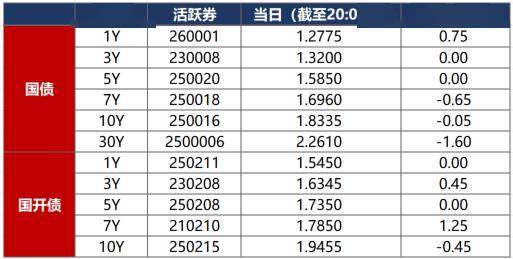
Group 1: Domestic News - The People's Bank of China (PBOC) emphasizes accelerating the construction of a cross-border payment system for the renminbi, aiming for a diversified and multi-layered development by 2026 [2] - The Ministry of Industry and Information Technology (MIIT) reports that the industrial and information sectors contributed over 40% to economic growth, with a projected 5.9% increase in industrial value added by 2025 [3] - The Ministry of Housing and Urban-Rural Development (MOHURD) plans to stabilize the real estate market by focusing on urban renewal, community construction, and improving housing sales systems [5] Group 2: International News - Former President Trump announces a framework agreement with NATO regarding Greenland, temporarily halting planned tariffs on European countries [6] - The U.S. Treasury yields show a general decline, with the 10-year Treasury yield down by 4 basis points to 4.26% [25] Group 3: Bond Market Dynamics - The bond market shows a strong performance with the 10-year government bond yield decreasing by 0.05 basis points to 1.8335% [10] - The credit bond market experiences significant price deviations, with some industrial bonds seeing price changes exceeding 10% [11] - Vanke announces a bondholder meeting where a proposal to extend the maturity of a portion of its bonds was approved [12] Group 4: Commodity Market - International crude oil prices rise, with WTI crude up 0.43% to $60.62 per barrel, and natural gas prices surge nearly 30% to $5.040 per million British thermal units [7] Group 5: Equity and Convertible Bond Market - The equity market sees a collective rise, with major indices increasing, and the convertible bond market also reflects this trend with major indices up by approximately 0.90% [21] - The convertible bond market records a trading volume of 912.89 billion yuan, with 308 out of 385 bonds rising in value [21]



五矿期货文字早评-20260122
Wu Kuang Qi Huo· 2026-01-22 00:59
Report Industry Investment Rating No relevant content provided. Core Views of the Report - For the stock index, in the long - term, policies support the capital market, and the strategy is to buy on dips [4]. - For treasury bonds, in the context of weak domestic demand recovery, there is still room for reserve requirement ratio and interest rate cuts, and the bond market is expected to fluctuate [6]. - For precious metals, in the medium - term, there is a buying opportunity after the price correction [8]. - For non - ferrous metals, in the double - wide cycle, the bullish sentiment of commodities continues, with the main focus on precious metals and non - ferrous metals, and other sectors are affected by the spill - over of market sentiment [41]. - For black building materials, the prices of black series continue to oscillate in the bottom range, and attention should be paid to the inventory reduction progress of hot - rolled coils and relevant policies [30]. - For energy and chemicals, different varieties have different trends, such as rubber is expected to decline after consolidation, and some varieties have opportunities for long - term investment [51]. - For agricultural products, different products have different outlooks, such as short - term support for the near - month contracts of live pigs and eggs, but medium - term pressure on some products [78][80]. Summary by Relevant Catalogs Stock Index - **Market Information**: Policies include solving abnormal low - price problems in government procurement, supporting the real estate market, and promoting cross - border payment systems [2]. - **Basis Ratio**: The basis ratios of IF, IC, IM, and IH for different periods are provided [3]. - **Strategy**: Adopt a long - on - dips strategy in the long - term, and pay attention to the market rhythm in the short - term [4]. Treasury Bonds - **Market Information**: The prices of TL, T, TF, and TS contracts changed on Wednesday. Policies focus on urban renewal and real estate system construction. The central bank conducted reverse repurchase operations with a net investment of 1227 billion yuan [5]. - **Strategy**: In the context of weak domestic demand recovery, there is room for reserve requirement ratio and interest rate cuts, and the bond market is expected to fluctuate, mainly affected by the stock - bond seesaw [6]. Precious Metals - **Market Information**: The prices of gold and silver in domestic and foreign markets changed. The conflict over Greenland was alleviated, and the inventory of COMEX silver decreased [7]. - **Strategy**: In the medium - term, there is a buying opportunity after the price correction, with reference price ranges for Shanghai gold and silver contracts [8]. Non - Ferrous Metals Copper - **Market Information**: The price of copper followed the trend of gold and fell. LME copper inventory increased, and the domestic spot was at a discount [10]. - **Strategy**: The copper price is expected to oscillate and adjust in the short - term, with reference price ranges for Shanghai copper and LME copper [11]. Aluminum - **Market Information**: The price of aluminum fell slightly. The inventory of LME aluminum increased, and the domestic downstream procurement sentiment improved [12]. - **Strategy**: The decline of aluminum price is limited, and it is still supported in the short - term, with reference price ranges for Shanghai aluminum and LME aluminum [13]. Zinc - **Market Information**: The price of zinc fell. The inventory of zinc ingots increased, and the LME announced restrictions on some zinc brands [14]. - **Strategy**: Zinc has room for price increase compared with copper and aluminum, and follow - up attention should be paid to the leading varieties in the sector and the Shanghai - London ratio [15]. Lead - **Market Information**: The price of lead fell. The inventory of lead ingots increased, and the LME announced restrictions on some lead brands [16]. - **Strategy**: The lead price may oscillate and adjust, and follow - up attention should be paid to the leading varieties in the sector and the Shanghai - London ratio [17]. Nickel - **Market Information**: The price of nickel fluctuated slightly. The prices of nickel ore and nickel iron changed [18]. - **Strategy**: The Shanghai nickel is expected to oscillate widely in the short - term, and it is recommended to wait and see, with reference price ranges for Shanghai nickel and LME nickel [19]. Tin - **Market Information**: The price of tin rebounded. The smelting start - up rates in Yunnan and Jiangxi were stable, and the inventory increased [20][21]. - **Strategy**: The supply - demand of tin has improved marginally, and the price is expected to oscillate. It is recommended to wait and see, with reference price ranges for domestic and overseas tin contracts [22]. Carbonate Lithium - **Market Information**: The price of carbonate lithium rebounded. The spot index and futures contract price increased [23]. - **Strategy**: The supply contraction expectation has not been falsified, but there is a callback risk. It is recommended to wait and see or try with a light position, with a reference price range for the futures contract [23]. Alumina - **Market Information**: The price of alumina increased slightly. The inventory increased, and the overseas price decreased [24]. - **Strategy**: The ore price is expected to decline, and the over - capacity of alumina smelting is difficult to change in the short - term. It is recommended to wait and see, with a reference price range for the domestic contract [25]. Stainless Steel - **Market Information**: The price of stainless steel increased. The inventory decreased, and the raw material prices changed [26]. - **Strategy**: In the short - term, the market is expected to be strong, and the price may oscillate at a high level, with a reference price range for the main contract [26]. Casting Aluminum Alloy - **Market Information**: The price of casting aluminum alloy oscillated. The inventory decreased, and the trading volume increased [27]. - **Strategy**: The price is expected to oscillate and consolidate, with strong cost support and general demand [28]. Black Building Materials Steel - **Market Information**: The prices of rebar and hot - rolled coils changed. The inventory and production of hot - rolled coils and rebar changed [30]. - **Strategy**: The prices of steel products continue to oscillate in the bottom range. Attention should be paid to the inventory reduction progress of hot - rolled coils and relevant policies [30]. Iron Ore - **Market Information**: The price of iron ore fell. The inventory increased, and the supply and demand changed [31]. - **Strategy**: The supply pressure eases marginally, and the price is supported in the short - term. Attention should be paid to the steel mill's restocking and iron - water production rhythm [32]. Coking Coal and Coke - **Market Information**: The prices of coking coal and coke changed. The technical forms and supply - demand structures are analyzed [33][34]. - **Strategy**: The prices of coking coal and coke are expected to oscillate strongly, and attention should be paid to market sentiment fluctuations [36]. Glass and Soda Ash - **Glass** - **Market Information**: The price of glass fell. The inventory decreased, and the trading volume changed [37]. - **Strategy**: The glass market is in a loose balance, and the price is expected to oscillate widely, with a reference price range for the main contract [38]. - **Soda Ash** - **Market Information**: The price of soda ash fell. The inventory increased slightly, and the trading volume changed [39]. - **Strategy**: The soda ash market is in a weak - oscillating pattern, and the price is expected to continue to be weak, with a reference price range for the main contract [39]. Manganese Silicon and Ferrosilicon - **Market Information**: The prices of manganese silicon and ferrosilicon changed. The technical forms and supply - demand structures are analyzed [40]. - **Strategy**: The supply - demand of manganese silicon is not ideal, and that of ferrosilicon is basically balanced. Attention should be paid to market sentiment and relevant factors, and there are opportunities for long - term investment [43]. Industrial Silicon and Polysilicon - **Industrial Silicon** - **Market Information**: The price of industrial silicon increased slightly. The supply and demand changed [44]. - **Strategy**: The price of industrial silicon is expected to oscillate due to news disturbances, and attention should be paid to the implementation of production cuts by large factories [45]. - **Polysilicon** - **Market Information**: The price of polysilicon fell. The supply pressure is expected to ease [46]. - **Strategy**: The market is in a wait - and - see state, and the price is expected to fluctuate in the short - term. Attention should be paid to spot transactions and exchange risk - control measures [47]. Energy and Chemicals Rubber - **Market Information**: The price of rubber oscillated and rebounded. The supply and demand, inventory, and spot prices changed [49][50]. - **Strategy**: Rubber is expected to decline after consolidation, and a short - on - rebound strategy is recommended [51]. Crude Oil - **Market Information**: The price of crude oil increased. The inventory of refined oil products in ports changed [52]. - **Strategy**: Take profit on heavy - oil spreads and go long on crude oil at the shale - oil break - even cost range [53]. Methanol - **Market Information**: The regional spot and futures prices of methanol changed [54]. - **Strategy**: The valuation is low, and there is room for long - term investment due to geopolitical expectations [55]. Urea - **Market Information**: The regional spot and futures prices of urea changed [56]. - **Strategy**: The import window is open, and it is recommended to take profit on rallies [57]. Pure Benzene and Styrene - **Market Information**: The prices of pure benzene and styrene changed. The supply, demand, and inventory are analyzed [60]. - **Strategy**: There is room for upward valuation repair of styrene non - integrated profit, and it is recommended to go long on non - integrated profit before the first quarter [61]. PVC - **Market Information**: The price of PVC fell. The supply, demand, and inventory changed [62]. - **Strategy**: The domestic supply is strong and demand is weak. In the short - term, there is support from electricity prices and export rush, and in the medium - term, a short - on - rallies strategy is recommended [63]. Ethylene Glycol - **Market Information**: The price of ethylene glycol increased. The supply, demand, and inventory changed [64][65]. - **Strategy**: The supply - demand pattern needs to be improved by increasing production cuts. There is a risk of rebound in the short - term, and valuation compression is expected in the medium - term [66]. PTA - **Market Information**: The price of PTA increased. The supply, demand, and inventory changed [67]. - **Strategy**: PTA is expected to enter the Spring Festival inventory - accumulation period. There is room for valuation increase after the Spring Festival, and attention should be paid to long - term investment opportunities [68]. p - Xylene - **Market Information**: The price of p - xylene fell. The supply, demand, and inventory changed [69]. - **Strategy**: PX is expected to maintain an inventory - accumulation pattern before the maintenance season. There are long - term investment opportunities following crude oil after the Spring Festival [71]. Polyethylene (PE) - **Market Information**: The price of PE increased. The supply, demand, and inventory changed [72]. - **Strategy**: The price of crude oil may have bottomed out. The supply pressure is reduced, and the price is supported by inventory reduction [73]. Polypropylene (PP) - **Market Information**: The price of PP increased. The supply, demand, and inventory changed [74]. - **Strategy**: The supply - demand is weak, and the inventory pressure is high. There is no prominent short - term contradiction. There are opportunities for long - term investment in the PP5 - 9 spread [75]. Agricultural Products Live Pigs - **Market Information**: The price of live pigs mainly declined. The consumption and supply situation is analyzed [77]. - **Strategy**: The short - term near - month contracts are supported, but the medium - term supply pressure is high [78]. Eggs - **Market Information**: The price of eggs was mostly stable. The supply, demand, and inventory are analyzed [79]. - **Strategy**: The near - month contracts are strong in the short - term, but the overall supply is sufficient, and the long - term outlook for the far - end contracts is uncertain [80]. Soybean and Rapeseed Meal - **Market Information**: The prices of soybean and rapeseed meal futures changed. The supply and demand situation is affected by policies and imports [81]. - **Strategy**: The prices of protein meals have fallen to the previous low, with many negative news. It is recommended to wait and see in the short - term [82]. Oils - **Market Information**: The prices of oils futures changed. The supply and demand situation is affected by production, consumption, and policies [83][84]. - **Strategy**: The current fundamentals are weak, but the long - term outlook is optimistic. It is recommended to wait and see in the short - term [85]. Sugar - **Market Information**: The price of sugar fell. The supply and demand situation is affected by imports and production in different countries [86][88]. - **Strategy**: After the negative impact of production increase is realized, there may be a rebound in international sugar prices. It is recommended to wait and see in the short - term [89]. Cotton - **Market Information**: The price of cotton oscillated. The supply and demand situation is affected by imports, production, and consumption [90][91]. - **Strategy**: In the long - term, there is room for the cotton price to rise. It is recommended to wait for a correction and then go long [92].
A股盘前播报 | 美欧关税警报解除!全球资产集体大涨 中概股指数涨超2%
智通财经网· 2026-01-22 00:55
Industry Insights - The People's Bank of China is accelerating the construction of a cross-border payment system for the renminbi, promoting interconnectivity in cross-border payments and aiming for a diversified and multi-layered development of the payment system [2] - The Ministry of Finance and four other departments announced the establishment of new duty-free shops at 41 ports to boost consumption, facilitating duty-free shopping for incoming travelers [3] - The demand for AI is driving significant revenue growth for several companies in the industry, with storage chip leader Demingli expected to achieve revenue of 10.3 billion to 11.3 billion yuan in 2025, representing a year-on-year increase of 115.82% to 136.77% [4] - The consumer electronics market is showing signs of recovery, with companies like Jin'an Guoji and Baiao Intelligent reporting impressive performance [4] Company Performance - Demingli, a leader in storage chips, anticipates a revenue increase of 115.82% to 136.77% in 2025, projecting revenues between 10.3 billion and 11.3 billion yuan [4] - Tianfu Communication, a core supplier of optical modules, expects a net profit growth of 40% to 60% in 2025 [4] - Jin'an Guoji forecasts a net profit of 280 million to 360 million yuan in 2025, reflecting a year-on-year increase of 655.53% to 871.40% [14] - Daikin Heavy Industries projects a net profit of 1.05 billion to 1.2 billion yuan in 2025, indicating a growth of 121.58% to 153.23% [14]




【早知道】住建部:支持房企合理融资需求;央行:加快建设人民币跨境支付体系
Zheng Quan Shi Bao Wang· 2026-01-22 00:00
Group 1 - The Ministry of Housing and Urban-Rural Development supports reasonable financing needs of real estate companies and emphasizes the importance of the "white list" system for real estate financing [1] - The Ministry of Industry and Information Technology aims to achieve automated monitoring of computing power resources data across 31 provinces and key computing power enterprises by the end of 2026 [1] - The People's Bank of China is accelerating the construction of a cross-border payment system for the Renminbi, promoting interconnectivity in cross-border payments [1] Group 2 - The Ministry of Finance and four other departments are establishing new duty-free shops at 41 ports, including Wuhan Tianhe International Airport [1] - The Guangdong government is supporting the orderly opening of automated driving tests in multiple scenarios and expanding high-level automated driving application areas [1]
上证早知道|泡泡玛特,一周两度回购;国产GPU第一股,最新业绩预告公布
Shang Hai Zheng Quan Bao· 2026-01-21 23:06
Group 1 - The Ministry of Housing and Urban-Rural Development emphasizes the ongoing progress of new urbanization in China, highlighting the potential for high-quality development in the real estate sector and the importance of city-specific policies for market regulation [4] - The Ministry of Finance, the State Taxation Administration, and the China Securities Regulatory Commission announced the extension of tax policies for innovative enterprises issuing depositary receipts (CDRs) from January 1, 2026, to December 31, 2027, including tax exemptions on capital gains and differentiated tax policies on dividends [4] - A notification was issued to establish and adjust a number of duty-free shops at ports, significantly increasing the number of such shops across 41 ports, including Wuhan Tianhe International Airport, thereby expanding the coverage of duty-free shopping [5] Group 2 - The State Grid reported a record high electricity load due to a cold wave, with the maximum load reaching 1.168 billion kilowatts, a 12.2% increase from the previous year's peak of 1.041 billion kilowatts, indicating a rising demand for electricity and the need for enhanced supply capabilities [7] - The investment focus of the State Grid during the 14th Five-Year Plan includes the construction of a new power system to support an annual increase of approximately 200 million kilowatts in renewable energy capacity, with R&D expenditures expected to exceed 240 billion yuan [8] - The People's Bank of China is accelerating the development of a cross-border payment system for the renminbi, aiming for high-quality development of the modern payment system, which may create new opportunities for digital renminbi and related infrastructure [9] Group 3 - Intel's CFO indicated that the demand for data center and client CPUs has exceeded expectations, leading to a rapid depletion of chip inventory, with potential supply challenges anticipated in Q1 2026 [10] - The domestic GPU company Moer Technology expects to achieve revenue of 1.45 to 1.52 billion yuan in 2025, representing a year-on-year growth of 230.7% to 246.67%, despite a projected net loss of 950 million to 1.06 billion yuan [12] - The company Demingli forecasts a net profit of 650 to 800 million yuan for 2025, reflecting a growth of 85.42% to 128.21% year-on-year, driven by enhancements in storage solutions and manufacturing capabilities [12]
