CHINA MOBILE(00941)

Search documents
智通港股沽空统计|11月19日
智通财经网· 2025-11-19 00:25
Core Insights - The article highlights the top short-selling stocks in the market, with AIA Group (81299), Li Ning (82331), and JD Group (89618) having the highest short-selling ratios at 100.00%, 100.00%, and 91.68% respectively [1][2] - Alibaba (09988), Xiaomi (01810), and Tencent (00700) lead in short-selling amounts, with figures of 3.531 billion, 1.787 billion, and 1.421 billion respectively [1][3] - China Mobile (80941), Shanghai Industrial Holdings (00807), and AIA Group (81299) have the highest deviation values, indicating significant differences from their historical short-selling averages [1][3] Short-Selling Ratios - AIA Group (81299) and Li Ning (82331) both have a short-selling ratio of 100.00%, while JD Group (89618) has a ratio of 91.68% [2] - Other notable companies with high short-selling ratios include Kuaishou (81024) at 90.75% and China Mobile (80941) at 90.20% [2] Short-Selling Amounts - Alibaba (09988) has the highest short-selling amount at 3.531 billion, followed by Xiaomi (01810) at 1.787 billion and Tencent (00700) at 1.421 billion [3] - Other companies with significant short-selling amounts include XPeng Motors (09868) at 1.012 billion and BYD (01211) at 1.001 billion [3] Deviation Values - China Mobile (80941) leads with a deviation value of 43.82%, indicating a significant increase in its short-selling ratio compared to its historical average [3] - Other companies with high deviation values include Shanghai Industrial Holdings (00807) at 40.85% and AIA Group (81299) at 36.63% [3]




重庆首支国家应急通信一类保障队伍正式揭牌
Zhong Guo Xin Wen Wang· 2025-11-18 09:31
Core Points - The establishment of Chongqing's first national emergency communication class support team marks its formal inclusion in the national specialized, standardized, and practical main force sequence for emergency communication support [1] - The team aims to provide national-level communication support for major emergencies such as flood control and geological disaster rescue in the upper reaches of the Yangtze River [1] Group 1 - The Ministry of Industry and Information Technology and 14 other departments have set a goal to achieve significant breakthroughs in key technologies for emergency communication by 2027, enhancing capabilities for extreme scenarios [1] - The national emergency communication class support team is required to quickly restore communication in extreme scenarios of "power outage, network disconnection, and road blockage" [1] - The team, formed by China Mobile Chongqing, consists of over a thousand personnel and a multi-dimensional support system that can restore core area communication within 4 hours and basic communication needs for affected individuals within 10 hours after a disaster [1] Group 2 - The team is equipped with various advanced technologies, including off-road satellite communication vehicles, integrated satellite portable stations, super base stations, and emergency cabins on the ground [1] - Aerial equipment includes 5G-A integrated drone high-altitude base stations and emergency drones, while portable terminals are equipped with "Beidou + Tiantong" satellite terminals, enabling rapid networking within 15 minutes in extreme scenarios [1] - The drone high-altitude base station can reach a height of 200 to 300 meters, covering a radius of approximately 3 kilometers and supporting the internet needs of 2,000 to 3,000 users [2]

算力持续景气,端侧大有可为
East Money Securities· 2025-11-18 06:23
Group 1 - The report highlights the sustained demand for computing power, with significant growth expected in the AI infrastructure sector driven by domestic advancements in computing chips and increased capital expenditure from cloud service providers [2][3]. - The domestic AI infrastructure is anticipated to experience rapid growth by 2026, following a slight dip in expectations due to external factors such as the ban on NVIDIA chips [2]. - The report emphasizes the structural alpha opportunities within the industry, particularly in segments like optical modules, liquid cooling, switches, and power supplies, as the demand for AI computing continues to rise [2]. Group 2 - The report indicates that the terminal AI market is on the verge of significant expansion, with policy support and ecosystem development expected to drive growth in 2026 [3]. - Innovations in products, such as Meta's AI glasses, are likely to accelerate the market penetration of terminal AI applications [3]. - The report suggests that the industry is transitioning from a phase of thematic catalysts to one of performance realization, with the emergence of "hit products" expected to further boost the sector [3]. Group 3 - The telecommunications sector is currently experiencing a phase of capital expenditure reduction, business restructuring, and increasing dividend payouts, which positions it favorably for investors [4]. - The report notes that the telecommunications sector has shown resilience, with profit growth outpacing revenue growth, and a stable or increasing dividend yield in a low-interest-rate environment [4]. - Emerging business areas, particularly in AI and satellite communications, are expected to contribute to a second growth curve for telecommunications companies [4]. Group 4 - The North American AI sector has seen a remarkable increase in capital expenditure, with projections indicating that spending could exceed $600 billion by 2026, driven by robust demand for AI services [12][13]. - The report outlines that the AI computing market is characterized by a dual demand for training and inference, with inference demand expected to surpass training demand in the near future [35][36]. - The report highlights the importance of energy management solutions, such as 800 VDC systems, in addressing the rising power consumption associated with AI data centers [69][70].



AI“冲击”下的存储行业,需要高性能与绿色化“并行”丨ToB产业观察
Tai Mei Ti A P P· 2025-11-18 01:29
Core Insights - The focus of global technology competition has shifted from pure computing power to storage, which is essential for supporting AI applications and large models [2][3] - The explosive growth of AI technology is fundamentally changing the underlying logic of storage demand, with global data expected to exceed 200ZB by 2025 and AI training data growing at an annual rate of 67% [2][3] Storage Industry Transformation - AI's rapid development is leading to a significant increase in storage requirements, with enterprises now needing storage systems that can handle tens to hundreds of PBs [3] - The demand for high-performance storage is surging, with AI training bandwidth requirements entering the "TB-level era," and a projected 300% increase in average storage bandwidth needs by 2025 compared to 2023 [3][8] - Traditional storage architectures are facing challenges, including increased data transport costs and inefficiencies, with GPU utilization rates as low as 40% in some cases [5][9] Challenges in the Storage Sector - The separation of storage and computing architectures is causing significant data transport costs, with energy consumption for data movement accounting for over 50% of total system energy [5] - Cost pressures are evident, as all-flash storage, while necessary for AI performance, remains 2.3 times more expensive than HDDs despite a 40% reduction in unit capacity costs by 2025 [5][9] - The complexity of managing diverse data types in the AI era presents significant governance challenges, characterized by the "4V" attributes: volume, variety, value, and velocity [6] Future Directions in Storage - The storage industry is evolving towards a dual focus on high performance and green transformation, driven by AI demands and sustainability requirements [7][9] - Innovations in high-performance storage are shifting from point optimizations to systemic breakthroughs, with full flash storage becoming a necessity and distributed architectures gaining prominence [8] - Green storage initiatives are becoming essential, with data centers aiming for carbon neutrality and significant increases in the use of renewable energy [9][10] Integration of Storage and Computing - The future of data centers is moving towards a model where storage and computing are integrated, addressing the challenges of architecture and efficiency [12] - The development of a hierarchical heterogeneous storage-computing architecture is anticipated, with solutions aimed at enhancing energy efficiency by up to 300 times [12] - Collaborative storage resource networks are being established, with potential cost reductions of 22% and improved computing utilization rates of 18% through regional cooperation [12][13]


南向资金今日成交活跃股名单(11月17日)
Zheng Quan Shi Bao Wang· 2025-11-17 13:57
Core Viewpoint - The Hang Seng Index fell by 0.71% on November 17, with southbound capital totaling HKD 913.76 billion in trading volume, resulting in a net inflow of HKD 84.48 billion [1] Trading Activity Summary - Southbound trading included a total of HKD 351.89 billion from the Shenzhen Stock Connect and HKD 561.86 billion from the Shanghai Stock Connect, with net inflows of HKD 41.13 billion and HKD 43.35 billion respectively [1] - The most actively traded stock was Alibaba-W, with a total trading volume of HKD 101.70 billion, followed by the Tracker Fund of Hong Kong and SMIC, with trading volumes of HKD 39.03 billion and HKD 38.54 billion respectively [1][2] - The top net buying stocks included the Tracker Fund of Hong Kong with a net inflow of HKD 37.27 billion, Alibaba-W with HKD 20.71 billion, and Xiaomi Group-W with HKD 2.80 billion [1][2] Continuous Net Buying Stocks - Three stocks experienced continuous net buying for more than three days, with Xiaomi Group-W leading at 14 days, followed by Alibaba-W and Huahong Semiconductor at 3 days each [2] - The total net buying amounts during this period were HKD 98.07 billion for Xiaomi Group-W, HKD 57.02 billion for Alibaba-W, and HKD 1.81 billion for Huahong Semiconductor [2]


智通港股通活跃成交|11月17日
智通财经网· 2025-11-17 11:01
Core Insights - On November 17, 2025, Alibaba-W (09988), the Tracker Fund of Hong Kong (02800), and SMIC (00981) were the top three stocks by trading volume in the Southbound Stock Connect, with trading amounts of 6.484 billion, 3.356 billion, and 2.080 billion respectively [1] - In the Southbound Stock Connect for the Shenzhen-Hong Kong Stock Connect, Alibaba-W (09988), SMIC (00981), and Tencent Holdings (00700) led the trading volume, with amounts of 3.686 billion, 1.774 billion, and 1.599 billion respectively [1] Southbound Stock Connect (Shanghai-Hong Kong) - Top active companies by trading amount: - Alibaba-W (09988): 6.484 billion, net buy of 868 million - Tracker Fund of Hong Kong (02800): 3.356 billion, net buy of 3.180 billion - SMIC (00981): 2.080 billion, net sell of 29.1529 million - Tencent Holdings (00700): 1.735 billion, net sell of 1.8 billion - Xiaomi Group-W (01810): 1.577 billion, net buy of 435 million - Huahong Semiconductor (01347): 1.571 billion, net buy of 85.3433 million - Ganfeng Lithium (01772): 1.209 billion, net sell of 88.1303 million - Horizon Robotics-W (09660): 842 million, net buy of 60.0033 million - Pop Mart (09992): 824 million, net buy of 219 million - Jingtaik Holdings (02228): 806 million, net buy of 60.6432 million [2] Southbound Stock Connect (Shenzhen-Hong Kong) - Top active companies by trading amount: - Alibaba-W (09988): 3.686 billion, net buy of 1.202 billion - SMIC (00981): 1.774 billion, net sell of 44.1418 million - Tencent Holdings (00700): 1.599 billion, net buy of 258 million - Xiaomi Group-W (01810): 1.372 billion, net sell of 15.5 million - Huahong Semiconductor (01347): 1.054 billion, net sell of 74.6878 million - Ganfeng Lithium (01772): 708 million, net buy of 4.5961 million - Meituan-W (03690): 612 million, net buy of 248 million - Tracker Fund of Hong Kong (02800): 547 million, net buy of 546 million - XPeng Motors-W (09868): 532 million, net sell of 52.5404 million - China Mobile (00941): 491 million, net sell of 18.3796 million [2]


2025 GMVPS案例集重磅发布!“编委会特别推荐”称号揭晓,计算技术重塑千行百业
Zhong Guo Neng Yuan Wang· 2025-11-17 08:29
Core Insights - The 2025 Global Computing Conference (CGC) hosted the release of the "2025 Annual Global Computing Industry Application Case Compilation (GMVPS)" which serves as an annual benchmark for innovation in the global computing industry [1] - The event featured nearly 60 submitted cases across more than ten industries, highlighting the breadth of innovation in the computing sector [1][8] Group 1: Case Collection and Evaluation - The case collection process, initiated on July 21, received strong support from various communities and attracted numerous submissions from GCC member units and industry partners [8] - The focus areas included intelligent computing, high-performance computing, green computing, and edge computing, covering advanced efficiency, secure computing, and intelligent systems [8] - A committee composed of technical experts, industry leaders, and media representatives conducted multiple rounds of material reviews and evaluations to select benchmark cases in technology innovation and industry application [13] Group 2: Special Recommendations and Recognitions - The newly introduced "Committee Special Recommendation" title emphasizes technological breakthroughs and industry demonstration, with a list of notable cases announced [14] - Selected cases include advanced solutions from companies like China Mobile, Huawei, and Lenovo, showcasing significant contributions to the computing landscape [16][17] Group 3: Ecosystem Development and Future Outlook - The GMVPS case selection activity aims to build bridges for industry innovation, promoting deep integration of computing technology across various sectors [19] - The release of the annual case collection not only showcases outstanding industry practices but also establishes a platform for technical exchange and resource sharing [19] - The alliance plans to continue gathering industry forces to enhance collaborative innovation, focusing on trends like intelligent upgrades and green low-carbon initiatives, thereby driving sustainable growth in the global digital economy [19]


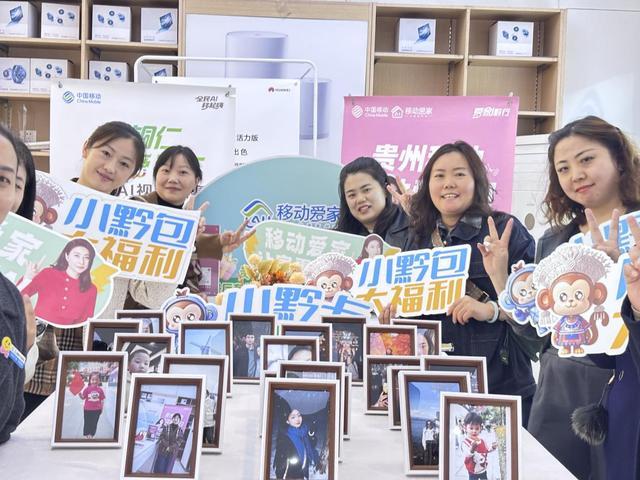
有呼必应 “移”路随行 |贵州移动“爱家日”:AI智联,暖意入万家
Huan Qiu Wang Zi Xun· 2025-11-17 04:39
Core Insights - Guizhou Mobile launched the "Mobile Love Home Day" event across nine cities in the province, focusing on integrating AI technology into family life [1] - The event featured innovative experiences such as the "AI Creation Workshop" and a "National AI Video Competition," promoting the theme of "AI for a Better Home" [1] Group 1: Event Overview - The "Mobile Love Home Day" is a brand service initiative introduced by Guizhou Mobile in May 2025, aimed at enhancing smart home services through monthly themed activities [1] - The event successfully combined technology and warmth, creating a unique experience for families [1] Group 2: AI Education and Engagement - An "AI Fun Classroom" was held in Zunyi City, where staff demonstrated AI functionalities and provided hands-on training for users on AI video production [3] - Participants expressed excitement and engagement, showcasing the practical benefits of AI technology in everyday life [3] Group 3: Community Participation - The "National AI Video Competition" attracted over 200,000 participants, allowing users to create works that reflect the beauty of Guizhou's landscapes and cultural heritage [5] - A winner from Qianxinan shared how the event made AI accessible to ordinary people, enhancing their quality of life [5] Group 4: Emotional Connection - The "AI Portrait Custom Frame" interactive area allowed participants to create cherished digital portraits, highlighting the emotional impact of technology on family memories [7] - A touching moment was shared by a participant who valued the AI-generated portrait as a special keepsake [7] Group 5: Customer Loyalty Program - Guizhou Mobile introduced the "Net Age Plan" during the event to reward long-term users with tiered benefits based on their service duration and consumption [9] - Users can receive monthly AI beans, data packages, and exclusive rewards, enhancing customer service experience [9] Group 6: Future Plans - Guizhou Mobile aims to continue expanding smart home service scenarios through various community activities, reinforcing the concept of a "smart and loving home" [11] - The company emphasizes that technology should be accessible and meaningful, enhancing the warmth and quality of life for ordinary families [11]
通信行业周报 2025年第46周:TOWER 规划扩产硅光芯片,AMD 预计未来 5 年营收 CAGR 达 35%-20251116
Guoxin Securities· 2025-11-16 09:23
Investment Rating - The report maintains an "Outperform" rating for the communication industry [5][44]. Core Insights - The communication industry is experiencing strong growth driven by advancements in AI infrastructure and silicon photonics, with companies like Tower and AMD showing significant revenue growth projections [1][15][21]. - Tower Semiconductor's Q3 2025 revenue reached $396 million, a 7% year-over-year increase, with expectations for Q4 revenue to be $440 million, driven by a 70% increase in silicon photonics revenue [11][1]. - AMD projects a compound annual growth rate (CAGR) of over 35% for overall revenue and over 60% for its data center business over the next 3-5 years, highlighting the growing demand for AI-related infrastructure [15][21]. - Cisco reported an 8% year-over-year revenue increase in Q1 FY2026, primarily due to strong AI infrastructure orders, with expectations for AI-related revenue to exceed $3 billion in FY2026 [21][22]. Summary by Sections Industry News Tracking - North American optical module and chip companies are expected to see significant growth, with Tower planning to triple its silicon photonics capacity [1][11]. - Baidu's World Conference 2025 unveiled a roadmap for computing infrastructure upgrades and the launch of the Wenxin large model 5.0, showcasing advancements in AI capabilities [26][27]. - The successful launch of 13 low-orbit satellites marks a significant step in accelerating satellite internet development [28]. Market Performance Review - The communication index fell by 4.77% this week, underperforming the Shanghai and Shenzhen 300 index, which decreased by 1.08% [3][36]. - Within the sector, IoT controllers, operators, and satellite internet showed relatively better performance [3][39]. Investment Recommendations - Continued focus on AI computing infrastructure development is advised, with recommendations to consider companies involved in optical devices, communication equipment, and liquid cooling solutions [44]. - The three major telecom operators are highlighted as important assets for long-term investment due to their stable operations and increasing dividend payouts [44]. Key Company Earnings Forecasts and Investment Ratings - Key companies such as China Mobile, Zhongji Xuchuang, and ZTE are rated as "Outperform" with projected earnings per share (EPS) growth and favorable price-to-earnings (PE) ratios [5][43].



上市公司全年纳税近4万亿元,前10名是这几家→
第一财经· 2025-11-15 12:46
Core Insights - The report reveals that in 2024, 5,091 listed companies in China contributed approximately 39,727 billion yuan in actual tax payments, remaining stable compared to 2023, accounting for about 22.7% of the national tax revenue [3][4]. Group 1: Tax Contributions and Distribution - The top 100 listed companies contributed around 73% of the total tax payments, indicating a significant concentration of tax contributions among a small number of firms [5]. - Major contributors include China National Petroleum (3,961 billion yuan) and Sinopec (3,313 billion yuan), with several banks and other companies also exceeding 1,000 billion yuan in tax payments [5]. - The average tax payment per listed company was 7.8 million yuan, with a median of 0.53 million yuan [6]. Group 2: Industry Contributions - The mining, financial, and manufacturing sectors accounted for nearly 77% of the total tax contributions from listed companies, with mining alone contributing about 1 trillion yuan [8]. - The manufacturing sector saw the highest growth in tax contributions, increasing by approximately 22.6 billion yuan, while the real estate sector experienced the largest decline at around -28% [12]. Group 3: Ownership Structure and Tax Burden - State-owned enterprises represented about 30% of listed companies but contributed nearly 80% of the total tax payments, highlighting the dominance of state-owned firms in tax contributions [12]. - The average tax burden for listed companies has decreased over the years, with the tax payment per 100 yuan of revenue dropping to approximately 5.6 yuan in 2024 [13]. - The mining and financial sectors had the highest tax payment per 100 yuan of revenue at around 12 yuan, while the manufacturing sector had a lower tax burden of about 4 yuan [14].