LENOVO GROUP(00992)

Search documents
第七届中国超级算力大会 (ChinaSC 2025)盛大召开 共探智能算力经济新未来!
Cai Jing Wang· 2025-11-10 05:47
Core Insights - The ChinaSC 2025 conference focused on the theme of "Intelligent Computing, Large Models, New Economy," discussing the technological trends and policy directions in China's computing power development [1] - The event gathered leading experts and scholars to explore the future of computing power and its integration with various industries, emphasizing the importance of collaboration for high-quality development [2] Industry Trends - The conference highlighted the accelerating global reshaping of computing power, with AI entering a new phase of "large models + deep industry coupling," positioning computing power as a core engine for driving the digital economy [4] - The integration of supercomputing and intelligent computing, termed "super-intelligent fusion," is becoming a focal point, indicating a shift from supporting AI to AI improving supercomputing capabilities [4][5] Key Reports and Rankings - Major reports released include the "2025 China AI Computing Open Architecture Research Report" and the "2025 China Computing Power Application Classic Cases," showcasing significant industry achievements and trends [3][12] - The "2025 China High-Performance Computing TOP100 Ranking" was presented, with Lenovo, Inspur, and Sugon leading the list, reflecting the ongoing advancements in computing power services [13][19] Innovations and Collaborations - The conference featured discussions on the development of the "Nine Source Unified Intelligent Computing Platform," aimed at addressing the complexities of intelligent computing software ecosystems [5][6] - Collaborative efforts were emphasized, such as the partnership between Oriental Geophysical and Huawei to enhance the GeoEast software platform, showcasing the importance of innovation in the energy exploration sector [7] Recognition and Awards - The event recognized outstanding companies and applications in the computing power sector, with awards for "2025 China Computing Power Leading Enterprises" and "Classic Application Cases," highlighting successful implementations across various industries [16][19] - Lenovo's significant presence in the TOP100 list, with 34 supercomputers, underscores its leadership in the high-performance computing market [19]


联想宣布与敦煌共建城市超级智能体:打造城市智能化中枢
Huan Qiu Wang· 2025-11-10 05:01
Core Insights - Lenovo Group has signed a strategic cooperation agreement with Dunhuang City to promote the development of smart city initiatives leveraging Lenovo's "full-stack AI" strategy and the city's unique advantages in cultural tourism, the Belt and Road Initiative, and low-altitude economy [1][2] Group 1: Strategic Cooperation - The partnership aims to drive intelligent transformation in various sectors including cultural tourism, agriculture, low-altitude economy, and urban governance [1][3] - Lenovo's city super-intelligent system has been implemented in multiple cities across China, establishing a replicable model for smart city construction [1][2] Group 2: Technology Framework - The "1+N intelligent system" framework includes a unified super-intelligent core and multiple specialized intelligent agents, enabling cross-domain data integration and real-time processing of vast heterogeneous data [2] - Each specialized intelligent agent is trained on domain-specific models, allowing for complex scenario reasoning and multi-task processing while ensuring data security through federated and transfer learning [2] Group 3: Sector-Specific Applications - In the cultural tourism sector, AI will facilitate the digital preservation of Dunhuang's cultural heritage and enhance visitor experiences through data-driven management [3] - In agriculture, smart agricultural systems will be deployed to optimize production and support the branding of local agricultural products [3] - The low-altitude economy will be developed in conjunction with the construction of Dunhuang International Airport, promoting intelligent advancements in related industries [3] - Urban governance will benefit from intelligent sensing networks for real-time monitoring and management of city operations [3]
当技术商业化从“年”缩短到“月”,观望的成本已远超行动
吴晓波频道· 2025-11-10 00:30
Core Insights - The article emphasizes that the next two years will witness a transformative shift in the industrial landscape driven by artificial intelligence, marking a critical point in the fourth industrial revolution [2][18] - The AI eyewear market is experiencing a remarkable growth rate of 116.1%, while the humanoid robot market is growing over 27%, indicating a significant shift in consumer habits and production capabilities [2] Group 1: Industry Trends - The CES 2026 will serve as a strategic platform for the commercialization of AI technologies, showcasing the evolution of the tech industry and highlighting key trends such as environmental AI and embodied intelligence [3][5] - The event will feature over 4,500 exhibitors across more than 150,000 square meters, providing a comprehensive view of future technology trends [5][18] Group 2: Learning Opportunities - Participants will have the chance to engage with top experts and industry leaders, including insights from notable figures like Lenovo's CEO and Intel's CEO during the Lenovo Innovation Technology Conference [8][28] - The program includes immersive visits to leading tech companies and academic institutions, such as Stanford's robotics lab and Google's campus, to understand cutting-edge technologies and their commercial applications [11][29] Group 3: Networking and Collaboration - The program aims to foster connections among high-level executives, with a focus on creating new business opportunities through shared insights and experiences [13][19] - The selection process for participants ensures that attendees are primarily industry leaders, enhancing the potential for valuable networking and collaboration [13][19]





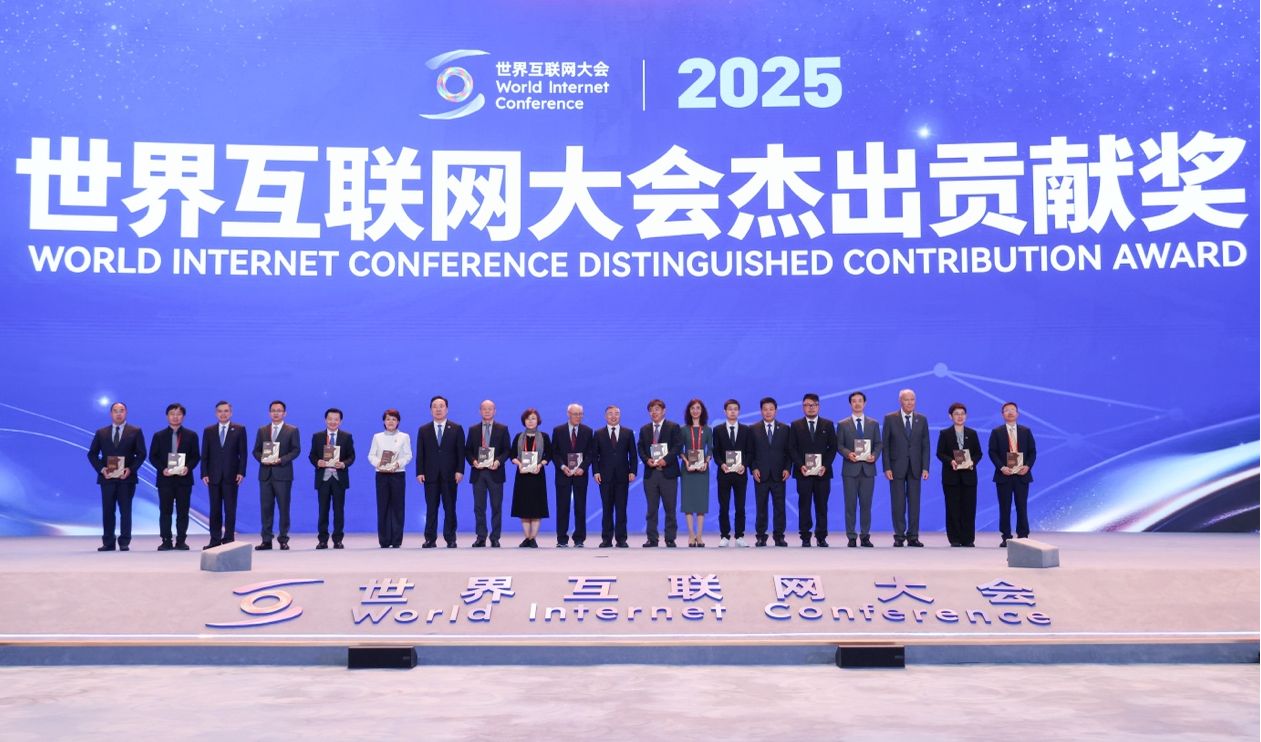
世界互联网大会杰出贡献奖名单揭晓,3家企业连续两年获奖
Bei Ke Cai Jing· 2025-11-09 10:36
Core Points - The 2025 World Internet Conference in Wuzhen announced the "Outstanding Contribution Award" winners, recognizing 5 individuals and 14 companies for their contributions to the internet [1][2]. Group 1: Award Winners - The awarded individuals include Robert Kahn, Vint Cerf, Jun Murai, Latifah Cohen, and Qian Hualin, each recognized for their significant contributions to internet technology and development [1]. - The awarded companies are categorized into three types: "Social Contribution," "Innovative Breakthrough," and "Growth Potential" [2][3]. Group 2: Company Categories - Companies recognized in the "Social Contribution" category include Tencent, Lenovo, Qiangna Technology, AgriPredict Solutions, and Arm [3]. - Companies in the "Innovative Breakthrough" category include China Mobile Research Institute, ZTE Corporation, Anheng Information, and Pakistan Mobile Communications [3]. - Companies in the "Growth Potential" category include Li Auto, Yushu Technology, Tianzu Zhixin, Ant Group's Antimi, and Tianyi Cloud [3]. Group 3: Changes from Previous Year - Notable changes from the 2024 awards include Tencent moving from "Innovative Breakthrough" to "Social Contribution," ZTE changing from "Social Contribution" to "Innovative Breakthrough," and Ant Group's Antimi receiving the "Growth Potential" award instead of Ant Group itself [5]. Group 4: Company Statements - Tencent's senior vice president emphasized that "Tech for Good" is ingrained in the company's ethos, focusing on innovation and positive impact [6]. - Ant Group's vice president highlighted the importance of addressing security challenges in data flow during the AI era, indicating a commitment to enhancing technology for large-scale data applications [6].




联想上海基金签约成立,首期规模10亿元人民币
Ge Long Hui· 2025-11-09 08:18
Core Insights - Lenovo Group has established the Lenovo Shanghai Fund with an initial scale of 1 billion RMB, focusing on cutting-edge technology and future industry sectors to drive innovation and capital infusion for technology transformation and industrial upgrading [1][2] - The CEO of Lenovo, Yang Yuanqing, emphasized that future AI will center around individuals and enterprises, necessitating a shift towards personalized and diverse intelligent forms, which requires breaking the limitations of single models and ecosystems [1][2] Group 1 - The Lenovo Shanghai Fund aims to integrate capital, industry, and research resources, enhancing Lenovo's full-chain layout in the AI industry while providing support for cutting-edge technology enterprises in Shanghai and nationwide [2] - Lenovo's venture capital arm has invested in over 300 innovative technology companies over nine years, with nearly 50% of these being recognized as "specialized and innovative" enterprises at the national and provincial levels [2] - The establishment of the Lenovo Shanghai Fund is expected to deepen Lenovo's mixed AI strategy and contribute to Shanghai's development as a hub for future industry innovation [2] Group 2 - Lenovo's "Tianxi Personal Super Intelligence" launched in May 2023 has achieved an average weekly active user rate of 40%, indicating strong engagement in the personal intelligence sector [1] - The company plans to advance a "one body, multiple ends" strategy in personal intelligence, developing various intelligent terminal forms and continuously enriching the application ecosystem [1] - In the enterprise sector, Yang Yuanqing predicts the emergence of "enterprise intelligent twins" through the coordination of multiple intelligent entities across value chain segments and vertical industries [1]
联想(00992)上海基金正式落地 10亿资本加码前沿科技与产学研融合
智通财经网· 2025-11-09 08:04
Core Insights - Lenovo Group has established the Lenovo Shanghai Fund with an initial scale of 1 billion RMB, focusing on cutting-edge technology and future industries to drive innovation and capital infusion for technology transformation and industrial upgrading [1][2] Group 1: Fund Establishment and Objectives - The Lenovo Shanghai Fund aims to integrate capital, industry, and research resources, enhancing Lenovo's full-chain layout in the AI industry while providing support for cutting-edge technology companies in Shanghai and nationwide [2] - The fund's core objective is to promote the integration of production, education, and research innovation, facilitating the commercialization of technological achievements [2] Group 2: AI Strategy and Developments - Lenovo's CEO, Yang Yuanqing, emphasized that future AI will center around individuals and enterprises, leading to personalized and diverse demands, which necessitates breaking through the limitations of single models and ecosystems [1] - Lenovo has already made early investments in the hybrid AI field, with its "Tianxi Personal Super Intelligence" achieving an average weekly active user rate of 40% since its launch in May 2023 [1] - The company plans to advance a "one body, multiple ends" strategy in the personal intelligence sector, developing various intelligent terminal forms and continuously enriching the application ecosystem [1] Group 3: Investment and Collaboration - Lenovo Capital has invested in over 300 innovative technology companies over nine years, with nearly 50% of these being recognized as "specialized, refined, distinctive, and innovative" enterprises [2] - More than 70 invested companies are collaborating around Lenovo's hybrid AI architecture, covering essential areas such as computing infrastructure, model development, and application implementation [2] - The establishment of the Lenovo Shanghai Fund is seen as a significant step in deepening Lenovo's hybrid AI strategy and supporting Shanghai's development as a hub for future industrial innovation [2]
联想上海基金正式落地 10亿资本加码前沿科技与产学研融合
Zhi Tong Cai Jing· 2025-11-09 08:01
Core Insights - Lenovo Group has established the Lenovo Shanghai Fund with an initial scale of 1 billion RMB, focusing on cutting-edge technology and future industries to drive innovation and capital infusion for technology transformation and industrial upgrading [1][2] - The CEO of Lenovo, Yang Yuanqing, emphasized the importance of personalized AI solutions that cater to diverse needs, requiring a shift from single models to a hybrid AI architecture that supports a native application ecosystem [1][2] Group 1 - The Lenovo Shanghai Fund aims to integrate capital, industry, and research resources, enhancing Lenovo's full-chain layout in the AI industry while providing support for cutting-edge technology enterprises in Shanghai and nationwide [2] - Lenovo Capital has invested in over 300 innovative technology companies in nine years, with nearly 50% of these being recognized as "specialized and innovative" enterprises at national and provincial levels, ranking high among CVC investment firms [2] - Over 70 invested companies are collaborating with Lenovo on hybrid AI architecture, covering essential areas such as computing infrastructure, model development, and application implementation [2] Group 2 - The establishment of the Lenovo Shanghai Fund is seen as a strategic move to deepen Lenovo's hybrid AI strategy and contribute to Shanghai's development as a hub for future industry innovation [2] - The fund will facilitate the precise matching of technological achievements from universities and research institutions with the industrial needs of enterprises, accelerating the commercialization of scientific and technological results [2] - Yang Yuanqing highlighted that technological innovation is the cornerstone of Lenovo's development in the AI era, with the collaboration bringing together various forces from industry capital, local venture capital, and academic institutions [2]
联想上海基金签约成立 首期规模10亿人民币
Xin Hua Cai Jing· 2025-11-08 10:38
Core Insights - Lenovo Group announced the establishment of the Lenovo Shanghai Fund with a first-phase scale of 1 billion RMB, focusing on cutting-edge technology and future industries to promote innovation through industry-academia-research integration [1] - The CEO of Lenovo, Yang Yuanqing, emphasized the need for personalized and diverse artificial intelligence (AI) solutions that are not limited to single models or devices, advocating for a cross-device and cross-application AI capability [1][2] - Lenovo has identified the trend of "hybrid artificial intelligence" and has made early investments in this area, with its "Tianxi Personal Super Intelligent Agent" achieving an average weekly active user rate of 40% since its launch in May 2023 [1][2] Company Strategy - Lenovo plans to advance a "one body, multiple ends" strategy in the personal intelligence sector, aiming to create various forms of intelligent native terminal devices and enrich the application ecosystem of super intelligent agents [2] - The company envisions that every enterprise will build multiple intelligent agents tailored to their unique applications across different sectors, coordinated by super intelligent agents, leading to the emergence of enterprise digital twins [2] - Continuous technological innovation is deemed essential for realizing the vision of hybrid artificial intelligence, which serves as a solid foundation for Lenovo's development in the AI era [2] Investment and Growth - Lenovo Capital has invested in over 300 innovative technology companies in its 9 years of operation, with 21 of these companies successfully going public [2] - Nearly 50% of the invested companies are recognized as "specialized and innovative" at the national and provincial levels, positioning Lenovo among the top in corporate venture capital [2] - More than 70 invested companies are collaborating with Lenovo on hybrid artificial intelligence architecture, covering various aspects such as computing infrastructure, models, and applications [2]
被产业链“寄予厚望”,AIPC现在如何了?
经济观察报· 2025-11-08 08:03
Core Viewpoint - The optimism surrounding AIPC (Artificial Intelligence Personal Computer) from manufacturers may not be reliable, as the AI experience that consumers can directly perceive is still immature [6][23]. Group 1: AIPC Market Dynamics - Lenovo's AIPC sales are on the rise, indicating a growing trend in the market [3]. - Intel reported a revenue of $13.65 billion in Q3 2025, marking a 2.8% year-on-year increase, attributed to AIPC demand [4]. - By the end of 2025, Intel expects to supply processors for over 100 million AIPC units [4]. Group 2: Hardware and Software Ecosystem - AIPC integrates a Neural Processing Unit (NPU) alongside traditional CPU and GPU, enhancing AI task execution [2][7]. - The AIPC market is driven by various chip manufacturers, including Intel, AMD, and Qualcomm, each offering unique architectures and capabilities [9][10]. - Microsoft leads the operating system market with its "Copilot+PC" standard for AIPC, requiring a minimum NPU performance of 40 TOPS and 16GB of RAM [11]. Group 3: Consumer Experience and Challenges - Despite high expectations, AIPC's software ecosystem is fragmented, and many productivity applications do not effectively utilize the NPU [5][20]. - Users report dissatisfaction with AI functionalities, citing issues with accuracy and usability [19][20]. - The physical limitations of local devices pose challenges for running high-parameter AI models, impacting user experience [22]. Group 4: Future Outlook - The rapid growth of AIPC is closely tied to the end of support for Windows 10, pushing businesses to upgrade [18]. - The true potential of AIPC may not be realized until the developer ecosystem matures and AI applications become more robust [23][24]. - AIPC penetration is projected to exceed 50% by 2028, indicating a long-term growth trajectory [24].



被产业链“寄予厚望”,AIPC现在如何了?
Jing Ji Guan Cha Wang· 2025-11-08 05:26
Core Insights - The article discusses the rise of AIPC (Artificial Intelligence Personal Computer) as a new category in the tech industry, highlighting Lenovo's launch of the "Lenovo Savior AI Edition" laptops equipped with AI capabilities through the integration of NPU (Neural Processing Unit) alongside traditional CPU and GPU [2][3] - The demand for AIPC has surged since the introduction of ChatGPT, prompting major tech companies to accelerate their AIPC strategies and product offerings [3][4] - Despite the growing market interest, challenges remain regarding the software ecosystem and practical applications of AIPC, with many users reporting underwhelming AI experiences [5][6] Industry Trends - AIPC sales have been increasing, with Lenovo's AIPC series seeing a production priority shift due to rising demand [3] - Intel reported a revenue increase of 2.8% in Q3 2025, attributed to AIPC, and anticipates supplying processors for over 100 million AIPC units by the end of 2025 [3][8] - Other companies, such as iFlytek, are also entering the AIPC market, aiming to create a comprehensive ecosystem with domestic CPUs and operating systems [4][10] Market Dynamics - The AIPC market is characterized by a fragmented software ecosystem and insufficient practical applications, leading to consumer dissatisfaction despite hardware advancements [5][6] - The hardware foundation of AIPC relies on a heterogeneous computing architecture (CPU+GPU+NPU), with various chip manufacturers, including Intel, AMD, and Qualcomm, competing in this space [6][8] - The operating system landscape is dominated by Microsoft, which has set standards for AIPC, while domestic players like iFlytek are adapting their systems to local needs [9][10] Supply Chain and Manufacturing - ODM manufacturers like Huaqin Technology are experiencing significant growth in AIPC-related revenues, with expectations of over 30% revenue growth in 2025 [11] - The demand for AIPC is driving up the prices of components, such as heat dissipation structures, which are expected to increase by around 30% due to higher cooling requirements [12] - The transition to AIPC is creating a complete supply chain that includes high-value products and improved profit margins for manufacturers [14] Consumer Experience and Challenges - Despite the hardware advancements, many consumers report that the AI functionalities of AIPC are not meeting expectations, often describing them as inadequate or frustrating [16][18] - The current AIPC offerings are seen as traditional computers with AI features rather than fully realized AI systems, indicating a gap between consumer expectations and actual performance [18][19] - Industry experts suggest that the true potential of AIPC will not be realized until the software ecosystem matures and AI applications become more robust and user-friendly [19]