SINO BIOPHARM(01177)

Search documents
中国生物制药(01177.HK):TRD208“非阿片类多靶点多模式镇痛”完成I期临床试验首例患者入组
Ge Long Hui· 2025-12-01 10:22
格隆汇12月1日丨中国生物制药(01177.HK)宣布,集团自主研发的国家1类创新药TRD208在中国开展的I 期临床试验已顺利完成首例患者入组。TRD208是一款全球首创的非阿片类多靶点多模式镇痛创新药, 有望成为急性疼痛领域的重磅药物。 临床前数据表明,TRD208在术后痛模型中表现出快速起效、强效镇痛、时间持久的优势。作为具有多 靶点协同作用的非阿片类药物,TRD208有望首次实现单一药物达到多模式镇痛的效果,进而替代目前 临床主流的联合用药方案,满足镇痛全过程的临床需求,具有简化治疗方案、提升患者用药依从性、规 避阿片类药物成瘾与依赖风险的核心优势。 TRD208具有独特的多靶点作用机制,可以阻滞中枢神经的NaV1.7、NaV1.8等多个与疼痛相关的传导通 路,同时还具有非甾体类抗炎药(NSAID)外周抗炎镇痛的作用。此外,TRD208具有抑制中枢敏化的作 用,有望降低由于急性疼痛诱发神经病理性疼痛的风险。 ...
中国生物制药(01177) - 自愿公告 - TRD208「非阿片类多靶点多模式镇痛」完成I期临床试...
2025-12-01 10:15
香港交易及結算所有限公司及香港聯合交易所有限公司對本公告的內容概不負責,對其準確性或完 整性亦不發表任何聲明,並明確表示,概不對因本公告全部或任何部份內容而產生或因倚賴該等內 容而引致的任何損失承擔任何責任。 (於開曼群島註冊成立之有限公司) 網站:www.sinobiopharm.com (股份編號:1177) 1 自願公告 2 TRD208「非阿片類多靶點多模式鎮痛」完成I期臨床試驗首例患者入組 中國生物製藥有限公司(「本公司」,連同其附屬公司統稱「本集團」)董事會(「董事會」)宣佈,本集團自 主研發的國家1類創新藥TRD208在中國開展的I期臨床試驗已順利完成首例患者入組。TRD208是一 款全球首創的非阿片類多靶點多模式鎮痛創新藥,有望成為急性疼痛領域的重磅藥物。 TRD208具有獨特的多靶點作用機制,可以阻滯中樞神經的NaV1.7、NaV1.8等多個與疼痛相關的傳 導通路,同時還具有非甾體類抗炎藥(NSAID)外周抗炎鎮痛的作用。此外,TRD208具有抑制中樞敏 化的作用,有望降低由於急性疼痛誘發神經病理性疼痛的風險。 臨床前數據表明,TRD208在術後痛模型中表現出快速起效、強效鎮痛、時間持久的優 ...
中国生物制药(01177) - 截至二零二五年十一月三十日止月份的股份发行人的证券变动月报表
2025-12-01 02:06
股份發行人及根據《上市規則》第十九B章上市的香港預託證券發行人的證券變動月報表 截至月份: 2025年11月30日 狀態: 新提交 致:香港交易及結算所有限公司 公司名稱: 中國生物製藥有限公司 呈交日期: 2025年12月1日 I. 法定/註冊股本變動 | 1. 股份分類 | 普通股 | 股份類別 不適用 | | | 於香港聯交所上市 (註1) | | 是 | | | --- | --- | --- | --- | --- | --- | --- | --- | --- | | 證券代號 (如上市) | 01177 | 說明 | - | | | | | | | | | 法定/註冊股份數目 | | | 面值 | | 法定/註冊股本 | | | 上月底結存 | | | 30,000,000,000 | HKD | | 0.025 HKD | | 750,000,000 | | 增加 / 減少 (-) | | | 0 | | | HKD | | 0 | | 本月底結存 | | 30,000,000,000 | | HKD | | 0.025 HKD | | 750,000,000 | 本月底法定/註冊股本總額: ...
医药生物行业2026年度策略报告:多元支付启新程,掘金广阔蓝海-20251128
Shanghai Securities· 2025-11-28 13:29
Investment Summary - The innovative pharmaceutical sector is entering a commercialization harvest period, with significant performance improvements in the first three quarters of 2025 [5] - The medical device bidding market shows a substantial growth trend, with a 62.75% year-on-year increase in the first half of 2025 [22] - The rise of health-conscious consumer behavior is driving rapid market growth and innovation in health consumption [5] - Supportive policies from the government are catalyzing high-quality development in the pharmaceutical industry [5] Sector Performance Review - As of November 27, 2025, the pharmaceutical and biotechnology sector has seen a 16.56% increase since the beginning of the year, outperforming the CSI 300 index by 1.81 percentage points [8] - The chemical pharmaceutical sub-sector led the gains with a 33.67% increase, while the medical services and biological products sectors also performed well [8][12] Innovative Pharmaceuticals - Policy support is enhancing the entire chain of high-quality development, with significant improvements in the approval process for innovative drugs [15] - The number of approved innovative drugs has surged, with 48 new first-class innovative drugs approved in 2024, a fivefold increase compared to 2018 [15] - The domestic innovative drug market is expanding rapidly, with a projected market size of 1 trillion yuan by 2035 [21] Medical Insurance Market - The commercial insurance system is gradually improving, with multi-channel payment mechanisms being explored to meet public demand [5] - The aging population is increasing demand in chronic disease and rehabilitation sectors, with over 310 million people aged 60 and above in China by 2024 [5] Medical Devices - The medical device bidding market is recovering, with a 29.8% year-on-year growth in the third quarter of 2025 [22] - The overall revenue for the medical device sector in Q3 2025 was 604.49 billion yuan, showing a positive growth trend [22] Brain-Computer Interface - The brain-computer interface industry is expected to see significant growth, with potential market sizes ranging from 400 to 1450 billion USD by 2030-2040 [23] - National and local policies are promoting innovation in the brain-computer interface sector, with plans to establish several influential enterprises by 2030 [23][25] AI in Healthcare - The AI+ healthcare market is rapidly expanding, with a projected market size of 315.8 billion yuan by 2033, reflecting a compound annual growth rate of 43% [27] - The AI pharmaceutical sector is also growing, with a market size increase from 0.7 million yuan in 2019 to 4.1 million yuan in 2023 [31] Traditional Chinese Medicine - The traditional Chinese medicine sector is experiencing revitalization through new consumption patterns, with a significant increase in the number of TCM clinics across the country [33] - The market for chronic disease management is expanding, with a projected size of 4 trillion yuan by 2024 [33] New Health Consumption - Policies promoting health consumption are driving rapid growth in the health consumption sector, with the total revenue of China's health industry reaching 9 trillion yuan in 2024 [34] - The health consumption market is characterized by rapid growth and continuous innovation in business models [34]



中国生物制药捐赠1000万现金及药品紧急驰援香港大埔火灾救援
Jing Ji Guan Cha Wang· 2025-11-28 09:35
经济观察网 11月26日,香港新界大埔区宏福苑突发火灾,引发全国上下关切。 正大制药总裁郑翔玲、中国生物制药首席执行长谢承润27日宣布,公司捐赠1000万港元的现金及药品, 用于受灾同胞的紧急安置及过渡期基本生活保障所需。 ...
多家企业驰援香港大埔火灾救援,捐款捐物总额超6亿港元
Xin Lang Cai Jing· 2025-11-28 02:02
Group 1: Incident Overview - A major fire occurred in Hong Kong's Tai Po district, resulting in 94 fatalities, including one firefighter, and 76 injuries, with 11 being firefighters [1] - The Hong Kong government established a relief fund with an initial allocation of 300 million HKD to assist affected residents [1] Group 2: Corporate Donations - Alibaba Group announced a donation of 20 million HKD for immediate relief efforts and additional support for affected families [2] - Tencent Charity Foundation pledged a total of 30 million HKD, including an initial 10 million HKD and an additional 20 million HKD to the relief fund [2] - ByteDance (Hong Kong) and Baidu each committed 10 million HKD for emergency relief and community recovery efforts [2] Group 3: Additional Corporate Contributions - Various companies, including NetEase, Xiaomi, and Kuaishou, each donated 10 million HKD to support emergency relief and community recovery [3] - Anta Group and Bosideng Group each contributed 30 million HKD, while Li Ning Group and Xtep Group donated 20 million HKD each for disaster relief [4][5][6] - Other companies like 361°, Chow Tai Fook, and Nongfu Spring also made significant contributions, totaling millions in cash and supplies [7][8] Group 4: Broader Industry Response - Multiple sectors, including automotive, real estate, and finance, participated in the relief efforts, with companies like Chery Automobile and BYD each donating 10 million HKD [9][10] - Financial institutions and logistics companies, such as Didi and SF Express, also pledged substantial amounts for emergency aid and recovery efforts [15]




港股创新药ETF(159567)涨0.23%,成交额11.49亿元
Xin Lang Cai Jing· 2025-11-27 11:13
Core Insights - The Hong Kong Innovative Drug ETF (159567) closed with a gain of 0.23% on November 27, with a trading volume of 1.149 billion yuan [1] - The fund was established on January 3, 2024, with an annual management fee of 0.50% and a custody fee of 0.10% [1] - As of November 26, 2024, the fund's shares totaled 9.88 billion, with a total size of 8.495 billion yuan, reflecting a significant increase in both shares and size compared to the previous year [1] Fund Performance - The fund's share count increased by 2398.89% and its size increased by 2148.37% from 3.95 million shares and 378 million yuan on December 31, 2024 [1] - Over the last 20 trading days, the cumulative trading amount reached 31.987 billion yuan, with an average daily trading amount of 1.599 billion yuan [1] - Since the beginning of the year, the cumulative trading amount has been 263.006 billion yuan, with an average daily trading amount of 1.201 billion yuan over 219 trading days [1] Fund Management - The current fund manager is Ma Jun, who has managed the fund since its inception, achieving a return of 68.86% during the management period [2] - The top holdings of the fund include companies such as BeiGene, CanSino Biologics, Innovent Biologics, and China National Pharmaceutical Group, with significant percentages of the portfolio allocated to these stocks [2] - The largest holding is BeiGene, accounting for 10.62% of the portfolio, followed closely by CanSino Biologics at 10.55% and Innovent Biologics at 10.21% [2]

上海宝济药业:中国生物制药领域创新疗法开发商通过港交所聆讯,或很快香港上市
Xin Lang Cai Jing· 2025-11-27 00:30
Core Viewpoint - Shanghai Baoji Pharmaceutical Co., Ltd. is preparing for an IPO on the Hong Kong Stock Exchange, with funds primarily allocated for the development and commercialization of core products and expansion of production capacity [1][2]. Group 1: IPO Details - The company has submitted its hearing materials and is expected to list soon, with CITIC Securities and Cathay Securities acting as joint sponsors [1]. - The funds raised will support clinical trials and regulatory filings for core products KJ017, KJ103, and SJ02 in various regions [1]. Group 2: Product Development - The company focuses on four strategic areas: large-volume subcutaneous delivery, antibody-mediated autoimmune diseases, assisted reproduction, and recombinant biopharmaceuticals [2]. - It has developed 12 research products, including three core products, with SJ02 already approved by the National Medical Products Administration (NMPA) [2]. - KJ017 is in the NDA stage, while KJ103 is in Phase III clinical trials [2]. Group 3: Technology and Production - The company aims to optimize its proprietary synthetic biology technology platform to develop new drug candidates [1]. - Plans include enhancing and expanding production capacity, including the construction of a new production base in Shanghai and upgrading existing facilities [1].
恒生科技涨幅居前,医疗、互联网、大消费等紧随其后,银行相对弱势
Ge Long Hui· 2025-11-26 12:40
Group 1 - The Hang Seng Index has risen by 1.15%, with the Hang Seng Tech sector leading the gains, followed by healthcare, internet, and consumer sectors, while banks are relatively weak [1] - The consumer sector opened high and has maintained a strong position, currently up by 1.88%. Notable stocks include Xiaomi Group up by 5.33%, Baidu Group up by 3.94%, and Kuaishou up by 3.5%, with several others like Alibaba, SMIC, and BYD also showing gains around 2% [3] - The healthcare sector has also seen significant gains, currently up by 1.95%. Key performers include Kangfang Biotech up by 4.98%, CSPC Pharmaceutical up by 4.37%, and China Biologic Products up by 3.79% [3] Group 2 - The banking sector experienced a sharp decline at the open but has since rebounded slightly, currently up by 0.42%. Notable increases include Citic Bank up by 2.34%, with nearly ten other banks like Qingdao Bank and Agricultural Bank also rising over 1% [3] - Some banks, such as Zhengzhou Bank and Everbright Bank, are experiencing slight declines despite the overall sector rebound [3]




创新药崛起!院内用药占比持续增长,中国医药行业结构性拐点已至
Di Yi Cai Jing· 2025-11-26 12:35
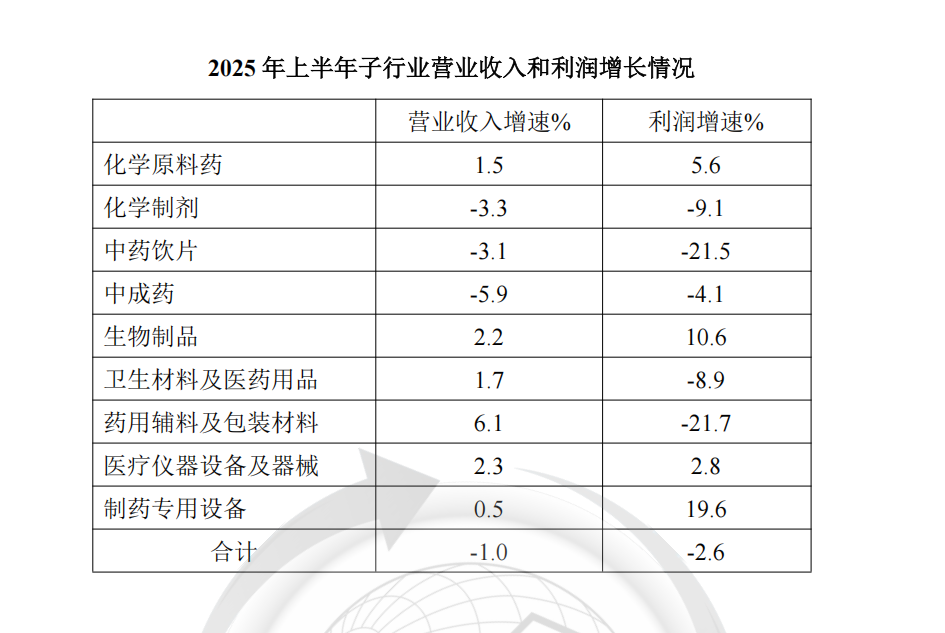
Group 1: Market Overview - In the US and five European countries, innovative drugs account for 70%-80% of the local market, while in China, the market share of innovative drugs is only 8.6% [1][10] - The Chinese innovative drug market is experiencing a "structural turning point," which is expected to reverse the downward trend in the pharmaceutical industry [1] - The domestic pharmaceutical terminal sales are projected to show negative growth starting in 2024, with over 30% of regulated pharmaceutical companies reporting losses in the first half of this year [1][3] Group 2: Industry Challenges - The pharmaceutical industry is facing a survival crisis due to external growth factors diminishing, and the capital market's enthusiasm for business development (BD) transactions cooling down [3] - The low concentration in several sub-sectors, particularly in the generic drug industry, has led to price competition, which is a key constraint on the development of the Chinese pharmaceutical industry [3][4] - The average price level of generic drugs has been further reduced due to policies on price governance and drug price comparison [4] Group 3: Innovative Drug Growth - Despite the overall revenue decline in the pharmaceutical industry, innovative drug companies have maintained good growth and profitability, with some achieving record high revenues [1][7] - The market size of innovative drugs (including biosimilars) reached 120 billion yuan in 2023, with a growth rate of 27% [7] - The revenue growth rate for biological products was 2.2%, with profit growth at 10.6%, indicating a strong performance in the innovative drug sector [8][7] Group 4: Regulatory and Policy Developments - The National Healthcare Security Administration has announced reforms to improve the immediate settlement of medical insurance funds, which is expected to alleviate the financial pressure on hospitals and improve drug payment timelines [5][6] - The implementation of policies to expand the scope of drug procurement and price control is expected to further impact the market dynamics [4][10] Group 5: Future Opportunities - The commercial potential of innovative drugs is anticipated to become the core driver of industry growth during the downturn [7] - The increasing number of innovative drug approvals and the shift in hospital medication structure are expected to enhance the market share of innovative products [7] - The industry is encouraged to build international innovation platforms to capture a larger share of the global market [2][18]