
BYD(01211)

Search documents
汽车早报|比亚迪加入国际汽车工作组(IATF) 特斯拉上海超级工厂2月交付同比增长91%
Xin Lang Cai Jing· 2026-03-12 00:38
Group 1: Industry Overview - In February, the sales of new energy vehicles in China reached 765,000 units, representing a year-on-year decline of 14.2% [1] - The production and sales of new energy vehicles were 694,000 units and 765,000 units respectively, with a year-on-year decrease of 21.8% and 14.2% [1] - New energy vehicles accounted for 42.4% of total new car sales in February [1] Group 2: Company Updates - BYD officially joined the International Automotive Task Force (IATF) as a new member [2] - Tesla's Shanghai Gigafactory delivered 58,600 units in February, marking a significant year-on-year increase of 91% [2] - Xiaomi's YU7 model sold 20,196 units in February, ranking among the top three in national passenger car sales [2] Group 3: Material Costs and Pricing - NIO's founder Li Bin stated that rising prices of memory and other raw materials could increase costs for high-end models by approximately 3,000 to 5,000 yuan, totaling nearly 10,000 yuan [3] - NIO currently has no plans to adjust prices despite the cost pressures [3] Group 4: Sales Performance - JAC Motors reported a sales figure of 20,300 units in February, reflecting a year-on-year decline of 24.51% [4] - Cumulatively, JAC's sales for January and February reached 55,100 units, down 11.78% compared to the same period last year [4] - Aion's i60 model has achieved cumulative sales of over 28,000 units since its launch [5] Group 5: Innovations and Patents - Xiaomi Automotive applied for a patent related to a method for determining parking spaces, which can identify parking spots even when obstructed by obstacles [6] Group 6: Recalls and Safety - BMW China announced a recall of 147,830 imported vehicles due to potential issues with the starter motor that could lead to starting difficulties and fire risks [7] - BMW will replace the affected starter motors free of charge to eliminate safety hazards [8] Group 7: Management Changes - BMW Group appointed Raymond Wittmann as the new member of the management board responsible for production, effective May 13 [9]


比亚迪被曝正考虑进军F1,收购现有车队为潜在路径
Xin Lang Cai Jing· 2026-03-12 00:28
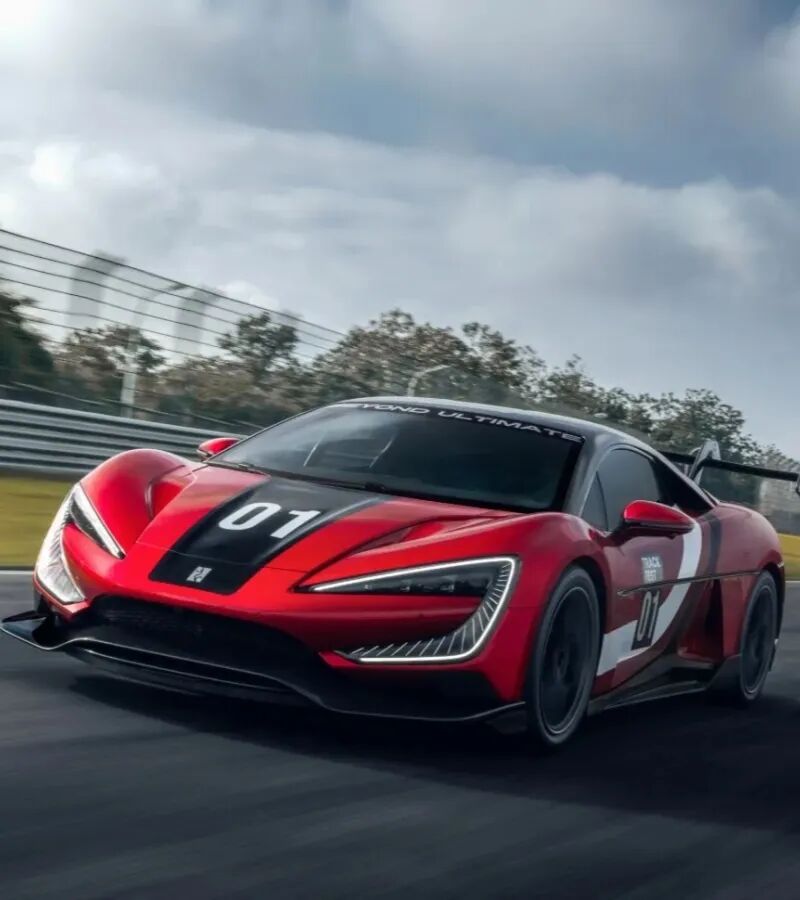
Core Viewpoint - BYD is considering entering Formula 1 racing to enhance its global brand recognition and support its international market expansion [1][3] Group 1: BYD's F1 Entry Plans - BYD is exploring various paths for participation in F1, including establishing its own team or acquiring an existing one [3] - The company has not officially confirmed or denied the reports regarding its F1 ambitions [3] - The strong market performance and urgent need for global expansion are driving BYD's interest in F1 [3] Group 2: Market Performance and Goals - BYD is projected to sell 2.25 million pure electric vehicles by 2025, surpassing Tesla's 1.63 million, making it the global leader in pure electric vehicle sales [3] - Overseas sales are expected to exceed 1 million units for the first time, reflecting a 150% year-on-year growth [3] - The company aims to increase its overseas annual sales target to 1.3 million units by 2026, alongside expanding into new markets and optimizing regional brand strategies [3] Group 3: F1 Regulations and Technological Alignment - The 2026 F1 season will introduce new regulations that significantly increase the electric component's share in hybrid power units, aligning well with BYD's strengths [4] - The new MGU-K motor will boost rear-wheel power from 120 kW to 350 kW, with nearly 50% of the power unit's output coming from the electric motor [4] - BYD's U9 supercar, with a maximum power close to 3,000 horsepower and track speeds of 472 km/h, showcases its capabilities in high-performance electric technology [4] Group 4: Broader Racing Interests - BYD is also evaluating participation in the World Endurance Championship, including the 24 Hours of Le Mans, reflecting a growing trend among Chinese automakers in global motorsport [4] - Other Chinese brands, such as Chery and Geely, are also making moves in endurance racing, indicating a broader interest in top-tier motorsport [4] - If BYD decides to acquire a team and participate in both F1 and the World Endurance Championship, it may consider the Alpine team, which is set to exit the endurance series after the 2026 season [4]

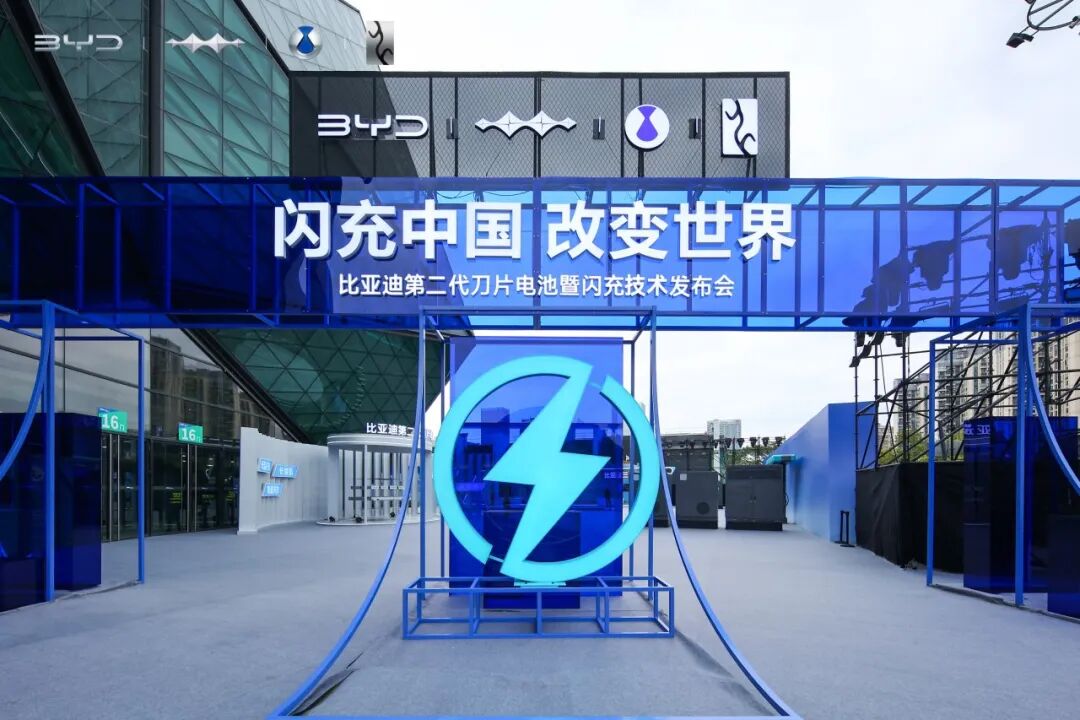
比亚迪发布第二代闪充技术
Mei Ri Shang Bao· 2026-03-11 23:04
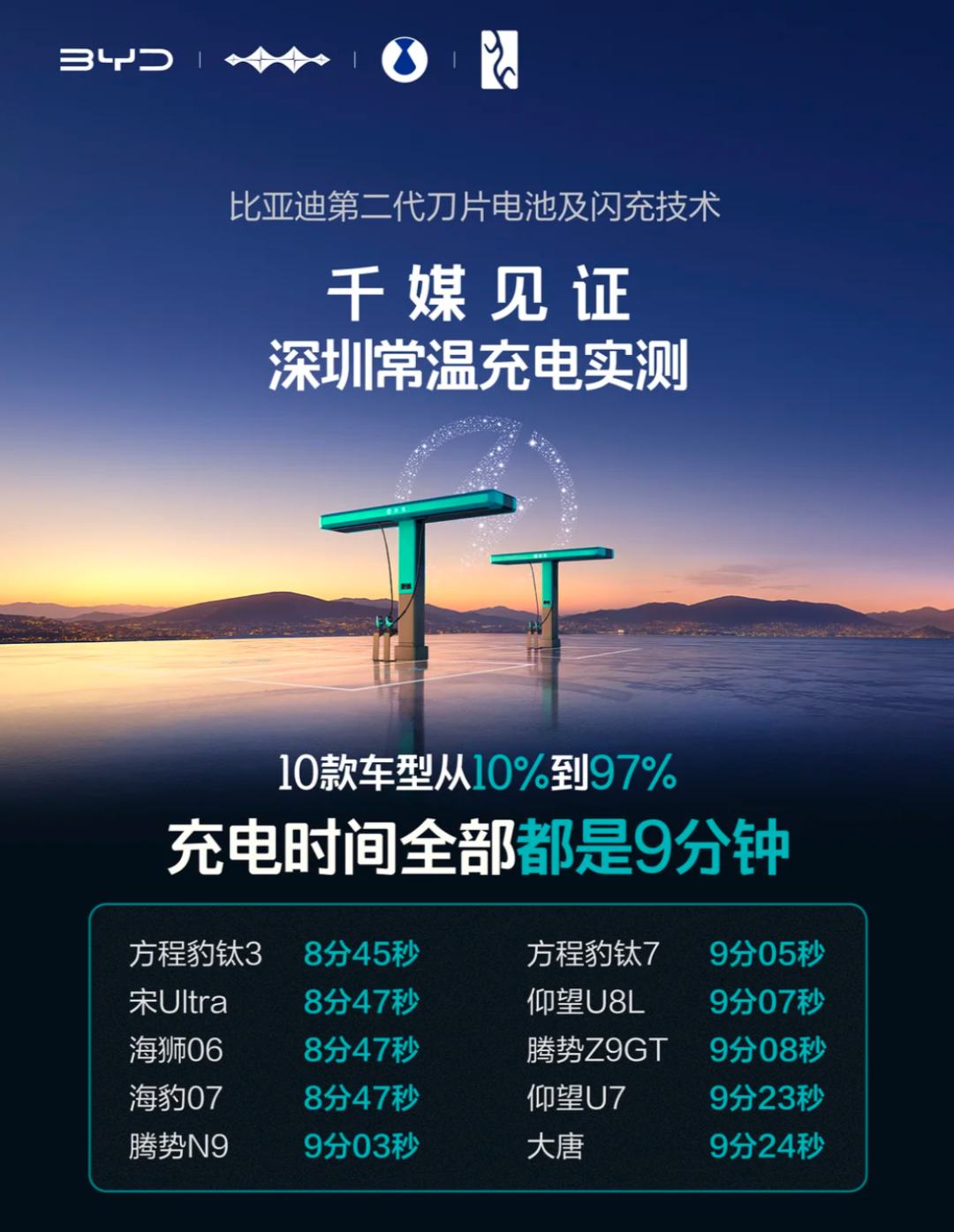
Core Insights - BYD has launched its second-generation blade battery and fast-charging technology, addressing global challenges of slow charging and low-temperature charging difficulties in electric vehicles [1][2] Group 1: Second-Generation Blade Battery - The second-generation blade battery achieves a breakthrough in charging speed, allowing a charge from 10% to 70% in just 5 minutes at room temperature, and to 97% in 9 minutes [1] - In low-temperature environments (down to -30 degrees Celsius), charging to 97% takes only 3 additional minutes compared to room temperature [1] - The energy density of the new battery has improved by over 5% compared to the first generation, with the Tengshi Z9GT model achieving a range of 1,036 kilometers [1] - The optimized cooling system ensures that fast charging has minimal impact on battery lifespan [1] Group 2: Fast Charging Infrastructure - The newly introduced BYD fast charging station has a single-gun charging power of 1,500 kW, the highest in the world for mass production [1] - The design includes a "sliding rail suspension T-type pile" for zero-gravity charging, plug-and-play convenience, and contactless payment, enhancing user-friendliness [1] - BYD plans to construct 20,000 fast charging stations across China by the end of the year, with 18,000 stations built in collaboration with operators and 2,000 designated as fast charging highway stations [1] - The initial phase will see 1,000 fast charging highway stations completed by the May Day holiday [1] Group 3: Strategic Vision - The launch of the second-generation blade battery and fast charging technology signifies a resolution to core pain points in electrification [2] - BYD aims to expand its fast charging stations internationally by the end of 2026, transitioning from "Fast Charging China" to "Fast Charging Planet," supporting global electrification efforts [2]
中汽协:2月我国汽车出口同比大增52.4%;比亚迪正式加入国际汽车工作组 | 汽车早参
Mei Ri Jing Ji Xin Wen· 2026-03-11 22:36
Group 1: Automotive Exports - In February, China's automobile exports reached 672,000 units, representing a year-on-year increase of 52.4% but a month-on-month decrease of 1.4% [1] - Chery was the top exporter among the top ten companies, exporting 124,000 units, which is a 44.1% increase year-on-year, accounting for 18.5% of total exports [1] - Tesla showed significant growth in exports, reaching 20,000 units, which is a year-on-year increase of 420% [1] Group 2: Used Car Market - In January, the national used car transaction volume was 1.73 million units, showing a year-on-year increase of 18% but a month-on-month decrease of 8% [2] - The transaction value for used cars was 110.6 billion yuan, reflecting a year-on-year growth of 14.8% [2] - The used new energy vehicle market saw a transaction volume of 158,000 units, with a year-on-year increase of 74% and a penetration rate of 12.2% [2] Group 3: International Standards - BYD has officially joined the International Automotive Task Force (IATF), collaborating with global automotive giants like Volkswagen and General Motors to participate in the formulation of international core standards [3] - This move signifies a significant step for Chinese automotive companies in the realm of international standards [3] Group 4: Next-Generation Aircraft - The U.S. Department of Transportation and the Federal Aviation Administration announced a pilot program for advanced air mobility and electric vertical takeoff and landing aircraft in 26 states [4] - The initiative aims to accelerate the safe integration of next-generation aircraft into the U.S. national airspace system and provide data for future regulatory frameworks [4] - Potential applications for these aircraft include personal travel, regional transportation, cargo delivery, and emergency medical services [4]
李斌回应比亚迪闪充技术 称充换电模式并非对立
Guo Ji Jin Rong Bao· 2026-03-11 15:17
Core Viewpoint - The CEO of NIO, Li Bin, expressed that the charging and battery swapping models are not mutually exclusive, as they address different energy replenishment needs in the electric vehicle industry [2]. Group 1: Industry Insights - Li Bin is pleased to see BYD's advancements in fast charging technology and the development of charging infrastructure, indicating that battery technology improvements benefit the entire electric vehicle sector [2]. - The establishment of charging infrastructure by automotive manufacturers enhances the experience for all smart electric vehicle users [2]. Group 2: Charging vs. Battery Swapping - Li Bin emphasized that the debate between charging and battery swapping is not a conflict, as each method addresses distinct issues such as battery lifespan, energy efficiency, and operational safety [2].

比亚迪:持续关注消费者的需求,并适时推出符合消费者需求的技术及产品
Zheng Quan Ri Bao· 2026-03-11 14:11
Group 1 - The core viewpoint of the article emphasizes BYD's commitment to technological innovation to meet consumer demands for a better life [1] - BYD continuously focuses on consumer needs and timely launches products and technologies that align with those needs [1]
比亚迪计划进军 F1,下一个对手,不是特斯拉,是法拉利
Xin Lang Cai Jing· 2026-03-11 13:33
Core Insights - BYD is evaluating the feasibility of entering top-tier motorsport, specifically targeting F1 and WEC events, marking a potential first for a Chinese automaker in F1 history [2][38] - The F1 series is one of the largest annual sporting events globally, with over 1.5 billion viewers and around 24 races held across five continents each year [4][40] - Operating a single F1 team costs approximately $500 million per season, comparable to building a top-tier hospital or producing ten mid-budget Hollywood films [6][42] Group 1: BYD's Ambitions and Challenges - BYD has surpassed Tesla to become the global leader in pure electric vehicle sales as of 2025, expanding its export markets to Europe, Southeast Asia, and Latin America [8][44] - Despite its sales success, BYD faces challenges in elevating its brand perception from "affordable Chinese electric vehicles" to "desirable high-end automobiles" [10][46] - The company has made attempts to enhance its brand image, including testing its high-end model U9 Xtreme in Germany, achieving a top speed of 496 km/h [12][48] Group 2: Strategic Options for Entering F1 - BYD has three potential strategies for entering F1: building its own team, acquiring an existing team, or gradually entering through WEC [16][52] - Building a new team is the most challenging option, as it involves navigating FIA approvals and existing teams' resistance, which could dilute prize pools and valuations [18][52] - Acquiring an existing team, such as Alpine or Aston Martin, is a more realistic shortcut, as seen with Audi's acquisition of Sauber [20][54] Group 3: Market Context and Timing - The F1 landscape is increasingly in need of Chinese manufacturers, with FIA's president indicating that a Chinese team is the next logical step for the sport [24][60] - China is the largest automotive market globally and has seen rapid growth in F1 viewership, evidenced by the high demand for tickets to the 2024 Chinese Grand Prix [26][62] - The year 2026 presents a significant opportunity for BYD due to major regulatory changes in F1 that will favor hybrid systems, aligning with BYD's technological strengths [26][62]
比亚迪闪充到底伤不伤电池?李斌一语点破:反正没换电快!
Xin Lang Cai Jing· 2026-03-11 13:33
Core Viewpoint - The competition in the new energy vehicle charging sector is intensifying, with BYD's second-generation blade battery achieving a "70% charge in 5 minutes" and NIO's battery swap service offering "full charge in 3 minutes," raising concerns among car owners about battery health and longevity [1][14]. Charging Technology Insights - Fast charging can lead to battery damage, as traditional fast charging uses high current to accelerate lithium-ion migration, resulting in increased wear over time [3][17]. - Data from Geotab indicates that frequent use of fast charging (over 100 kW) can double the battery degradation rate compared to slow charging, with heavy fast charging users experiencing an annual degradation rate of up to 2.5%, while those who use it less see only 1.5% [3][17]. - Each 1C increase in fast charging current raises battery polarization voltage by 50-80 mV, which in turn increases degradation speed; high temperatures during fast charging can further accelerate capacity loss by 40-60% [5][19]. Battery Swap Advantages - NIO's CEO, Li Bin, emphasizes that battery swapping offers a significant advantage in preserving battery health, stating that fast charging can damage battery lifespan and safety [6][20]. - NIO's battery swap stations ensure each battery undergoes extensive real-time health checks and employs specialized charging strategies, maintaining a degradation rate below 15% [9][23]. Technology Developments - BYD claims to have developed technology that mitigates the traditional belief that fast charging damages batteries, with their second-generation blade battery demonstrating stable performance after 500 fast charge cycles [10][24]. Usage Scenarios - Fast charging is suitable for emergency situations, such as long-distance travel, where a quick charge is needed, while battery swapping is more appropriate for daily commuting and users without home charging options [13][27]. - Approximately 60% of users in China lack the ability to install home charging stations, making battery swapping a more convenient option for these consumers [13][27].
从充电焦虑到无感支付,比亚迪闪充站破局
Xin Lang Ke Ji· 2026-03-11 13:31
Core Viewpoint - BYD has announced an ambitious plan to build 20,000 fast charging stations across China by the end of 2026, aiming to enhance the electric vehicle charging infrastructure significantly [2] Group 1: Charging Network Expansion - The plan includes 2,000 stations at highway service areas, covering nearly one-third of the highway network, while the remaining 18,000 will be established through partnerships with existing public charging stations [2] - The target is to achieve coverage of 3 kilometers in first and second-tier cities, 5 kilometers in third and fourth-tier cities, and 6 kilometers in fifth and sixth-tier cities [2][12] - The "Dream Station" initiative allows users to request new charging stations, shifting the planning process from a company-driven model to one based on user demand [12][13] Group 2: Technological Advancements - The second-generation blade battery can charge from 10% to 70% in just 5 minutes and from 10% to 97% in 9 minutes, thanks to the "full-link ion flash communication technology system" [4] - The energy density of the second-generation battery has improved by over 5% compared to the first generation, enabling a range of 1,036 kilometers for the Tengshi Z9GT electric vehicle [4] - The battery has also overcome low-temperature performance issues, allowing charging from 20% to 97% in just 12 minutes at -30 degrees Celsius [4] Group 3: Energy Storage System - The 1500kW charging stations are equipped with energy storage systems that allow for low-cost electricity storage during off-peak hours and discharge during peak hours, creating a local power buffering mechanism [5][7] - This design avoids the need for grid upgrades, maximizing station efficiency and ensuring that multiple vehicles can charge simultaneously without power shortages [7] Group 4: User Experience and Market Impact - The charging network's design focuses on user experience, featuring innovations like a T-shaped charging pile that prevents cable tangling and an app for seamless charging and payment [9] - The density of the charging network is expected to enhance user trust in electric vehicles, potentially leading to increased sales and brand loyalty [12][13] - Analysts believe that BYD's approach to integrating electric vehicles, energy storage, and charging networks positions the company as a builder of energy systems rather than just a car manufacturer [13]
比亚迪:公司践行供应商的全生命周期管理,注重对供应商在环境、社会风险等方面的审核
Zheng Quan Ri Bao Zhi Sheng· 2026-03-11 13:08
Core Viewpoint - The company emphasizes the importance of supply chain quality, resilience, and sustainability for its operations, focusing on lifecycle management of suppliers and supporting them in environmental and social risk assessments [1] Group 1: Supply Chain Management - The company practices full lifecycle management of suppliers, ensuring they meet environmental and social risk standards [1] - A training program titled "BYD Supplier Quality Management Requirements" is scheduled for January 2024, aimed at enhancing supplier capabilities [1] - The training will cover topics such as quality digital management, rapid response, secondary supplier management, high-end model management, and overseas resource allocation, with a focus on the company's quality goals [1] Group 2: Training and Support - The training will utilize both centralized training at the company headquarters and on-site training by SQE engineers, ensuring comprehensive coverage [1] - A total of 736 suppliers will be included in this training initiative, highlighting the company's commitment to improving supplier quality management [1]