
CZBANK(02016)

Search documents
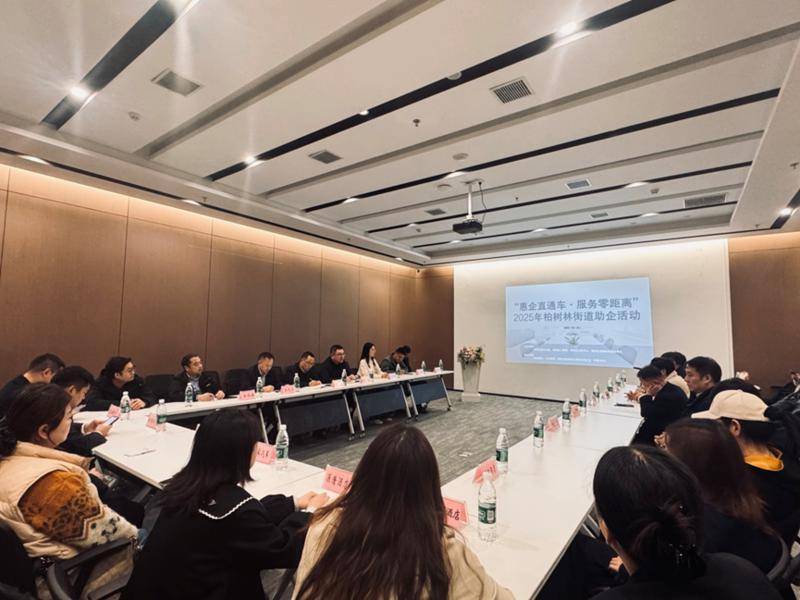
碑林区“金融助企”对接会精准服务小微企业融资
Sou Hu Cai Jing· 2025-11-01 15:44
Core Insights - The event titled "Direct Access to Enterprises: Zero Distance Service" was held in Beilin District to bridge financial services and assist enterprises in overcoming financing challenges, thereby promoting high-quality regional economic development [1] Group 1: Event Overview - The event was co-hosted by various local government and business organizations, aiming to facilitate face-to-face communication between over 20 invited enterprise representatives and relevant government departments and financial institutions [1] - The focus of the event was on the financing needs of small and micro enterprises, with specific financial products introduced to cater to their diverse requirements [3] Group 2: Financial Products Introduced - Zhejiang Merchants Bank introduced targeted financial products such as "Housing Mortgage Easy Loan," "Residual Value Easy Loan," and "Digital Easy Loan," which are designed to meet the varied needs of different enterprises [3] - Agricultural Bank of China promoted the "Qianfan Fund," which focuses on supporting hard technology sectors to drive technological innovation and industrial upgrading [3] Group 3: Interactive Sessions - An interactive session was held where bank managers and enterprise representatives discussed customized financing solutions based on the enterprises' scale, operational status, and development plans [5] - The atmosphere during the discussions was described as lively, with positive feedback from participants regarding the flexibility of financing options based on actual business operations [5] Group 4: Future Initiatives - The event is part of Beilin District's efforts to deepen financial services for the real economy, with plans to follow up on the outcomes and establish a regular communication mechanism between government, banks, and enterprises [5]


浙商银行(601916):负债成本持续改善 资产质量夯实
Ge Long Hui· 2025-11-01 13:13
Core Insights - The performance of Zhejiang Commercial Bank in Q3 2025 is generally in line with expectations, with cumulative operating income and net profit attributable to shareholders declining by 6.8% and 9.6% year-on-year respectively [1][2] Financial Performance - Cumulative operating income and net profit for the first three quarters of 2025 decreased by 6.8% and 9.6% year-on-year, while Q3 2025 saw a single-quarter operating income and net profit decline of 8.9% and 18.4% respectively [1] - The net interest margin for Q3 2025 was 1.56%, a year-on-year decrease of 10 basis points, with the decline narrowing compared to the 17 basis points drop in Q2 [1] - The cost of liabilities improved, with a year-on-year decrease of 37 basis points to 1.8%, while the yield on interest-earning assets fell by 45 basis points to 3.46% [1] - Non-interest income decreased by 18.5% year-on-year in Q3 2025, with net fees down 33.6% and other non-interest income down 14.1%, impacting revenue by 2 percentage points and 3 percentage points respectively [1] Asset Quality - The non-performing loan ratio at the end of Q3 2025 was 1.36%, unchanged from the end of Q2, with a cumulative non-performing loan generation rate of 1.5% for the first three quarters, down 17 basis points year-on-year [2] - The credit cost decreased by 10 basis points year-on-year to 0.71%, supporting net profit [2] - The provision coverage ratio at the end of Q3 2025 was 159.56%, a decrease of 10 percentage points from the end of Q2 [2] Capital Adequacy - The core capital adequacy ratio and total capital adequacy ratio at the end of Q3 2025 were 8.4% and 12.15% respectively, with a 1 basis point increase and a 16 basis point decrease from the previous quarter [2] Profit Forecast and Valuation - The profit forecast and outperform industry rating remain unchanged, with the A-share trading at 0.40x P/B for 2025E/2026E and a target price of 3.55 yuan, indicating a 17.6% upside [2] - The H-share is trading at 0.28x P/B for 2025E/2026E, with a target price of 3.01 HKD, reflecting a 14.4% upside [2]

浙商银行三季报出炉,总资产增近2%,不良贷款率下降|看财报
Tai Mei Ti A P P· 2025-11-01 11:55
Core Viewpoint - Zhejiang Commercial Bank reported stable financial performance in Q3 2025, focusing on quality over scale amid external pressures, with total assets reaching 3.39 trillion yuan, a 1.91% increase from the previous year [2][3] Financial Performance - As of September 2025, the bank's total assets amounted to 3.39 trillion yuan, reflecting a growth of 1.91% compared to the end of the previous year [2][4] - The bank achieved operating income of 48.931 billion yuan and net profit attributable to shareholders of 11.668 billion yuan [2][6] - The non-performing loan ratio improved to 1.36%, down by 0.02 percentage points from the end of the previous year [2][6] Asset and Liability Management - The bank's total liabilities reached 3.182278 trillion yuan, an increase of 1.90% from the previous year, with deposits surpassing 2 trillion yuan, growing by 7.15% [4][6] - Loan and advance amounts totaled 1.896272 trillion yuan, marking a 2.11% increase [4] Risk Management - The net interest margin for the first three quarters was 1.67%, a decrease of 4 basis points compared to the previous year [5][6] - The bank's capital adequacy ratio stood at 12.15%, with the core tier one capital ratio at 8.40%, up by 0.02 percentage points from the previous year [6] Strategic Initiatives - The bank is focusing on a "low-risk, balanced return" asset structure, optimizing its balance sheet to support sustainable growth [4][8] - Initiatives include a three-year action plan to deepen its presence in Zhejiang, with financing services totaling 1.16 trillion yuan and commitments to support advanced manufacturing projects [8] - The bank has launched the "Shan Ke Accompanying Plan" for technology financial services, aiming for an additional 10 billion yuan in tech loans this year [8]

以数为擎,向绿而行,企业可持续发展迎“智”变——第四届上市公司可持续发展官论坛暨年度最佳奖项评选结果隆重揭晓
Zhong Guo Jin Rong Xin Xi Wang· 2025-10-31 14:58
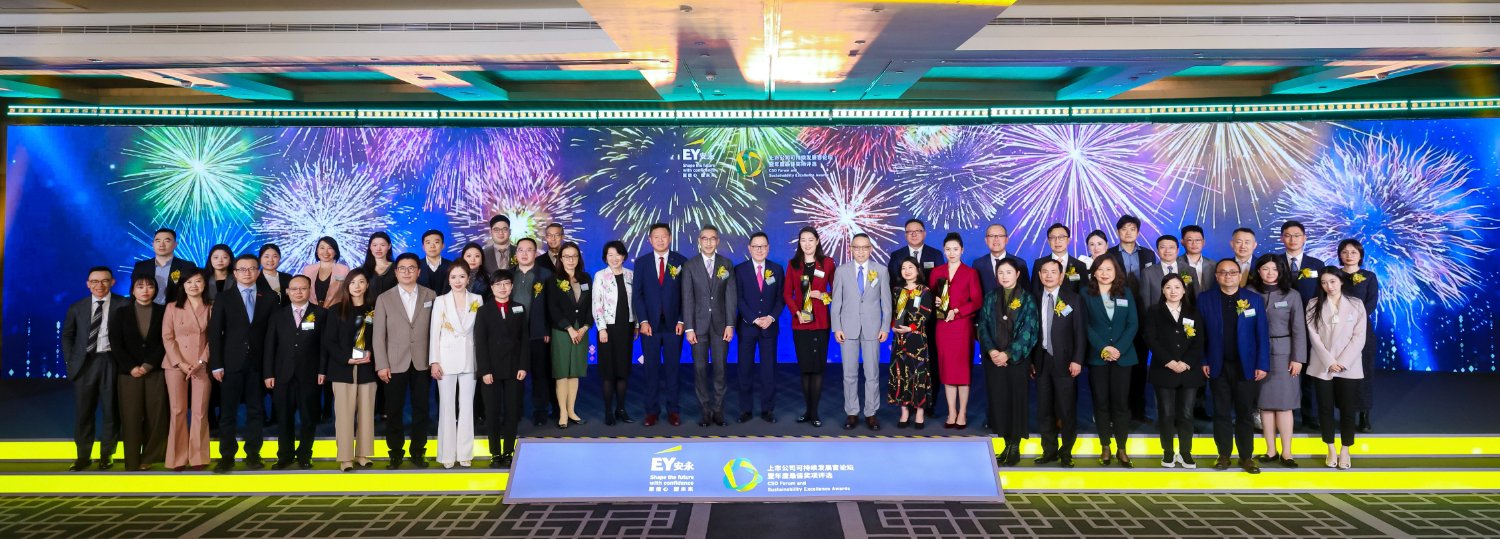
Core Insights - The integration of "digital intelligence" and "green" initiatives is advancing corporate ESG (Environmental, Social, and Governance) practices from conceptual advocacy to systematic and intelligent implementation [1][3] - The fourth annual forum on sustainable development for listed companies, themed "Digital Intelligence and Green Movement Leading New Journey," was held in Beijing, revealing the winners of the "Ernst & Young Sustainable Development Annual Best Awards 2025" [1][3] - The awards highlighted the innovative practices of Chinese companies in the ESG and AI integration space, showcasing their contributions to building a modern industrial system and achieving high-quality development [1][3] Group 1: Event Overview - The forum featured 2 special awards, 12 outstanding companies, 2 distinguished individuals, 16 excellent cases, and 1 special contribution award for technological innovation in ESG development [1][3] - The focus of this year's awards was on the role of digitalization as an innovative driving force, emphasizing zero-carbon technology and AI's role in enhancing productivity [1][3] Group 2: Industry Trends - Ernst & Young's China Chairman noted that 2023 is a pivotal year for global sustainable development, marking the 10th anniversary of the Paris Agreement and the 20th anniversary of the "Green Mountains and Clear Water are Gold and Silver Mountains" concept [3] - The rapid advancement of AI technology is accelerating the digital and green transformation of Chinese enterprises, positioning them as key players in sustainable development [3][4] Group 3: AI and ESG Integration - Companies are encouraged to integrate ESG into their core strategies and leverage technology to transform sustainable development into a quantifiable and operational value system [4][5] - Ernst & Young has introduced AI-driven solutions, including the DeepSeek model and the METIS AI platform, to support enterprises in their green transformation efforts [4][5] Group 4: Award Evaluation and Criteria - The evaluation framework for the awards includes nine dimensions, focusing on technological innovation, low-carbon benefits, and social responsibility [5] - This year, an AI assessment component was introduced to enhance the evaluation process, utilizing a comprehensive ESG information database [5] Group 5: Future Outlook - Ernst & Young aims to deepen its professional service capabilities, helping companies embed sustainable development into their strategic core and operational processes [6]





浙商银行副行长骆峰:9月自营消费贷款新开户数环比增长50%
Xin Lang Cai Jing· 2025-10-31 07:28
Core Insights - The Vice President and Secretary of the Board of Zhejiang Commercial Bank, Luo Feng, reported a significant growth in consumer loan business since the implementation of the fiscal subsidy policy for consumer loans on September 1, 2025 [1] Group 1: Consumer Loan Growth - In September, the number of new consumer loan accounts opened by Zhejiang Commercial Bank increased by 50% month-on-month and 48% year-on-year [1] - The amount of consumer loans disbursed rose by 43% month-on-month and 42% year-on-year [1] - Over 10,000 customers received authorization for consumer loan subsidies, indicating a substantial increase in both loan applications and disbursements [1]
10月31日早间重要公告一览
Xi Niu Cai Jing· 2025-10-31 03:58
Group 1: Yonghui Supermarket - Yonghui Supermarket's application for a private placement has been accepted by the Shanghai Stock Exchange for review [1] Group 2: Suzhou Bank - Suzhou Bank reported a net profit of 4.477 billion yuan for the first three quarters, a year-on-year increase of 7.12% [2] - The bank's operating income for the same period was 9.477 billion yuan, up 2.02% year-on-year [2] Group 3: Guohai Securities - Guohai Securities achieved a net profit of 705 million yuan in the first three quarters, marking a significant year-on-year increase of 282.96% [4] - The company's operating income for the same period was 2.617 billion yuan, up 24.22% year-on-year [4] Group 4: China Baoneng - China Baoneng reported a net profit of 283 million yuan for the first three quarters, a decline of 26.51% year-on-year [5] - The company's operating income for the same period was 16.812 billion yuan, an increase of 14.87% year-on-year [5] Group 5: Shahe Co., Ltd. - Shahe Co., Ltd. plans to acquire 70% of the shares of Shenzhen Jinghua Display Electronics Co., Ltd. [7] - The company reported a net loss of 32.22 million yuan in the first three quarters [9] Group 6: China Power - China Power reported a net profit of 1.208 billion yuan for the first three quarters, a year-on-year increase of 62.5% [10] - The company's operating income for the same period was 40.971 billion yuan, up 11.88% year-on-year [10] Group 7: Shanghai Electric - Shanghai Electric achieved a net profit of 1.065 billion yuan in the first three quarters, a year-on-year increase of 8.48% [11] - The company's operating income for the same period was 81.789 billion yuan, up 7.50% year-on-year [11] Group 8: China Shipbuilding Defense - China Shipbuilding Defense reported a net profit of 655 million yuan for the first three quarters, a year-on-year increase of 249.84% [12] - The company's operating income for the same period was 14.315 billion yuan, up 12.83% year-on-year [12] Group 9: China Merchants Shekou - China Merchants Shekou reported a net profit of 2.497 billion yuan for the first three quarters, a decline of 3.99% year-on-year [13] - The company's operating income for the same period was 89.766 billion yuan, up 15.07% year-on-year [13] Group 10: Zhejiang Merchants Bank - Zhejiang Merchants Bank reported a net profit of 11.668 billion yuan for the first three quarters, a decline of 9.59% year-on-year [17] - The bank's operating income for the same period was 48.931 billion yuan, down 6.78% year-on-year [17] Group 11: Inspur Information - Inspur Information reported a net profit of 1.482 billion yuan for the first three quarters, a year-on-year increase of 15.35% [17] - The company's operating income for the same period was 120.669 billion yuan, up 44.85% year-on-year [17] Group 12: China National Aviation - China National Aviation reported a net profit of 1.870 billion yuan for the first three quarters, a year-on-year increase of 37.31% [27] - The company's operating income for the same period was 129.826 billion yuan, up 1.31% year-on-year [27] Group 13: Huayin Power - Huayin Power reported a net profit of 357 million yuan for the first three quarters, a year-on-year increase of 954.94% [28] - The company's operating income for the same period was 6.362 billion yuan, up 3.23% year-on-year [28]





浙商银行:前三季度实现营业收入489.3亿元
Zheng Quan Shi Bao Wang· 2025-10-30 14:09
Core Insights - Zhejiang Commercial Bank (浙商银行) reported a total operating income of 48.93 billion yuan and a net profit attributable to shareholders of 11.67 billion yuan for the first three quarters of 2025 [1] - As of the end of September, the bank's total assets reached 3.39 trillion yuan, with loans and deposits accounting for approximately 56% and 65% of total assets and total liabilities, respectively [1] - The non-performing loan ratio stood at 1.36%, a decrease of 0.02 percentage points compared to the beginning of the year [1]
浙商银行前三季度实现归母净利116.68亿元,不良率降至1.36%
Bei Jing Shang Bao· 2025-10-30 13:41
Core Insights - Zhejiang Commercial Bank reported a decline in operating income for Q3 2025, totaling 48.931 billion yuan, a decrease of 3.56 billion yuan or 6.78% year-on-year [2] - The bank's net interest income was 34.438 billion yuan, down 1.149 billion yuan or 3.23% year-on-year, with a net interest margin of 1.67%, a decrease of 0.13 percentage points [2] - Non-interest income fell to 14.493 billion yuan, a reduction of 2.411 billion yuan or 14.26% year-on-year [2] - The cost-to-income ratio improved to 26.44%, down 1.46 percentage points year-on-year [2] - Net profit attributable to shareholders was 11.668 billion yuan, a decrease of 1.237 billion yuan or 9.59% year-on-year [2] Asset Quality - As of the end of the reporting period, the bank's non-performing loan balance was 25.661 billion yuan, an increase of 0.167 billion yuan from the end of the previous year [2] - The non-performing loan ratio stood at 1.36%, a slight decrease of 0.02 percentage points from the end of the previous year [2] - The provision coverage ratio was 159.56%, down 19.11 percentage points from the end of the previous year [2] - The loan provision ratio was 2.17%, a decrease of 0.29 percentage points from the end of the previous year [2]
浙商银行前三季度总营收489.31亿元
Zhong Guo Jing Ying Bao· 2025-10-30 12:33
Core Insights - Zhejiang Zheshang Bank reported its Q3 2025 financial results, showing total assets of 3.39 trillion yuan, a year-on-year increase of 1.91% [1] - The bank achieved operating income of 48.931 billion yuan and a net profit attributable to shareholders of 11.668 billion yuan [1] - The asset quality has improved, with a non-performing loan ratio of 1.36%, down by 0.02 percentage points from the end of the previous year [1]
浙商银行(02016)公布前三季度业绩 归母净利约116.68亿元 同比减少9.59%
智通财经网· 2025-10-30 12:07
Core Insights - Zhejiang Zheshang Bank reported a decrease in operating income and net profit for the first three quarters of 2025, with operating income at 48.958 billion yuan, down 6.78% year-on-year, and net profit attributable to shareholders at 11.668 billion yuan, down 9.59% year-on-year [1] Financial Performance - The total assets of the group reached 3389.012 billion yuan, an increase of 63.473 billion yuan, or 1.91%, compared to the end of the previous year [1] - The total amount of loans and advances was 1896.272 billion yuan, up 39.156 billion yuan, or 2.11%, from the end of the previous year [1] - Total liabilities amounted to 3182.278 billion yuan, increasing by 59.482 billion yuan, or 1.90%, compared to the end of the previous year [1] - Customer deposits reached 2059.773 billion yuan, an increase of 137.484 billion yuan, or 7.15%, from the end of the previous year [1] Asset Quality - The non-performing loan balance was 25.661 billion yuan, an increase of 0.167 billion yuan compared to the end of the previous year [1] - The non-performing loan ratio stood at 1.36%, a decrease of 0.02 percentage points from the end of the previous year [1] - The provision coverage ratio was 159.56%, down 19.11 percentage points from the end of the previous year [1] - The loan provision ratio was 2.17%, a decrease of 0.29 percentage points from the end of the previous year [1] Capital Adequacy - The capital adequacy ratio was 12.15%, a decrease of 0.46 percentage points from the end of the previous year [1] - The Tier 1 capital adequacy ratio remained stable at 9.61% compared to the end of the previous year [1] - The core Tier 1 capital adequacy ratio was 8.40%, an increase of 0.02 percentage points from the end of the previous year [1]