PING AN OF CHINA(02318)

Search documents
当3亿老人开始享老 居家养老服务师转型“进行时”
2 1 Shi Ji Jing Ji Bao Dao· 2025-12-24 01:16
Core Insights - The aging population in China is rapidly increasing, with 310 million people aged 60 and above by 2024, representing 22% of the total population, and 220 million aged 65 and above, accounting for 15.6% [1] - The demand for elderly care is shifting from "survival-type" to "quality-type," necessitating a transformation in traditional elderly care services to meet diverse and specialized needs [1] - The introduction of the "Elderly Care Service Specialist" as a new profession in 2025 is expected to drive the professionalization, intelligence, and personalization of elderly care services [1] Group 1: Professionalization - The transition to "professionalization" distinguishes elderly care specialists from traditional caregivers, focusing on needs assessment, service planning, and implementation, requiring higher professional knowledge and comprehensive skills [2] - Elderly care specialists must break traditional care boundaries and develop interdisciplinary capabilities, covering the entire service chain from needs assessment to quality control [2] Group 2: Intelligent Transformation - The second upgrade direction is "intelligent transformation," where the integration of smart technology with elderly care services is reshaping the work model of elderly care specialists [3] - Specialists can utilize smart assessment systems and IoT devices to collect data on elderly individuals, enhancing service efficiency and enabling proactive care [3] Group 3: Personalization - The third upgrade direction is "personalization," addressing the diverse needs of the elderly population, including basic care and emotional support [4] - Future elderly care services will shift from standardized offerings to personalized solutions, dynamically adjusting to individual health conditions and preferences [4] Group 4: Collaborative Support - The transformation of elderly care specialists requires collaborative support in standard development, qualification recognition, and talent cultivation to ensure stability and effectiveness [5] Group 5: Standards and Qualifications - A comprehensive standard system is essential for the transformation, with national and industry standards being established to regulate service quality and safety [6] - The recognition of the "Elderly Care Service Specialist" as a new profession marks a significant step towards professional development in the elderly care sector [6] Group 6: Talent Development - Continuous improvement of the talent cultivation system is crucial, with educational institutions encouraged to offer relevant programs and training for existing workers [7] - Leading companies like Ping An are setting examples in service quality management and training, significantly impacting the industry [7] Group 7: Future Outlook - With the combined efforts of standards, talent development, policy support, and corporate empowerment, professional elderly care specialists will evolve into "health life managers," equipped to meet the quality care needs of 310 million elderly individuals [8]
“银发新职业”困境突围,居家养老服务师走向何方?
2 1 Shi Ji Jing Ji Bao Dao· 2025-12-24 01:12
Core Insights - China is entering a deep aging society, with the elderly population aged 60 and above expected to reach 310 million by 2024, accounting for 22% of the total population, and the number of disabled elderly people projected to rise from 35 million to 46 million by 2035 [1] - The current workforce in the elderly care service sector is only 1.338 million, which is less than 10% of the required number based on international standards [1] - The introduction of the "Elderly Care Service Specialist" as a new profession marks a significant step towards professionalizing the elderly care industry, aiming to alleviate the talent shortage and improve service quality [1] Industry Challenges - The elderly care service industry faces a dual gap in quantity and quality, with only 597,000 staff in care institutions and 741,000 in community services, insufficient to meet the needs of 35 million disabled elderly individuals [2] - There is a low percentage of qualified professionals, with only 248,000 having obtained relevant certifications, and a lack of advanced professionals to meet complex service demands [2] - The unclear career development path for elderly care workers is a major bottleneck, as many are viewed as manual laborers without a clear advancement system [2] Social Perception and Compensation Issues - Social biases and imbalanced compensation create barriers to attracting talent, with over 80% of current workers reporting daily work hours exceeding 10 hours and nearly 70% stating their income is barely sufficient [3] - The lack of a comprehensive training system and industry standards exacerbates the talent crisis, with educational programs being limited and practical training opportunities insufficient [3] Talent Development Initiatives - Companies like Ping An are exploring solutions by establishing a comprehensive training system for elderly care specialists, integrating selection, training, and support [4] - By 2025, Ping An aims to cover 100 cities with its home care services, having served nearly 240,000 clients, with high satisfaction rates among service providers [5] - The strict selection criteria for caregivers and ongoing training programs are essential for enhancing service quality, with significant service hours logged and high customer satisfaction reported [5][6] Standardization and Quality Assurance - The establishment of a robust standard system is crucial for retaining talent, with Ping An's home care services recently receiving a five-star rating based on comprehensive evaluation criteria [6] - The development of a clear professional standard for elderly care specialists can enhance social recognition and support industry transformation [6] Collaborative Solutions for Industry Growth - The industry requires collaboration among government, enterprises, and society to address talent shortages effectively, emphasizing the need for a standardized framework covering service provision, personnel qualifications, and quality evaluation [8] - Continuous optimization of talent supply necessitates a solid training framework, with a focus on practical skills and humanistic care [8] Enhancing the Appeal of the Profession - To make elderly care specialists an attractive profession, efforts should be made to improve economic compensation and social recognition, including policy support and positive publicity [9][10] - Establishing a standardized professional system and diverse support policies will help ensure high-quality development in the home care industry, benefiting the elderly population [10]
智通港股沽空统计|12月24日
智通财经网· 2025-12-24 00:23
Group 1 - The top short-selling stocks include China Resources Beer (80291) with a short-selling ratio of 100.00%, Lenovo Group (80992) at 91.04%, and BYD Company (81211) at 90.24% [1][2] - The highest short-selling amounts are led by Alibaba (09988) at 1.293 billion, Tencent Holdings (00700) at 1.057 billion, and Xiaomi Group (01810) at 0.925 billion [1][2] - The stocks with the highest deviation values are China Resources Beer (80291) at 31.62%, Lenovo Group (80992) at 17.55%, and BYD Company (81211) at 32.51% [1][2] Group 2 - The top short-selling ratio rankings show that China Resources Beer has the highest ratio at 100.00%, followed by Lenovo Group at 91.04% and BYD Company at 90.24% [2] - The top short-selling amounts indicate that Alibaba leads with 1.293 billion, followed by Tencent at 1.057 billion and Xiaomi at 0.925 billion [2] - The highest deviation values are recorded for China Resources Beer at 31.62%, Xiaomi at 35.05%, and BYD at 32.51% [2]





年内险资向私募股权基金出资已超千亿元
Zheng Quan Ri Bao· 2025-12-23 16:09
今年以来,险资继续加大私募股权基金投资力度。执中数据科技(苏州)有限责任公司(以下简称"执中") 数据显示,在今年(截至12月19日)备案的私募股权基金中,保险机构作为有限合伙人(LP)向私募股权基 金出资合计达1097.56亿元,较去年同期增长55.85%。 "今年以来,监管部门发布了一系列鼓励险资加大股权配置力度的政策。"张令佳表示,例如,国家金融 监督管理总局将保险公司投资单一创业投资基金的账面余额占该基金实缴规模的比例上限从20%提高至 30%。同时,进一步加强国有商业保险公司长周期考核,提升了险资对短期波动的容忍度,鼓励其进行 更长期的布局。 业内人士认为,险资加码私募股权投资是宏观经济环境、监管政策导向与险资自身资产配置需求三重因 素共振的结果。未来,预计险资还将继续加大这一领域的投资力度。 寿险公司出资额最大 根据出资总金额看,2025年在私募股权投资领域最活跃的5家保险机构依次为:中国太平洋人寿保险股 份有限公司,出资额达205.99亿元;中国平安人寿保险股份有限公司,出资额为150亿元;阳光人寿保 险股份有限公司,出资额为114.88亿元;友邦人寿保险有限公司,出资额为106.75亿元;人保 ...

“平安系”五项提案被华夏幸福否决,百亿资本联姻分道扬镳?
Nan Fang Du Shi Bao· 2025-12-23 16:00
Core Viewpoint - The debt dispute between China Ping An and China Fortune Land Development (CFLD) has escalated, with Ping An's five proposals being rejected by CFLD, leading to a stalemate in their capital relationship that began in 2018 [2][3][6]. Group 1: Proposal Rejection - CFLD's board rejected Ping An's five proposals, which included matters related to pre-restructuring and financial due diligence [3][4]. - The board provided specific reasons for the rejection, arguing that the proposals could lead to legal liabilities and harm the interests of the company and its stakeholders [4]. Group 2: Background of the Relationship - The capital relationship began in July 2018 when Ping An invested 13.77 billion yuan for a 19.88% stake in CFLD, later increasing its stake to 25.25% in January 2019 [6][7]. - CFLD had made performance commitments to Ping An, promising net profit growth rates of at least 30%, 65%, and 105% from 2018 to 2020, with specific profit thresholds [7]. Group 3: Financial Performance and Debt Crisis - CFLD's financial performance has deteriorated significantly since 2019, with net profit dropping from 14.6 billion yuan in 2019 to a loss of 39 billion yuan in 2021 [7][9]. - As of the third quarter of 2025, CFLD reported total revenue of 3.882 billion yuan, a 72.09% year-on-year decline, and a net loss of 9.829 billion yuan [9]. Group 4: Legal Proceedings and Future Outlook - Legal disputes have arisen, with Ping An suing CFLD over the validity of an arbitration agreement, while CFLD has raised jurisdictional objections [6][9]. - Experts suggest that a potential resolution could involve restructuring and collaboration, especially if the real estate market improves [10].

中国平安、宁德时代、中兴通讯:瑞银集团H股持仓比例变动
Xin Lang Cai Jing· 2025-12-23 15:13
Group 1 - UBS increased its long position in Ping An Insurance (Group) Company of China, Ltd. - H shares from 8.99% to 9.02% as of December 17, 2025 [1] - UBS raised its long position in Contemporary Amperex Technology Co., Limited - H shares from 4.74% to 5.03% as of December 17, 2025 [1] - UBS decreased its long position in ZTE Corporation - H shares from 9.04% to 8.98% as of December 17, 2025 [1]
中国平安4年新高 证券保险ETF已涨+71% 要大回调了吗?手把手教你学定投
Xin Lang Cai Jing· 2025-12-23 12:09
Core Viewpoint - The article discusses the recent performance of the Chinese stock market, particularly focusing on the rise of China Ping An and the Securities Insurance ETF, while also highlighting the upcoming regulatory changes in the insurance sector. Group 1: Market Performance - China Ping An's stock rose over 1.6%, reaching a four-year high, while the Securities Insurance ETF increased by over 0.9%, with a performance of +71.69% over the past 356 days, indicating potential short-term pullback needs if market sentiment declines [3][10]. - The Securities Insurance ETF's trading status shows a slight increase of +0.97%, with a current price of 0.933, and a trading volume indicating a negative委比 of -27.76% [4][11]. Group 2: Regulatory Changes - On December 19, 2025, the Financial Supervision Administration will release a draft for the "Asset-Liability Management Measures for Insurance Companies," which aims to systematically upgrade existing regulatory rules, set to take effect on July 1, 2026 [4][12]. - Institutions indicate that this new regulation marks a transition to a more systematic and standardized phase in the industry's asset-liability management [5][12]. Group 3: Investment Strategy - The article emphasizes the long-term benefits of systematic investment plans, noting that over the past 200 years, the stock market has outperformed other asset classes significantly, with a growth of 100,000% compared to gold and long-term bonds [5][12]. - Previous investment plans have shown substantial returns, with gains of +139%, +128%, and +114% for various periods, indicating the effectiveness of the investment strategy [7][14].
科技赋能普惠保险,平安产险广东分公司织密南粤风险防护网
Nan Fang Du Shi Bao· 2025-12-23 11:15
Core Insights - The insurance sector is evolving from a phase of broad coverage to a focus on high-quality development, emphasizing the importance of inclusive insurance as a key component of inclusive finance [2] - The implementation plan for high-quality development of inclusive finance aims to establish a comprehensive system by 2025, enhancing the role of inclusive finance in promoting common prosperity [2] Group 1: Innovations in Road Traffic Accident Assistance - The "Yue Rescue" cloud platform has significantly improved the efficiency of road traffic accident assistance, reducing the processing time from over one day to just 0.3 days [3] - Since taking over the operation of the Guangdong Road Traffic Accident Social Rescue Fund in March 2023, the company has processed 15,269 assistance applications and successfully aided 9,838 injured individuals, with disbursements exceeding 680 million yuan [3] - The success rate of life-saving interventions for traffic accident victims has increased from 97.37% in 2023 to 98.16% in 2025 due to the establishment of an online review mechanism [3] Group 2: Outreach and Recovery Efforts - The company has developed a multi-dimensional publicity system, distributing over 96,000 promotional materials to ensure that rescue policies reach the public effectively [4] - An integrated recovery system has been established, recovering 149 million yuan, with a recovery rate of 26% in 2025, promoting the sustainable operation of the rescue fund [4] Group 3: Risk Mitigation for Small Enterprises - The company has introduced a gas alarm and automatic shut-off system to prevent potential gas explosion incidents, covering over 500 small catering businesses [5][6] - Upgraded safety monitoring systems have been implemented to reduce false alarms and provide real-time risk tracking, effectively preventing property losses from water leaks [6] - The company has provided over 230 million yuan in risk protection for small enterprises and conducted more than 30 training sessions to enhance their risk resilience [6] Group 4: Trends in Inclusive Insurance - The inclusive insurance sector is transitioning from a focus on scale to quality enhancement, with technology playing a crucial role in improving service efficiency and effectiveness [7] - The company's innovative practices reflect a shift towards a comprehensive risk management model that includes compensation, prevention, and service [7] - The company aims to continue its commitment to serving the public with more precise services and innovative models, strengthening the insurance safety net across the region [7]

华夏幸福:取消原议案并增加临时提案,调整股东会议事规则

Xin Lang Cai Jing· 2025-12-23 10:39
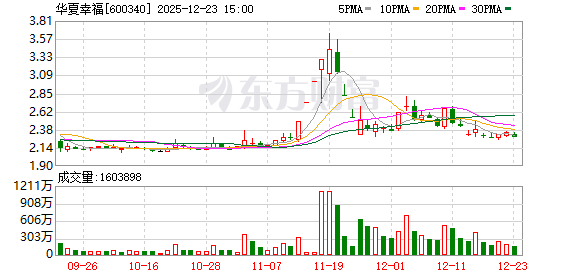
华夏幸福公告称,公司2025年第三次临时股东大会原定于12月31日召开。12月21日,公司董事会收到股 东中国平安人寿保险股份有限公司邮件,提议调整已审议通过的《股东会议事规则》。经核查,同意取 消原《关于修订的议案》,将调整后的该议案重新提交审议。除取消原议案和增加临时提案外,原股东 大会通知事项不变。 ...
华夏幸福与股东交锋“白热化”
第一财经· 2025-12-23 10:03
Core Viewpoint - The ongoing conflict between Huaxia Happiness and its shareholder China Ping An highlights significant disagreements over the company's pre-restructuring process and governance issues, which could impact the success of its restructuring efforts [2][9]. Group 1: Company Developments - Huaxia Happiness announced on December 22 that its board rejected five temporary proposals from China Ping An, which included issues related to the company's pre-restructuring, board appointments, and financial due diligence [2]. - The company is currently undergoing a pre-restructuring process, which involves negotiating with creditors and potential investors to create a restructuring plan before entering formal restructuring procedures [8]. - Huaxia Happiness has stated that the pre-restructuring process can be initiated either by creditors or the company itself, and that the current process does not require board or shareholder meetings since it was initiated by creditors [5]. Group 2: Shareholder Actions - China Ping An has made multiple moves against Huaxia Happiness, including a public statement on November 19 claiming ignorance of the pre-restructuring announcement and questioning its legality [4]. - On December 19, China Ping An proposed five new items for discussion at the upcoming shareholder meeting, focusing on the pre-restructuring and financial due diligence [6]. - The board of Huaxia Happiness voted against these proposals, indicating a continued rift between the company and its major shareholder [7]. Group 3: Restructuring Challenges - Successful pre-restructuring requires navigating several key steps, including asset and liability assessment, developing a restructuring plan, and obtaining creditor approval [10]. - The relationship between Huaxia Happiness and China Ping An has evolved beyond a simple creditor-debtor dynamic, now involving deeper issues related to corporate governance and risk management in the real estate sector [9]. - The pre-restructuring process is critical for Huaxia Happiness to avoid bankruptcy and improve its chances of recovery, especially given the changing market conditions and previous commitments made during debt restructuring discussions [8].