
CM BANK(03968)

Search documents
跟进!多家股份行下调存款利率
Zhong Guo Jing Ying Bao· 2025-05-22 00:16
中经记者 慈玉鹏 北京报道 继5月20日国有六大行以及招商银行、光大银行宣布下调存款利率后,《中国经营报》记者统计发现,5 月21日又有七家股份行再次跟进下调存款利率,其中长期存款利率下调幅度大于短期。 记者注意到,截至目前,九家股份制银行普遍对六个月、一年期、二年期定存挂牌利率下调15个基点, 三年期、五年期定存挂牌利率普遍下调25个基点。其中长期存款利率下调幅度更大。 同时,除招商银行与五大行保持一致外,其余8家股份制银行整存整取一年期、三年期、五年期挂牌利 率分别降至1.15%、1.3%、1.35%。 或推动"存款搬家" 东方金诚首席宏观分析师王青表示:"截至2025年4月末,活期存款占比34.5%,此次六大行下调存款利 率并带动其他商业银行跟进调整后,或将带动整体存款利率下调0.11—0.13个百分点左右,基本能够覆 盖本次LPR报价下调带动各类贷款利率下行对银行资产端收益的影响,稳定银行净息差。" 从影响看,王青表示,最新数据显示,2025年一季度商业银行净息差为1.43%,较上季度下行0.09个百 分点,再创历史新低,且已明显低于1.8%的警戒水平。本次LPR报价下调带动银行存款利率同步下调, 在 ...





国有大行集体迎来今年首轮存款降息 1年期存款利率已跌破“1”
Shen Zhen Shang Bao· 2025-05-21 16:49
【深圳商报讯】(首席记者谢惠茜)就在今年首次LPR下调当天,六大国有银行也集体宣布下调存款利 率,这是国有大行今年首轮存款降息。其中,各家国有银行活期存款利率下调至0.05%,1年期整存整 取定期存款利率均跌破"1字头",下调至0.95%。随后,多家股份行也纷纷"跟进"。 5月21日,截至记者发稿时,已有9家股份制银行跟进下调了存款挂牌利率。除了招商银行已于5月20日 下调之外,平安银行、中信银行、兴业银行、光大银行、浦发银行、民生银行、广发银行、华夏银行共 8家股份制银行均已于5月21日开始执行新的存款挂牌利率。 具体来看,上述8家股份制银行将1年、2年定期利率均调降了15个基点。其中,1年定期存款利率均下调 至1.15%;2年定期存款利率普遍下调至1.20%,民生银行下调至1.15%。3年、5年定期存款利率均下调 了25个基点,分别下调至1.30%、1.35%。 苏商银行特约研究员武泽伟接受记者采访时表示,此次国有大行和股份行集中下调存款利率是政策引导 与市场联动的结果。一方面,央行通过下调LPR,释放适度宽松的政策信号,要求通过利率自律机制引 导商业银行跟进;另一方面,银行主动调整负债成本以缓解净息差压 ...

深度|多家银行零售业务“束手脚”,个贷不良折扣率、回收率创两年来次低
券商中国· 2025-05-21 13:45
Core Viewpoint - The retail banking sector is facing significant challenges with increasing personal non-performing loans (NPLs) and a declining recovery rate, indicating a tough operating environment for banks [1][3][12]. Group 1: Personal Loan Market Trends - The scale of personal NPL batch transfers reached 370.4 billion yuan in Q1 2025, a significant drop from 715.4 billion yuan in Q4 2024, but a 7.6-fold increase year-on-year compared to 43 billion yuan in Q1 2024 [4]. - The discount rate for personal NPLs fell to 4.1% in Q1 2025, down from 4.8% in the previous quarter and 4.6% year-on-year, while the average principal recovery rate also hit a near two-year low of 6.9% [6][7]. - Personal consumption loans accounted for 72.4% of the NPLs, with credit card overdrafts at 14% and personal business loans at 13.5% [8]. Group 2: Factors Influencing NPLs - The increase in personal NPL transfers is attributed to three main factors: expansion of institutions allowed to conduct batch transfers, a shift in strategy from collection to batch transfer for efficiency, and worsening credit conditions for borrowers during economic downturns [5]. - The longer the overdue period, the lower the recovery rates and higher the discount rates, confirming the trend that personal bad debts are becoming less valuable [11]. Group 3: Bank Performance and Strategies - Many banks reported a decline in personal loan balances in Q1 2025, with notable examples including Ping An Bank and Industrial Bank, which saw reductions of 2.2% and 1.31% respectively [16][17]. - Banks are adopting a cautious approach to retail lending, with several institutions reporting personal loan growth rates below overall loan growth rates, indicating a shift towards more conservative lending practices [15]. - For instance, China Merchants Bank reported a retail NPL ratio of 1.01%, up from 0.98% at the end of the previous year, highlighting the ongoing challenges in managing retail loan quality [13].





最新!又有多家银行宣布:下调!
Zhong Guo Ji Jin Bao· 2025-05-21 12:55
Core Viewpoint - Nine joint-stock banks in China have followed state-owned banks in rapidly lowering deposit interest rates, focusing on medium to long-term deposits, particularly three-year and five-year terms [2][4][5] Group 1: Deposit Rate Adjustments - As of May 21, seven banks including Ping An Bank and CITIC Bank have announced reductions in deposit rates, with three-year and five-year fixed deposit rates lowered by 25 basis points (BP) [2][4] - The adjusted rates for Ping An Bank are now 0.70% for three months, 0.95% for six months, 1.15% for one year, 1.20% for two years, and 1.30% for three years, reflecting a decrease of 15 BP for shorter terms and 25 BP for longer terms [3][4] - Minsheng Bank has also reduced its deposit rates, with similar decreases across various terms, including a 25 BP drop for three-year and five-year deposits [3][4] Group 2: Market Expectations and Reactions - Investors had anticipated the recent reductions in deposit rates, with no significant rush to lock in rates observed at bank branches [4][5] - The speed of the banks' responses to the need for lower deposit rates aligns with market expectations, indicating a proactive approach to stabilize net interest margins and support the real economy [5][6] Group 3: Implications for Banking Sector - The adjustments in deposit rates are seen as necessary to reduce financing costs for the real economy, with banks needing to lower their liability costs to maintain profitability [5][8] - The current trend shows that the reductions in deposit rates are larger than the Loan Prime Rate (LPR) decreases, which may help banks manage interest expenses and improve their financial performance [8]

十余家银行接力降息,“存五年不如存一年”或逐渐消失
Di Yi Cai Jing· 2025-05-21 12:45
Core Viewpoint - The intention of banks to guide depositors towards "short-term" deposits remains clear, as they respond to the pressure of narrowing net interest margins through refined pricing strategies to reshape the deposit market landscape [1][7][9]. Summary by Sections Deposit Rate Trends - Several banks previously exhibited extreme inversion in deposit rates, where shorter-term deposits offered higher rates than longer-term ones. However, this phenomenon has diminished with the recent wave of deposit rate cuts [2][6]. - As of May 21, 2023, major banks like China Merchants Bank have aligned their one-year and five-year deposit rates at 1.30%, eliminating the extreme inversion [2][9]. - Despite the disappearance of extreme inversions in some banks, certain smaller banks still exhibit varying degrees of rate inversion, particularly in their short- to medium-term deposits [5][6]. Market Response and Future Expectations - Analysts suggest that the trend of "large banks leading, smaller banks following" in deposit rate cuts will continue, potentially leading to a gradual disappearance of existing rate inversions in smaller banks [6][7]. - The recent deposit rate cuts are expected to positively impact banks' net interest margins, as the reduction in deposit costs may exceed the decline in asset yields for the first time historically [11]. Current Deposit Rates - As of May 21, 2023, the deposit rates for major banks are as follows: - Industrial and Commercial Bank of China: 1-year at 0.95%, 5-year at 1.30% - China Merchants Bank: 1-year at 0.95%, 5-year at 1.30% - Other banks like CITIC Bank and Minsheng Bank have similar rates for various terms [8][9]. Implications for Banking Sector - The banking sector is facing significant pressure on net interest margins, with the first quarter of 2023 showing a decline in net interest margin to 1.43%, a historically low level [9]. - The ongoing trend of financial disintermediation is leading to a "liability shortage" for banks, compelling them to attract deposits through higher rates in interbank markets, which could counteract the benefits of lower deposit costs [11].
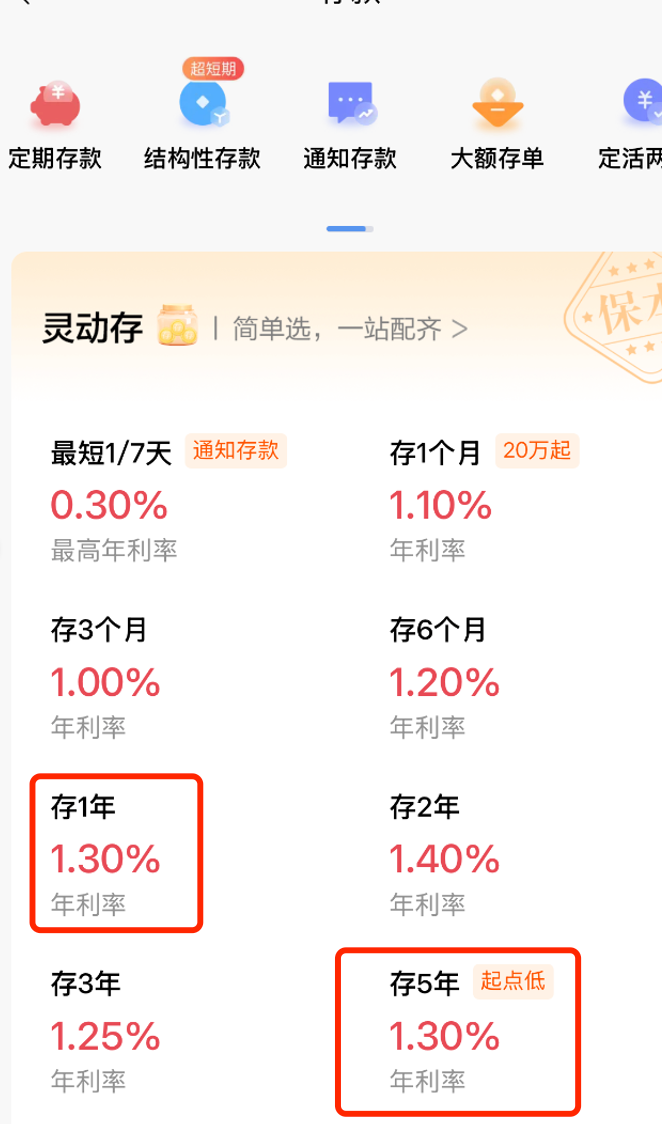
9家股份行跟进下调存款利率,活期存款接近零利率,定存最大降幅25bp
Hua Xia Shi Bao· 2025-05-21 10:19
Core Viewpoint - The recent adjustment of deposit rates by major banks marks the seventh round of rate cuts, significantly lowering the cost of bank liabilities and stabilizing profit margins, which is expected to enhance the banks' internal growth capabilities and maintain sound operations [4][7]. Group 1: Deposit Rate Adjustments - As of May 21, nine joint-stock banks have announced adjustments to their deposit rates, following the lead of the six major state-owned banks [5]. - The new rates include a 5 basis point reduction in demand deposit rates and a 15-25 basis point reduction in time deposit rates, with the one-year fixed deposit rate falling below 1% [3][5]. - The current demand deposit rate is now close to zero, and the one-year fixed deposit rate has been set at 1.15% for most banks [5][6]. Group 2: Impact on Banking Sector - The reduction in deposit rates is expected to lower banks' funding costs, thereby stabilizing net interest margins and enhancing their ability to support the real economy [8][12]. - Analysts suggest that the ongoing low interest rate environment may lead to a shift in deposits from large banks to smaller banks, which could affect the competitive landscape [8][12]. - The overall banking sector is entering a low interest rate and low spread cycle, with net interest margins for various types of banks showing a downward trend [10][12]. Group 3: Future Outlook - The adjustments in deposit rates are anticipated to lead to a decrease in overall deposit rates by approximately 0.11-0.13 percentage points, which may help stabilize banks' net interest margins [13]. - Despite the downward pressure on net interest margins, it is expected that the decline will not continue indefinitely, as measures to control funding costs are taking effect [12][13]. - The shift in deposit rates may also influence the allocation of bank assets towards bonds, potentially increasing demand in the bond market [8][13].

最新!跌破1%
Zhong Guo Ji Jin Bao· 2025-05-21 08:35
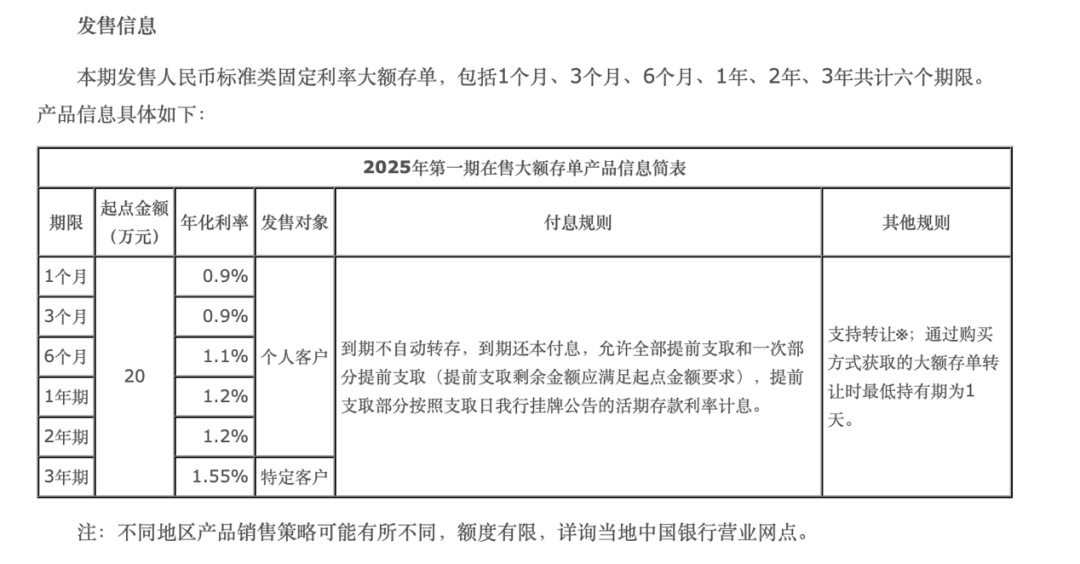
Core Viewpoint - A new round of interest rate cuts for large-denomination certificates of deposit (CDs) has begun, with some products' rates falling below 1% for the first time in recent years, indicating a significant shift in the banking sector's approach to deposit rates [1][9]. Summary by Category Interest Rate Changes - Major banks, including state-owned banks, have reduced the annualized interest rates for 1-month and 3-month large-denomination CDs to 0.9%, marking a historic low [1][3]. - The latest issuance by Bank of China shows a reduction of 25 basis points for 1-month, 3-month, 6-month, and 1-year products, while the 3-year product saw a reduction of 35 basis points [3][10]. - Other banks, such as Industrial and Agricultural Banks, have also lowered their rates to 0.9% for similar products [3][6]. Implications for the Banking Sector - The reduction in deposit rates is seen as a strategy to alleviate pressure on net interest margins, which have been declining [10][11]. - Analysts suggest that lowering deposit rates will help banks stabilize their net interest margins and reduce financing costs for the real economy [10][11]. Investor Guidance - Investors are advised to adjust their expectations regarding investment returns and consider a diversified asset allocation strategy in light of the declining interest rates [1][8][11]. - The trend of decreasing deposit rates is expected to continue, prompting investors to seek alternative investment options such as cash management products, money market funds, and government bonds [11].
跟进!这七家股份行调降存款利率,储户如何应对?
Bei Jing Shang Bao· 2025-05-21 04:38
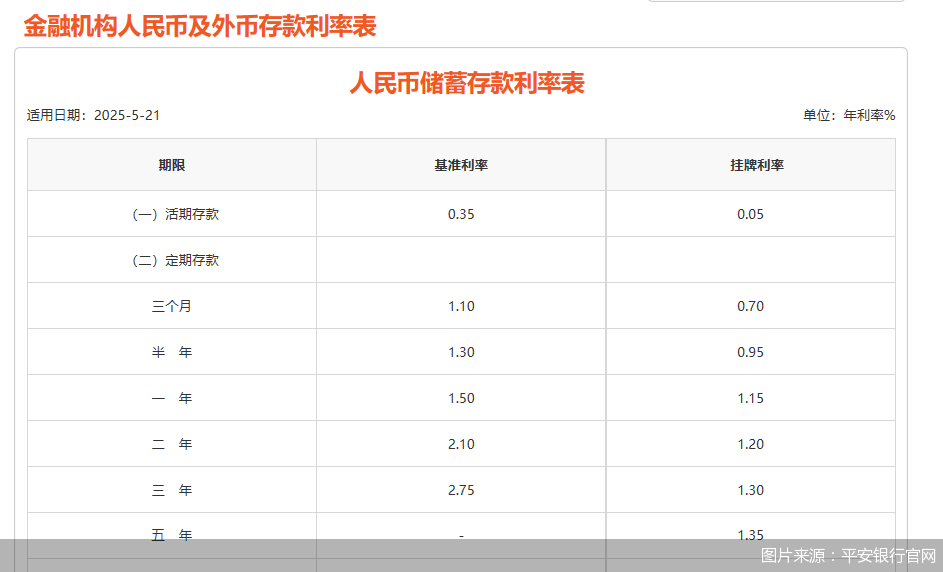
一般来说,银行存款利率下调更多取决于存款市场供求状况,各类型、各家银行会基于自身资产负债、净息差与经营等方面情况也会 进行差异化定价。根据以往的调整惯例,国有大行领衔、股份制银行迅速跟进、地方银行陆续追随的调整节奏已经形成,并且,在实 际业务中,挂牌利率与执行利率也会存在差异,储户可结合考虑自身的实际情况,货比三家,进行合理的储蓄配置。 北京商报讯(记者宋亦桐)继六家国有银行及招商银行、光大银行集体降低存款利率后,5月21日,广发银行、平安银行、中信银 行、华夏银行、兴业银行、浦发银行、民生银行七家股份制银行也跟进调整人民币存款挂牌利率,下调幅度为5—25个基点。 调整后,广发银行、平安银行、中信银行、华夏银行、兴业银行、浦发银行六家股份制银行人民币活期、整存整取定期利率均保持一 致。其中,活期存款利率为0.05%,较此前下调5个基点;定期整存整取三个月期、半年期、一年期、二年期利率分别为0.7%、 0.95%、1.15%、1.20%;三年期和五年期利率分别为1.30%和1.35%。 5月20日,国有六大行、招商银行、光大银行在内的8家银行宣布下调存款挂牌利率,下调幅度为5—25个基点。工商银行、农业银 行、 ...

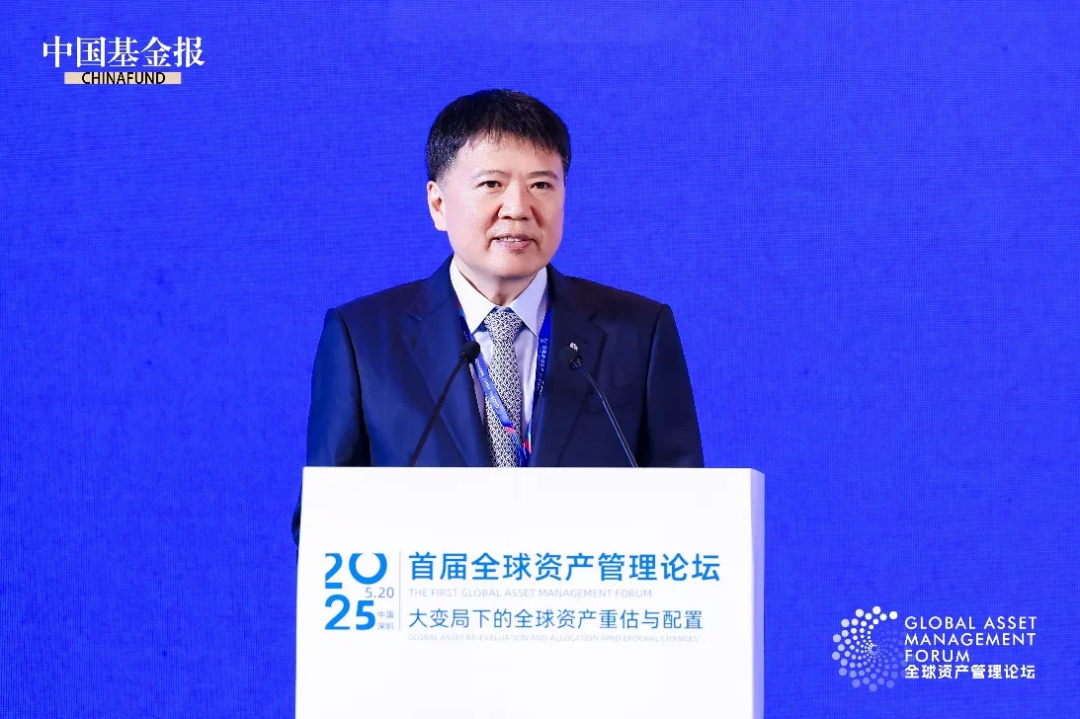
招商银行副行长王小青:财富管理视角下的资产管理
Zhong Guo Ji Jin Bao· 2025-05-21 04:15
Core Viewpoint - The speech emphasizes the importance of wealth management and asset management as interdependent components driving the development of the financial market, highlighting the need for personalized services based on client needs and preferences [3][7][8]. Industry Overview - China's economy is expected to maintain long-term, stable, and rapid growth, indicating a high level of certainty in the wealth management market, which is still in a golden development phase [3][6]. - The accumulation of wealth among Chinese residents over decades has injected continuous vitality into the wealth management industry, creating unprecedented development opportunities [6][3]. Wealth Management vs. Asset Management - Wealth management focuses on "people," addressing client needs, risk tolerance, financial goals, and fund planning, while asset management centers on "things," emphasizing the risk-return characteristics of various assets and identifying investment opportunities [3][7]. - The connection between wealth management and asset management is facilitated by solutions that deeply understand client needs, akin to a "translator" converting client aspirations into appropriate asset allocations [7][8]. Client-Centric Approach - Each client is unique, with varying financial situations, investment preferences, and risk tolerances, necessitating a tailored approach in both wealth and asset management [8][9]. - The process of wealth management is likened to a dining experience, where understanding client preferences is crucial for providing suitable investment solutions [8]. Importance of Asset Allocation - Long-term investment returns are more influenced by asset allocation and style matching than by the selection of specific products [9][10]. - The details in investment advisory and asset allocation practices are critical, including the scientific definition of assets and their effective categorization [9]. Collaboration Between Wealth and Asset Management - To better meet client needs, wealth management and asset management institutions must collaborate, as demonstrated by the "TREE Asset Allocation Service System" developed by the company [4][9]. - The company emphasizes the need for asset management institutions to possess diverse capabilities, including research culture, system construction, in-depth research, risk management, and client engagement [4][10]. Key Focus Areas for Asset Management Institutions - The company highlights three key areas for asset management institutions: consistency in actions and words, belief in long-term investment principles, and the development of distinctive expertise in specific fields [10][11]. - The company aims to strengthen cooperation with various asset management institutions to create a sustainable wealth management ecosystem, ensuring that financial services return to their core purpose of supporting the real economy [11].
7家股份行今日起调整存款挂牌利率,3年、5年期整存整取均降至1.3%、1.35%
Cai Jing Wang· 2025-05-21 04:05
Core Viewpoint - Several Chinese banks have announced a reduction in RMB deposit interest rates effective from May 21, 2025, indicating a trend towards lower interest rates in the banking sector [1][2]. Group 1: Interest Rate Adjustments - The seven joint-stock banks, including Ping An Bank, Industrial Bank, Minsheng Bank, CITIC Bank, Huaxia Bank, Guangfa Bank, and Pudong Development Bank, will lower the interest rate on demand deposits from 0.1% to 0.05%, a decrease of 5 basis points [1]. - The fixed deposit rates for 3-month, 6-month, and 1-year terms will be adjusted from 0.85%, 1.10%, and 1.30% to 0.70%, 0.95%, and 1.15%, respectively, each down by 15 basis points [1]. - For 3-year and 5-year fixed deposits, the rates will be reduced from 1.55% and 1.60% to 1.30% and 1.35%, representing a decrease of 25 basis points [1]. Group 2: Specific Bank Adjustments - Minsheng Bank will adjust its 2-year deposit rate from 1.30% to 1.15%, while the other six banks will lower their rates from 1.35% to 1.20%, a reduction of 15 basis points [2]. - Prior to this announcement, China Merchants Bank and Everbright Bank had already adjusted their deposit rates effective May 20, aligning their rates with the six major state-owned banks [2]. - After the adjustments, China Merchants Bank's fixed deposit rates for various terms will be set at 0.65%, 0.85%, 0.95%, 1.05%, 1.25%, and 1.30% for 3-month, 6-month, 1-year, 2-year, 3-year, and 5-year deposits, respectively [2].
