MICROSOFT(04338)

Search documents
微软获批在威斯康星州增建15个数据中心
Ge Long Hui· 2026-01-27 02:52
Core Viewpoint - Microsoft has received local approval to expand its data center operations in Pleasant Prairie, Wisconsin, by adding 15 new data centers, which will enhance its capacity to confirm revenue from OpenAI and other clients [1] Group 1: Company Expansion - The new data centers will be located near Microsoft's existing data center expansion area [1] - Microsoft is in competition with Amazon, Google, and Oracle to build data centers equipped with NVIDIA chips for training and running generative AI models [1] Group 2: Challenges and Community Response - Finding suitable locations for these facilities is challenging due to utility companies not always providing the necessary energy [1] - Residents and officials in Pleasant Prairie generally welcome Microsoft's expansion in the village [1] - Microsoft is now able to submit final civil engineering plans and apply for building permits [1]

微软AI芯片Maia时隔两年上新,号称性能超亚马逊Trainium
Di Yi Cai Jing Zi Xun· 2026-01-27 02:27
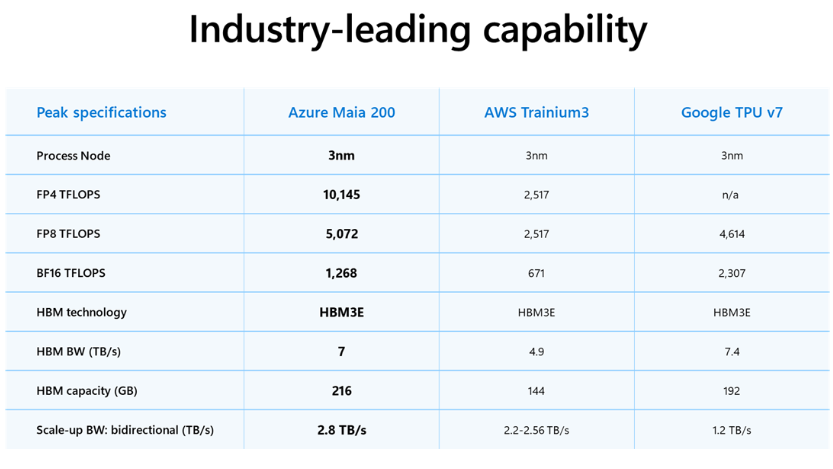
微软云与人工智能执行副总裁斯科特·格思里表示,Maia 200采用台积电3纳米工艺制造,每颗芯片包含 超过 1400 亿个晶体管,为大规模 AI 工作负载量身打造,同时兼顾高性价比。他称Maia 200是微软迄今 为止部署的最高效推理系统,其每美元性能比微软目前部署的最新一代硬件提升了30%。他同时表示, Maia 200的FP4性能是第三代 Amazon Trainium的3倍。 当地时间1月26日,微软宣布推出第二代人工智能芯片Maia 200。 目前,Maia 200已部署在微软位于爱荷华州得梅因附近的美国中部数据中心区域,接下来将部署位于亚 利桑那州凤凰城附近的美国西部3数据中心区域,未来还将部署更多区域。 在应用方面,微软超级智能团队将利用 Maia 200 进行合成数据生成和强化学习,以改进下一代内部模 型。在去年11月,微软宣布成立超级智能团队,由微软消费者人工智能业务负责人穆斯塔法·苏莱曼 (Mustafa Suleyman)领导,旨在实现人文主义超级智能。穆斯塔法·苏莱曼表示,这么做为了摒弃关于 通用人工智能(AGI)竞赛的叙事,而是将其视为一项更广泛、更深刻的人类事业,用于改善人类的生 活 ...

微软升级推出其第二代AI芯片,科创芯片设计ETF易方达(589030)近3天获得连续资金净流入
Xin Lang Cai Jing· 2026-01-27 02:15
消息面上,日前,微软公司推出其第二代人工智能(AI)芯片——"Maia 200"。这是该公司努力提高服 务效率、并提供英伟达硬件替代方案的核心举措。这是该科技巨头推动以更高能效比与性价比算力路径 为其云端AI训练/推理算力资源服务提供的至关重要自研AI算力集群硬件,并为售价昂贵的英伟达AI GPU系列人工智能算力集群提供替代型AI算力基础设施解决方案的核心举措。 微软表示,这款新推出的云计算专属AI芯片在大部分AI推理任务上的性能优于谷歌和亚马逊云计算服 务的同类半导体设备。Maia 200 也是微软迄今部署过的最高效人工智能推理系统。同时,微软透露已 在设计Maia 200的后续产品Maia 300。 科创芯片设计ETF易方达(589030)紧密跟踪上证科创板芯片设计主题指数,上证科创板芯片设计主题指 数选取科创板内业务涉及芯片设计领域的上市公司证券作为指数样本,以反映科创板芯片设计领域上市 公司证券的整体表现。 截至2026年1月27日 09:38,上证科创板芯片设计主题指数(950162)上涨0.39%,科创芯片设计ETF易方 达(589030)盘中换手2.26%,成交迅速走阔。 截至1月26日,科创芯 ...
微软新一代自研AI芯片“Maia 200”出鞘!推理狂潮席卷全球,属于AI ASIC的黄金时代到来
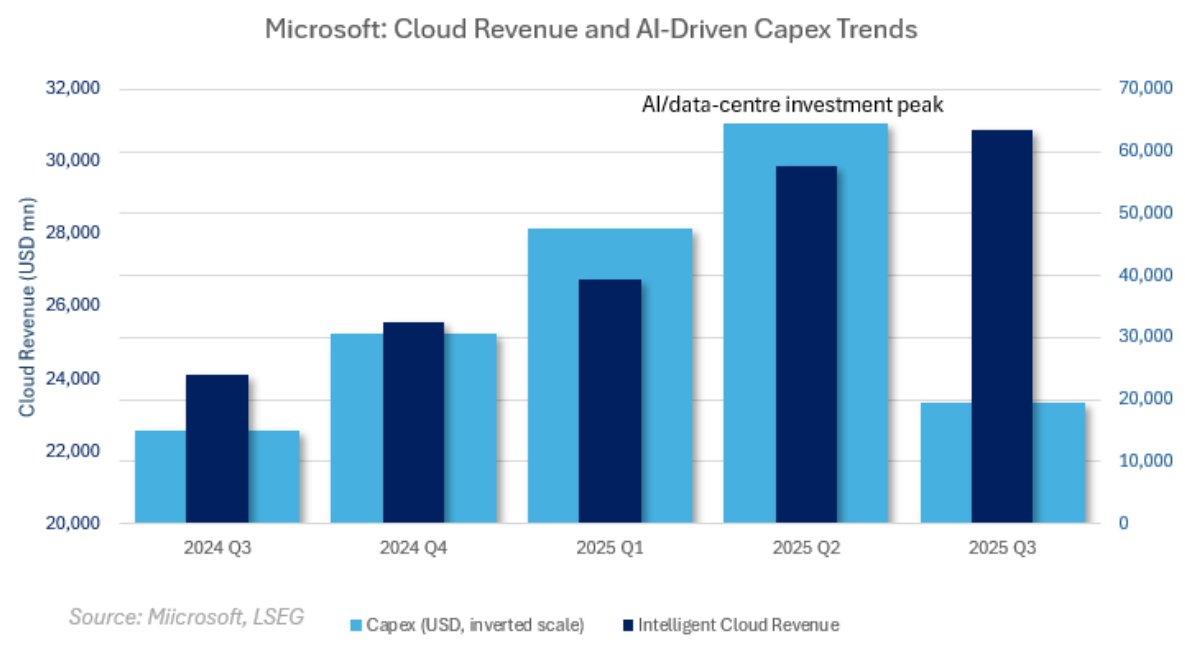
Zhi Tong Cai Jing· 2026-01-27 01:38
Core Viewpoint - Microsoft has launched its second-generation AI chip, Maia 200, aimed at providing a cost-effective alternative to NVIDIA's AI GPU series for cloud AI training and inference tasks [1][3]. Group 1: Product Launch and Specifications - The Maia 200 chip, manufactured by TSMC, is designed for high-performance AI inference tasks and is being deployed in Microsoft's large AI data centers [1][3]. - The chip offers a performance improvement of 30% per dollar compared to Microsoft's latest hardware, with FP4 performance three times that of Amazon's third-generation Trainium and FP8 performance exceeding Google's seventh-generation TPU [5][6]. - Maia 200 is built using TSMC's advanced 3nm process and contains over 140 billion transistors, providing over 10 petaFLOPS of performance at FP4 and over 5 petaFLOPS at FP8 within a power consumption of 750 watts [6]. Group 2: Competitive Landscape - The launch of Maia 200 positions Microsoft as a strong competitor against Amazon's Trainium and Google's TPU, with claims of superior performance in AI inference tasks [3][4]. - Other chip design giants like Marvell, Broadcom, and MediaTek are also focusing on developing custom AI ASIC solutions for cloud giants, indicating a competitive shift towards high-performance, cost-effective AI infrastructure [2]. Group 3: Industry Trends and Future Outlook - The increasing demand for AI data centers and the need for energy-efficient solutions are driving the development of AI ASIC technology across major tech companies [7][8]. - Microsoft is already planning the next generation of AI chips, named Maia 300, and has options to collaborate with OpenAI for exclusive chip designs [6][7]. - The AI ASIC technology route is seen as a critical investment for companies aiming to enhance cost-effectiveness and energy efficiency in AI computing [7][8].
微软(MSFT.US)新一代自研AI芯片“Maia 200”出鞘! 推理狂潮席卷全球 属于AI ASIC的黄金时代到来
智通财经网· 2026-01-27 00:34
Core Viewpoint - Microsoft has launched its second-generation AI chip, Maia 200, aimed at providing a cost-effective alternative to NVIDIA's AI GPU series for cloud AI training and inference tasks [1][3]. Group 1: Product Launch and Specifications - The Maia 200 chip, manufactured by TSMC, is designed for high-performance AI inference tasks and is being deployed in Microsoft's AI data centers [1][3]. - The chip features over 1.4 trillion transistors and is built on a 3nm process, offering more than 10 petaFLOPS of performance at FP4 precision and over 5 petaFLOPS at FP8 precision, all within a power consumption of 750 watts [5][6]. - Maia 200's performance per dollar is reported to be 30% better than Microsoft's current hardware, and it outperforms Amazon's Trainium by three times in FP4 performance [5][8]. Group 2: Competitive Landscape - The launch of Maia 200 positions Microsoft as a strong competitor against Amazon's Trainium and Google's TPU, with claims of superior performance in AI inference tasks [3][4]. - Major chip design companies like Marvell and Broadcom are increasingly focusing on developing custom AI ASIC solutions for cloud giants, indicating a competitive shift in the industry [2]. Group 3: Strategic Importance - The development of Maia 200 reflects Microsoft's serious commitment to in-house chip engineering, driven by the growing energy demands of large AI data centers and the need for cost-effective solutions [9]. - The AI ASIC technology route is becoming crucial for major tech companies, as they aim to enhance the cost-effectiveness and energy efficiency of their AI computing systems [10][11].
1月27日美股成交额前20:微软发布AI芯片以减少对英伟达的依赖
Xin Lang Cai Jing· 2026-01-26 22:01
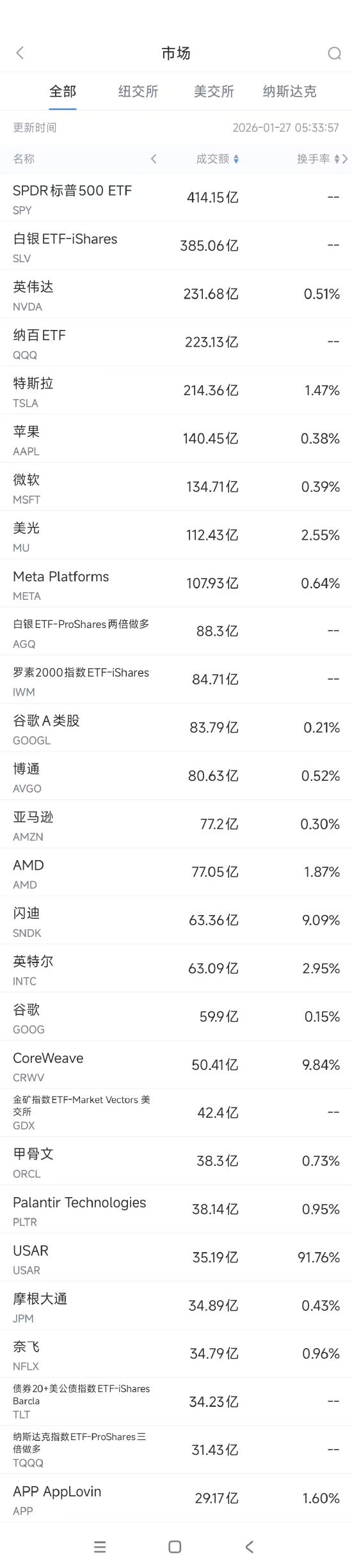
Group 1: Nvidia and Microsoft - Nvidia's stock fell by 0.64% with a trading volume of $23.168 billion, as Microsoft announced the launch of its second-generation AI chip, Maia 200, aimed at reducing dependency on Nvidia's chips [1][10] - The Maia 200 chip, produced by TSMC, is being shipped to Microsoft's data centers in Iowa and will soon be deployed in Phoenix [10] Group 2: Tesla and EU Investigation - Tesla's stock dropped by 3.09% with a trading volume of $21.436 billion, as the EU launched an investigation into Musk's X platform over concerns regarding the platform's failure to prevent the Grok AI chatbot from generating and disseminating potentially harmful deepfake images [1][11] - The investigation will assess whether the platform adequately evaluated and mitigated risks associated with deploying Grok in the EU market [11] Group 3: Apple and Financial Forecasts - Apple's stock rose by 2.97% with a trading volume of $14.045 billion, as JPMorgan raised its target price for Apple, anticipating strong demand for the iPhone 17 and effective cost control to drive better-than-expected performance [1][12] - Analysts believe that strong demand for the iPhone 17, combined with lower operating expenses, will lead to revenue and profit exceeding market expectations in the upcoming fiscal quarter [12] Group 4: Micron and Semiconductor Industry Outlook - Micron's stock fell by 2.64% with a trading volume of $11.243 billion, while BNP Paribas raised its target price for Micron from $270 to $500 [13] - JPMorgan expects companies in the semiconductor sector to report fourth-quarter results that meet or exceed expectations, contributing to a positive earnings revision trend [13] Group 5: Intel's Revenue Forecast - Intel's stock declined by 5.72% with a trading volume of $6.309 billion, as the company projected first-quarter revenue for 2026 to be between $11.7 billion and $12.7 billion, significantly below market expectations [14] Group 6: CoreWeave and Nvidia Investment - CoreWeave's stock increased by 5.73% with a trading volume of $5.041 billion, as Nvidia announced an additional $2 billion investment to help CoreWeave build over 5 billion watts of AI computing power by 2030 [14][15] - This partnership will allow CoreWeave to be among the first to deploy Nvidia's next-generation products, including storage systems and new CPUs [14][15]


微软推出新一代人工智能芯片 剑指英伟达软件优势
Xin Lang Cai Jing· 2026-01-26 16:18
微软于周一发布自研第二代人工智能芯片,同时推出配套软件工具,剑指英伟达在开发者群体中最大的 一项竞争优势。 责任编辑:郭明煜 微软于周一发布自研第二代人工智能芯片,同时推出配套软件工具,剑指英伟达在开发者群体中最大的 一项竞争优势。 微软方面表示,新款芯片名为 "玛雅 200"(Maia 200),本周将率先在美国艾奥瓦州的一座数据中心投 入使用,后续计划在亚利桑那州增设第二个部署地点。该芯片是微软 2023 年推出的玛雅系列人工智能 芯片的第二代产品。 当下,微软、字母表旗下谷歌以及亚马逊旗下亚马逊云科技等一众头部云计算企业,均在发力自研芯 片,与英伟达的竞争日趋激烈 —— 而这些企业恰恰是英伟达的核心客户群体,玛雅 200 芯片的问世正 是这一趋势的缩影。 其中,谷歌的动作尤为引人关注。元宇宙平台公司等英伟达的大型客户正与谷歌展开深度合作,力求填 补谷歌与英伟达在人工智能芯片软件生态上的核心差距。 微软则透露,在推出新款玛雅芯片的同时,还将配套发布一套芯片编程软件工具包。该工具包包含开源 软件工具 Triton,ChatGPT 研发方 OpenAI 为这款工具的开发作出了重要贡献。Triton 的功能与英 ...
微软发布最新人工智能芯片 旨在减少对英伟达的依赖
Yang Shi Xin Wen· 2026-01-26 16:04
Core Viewpoint - Microsoft has launched its latest artificial intelligence chip aimed at reducing dependence on Nvidia [2] Group 1 - The new AI chip is part of Microsoft's strategy to enhance its own hardware capabilities and lessen reliance on third-party suppliers [2] - This move is expected to strengthen Microsoft's position in the competitive AI market, where demand for custom chips is increasing [2] - The development of the chip aligns with broader industry trends towards in-house chip production among major tech companies [2]
微软发布最新AI芯片,希望降低对英伟达的依赖
Hua Er Jie Jian Wen· 2026-01-26 16:01
风险提示及免责条款 市场有风险,投资需谨慎。本文不构成个人投资建议,也未考虑到个别用户特殊的投资目标、财务状况或需要。用户应考虑本文中的任何 意见、观点或结论是否符合其特定状况。据此投资,责任自负。 微软发布最新AI芯片,希望降低对英伟达的依赖。 ...
AI投资进入“交卷期”,微软(MSFT.US)变现执行力将决定科技股下半场定价
Zhi Tong Cai Jing· 2026-01-26 07:10
Core Viewpoint - Microsoft is set to report its Q2 FY2026 earnings on January 28, with expected revenue of $80.23 billion, reflecting a 15.2% growth, and an anticipated EPS of $3.88, representing a 20.1% year-over-year increase. The market's focus is shifting from overall performance to the execution in cloud business growth, AI monetization, and profit margins [1][2]. Revenue Growth - Cloud Computing as Core Driver - Azure remains the central driver of the earnings narrative, with market concerns focusing on whether cloud growth has stabilized or is re-accelerating compared to the previous quarter. Key indicators such as commercial bookings and remaining performance obligations (RPO) will be closely monitored [3]. AI Monetization - Evidence vs. Narrative - AI is crucial to Microsoft's valuation, but the market is seeking tangible evidence of revenue generation from AI. Attention will be on the adoption rates of Copilot in both enterprise and consumer sectors, whether this adoption is through paid or bundled models, and if AI workloads are reflected in Azure billing [6]. Profit Margins - Cloud Efficiency and Rising Costs - Profit margins are a critical sensitivity point as Microsoft increases investments in AI and data centers. The market will compare operating margins with the previous quarter to assess whether cloud computing efficiencies can offset rising costs in computing power, energy, and infrastructure [7][8]. Productivity and Personal Computing - Beyond cloud and AI, Microsoft's productivity and PC segments may signal potential demand. Pricing power in Office and Microsoft 365 will be viewed as indicators of enterprise resilience, while Windows OEM demand may suggest stabilization in the PC cycle [9]. True Catalyst - Guidance and Outlook - Guidance is likely to drive post-earnings reactions, with the market focusing on the tone for Q1 and the full year, particularly regarding cloud demand and spending trends. Investors will look for clear responses from management on Azure's growth outlook and whether AI revenue expectations are quantified or remain qualitative [11]. Capital Expenditures and Investment Spending - As Microsoft continues to expand AI and data center investments, capital expenditure guidance will be scrutinized. The market remains sensitive to narratives of "spending first, profiting later," especially in a high-interest-rate environment. Indications that high capital expenditure intensity will persist longer than expected could pressure market sentiment [12].