
BAMA TEA(06980)

Search documents
八马茶业成功上市:资本浪潮下的品牌突围与行业破局
Sou Hu Cai Jing· 2025-11-03 09:11
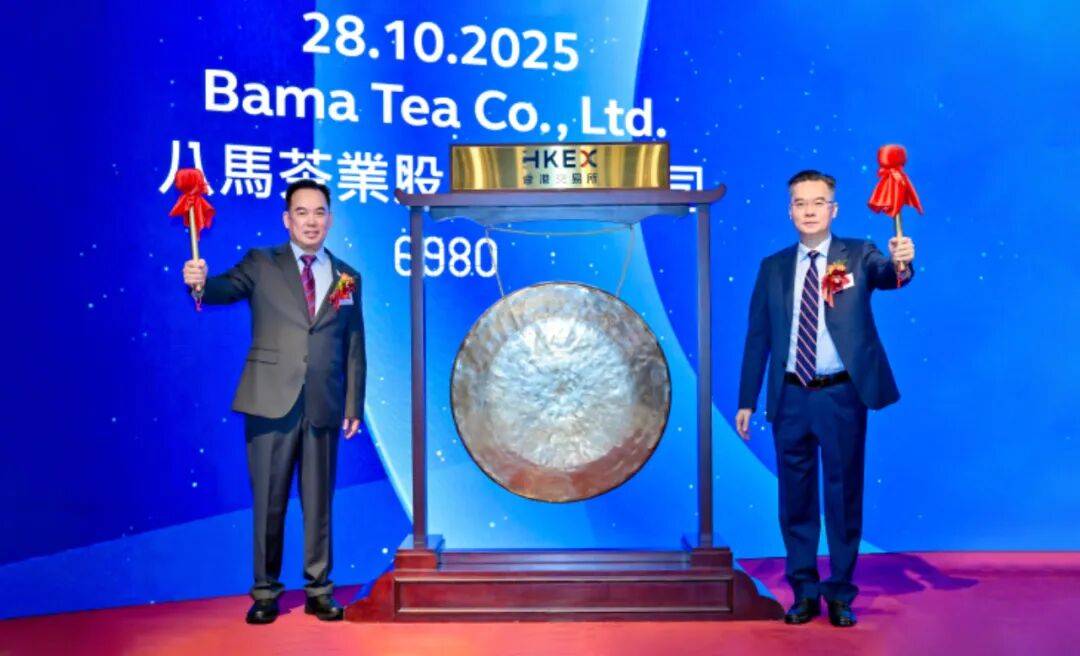
Core Insights - Eight Horses Tea officially listed on the Hong Kong Stock Exchange after a 12-year IPO journey, achieving a market capitalization exceeding HKD 7.7 billion, setting a new record for tea companies in Hong Kong [1] - The company's market performance and strategic layout demonstrate the innovative practices of traditional tea enterprises in modern transformation while revealing deep challenges and potential solutions within the industry [1] Listing Journey - The listing process of Eight Horses Tea was fraught with challenges, including attempts to list on various exchanges since 2013, ultimately succeeding in Hong Kong due to its accommodating market for consumer growth [2] - The funds raised from the IPO will primarily be allocated to channel expansion, supply chain digitalization, and international brand promotion, indicating a forward-looking strategy [2] - Eight Horses Tea ranks first in the high-end tea market in China and has a nationwide presence with 3,716 offline stores, utilizing a "direct + franchise" model [2] Market Position and Expansion - The ability to scale is rare in the highly fragmented tea industry, where over 1.6 million tea companies exist, with the top five holding only 5.6% market share [3] - Eight Horses Tea has established a unique channel barrier through standardized store systems and a digital supply chain, reflected in an 86.7% stock price increase on its first trading day [3] Industry Upgrades - To address quality fluctuations due to non-standardized production, Eight Horses Tea has implemented digital transformations in its production processes, creating over 20 industry standards [4] - The company employs a mixed model of self-production and outsourcing to mitigate risks while maintaining quality, with its self-produced Tieguanyin tea being a market leader for over a decade [4] - A multi-brand strategy targets younger consumers, with sub-brands focusing on innovative products and high-end offerings, successfully bridging traditional and modern markets [4] Industry Transformation - The tea industry is shifting from a "gift economy" to "quality consumption," prompting companies to adjust their product offerings in response to changing consumer demands [5] - The rise of new tea drinks contrasts with the decline of original leaf tea, necessitating traditional tea companies to adopt digital marketing and e-commerce strategies to engage younger generations [5] - The Chinese tea industry is evolving from "agricultural products" to "consumer goods," with advancements in eco-friendly tea technology and cultural product development expanding industry boundaries [5] Conclusion - The listing of Eight Horses Tea marks a significant milestone for the company and reflects the modernization of the Chinese tea industry [6] - Future strategies for tea companies should focus on maintaining scale advantages, enhancing technological capabilities, optimizing governance structures, and expanding into younger markets while leveraging capital for industry consolidation [6]


泉企八马茶业敲钟上市,“高端中国茶第一股”全拆解
Sou Hu Cai Jing· 2025-10-31 09:27
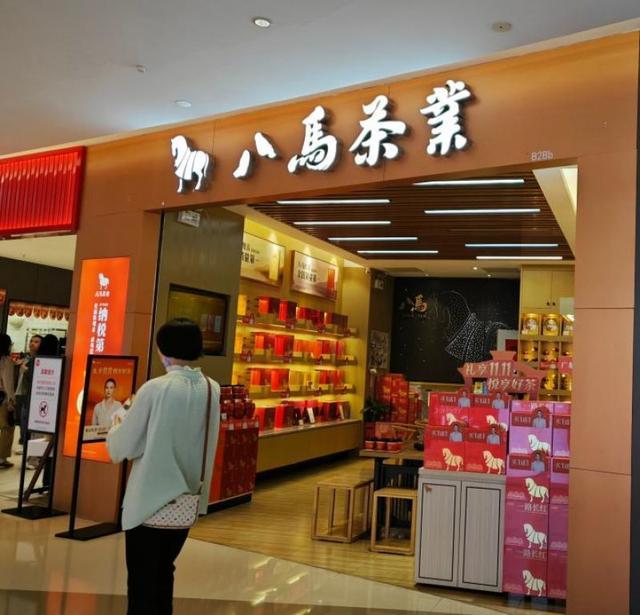
Core Insights - Baima Tea Co., Ltd. has successfully listed on the Hong Kong Stock Exchange, becoming the "first high-end Chinese tea stock" after a long wait in the A-share market [1][4][21] - The company experienced a significant stock price increase of 86.7% on its first trading day, reaching a market capitalization of 79.35 billion HKD [4][16] - Despite the successful IPO, Baima Tea is facing challenges with declining revenue and net profit in the first half of 2025 [16][18] Company Overview - Baima Tea is recognized as the largest high-end raw leaf tea company in China, with a strong family influence in its management and ownership structure [1][5][9] - The company has a significant number of stores, with over 3,700 locations, and has been a leader in customer satisfaction in the tea retail sector for three consecutive years [16][18] Financial Performance - In the first half of 2025, Baima Tea reported revenues of 1.063 billion CNY, a decrease of 4.23% year-on-year, and a net profit of 120 million CNY, down 17.81% [16][18] - The decline in performance is attributed to a reduction in the number of direct retail stores, which decreased from 352 in 2022 to 244 in mid-2025 [16][18] Market Position and Strategy - Baima Tea has expanded its franchise model, with a total of 3,585 franchise stores as of June 2025, indicating a shift in its retail strategy [16][18] - The company plans to allocate 35% of its IPO proceeds to expand production facilities and 20% to enhance brand value and product offerings [16][18] Brand Development - The company has faced challenges with brand promotion, including a past incident of false advertising related to its association with the Boao Forum [17] - Baima Tea has launched new product lines targeting younger consumers and has achieved significant sales milestones in its key tea categories [18][21]
上市首日大涨86.7%!八马茶业圆梦港交所:能否破解加盟模式隐忧?
Hua Xia Shi Bao· 2025-10-30 13:56
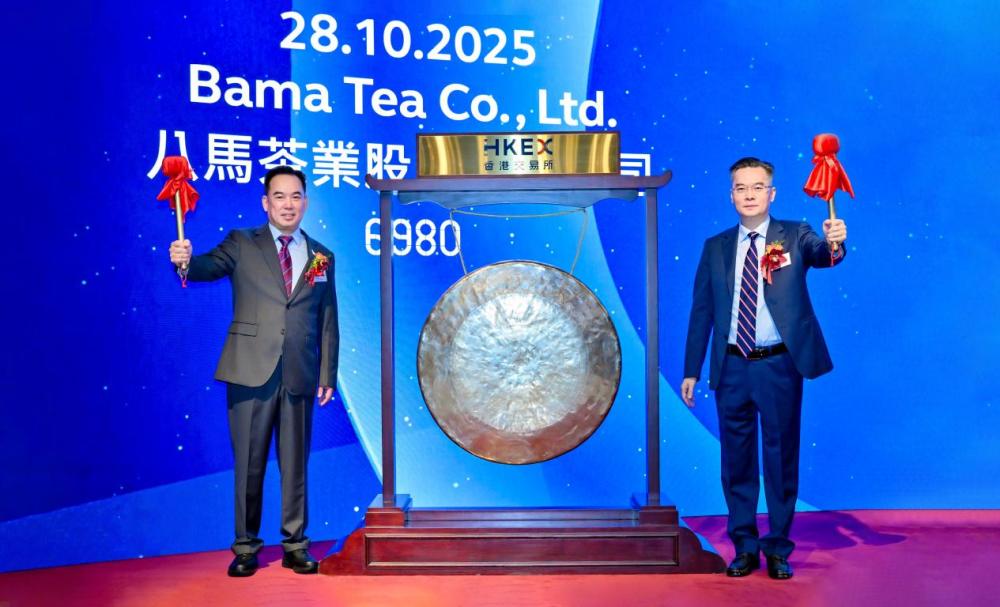
Core Viewpoint - Baima Tea has successfully listed on the Hong Kong Stock Exchange after years of attempts, achieving a closing price of HKD 93.35 per share, an increase of 86.7%, with a market capitalization of HKD 7.935 billion [2][8]. Financial Performance - Baima Tea's revenue and net profit for the years 2022 to 2024 are approximately RMB 1.818 billion, RMB 2.122 billion, and RMB 2.143 billion, with corresponding net profits of RMB 166 million, RMB 206 million, and RMB 224 million [3]. - In the first half of 2025, Baima Tea reported revenue of RMB 1.063 billion, a decrease of approximately RMB 57 million compared to the same period last year, and a net profit of RMB 120 million, down RMB 26 million year-on-year [3]. Marketing and Expansion - The company has increased its marketing expenditures significantly, with sales and marketing expenses from 2022 to the first half of 2025 being RMB 617 million, RMB 681 million, RMB 692 million, and RMB 332 million, representing 33.9%, 32.1%, 32.3%, and 31.2% of revenue respectively [4]. - As of June 30, 2023, Baima Tea has expanded its number of stores to 3,585, up from 2,613 in 2022, adding nearly 1,000 stores in three years [4]. Business Model and Challenges - Baima Tea relies heavily on a franchise model, with 3,341 of its 3,585 stores being franchise outlets, accounting for over 50% of total revenue [6]. - The number of franchisees has slightly decreased in the first half of 2025, indicating potential challenges in maintaining franchise relationships and revenue stability [6]. Market Position and Growth Potential - Baima Tea positions itself as a leader in the high-end tea market, targeting high-income consumers, with an average transaction value between RMB 2,300 and RMB 3,000 [4]. - The company holds a market share of 1.7% in the high-end tea segment, suggesting significant room for growth as the top five brands collectively hold only 5.6% of the market [4]. Industry Insights - The Chinese tea market is characterized by a fragmented structure with intense competition, lacking strong brand identities [5]. - Experts suggest that Baima Tea can leverage its brand and marketing strategies to create emotional connections with consumers and enhance its market position [5][9]. Investor Sentiment - The public offering prior to Baima Tea's listing attracted 169,000 applications, with an oversubscription rate of 2,684 times, setting a record for new stock oversubscription in Hong Kong this year [7]. - The market's positive response reflects a renewed interest in traditional tea companies with strong brand influence and market channels [8].
八马茶业建议实行及申请H股全流通
Zhi Tong Cai Jing· 2025-10-30 13:37
Core Viewpoint - The company, Eight Horses Tea Industry (06980), has approved a plan for full circulation of H-shares, converting 31,933,125 domestic shares held by 11 shareholders into H-shares, which represents approximately 37.57% of the total issued shares as of the announcement date [1] Group 1 - The board of directors has reviewed and approved the implementation of full circulation for H-shares [1] - The company plans to submit a filing application to the China Securities Regulatory Commission on October 30, 2025 [1] - The conversion involves 31,933,125 domestic shares held by 11 shareholders [1]
八马茶业(06980)建议实行及申请H股全流通
Zhi Tong Cai Jing· 2025-10-30 13:36
Core Viewpoint - The company Baima Tea Industry (06980) has proposed to implement full circulation of H-shares and has submitted a filing application to the China Securities Regulatory Commission for the conversion of 31,933,125 domestic shares held by 11 shareholders into H-shares, which represents approximately 37.57% of the total issued shares as of the announcement date [1]. Group 1 - The board of Baima Tea Industry has approved the implementation of full circulation for H-shares [1]. - The company plans to convert domestic shares into H-shares by October 30, 2025 [1]. - The conversion involves 31,933,125 shares, which is about 37.57% of the total issued shares [1].
八马茶业(06980.HK)建议实行及申请H股全流通
Ge Long Hui· 2025-10-30 13:13
Core Viewpoint - The company, Baima Tea Industry (06980.HK), has announced its plan to implement full circulation of H-shares by converting 31,933,125 domestic shares held by 11 shareholders into H-shares, which represents approximately 37.57% of the total issued shares as of the announcement date [1] Group 1 - The board of directors has approved the submission of a filing application to the China Securities Regulatory Commission (CSRC) for the conversion of domestic shares into H-shares [1] - The conversion will be eligible for listing and trading on the main board of the Stock Exchange of Hong Kong after obtaining all necessary approvals and complying with applicable laws and regulations [1] - According to the company's articles of association, no further approval from shareholders is required for the conversion and listing [1]
八马茶业(06980) - 内幕消息公告 - 本公司建议实行及申请H股全流通
2025-10-30 13:00
香港交易及結算所有限公司及香港聯合交易所有限公司對本公告的內容概不負責,對其準確性 或完整性亦不發表任何聲明,並明確表示,概不對因本公告全部或任何部分內容而產生或因倚 賴該等內容而引致的任何損失承擔任何責任。 BAMA TEA CO., LTD. 在取得所有相關備案及╱或批准(包括但不限於中國證監會及聯交所)並已遵守所 有適用法律、法規及規則後,該等內資股將轉換為H股,並合資格於聯交所主板 上市及買賣(「轉換及上市」)。根據本公司公司章程,無須於股東大會上取得本公 司股東進一步批准以批准轉換及上市。 1 於本公告日期,本公司尚未就轉換及上市向聯交所提出申請,且本公司轉換及上 市的實施計劃詳情尚未最終確定,而將予轉換的內資股最終數目以及轉換及上市 的完成須遵守中國證監會、聯交所及其他相關監管機構規定完成的相關程序。本 公司將遵照上市規則以及適用法律法規適時就H股全流通以及轉換及上市的進展 情況作出進一步公告。 H股全流通以及轉換及上市須遵守中國證監會、聯交所及其他相關境內外監 管機構規定的相關程序。本公司股東及潛在投資者於買賣本公司股份時務請 審慎行事。 (於中華人民共和國註冊成立的股份有限公司) (股份代號: ...
首秀大涨73% 八马茶业成功上市 重构万亿茶产业价值逻辑
Zhong Guo Jin Rong Xin Xi Wang· 2025-10-30 00:15
Core Insights - Eight Horses Tea has successfully listed on the Hong Kong Stock Exchange, showcasing a clear path for modernization in the Chinese tea industry through quality and category synergy, technological empowerment, and comprehensive channel layout [2] Quality and Product Strategy - Quality is a core value for Eight Horses Tea, with three selection standards: "golden production areas, traditional craftsmanship, and renowned works," and four quality standards: "safety, suitability, authenticity, and stability" [3] - The company actively participates in setting over 20 national, industry, and local standards as a key player in agricultural industrialization [3] Technological Advancements - Eight Horses Tea has invested in smart, digital, and information-based production lines, establishing a leading "super factory" with award-winning technology [5] - The company has transitioned from "experience-driven" to "technology-driven" production, ensuring high-end quality is replicable and verifiable [7] Financial Performance - Revenue is projected to grow from RMB 1.818 billion in 2022 to RMB 2.143 billion in 2024, with a compound annual growth rate (CAGR) of 8.6% [6] - Net profit is expected to increase from RMB 166 million in 2022 to RMB 224 million in 2024, with a CAGR of 16.2% [6] Supply Chain and Production - The company has built smart tea storage systems and a nationwide intelligent logistics network, ensuring product quality and safety [11] - Eight Horses Tea aims to achieve comprehensive self-production of six major tea types within three to five years through the establishment of multiple smart processing plants [11] Channel Strategy - Eight Horses Tea has developed a nationwide network of over 3,700 chain stores and achieved a closed-loop of 40 million fans and 26 million members across all channels [12][14] - The company focuses on flagship stores as core carriers of its high-end brand image, providing commercial and social interaction spaces [15] Future Expansion Plans - The company plans to add 1,500 new stores in the next three to five years and expand its overseas presence, starting with suitable countries along the Belt and Road Initiative [16] - Eight Horses Tea will continue to enhance its online presence through social media and live streaming, aiming for rapid growth in online business [16]
八马茶业(06980):公司事件点评报告:高端中国茶第一股,“千城万店”加速扩张
Huaxin Securities· 2025-10-29 15:27
Investment Rating - The report assigns a "Buy" rating for the company, marking its first coverage [10]. Core Insights - Baima Tea is recognized as the largest high-end tea supplier in China, with a strong brand presence and continuous enhancement of brand equity [2]. - The company's revenue has shown steady growth, with a forecasted increase in earnings per share (EPS) from 2.64 to 3.69 CNY from 2025 to 2027 [10]. - The company is expanding its offline presence significantly, with plans to add 1,500 new stores in the next 3-5 years, focusing on lower-tier cities [9]. Summary by Sections Company Overview - Baima Tea is a well-known supplier of various tea products in China, including high-end Pu'er tea and other tea-related products, with its brand "Baima" recognized as a famous trademark [2]. Financial Performance - Revenue is projected to grow from 18.18 billion CNY in 2022 to 21.43 billion CNY in 2024, with net profit increasing from 1.66 billion CNY to 2.24 billion CNY during the same period [3]. - In the first half of 2025, revenue decreased by 4% to 10.63 billion CNY, primarily due to a reduction in offline stores [3]. Product Sales - In the first half of 2025, tea sales saw a slight decline of 4%, while tea utensils and tea food experienced growth of 1% and a decline of 20%, respectively [4]. - The average price of Baima tea increased from 643 CNY/kg in 2024 to 667 CNY/kg in 2025 [4]. Market Strategy - The company is enhancing its online sales through live streaming, which has contributed to an increase in online revenue share to 35.49% in the first half of 2025 [5]. - As of October 2025, the number of offline stores reached 3,730, with a net increase of 226 stores since the beginning of the year [9]. Earnings Forecast - The forecast for EPS is 2.64 CNY for 2025, with a projected PE ratio of 33, indicating a solid market position [10]. - Revenue is expected to grow steadily, with a projected increase to 2,598 million CNY by 2026 [12].
茶咖日报|肯德基咖啡喝出塑料手套?顾客:门店要求提供视频自证
Guan Cha Zhe Wang· 2025-10-29 10:25
Group 1 - A customer reported finding a plastic glove in a coffee cup at a KFC location in Harbin, leading to a request for video evidence from the store [1] - KFC's customer service stated that they could not verify the claims made on social media and advised customers to contact the store directly for service [1] Group 2 - COFCO Technology announced partnerships with several leading tea beverage companies to promote D-alloheptulose sugar, which is seen as a promising product in the health trend [2] - The collaboration aims to enhance product offerings in the tea beverage sector [2] Group 3 - Xiangpiaopiao signed a cooperation agreement with Zhejiang Chinese Medical University to establish a health beverage research institute, focusing on integrating traditional Chinese medicine into daily consumption [3] - The first product from this collaboration is "Five Red Warm Milk Tea," based on traditional remedies [3][4] - Xiangpiaopiao is undergoing a strategic upgrade from a milk tea pioneer to a leader in health-oriented tea beverages, emphasizing product innovation and brand rejuvenation [3][4] Group 4 - Jiahua Foods reported a 68.5% decline in net profit for the first three quarters of the year, despite a 5.3% increase in revenue to 1.77 billion yuan [5] - The company attributed the profit drop to rising raw material costs and increased marketing expenses [5][6] - Jiahua Foods is facing challenges due to the trend of "de-plant-based cream" in the new tea beverage market, leading to a significant decrease in sales [6] Group 5 - Eight Horse Tea officially listed on the Hong Kong Stock Exchange with an initial price of 50 HKD, closing at 93.35 HKD, marking an increase of 86.7% [7] - The company plans to expand its physical presence by adding 1,500 new stores over the next three to five years and aims to establish an intelligent production base [7] - Eight Horse Tea has a strong family ownership structure, with significant control held by the Wang family, who have a long history in tea production [8]

