
BAMA TEA(06980)

Search documents
中信建投:高端茶叶发展迅速 行业潜力广阔
智通财经网· 2025-10-28 07:53
Core Viewpoint - The Chinese tea market is projected to grow from 288.9 billion yuan in 2020 to 325.8 billion yuan in 2024, with a compound annual growth rate (CAGR) of 3% [1][2] Market Overview - The Chinese tea industry has a long history, with domestic production accounting for approximately 69% of total output by 2024, indicating a self-sufficient industry [2] - The market is segmented into high-end, mid-range, and mass-market categories, with high-end tea experiencing the fastest growth due to rising consumer health awareness [3] - The overall tea market is expected to see sales revenue increase from about 89 billion yuan to approximately 103.1 billion yuan, reflecting a CAGR of about 3.7% [3] Market Segmentation - Tea types are categorized into six major categories based on fermentation: green tea, white tea, yellow tea, oolong tea, black tea, and red tea, with green tea dominating the market, accounting for over 50% of the total [2] - The market size for red tea is approximately 54.1 billion yuan, while oolong and black tea are in the 30-40 billion yuan range, and white tea and yellow tea are relatively niche, with sizes of 10.4 billion yuan and 2.9 billion yuan, respectively [2] Sales Channels - The sales model for tea is heavily reliant on offline experiences, with online and offline channels expected to account for approximately 11% and 89% of the market, respectively, by 2024 [3] - Direct sales and distribution models are projected to represent about 27.8% and 72.2% of the market, respectively [3] Competitive Landscape - The high-end tea market is highly fragmented, with Baima Tea Industry holding the largest market share at approximately 1.7% in 2024, followed by Tianfu and Lancang Ancient Tea [4] - The combined market share of the top three companies is less than 2% of the overall tea market size of 325.8 billion yuan [4]

首日开盘大涨73%,八马茶业(6980.HK)登陆港交所,破局中国茶业“有品类无品牌”千年困境
Xin Lang Cai Jing· 2025-10-28 05:55
Core Viewpoint - The entry of Baima Tea into the Hong Kong stock market marks a significant milestone for the Chinese tea industry, establishing it as the first high-end Chinese tea stock and filling a crucial gap in the capital market's consumer sector [1][3]. Industry Leadership - Baima Tea has successfully navigated the Hong Kong Stock Exchange, reflecting market confidence in its ability to consolidate the fragmented tea industry [3]. - The company is positioned as a benchmark high-end tea enterprise, emphasizing "quality first" as its strategic foundation, focusing on high-quality tea and stores [3][4]. Market Position - According to the prospectus, Baima Tea ranks first in the Chinese high-end tea market by sales revenue for 2024, and also leads in the oolong and black tea markets [4]. - Baima's Iron Goddess of Mercy tea has been the top seller in China for over a decade, while its Wuyi Rock tea and black tea have held the top positions for five and four consecutive years, respectively [4]. - The company has achieved recognition as the top brand in Chinese tea chain stores and has been rated first in customer satisfaction for three consecutive years [4]. Brand Recognition - Baima Tea has been included in the "Top 500 Chinese Brand Values" for nine consecutive years and has been recognized as a "symbolic brand in the tea industry" for three years [5]. - The "Baima" brand has been recognized as a "famous Chinese trademark" since 2010, and the "Xinjihao" brand was included in the "Chinese Time-honored Brand" list in 2024 [5]. Global Expansion - Baima Tea has actively promoted Chinese tea culture globally, hosting tasting events in over 30 countries, including the US, UK, and France, and has received international accolades [5][7]. - The company has represented Chinese tea at significant international events, enhancing its brand image associated with high standards and national significance [7]. Market Growth Potential - The total market size of the Chinese tea industry is projected to reach RMB 325.8 billion by 2024, with the high-end tea market expected to grow from RMB 103.1 billion to RMB 135.3 billion by 2029, indicating a growth rate of over 30% [7][8]. Growth Strategy - Baima Tea's success is attributed to the integration of product, channel, and innovation capabilities, transitioning the tea industry from non-standard to standardized products [8][10]. - The company has developed a comprehensive product matrix covering six major tea categories and related products, targeting different consumer segments through a multi-brand strategy [8][10]. Sales Network - Baima Tea has established a nationwide sales network through a combination of direct and franchise models, ranking first among Chinese tea companies in terms of the number of chain stores, with 3,716 stores as of 2024 [12]. - The company emphasizes a supportive relationship with franchisees, providing operational guidance, marketing support, and digital systems, resulting in a high retention rate of franchise partners [12]. Innovation and Technology - The company combines traditional tea-making techniques with digital innovation, utilizing big data, IoT, and cloud services to create a smart production ecosystem [16]. - Baima Tea's production facilities are equipped with advanced automated production lines, enhancing efficiency and scalability [16]. Conclusion - Baima Tea's listing on the Hong Kong Stock Exchange represents a significant step towards capitalizing on its cultural assets and consumer scalability, paving the way for its ambition to become the world's leading tea company [19][20].

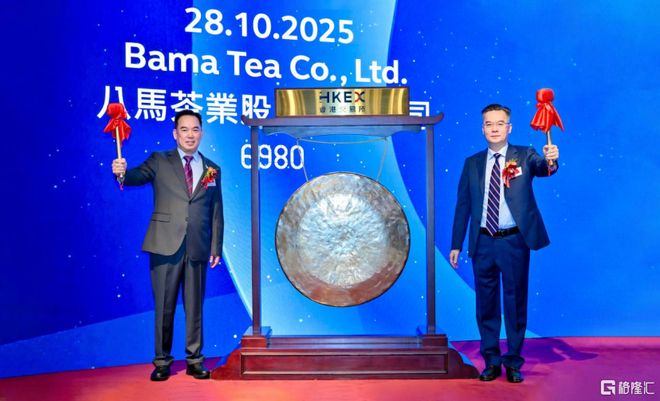
首秀大涨73% “高端中国茶第一股”八马茶业成功上市 重构万亿茶产业价值逻辑
Xin Hua Cai Jing· 2025-10-28 05:40
Core Viewpoint - Eight Horses Tea Industry officially listed on the Hong Kong Stock Exchange on October 28, becoming the "first high-end Chinese tea stock," with an initial price of 50 HKD and a first-day opening surge of 73%, reaching a market capitalization of over 7.3 billion HKD [1] Group 1: Quality and Product Strategy - The core of high-end tea lies in quality raw materials sourced from key tea-producing regions in China, with Eight Horses Tea establishing strict selection standards to ensure top-quality ingredients [2][3] - The company has achieved steady revenue growth, with projected revenue increasing from 1.818 billion RMB in 2022 to 2.143 billion RMB in 2024, reflecting a compound annual growth rate (CAGR) of 8.6% [3] - Eight Horses Tea has built a differentiated business model with various sub-brands targeting specific market segments, including high-end gifts and diverse flavor preferences [3] Group 2: Technological Innovation and Supply Chain - The company has developed a smart supply chain system that integrates "smart tea gardens, smart factories, and smart warehousing," transitioning from experience-driven to technology-driven production [5][6] - Eight Horses Tea has established a comprehensive R&D system, including multiple government-approved laboratories, to enhance product quality and innovation [5] Group 3: Channel Strategy and Market Expansion - The company has created a nationwide network of over 3,700 stores and aims to expand to 1,500 additional stores in the next three to five years, focusing on flagship "city reception hall" stores [7][8] - Eight Horses Tea has achieved full online channel coverage, ranking first in tea categories on major e-commerce platforms and local life services, while also planning to expand internationally [8]
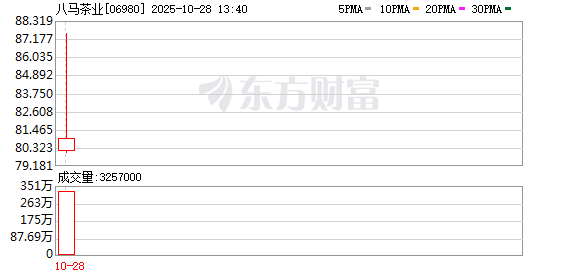
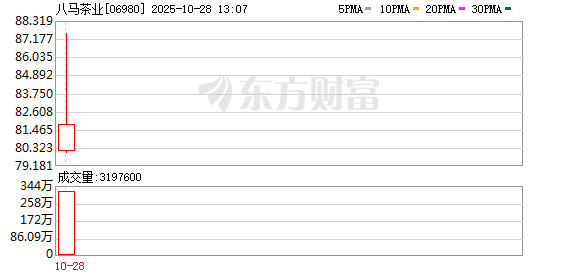
八马茶业(06980),成功在香港上市
Xin Lang Cai Jing· 2025-10-28 05:16
Core Viewpoint - Baima Tea, a leader in China's high-end tea market, successfully listed on the Hong Kong Stock Exchange, raising approximately HKD 4.5 billion through its IPO, with a strong oversubscription rate of 2680.04 times for the public offering and 13.58 times for the international offering [3][6]. Company Overview - Established in 1997, Baima Tea is recognized as the top brand in the high-end Chinese tea market, offering a comprehensive product range that includes various types of tea and related products [6]. - According to a report by Frost & Sullivan, Baima Tea ranks first in the Chinese tea market by the number of chain specialty stores and by sales revenue in the high-end tea segment as of the end of 2024 [6]. - The company has a total of 3,585 offline stores in China, including 244 direct-operated stores and 3,341 franchised stores, with a significant online presence across major e-commerce platforms [6]. Shareholding Structure - The controlling shareholders of Baima Tea are family members acting in concert, holding a combined 49.98% of the shares, with Wang Wenbin holding 22.69% and Wang Wenli holding 18.22% [5][6]. - Other notable shareholders include Tianjin Changfeng (6.14%) and various institutional and individual investors, with public shareholders collectively holding 10.59% [5]. IPO Details - The IPO involved a global offering of 9 million H shares, representing 10.59% of the total shares post-issue, with a maximum price set at HKD 50.00 per share [3]. - The IPO was managed by a team of underwriters including Huatai International, Agricultural Bank of China International, and others, with KPMG serving as the auditor [10]. Market Performance - Following the IPO, Baima Tea's shares closed at HKD 81.80, reflecting a 63.60% increase, resulting in a market capitalization of approximately HKD 69.53 billion [7].
八马茶业登陆港交所开盘上涨超70% 推进“千城万店”计划将新增1500家门店
Zheng Quan Shi Bao Wang· 2025-10-28 05:07
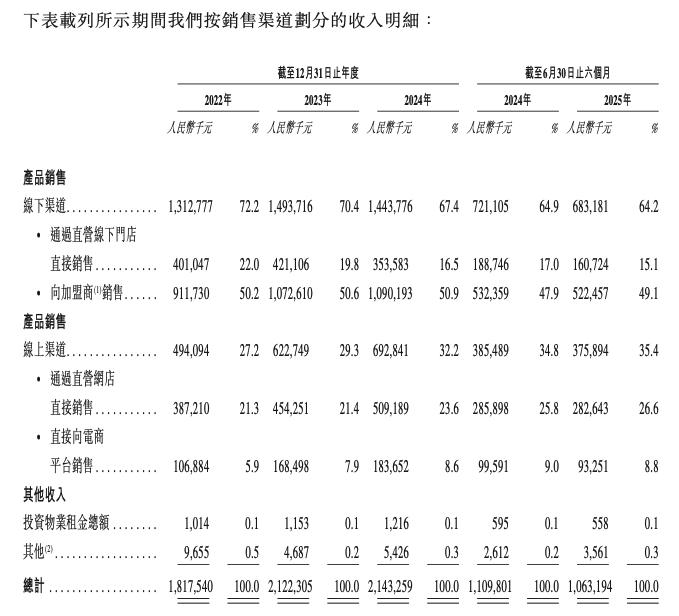
Core Viewpoint - Eight Horses Tea Industry (八马茶业) has successfully listed on the Hong Kong Stock Exchange, experiencing a significant stock price surge on its debut, reflecting strong market interest and potential for growth in the tea industry [1] Company Overview - Established in 1997, Eight Horses Tea has developed a comprehensive sales system combining direct sales and franchising, as well as online and offline channels [1] - The company offers a wide range of tea products, including Oolong, black, red, green, white, and yellow teas, along with tea-related products [1] - Eight Horses Tea has been recognized as a "China Famous Trademark" since 2010 and its sub-brand "Xinjihao" will be recognized as a "Chinese Time-honored Brand" starting in 2024 [1] Franchise and Digital Strategy - The company has implemented a rigorous franchisee selection process and provides comprehensive support through its "Wealth Creation Academy" and 25 training bases [2] - The average annual sales per franchise store have increased from 8 million RMB in 2022 to 11.6 million RMB in 2024 [2] - Eight Horses Tea has established a strong online presence on major e-commerce platforms and has maintained top sales positions in various tea categories for several consecutive years [2] Production and Market Position - The company has built a 160,000 square meter smart industrial park, achieving a daily production capacity of 432,000 tea bags and reducing labor costs by 40% [3] - The tea industry in China is characterized by low concentration and a large number of small enterprises, with over 1.6 million tea companies operating as of 2024 [3] Financial Performance - Eight Horses Tea's revenue has shown consistent growth, with figures of 1.818 billion RMB, 2.122 billion RMB, 2.143 billion RMB, and 1.063 billion RMB from 2022 to the first half of 2025 [4] - The net profit has also increased, with net profit margins rising from 9.1% in 2022 to 11.3% in the first half of 2025 [4] - The company aims to expand its store network significantly, planning to add 1,500 new stores in the next three to five years [4]
八马茶业IPO:敲得开的港股门,打不破的次元壁
3 6 Ke· 2025-10-28 04:06
Core Viewpoint - The capital market is not averse to tea, but it shows a preference for ready-to-drink tea over traditional loose-leaf tea, as evidenced by the challenges faced by companies like Baima Tea in their IPO attempts [1][4]. Group 1: Baima Tea's IPO Journey - Baima Tea officially listed on the Hong Kong Stock Exchange on October 28, 2023, with a maximum offering price of 50 HKD per share, raising approximately 450 million HKD [2]. - The company faced multiple challenges in its IPO journey, including failed attempts to list on the Shenzhen Stock Exchange and New Third Board due to lack of policy support and concerns over profitability [3]. - After several setbacks, including multiple withdrawals of IPO applications, Baima Tea finally succeeded in listing on the Hong Kong Stock Exchange [3]. Group 2: Market Position and Performance - Baima Tea claims to be the largest tea supplier in China by the number of chain stores, with a leading position in sales of Oolong tea and other high-end tea categories [8][10]. - The high-end tea market in China is growing, with market size expected to increase from 89 billion RMB in 2020 to 135.3 billion RMB by 2029, reflecting a compound annual growth rate of approximately 5.6% [10]. - Despite its leading position, Baima Tea's market share in the high-end tea segment increased from about 1.1% in 2020 to approximately 1.7% in 2024, indicating a highly fragmented market [10][9]. Group 3: Revenue and Profitability Trends - Baima Tea's revenue for the years 2022, 2023, and 2024 was 1.82 billion RMB, 2.12 billion RMB, and 2.14 billion RMB, respectively, with a noticeable slowdown in growth rates [14]. - The company's net profit for the same years was 166 million RMB, 206 million RMB, and 224 million RMB, showing a declining growth trend in profitability [15]. - In the first half of 2025, Baima Tea reported a revenue decline of 4.2% year-on-year, attributed to decreased sales in offline channels and increased administrative expenses [14]. Group 4: Sales Channels and Strategies - Baima Tea's sales are heavily reliant on offline channels, with offline sales accounting for over 70% of total revenue, while online sales are growing but still represent a smaller portion [34][14]. - The company has expanded its online presence significantly, with a total of 40.9 million followers across major e-commerce platforms [13]. - The average annual purchase amount of offline store members has been declining, indicating potential challenges in maintaining customer loyalty [20]. Group 5: Brand and Market Dynamics - The tea market in China is characterized by a high degree of fragmentation, with over 1.6 million companies involved in tea planting, production, and distribution [9]. - Baima Tea's strategy includes targeting the high-end gift tea market, focusing on business and government gift segments, which has shaped its long-term development approach [24]. - The company has launched sub-brands like "Xiao Ma Tea Qu" and "Wan Shan Hong" to cater to younger consumers and diversify its product offerings [38][39].
八马茶业(06980):产品、渠道、技术铸就“高端中国茶第一股” 首日早盘大涨73%
智通财经网· 2025-10-28 03:37
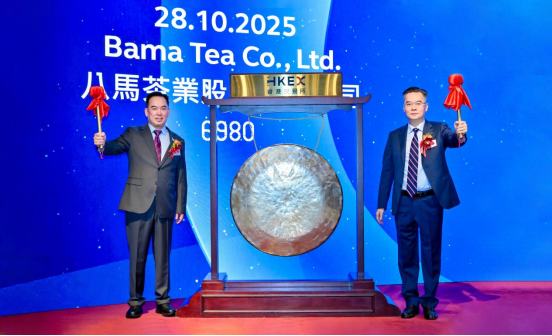
Core Insights - Baima Tea Co., Ltd. officially listed on the Hong Kong Stock Exchange on October 28, marking a significant milestone in the standardization and branding of the Chinese tea industry [1][4] - The company has demonstrated strong market expansion capabilities and a unique business model, becoming a leading national chain with high-end brand influence in a fragmented market [2][3] - The initial public offering (IPO) was highly successful, with oversubscription reaching 2,684 times, and the stock price surged 73% on the first day of trading, valuing the company at over HKD 7.35 billion [2][3] Market Position - Baima Tea has established a leading position in multiple segments, including being the top tea chain in China and ranking first in revenue in the high-end tea market, Oolong tea market, and black tea market [3][6] - The Chinese tea market is highly fragmented, with over 1.6 million companies, and the top five players hold only about 5.6% market share by revenue [2] Competitive Advantages - The company has built a robust competitive moat through three key elements: product quality, channel strategy, and technological innovation [6][10] - Baima Tea emphasizes quality, leveraging its 300-year family heritage in tea production and maintaining high standards for raw materials and production processes [6][7] - The company operates over 3,700 chain stores across all provinces in mainland China, utilizing a "direct sales + franchise" model to achieve significant scale [9][10] Technological Innovation - Baima Tea has invested in smart, digital, and information-based production lines, creating industry-leading "super factories" that enhance production efficiency and ensure consistent tea flavor [11][14] - The company actively participates in setting industry standards, having led or contributed to over 20 tea industry standards, which helps modernize quality control [14] Future Growth Strategy - The funds raised from the IPO will be strategically allocated to expand the channel network, upgrade supply chains and smart factories, and enhance brand building and international promotion [15][16] - The company aims to penetrate high-end markets and expand into Southeast Asia and countries along the Belt and Road Initiative, promoting Chinese tea culture globally [16] - The Chinese tea market is projected to reach RMB 135.3 billion by 2029, positioning Baima Tea to solidify its leadership and accelerate market consolidation [16]
八马茶业上市首日高开超60%
Xin Lang Cai Jing· 2025-10-28 03:10
港股新股八马茶业上市首日高开超60%,八马茶业此次发行价为50港元,发行900万股,募资总额为4.5 亿港元;扣非发行应付上市费用6011万港元,募资净额为3.9亿港元。 ...
八马茶业登陆港交所
Bei Jing Shang Bao· 2025-10-28 02:49
Core Viewpoint - Baima Tea, a Chinese tea chain brand, successfully listed on the Hong Kong Stock Exchange, with its stock price opening significantly higher than the issue price, indicating strong market interest and investor confidence [1] Group 1: Company Overview - Baima Tea's shares opened at 80 HKD per share, which is 60% higher than the issue price [1] - The company offered a total of 9 million shares in its global offering, raising a total of 450 million HKD [1] Group 2: Financial Details - After deducting listing expenses of 60.11 million HKD, the net fundraising amount is approximately 390 million HKD [1] - The funds raised will be utilized for expanding the sales network, improving supply chain efficiency, and brand promotion [1]
港股异动丨“高端中国茶第一股”八马茶业首日上市大涨73%
Ge Long Hui· 2025-10-28 01:53
Group 1 - Baima Tea, known as the "first high-end Chinese tea stock," was listed on the Hong Kong Stock Exchange today, experiencing a surge of 73% to HKD 86.5 [1] - The IPO was priced at HKD 50, which was the upper limit of the pricing range. The public offering in Hong Kong was oversubscribed by 2,680.04 times, while the international placement was oversubscribed by 13.58 times [1] - Founded in 1997 and originating from a 300-year-old tea-making family, Baima Tea is the largest high-end tea company in China and a time-honored brand [1] Group 2 - According to 2024 data, Baima Tea ranks first in sales revenue in the high-end tea market, the number of tea chain stores, and in the oolong and black tea markets nationwide [1] - The company operates over 3,700 chain stores across mainland China [1] - Baima Tea's sales revenue for Tieguanyin has ranked first in the country for over 10 consecutive years, while Wuyi rock tea and black tea have ranked first for 5 and 4 consecutive years, respectively [1]