
NIO(09866)

Search documents
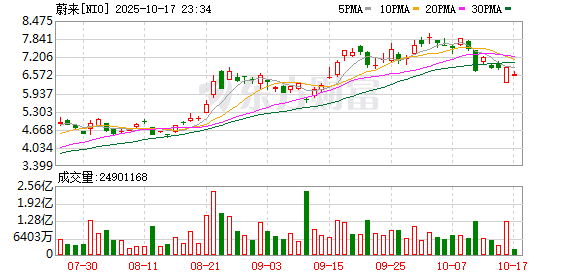
从跌13%到涨5%!蔚来回应GIC起诉:是灰熊三年前的不实指控
Guo Ji Jin Rong Bao· 2025-10-17 15:34
Core Viewpoint - The lawsuit filed by the Government of Singapore Investment Corporation (GIC) against NIO highlights allegations of inflated revenue and profits through a partnership with Wuhan Weinan Battery Asset Co., leading to investor losses [2][4]. Group 1: Lawsuit Details - GIC accuses NIO of recognizing over $600 million in battery leasing revenue without disclosing substantial control over Wuhan Weinan, resulting in significant losses during the investment period from August 2020 to July 2022 [4]. - The lawsuit's core allegations align closely with a short-selling report by Grizzly Research in June 2022, focusing on related party transactions involving Wuhan Weinan [4][5]. - A U.S. judge has ordered a pause in the proceedings of GIC's lawsuit due to ongoing collective litigation, causing fluctuations in NIO's stock price [4]. Group 2: Accounting Practices - The lawsuit raises concerns about NIO's accounting practices, specifically the recognition of long-term leasing income as a one-time revenue, which allegedly violates U.S. accounting standards [5]. - GIC claims that if the rental income were recognized over five years, the revenue growth would appear significantly less dramatic, contrasting with the reported increase from under 3 billion to 6.6 billion in Q4 2020 [5]. Group 3: NIO's Defense - NIO defends its revenue recognition based on the principle of "control transfer," asserting that ownership and rental income rights were transferred to Wuhan Weinan upon battery sale, meeting revenue recognition criteria under ASC 606 [6]. - The company holds a 19.8% stake in Wuhan Weinan, and there is no evidence of control agreements, which raises questions about the consolidation of financial statements [6]. - Major financial institutions, including Deutsche Bank and Morgan Stanley, have publicly disagreed with the conclusions of the Grizzly report, suggesting a misunderstanding of NIO's Battery as a Service (BaaS) model [6]. Group 4: Recent Financial Performance - NIO's recent financial results show revenue growth and a reduction in net losses, with Q2 2025 revenue at 19.01 billion, a 9% year-over-year increase, and a net loss of 5.14 billion, narrowing by 0.29% [8]. - For the first half of the year, total revenue reached 31.043 billion, up 13.49% year-over-year, with a net loss of 12.032 billion, a 15.87% reduction compared to the previous year [8].


美股三大指数开盘涨跌不一,诺和诺德跌超4%
Feng Huang Wang Cai Jing· 2025-10-17 13:43
Market Overview - The U.S. stock market opened mixed with the Dow Jones up 0.01%, Nasdaq down 0.53%, and S&P 500 down 0.3% [1] - Notable declines were observed in pharmaceutical stocks, with Novo Nordisk down over 4% and Eli Lilly down over 3% following Trump's announcement of price reductions for weight loss drugs [1] - Bank stocks also fell, with Deutsche Bank down over 3% and Barclays down over 2% [1] - Other notable declines included Kingsoft Cloud and NIO, both down over 3% [1] Company News - Oracle reported that its AI cloud gross margin could reach 35%, citing a six-year AI infrastructure project with total revenue of $60 billion [2] - In the last 30 days, Oracle signed new cloud infrastructure supply contracts worth $65 billion, consisting of seven contracts from four different clients, including Meta but not OpenAI [2] - Alibaba and Ant Group announced a joint investment of $925 million (approximately 6.6 billion RMB) to acquire a 13-story commercial building in Hong Kong, establishing their headquarters there to expand international business [3] - Schlumberger reported a 2.5% year-over-year decrease in Q3 revenue, totaling $8.93 billion, while adjusted earnings per share were $0.69, exceeding market expectations of $0.66 [4] - Morgan Stanley predicts that the flying car industry will create a market size of $300 billion by 2030, with potential growth to $9 trillion by 2050, highlighting China's potential as the largest urban low-altitude transportation market [5]

新加坡国资起诉蔚来欺诈,是真有问题还是空头炒作?
Xin Lang Cai Jing· 2025-10-17 12:32
Core Viewpoint - NIO's stock price experienced significant volatility due to a lawsuit filed by Singapore's GIC, alleging that NIO inflated revenue through an external company, Wuhan Weinan Battery, misleading investors [1][4][9] Group 1: Lawsuit and Market Reaction - On October 16, NIO's Hong Kong stock fell nearly 9% amid renewed media attention on the lawsuit, despite the case being temporarily shelved in U.S. courts [1][12] - The following day, NIO's stock rebounded by 2%, indicating potential market recovery or investor confidence [1] - The lawsuit is seen as a possible tactic by large investors to manipulate stock prices for profit, reminiscent of "rumor selling" strategies in capital markets [1][3] Group 2: Background of the Lawsuit - GIC purchased approximately 54.45 million shares of NIO from August 2020 to July 2022, but has since incurred losses due to the bear market and NIO's failure to achieve profitability [4][6] - The lawsuit is based on U.S. securities law, allowing collective action if a company is found to have committed fraud or misrepresentation that led to investor losses [6][8] Group 3: NIO's Business Model and Financial Practices - The core of GIC's allegations revolves around NIO's battery-as-a-service (BaaS) model, which allows consumers to purchase vehicles without batteries, lowering the initial cost by 25%-30% [9][11] - NIO established Wuhan Weinan Battery in August 2020, holding a 19.4% stake, with other significant shareholders including state-owned entities and CATL [9][11] - The financial structure allows NIO to recognize revenue from both vehicle sales and battery leasing, which may inflate reported income [11][12] Group 4: Implications and Future Outlook - The outcome of the collective lawsuit could lead to either dismissal or a settlement, with an uncertain timeline that may extend for years [10][12] - NIO's accounting practices are compliant with regulations, but the strategy may provide a competitive edge in valuation compared to peers [12] - Long-term performance will ultimately depend on NIO's ability to sustain sales growth, similar to the recovery seen in other companies like Luckin Coffee [13]

新加坡股东起诉蔚来,“换电故事”陷入新危机
Xin Lang Cai Jing· 2025-10-17 10:53
Core Viewpoint - NIO's stock price plummeted over 13% following a lawsuit filed by Singapore's GIC, accusing the company of inflating revenue through its partnership with CATL and the establishment of Wuhan Weinan Battery Asset Company (Mirattery) [1][3][4] Group 1: Lawsuit Details - This lawsuit marks the first instance of a sovereign wealth fund suing a Chinese concept stock, raising significant trust issues for NIO's battery swapping narrative [2][4] - GIC claims that NIO artificially inflated its performance by prematurely recognizing revenue from battery leasing services, misleading investors about its financial health [6][10] - The lawsuit centers on NIO's "Battery as a Service" (BaaS) model, which separates vehicle ownership from battery ownership, allowing NIO to report stable rental income [5][6] Group 2: Financial Implications - GIC argues that NIO's accounting practices led to an exaggerated revenue growth, with reported revenue jumping from under 30 billion yuan to over 66 billion yuan in a single quarter [6][7] - If GIC's claims are validated, NIO may need to restate its financials, significantly impacting its reported revenues and potentially leading to legal repercussions for misleading disclosures [14][27] Group 3: GIC's Background and Strategy - GIC, established in 1981, manages nearly $800 billion in assets and is known for its long-term investment strategy, emphasizing returns that exceed global inflation [17][19] - The fund has a history of litigation to protect its investments, having previously sued companies for misleading disclosures, indicating a strategic approach to safeguarding its assets [20][21][22] Group 4: Broader Industry Implications - The lawsuit signals a shift in the role of sovereign wealth funds from passive investors to active governance participants, reflecting a growing intolerance for accounting irregularities [29][30] - GIC's actions may set a precedent for increased scrutiny of Chinese companies listed abroad, potentially leading to stricter disclosure requirements and greater accountability from third-party auditors [31]
Nio shares rebound after GIC lawsuit over alleged revenue inflation
Thesun.My· 2025-10-17 08:48
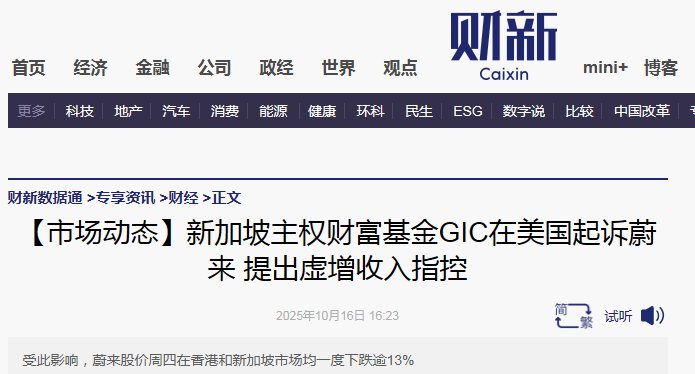
Core Viewpoint - Nio Inc's shares experienced a rebound after a significant decline due to a lawsuit from Singapore's sovereign wealth fund GIC, which accuses the company of issuing misleading statements that inflated its securities value [1][2]. Group 1: Lawsuit Impact - The lawsuit filed in New York's Southern District claims that Nio's alleged misleading statements caused GIC to incur substantial financial losses [1]. - Following the lawsuit's revelation, Nio's stock fell sharply by 9.8% in Singapore and 13% in Hong Kong on Thursday [2]. - Market observers suggest that the legal action could hinder Nio's future fundraising efforts [2]. Group 2: Company Response and Financials - Nio has denied all allegations related to false claims from a 2022 short-selling report by Grizzly Research [2]. - The company recently raised $1.2 billion through a share sale, although it is still trailing behind competitors like BYD and Geely [3]. - Morningstar Research indicated that while the allegations could harm Nio's corporate governance reputation, they are not expected to materially affect operations [3]. Group 3: Market Performance - Nio's stock rose by 2.86% in Singapore and 2.48% in Hong Kong during Friday afternoon trading following the initial decline [1]. - The research firm anticipates that vehicle sales growth and profitability improvements will support near-term share prices [4].
港股收盘(10.17) | 恒指收跌2.48% 科技股集体下挫 老铺黄金(06181)逆市涨超3%
智通财经网· 2025-10-17 08:48
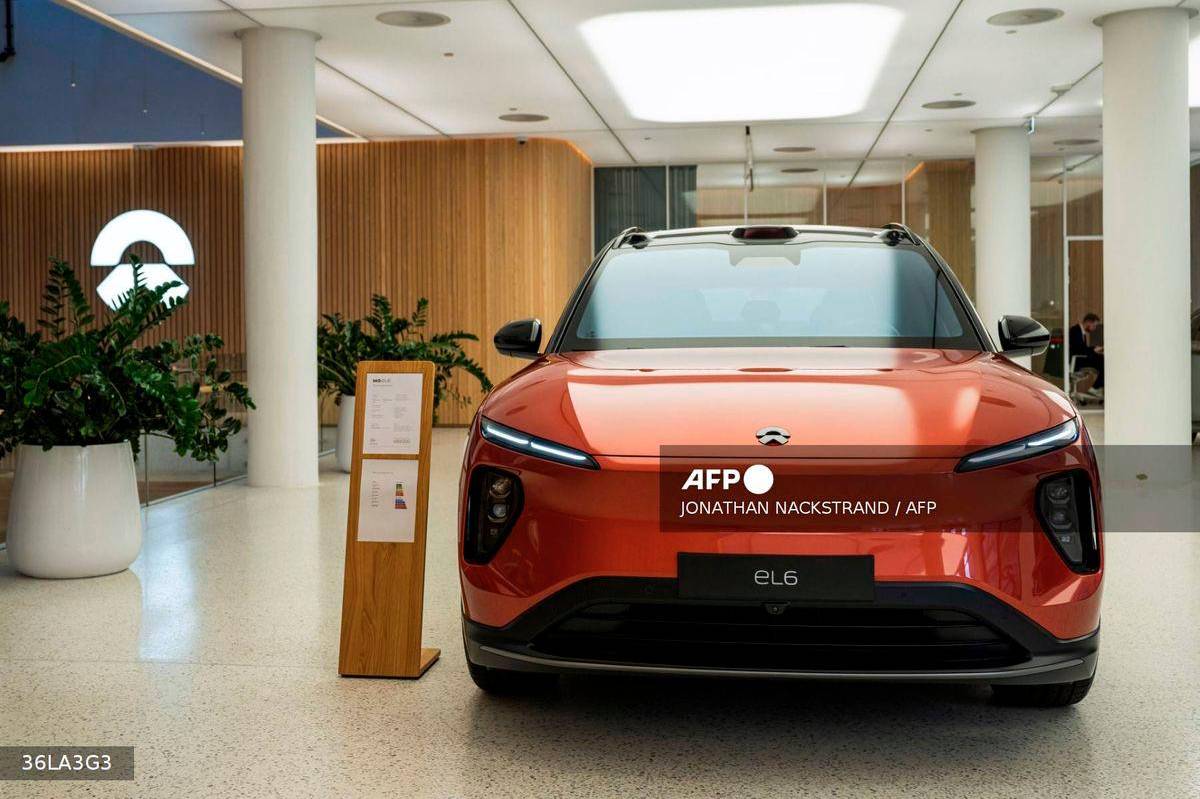
Market Overview - The credit crisis among U.S. regional banks has intensified, leading to a decline in U.S. stock markets and a significant drop in Hong Kong stocks, with the Hang Seng Index falling nearly 3% at one point [1] - The Hang Seng Index closed down 2.48% at 25,247.1 points, with a total turnover of HKD 314.62 billion, while the Hang Seng Tech Index dropped 4.05% [1] - For the week, the Hang Seng Index fell 3.97%, the Hang Seng China Enterprises Index fell 3.7%, and the Hang Seng Tech Index fell 7.98% [1] Blue Chip Performance - Hansoh Pharmaceutical (03692) rose 2.13% to HKD 36.5, contributing 1.43 points to the Hang Seng Index, after signing a licensing agreement with Roche for its ADC HS-20110, with a total deal value of USD 1.53 billion [2] - Chow Tai Fook (01929) increased by 5.02%, while Link REIT (00101) rose 0.57% [2] - BYD Electronic (00285) fell 8.13%, negatively impacting the index by 4.21 points [2] Sector Performance - Major tech stocks collectively declined, with Alibaba down over 4% and Tencent nearly 2% [3] - Chip stocks saw significant losses, with ZTE Corporation down over 12% and Hua Hong Semiconductor down nearly 7% [3][4] - The photovoltaic sector continued to decline, with rumors about a multi-crystalline silicon storage platform being unsubstantiated, leading to further losses in solar stocks [4][6] Cryptocurrency Market - The cryptocurrency market experienced a sharp decline, with Bitcoin dropping nearly 5% to USD 104,986, and Ethereum down nearly 7% [6] - The decline was attributed to concerns over credit markets following recent events involving U.S. regional banks and the ongoing government shutdown [6] Notable Stock Movements - Lao Pu Gold (06181) rose 3.11% after announcing a price adjustment for its products, marking its third price change this year [7] - China Duty Free Group (01880) increased by 2.05% following the announcement of expanded duty-free shopping policies in Hainan [8] - NIO Inc. (09866) saw a 2.17% increase, responding to a lawsuit that is not related to its recent operational status [9] - Fuyao Glass (03606) fell 5.73% after announcing a leadership change and reporting Q3 revenue of approximately CNY 11.855 billion, up 18.86% year-on-year [10]

蔚来称公安机关已立案
Bei Jing Ri Bao Ke Hu Duan· 2025-10-17 07:14
Core Viewpoint - NIO has reported incidents of defamation and misinformation targeting the company, leading to legal actions against the perpetrators [1] Group 1: Company Actions - NIO's legal department has announced its support for a special rectification action initiated by six government departments to combat online infringement in the automotive industry [1] - The company has taken legal action against the account holder of "BelieveDB," who has been spreading false information about NIO and its users since 2023, resulting in a court ruling against the individual [1] - NIO has gathered evidence against the "Roadside News Agency" account for spreading capital market-related rumors and has reported the matter to law enforcement, which has initiated an investigation [1] Group 2: Industry Context - The special rectification action targets behaviors such as defaming automotive companies and utilizing generative AI technology to produce false content [1] - NIO emphasizes the importance of high-quality services and products as the foundation for the company's success and the advancement of the automotive industry [1] - The company is committed to maintaining a fair and healthy online environment and will continue to take legal measures against malicious infringement actions [1]
蔚来法务部发文打击网络侵权
Bei Jing Wan Bao· 2025-10-17 06:54
Core Viewpoint - NIO has reported that it is actively combating online defamation and has filed a police report regarding false information generated by AI, emphasizing its commitment to protecting its reputation and the rights of its users [1] Group 1: Legal Actions and Responses - NIO's legal department has announced its support for a special rectification action initiated by six government departments to address online misconduct in the automotive industry [1] - The company has taken legal action against an individual, Dong Bin, who has been spreading false statements about NIO and its users since 2023, resulting in a court ruling that ordered Dong to cease infringement, publicly apologize, and compensate NIO for damages [1] - NIO has gathered evidence against another account, "Roadside News Agency," which has been disseminating rumors related to NIO's capital market, and has reported this to the police, leading to an ongoing investigation [1] Group 2: Commitment to Quality and Integrity - NIO emphasizes its belief that high-quality services and products are essential for the company's foundation and the advancement of the automotive industry [1] - The company is determined to combat malicious actions such as black PR and water army tactics that infringe upon its rights and the rights of its users, aiming to maintain a fair and healthy online environment [1]
再创新高 蔚来累计换电次数突破8个“8”
Zhong Guo Zhi Liang Xin Wen Wang· 2025-10-17 06:32
Core Insights - NIO announced that the cumulative battery swap count has exceeded 88,888,888 times, with over 50% of the energy replenished coming from battery swaps [1] - More than 82% of users can find at least one battery swap station within 3 kilometers of their residence, with an average battery swap completed every 0.86 seconds [1] Battery Swap Infrastructure - As of October 15, 2025, NIO has built a total of 3,525 battery swap stations, including 1,002 along highways and 4,765 charging stations [1] - The company operates 27,276 charging piles and has access to over 1.379 million third-party charging piles [1] Battery Swap Process - The battery swap process at NIO stations takes only 3 minutes, is fully automated, and does not require users to exit their vehicles [1] - Each battery swap includes a self-check to ensure that both the vehicle and battery are in optimal condition [1] Flexible Battery Services - NIO offers flexible battery upgrade services, allowing users to upgrade to long-range battery packs on a daily, monthly, or yearly basis [1] - Users can utilize smaller batteries for daily use and rent larger batteries for long-distance travel, with the option to pick up batteries nationwide [1]
蔚来发文打击网络侵权:涉AI虚假信息案已立案调查
Feng Huang Wang· 2025-10-17 06:18
Core Viewpoint - NIO has reported legal actions against accounts spreading false information using AI technology, emphasizing the impact on its reputation and market environment [1] Group 1: Legal Actions - NIO's legal department has filed a report with the police regarding the account "Roadside News Agency" for allegedly creating and disseminating false information through AI [1] - The account holder of "BelieveDB," Dong Bin, has been ruled by the court to have infringed on NIO's rights, requiring him to publicly apologize and compensate for damages [1] Group 2: Impact of False Information - The "Roadside News Agency" has published numerous false claims related to NIO's capital market, which were rapidly disseminated across multiple platforms, severely damaging the company's reputation [1] - NIO has completed evidence collection and the police have initiated an investigation into the matter [1] Group 3: Support for Regulatory Actions - NIO expresses strong support for a recent joint initiative by six departments, including the Ministry of Industry and Information Technology, aimed at addressing online chaos in the automotive industry [1] - The company will continue to legally combat various forms of online black public relations and bot activities, including those utilizing generative AI technology to create false content [1]